Inspiration
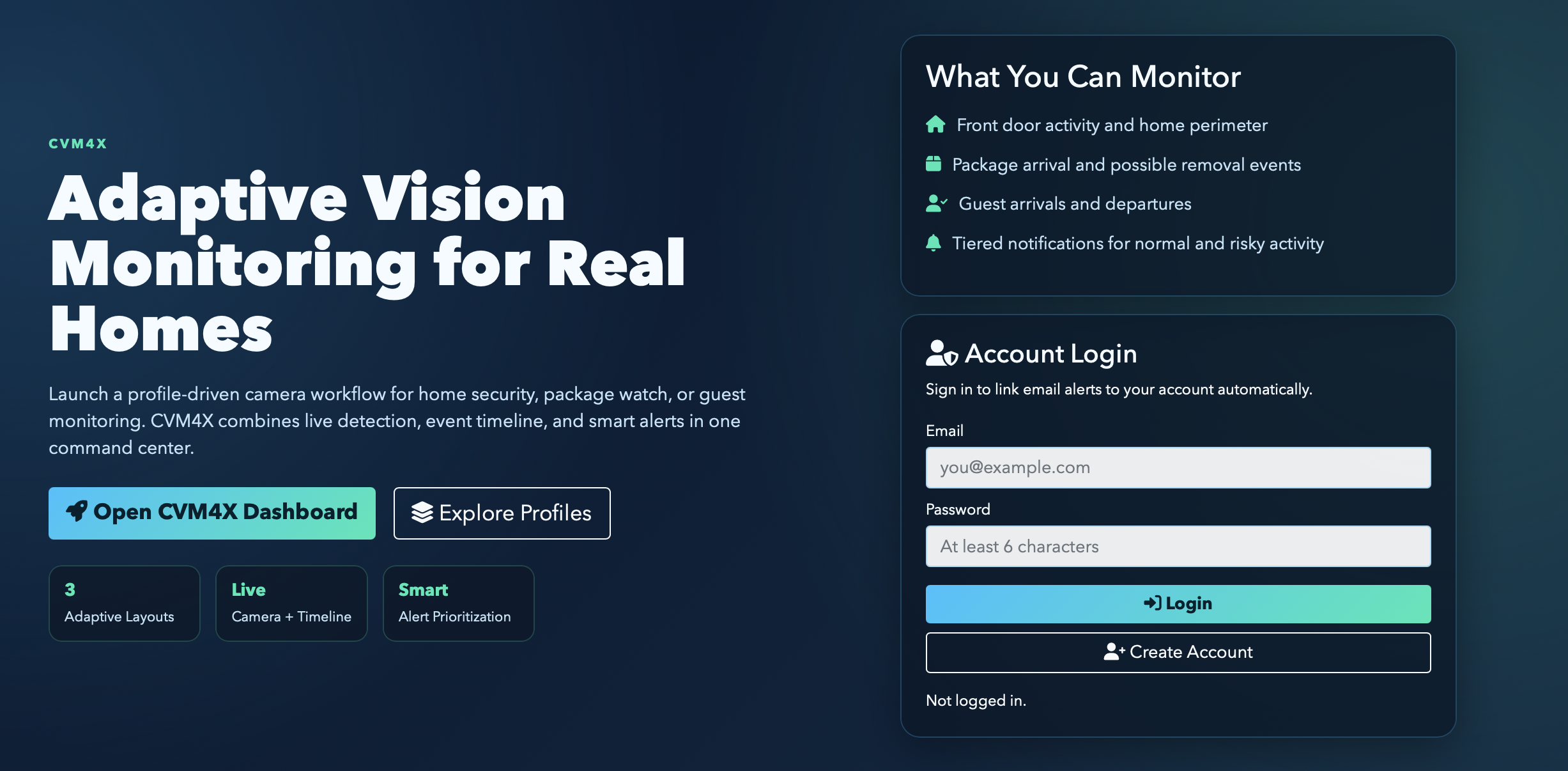
CVM4X is an AI-powered surveillance platform that:
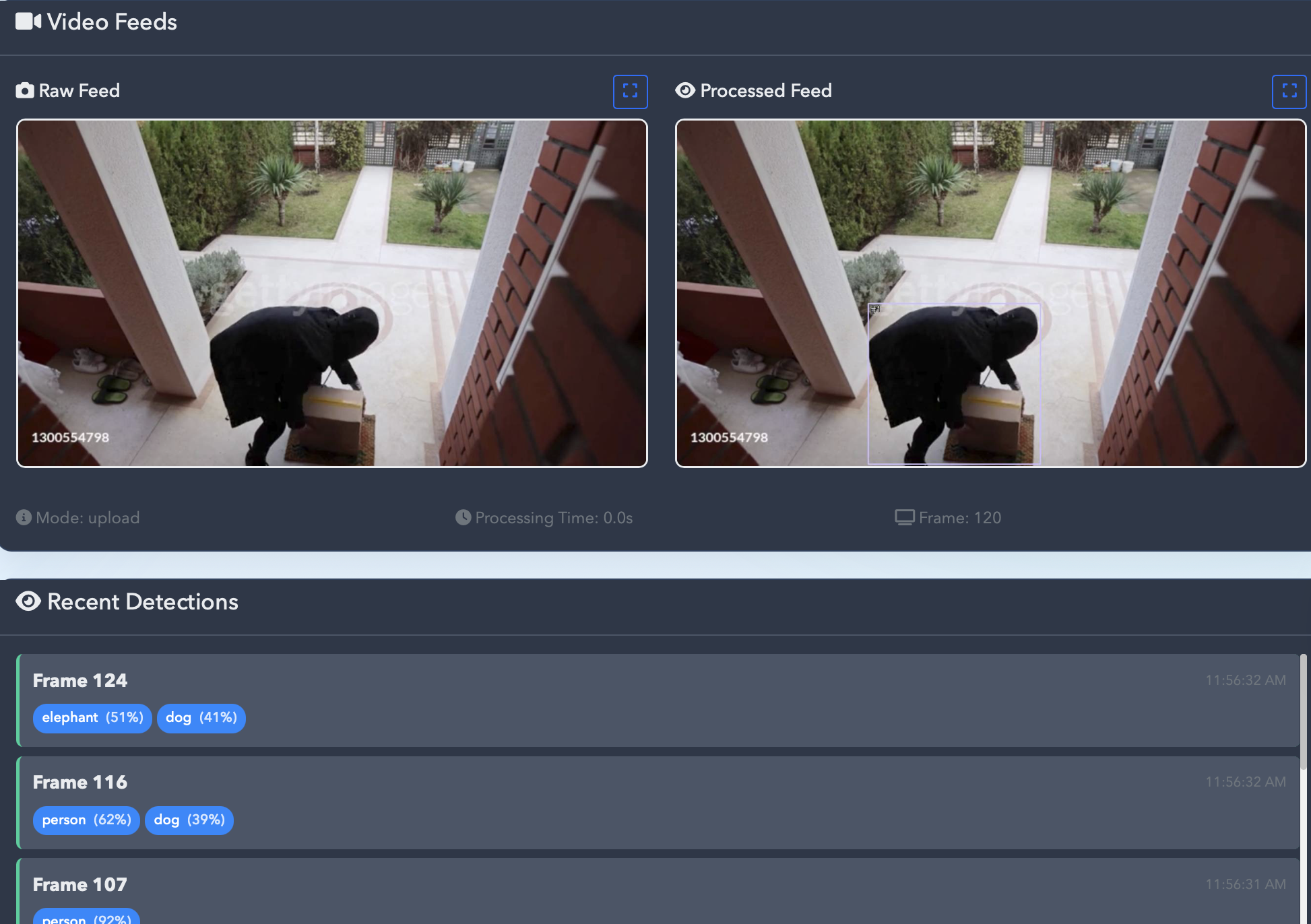
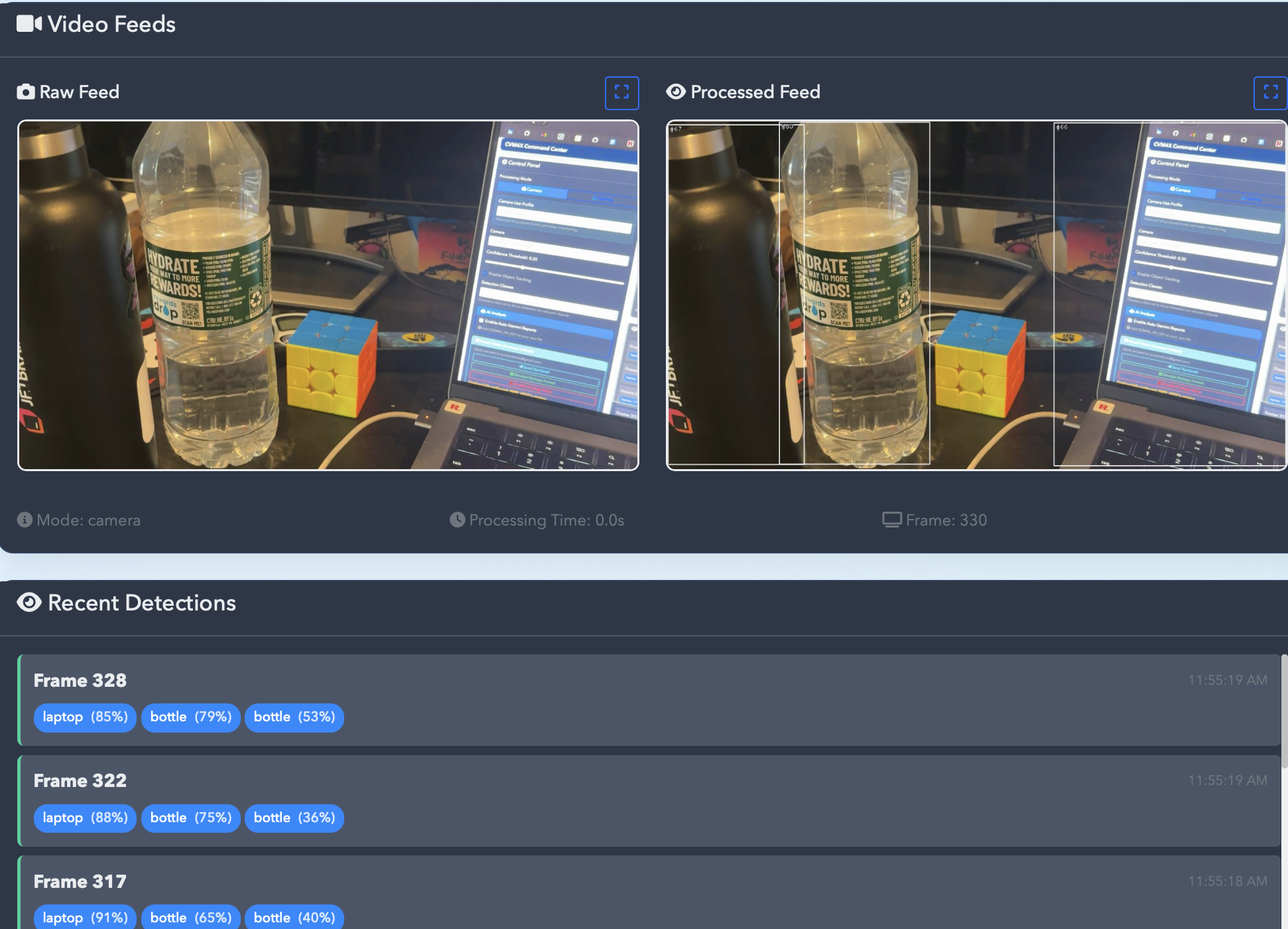
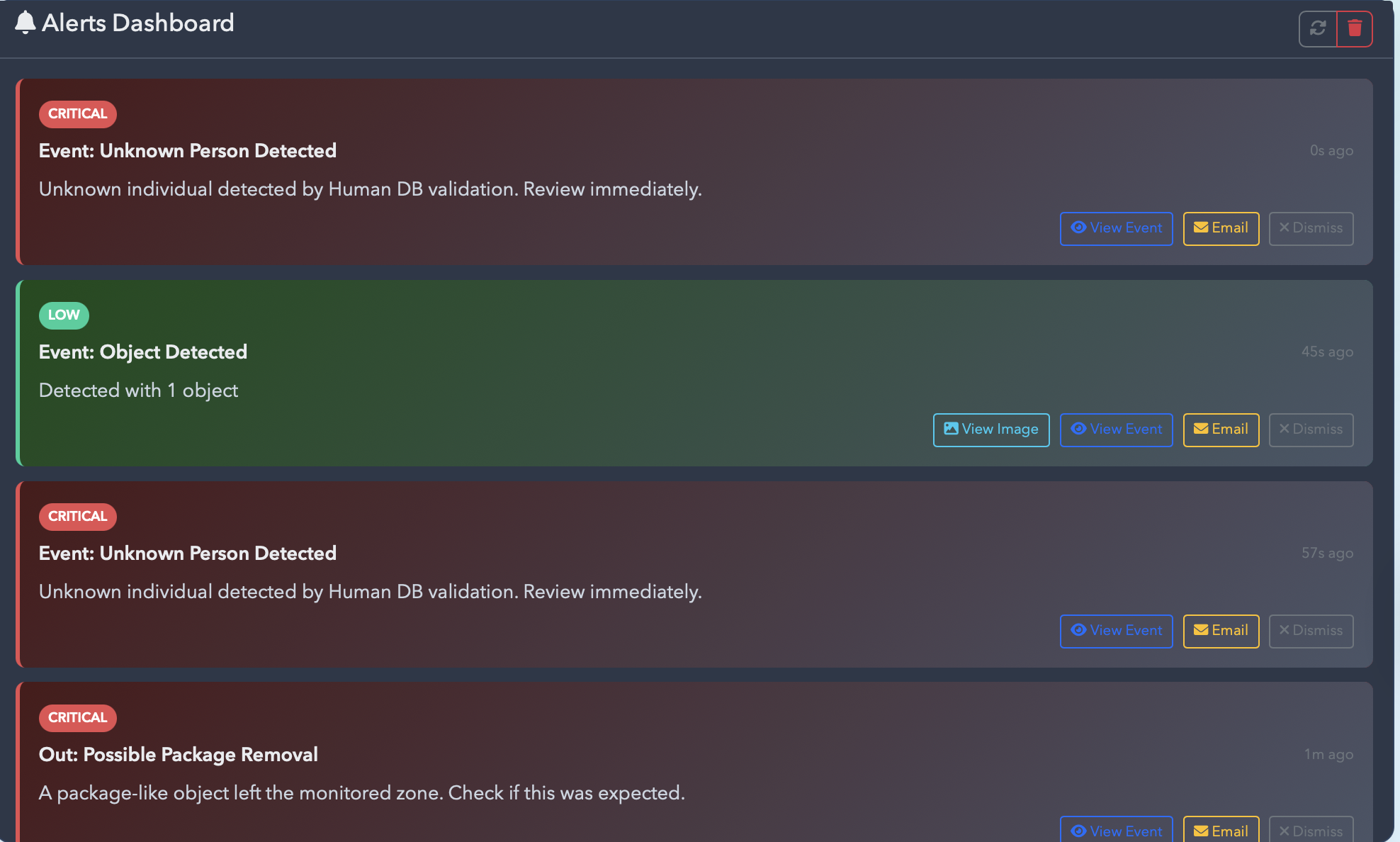
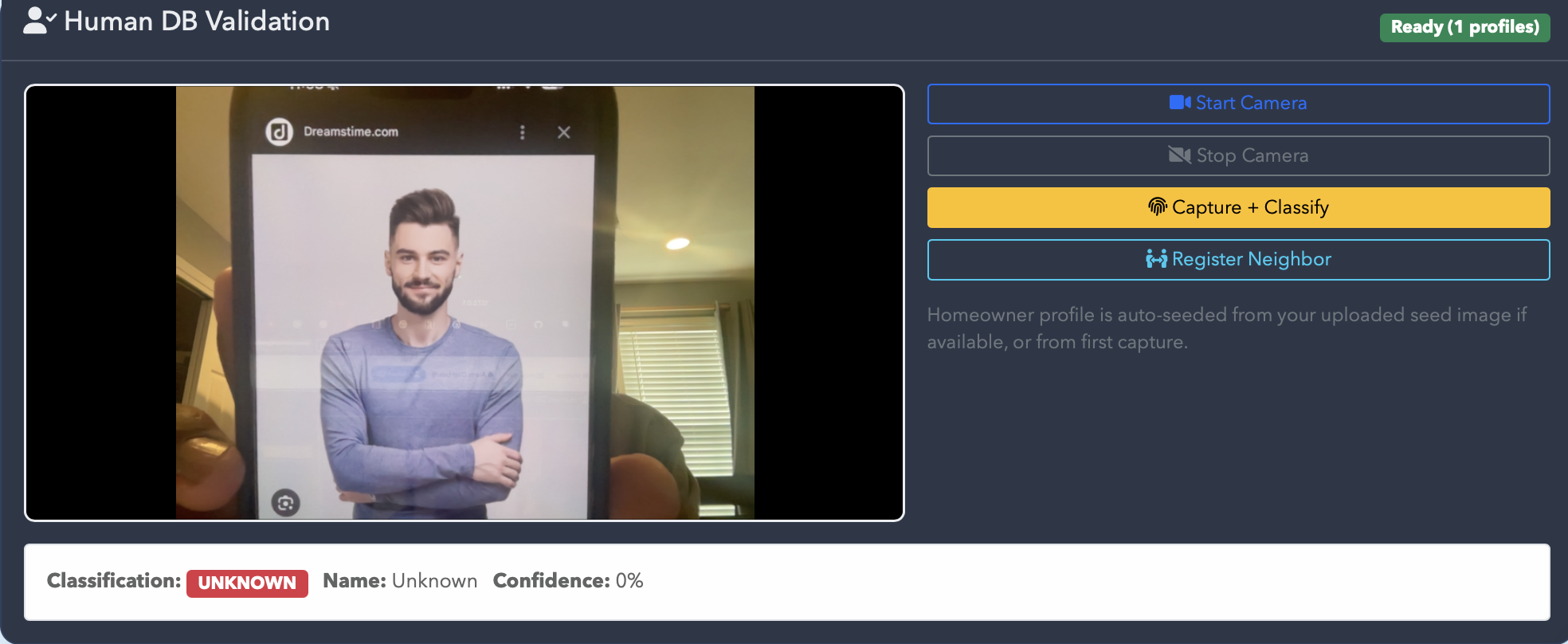
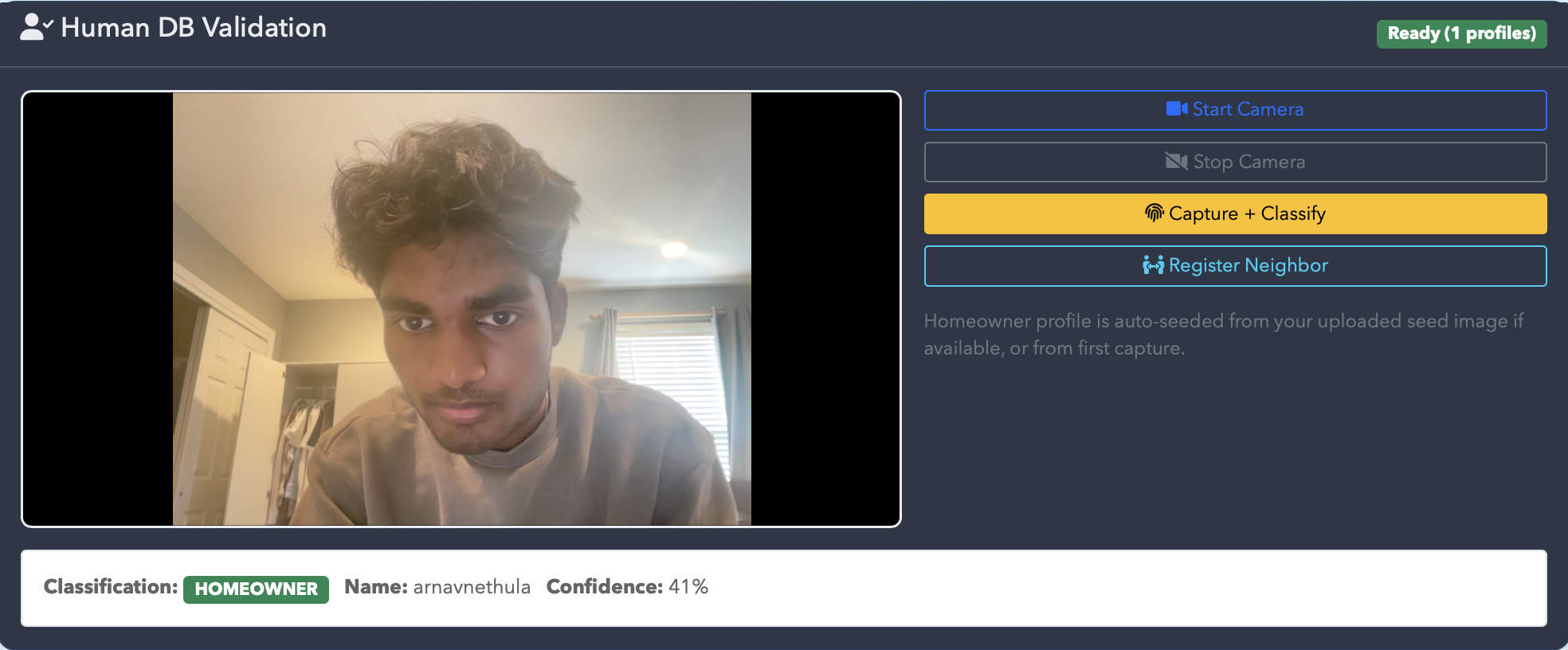
Detects people, vehicles, packages, and potential threats in real time using computer vision. Tracks object enter/exit events and builds a visual timeline of activity. Sends priority-based alerts, including critical notifications for unknown people or suspicious events. Uses Human DB validation to classify faces as homeowner, neighbor, or unknown. Automatically links authenticated user accounts to alert delivery (no manual email entry required). Provides analytics dashboards with live metrics, trend charts, and short-term forecasting. Runs in a web interface with camera/live stream monitoring and Raspberry Pi-ready deployment options.
What it does
We built CVM4X as a modular full-stack system:
Backend: Python + Flask + Flask-SocketIO for API and real-time event streaming. Vision pipeline: OpenCV + YOLOv8 for detection, tracking, and event generation. Identity layer: face_recognition-based Human DB validator for profile registration/classification. Summarization: Uses Gemini API to summarize timeline snapshots through an LLM to make it convenient for the user to view past footage Alerts: notification manager + SMTP email service with severity-aware auto-emailing. Auth: Supabase login/session integration for account-based workflows. Frontend: HTML/CSS/JavaScript dashboard with monitor, analytics, alerts, and human validation tabs. Deployment support: dedicated Raspberry Pi 5 startup workflow and environment configuration.
How we built it
We built CVM4X as a modular full-stack system:
Backend: Python + Flask + Flask-SocketIO for API and real-time event streaming. Vision pipeline: OpenCV + YOLOv8 for detection, tracking, and event generation. Summarization: Gemini LLM to view footage and summarize the videos. Identity layer: face_recognition-based Human DB validator for profile registration/classification. Alerts: notification manager + SMTP email service with severity-aware auto-emailing. Auth: Supabase login/session integration for account-based workflows. Frontend: HTML/CSS/JavaScript dashboard with monitor, analytics, alerts, and human validation tabs. Deployment support: dedicated Raspberry Pi 5 startup workflow and environment configuration.
Challenges we ran into
Camera reliability differences across environments, especially continuity/mobile camera behavior. Balancing real-time performance with richer analytics and UI updates. Keeping frontend and backend in sync while rapidly evolving features. Handling edge cases in identity classification and unknown-person escalation. Preventing notification noise while still surfacing critical events quickly. Making the system demo-ready on constrained hardware (Pi) without sacrificing core functionality.
Accomplishments that we're proud of
End-to-end real-time AI surveillance pipeline working in a browser dashboard. Priority-based alerting with automatic email notifications for high/critical events. Human DB workflow for homeowner/neighbor/unknown classification and response automation. Account-based alert subscriptions tied to authentication instead of manual setup. A polished multi-tab UX with monitoring, alerts, identity validation, and analytics/forecasting. Raspberry Pi 5 execution path for practical, low-cost deployment.
What we learned
Camera/device handling is often the hardest part of “AI demo” stability. Small UX decisions (clear tabs, fewer manual steps, cleaner language) dramatically improve usability. Alert systems need context and prioritization to be useful, not just frequent. Modular architecture pays off when requirements change quickly during a hackathon.
What's next for CVM4X
Improve identity accuracy with larger face datasets and adaptive threshold tuning. Add multi-camera orchestration and zone-based rules per camera. Expand forecasting with anomaly detection and predictive risk scoring. Introduce richer incident reports (summaries, clips, and recommended actions). Add mobile-first controls and remote arm/disarm workflows. Optimize inference and memory usage further for long-running Raspberry Pi deployments. Package CVM4X as a more plug-and-play installer for non-technical users.
Built With
- chart.js
- flask
- flask-socketio
- gemini
- javascript
- opencv
- postgresql
- python
- socket.io
- ultralytics
- yolov8


Log in or sign up for Devpost to join the conversation.