Inspiration
Volunteering with children, noticing how human-computer interaction has become crucial to everyday life. Wanting to help people become more self-sufficient later on in life.
What it does
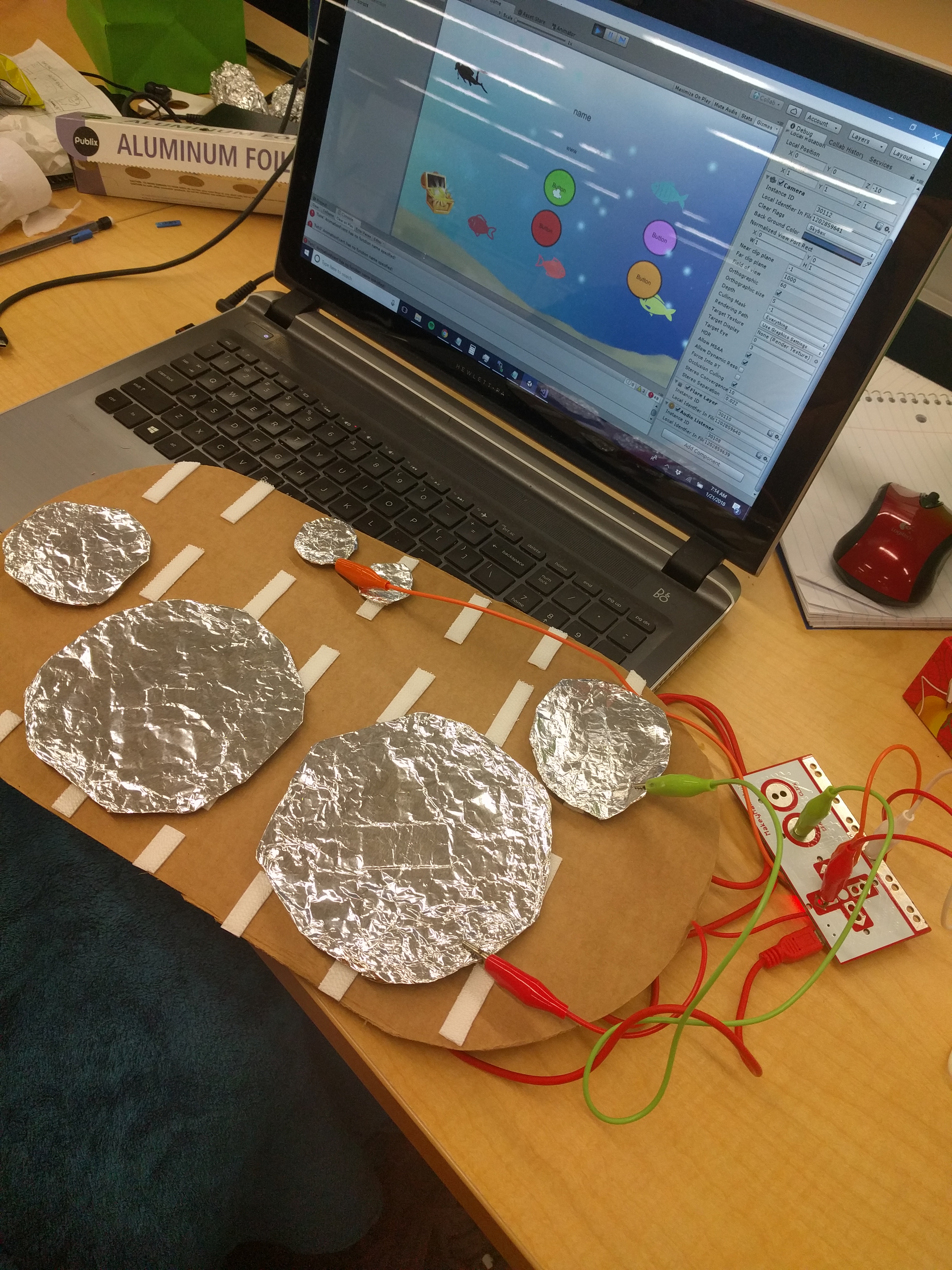
Our 2D Unity software has both teacher and student portals. The teacher can use templates to design lesson plans and quizzes for students. Students complete the modules by using a Makey Makey input device connected to a simple physical controller which is customizable for a wide range of capabilities.
How I built it
After planning our UI/UX design on paper as a team, we began creating the project in Unity and programming in C#. We researched how to integrate Unity into a website and began prototyping with bootstrap, HTML, CSS.
Challenges I ran into
Saving and transferring data between different aspects of the project, figuring out how much of the project should / could be split between Unity and the web-based portion.
Accomplishments that I'm proud of
Getting WebGL to function properly with Unity. Creating the customizable cardboard, aluminum foil, and velcro controller, and getting this system to work with Unity. Gained experience in UX and UI, learned new features of art making app Krita
What I learned
I gained familiarity with many aspects of Unity which I normally don't use, since this is a 2D web-based project instead of the 3D VR projects I usually work on. In addition to the obvious technical knowledge, I also believe that I now have an enhanced perspective on the needs of the assistive learning community.
What's next for Customizable Assistive Learning
Further develop the software so that it can be presented to potential users at the Assistive Technology Industry Association in February. Add more templates and give teachers better options for teaching material. Make improvements to the UI. Add a reward system so that modules earn points. Fully adapt for the website.

Log in or sign up for Devpost to join the conversation.