-
-
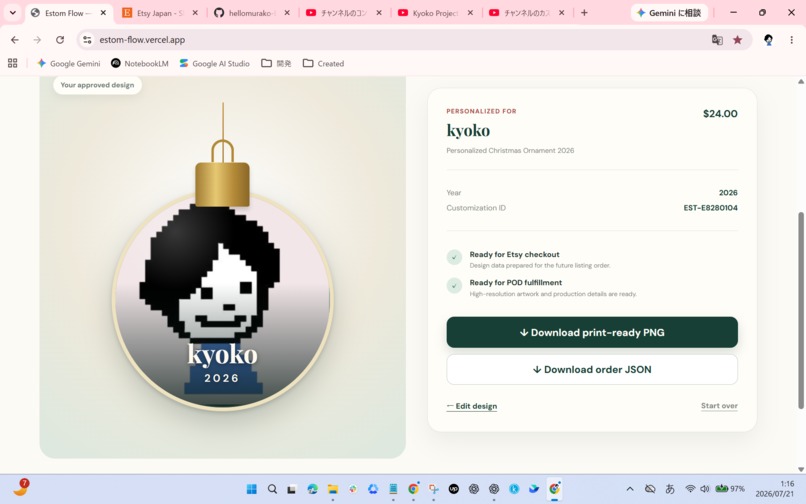
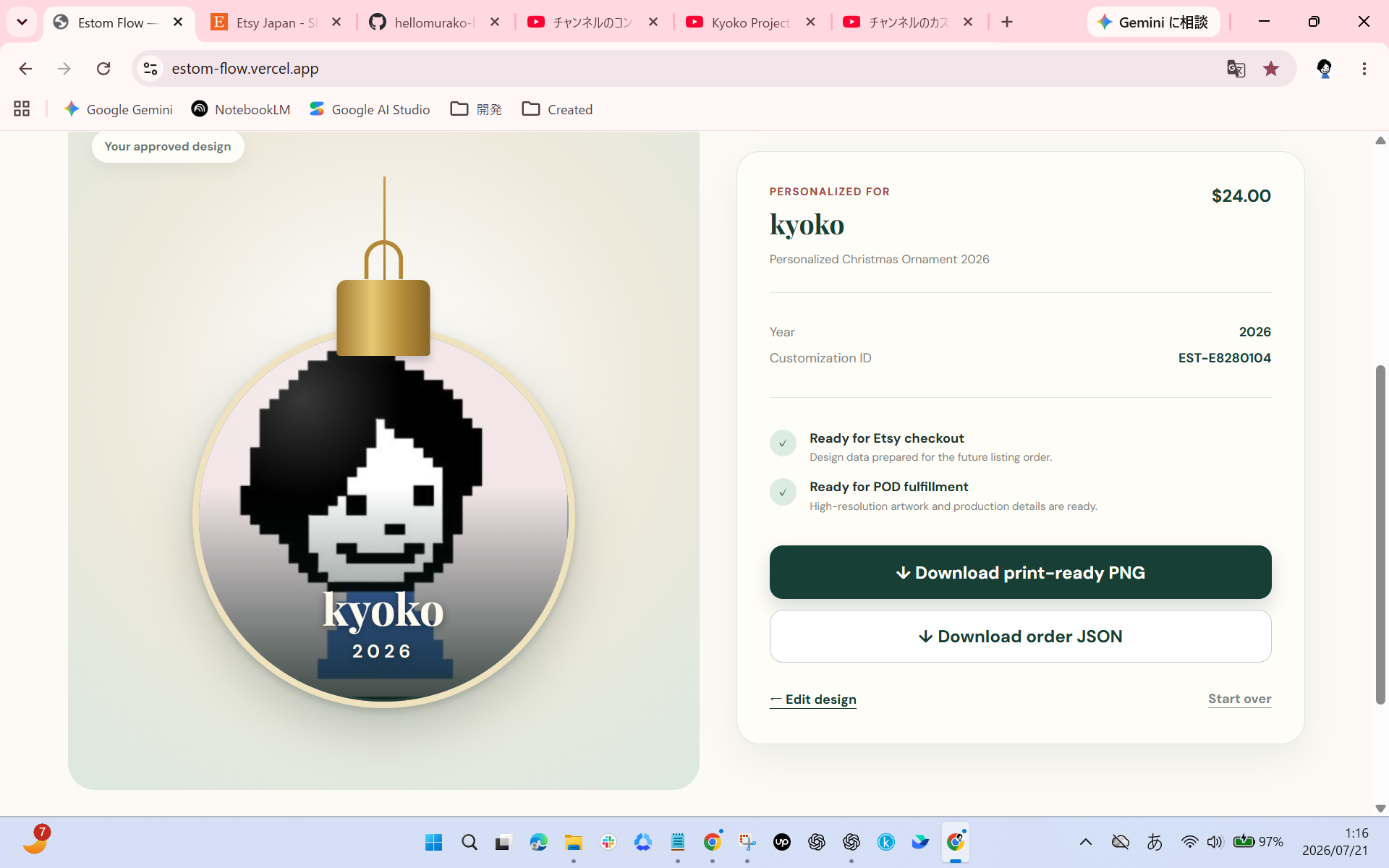
Customers upload a photo, adjust the crop, and add a name and year.
-
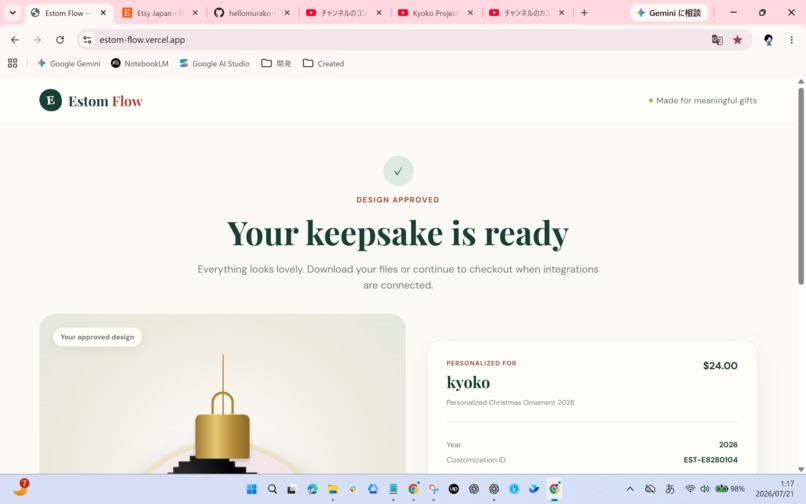
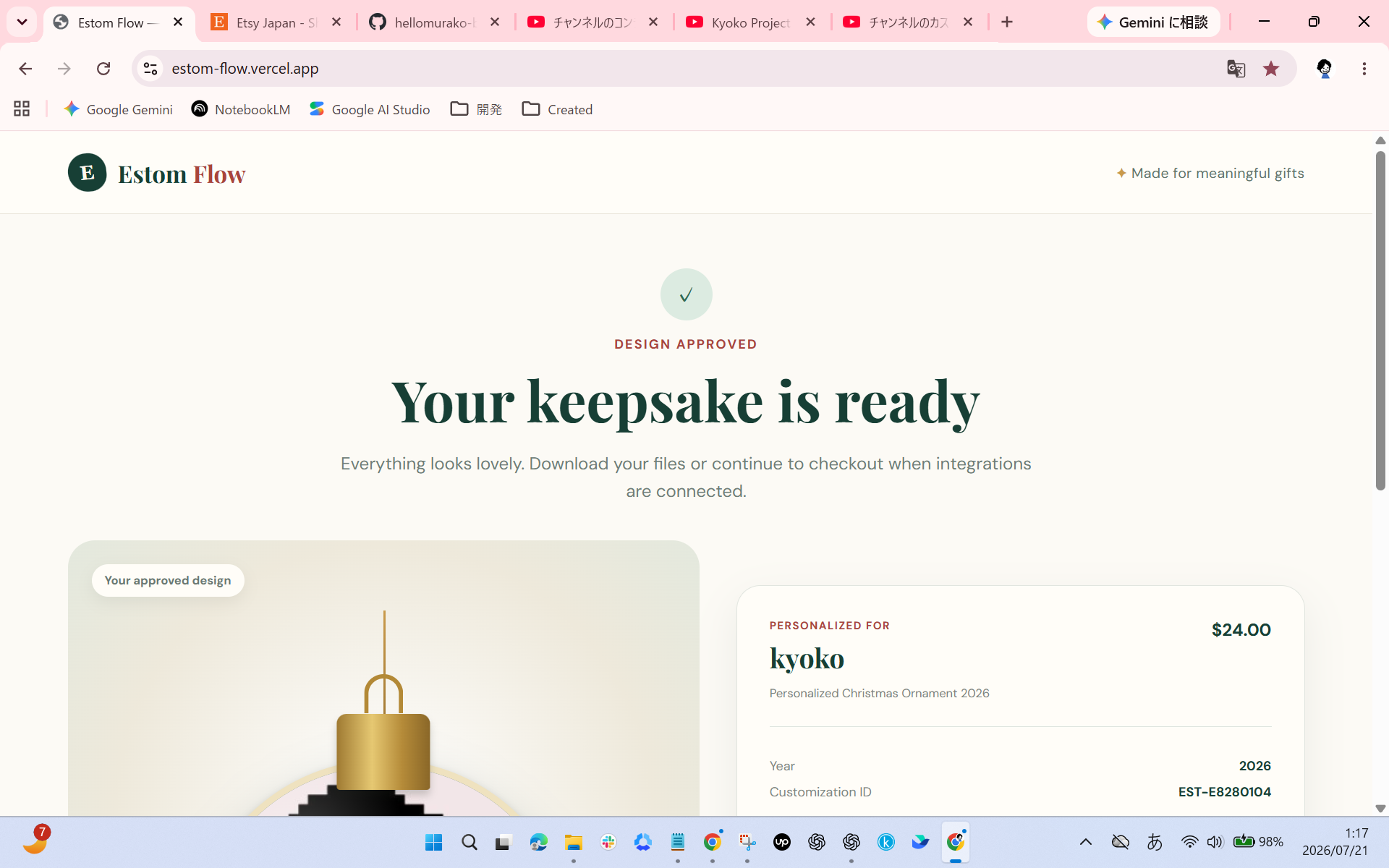
The approved design generates a customization ID, print-ready PNG, and order JSON.
-
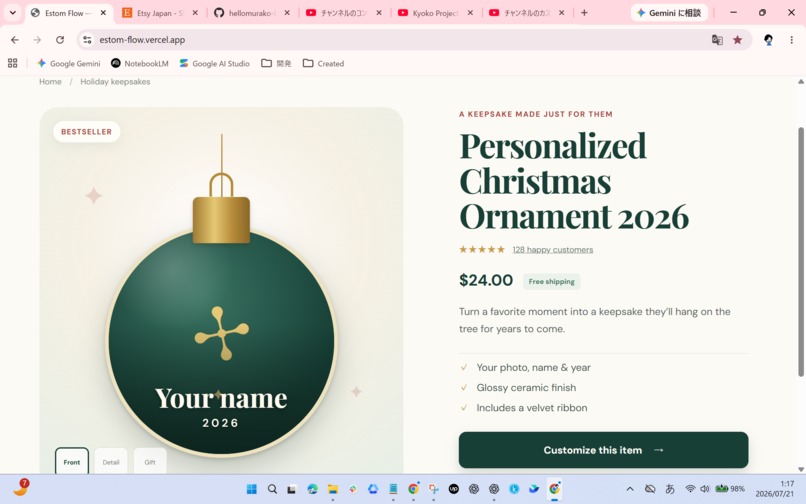
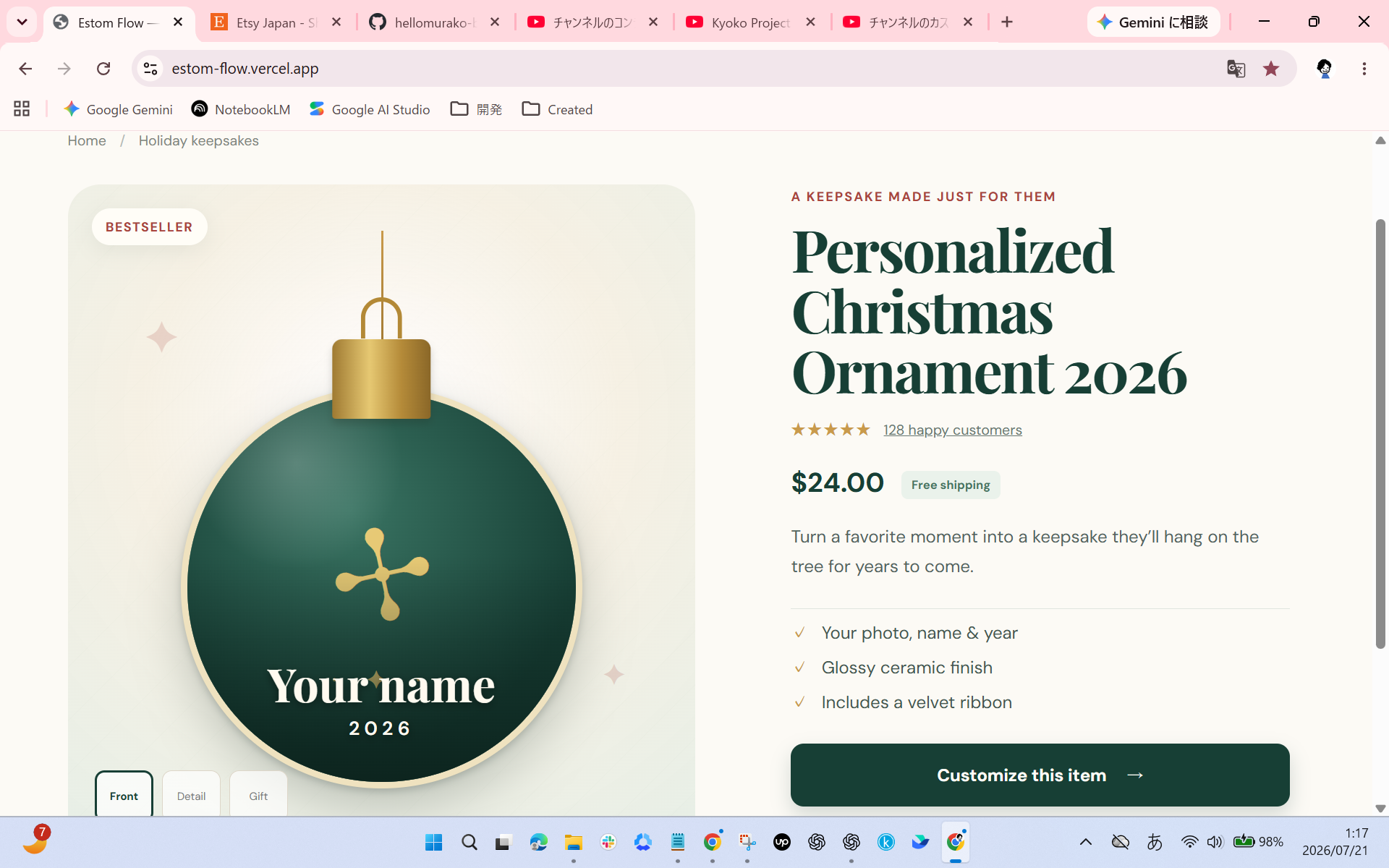
A gift-style product page for a personalized Christmas ornament.
Inspiration
I was preparing to open an Etsy shop and had already decided that I wanted to sell personalized products.
But I stopped when I thought about the actual workflow behind every order.
In my everyday work, I already know how easily small manual tasks can lead to mistakes. Personalized products would require me to receive customer photos and names, resize images, check layouts, prepare print files, and match every design with the correct order. I realized that managing all of this manually would not be realistic for me.
There are paid customization tools available, but the ones I found did not fit the products or customer experience I wanted to create.
That made me wonder how many other small sellers have a personalized product idea, but never launch it because the operational workload feels too heavy.
What Estom Flow does
Estom Flow allows customers to complete their product customization before checkout.
The customer can:
- Upload a photo
- Move and resize the image inside the printable area
- Add a name and year
- Preview the finished product
- Confirm the design
- Generate production-ready design data
The goal is to reduce the manual work for the seller and make the confirmed customization ready to connect with print-on-demand fulfillment.
For this prototype, I created a personalized Christmas ornament as the first product template.
How I built it
I am a non-technical builder, so I used Codex to turn the product workflow I had designed into a working web prototype.
I defined the customer journey, the required customization steps, the product template structure, and the operational problems the tool needed to solve. Codex helped implement the interface, image positioning and scaling, preview generation, local data handling, and downloadable production files.
I also used GPT-5.6 as a thinking partner to review the scope, identify risks, clarify the user flow, and prepare the project documentation.
Challenges
The biggest challenge was not simply creating an image editor. The design created by the customer must also be usable for production.
The system needs to keep the image within the printable area, preserve sufficient image quality, prevent missing information, and make sure the final production file matches the preview approved by the customer.
Because of the Build Week deadline, the current prototype focuses on the customization and production-file workflow rather than live Etsy and POD API connections.
What I learned
I learned that personalized commerce is not only a creative problem. It is also an operational problem.
A seller may have a good product idea, but still be unable to launch it because every order creates repetitive design, checking, and file-preparation work.
By allowing the customer to complete and approve the customization themselves, much of that work can be standardized before the order reaches the seller.
What's next
The next steps are:
- Connect Etsy listings and orders
- Connect a print-on-demand fulfillment provider
- Add automated resolution and print-area checks
- Add an optional seller approval step
- Create more templates for Christmas, weddings, pets, babies, memorial gifts, and other personalized products
- Allow sellers to add new product templates with AI assistance
I hope Estom Flow can help small sellers like me launch personalized products without being stopped by the manual workload behind every order.
Built With
- canvas
- codex
- etsy
- html5
- localstorage
- print-on-demand
- react
- typescript
- vite

Log in or sign up for Devpost to join the conversation.