-
-
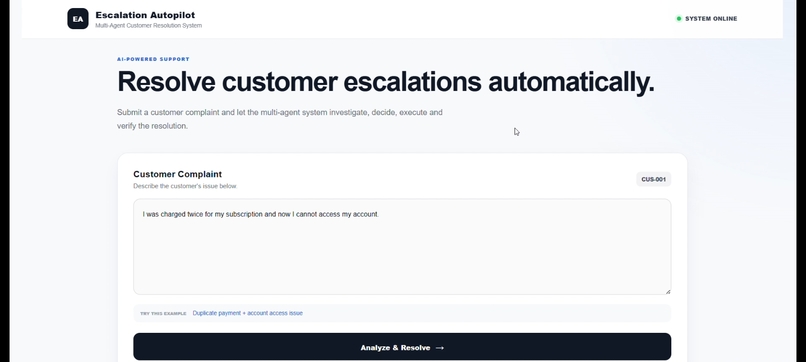
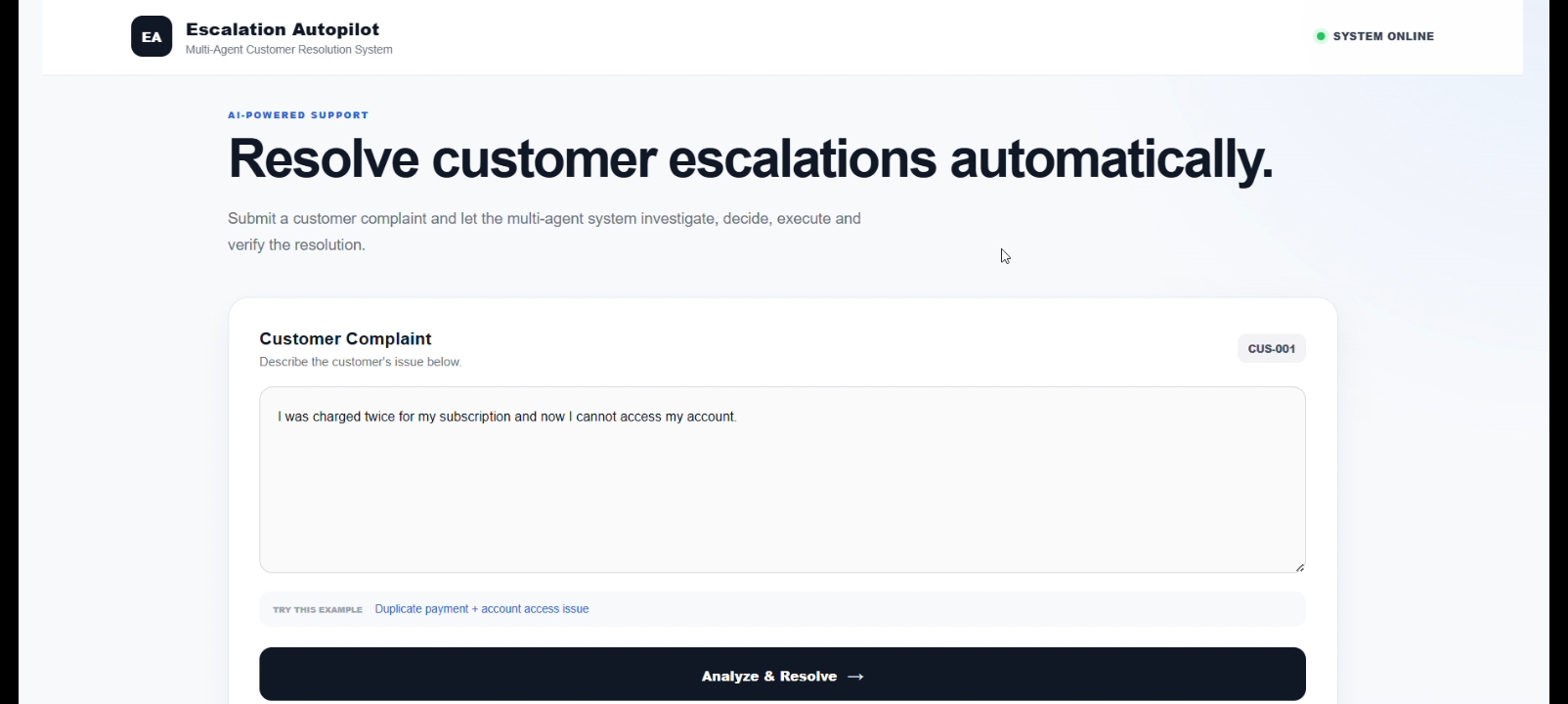
Customer Complaint - AI-powered escalation analysis
-
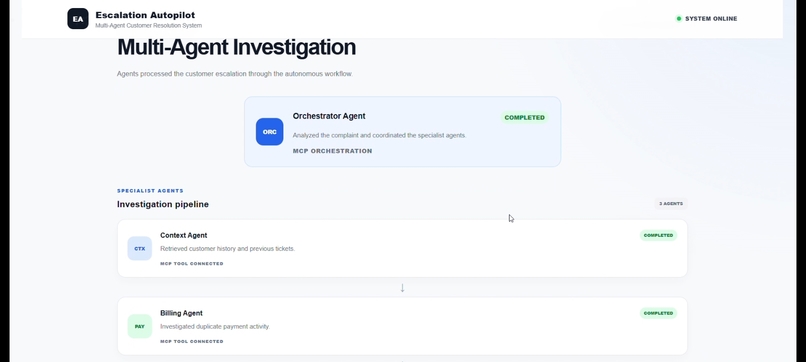
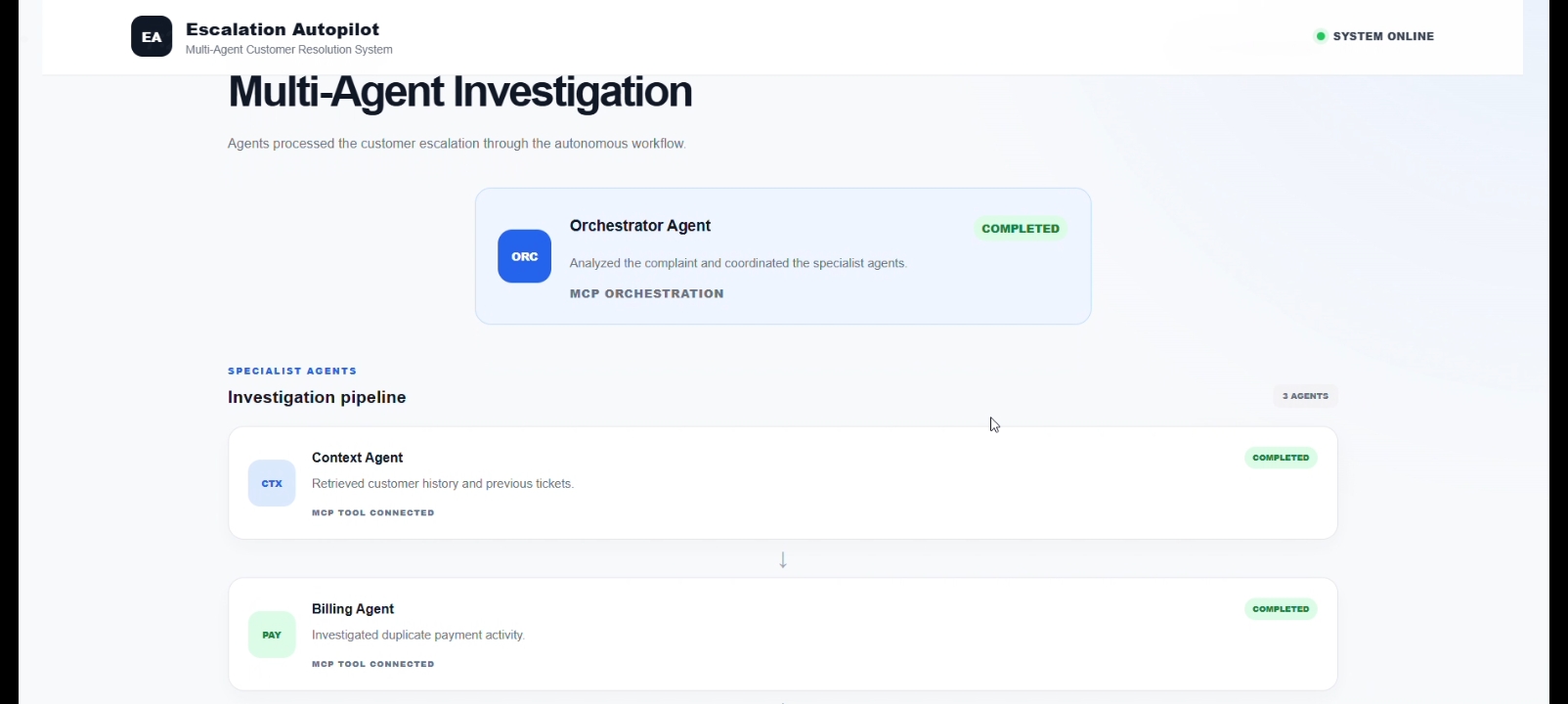
Live Multi-Agent Orchestration - Context, Billing and Technical Agents
-
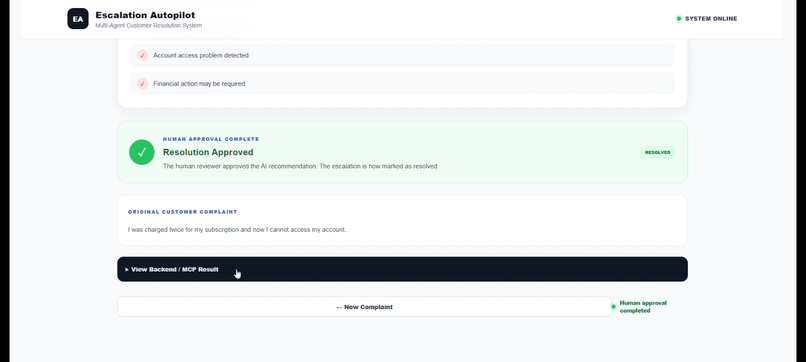
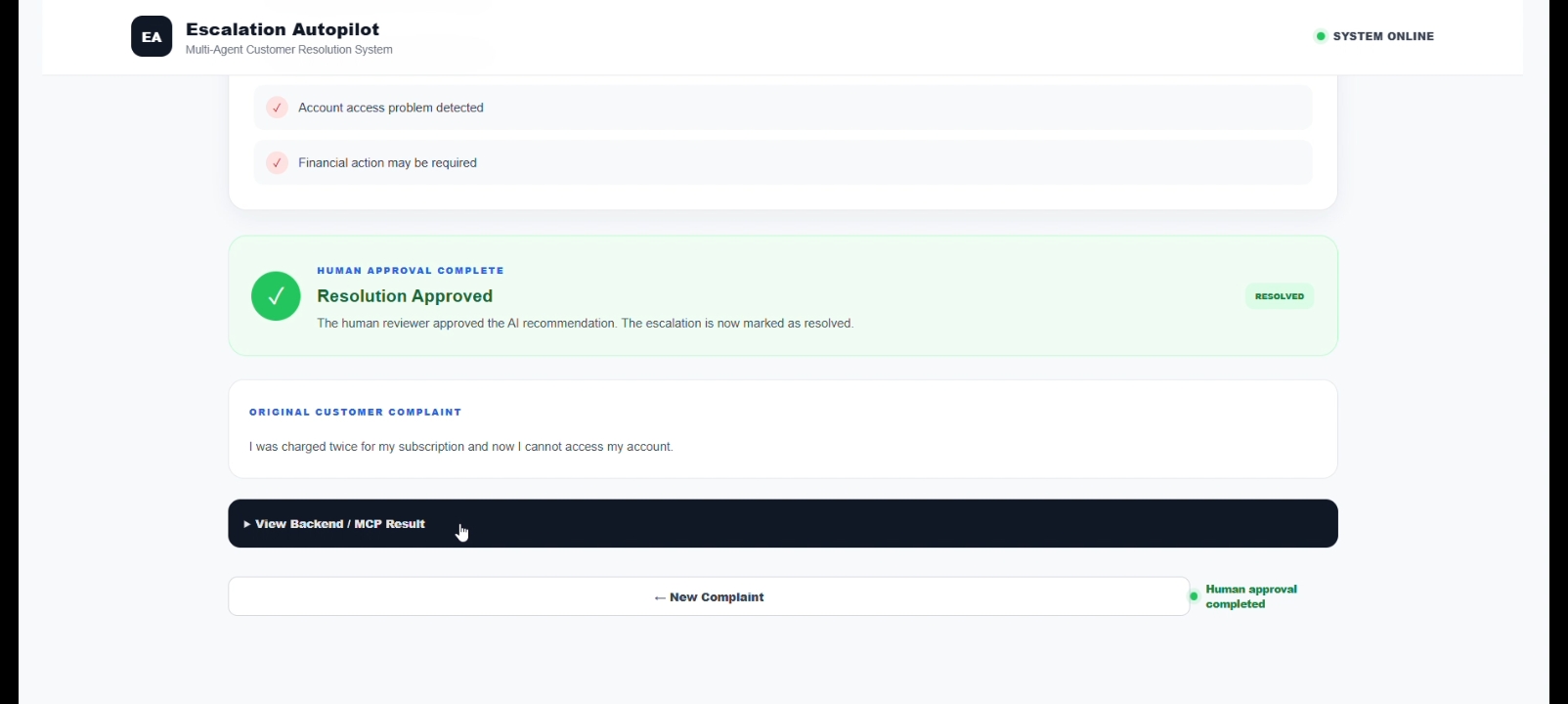
Risk Analysis and Human Support Handoff
Inspiration:
Customer support teams often spend too much time investigating complex escalations across customer history, billing, account status, and technical issues. We wanted to build an AI system that could perform this investigation before involving a human.
What it does:
Customer Escalation Autopilot uses multiple AI agents to investigate customer complaints. An Orchestrator coordinates Context, Billing, and Technical Agents. The system evaluates risk, recommends actions, verifies the workflow, and prepares a complete Human Handoff Summary for high-risk cases.
How we built it:
We built a multi-agent architecture using JavaScript, React, Node.js, and MCP-based tools. The workflow connects specialist agents with customer, account, billing, and notification tools. The frontend visualizes live agent execution, risk analysis, verification, and human approval.
Challenges we ran into:
One of our main challenges was coordinating multiple agents while keeping the workflow understandable and reliable. We also had to connect the frontend, backend, and MCP tools into a single end-to-end workflow.
Accomplishments that we're proud:
We built a working multi-agent customer escalation workflow with live agent execution, risk visualization, verification, and a structured human handoff. The system doesn't simply escalate a ticket- it investigates it first and gives the human decision-maker the information needed to act.
What we learned:
We learned how multi-agent orchestration, MCP tools, human-in-the-loop workflows, and frontend visualization can work together to solve a practical customer-support problem.
Built With
- agent
- api
- express.js
- javascript
- mcp
- multi-agent
- node.js
- react
- rest
- systems
- vite

Log in or sign up for Devpost to join the conversation.