Inspiration
Most people don't know how long their savings would last if they lost their job or faced a surprise bill. Banks have the data to show this, but customers rarely see it. We wanted a tool that answers one question: how big is my cushion, and what happens if something goes wrong?
What it does
Built for the Tangerine "Resilience Rewired" track: Cushion knows the customer, takes a shock, and makes a plan.
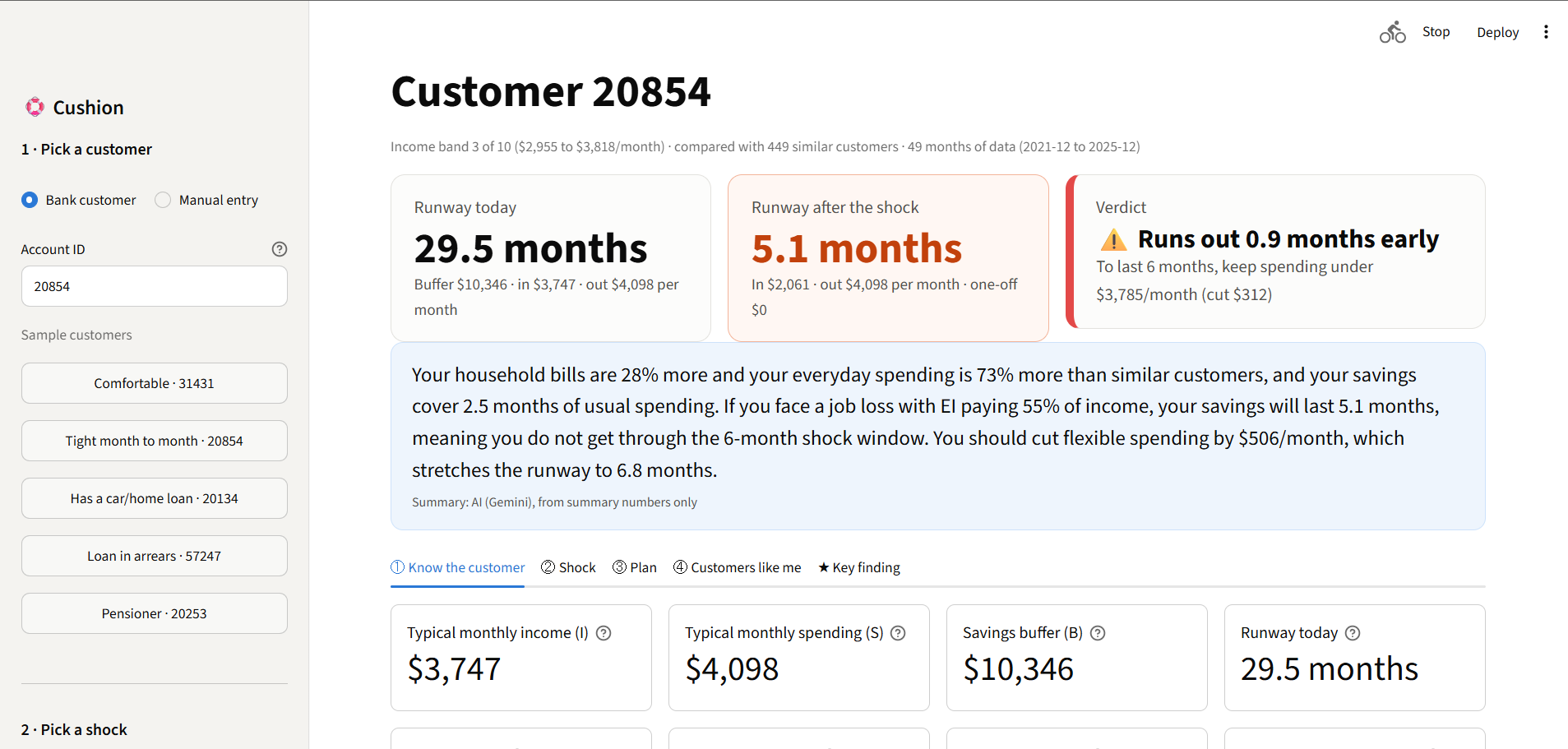
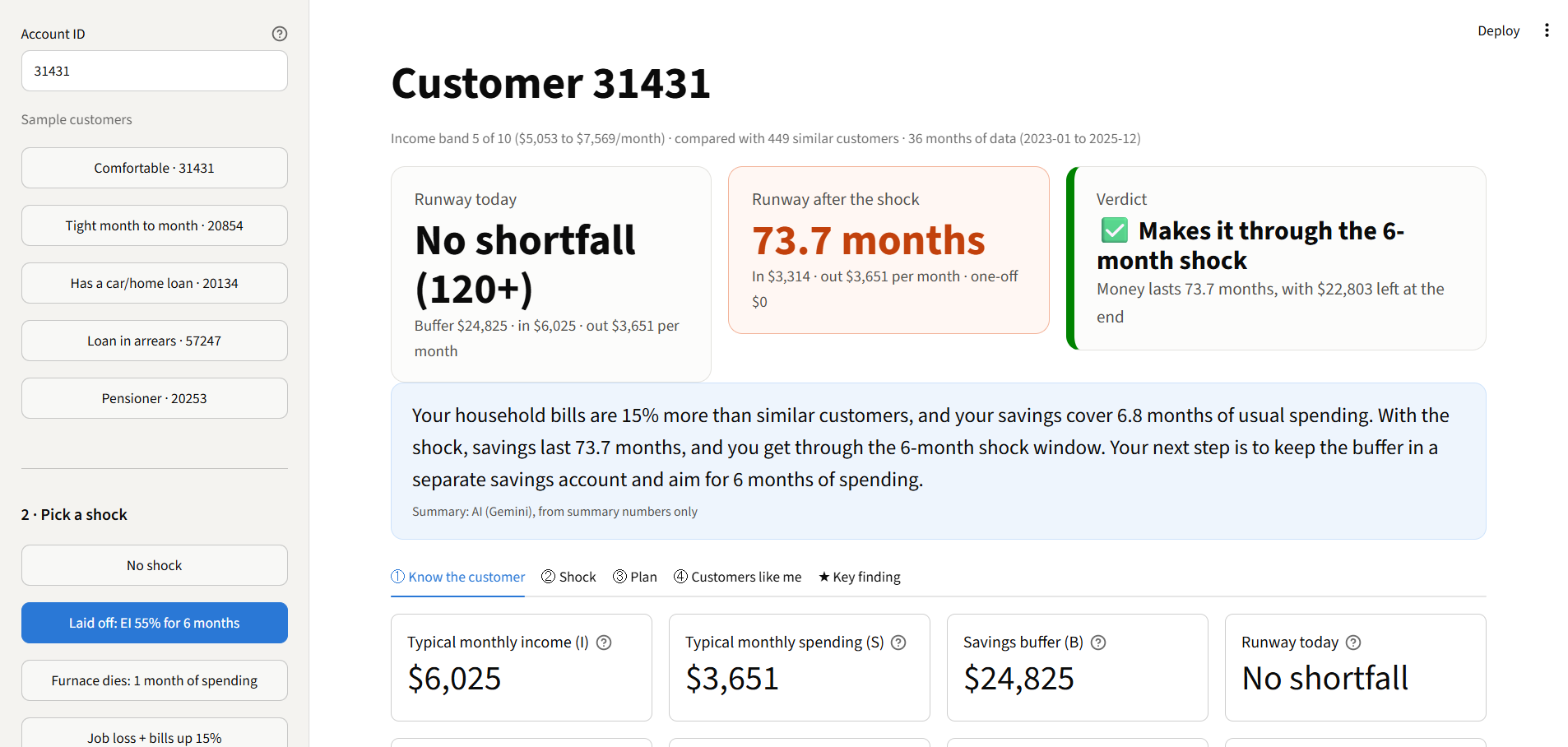
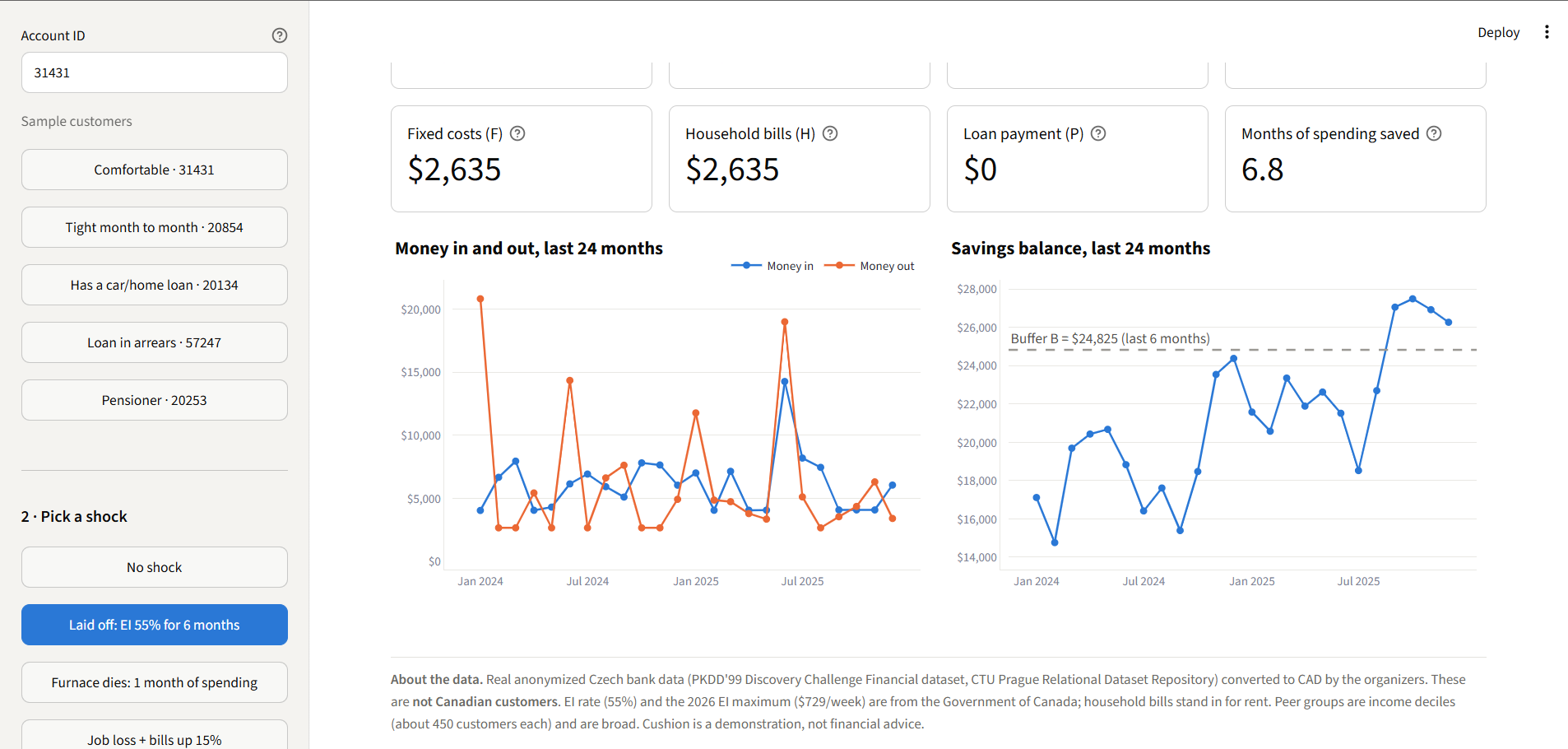
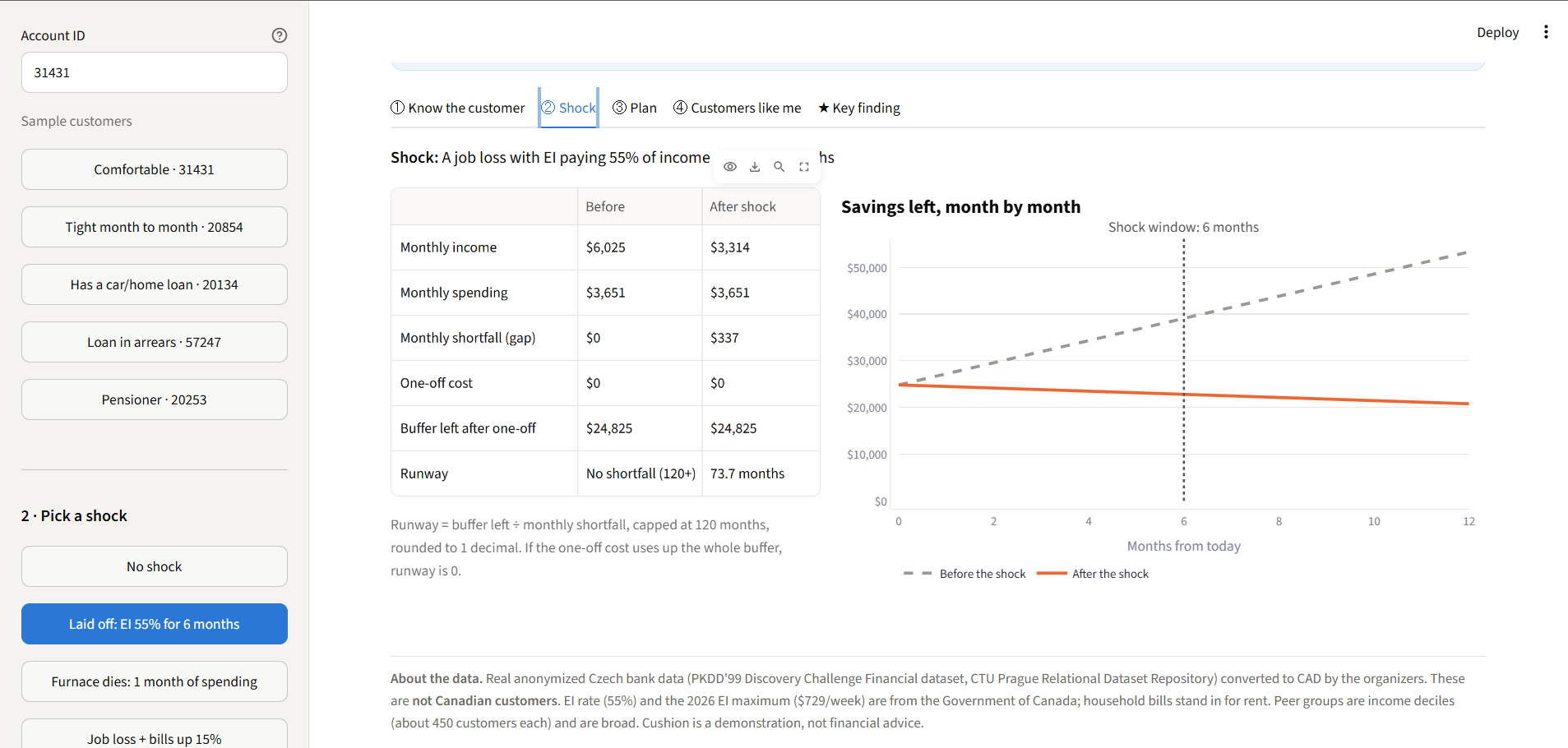
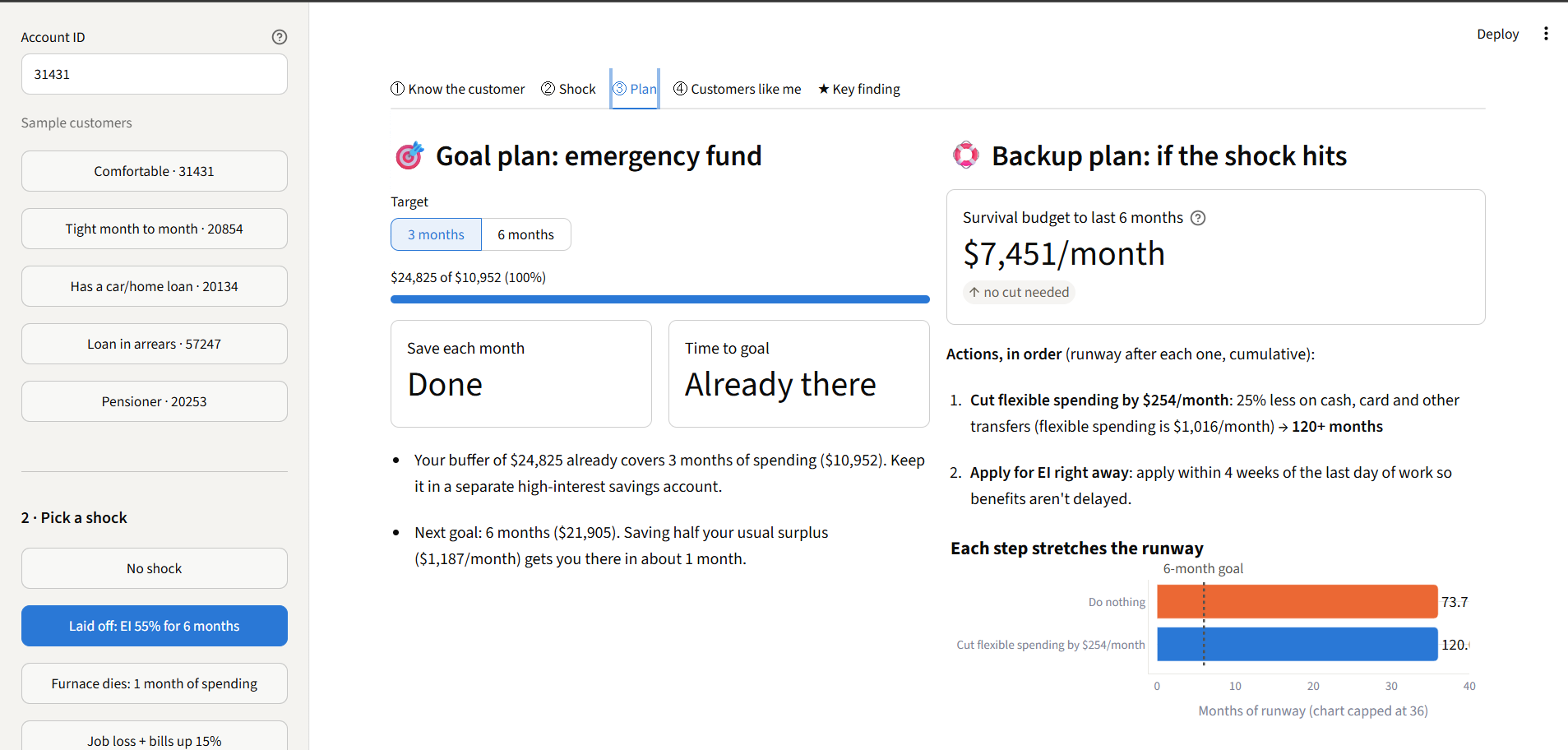
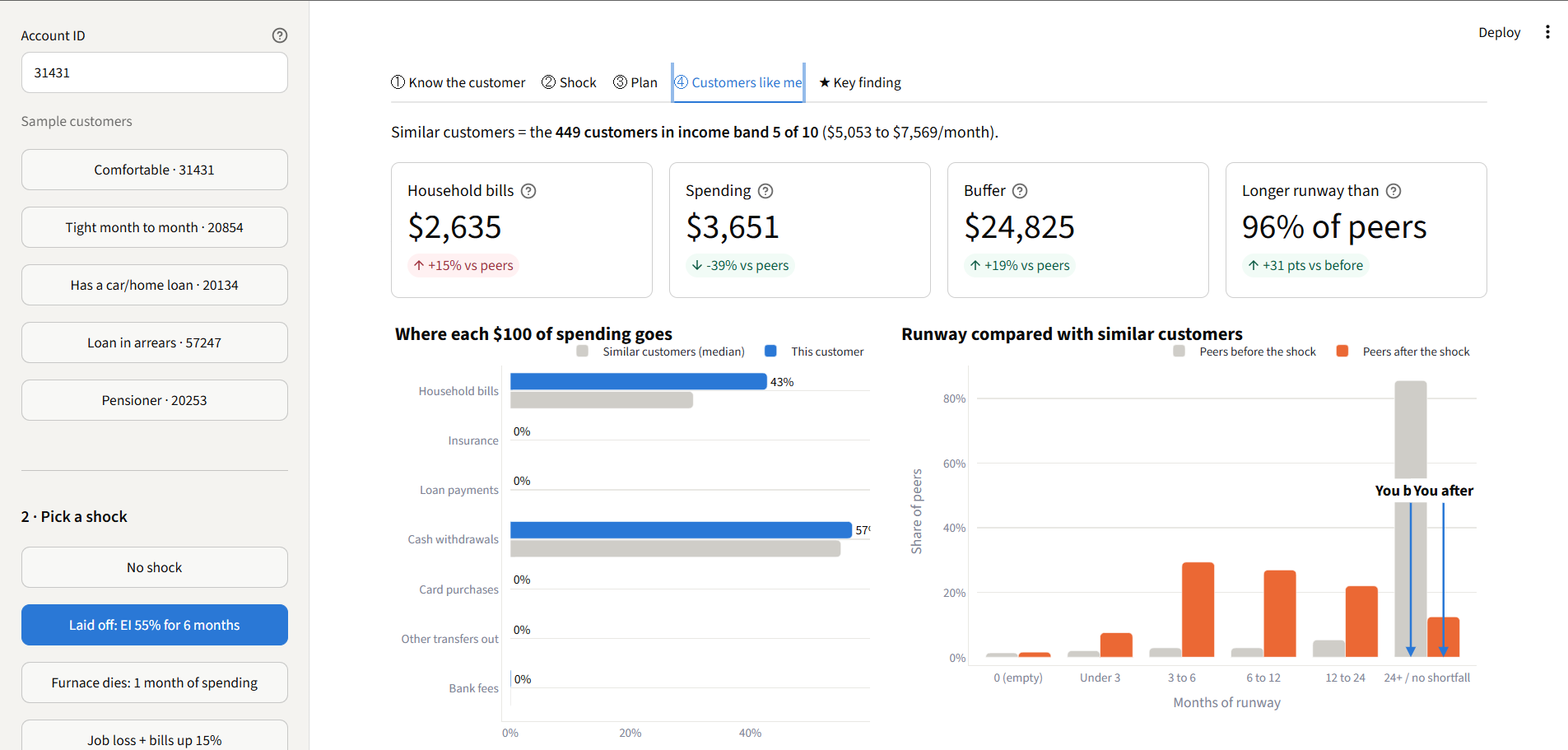
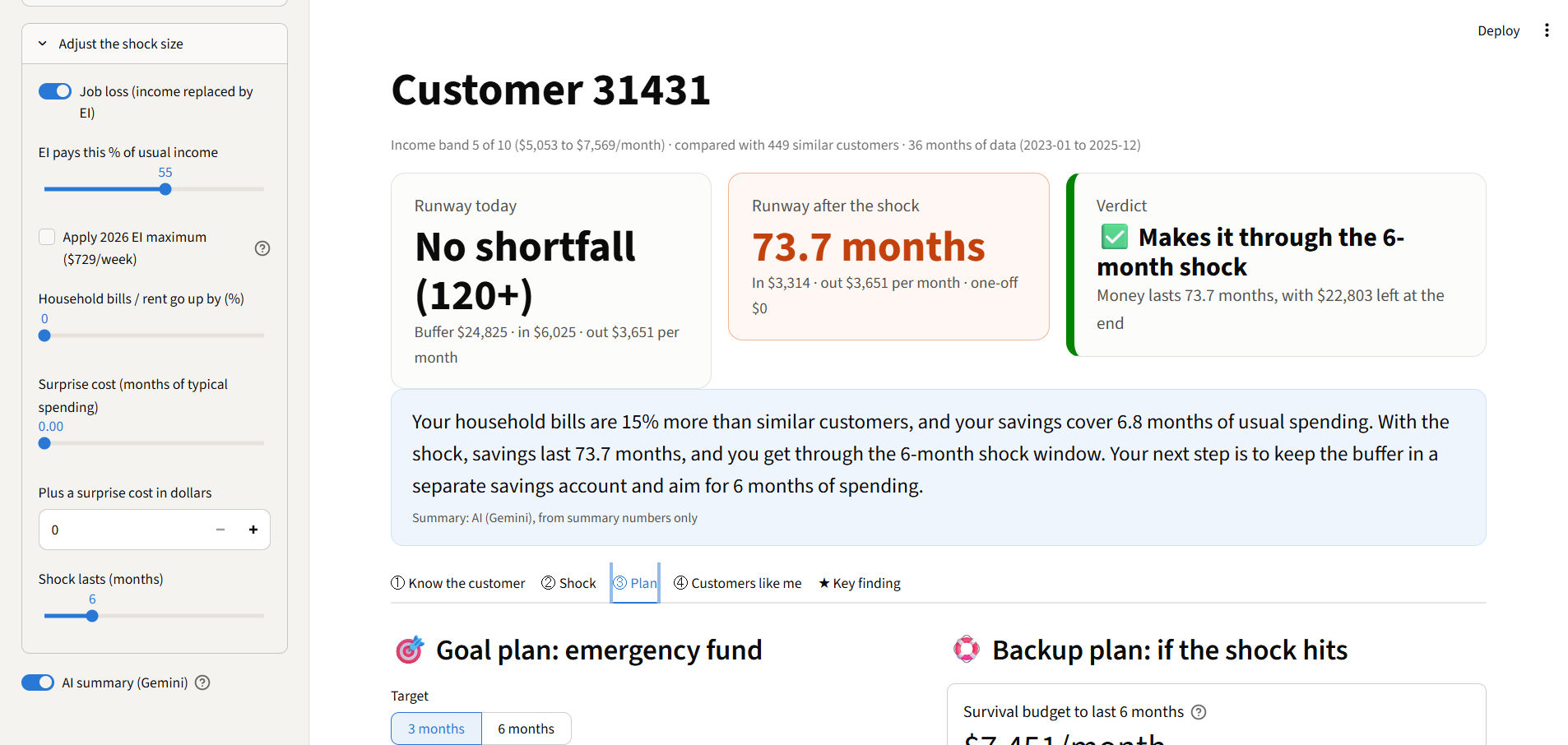
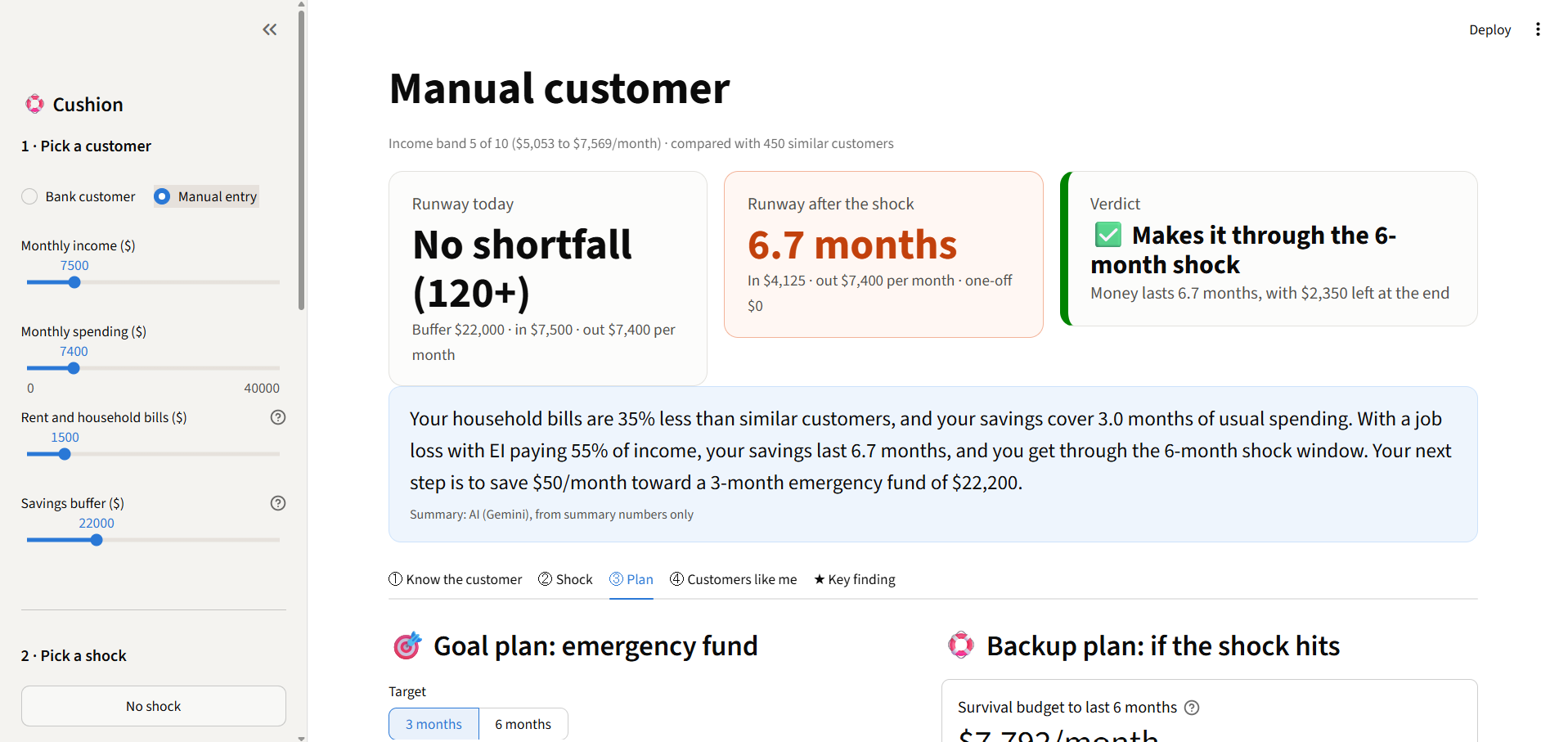
Cushion takes a bank customer's account and shows their income, bills, spending, and savings buffer. It applies a shock, such as a job loss with Employment Insurance at 55% of income, higher household bills, or a one-off repair, and recalculates how many months the customer's money would last. It builds a goal plan for growing an emergency fund and a backup plan for if the shock hits. It also compares the customer to others with similar incomes, with charts and a plain-English summary.
How I built it
Python, pandas, and Streamlit for the app, and Plotly for the charts. All numbers use the track's definitions for income, spending, buffer, and runway, and the calculations are covered by tests. The Gemini API writes the summaries, with a fallback so the app still works without it. Shock sizes use the Canadian sources listed in the track README. The data is the Tangerine track dataset of anonymized bank data (PKDD'99 Financial dataset, CTU Prague Relational Dataset Repository), converted to CAD.
Challenges I ran into
Working solo against a 24-hour deadline meant keeping the scope tight. The hardest parts were matching the judges' exact runway definitions, making the app fast enough for a live demo, and handling accounts with little history or no loans.
Accomplishments that I'm proud of
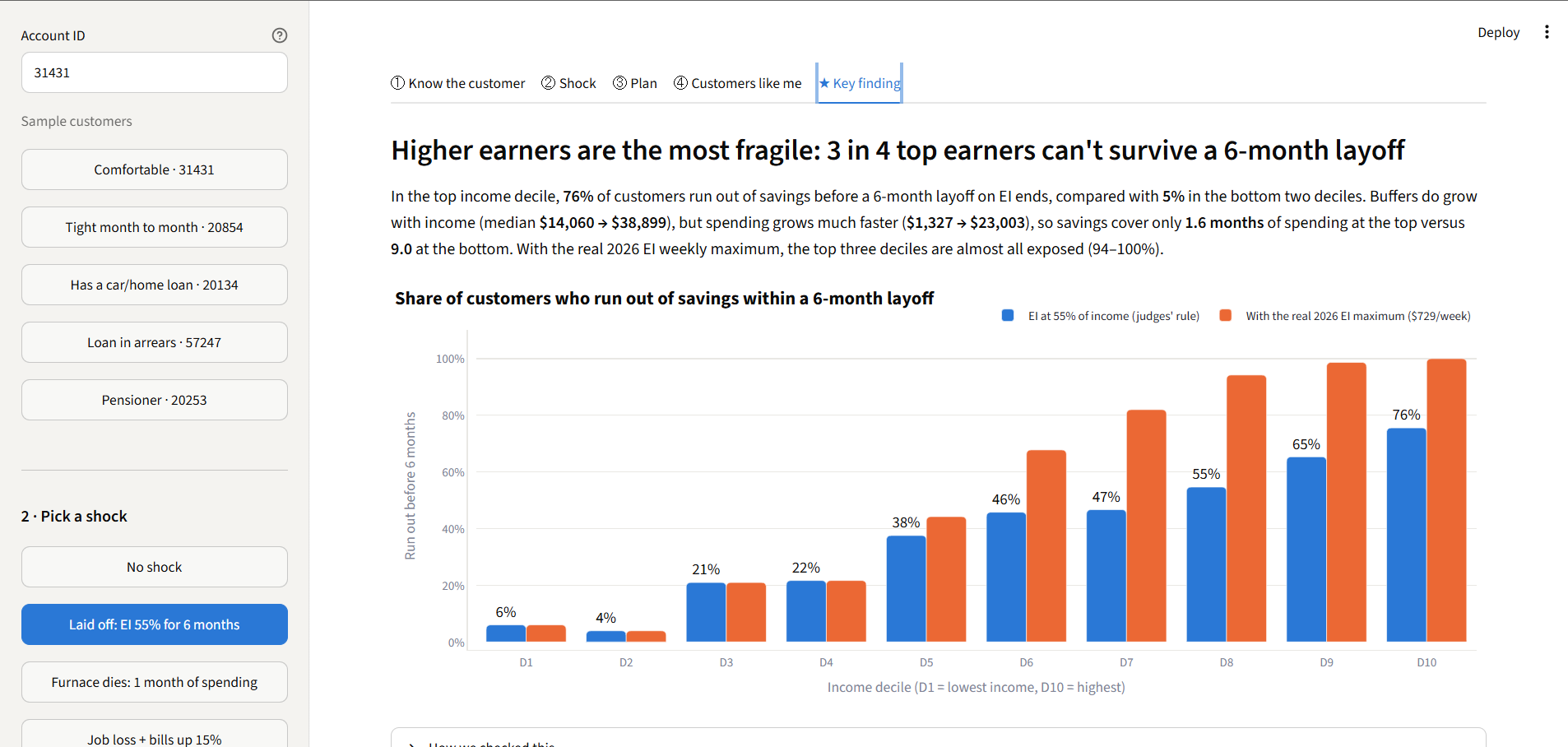
A working tool that handles any account and any shock in seconds, with a clear before-and-after view. [Add one finding you saw in the app, for example which kind of customer has the shortest runway.]
What I learned
How much a customer's cushion depends on fixed costs and income stability, and how important it is to explain every number clearly to a non-technical user.
What's next for Cushion
Add more shock types, let customers set their own savings goals, and use real Canadian rent and EI benchmarks. The current data comes from a Czech bank with amounts converted to CAD, so it doesn't represent Canadian customers, and some income groups have few peers.
Built With
- claude-code
- gemini-api
- python
