Inspiration
- NASA ocean data shows large-scale structure, but lacks fine detail.
- We wanted to turn that into something you can move through and experience, not just look at.
What it does
- Visualizes ocean life and motion using:
- chlorophyll (structure)
- currents (direction)
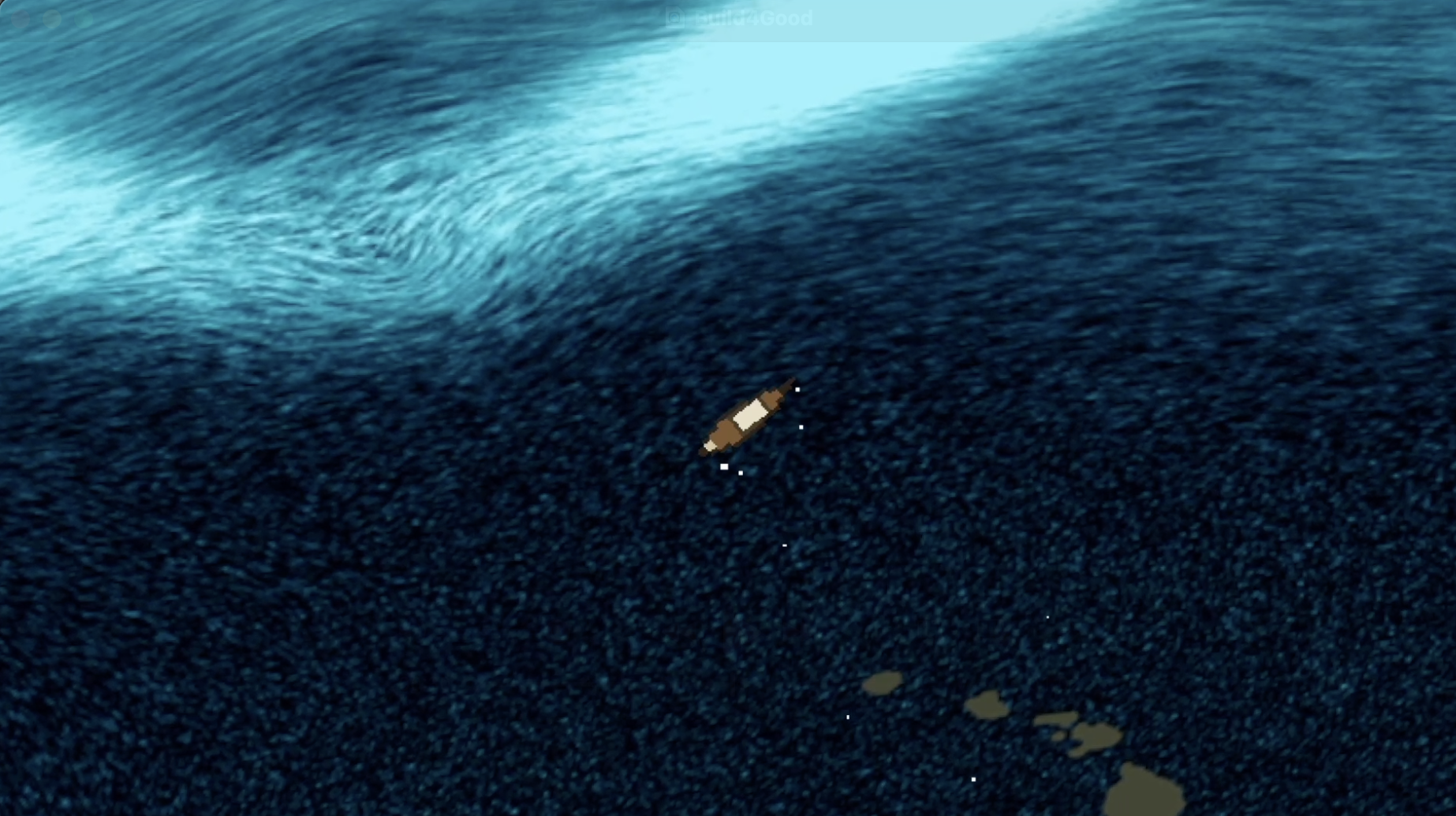
- Lets you drive a boat through the system, with particles reinforcing motion.
How we built it
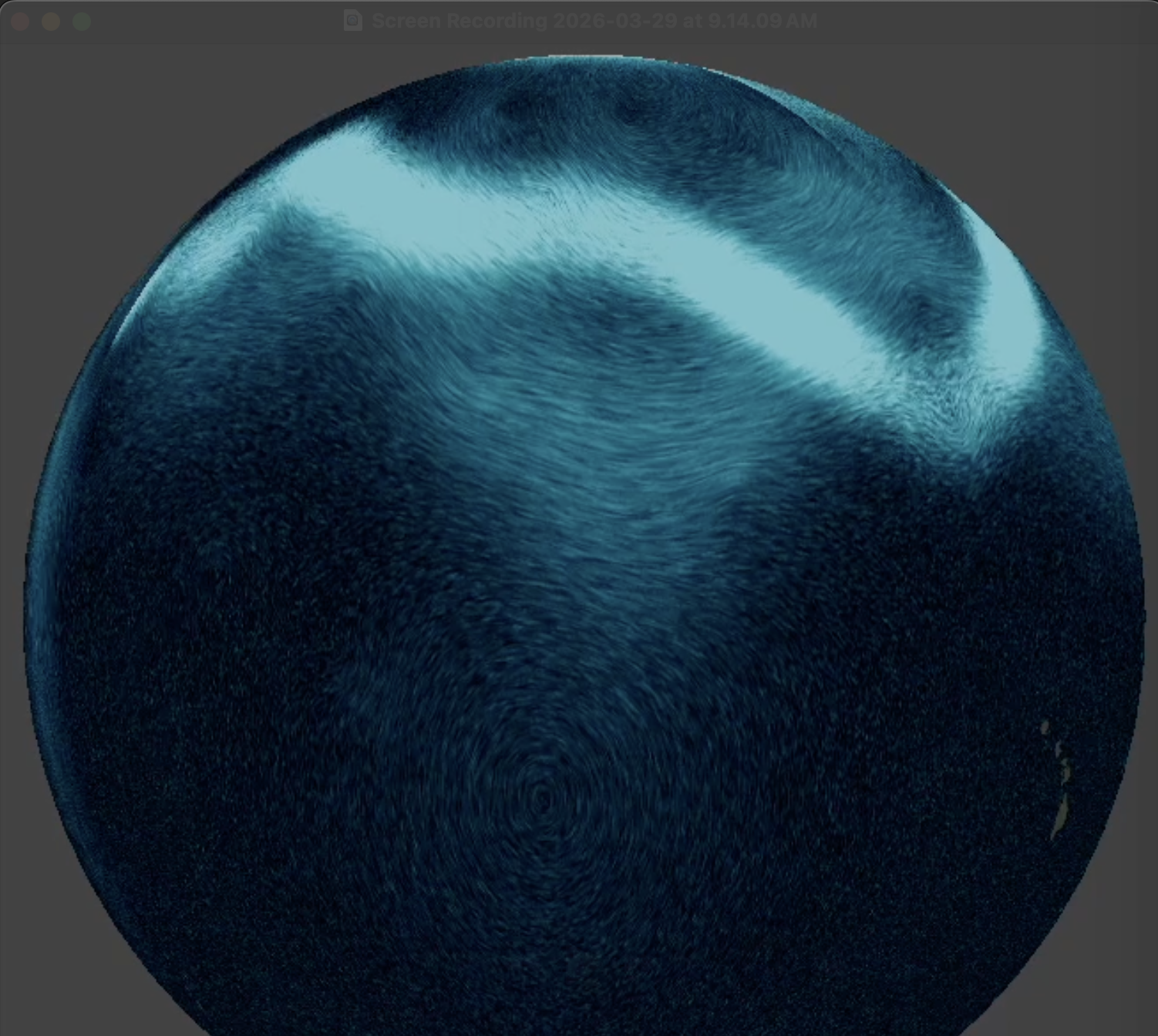
- Used NASA data as geographic + directional reference.
- Generated a synthetic field to match real ocean structure.
- Created flow using:
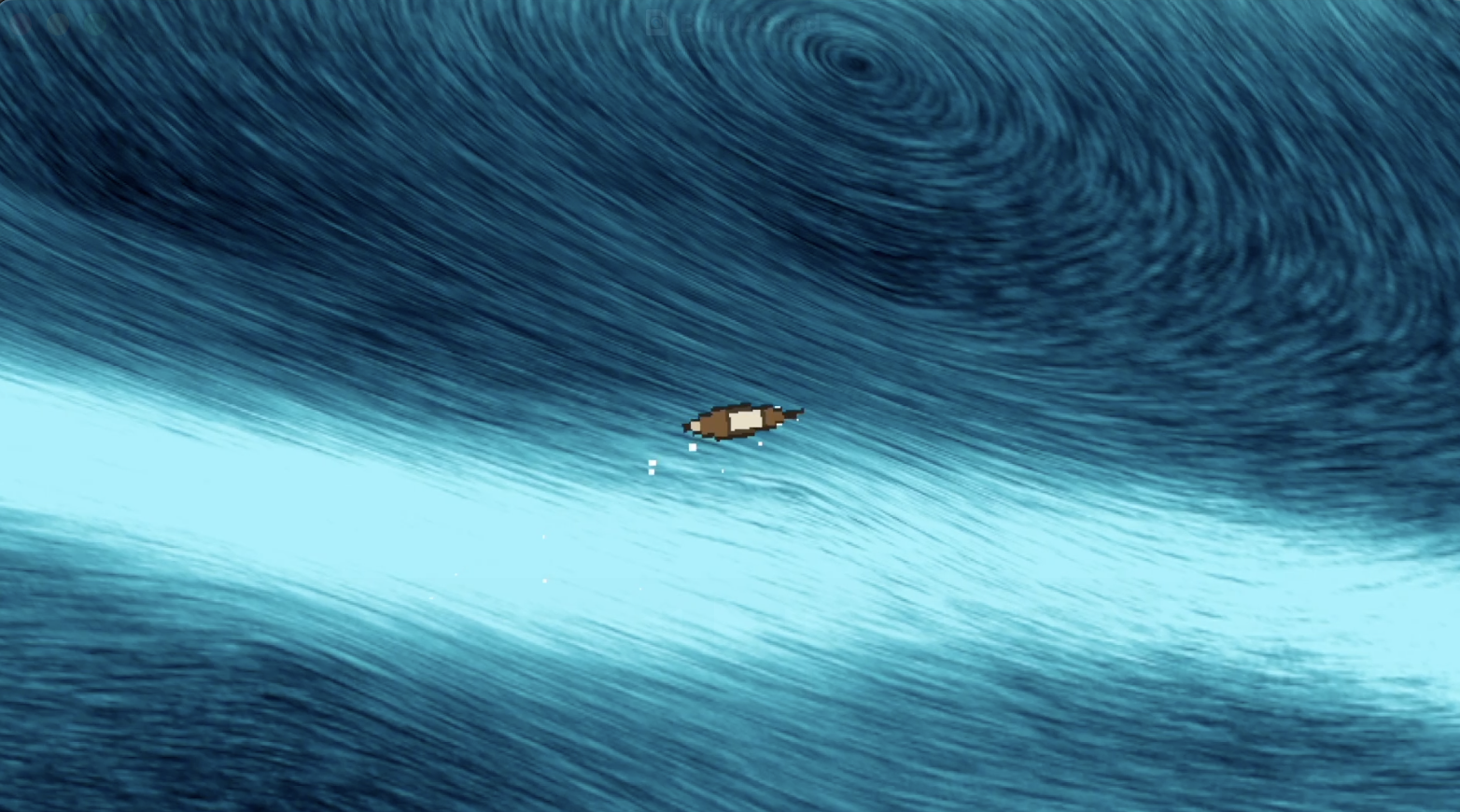
- a dominant current (Kuroshio-like)
- eddies + curl noise
- Applied LIC (line integral convolution) to produce filament structures.
- Rendered as a single shader-driven texture with animated UV distortion.
- Added particles for local motion feedback.
Challenges we ran into
- Real NASA data was too low-resolution and incomplete for visual quality.
- Direct use looked flat and blocky.
- Needed to fill in gaps without losing realism.
- Balancing accuracy vs visual clarity.
Accomplishments that we're proud of
- Turned coarse data into a visually rich, flowing system.
- Achieved thin, coherent filament structures instead of blobs.
- Built something explorable, not just viewable.
- Strong performance (single quad + shader).
What we learned
- Real data provides structure, but not visual detail.
- The most important visuals came from simulation layered on top of data.
- Techniques like LIC are critical for revealing flow structure.
- Interactivity (driving through it) makes the data intuitive.
Built With
- c#
- convolution
- hlsl
- hlsl-shaders
- integral
- kuroshio-extension-data
- line
- nasa-neo-(modis)
- numpy
- particlesystem
- pillow
- python
- rigidbody2d
- scipy
- shader-graph
- unity-(urp)
- unity-editor-scripting
- unity-input-system

Log in or sign up for Devpost to join the conversation.