
Inspiration
I've had anxiety for over 9 years. At some point I even used to wear a rubber band on my wrist, just so I'd have something to remind me to snap back into the present every time I looked at it. It worked, until it didn't. You get used to it. It fades into background noise like everything else.
I tried meditation apps. Every single one tells you to close your eyes and breathe. But for someone like me, closing my eyes is when the noise gets loudest. There's nothing to hold onto. My mind fills the silence.
I tried the discipline route too. Screen time limits, app blockers, putting my phone in another room. But we live on our phones. Fighting that felt like trying to hold water. So I stopped fighting and asked a different question: what if the device that usually pulls me out of the present could be the thing that trains me to stay in it?
I'm from Ethiopia, where mental health isn't something most people talk about openly. And where most people can't make online payments. I felt like some of my best years were slipping away while I was stuck inside my own head. So I built what I wish I'd had.
What it does
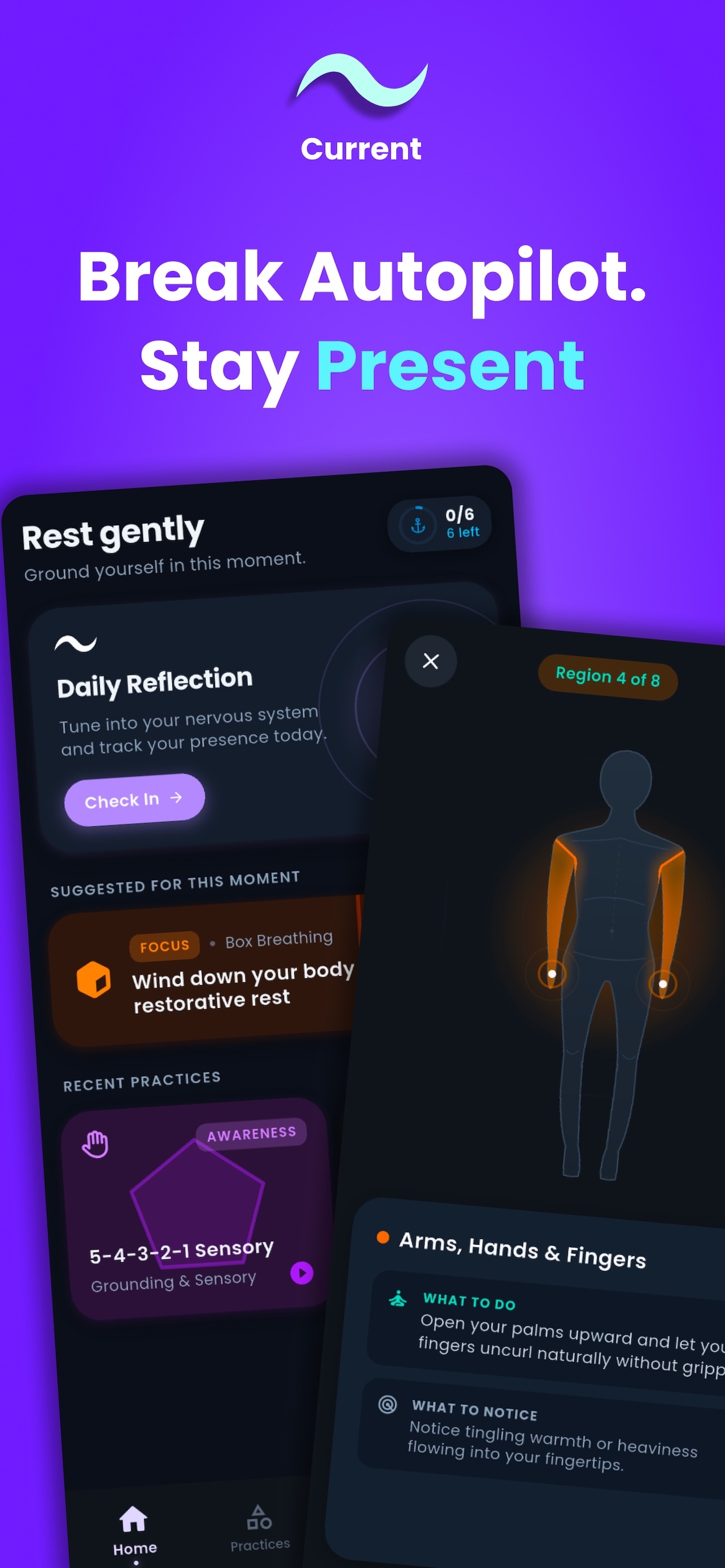
Current is a somatic grounding and breathwork app for people whose minds won't quiet down. Instead of asking you to sit still and close your eyes, it gives you something to do.
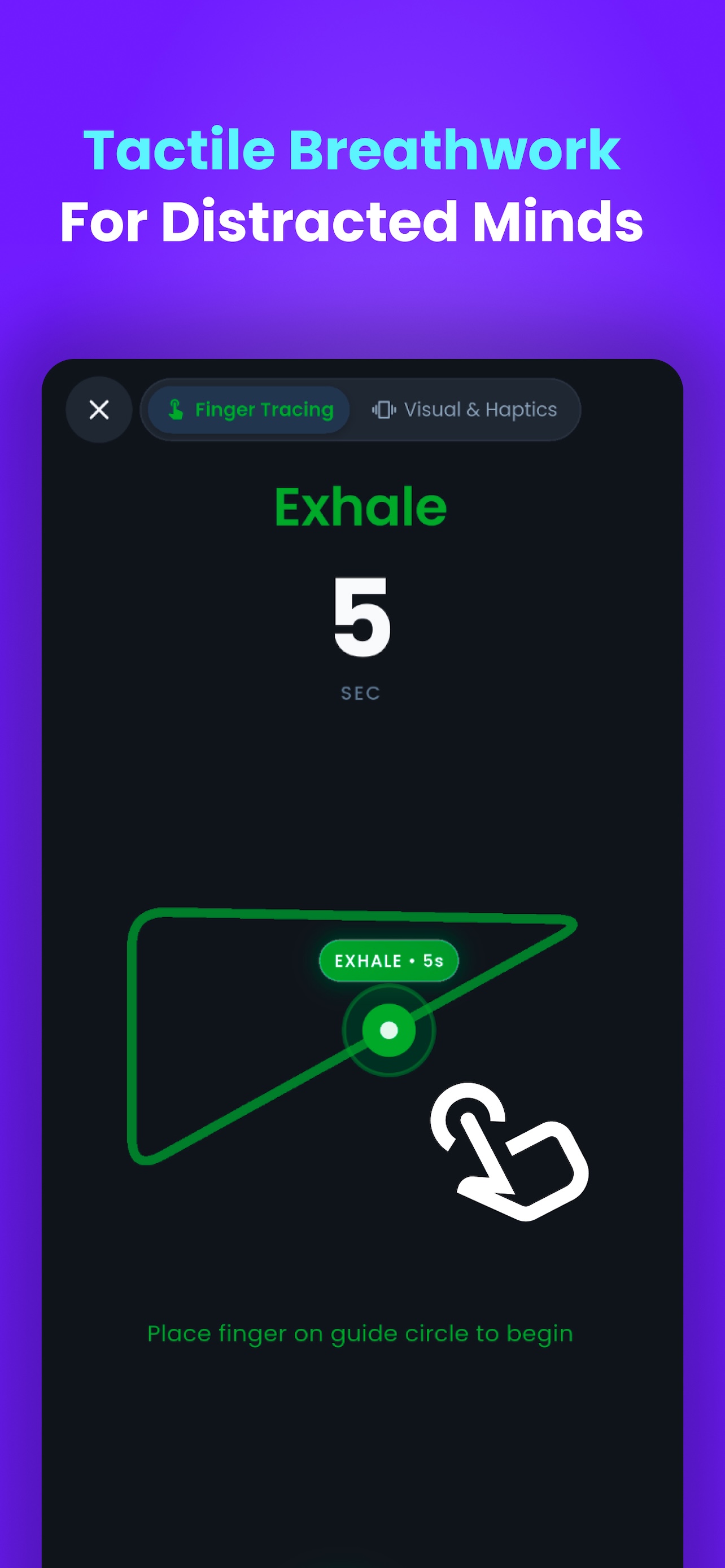
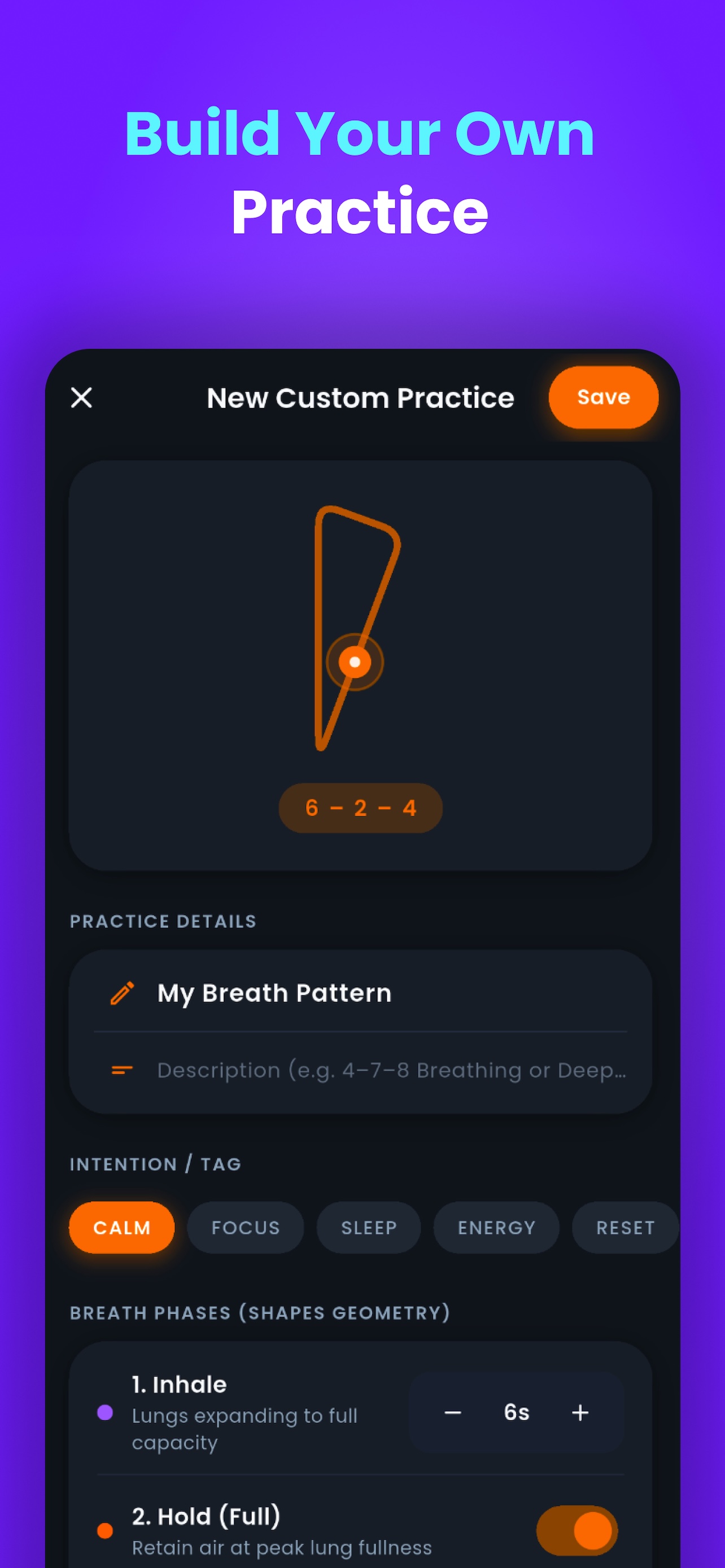
You trace geometric breathing shapes on your screen with your finger while haptics mirror your breath, building in intensity as you inhale and softening as you exhale. Your hand is moving, so your mind can't wander. It's active presence, not passive meditation.
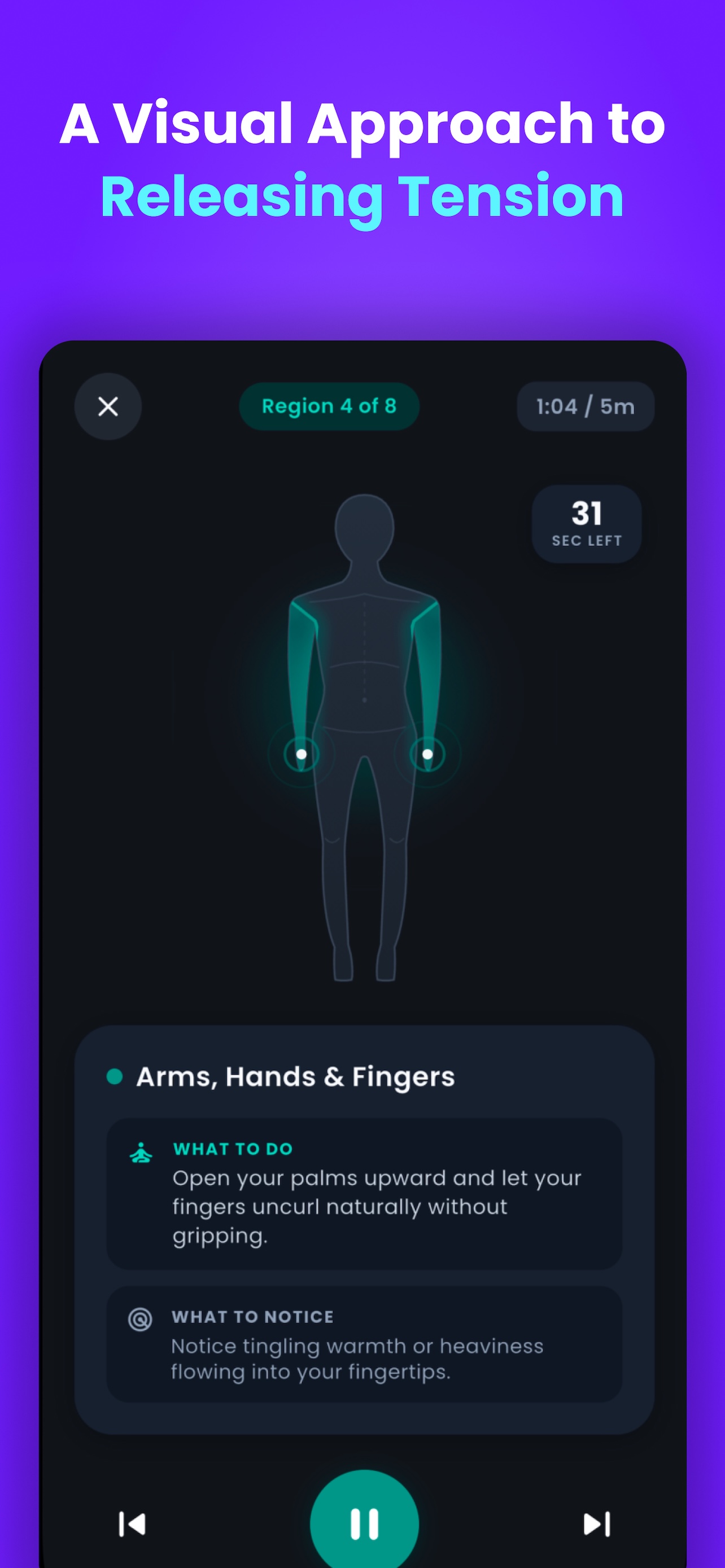
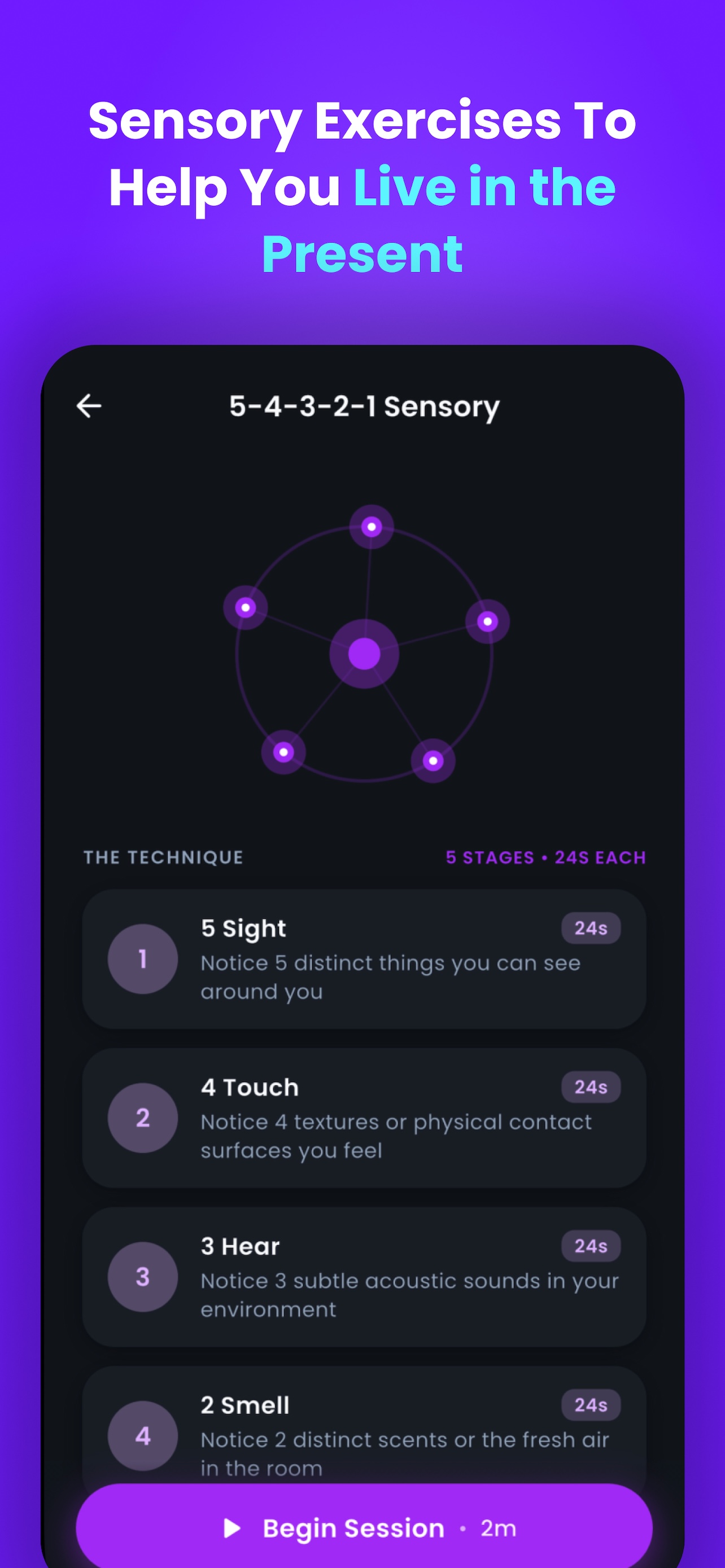
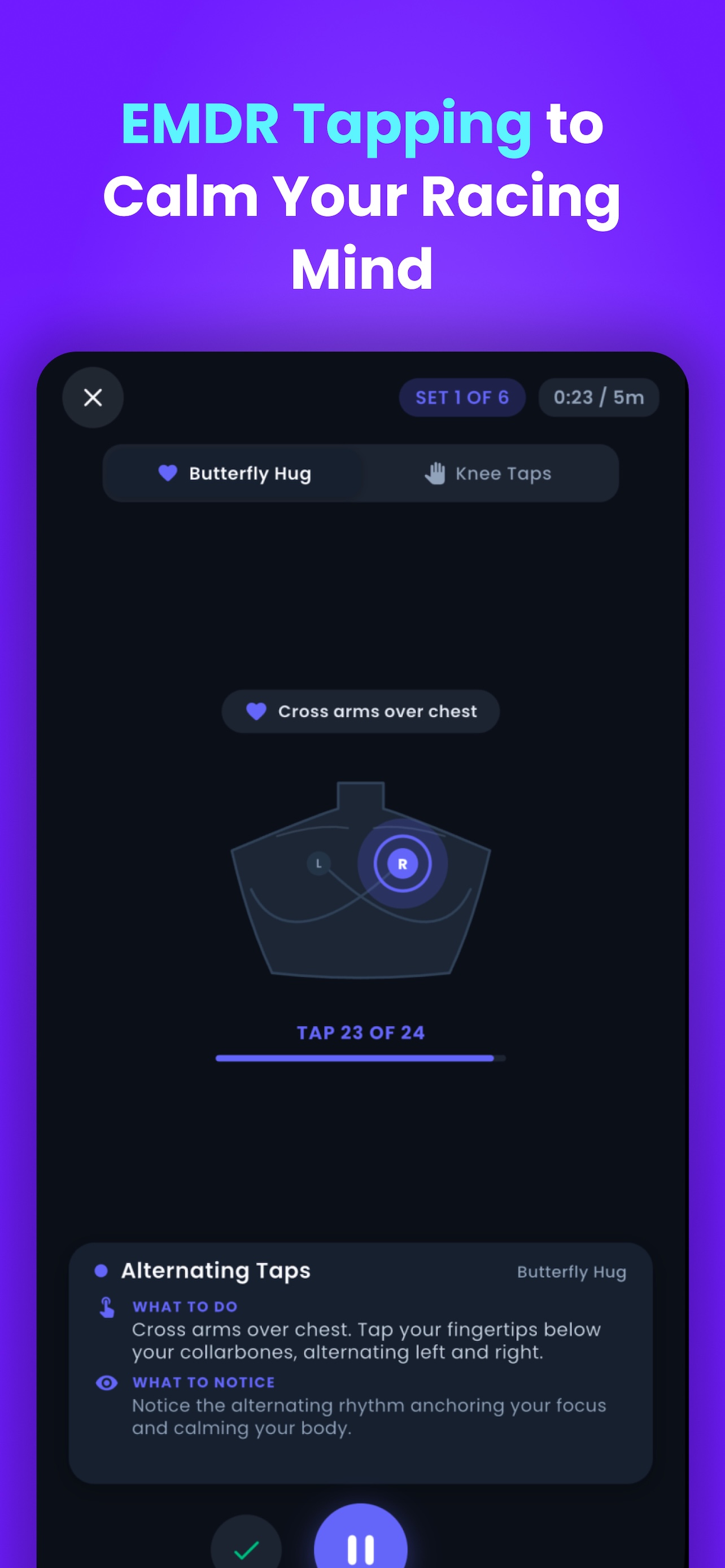
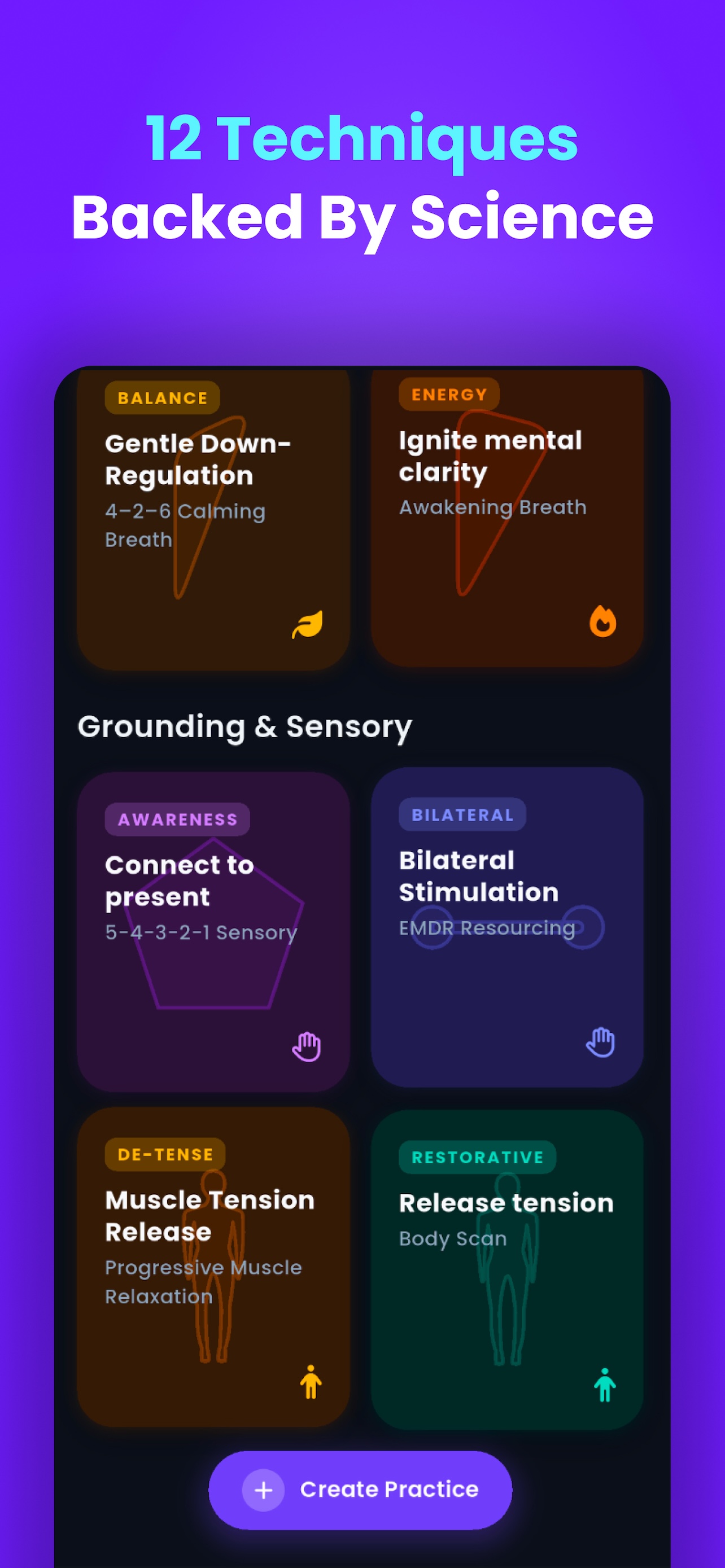
The app includes 12 research-backed practices: physiological sighing, box breathing, EMDR-inspired bilateral tapping, progressive muscle relaxation, sensory grounding, body scans, and more. Each one is paired with a clear explanation of why it works and what it does to your nervous system.
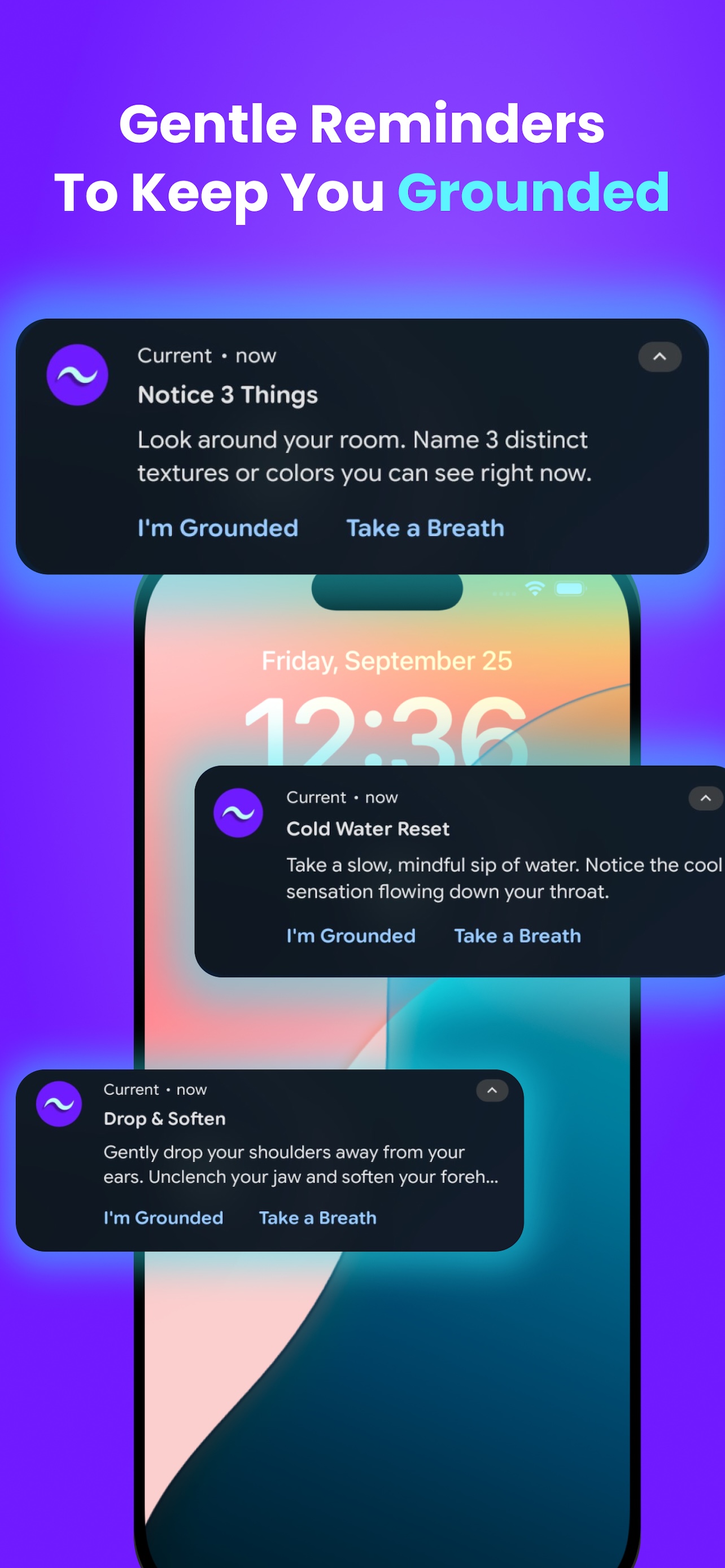
Throughout the day, Current sends randomized presence anchors: gentle nudges to drop your shoulders, unclench your jaw, take a breath, and so on. And when you engage, it registers your presence. They arrive within your waking window and are timed to be surprising.
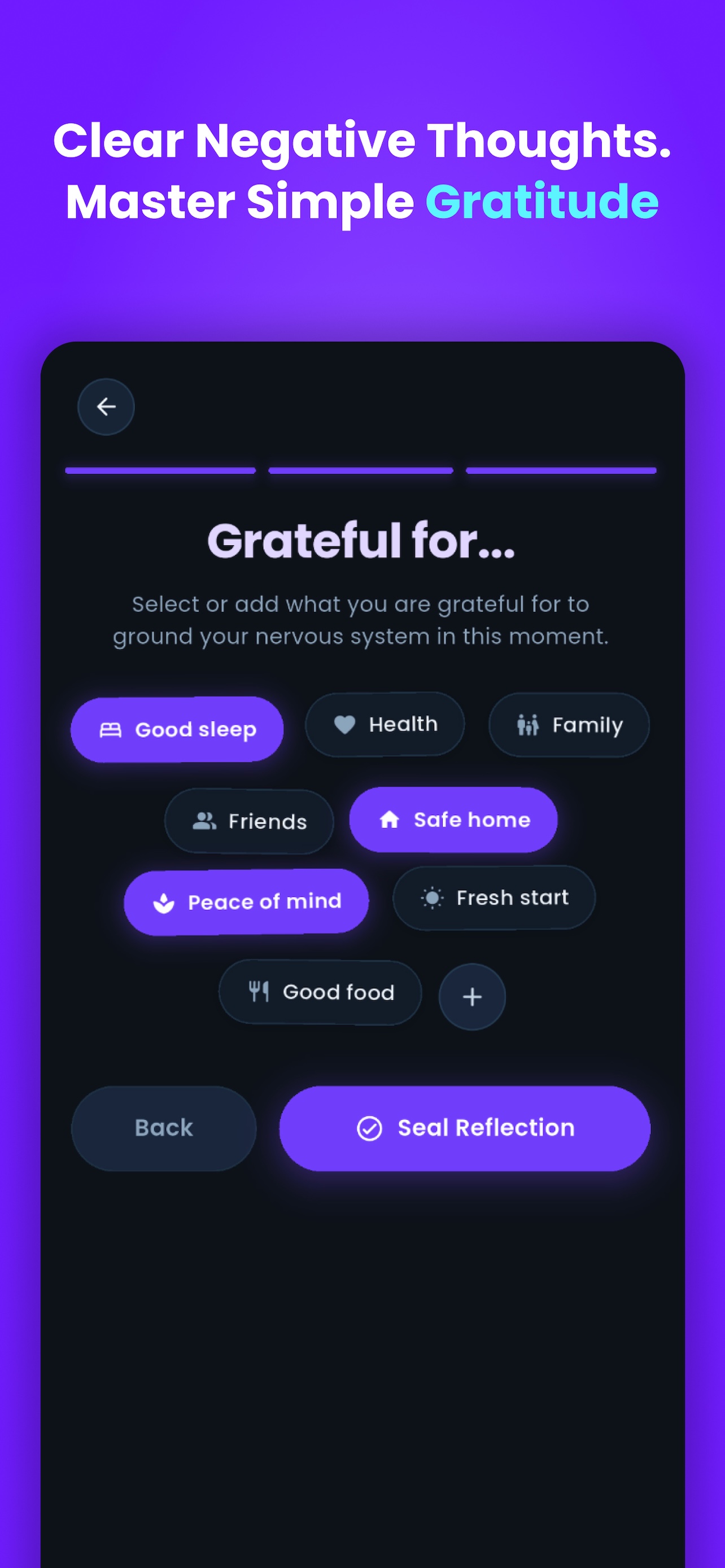
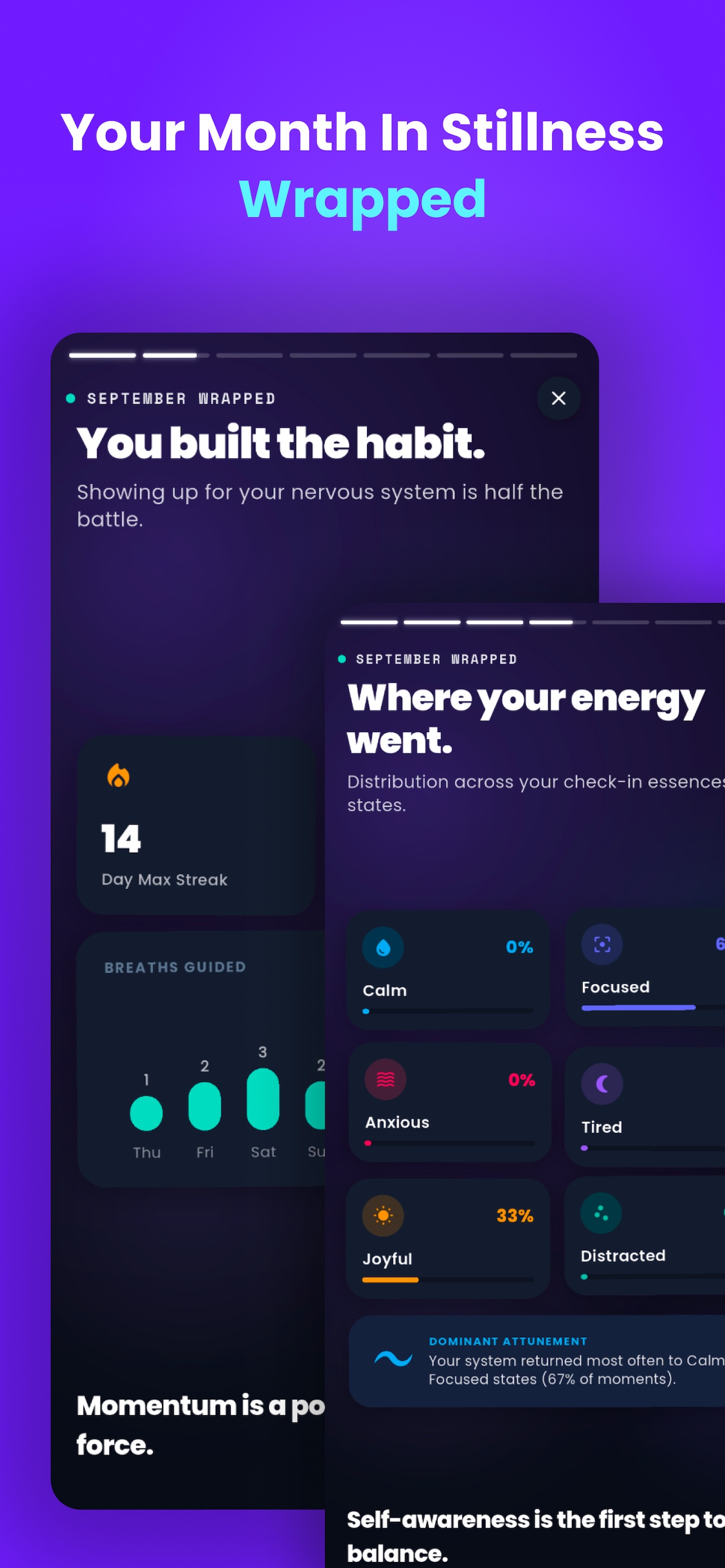
The daily check-in maps your emotional state to your nervous system and recommends the right practice. Gratitude doesn't ask you to write. It asks you to choose from floating bubbles of gratitude, because when you're overwhelmed, a blank page is a wall. Your Presence Score intentionally ignores streaks, because when you live with anxiety, the last thing you need is guilt over a missed day.
The core grounding tools are free, work completely offline, and require no account. The people who need this most shouldn't be the ones locked out.
How I built it
Current is built with Flutter for both iOS and Android from a single codebase.
The finger-tracing breathwork engine is custom-built: a real-time system that synchronizes geometric path rendering, guide bead pacing, phase-aware haptic feedback, and an elastic tether correction mechanic all in a single interactive loop. The haptic engine maps vibration intensity to breath phases so the user is anchored through sight, touch, and proprioception simultaneously.
Subscriptions are handled through RevenueCat, which made it straightforward to offer a generous free tier alongside Pro, without gating the tools someone might need during a panic episode at 2am.
The entire app works offline. No account required. No server dependency for any core feature.
Challenges I ran into
The hardest part was the finger-tracing mechanic itself. Getting the guide bead, the user's finger position, the elastic tether, the haptic pulses, and the breath phase labels to all feel like one unified experience took dozens of iterations. Early versions felt mechanical. It took a lot of testing on myself to find the pacing that actually felt calming rather than just "correct."
Haptic design was another challenge entirely. You can't just vibrate the phone and call it feedback. The intensity curve had to mirror the feeling of lungs expanding and contracting, which meant building a custom haptic engine that ramps smoothly across breath phases instead of firing discrete pulses.
Making the onboarding prove the app's premise without explaining it was tricky. The Lissajous Dampener, where a chaotic wave calms under your touch, went through several versions before it felt like a genuine "aha" moment rather than a gimmick.
And honestly, building a mental health tool from a place where mental health isn't openly discussed added its own weight. Every feature decision carried personal stakes. There was no detachment.
Accomplishments that I'm proud of
The moment someone opens Current for the first time and presses the Lissajous Dampener, watching chaos settle into calm under their finger, that's the moment I'm most proud of. The onboarding doesn't explain the app. It is the app. By the time you reach the home screen, you've already felt why this approach works.
I'm proud that the free tier is genuinely useful. Not a watered-down preview, but a real set of grounding tools that someone in crisis can use without ever paying or signing up.
I'm proud of the elastic tether mechanic. When you drift off-pace during a breathing exercise, a stretchy line gently appears between your finger and the guide bead, and when you correct, it snaps back softly. Correction feels like returning, not failing. That distinction matters when your users are already anxious.
And I'm proud of what the app chooses not to do. No streaks. No guilt. No "you missed yesterday." Just a quiet celebration of every moment you chose to show up.
What I learned
I learned that designing for anxious people means questioning every pattern that "normal" apps take for granted. Streaks motivate most users, but they devastate someone already struggling with self-worth. Blank text fields feel neutral to most people, but to someone overwhelmed, they're a wall. Closing your eyes is relaxing for most, but for an anxious mind, it's an invitation for the noise to take over.
I learned that haptics are an entire design language most apps ignore. The difference between a generic buzz and a vibration that mirrors your breath is the difference between a notification and a grounding anchor.
I learned that showing people why a technique works matters more than telling them to do it. Especially in communities where mental health is misunderstood, the science gives people language and legitimacy to take their own wellbeing seriously.
And I learned that building something this personal is exhausting and rewarding in equal measure. Every feature in Current came from something I actually needed. That made the decisions harder, but it made the product honest.
What's next for Current: Grounding & Breath
The most natural next step is bringing Current to the wrist. Apple Watch and Wear OS support would let the core grounding mechanics, haptic breathing guidance and presence anchors, live where they're most useful: already on your body, always accessible, no phone needed. Imagine a presence anchor arriving as a gentle tap on your wrist during a stressful meeting, with a quick breathing exercise you can trace right there on the watch face. The haptic engine already exists; the watch is just a more practical surface for it.
Beyond wearables, I want to expand the practice library with community-contributed exercises, so people can share techniques that work for them. I'm also researching real-time biofeedback using heart rate data from watches to dynamically adjust breathing pace to the user's actual physiological state, not just a fixed timer.
Localization is important to me personally. I want Current available in Amharic and other languages spoken in communities where mental health resources are scarce, so the app can reach everyone who needs it.
And long-term, I'd like to partner with therapists and counselors to build a companion mode where practitioners can recommend specific exercises to their clients through the app, creating a bridge between self-guided grounding and professional care.
Current started as something I needed for myself. The goal is to make sure anyone who needs it can reach it, wherever they are, whatever's on their wrist or in their pocket.
Built With
- flutter
- revenuecat
- supabase

Log in or sign up for Devpost to join the conversation.