-
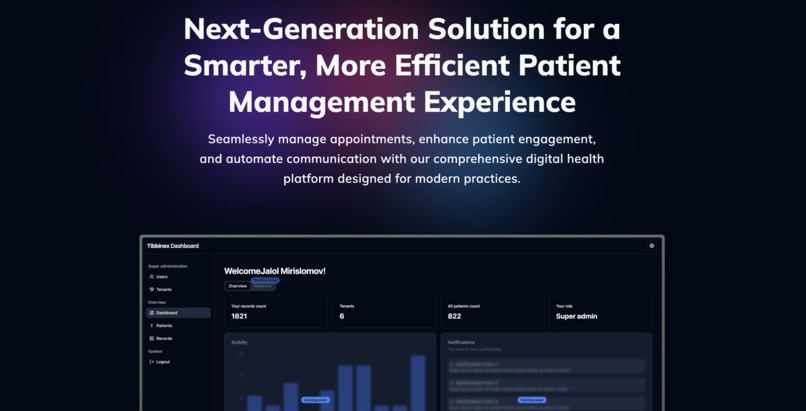
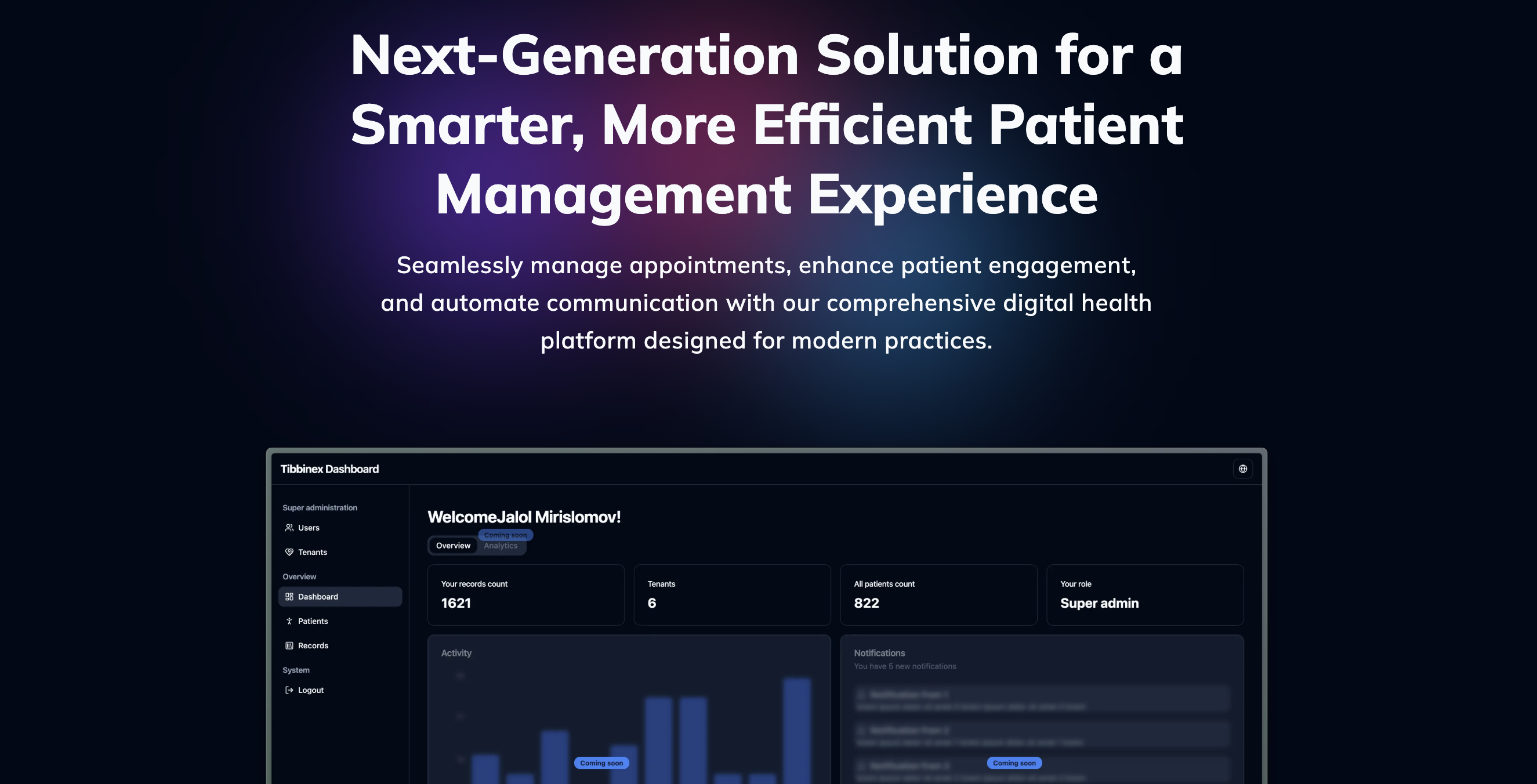
Landing
-
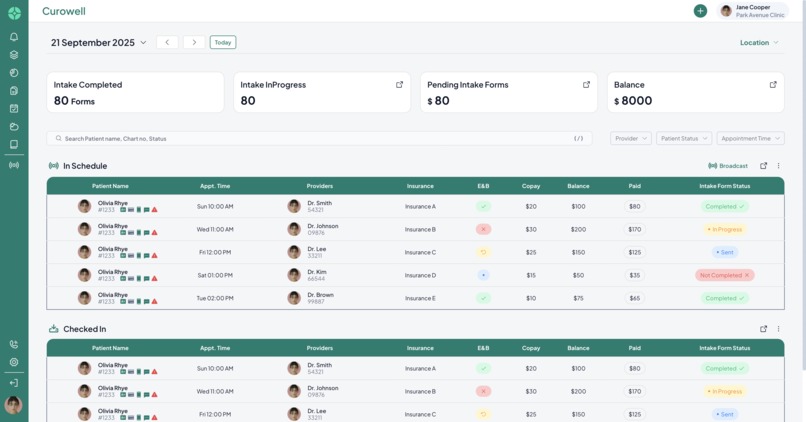
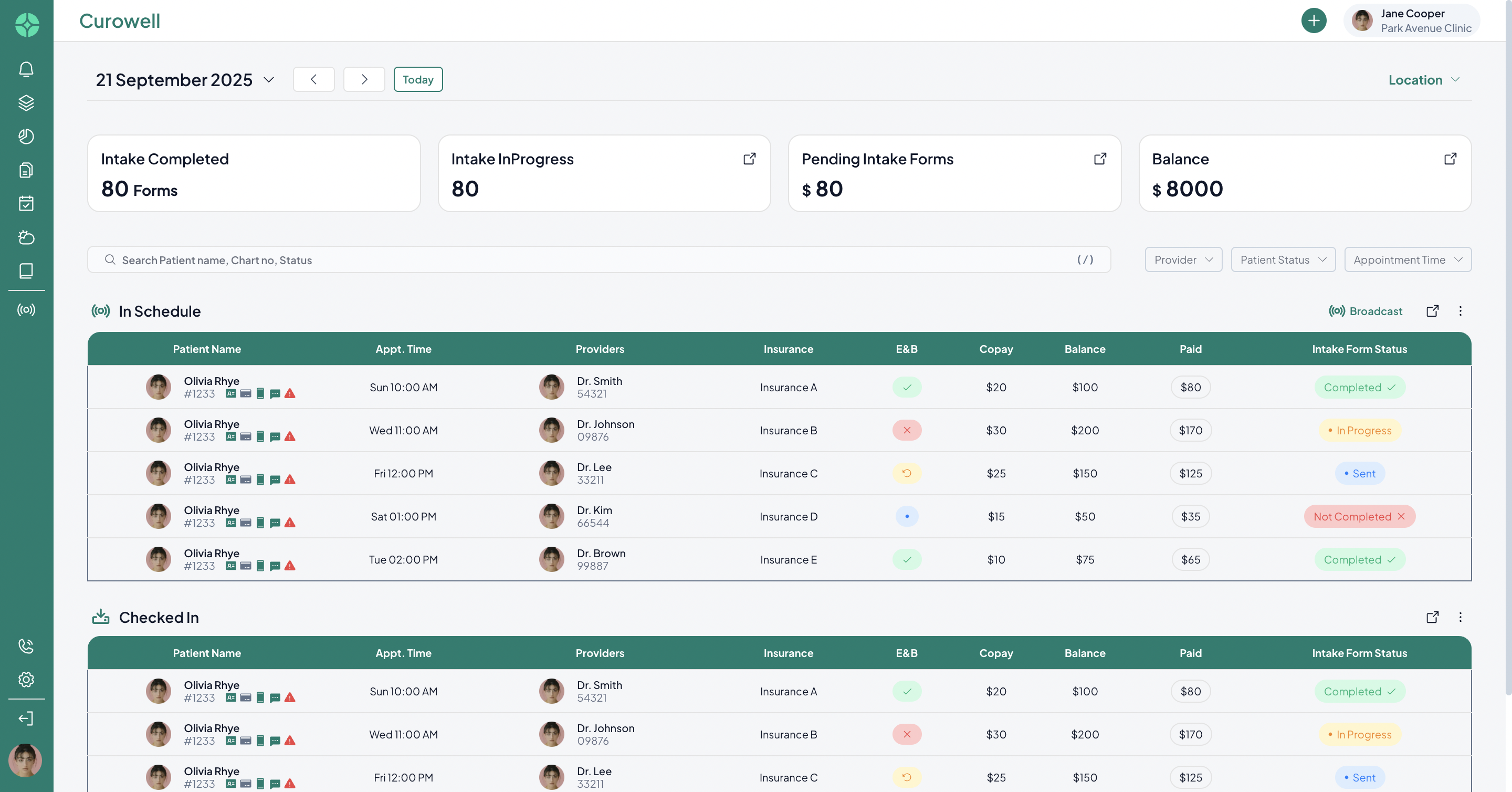
Appointment Dashboard
-
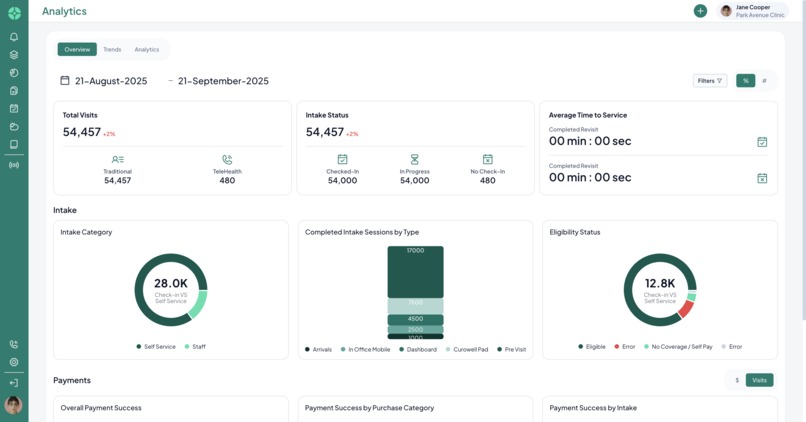
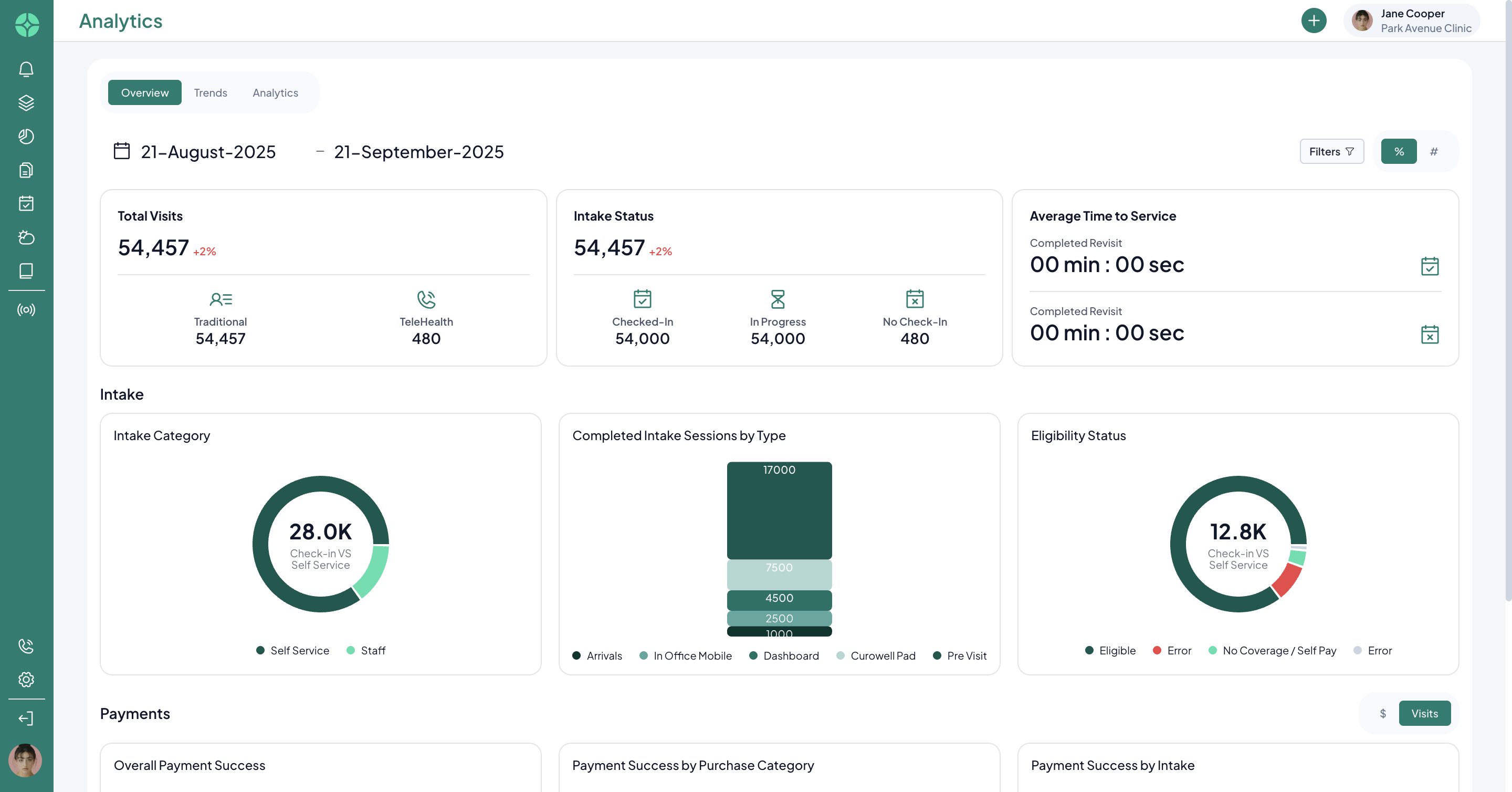
Analytics Dashboard
-
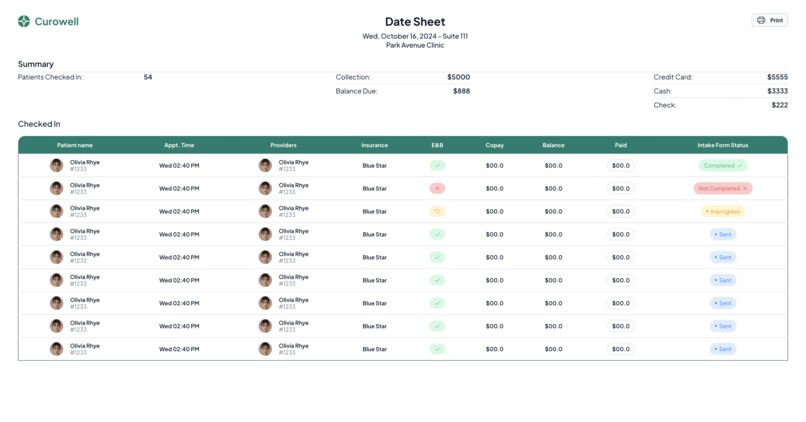
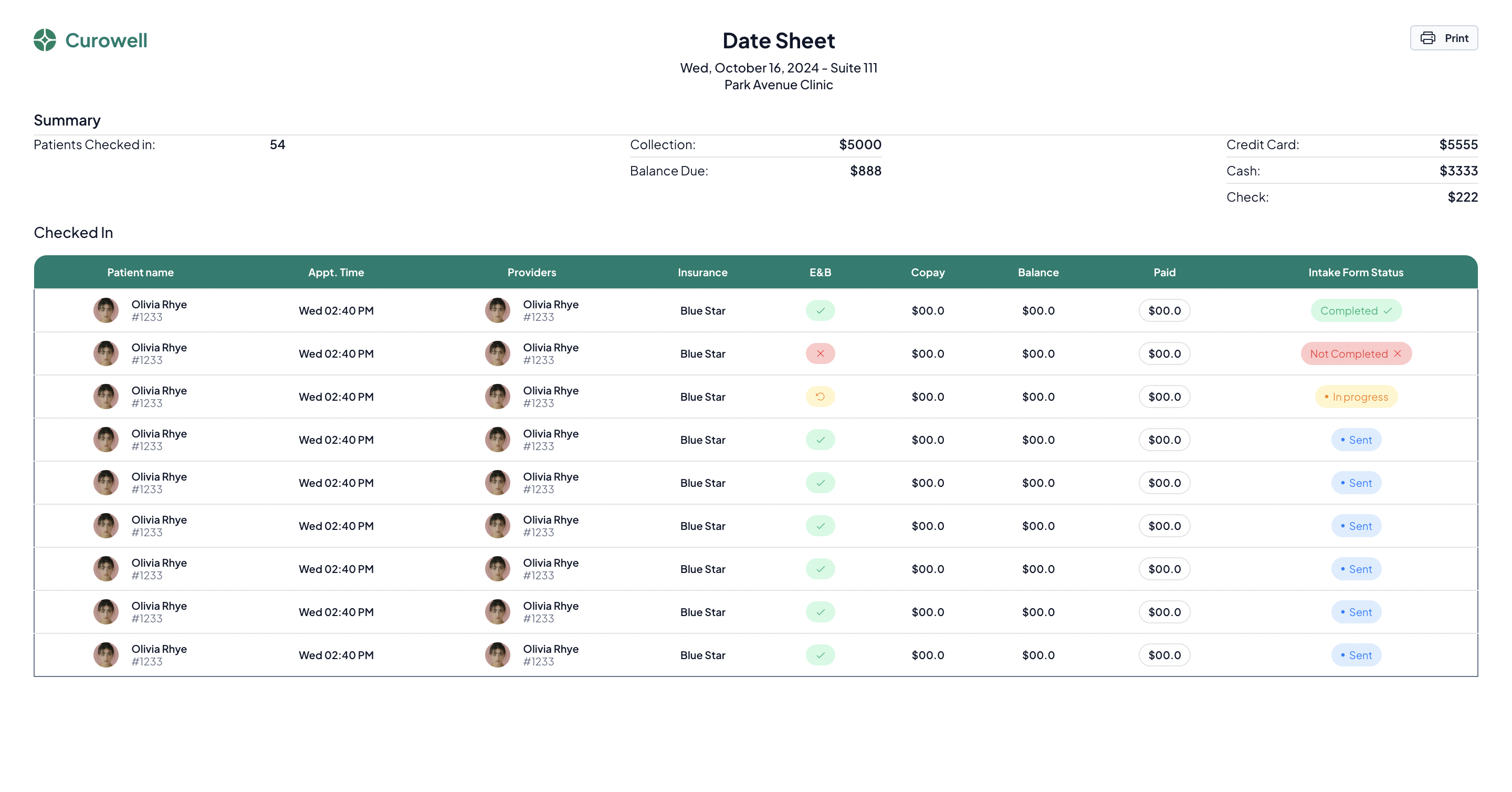
Reconcilation Sheet
Inspiration
The inspiration for Curowell came from the persistent inefficiencies plaguing healthcare practices, where administrative burdens and patient no-shows cost the industry $5B annually. Small practices, in particular, struggle with outdated tools that waste 40% of staff time on manual tasks. Our founder witnessed a solo practitioner lose $100K yearly due to no-shows, sparking the vision for a streamlined, affordable platform that leverages AI and customization to empower practices of all sizes.
What it does
Curowell is a cloud-based platform that transforms patient management for healthcare practices. It offers:
Intuitive Appointment Scheduler: Simplifies booking and reduces errors.
Secure Patient Chat: Enables real-time, HIPAA-compliant communication.
Automated Reminders: Cuts no-shows by up to 50% with email/SMS alerts.
AI Appointment Accelerator: Optimizes scheduling to fill gaps intelligently.
Customizable Dashboards: Tailors the interface to each practice’s branding and workflow.
Available at dashboard.curowell.com and curowell.com, it enhances efficiency, engagement, and scalability for small to large practices.
How we built it
Curowell was developed using modern web technologies for scalability and ease of use. Key steps:
Frontend: Built with Next JS for a responsive, user-friendly dashboard .
Backend: Node.js with MongoDB for secure data handling, ensuring HIPAA compliance.
AI Integration: Leveraged machine learning for the Appointment Accelerator, trained on scheduling patterns to optimize bookings.
Agile Development: A small team, iterated rapidly with weekly sprints.
Beta Testing: Piloted with 5 practices to refine UX, achieving 90% satisfaction in time savings.
Challenges we ran into
HIPAA Compliance: Ensuring end-to-end encryption for patient chat was complex; we partnered with compliance experts to meet standards.
AI Accuracy: Early Accelerator models overbooked slots; multiple iterations improved slot-fill precision to 95%.
Market Noise: Competing with giants like Athenahealth and Phreesia required sharp differentiation; we focused on affordability ($99/mo vs. $300+).
User Adoption: Small practices were hesitant to switch; we introduced a 14-day freemium model to lower barriers.
Resource Constraints: Limited initial team size slowed feature rollout; mitigated by prioritizing core features.
Accomplishments that we're proud of
Live MVP: Launched a functional demo at curowell.com with 100+ visits and a 50-practice waitlist.
Beta Success: 90% of beta testers reported time savings, validating our solution Grand View Research.
Affordable Innovation: Delivered AI-driven features at $99/mo, undercutting competitors like Zocdoc ($300+) Crozdesk.
Scalable Design: Built with state of the art tech.
User-Centric Design: Customizable dashboards earned praise for aligning with practice branding.
What we learned
Market Fit: Small practices (70% of 500K+ U.S. clinics) crave affordable, simple tools Fortune Business Insights.
AI Potential: Machine learning can significantly reduce no-shows, but requires robust data for accuracy.
User Trust: HIPAA compliance and transparent pricing are non-negotiable for healthcare adoption.
Iterative Development: Rapid user feedback loops are critical for refining UX in health tech.
Competitive Edge: Differentiation through cost and niche focus (small practices) outperforms broad-market approaches.
What's next for Curowell
Q4 2025: Launch Web Dashboard
Q1 2026: Launch mobile app for iOS/Android to expand accessibility.
Market Expansion: Target 1K signups via digital marketing (SEO, LinkedIn) and medical association partnerships.
Revenue Goals: Achieve $500K revenue in Year 1, scaling to $2M ARR by Year 3 with 5K subscribers Precedence Research.
Global Reach: Explore EU/Asia markets by 2027, leveraging cloud scalability.

Log in or sign up for Devpost to join the conversation.