Inspiration
LLM usage decreases critical thinking, but having so much AI technology at your fingertips should do the exact opposite! In 36 hours, we built Curious Catalyst, starring Plato, a very curious, very alive cat that lives on your screen.
What it does
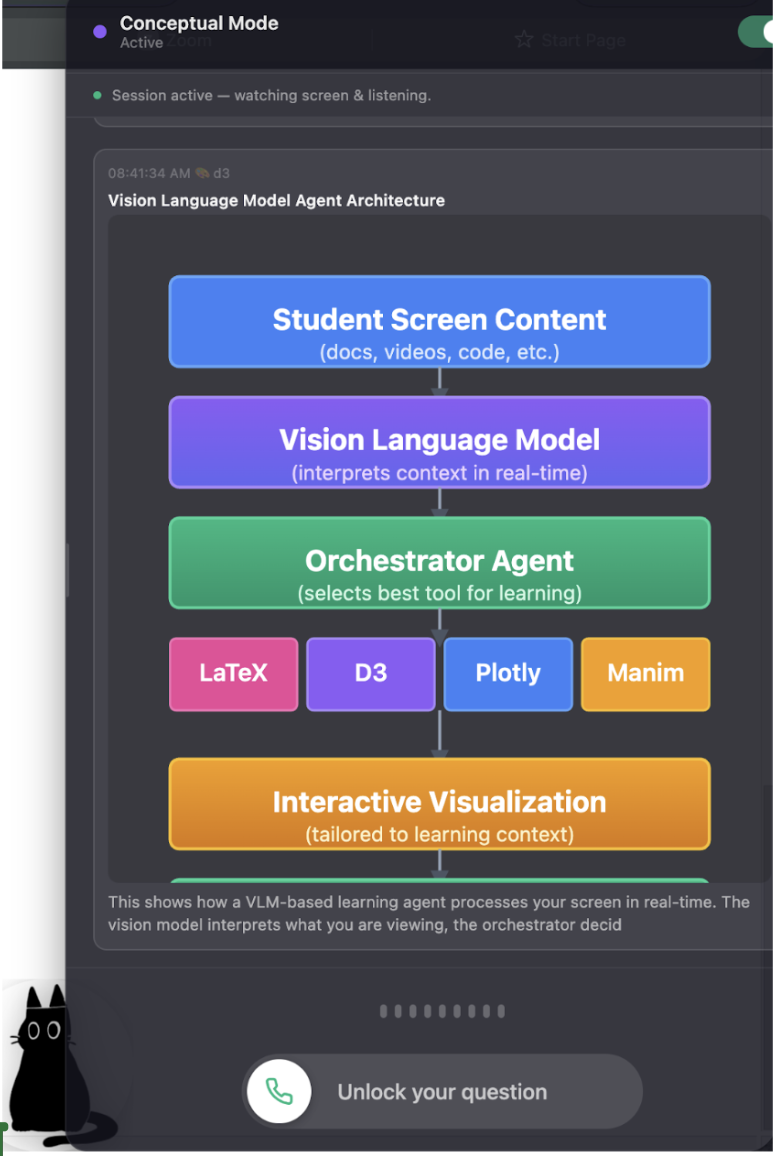
Plato is a floating cat that lives on your desktop and observes your actions with the computer, the physical content on your computer, and infers your level of understanding/state of mind. When activated, Plato reveals a side panel that presents our learning tools.
We have three use cases of learning agents: 1) Conceptual learning which revisits topics and strengthens foundations, 2) Application-based learning which allows for iterations on problems to strengthen problem-solving, 3) Extension-based learning to further your understanding
Plato can learn about the way you learn, how you're learning - through Bayesian Knowledge Tracing - and deploy the right agent, dynamically switching to give you the help you need - completely unprompted. Alongside inter-agent communication and content generation, Plato decides whether to generate dynamic, customizable visualizations (to help layer abstractions) or a live phone call integrated with realtime speech-to-speech models that are adjusted to your understanding and pace of learning to walk you through the concept.
How we built it
The live video feed of the model is handled through a two pronged approach - Gemini’s VLM model and Zoom’s Screenshare Render to analyze the stream of content on the screen, user activity.
Plato uses Bayesian Knowledge Tracing to attempt to infer how much the user actually knows, and by consequence determine the intervention point of the model. Thus, Plato actively tracks mastery by building a confidence weighted map of your level of understanding and determining which lens of learning you would most benefit from.
Plato’s agents interact and are developed through fetch.ai’s agent tooling and are hosted on AgentVerse, and are findable on ASI:One. There are three agents, each for a different lens of learning. They have different decision making capabilities on which tools to call, when to deploy, and how to engage with the user. There is an orchestrate agent, that handles transitions between different learning agents, keeping the transitions seamless while keeping the model personalized.
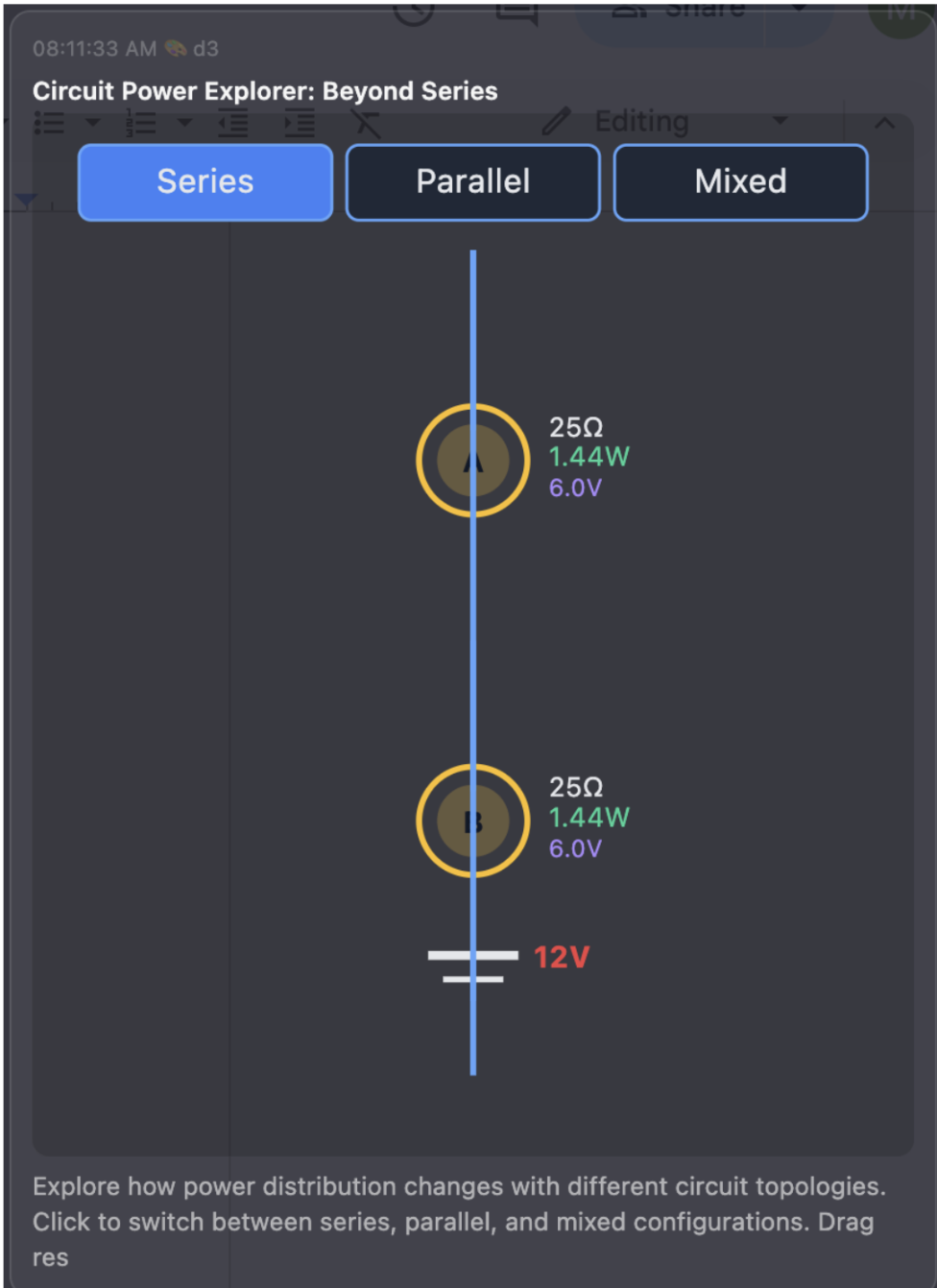
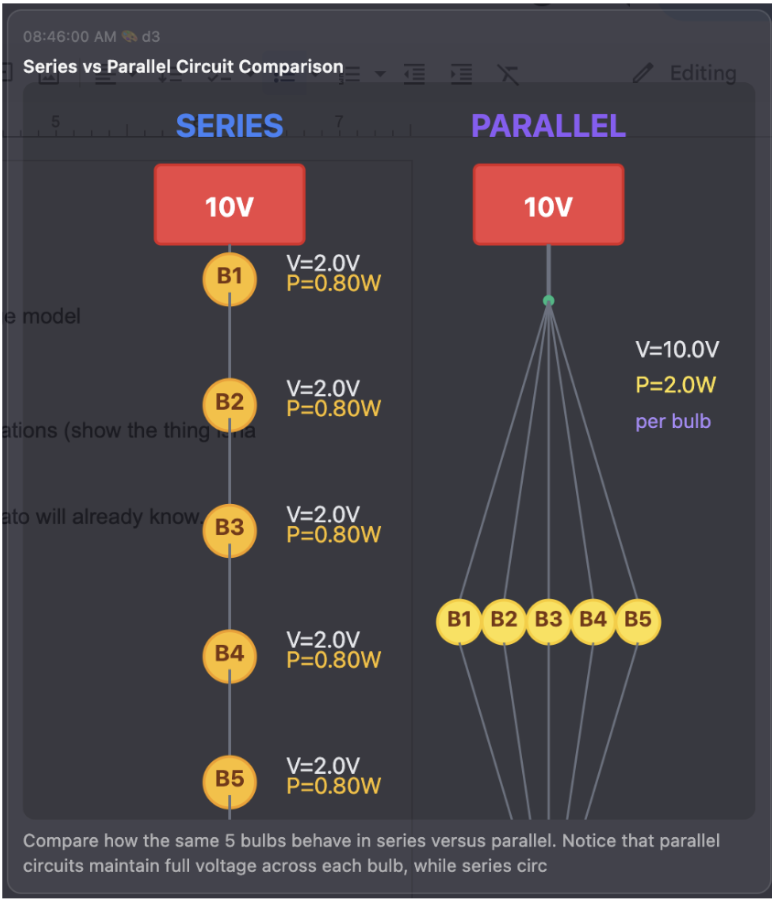
Visualizations are generated dynamically based on your learning habits, live behavior, and the content on your screen. We also use OpenAI's speech to speech API, where the side panel will prompt you with an “incoming” phone call to dive deeper into a concept, either for more foundational explanation or more in-depth innovation.
As for Plato, we did our own art, assisted by Sora to bring him to life.
Challenges we ran into
We faced many challenges bringing Curious Catalyst to life. Our core philosophy was that curiosity shouldn't be prompted—but this created our biggest design challenge. How do you build a system that knows when to intervene without the user explicitly asking?
We had to architect an entire behavioral learning system that passively observes screen content, tracks micro-interactions (re-reading the same line, pausing on a problem, scrolling back), and infers cognitive state in real-time. The agents needed to collaborate seamlessly while determining intervention timing that felt helpful rather than intrusive. Getting multiple agents to agree on "now is the right moment" without constant user input required building sophisticated inter-agent communication protocols and confidence thresholds.
We also spent a lot of time thinking about when should the conceptual agent hand off to the problem-solving agent? Switching too early leaves foundations shaky; switching too late frustrates users who are ready to move forward. To do this, we had to build out state synchronization: each agent needed access to shared context (what the user is working on, what they've tried, their current affect) while maintaining specialized decision-making capabilities.
Accomplishments that we're proud of and what's next for Curious Catalyst
As knowledge progresses and the sheer power of AI’s ability to provide endless, customizable knowledge becomes greater, we aim to break the glass ceiling for more concepts.
On top of improving the customizability of visuals, we also seek to extend this to dense scientific information and wet-lab experimental workflow. It would also be beneficial to extend Curious Catalyst to thesis and argument defensibility, or information retainment from
Additionally, we could use this tool to keep under-resourced schools with a large number of students more focused and on track. Since Plato meets the learner where they are, extending it with some preset curriculum, such as Common Core can make learning and teaching standards more accessible. Furthermore, it can make home-schooling more equitable and robust for those with extenuating circumstances.
In a world where literacy rates and mathematical ability correlates to incarceration rates, your ability to learn is the most important thing you have. On the other end of the spectrum, innovation happens every single second. Learning in any field being endlessly customizable, iterative, and active will improve the ability of the world to learn.
What we learned
Multi-agent orchestration is deceptively complex. Coordinating three specialized learning agents isn't just about message passing - it requires sophisticated state management, fault tolerance, and seamless handoffs.
Vision models have wildly different strengths. We discovered that no single VLM excels at everything. Screen analysis quality varies dramatically depending on the task—some models better understand mathematical notation, others excel at detecting user frustration signals.
Bayesian Knowledge Tracing is elegant and honest. Rather than binary right/wrong tracking, BKT's probabilistic approach to modeling mastery feels more authentic to how humans actually learn.
Ambient intelligence requires invisibility. We learned that effective ambient AI must be felt, not seen—present when needed, invisible when not. Plato, the cat avatar, helped make monitoring feel friendly rather than surveillant.
Built With
- agents:
- agentverse
- ai
- api
- asi:one
- backend:
- chrome
- claude
- d3.js
- electron
- extension
- fastapi
- fet
- fetch.ai
- flash
- frontend:
- gemini
- html/css/js
- manim
- openai
- payment
- protocol
- python
- realtime
- typescript
- uagents
- uvicorn
- websockets

Log in or sign up for Devpost to join the conversation.