-
-
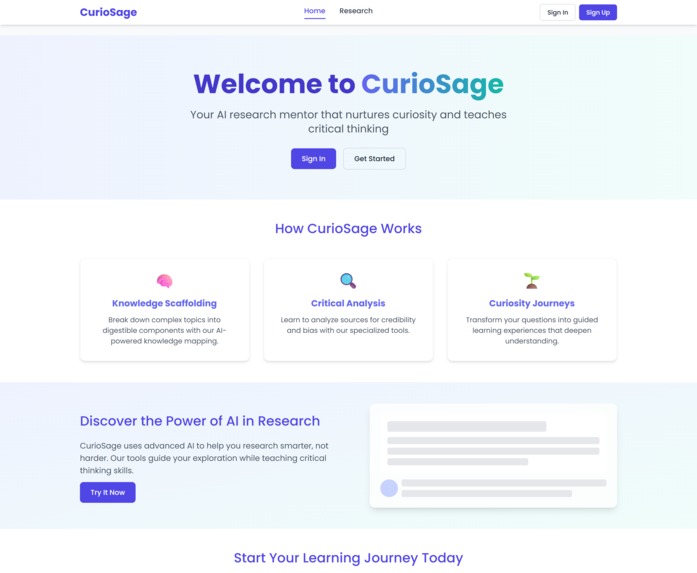
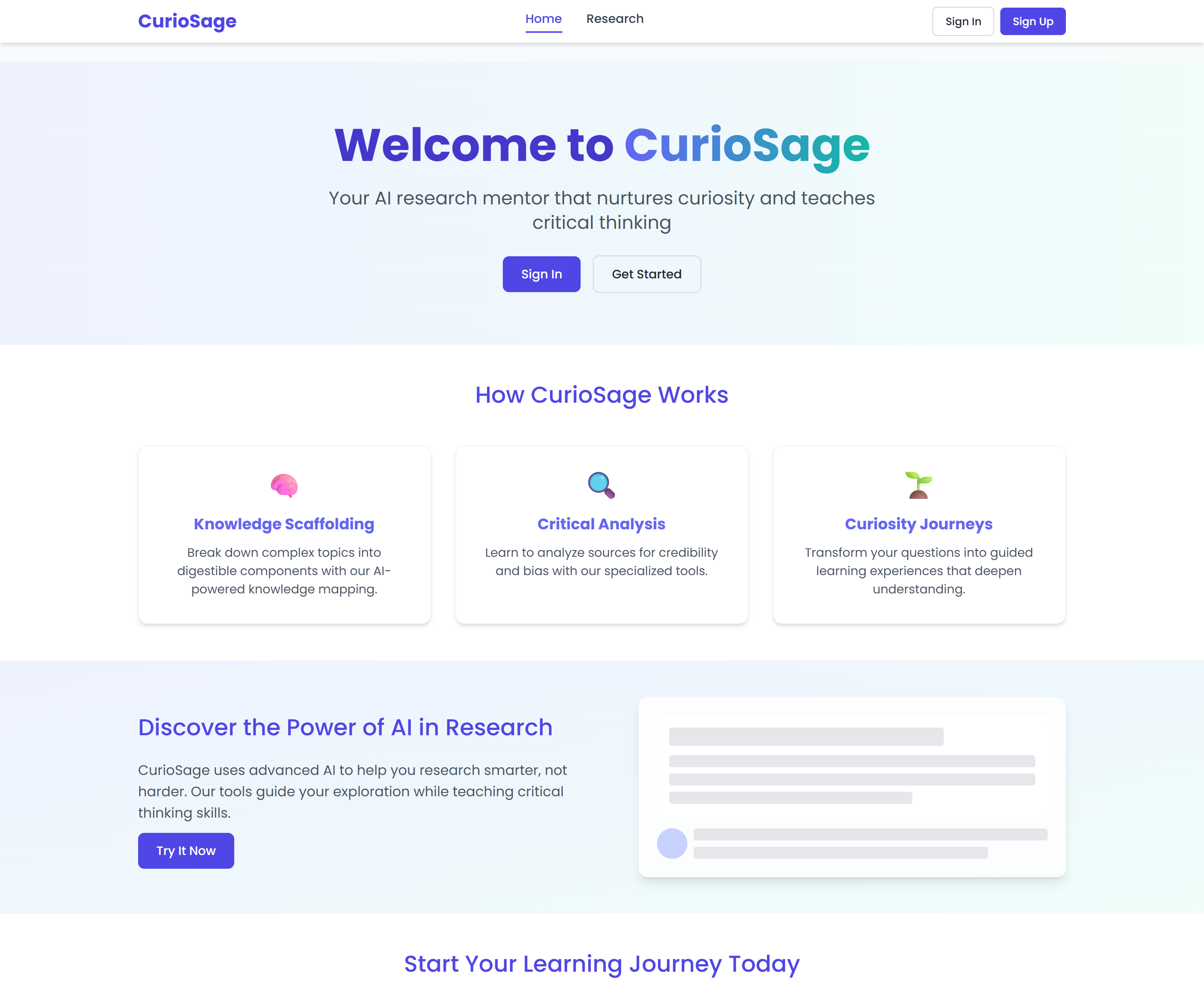
Home Page
-
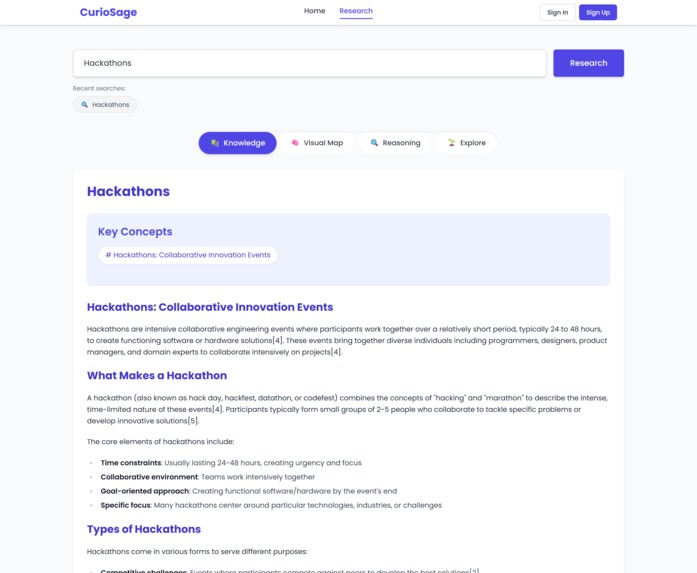
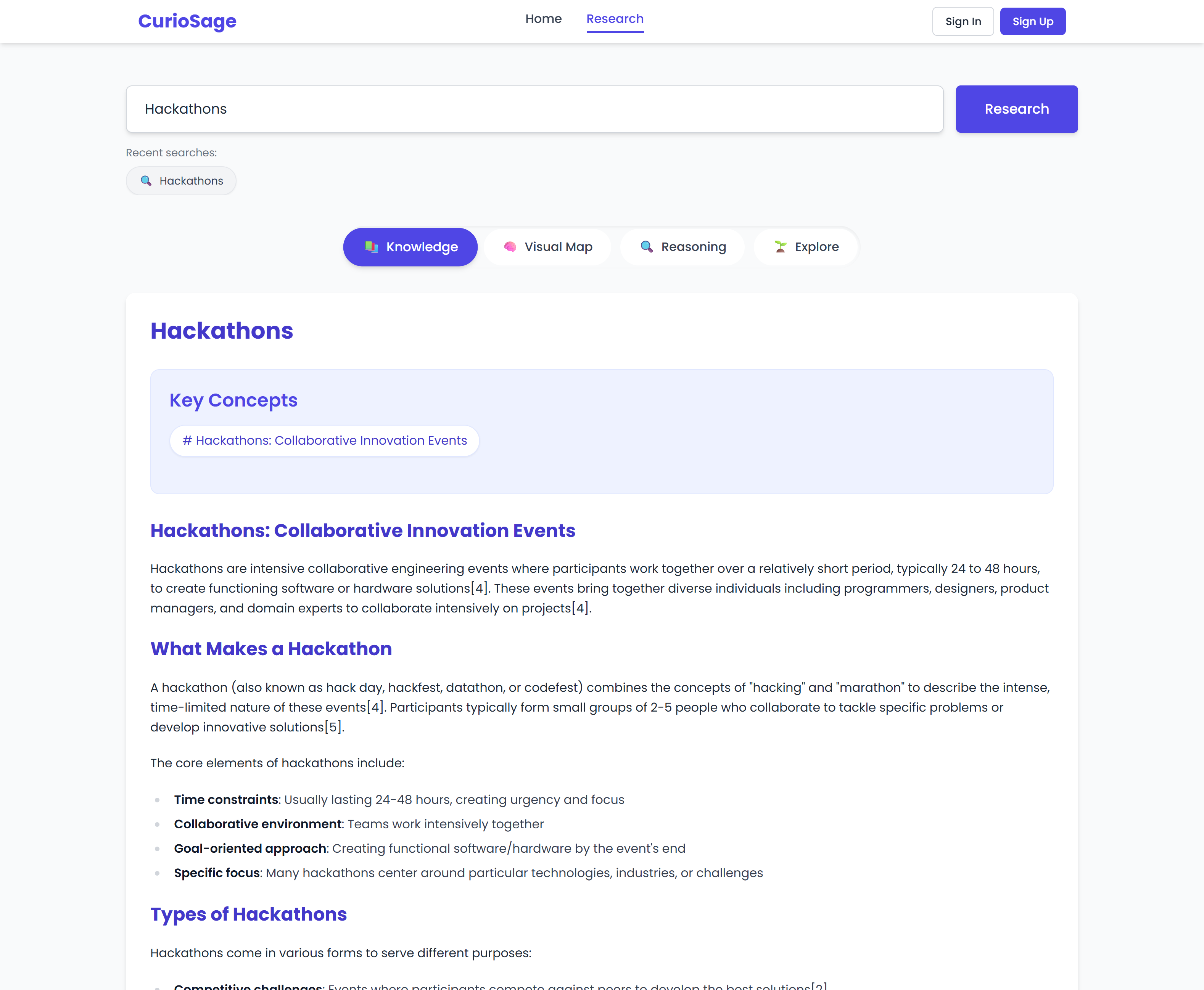
Research Page
-
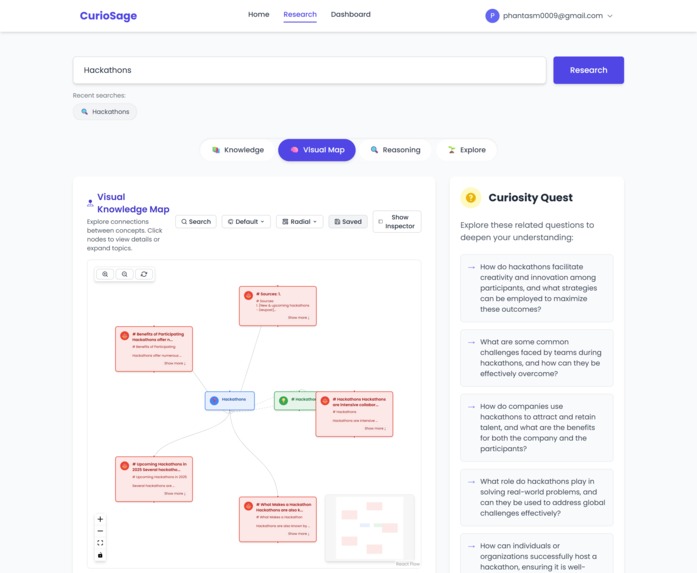
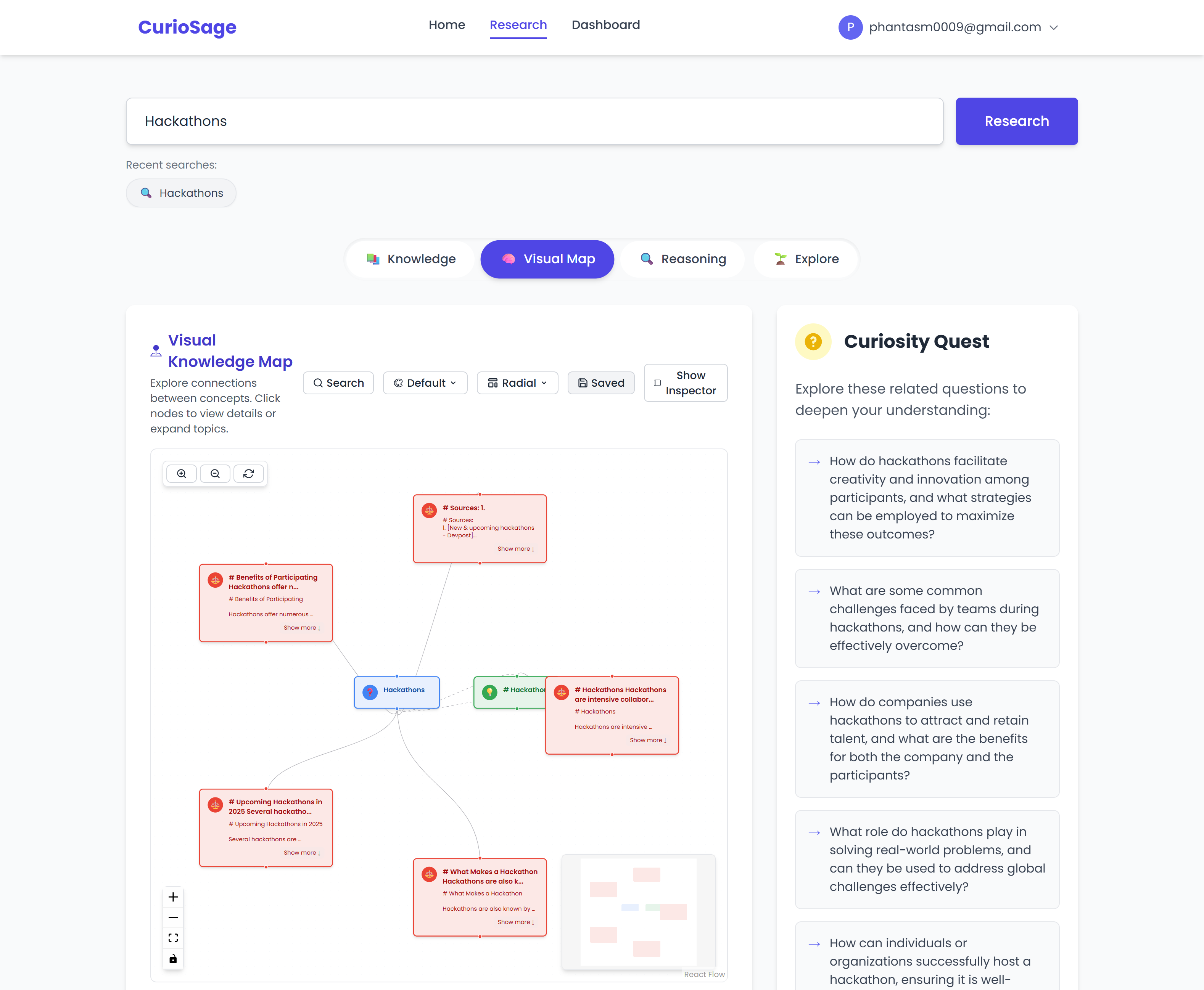
Visual Map
-
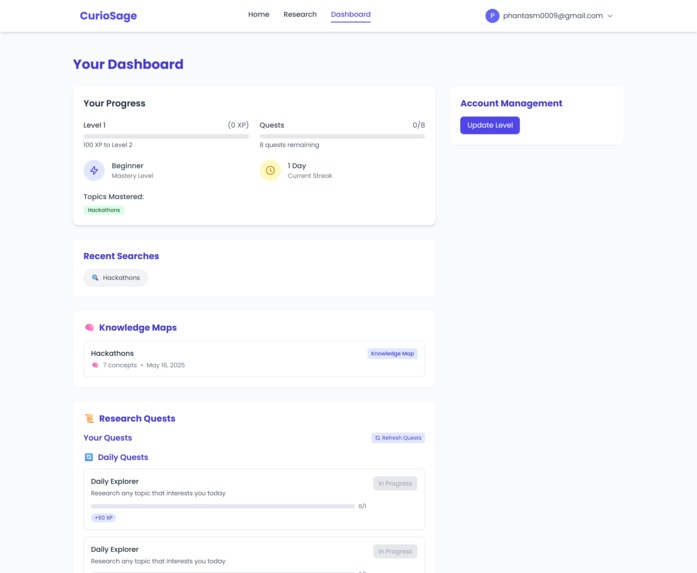
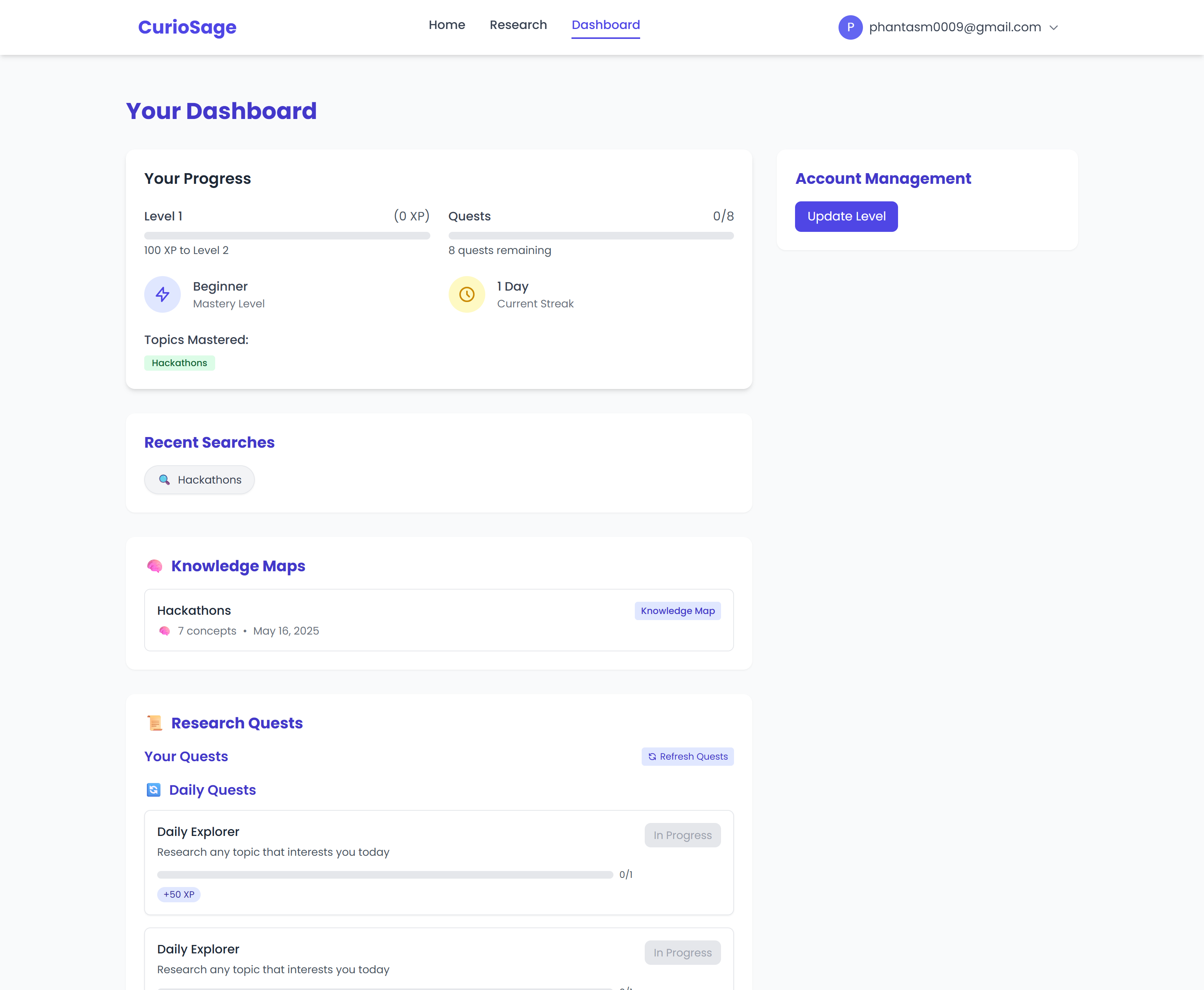
Profile Page
Inspiration
In today's information-saturated world, students and lifelong learners face enormous challenges: information overload, difficulty distinguishing credible sources, and learning environments that prioritize answers over understanding. We created CurioSage after observing how many learners struggle with developing critical thinking skills while conducting research online. We were inspired by the idea that AI could serve not just as an answer provider, but as a mentor that guides users through the process of exploration and critical evaluation—nurturing curiosity rather than simply satisfying it.
What it does
CurioSage is an AI-powered learning companion that transforms how users approach research and learning:
- Knowledge Scaffolding: Structures complex topics into digestible, interconnected concepts that build upon each other
- Chain-of-Thought Reasoning: Shows the step-by-step reasoning process behind conclusions, making critical thinking transparent and learnable
- Interactive Knowledge Maps: Visualizes relationships between concepts, allowing spatial exploration of topics
- Source Credibility Analysis: Evaluates and explains the reliability and potential biases in information sources
- Gamified Quest System: Rewards curiosity with XP, levels, and daily quests that encourage diverse exploration
- Personal Learning Dashboard: Tracks progress, maintains a curiosity streak, and provides visual representations of knowledge growth
How we built it
We built CurioSage using a modern tech stack designed for scalability and interactivity:
- Frontend: React 18 with Tailwind CSS for responsive UI, Framer Motion for animations, and ReactFlow for interactive knowledge maps
- Backend: Node.js with Express to handle API requests and process user data
- AI Integration: Perplexity Sonar API for generating knowledge scaffolds, reasoning chains, and source analysis
- Database: Firebase Firestore for user profiles, search history, quests, and knowledge maps
- Authentication: Firebase Auth with email/password and Google sign-in options
- Data Processing: Custom algorithms for categorizing search topics and generating personalized quest recommendations
- Deployment: GitHub Pages for the frontend and Render for the backend API
Challenges we ran into
During development, we faced several significant challenges:
- Context Loop Dependencies: Circular dependencies between React contexts led to complex rendering issues that we had to carefully refactor
- ReactFlow Integration: Implementing interactive knowledge maps with ReactFlow presented compatibility issues with various deployment environments
- Perplexity API Response Parsing: The AI responses required careful parsing and formatting to extract structured data for visualization
- User Progress Tracking: Building a reliable system to track quest completion and synchronize XP/level progression across the application
- Cross-Origin Limitations: Ensuring secure communication between the frontend and backend while dealing with CORS restrictions
- Performance Optimization: Balancing feature richness with performance, especially for the visual knowledge maps with many nodes
Accomplishments that we're proud of
Looking back at our journey, we're particularly proud of:
- Successfully implementing an interactive knowledge mapping system that visualizes complex topics spatially
- Creating a gamification layer that genuinely encourages learning rather than just superficial engagement
- Building a credibility analysis system that helps users critically evaluate information sources
- Designing a clean, intuitive UI that makes complex learning tools accessible to users of all ages
- Developing a flexible quest system that adapts to users' interests and learning patterns
- Ensuring our AI integration promotes critical thinking rather than passive consumption of information
What we learned
This project has been an incredible learning experience for our team:
- The importance of thoughtful system architecture when integrating multiple third-party services
- Techniques for processing and structuring AI-generated content for interactive visualizations
- Methods for implementing effective gamification that enhances rather than distracts from learning
- Strategies for managing complex state across a React application with multiple contexts
- The power of combining visual learning with textual information for deeper understanding
- User experience patterns that encourage curiosity and exploration without overwhelming users
What's next for CurioSage
We have ambitious plans to expand CurioSage's capabilities:
- Collaborative Learning: Allow users to share knowledge maps and learn together in real-time
- Mobile Application: Develop native mobile apps to make learning on-the-go even more accessible
- Expanded Curriculum Integration: Create specialized tools for teachers to incorporate CurioSage into classroom activities
- Enhanced Visualization Options: Add more visualization types beyond knowledge maps, such as timelines and comparison matrices
- Audio Explanations: Integrate text-to-speech to support auditory learners and accessibility
- Offline Mode: Enable core functionality to work without an internet connection
- Expanded Quest System: Introduce quest paths that guide users through interconnected learning journeys
- Community Challenges: Create community-wide learning challenges around trending topics or current events
Built With
- auth
- express.js
- firebase
- node.js
- perplexity
- react
- reactflow
- tailwind


Log in or sign up for Devpost to join the conversation.