-
-
The card for kids
-
The reveal
-
Question
-
Question
-
The card for kids
Inspiration
Kids today have access to more information than ever, but most learning experiences still follow the same pattern: ask a question → get an answer → move on.
We asked ourselves: what if AI could help kids think before giving them the answer?
Inspired by TikTok’s discovery experience and Duolingo’s engaging learning design, we wanted to create something different: a product that optimizes for curiosity, not screen time.
What it does
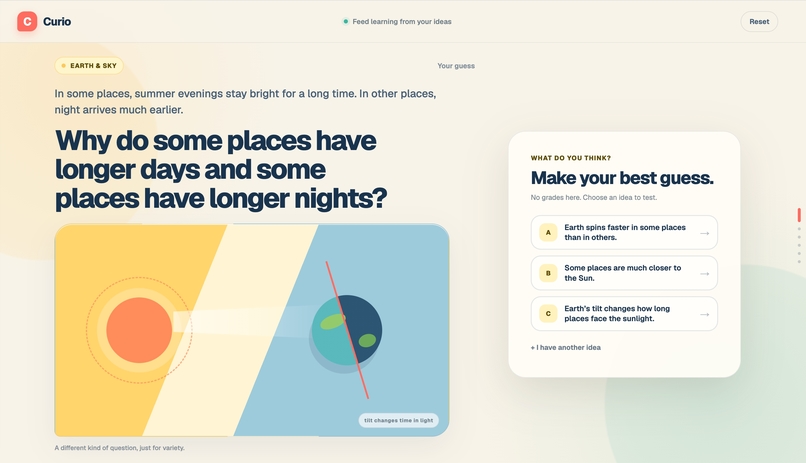
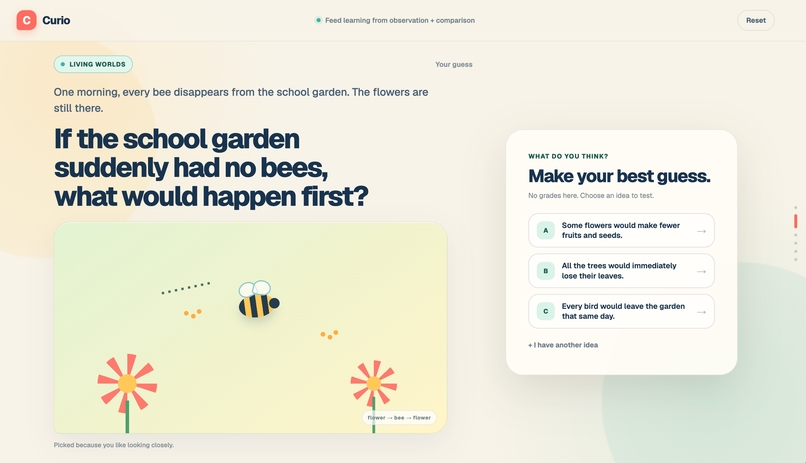
Curio is an AI-powered curiosity feed for kids.
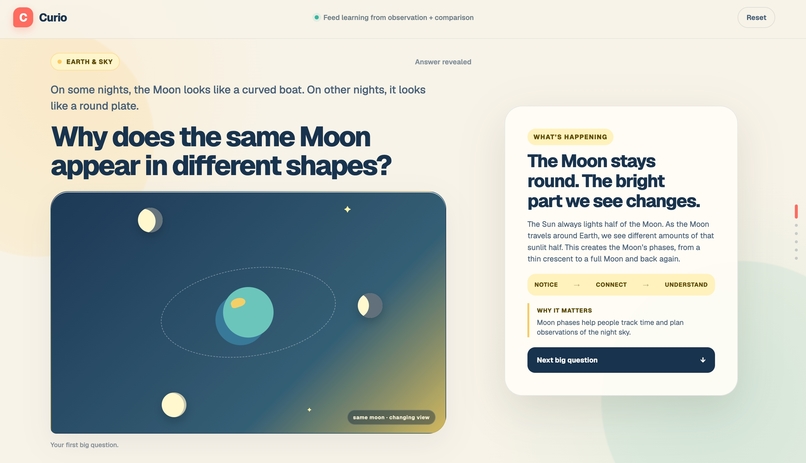
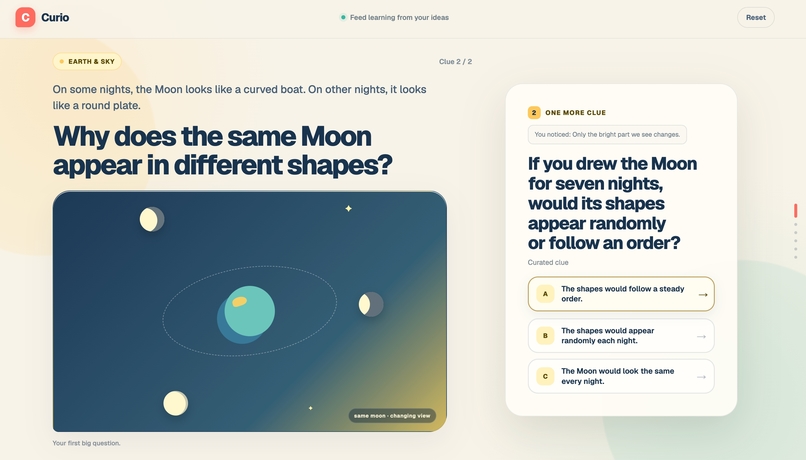
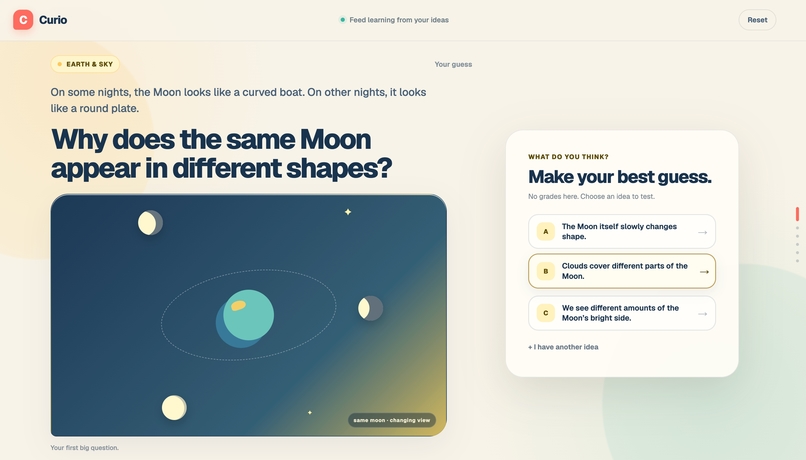
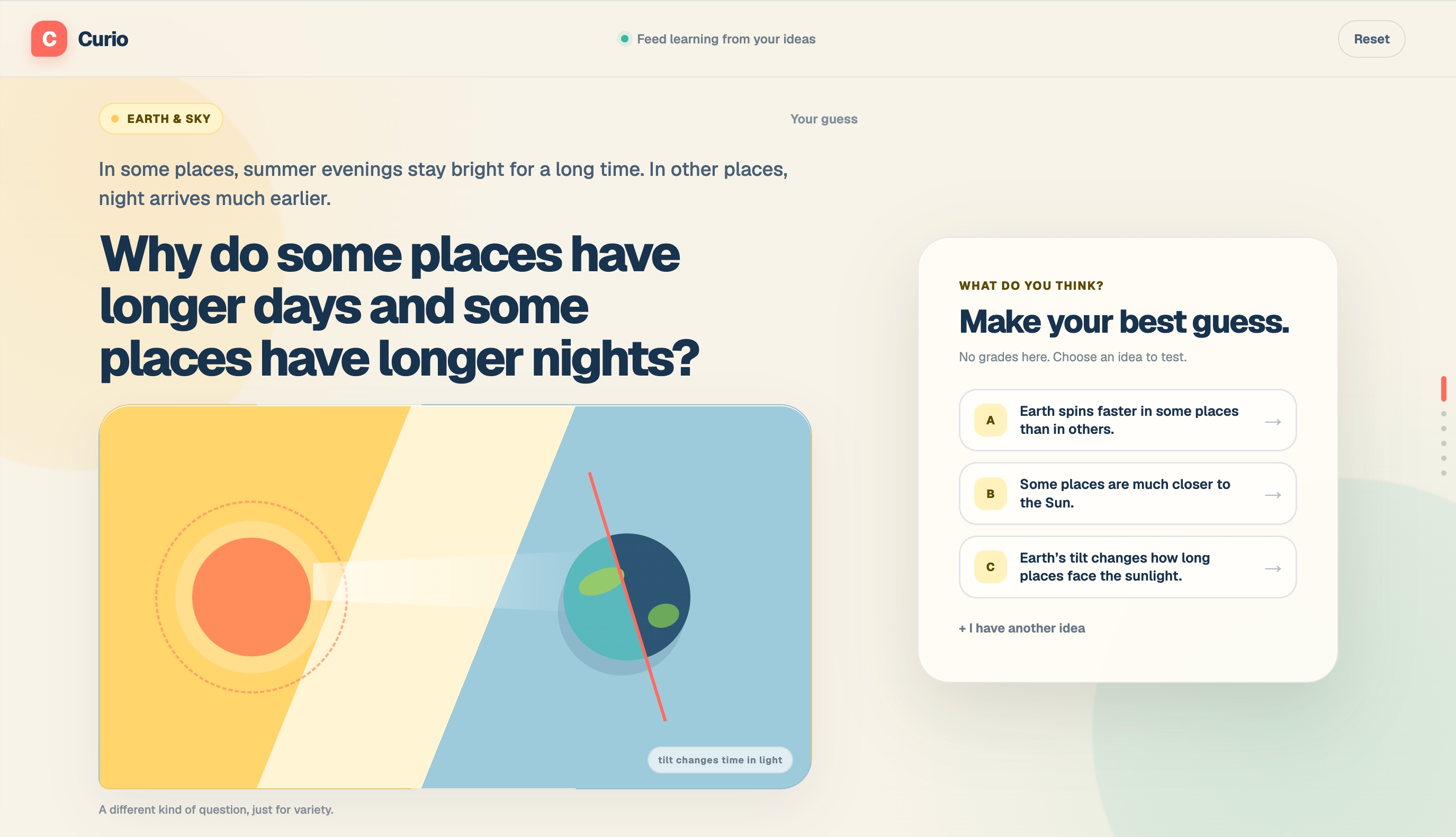
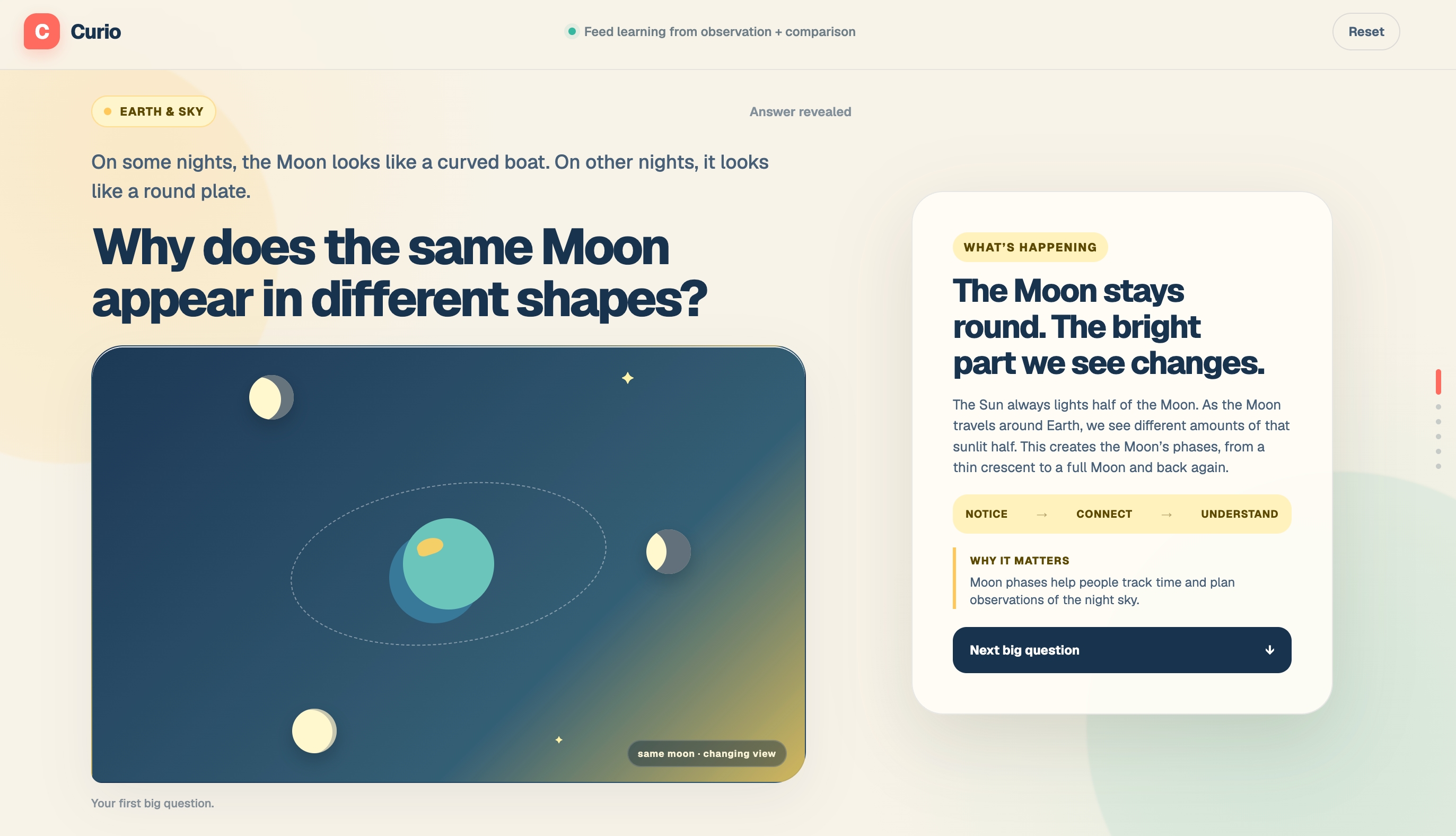
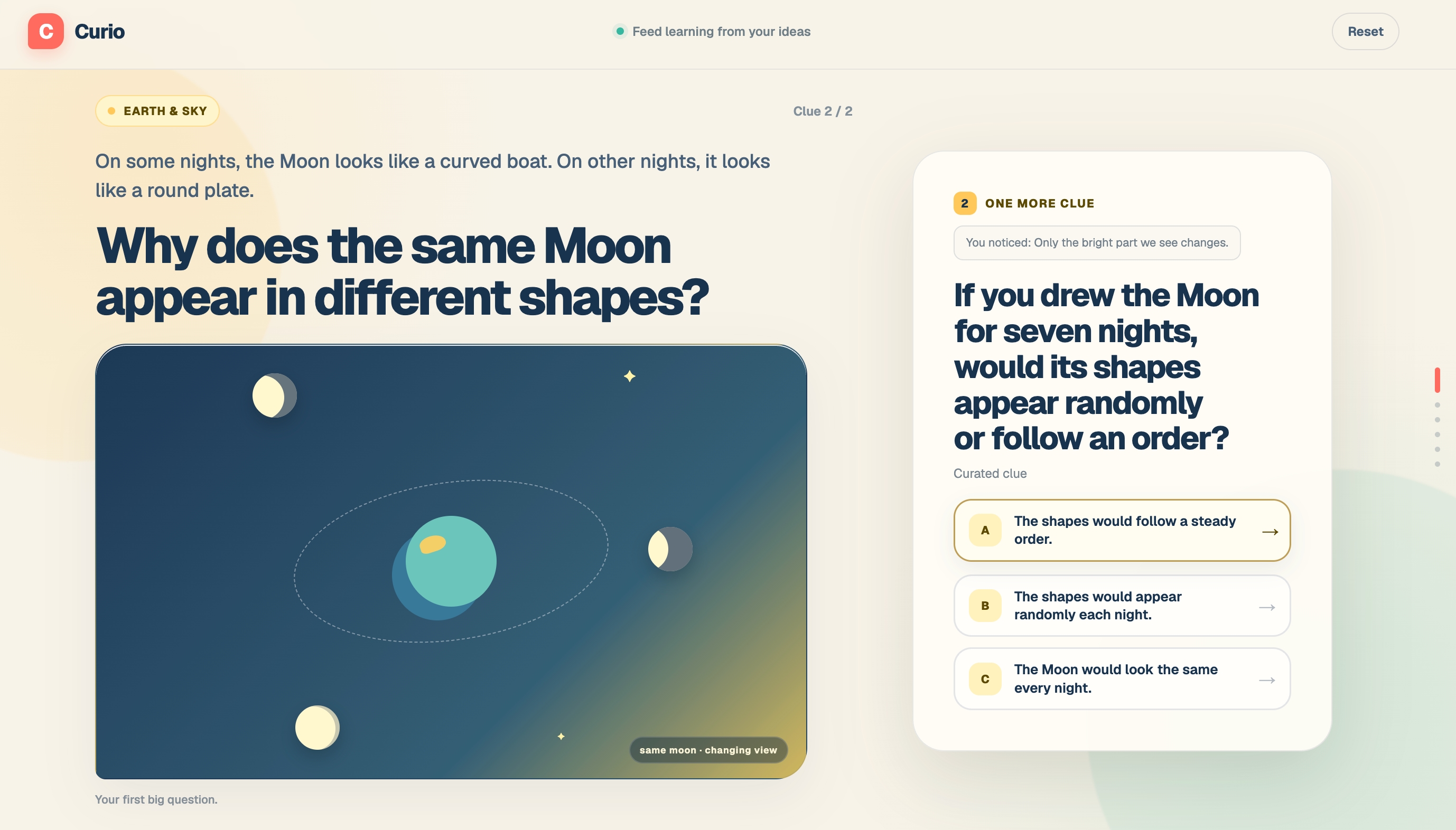
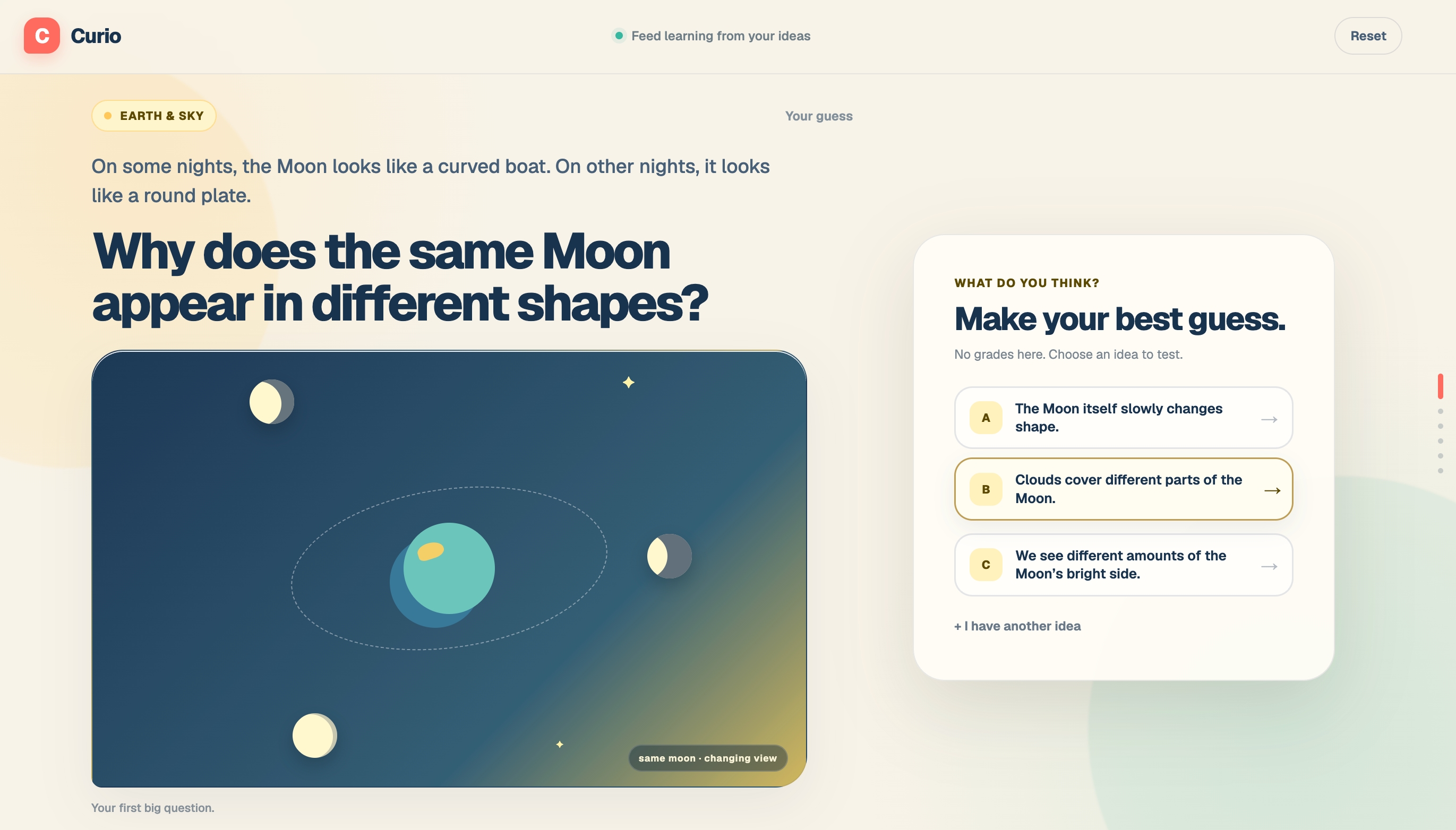
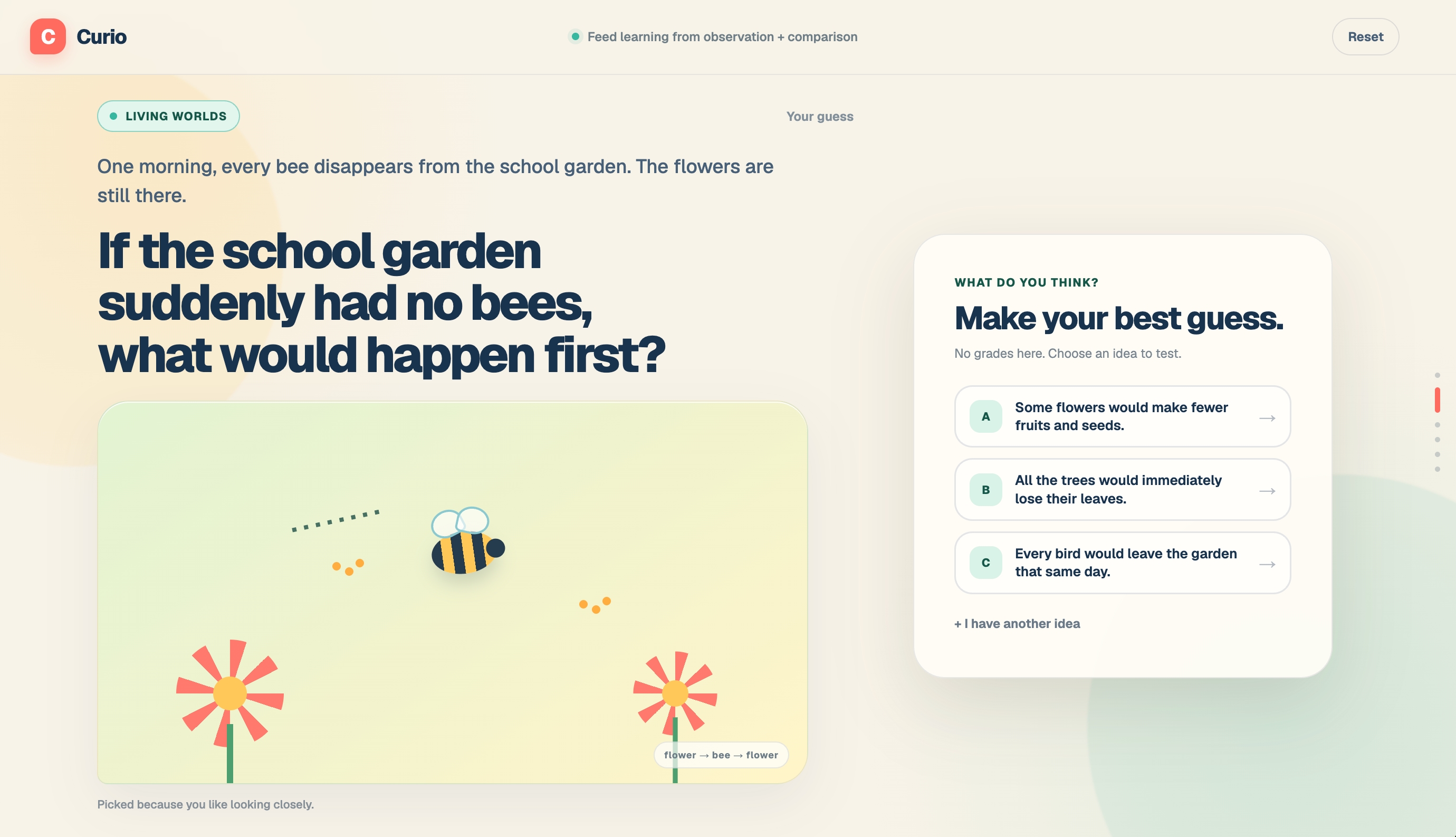
Instead of giving instant answers, Curio starts with a surprising question and lets children make their own guesses. GPT-5.6 then guides them through two carefully designed thinking steps — helping them observe, compare, find patterns, and build their own understanding before revealing the answer.
For example, instead of immediately explaining why the Moon changes shape, Curio asks children: “Does the Moon itself change, or does the bright part we see change?”
The goal is not just to help kids learn facts, but to help them develop curiosity and better thinking habits.
How we built it
We built Curio with Codex and GPT-5.6-Sol as the core AI development stack.
Codex helped us rapidly turn product ideas into a working full-stack prototype — from building the interactive web experience, designing the vertical curiosity feed, implementing card-based interactions, and iterating quickly during development.
GPT-5.6-Sol powers Curio’s guidance engine. Instead of acting as a chatbot that simply answers questions, it helps select and adapt the next thinking question based on each child’s response.
To make the AI experience reliable, we designed structured curiosity paths for each topic:
- a core question
- possible child guesses
- two reasoning steps
- a final explanation
GPT-5.6-Sol operates within these learning paths, adapting the wording and difficulty while keeping the intended reasoning journey.
The combination of Codex’s rapid development workflow and GPT-5.6-Sol’s reasoning capability allowed us to build an AI experience where children discover ideas step by step, rather than just receiving generated answers.
Challenges we ran into
The biggest challenge was finding the right balance between AI flexibility and educational safety.
A fully open-ended chatbot can easily reveal answers too early, generate inconsistent explanations, or ask questions that do not actually help children think.
We learned that great AI learning experiences need a combination of:
- human-designed reasoning paths
- AI-powered adaptation
The hardest part was designing questions that are simple enough for kids, but still meaningful enough to create real moments of discovery.
Accomplishments that we're proud of
We built a complete AI learning experience from scratch in a short hackathon timeframe.
We are proud that Curio demonstrates a different way of using AI:
- AI does not replace thinking.
- AI creates the conditions for thinking.
The final prototype includes:
- an interactive curiosity feed
- AI-generated thinking guidance powered by GPT-5.6
- adaptive question paths
- personalized curiosity insights
- topic recommendations based on how kids think
What we learned
Building Curio changed our perspective on AI products.
The best AI experiences are not always the ones that generate the most content. Sometimes the most valuable thing AI can do is ask the right question at the right moment.
We learned that combining structured product design with adaptive AI can create experiences that are both reliable and personal.
What's next for Curio
We want to expand Curio into a larger curiosity ecosystem.
Future directions:
- more science, creativity, and real-world exploration topics
- more personalized learning paths
- richer visual experiences and interactive simulations
- deeper understanding of each child’s curiosity journey
Our vision is simple:
Help every child stay curious in a world full of instant answers.
Built With
- ai-agents
- codex
- gpt-5.6
- llm
- next.js
- openai-api
- openrouter
- prompt
- react
- tailwind-css
- typescript


Log in or sign up for Devpost to join the conversation.