-
-
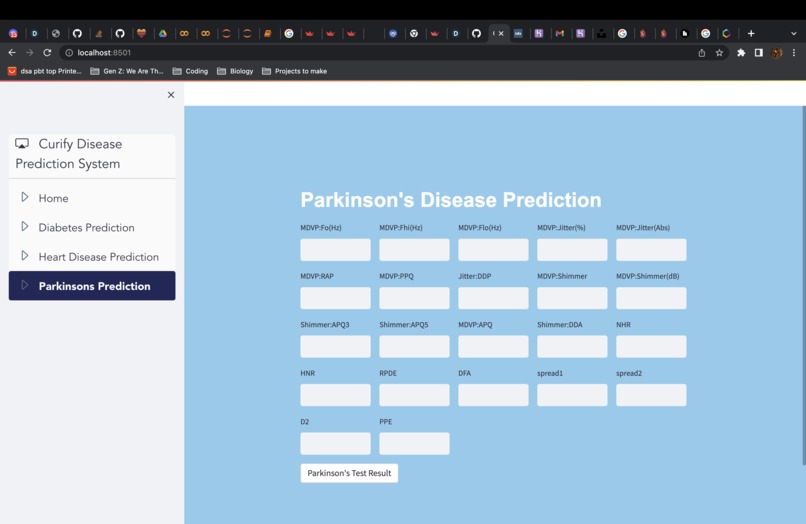
Parkinsons
-
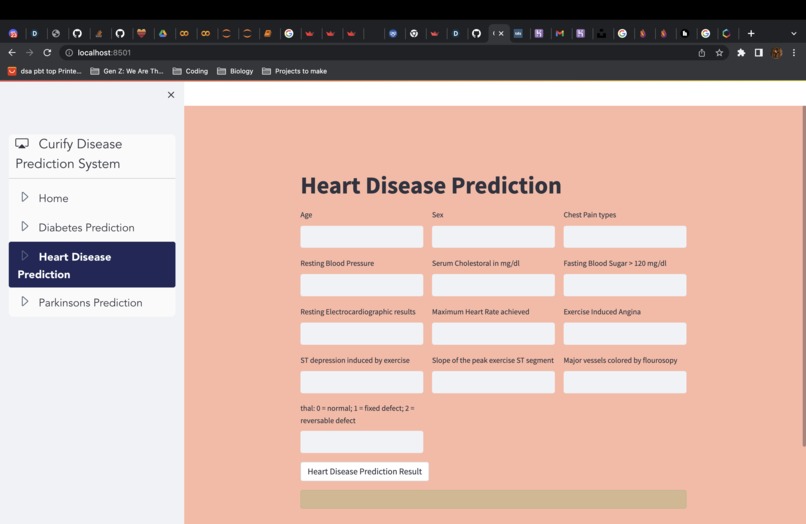
Heart Disease
-
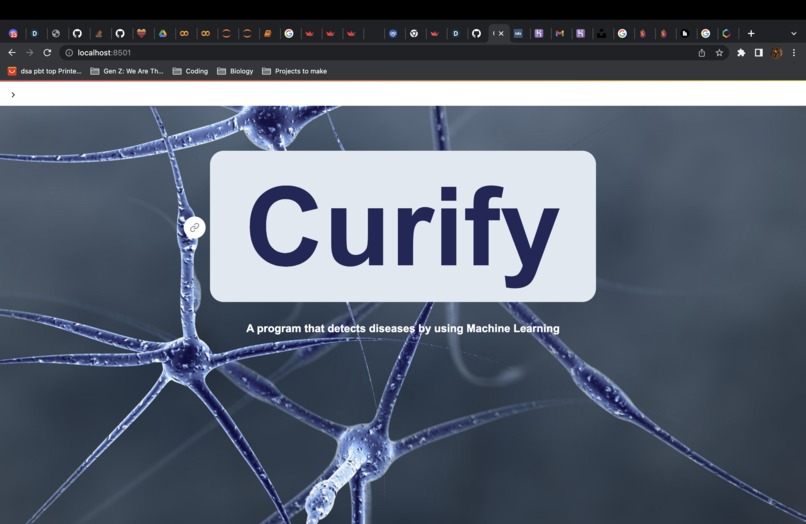
Home
-
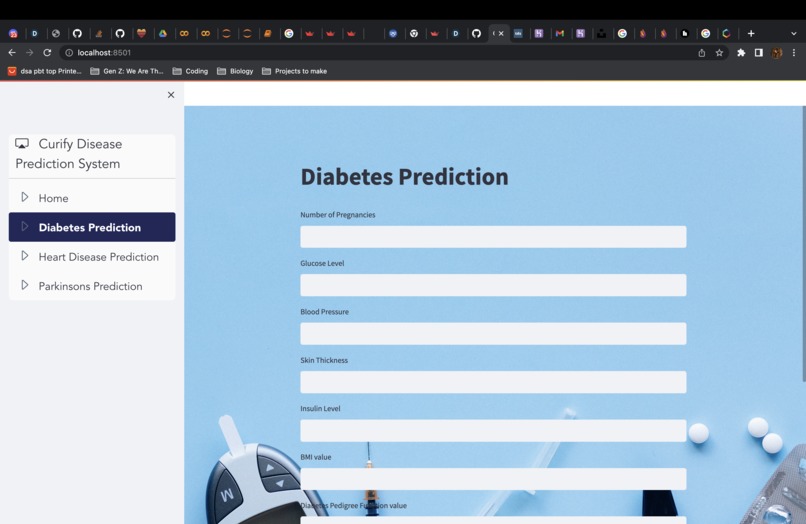
Diabetes

Inspiration
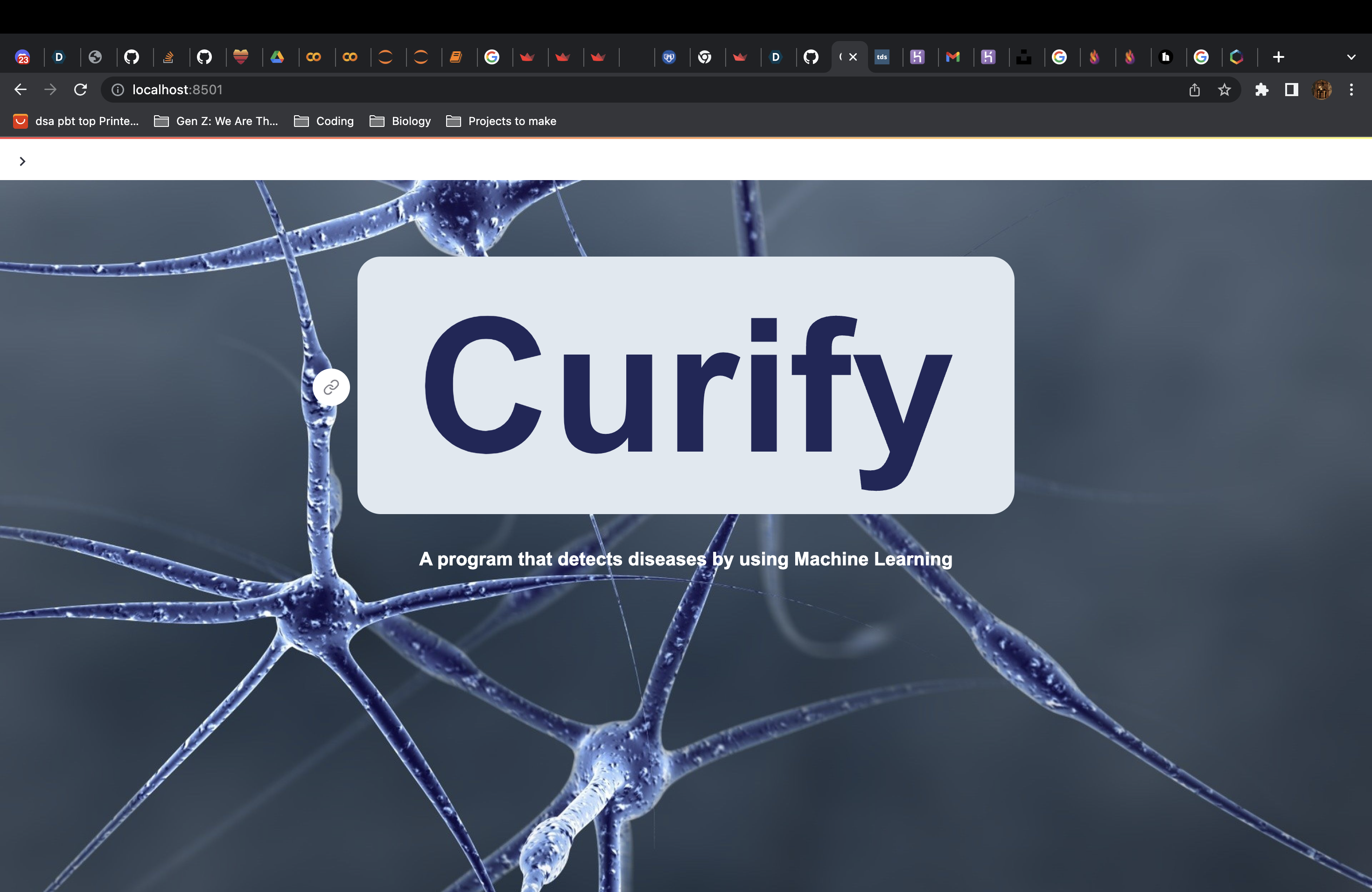
Avaneesh's parents are pre-diabetic and always try to change their diets daily so their sugar levels do not increase to unhealthy levels. His two grandfathers had also died of a heart attack and were bedridden due to Parkinson's disease and a weak heart. This is what drove him to make Curify.
What it does
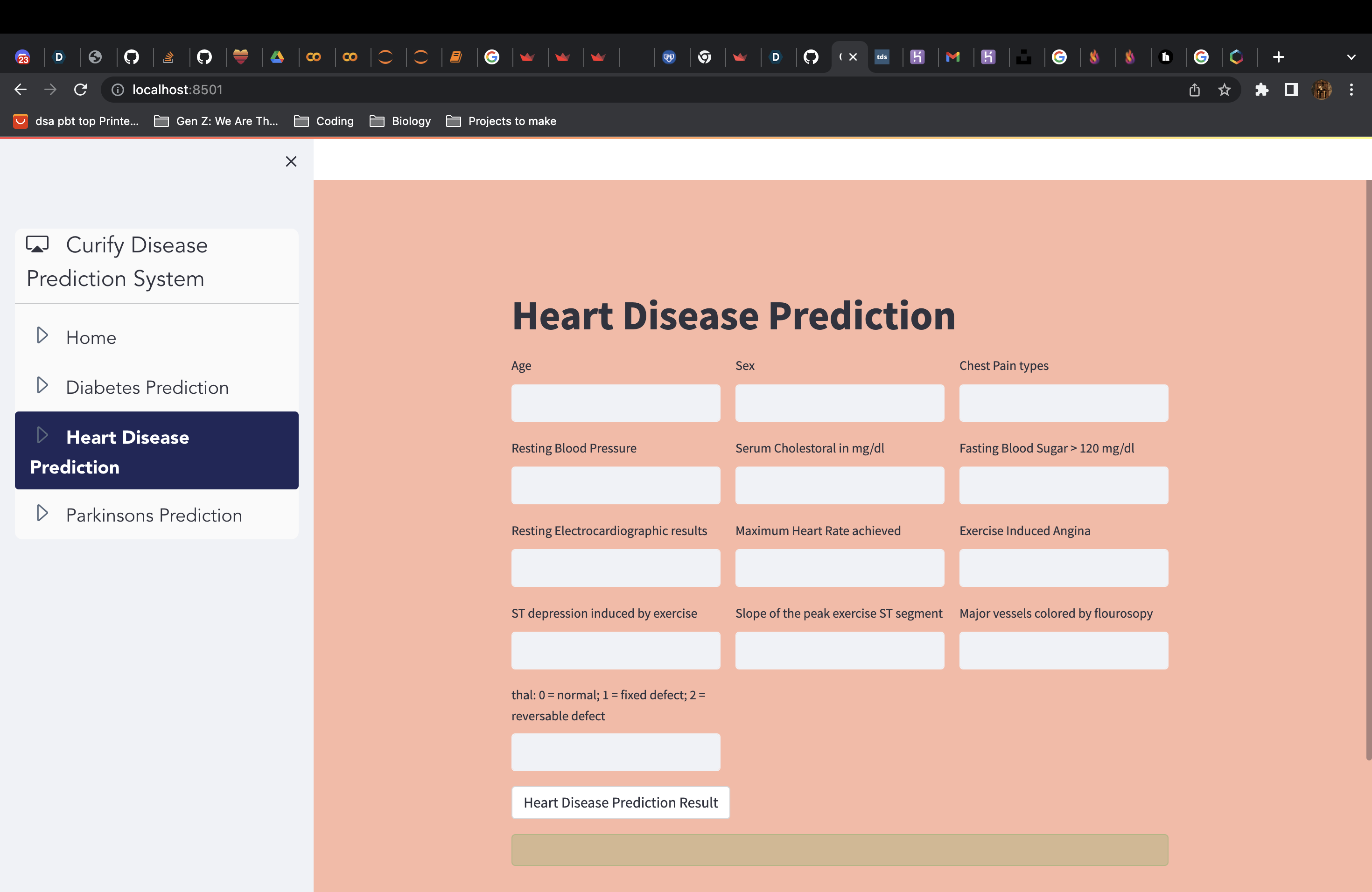
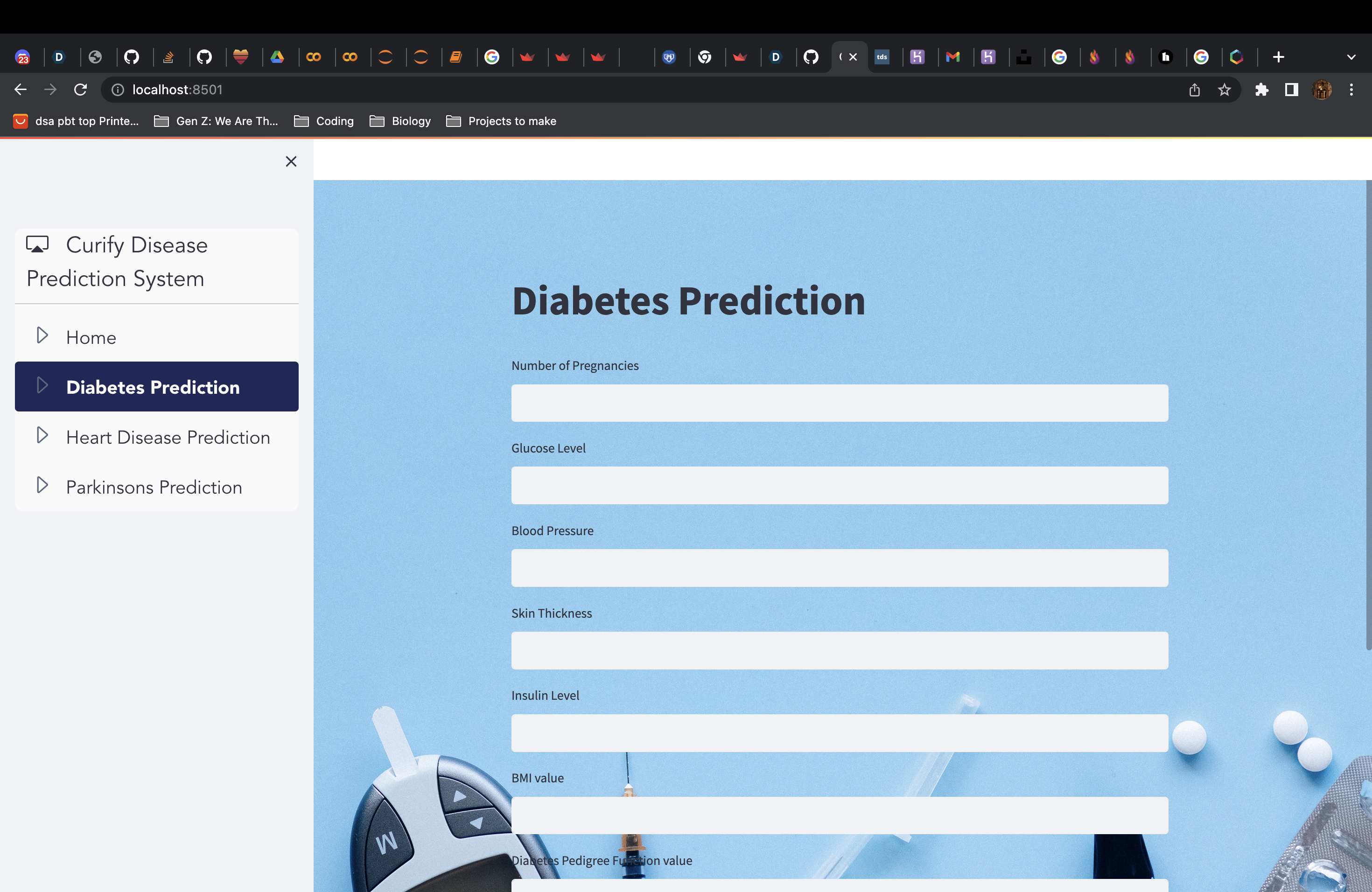
It predicts whether a person has diabetes, heart disease, or Parkinson's by analyzing data entered by the user. It analyzes this data by using machine learning. After it analyzes the input, it outputs whether you may have the disease or not on a web app.
How we built it
We built it by first using datasets we found on Kaggle, Jupyter Notebook, and sklearn to code the notebooks for all the models: SVM and Logistic Regression. Then we saved them using pickle and called them in the Python web application code. We included everything a website would contain; great UI/UX, usability, and functionality. After that, we hosted the web app using Heroku.
Challenges we ran into
We ran into challenges where GitHub would not save our progress, or we had instances where the code just would not work i.e., the ML did not give out desired results, and the web app became over complicated.
Accomplishments that we're proud of
We are proud of ourselves for being able to focus during the entirety of the hackathon and not going to YouTube or playing video games. We were also proud of ourselves for being able to make 3 different disease prediction models that worked great during the hackathon.
What we learned
We learned a lot about the three diseases covered in our program (diabetes, Parkinson's, and heart disease) and how to combine HTML and CSS into a Python Web app to make it look more beautiful.
What's next for Curify: Disease Detection
We want to add more libraries of diseases, such as breast cancer libraries through x-rays, and create an iOS app. We originally planned to make this an iOS app but did not know how to convert the ML code to a coreML model.


Log in or sign up for Devpost to join the conversation.