-
-
Figma Visual
-
-
-
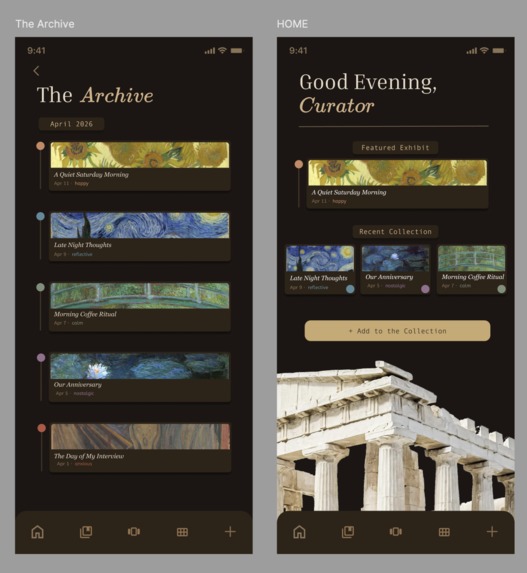
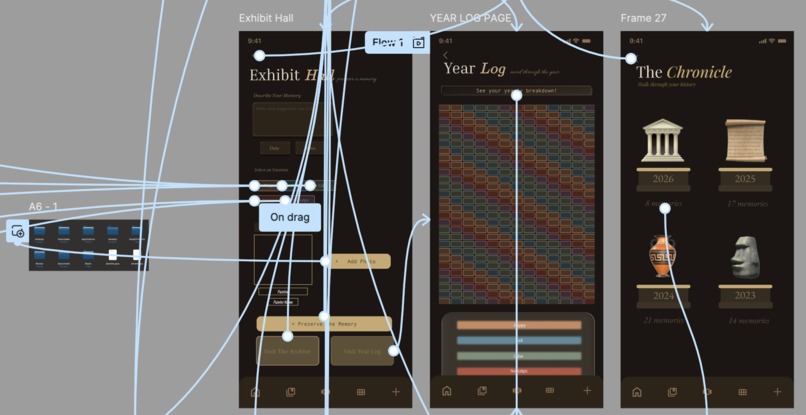
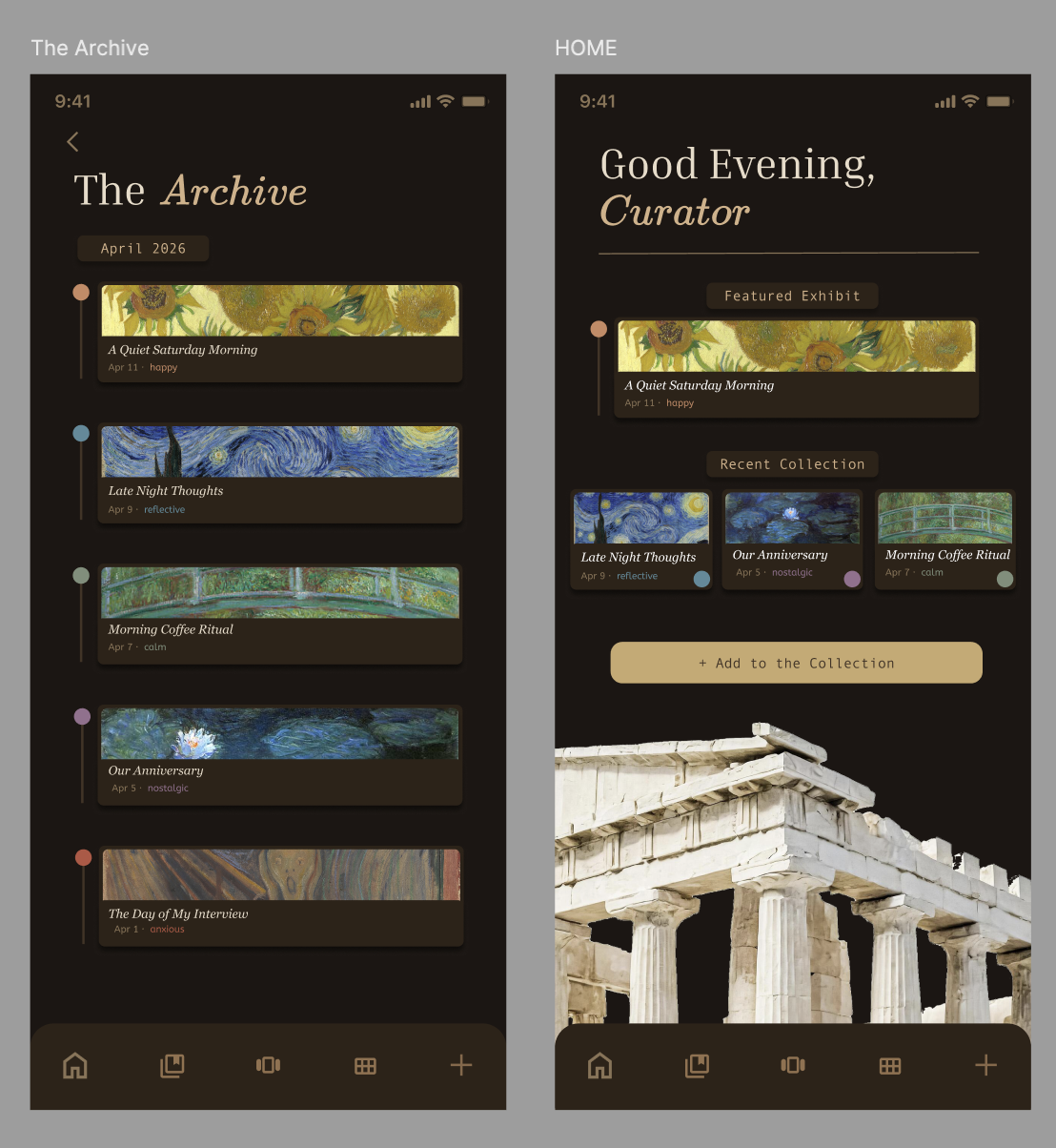
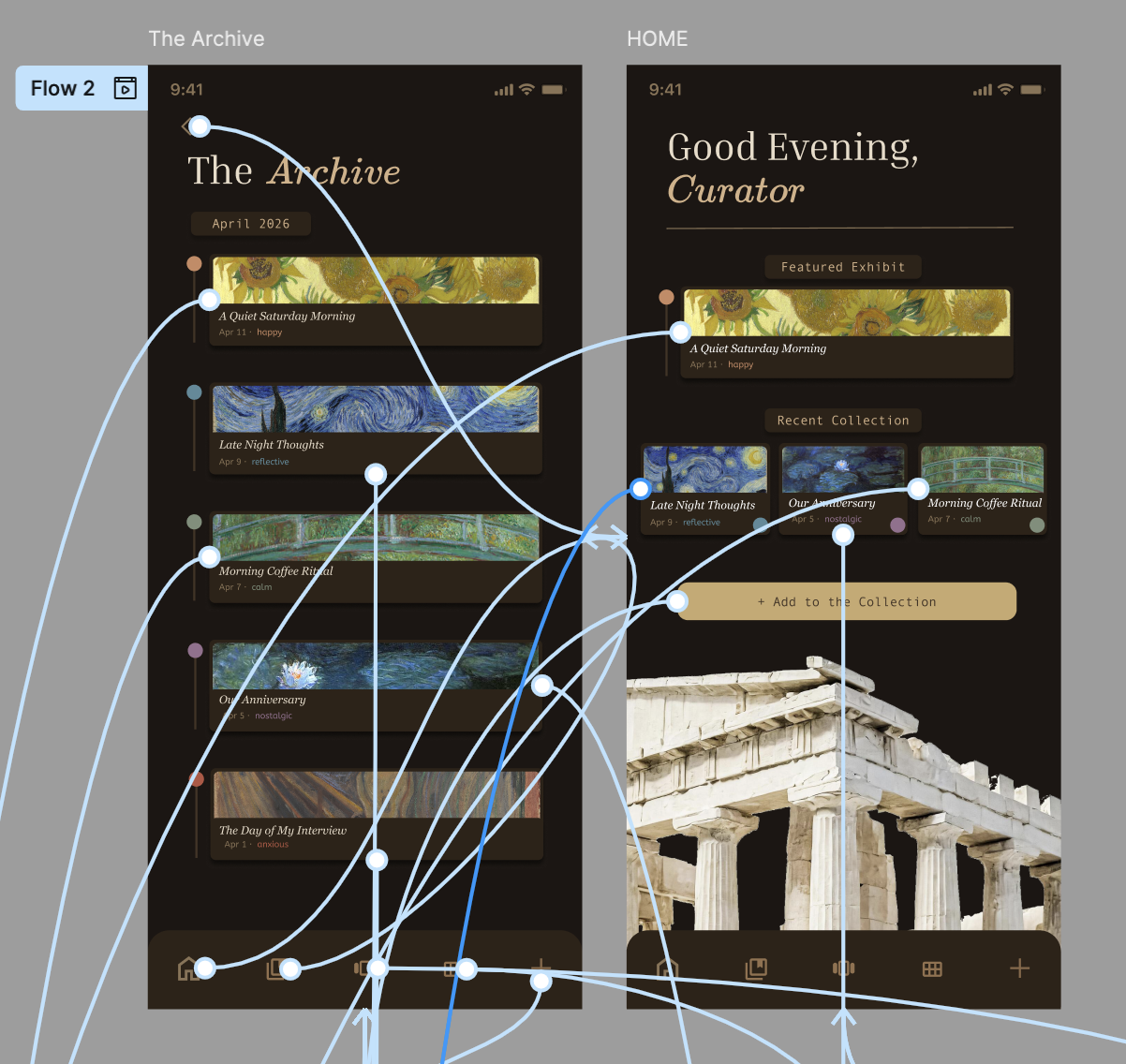
Wireframes of the Archive and the Home page
-
-
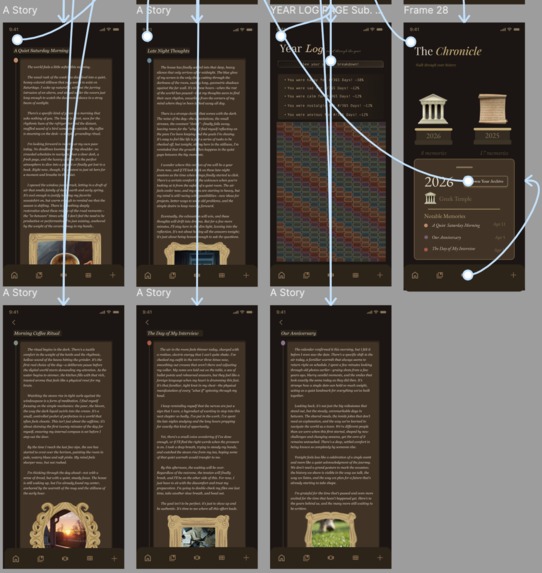
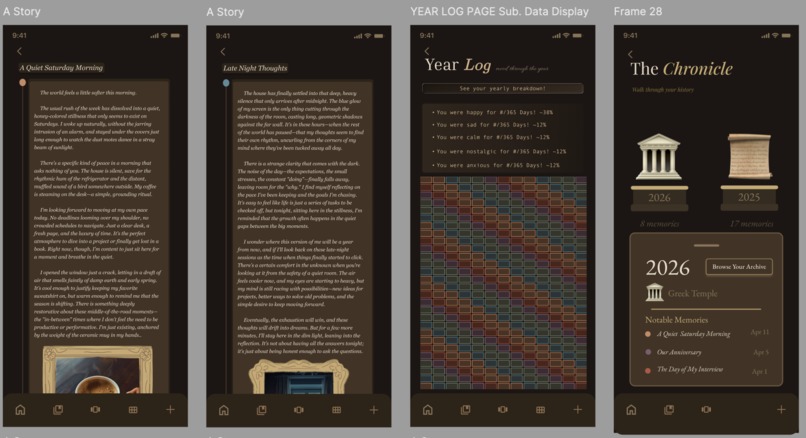
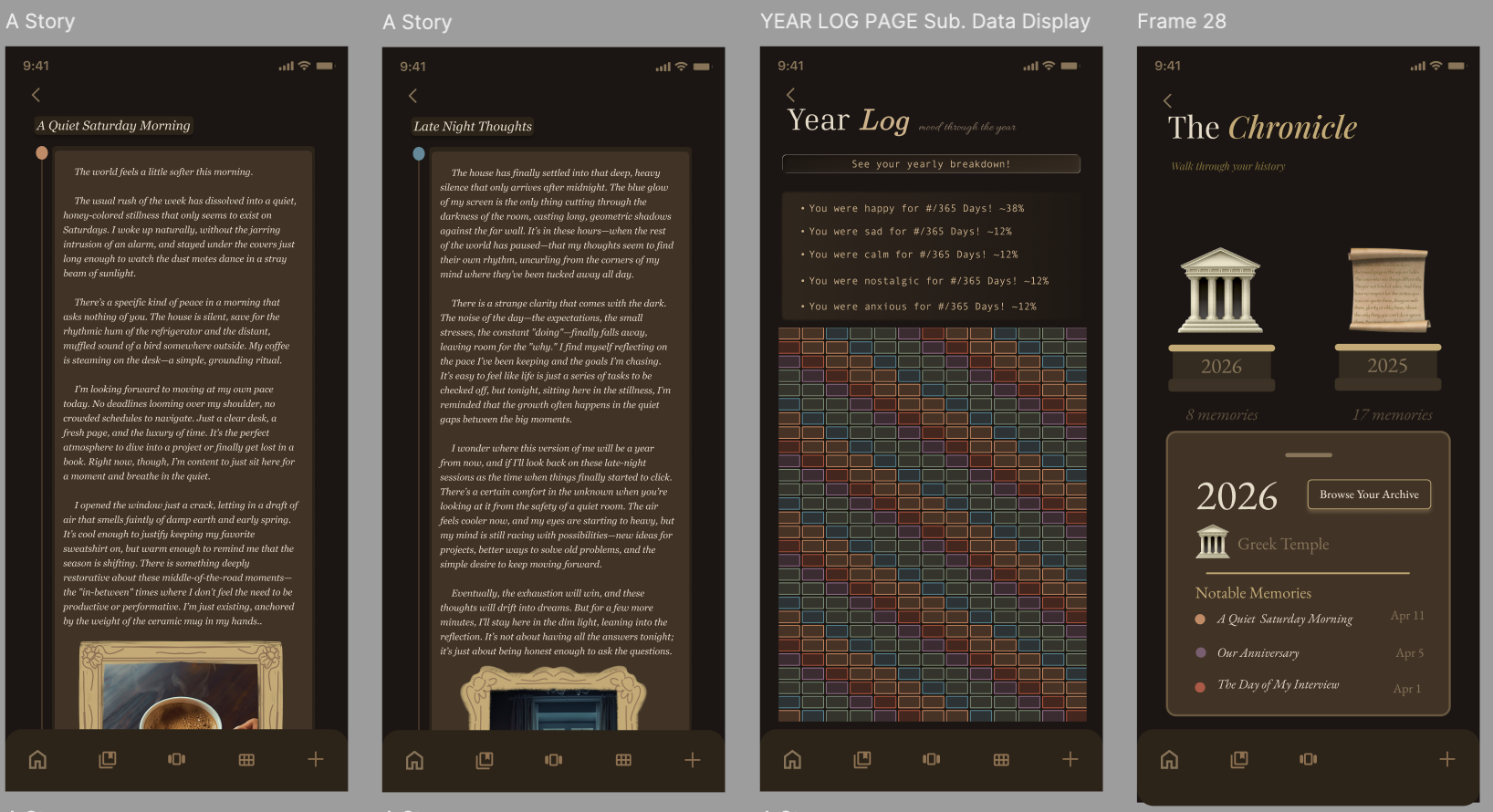
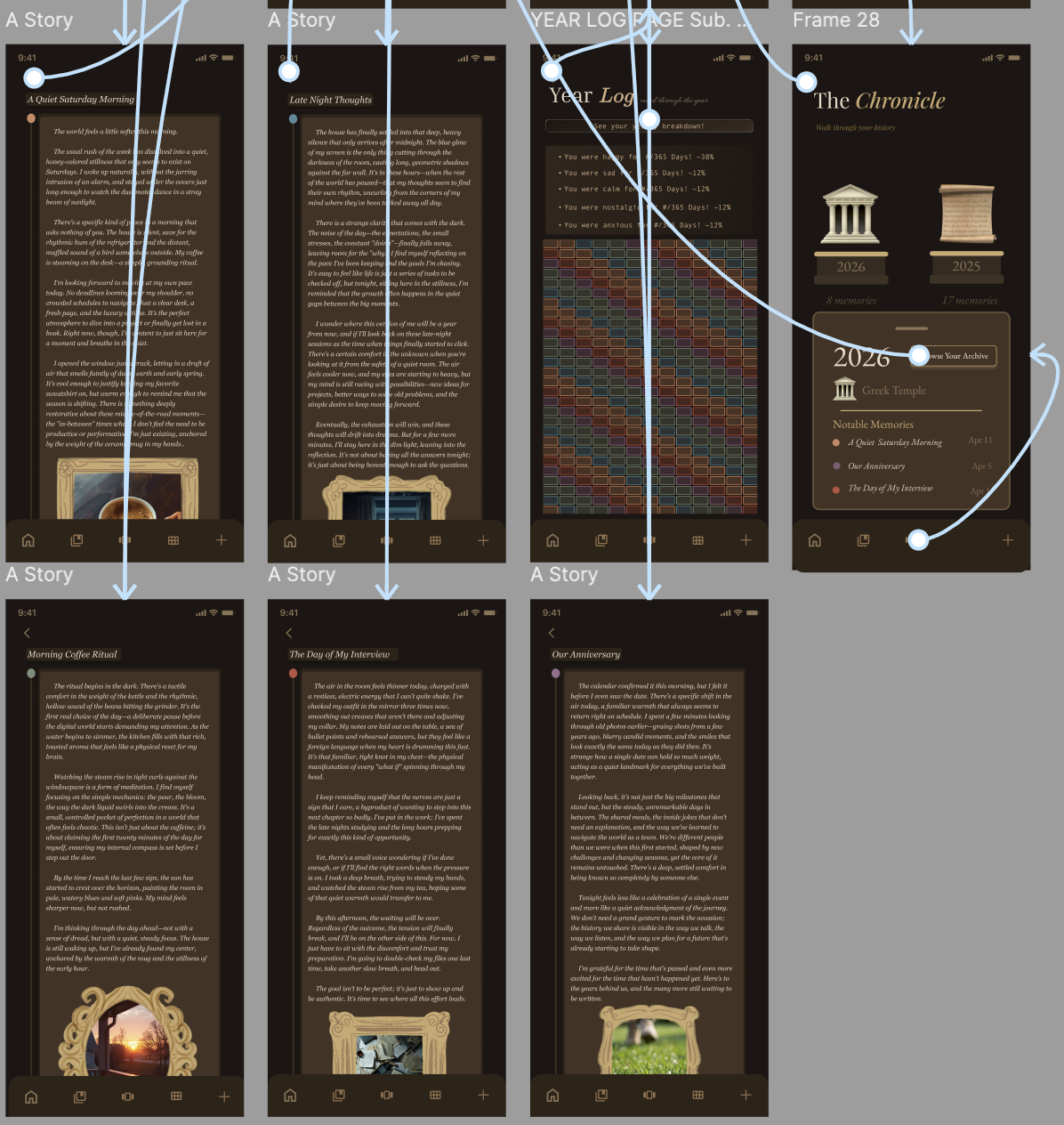
Wireframes to stories
-
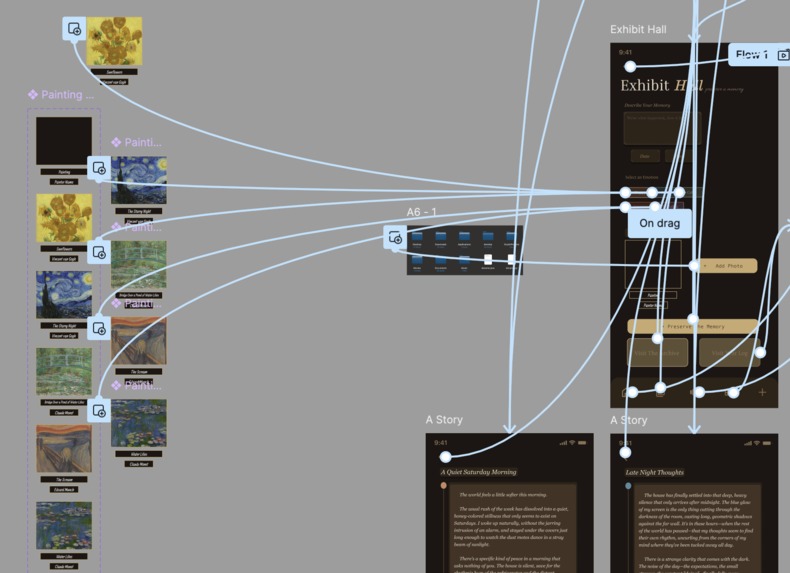
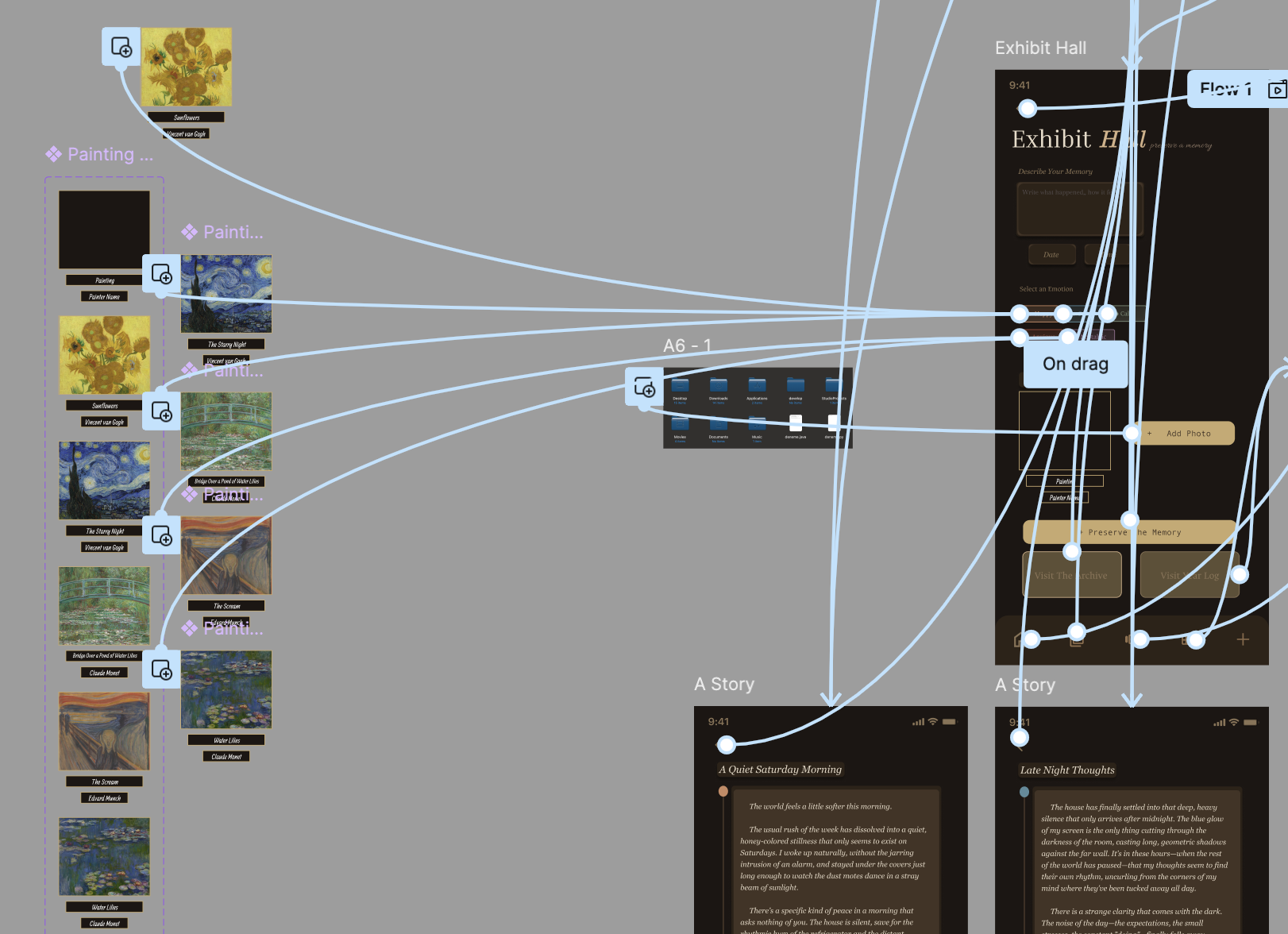
Wireframes of the painting selections
-
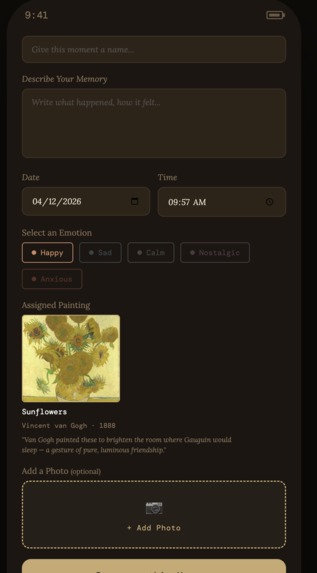
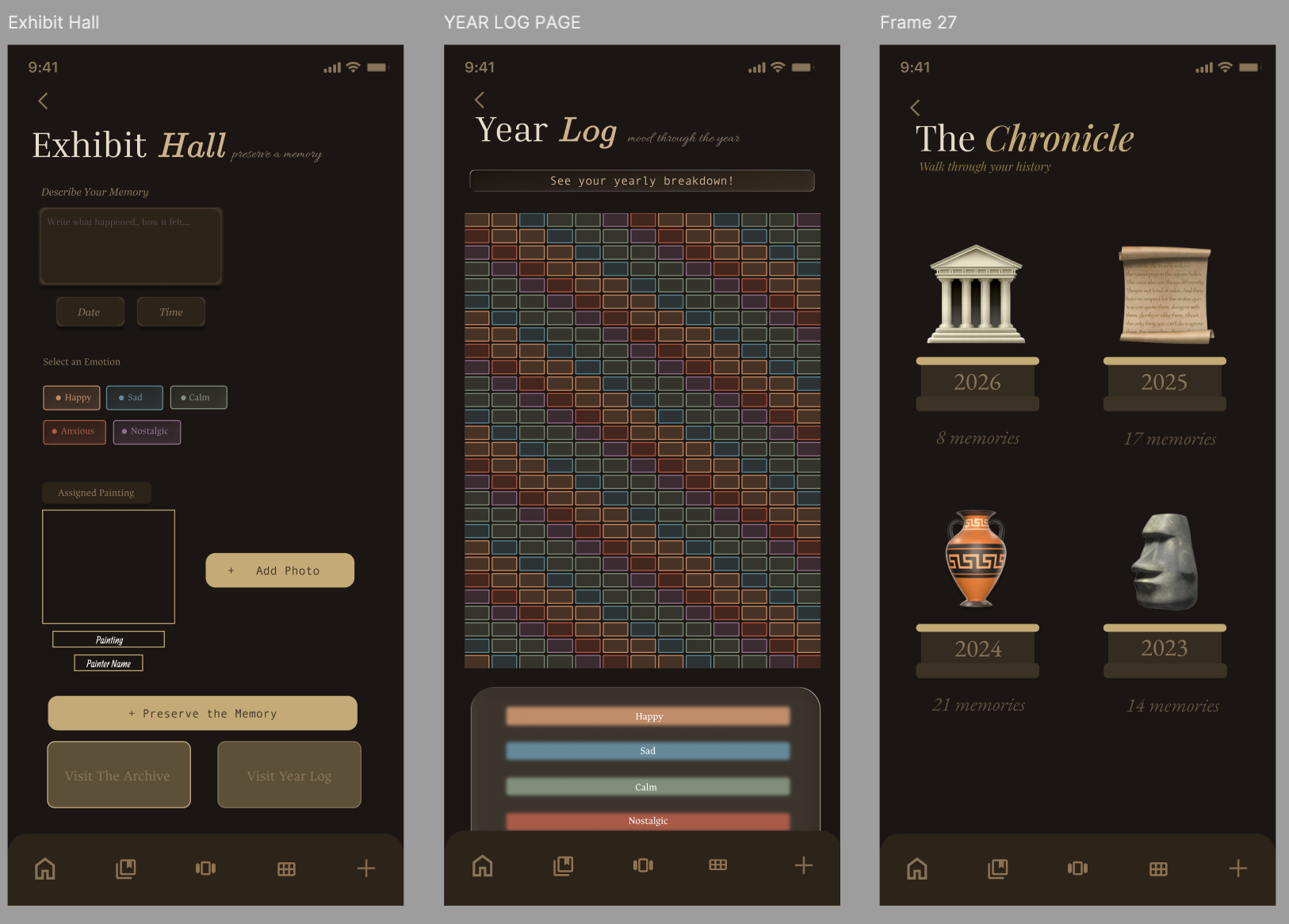
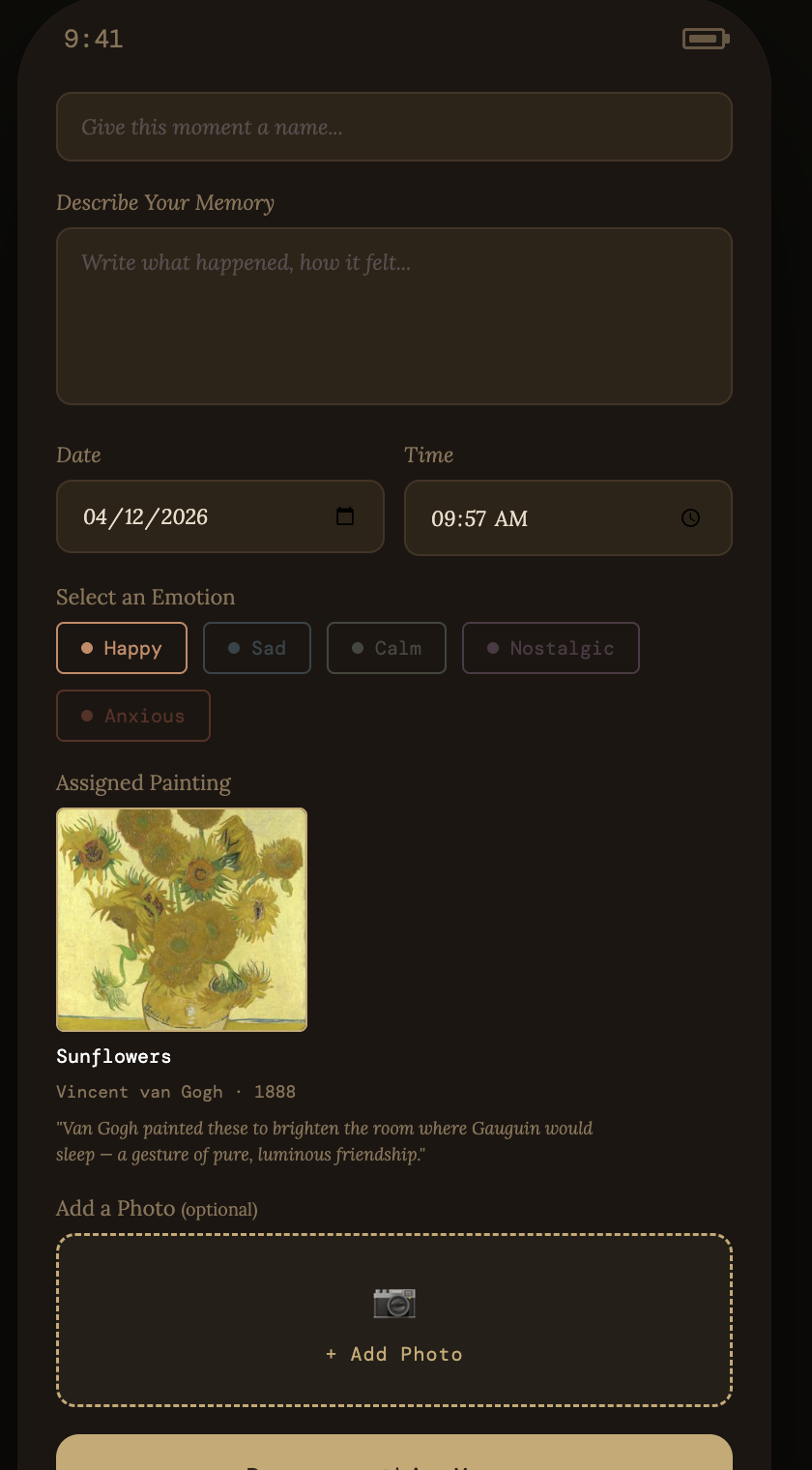
The Add Picture Feature in the Memory Creation
-
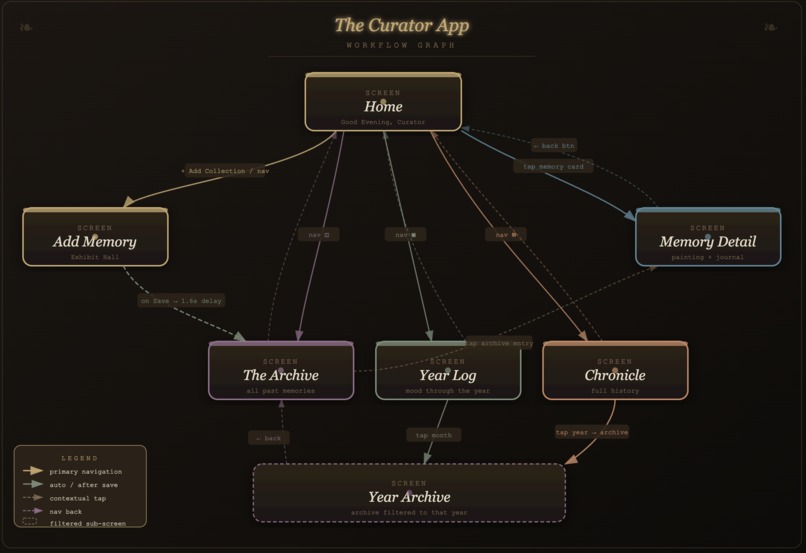
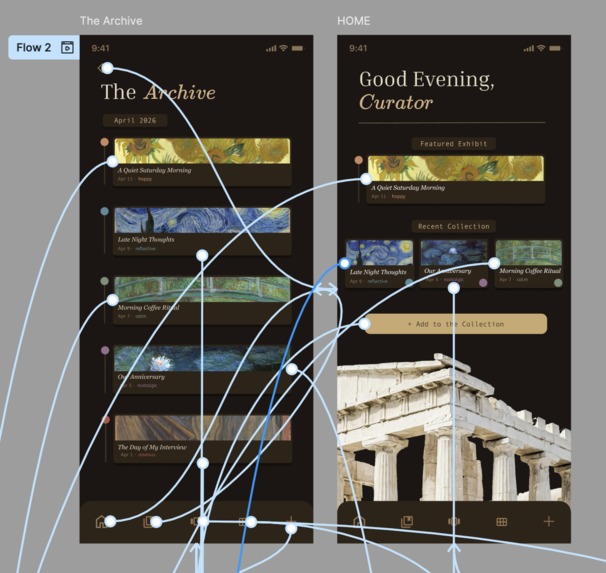
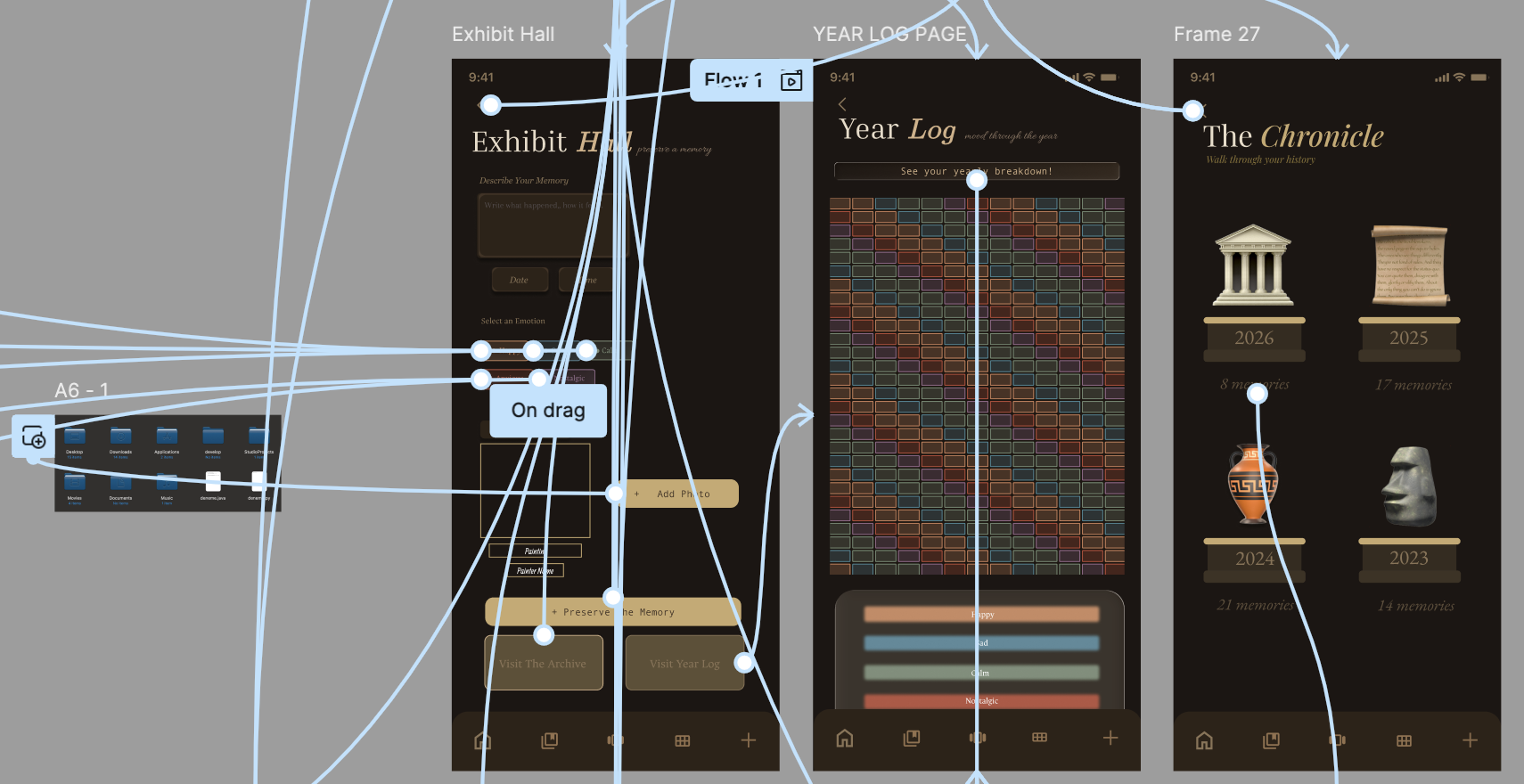
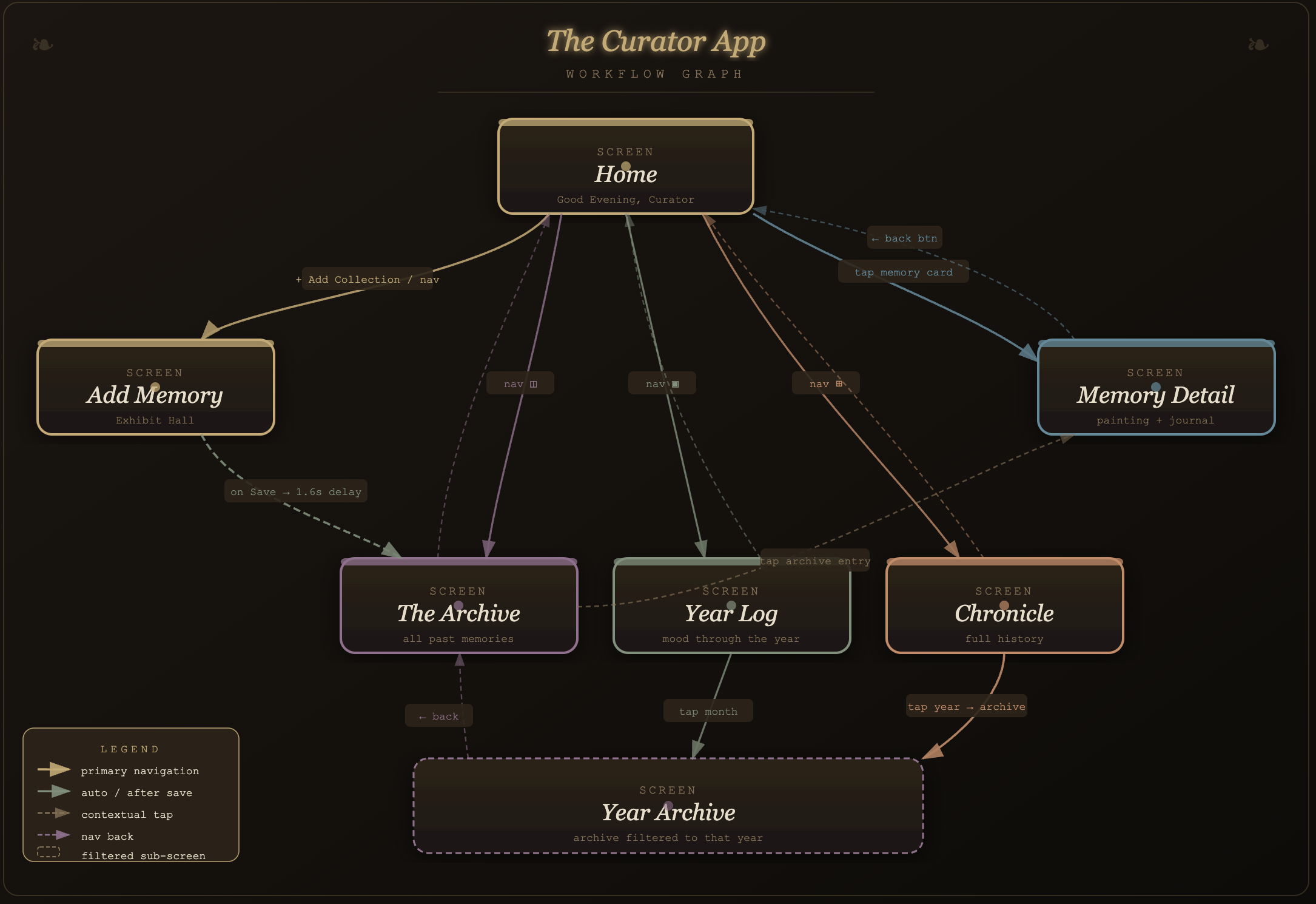
The Workflow Graph
Inspiration The WEHack 2026 theme, The Night at the Museum, immediately made us think about what museums actually do: they take the raw material of human experience and transform it into something worth preserving, worth returning to, worth studying. A painting doesn't just sit on a wall; it holds a moment, a feeling, a world. We asked ourselves: what if we built a museum for your own life? Modern journaling apps feel clinical with the text fields, timestamps, export buttons. We wanted something that felt like an exhibition. Each memory deserved to be curated, framed, and hung. That's where Curator was born: a personal memory gallery where every journal entry is paired with a classical masterpiece that mirrors its emotional fingerprint.
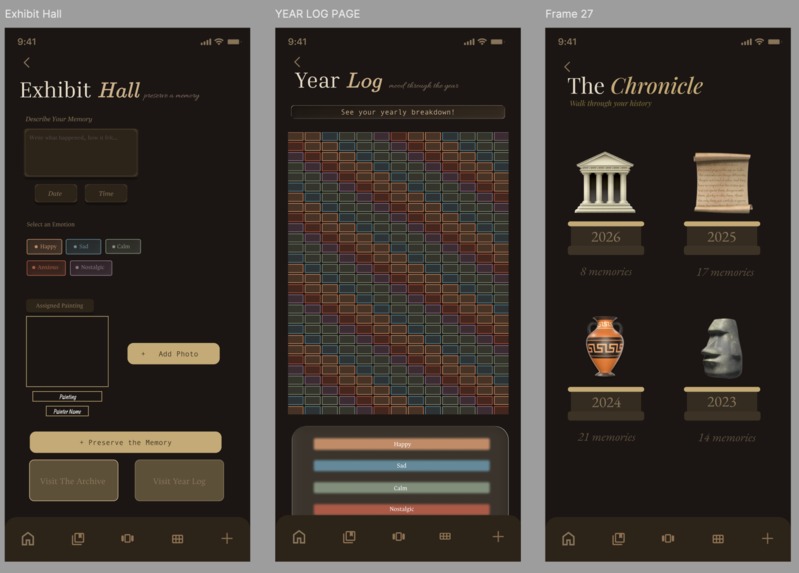
What it does Curator is a digital memory capsule that transforms personal experiences into a private, curated art gallery. By bridging the gap between journaling and classical expression, the app pairs user-logged memories with historical masterpieces based on the user's chosen emotion. When a user logs a moment, our system matches their sentiment with a painting that mirrors that feeling, such as pairing a joyful achievement with Van Gogh’s Sunflowers, giving personal history a timeless visual weight. The app functions as an immersive emotional archive, allowing users to revisit their past through a gallery of art where each masterpiece acts as a portal to a specific recorded memory. To deepen the connection to the art world, every entry includes context about the artist and the matched work, turning the act of reflection into an educational journey. This move beyond simple text lists creates a more engaging and visually stimulating way to browse one's own history. To support mindfulness and personal growth, Curator features a robust analytics suite that provides a high-level view of a user's year. The app generates dynamic emotion charts and statistical breakdowns, showing the exact percentage of the year a user felt happy, anxious, or calm. By combining personal storytelling with data visualization, Curator transforms a standard diary into a meaningful, artistic representation of the human experience, helping users identify patterns in their well-being over time.
How we built it Curator is a fully coded, single-file mobile prototype built in HTML and CSS, designed to render as a pixel-perfect phone mockup (390×844px) in any browser, with no frameworks or dependencies. The visual language was designed from scratch: warm amber against deep walnut backgrounds, with serif typography pairing Playfair Display and Lora to evoke the feeling of standing in a dimly lit gallery after hours. Every design token was defined intentionally. We anchored on three principles: Seamless usability: a persistent bottom nav bar, single primary action per screen, no dead ends Semantic color: mood colors cascade consistently across card thumbnails, timeline dots, mood tags, and the heatmap; color is never decorative, it always means something Screens are named Exhibit Hall, The Archive, The Chronicle, in which the metaphors shape the experience
Challenges we ran into Pairing emotion to art felt straightforward until we tried to define it rigorously. Emotions don't map cleanly, reflective could be Hopper, Van Gogh, or Vermeer. To overcome this problem, we mapped our art selection to the color palettes psychologists associate with specific moods and matched each memory to a painting that reflects those exact tones and emotional resonance. Recreating a native mobile feel in pure HTML/CSS required careful work: momentum scrolling, tap states without flicker, and scroll containers that didn't bleed into the nav bar. We enforced a fixed-dimension phone shell to hold the canvas size consistent. The Year Log heatmap required precise layout math. Fitting days into a scrollable container while keeping cells square and legible, without a layout engine, meant expressing everything in flex ratios and fixed heights. So we manually calculating fixed heights and flex ratios to keep each day a perfect, legible square throughout the scrollable view.
Accomplishments that we're proud of We are incredibly proud of engineering a fully navigable, multi-screen mobile prototype within a single HTML file while maintaining a sophisticated visual system of color tokens and typographic hierarchy across seven distinct layouts. Beyond the technical build, we successfully proved that classical art integration creates a profound emotional impact, seeing Munch's The Scream alongside an anxious entry resonates far more deeply than a simple status icon. Finally, our Year Log delivers a genuinely beautiful and intuitive emotional summary, offering a level of insightful data visualization that most journaling apps overlook.
What we learned We discovered that metaphor is a powerful UX tool rather than just a branding choice, as the museum framing fundamentally elevates how users perceive the act of logging personal memories. Navigating the constraints of a 390 x 844 px canvas taught us to master information density, ensuring emotionally rich content feels substantial without crowding the mobile interface. By integrating classical art, we learned that elements like Van Gogh’s brushwork communicate a depth of feeling that modern flat UI simply cannot replicate. Ultimately, we found that scoping ruthlessly under hackathon time pressure results in a more polished, intentional product than trying to build every possible feature.
What's next for Curator App Moving forward, we plan to transition from explicit emotion tags to semantic AI painting assignments, utilizing an LLM to interpret the deeper narrative of a journal entry. To move beyond a prototype, we will implement real persistence via a backend or local storage so user memories survive a refresh. We also aim to introduce Shared Galleries, allowing users to publish curated exhibits of their year for others to explore. Finally, we intend to expand our collections to include architecture and sculpture, ensuring every emotional register finds its perfect artistic medium.


Log in or sign up for Devpost to join the conversation.