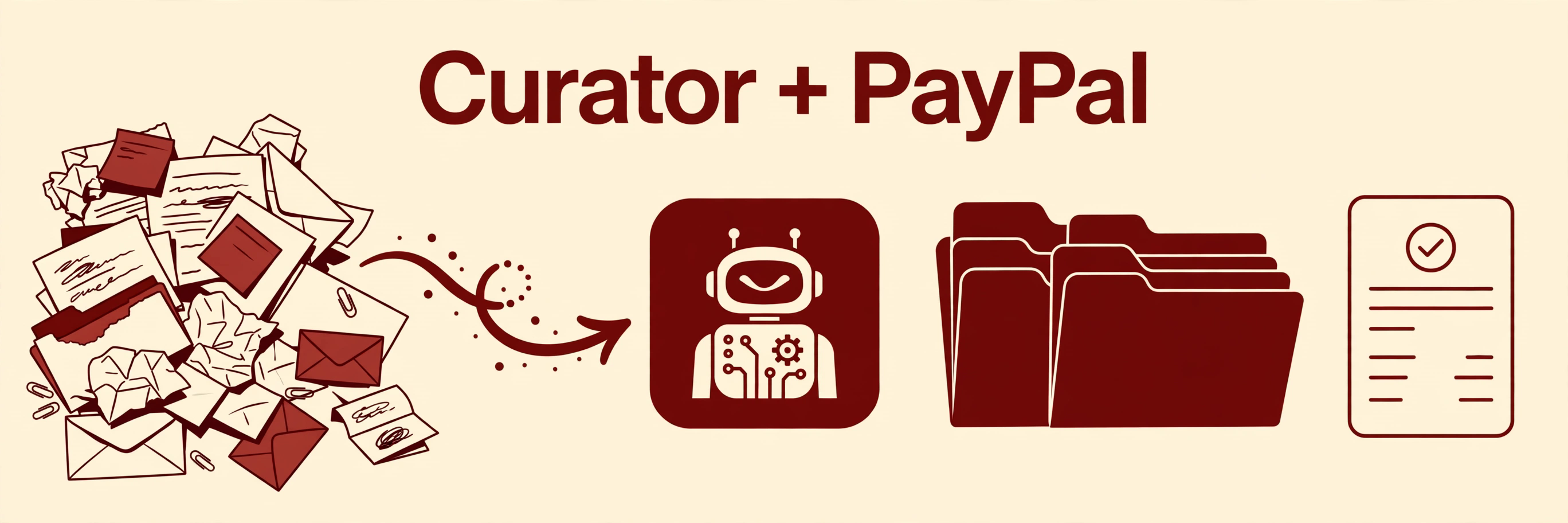
Curator snaps onto a messy folder, sorts it into subjects by what each file is actually about, answers questions with facts that point back at their exact source line, pays an invoice for real in the PayPal sandbox, and writes the payment into an append-only K-record — a log where old entries are never edited, so anyone can audit later what the agent believed, what it was allowed to do, and what it paid.
Four acts:
- SNAP ON — 34 messy files (bad names, chat logs, a ChatGPT export, unpaid invoices) get sorted into subjects by content, never by filename. Files that fit nowhere stay unfiled. Curator never guesses.
- RETRIEVE — Every fact comes with its source pointer (file name + line N / message N). No source, no fact.
- PAY — Invoice INV-0041 ($480, M. Okafor, job complete Oct 28, due Nov 12) is paid through the PayPal sandbox via the PayPal Agent Toolkit in two steps: the server creates the order, the sandbox buyer approves it, the agent captures it and shows the receipt. No approval, no money moves.
- AUDIT — Pick a date range and run the audit: permissions, authority/trust changes, beliefs and payments, plus what changed since. The live payment appears as a new K-record entry. Old entries are untouched.
Built with Node.js and Express, vanilla JavaScript frontend, and the PayPal Agent Toolkit (@paypal/agent-toolkit 1.11.0) against the PayPal sandbox only. There is no production path in the code.
Honest notes: the pool data is seeded mock data (invented people, businesses, invoices and amounts). The PayPal sandbox payment is real API calls with fake money. The payee email on the receipt is a demo placeholder label; funds settle to the sandbox merchant account that owns the server credentials, because the toolkit has no payee field.
The sheet changes. The notes never do.

