Inspiration
The inspiration behind CuraStyl came from a simple but frustrating experience: choosing a hairstyle from Instagram, showing it to a stylist, and still having no idea how it would actually look on you. A haircut, beard style, or hair colour is a highly visual and personal decision, yet customers usually have to make that decision without seeing the result beforehand.
At the same time, we noticed a second problem on the salon side. Local salons often depend on phone calls, WhatsApp, walk-ins, and manual scheduling, making customer discovery, appointment management, and retention difficult.
We wanted to connect these two problems into one experience: help customers decide what suits them using AI and 3D WebAR, then help them discover, book, and revisit a real local salon. This led us to build CuraStyl as a complete visual-to-booking platform rather than just another salon directory.
What it does
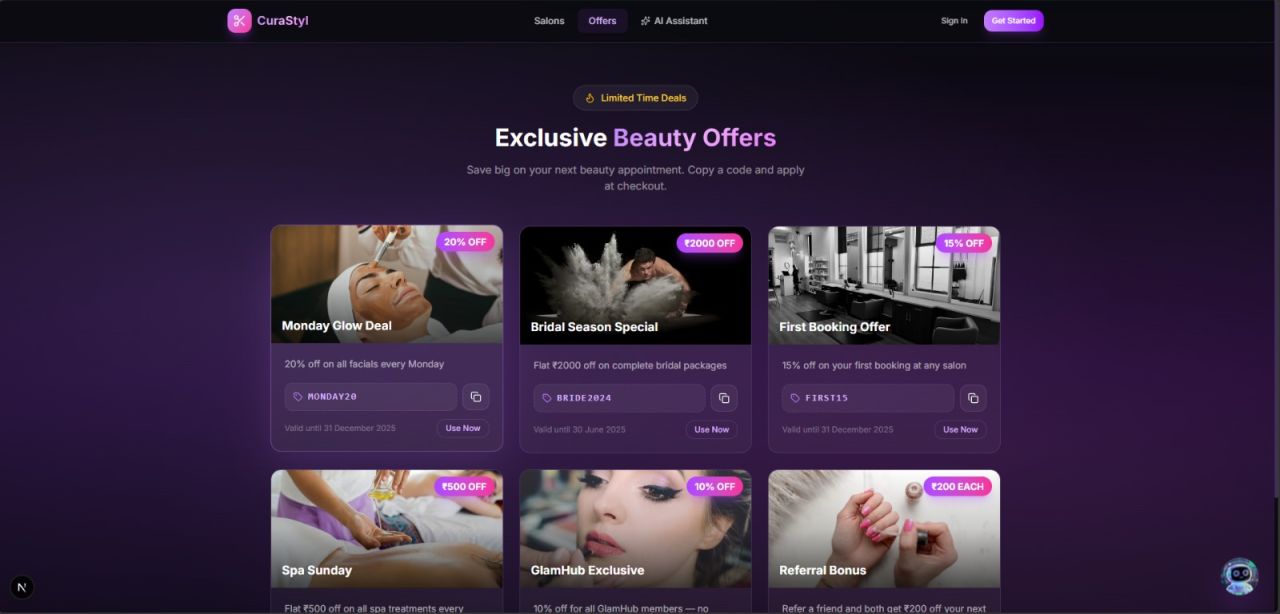
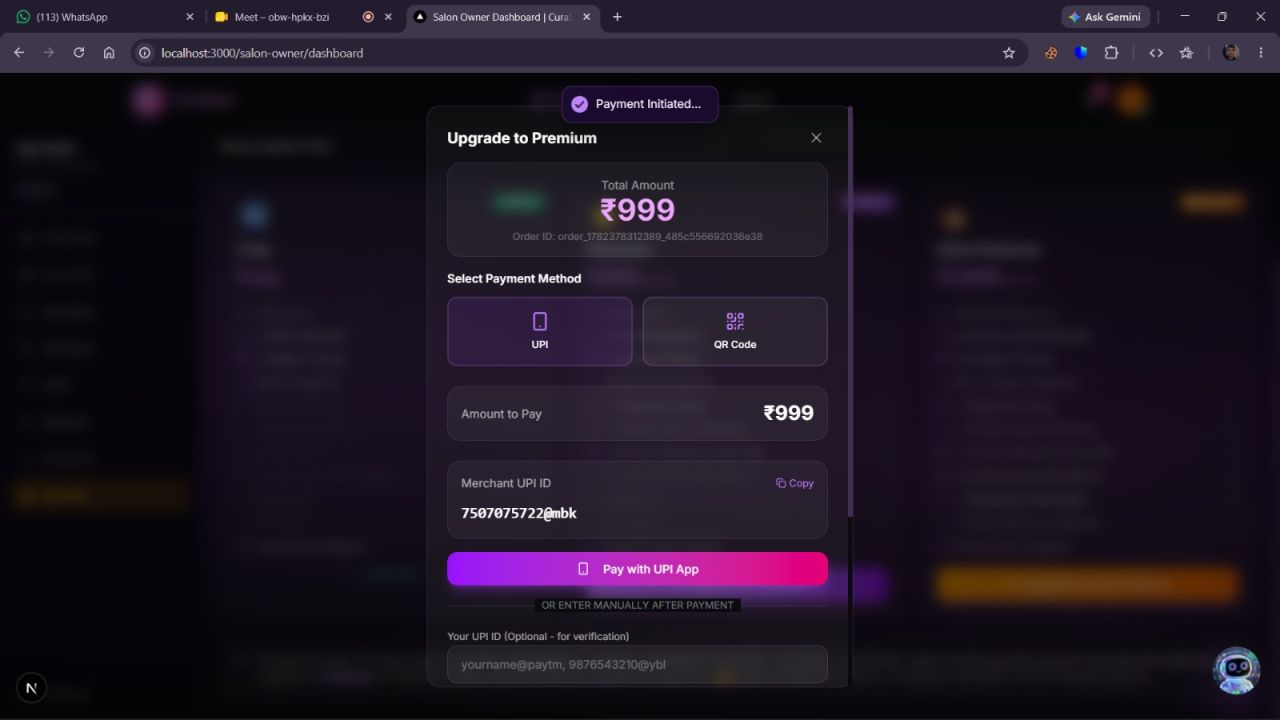
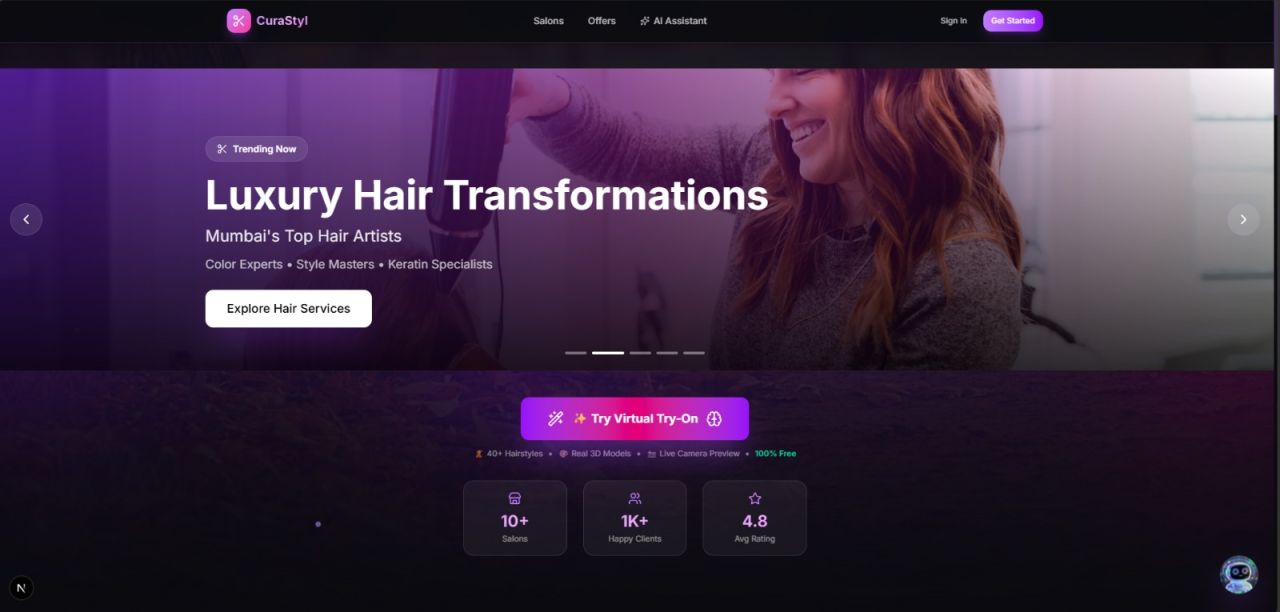
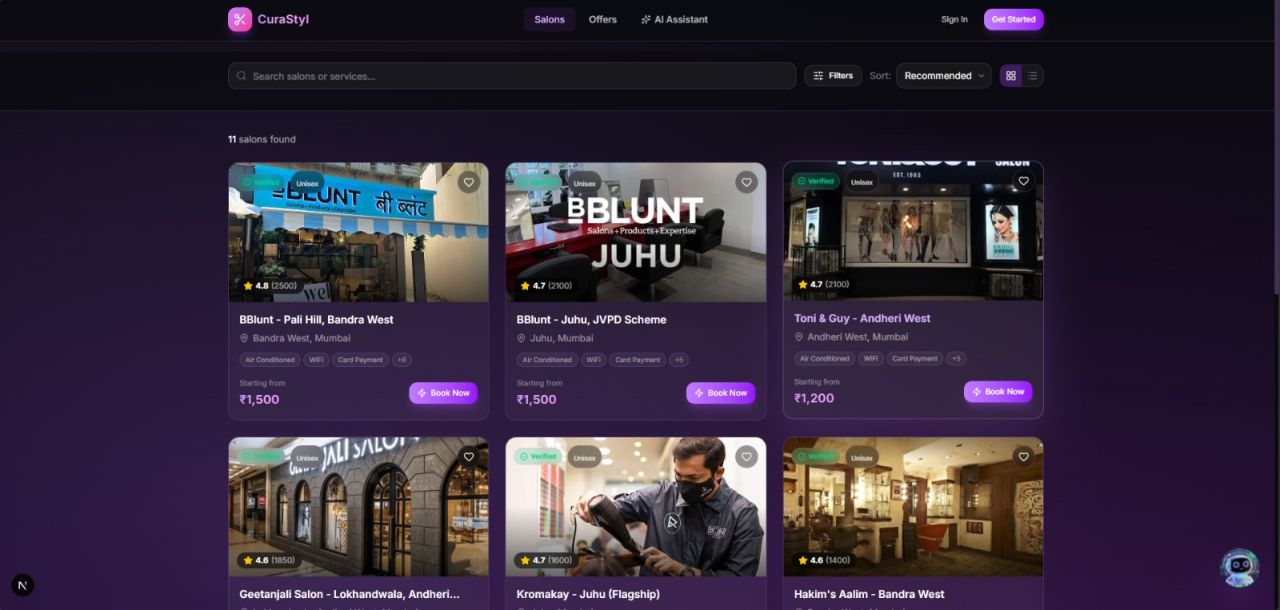
CuraStyl is an AI-powered hyperlocal salon marketplace that combines intelligent styling assistance, 3D WebAR virtual try-on, salon discovery, booking, payments, loyalty, and salon management in one platform.
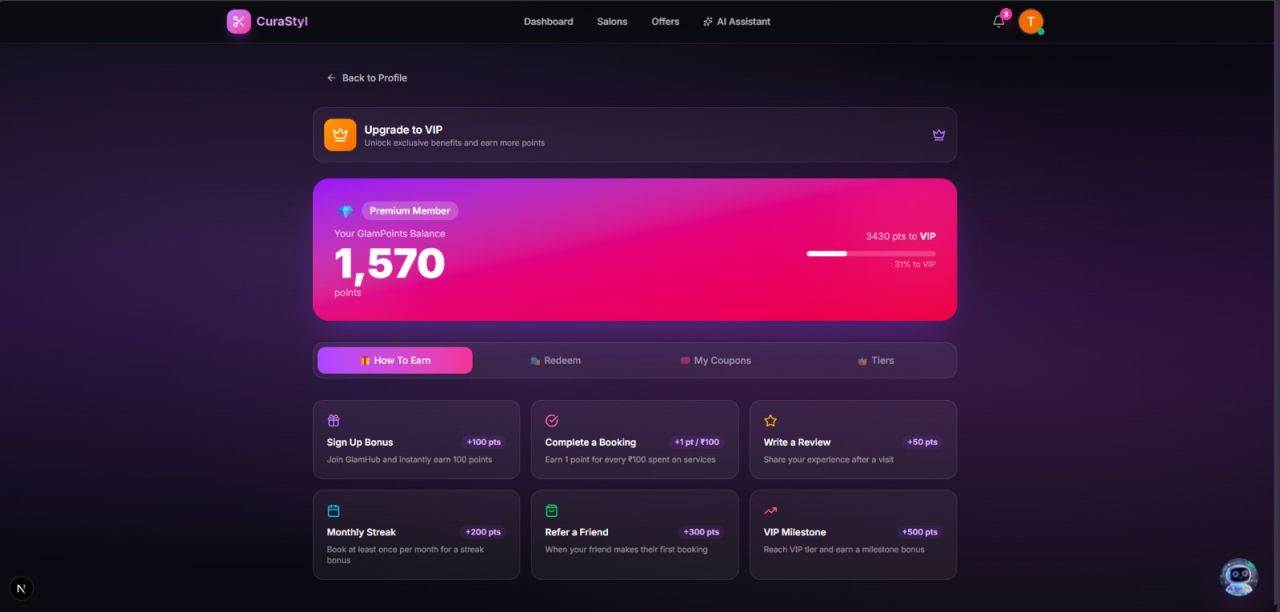
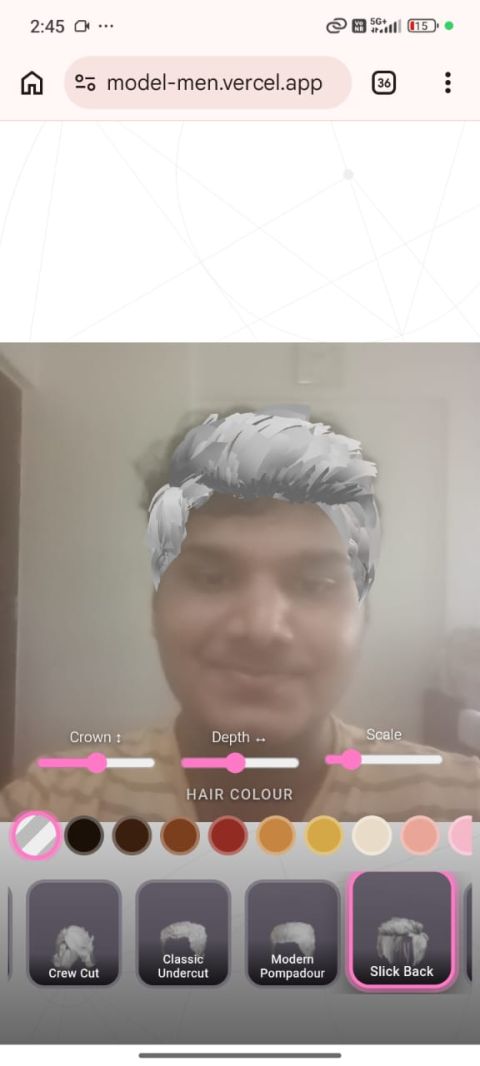
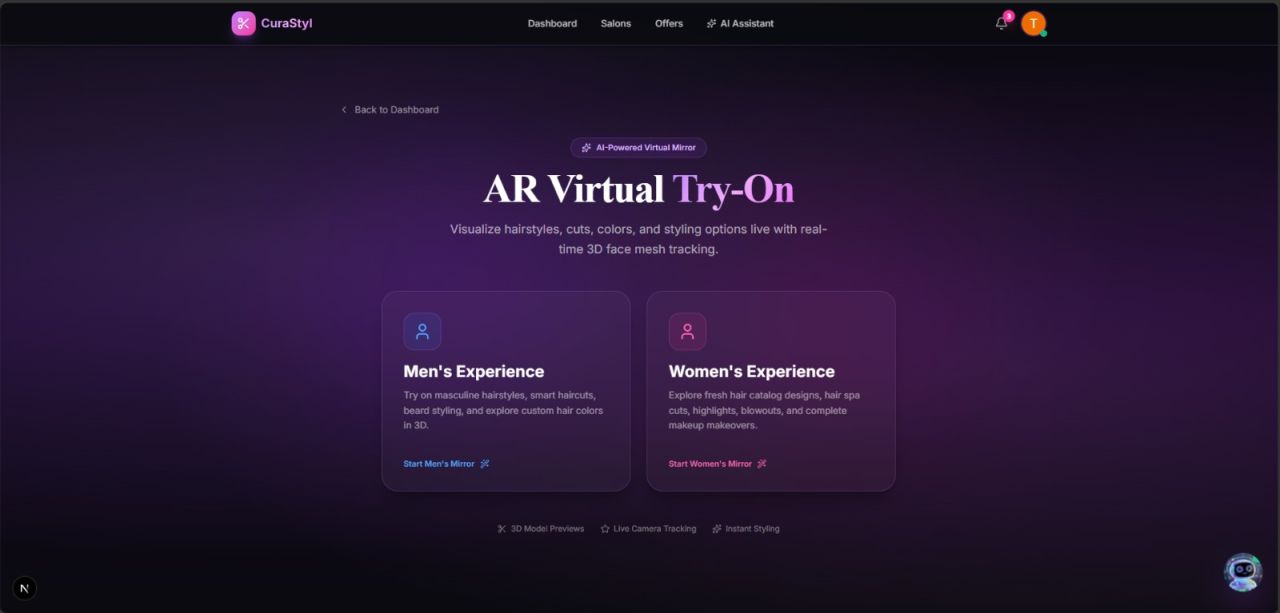
Customers can use AuraAI to get personalized hairstyle and grooming recommendations, explore visual references, and use a browser-based 3D virtual mirror to preview selected hairstyles and beard styles using real-time facial tracking. They can then discover salons based on location, explore services, check available slots, make a booking, and earn GlamPoints.
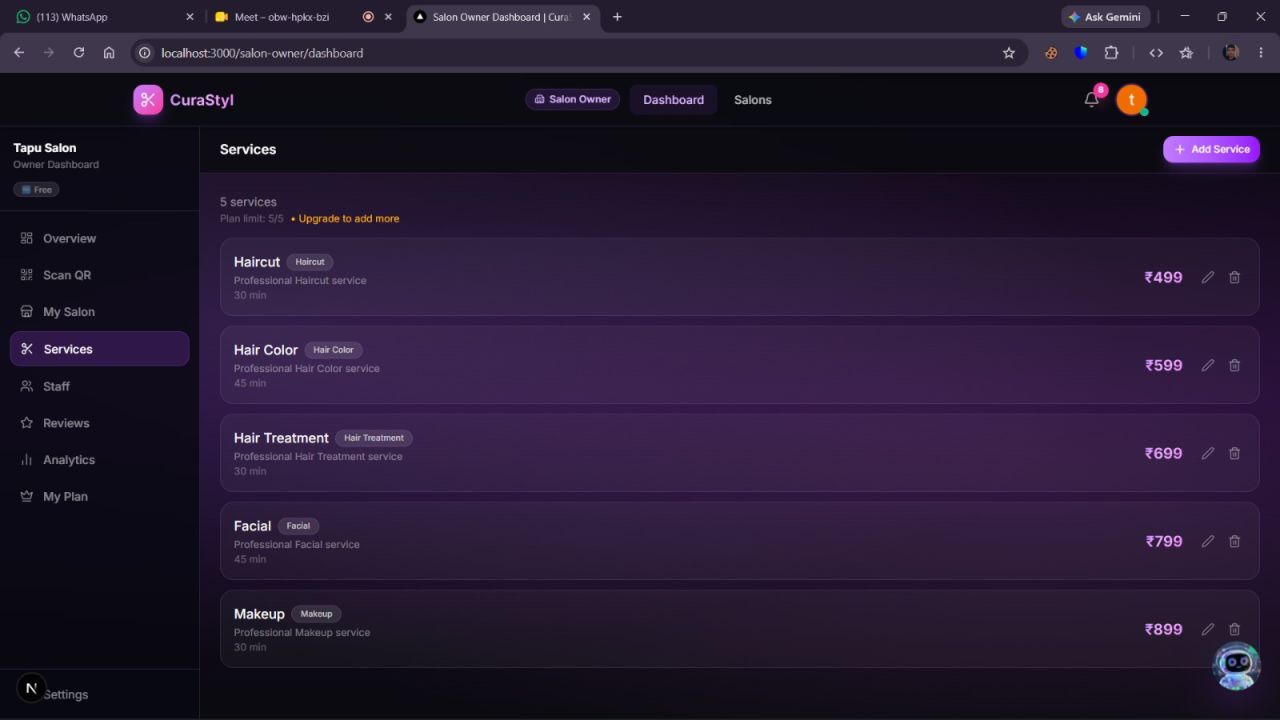
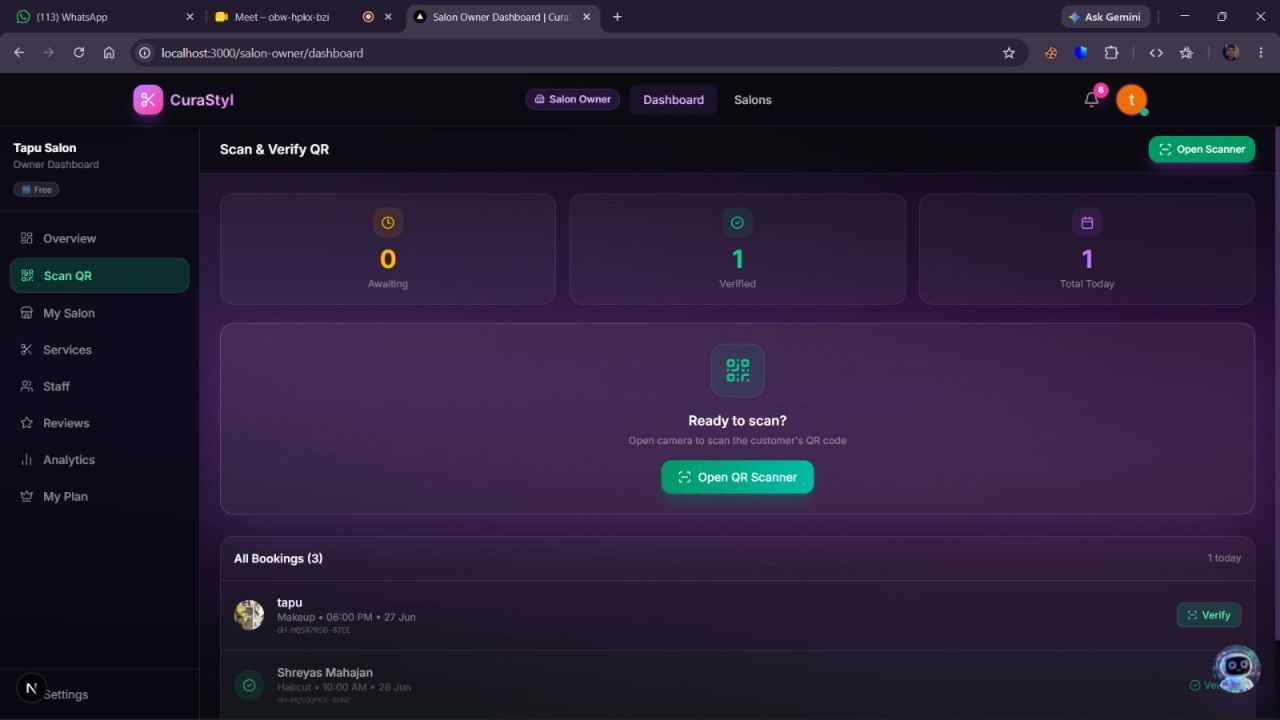
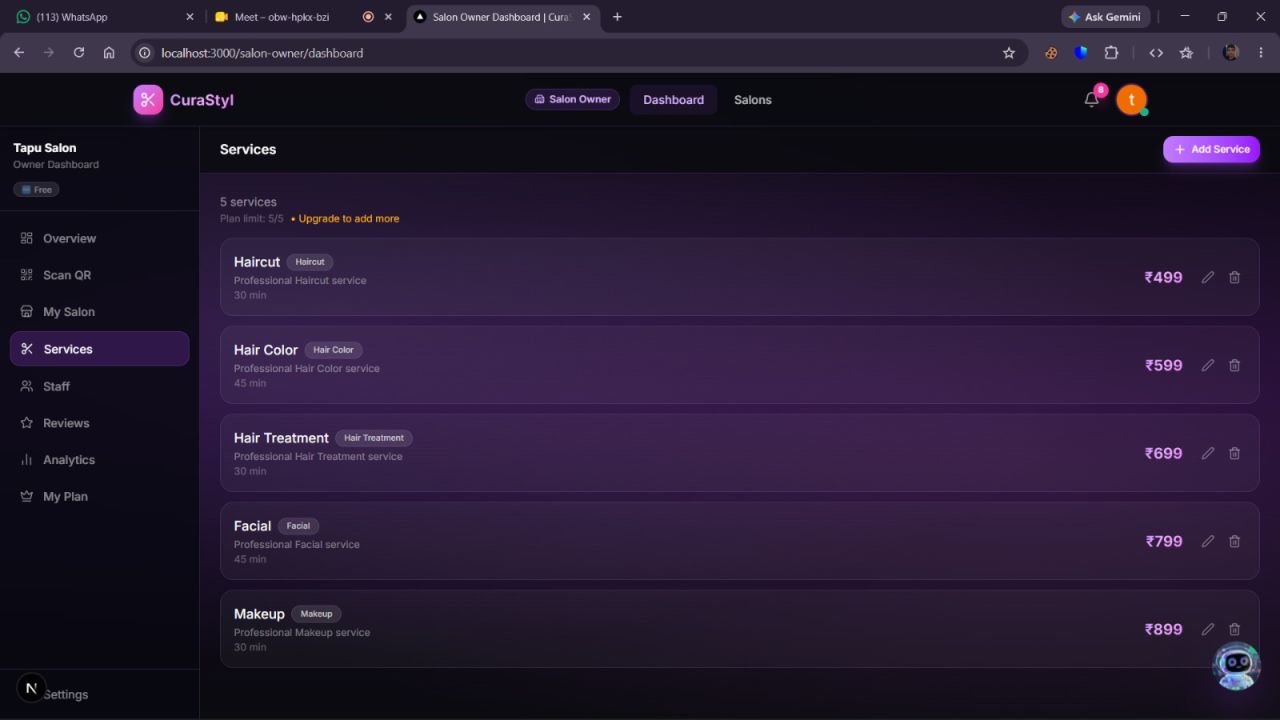
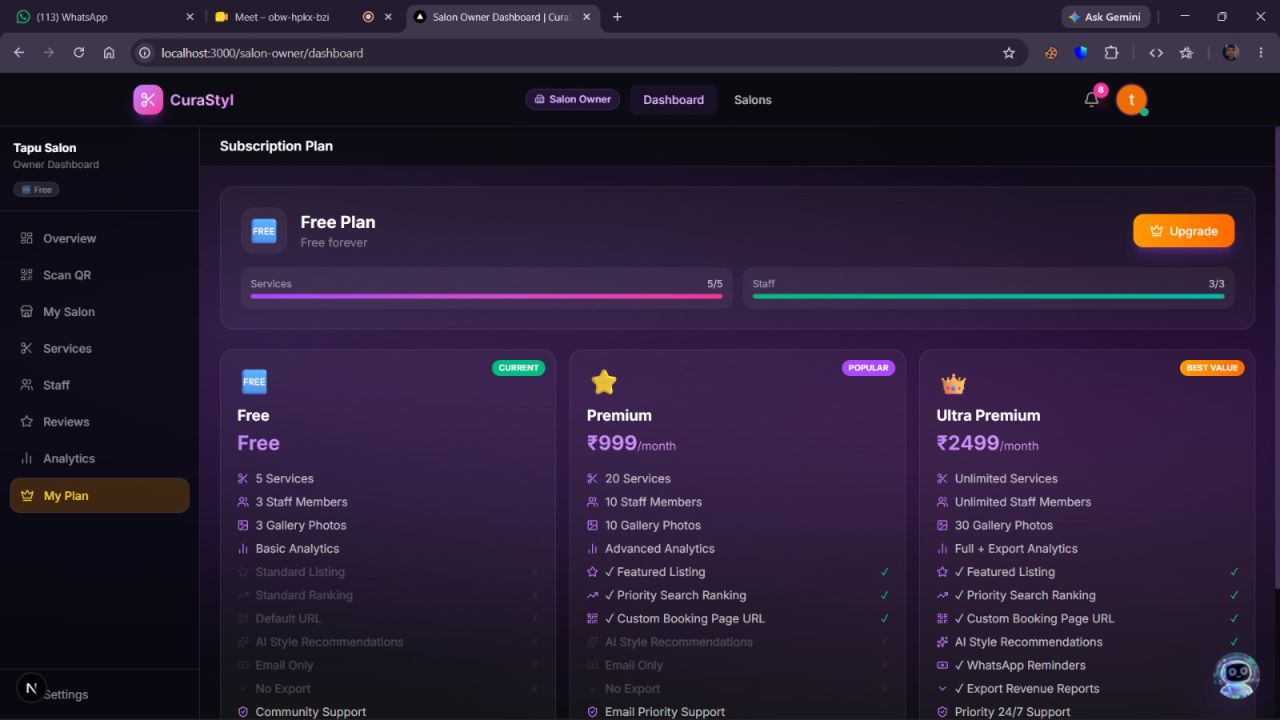
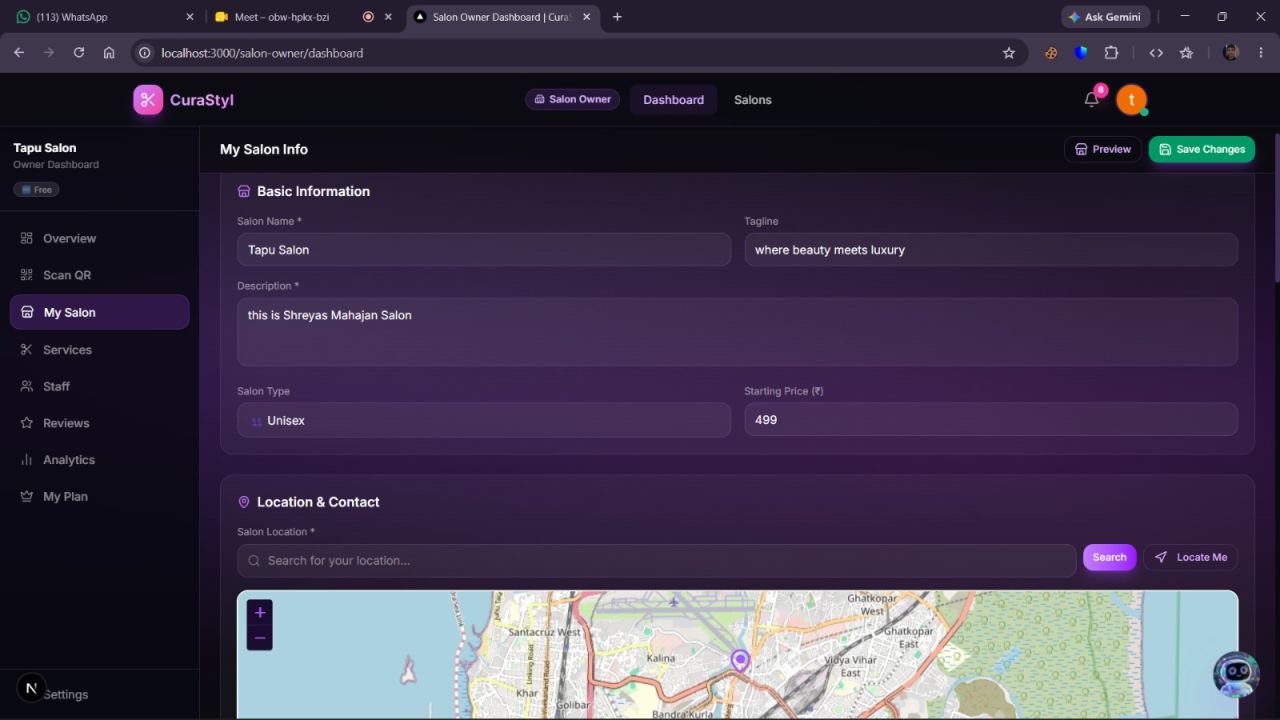
For salon owners, CuraStyl provides a digital workspace for managing appointments, staff schedules, customer information, and business activity. The goal is to connect the complete journey from “What will suit me?” to “Where should I get it done?” to “How can the salon manage the appointment?”
How we built it
We built CuraStyl as a full-stack web application using Next.js 15 and React 19, with Tailwind CSS and Framer Motion for the frontend experience.
The 3D virtual try-on system uses MediaPipe Face Mesh for real-time facial landmark tracking and Three.js / React Three Fiber for rendering 3D hairstyle and grooming assets directly in the browser. This allows users to experience WebAR without installing a separate mobile application.
AuraAI is built around Google's Gemini multimodal AI capabilities to provide conversational styling assistance and personalized recommendations. We also integrated visual content sources to provide relevant hairstyle inspiration.
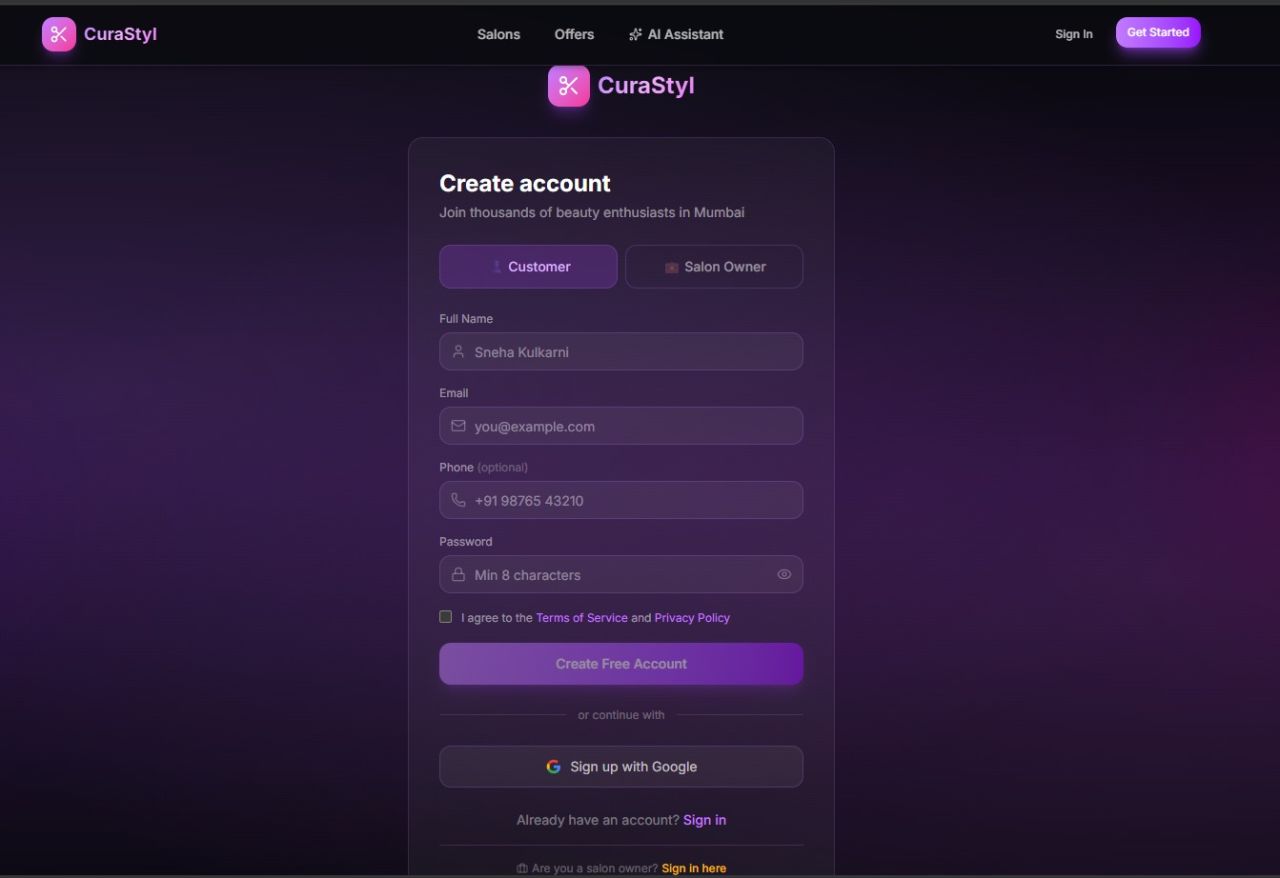
For backend infrastructure, authentication, database management, and access control, we used Supabase PostgreSQL with Row-Level Security. We implemented role-based access so customer and salon-owner workflows remain separated. We also developed booking, payment, loyalty, and salon-management workflows as part of the same ecosystem.
The result is a live, deployed product rather than only a prototype.
Challenges we ran into
One of our biggest challenges was building a real-time 3D try-on experience that works directly inside a browser. We had to combine facial landmark detection, 3D asset positioning, camera permissions, rendering performance, and responsive UI while keeping the experience usable across different devices.
Another challenge was integrating multimodal AI reliably. AI APIs can experience quota limitations or temporary failures, so we implemented an API-key rotation and failover mechanism to improve the resilience of AuraAI.
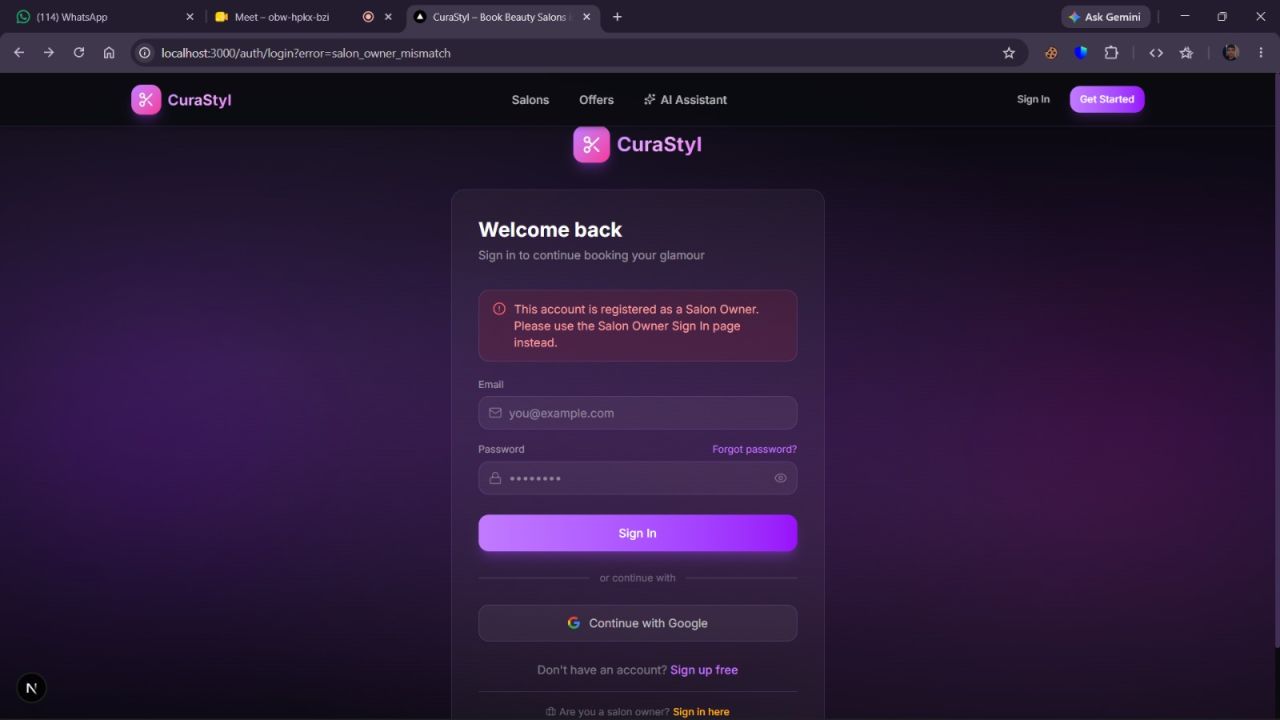
We also had to design a single system for two very different roles: customers and salon owners. This required careful database design, authentication, role-based routing, and PostgreSQL Row-Level Security to prevent unauthorized access to data.
Finally, we dealt with practical challenges such as asynchronous AI responses, 3D asset loading, camera handling, responsive layouts, booking states, and deployment. We solved these through modular architecture, validation, error handling, optimization, and iterative testing.
Accomplishments that we're proud of
Our biggest accomplishment is turning CuraStyl from an idea into a fully deployed and functional product. Instead of building only a conceptual prototype, we implemented the major components of the ecosystem end-to-end.
We are particularly proud of integrating real-time MediaPipe facial tracking with Three.js-based 3D rendering to create a browser-based virtual try-on experience, while simultaneously building an AI styling assistant and a hyperlocal salon booking ecosystem.
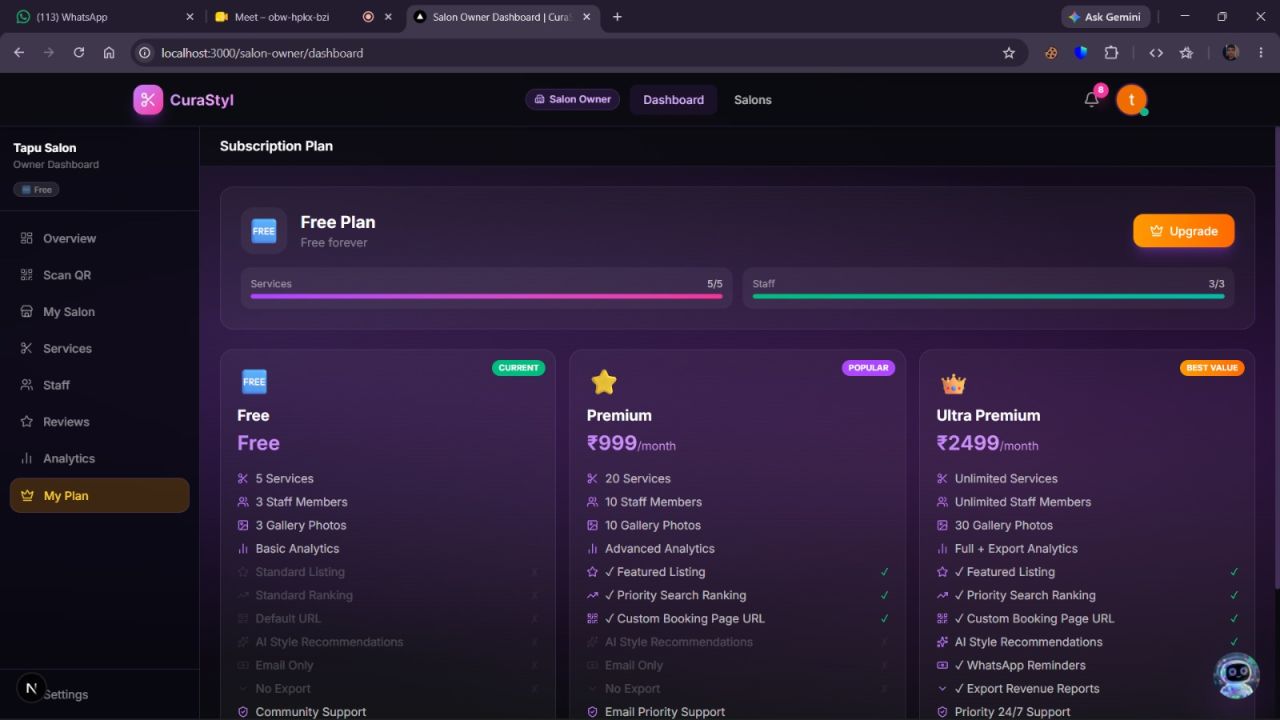
We also built separate customer and salon-owner experiences, implemented database-level security using Supabase Row-Level Security, and developed the supporting booking, payment, loyalty, and management workflows.
Most importantly, the project brought together AI, computer vision, 3D graphics, full-stack development, and a real-world business use case into one working platform.
What we learned
CuraStyl taught us that building a real product is much more than integrating technologies. Every technical decision has to connect back to an actual user problem.
Technically, we learned how to work with real-time computer vision, facial landmarks, browser-based 3D rendering, multimodal AI, asynchronous APIs, database security, and multi-role application architecture.
From a product perspective, we learned the importance of reducing friction: users should be able to move from discovering a style to visualizing it and eventually booking a service with as few steps as possible.
We also learned to distinguish between what we have actually validated and what is still a business hypothesis. Building the platform gave us the foundation; the next step is validating user behaviour, salon adoption, booking conversion, and retention with real-world users.
What's next for CuraStyl
Our next priority is moving from a working product to a validated marketplace. We plan to onboard our first group of real salons in Mumbai and conduct structured customer and salon pilots to measure adoption, booking conversion, repeat usage, and the impact of WebAR on purchase decisions.
On the product side, we plan to expand the 3D hairstyle and beard library, improve the accuracy and realism of virtual try-on, add more personalized AI recommendations, and optimize the experience for a wider range of devices.
On the business side, we plan to strengthen the salon management SaaS, introduce deeper CRM and analytics capabilities, and validate our marketplace commission and subscription models.
Once we establish strong product-market fit in Mumbai, our roadmap is to expand into other major Indian cities and eventually build CuraStyl into a nationwide beauty-tech ecosystem connecting customers, independent salons, stylists, and beauty brands.
Built With
- ai
- css
- fiber
- framer
- gemini
- generative
- mediapipe
- motion
- next.js
- postgresql
- react
- stripe
- supabase
- tailwind
- three
- three.js
- typescript
- vercel

Log in or sign up for Devpost to join the conversation.