-
-
diagnolysis
-
The idea for CuraIQ was born from observing how doctors often struggle with overlapping symptoms in fever cases. During outbreaks such as dengue, malaria, typhoid, and viral fever, hospitals face diagnostic uncertainty, delays in reporting, and patient overload.
We realized that while medical data like symptoms, reports, and patient history are often available, they are rarely analyzed intelligently in real time. Our goal was to build a system that bridges this gap - an AI-powered assistant that supports healthcare professionals in identifying fever causes and assessing severity efficiently. CuraIQ was inspired by the need for faster, smarter, and more accessible diagnosis — especially in rural and outbreak-prone regions.
"Every minute saved in diagnosis can save a life."
What it does:
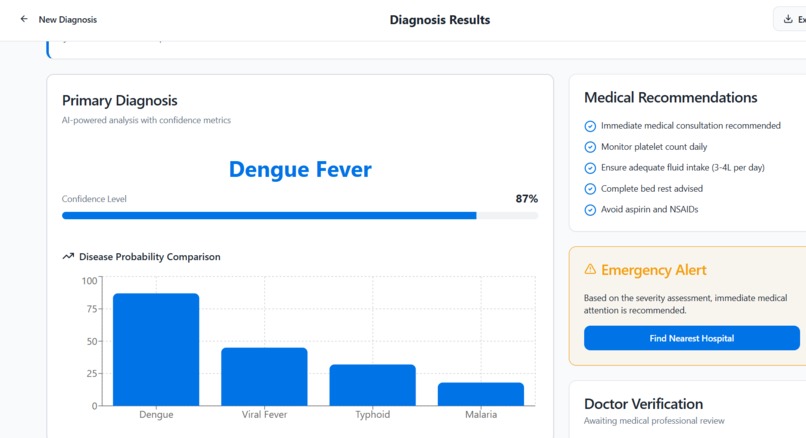
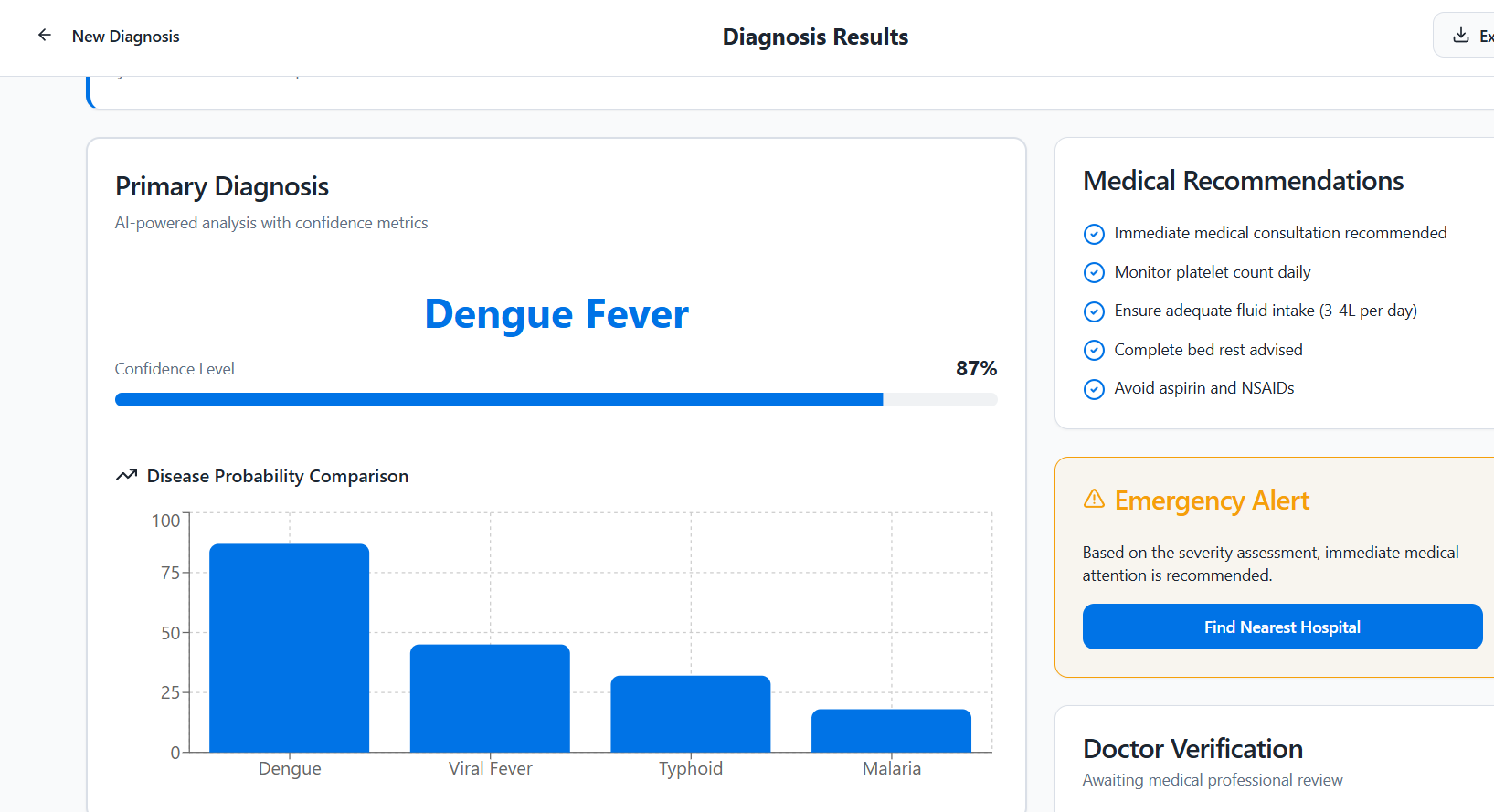
CuraIQ is an AI-powered fever diagnosis and triage platform that helps healthcare professionals determine the cause and severity of fever quickly and accurately.
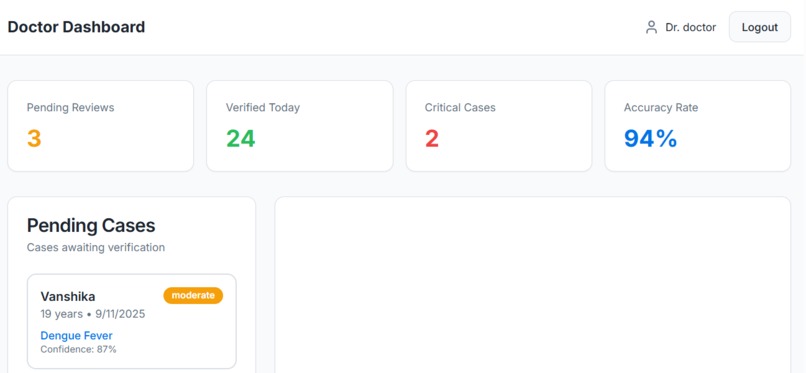
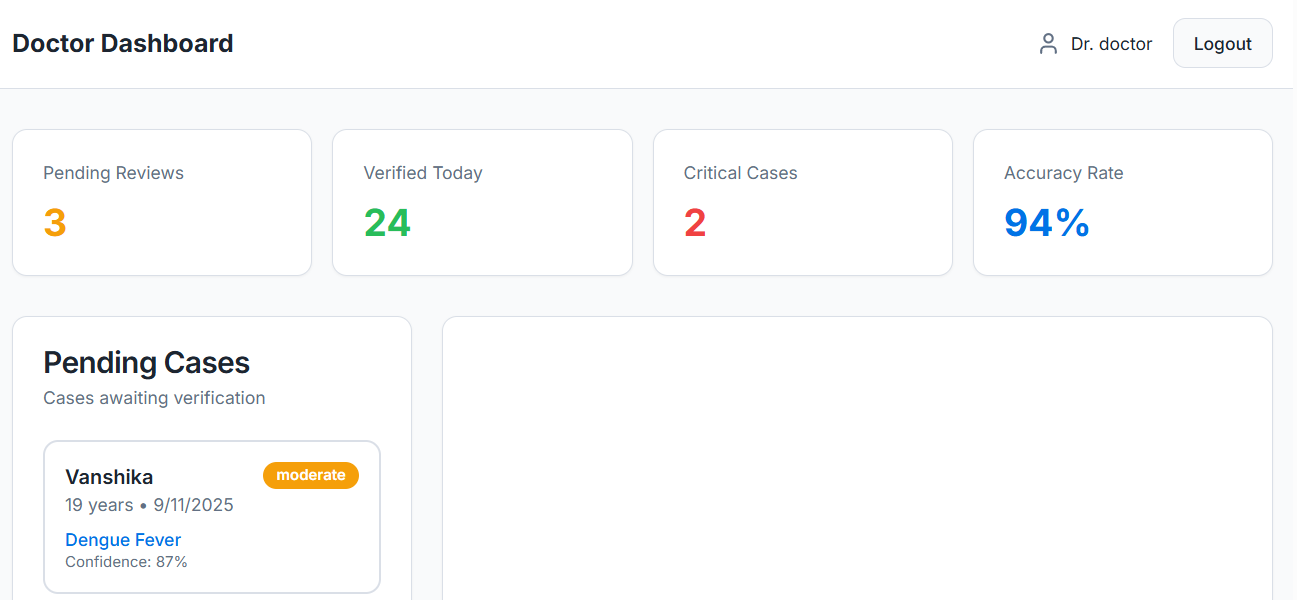
Core Features: • Symptom and report-based analysis • AI-driven prediction of possible causes such as dengue, malaria, typhoid, or viral fever • Severity classification -mild, moderate, or critical • Chatbot interface for patient interaction • OCR integration to extract values from lab reports • Doctor dashboard showing triage results and AI insights • Offline mode for low-connectivity areas
CuraIQ converts unstructured medical data into real-time, actionable insights — enabling faster, smarter, and data-driven healthcare decisions.
how we built it: • Machine Learning: Scikit-learn and TensorFlow models to predict fever type and severity
• NLP: spaCy and BERT for symptom text understanding • OCR: Tesseract and Google Vision API to extract report data • Backend: Flask-based server for ML model integration • Frontend: React, HTML, CSS for responsive UI • Database: MySQL for secure data storage • Deployment: Locally hosted prototype (cloud-ready)
challenges we ran into
• Gathering clean and diverse medical datasets • Extracting structured data from non-standard lab reports • Training NLP models for unstructured inputs • Achieving high prediction accuracy with low latency • Designing a simple, professional UI for doctors
Accomplishments we're prod of
• Built a working AI prototype that predicts fever type and severity • Integrated OCR, NLP, and ML seamlessly • Created a doctor-focused real-time triage dashboard • Designed a multimodal input system (text, voice, reports) • Developed a scalable, lightweight architecture
what we learnt
• Combining AI, NLP, and OCR for healthcare applications • Importance of clean datasets and model interpretability • Designing ethical, human-centered healthcare AI • Rapid prototyping under time pressure • That true innovation lies where empathy meets technology
WHAT’S NEXT FOR CURAIQ – EMPOWERING HEALTHCARE WITH INTELLIGENT DIAGNOSIS
Our goal is to scale CuraIQ into a global healthcare support platform.
Future Plans: • Partner with hospitals to train on real-world data • Add multilingual chatbot support for rural access • Integrate IoT-based real-time vitals monitoring • Cloud deployment for multi-hospital access • Outbreak mapping using anonymized fever data
Our vision: To make intelligent, accessible, and timely diagnosis available to every patient, everywhere.
.
Built With
- bert
- canva
- css
- figma
- flask
- git
- google-cloud
- google-vision-api
- html
- javascript
- mysql
- python
- react
- scikit-learn
- spacy
- tensorflow
- tesseract-ocr

Log in or sign up for Devpost to join the conversation.