-
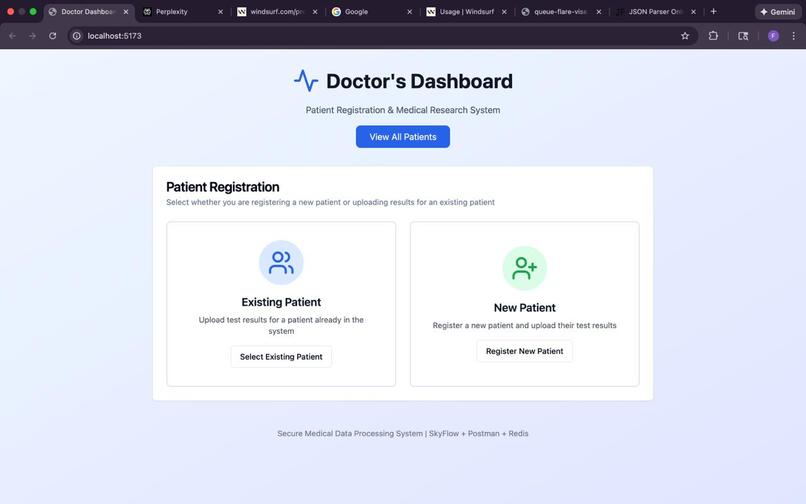
Upload Dashboard
-
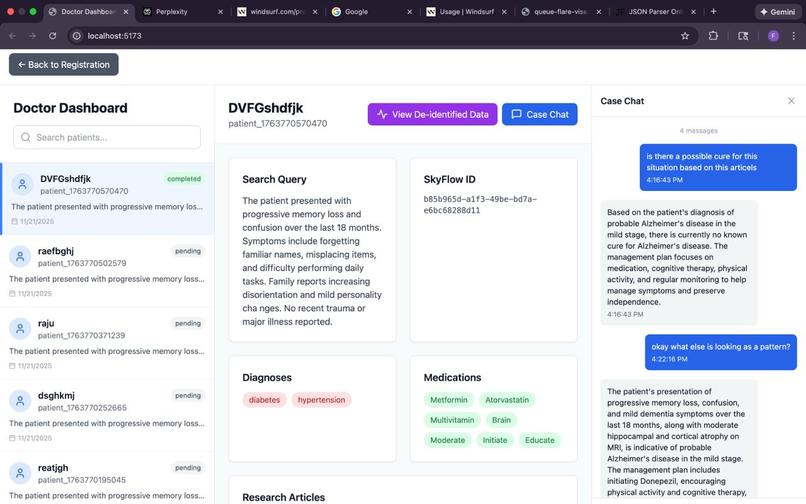
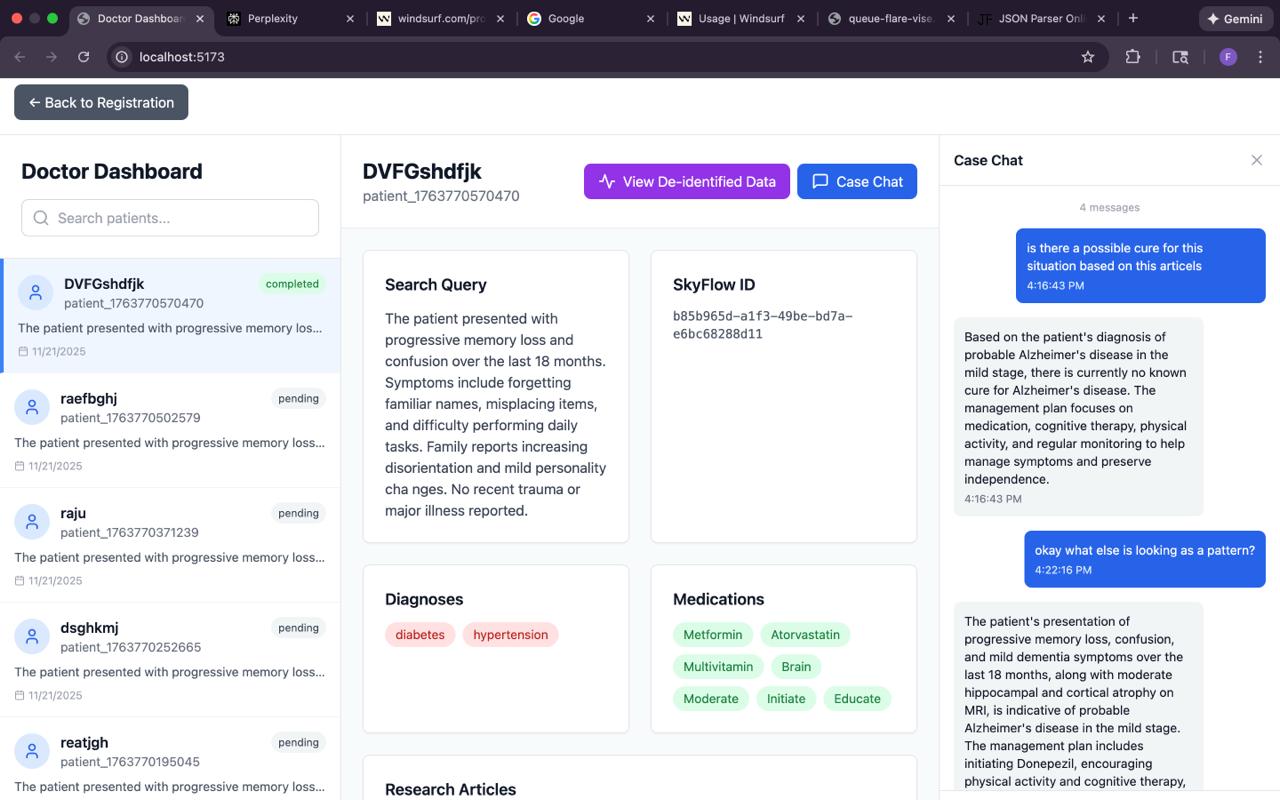
Chat Interface
-
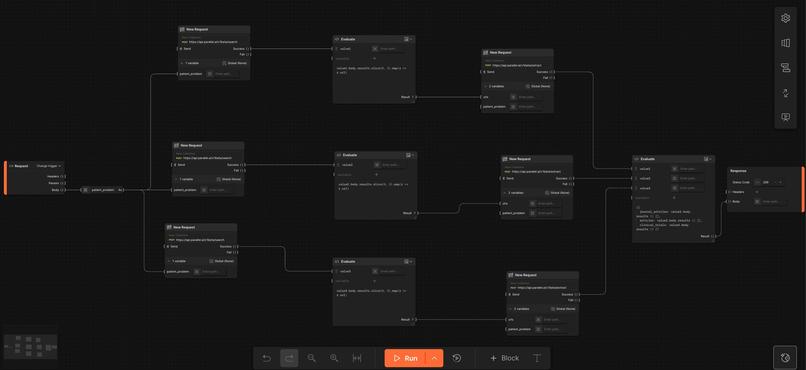
Architecture
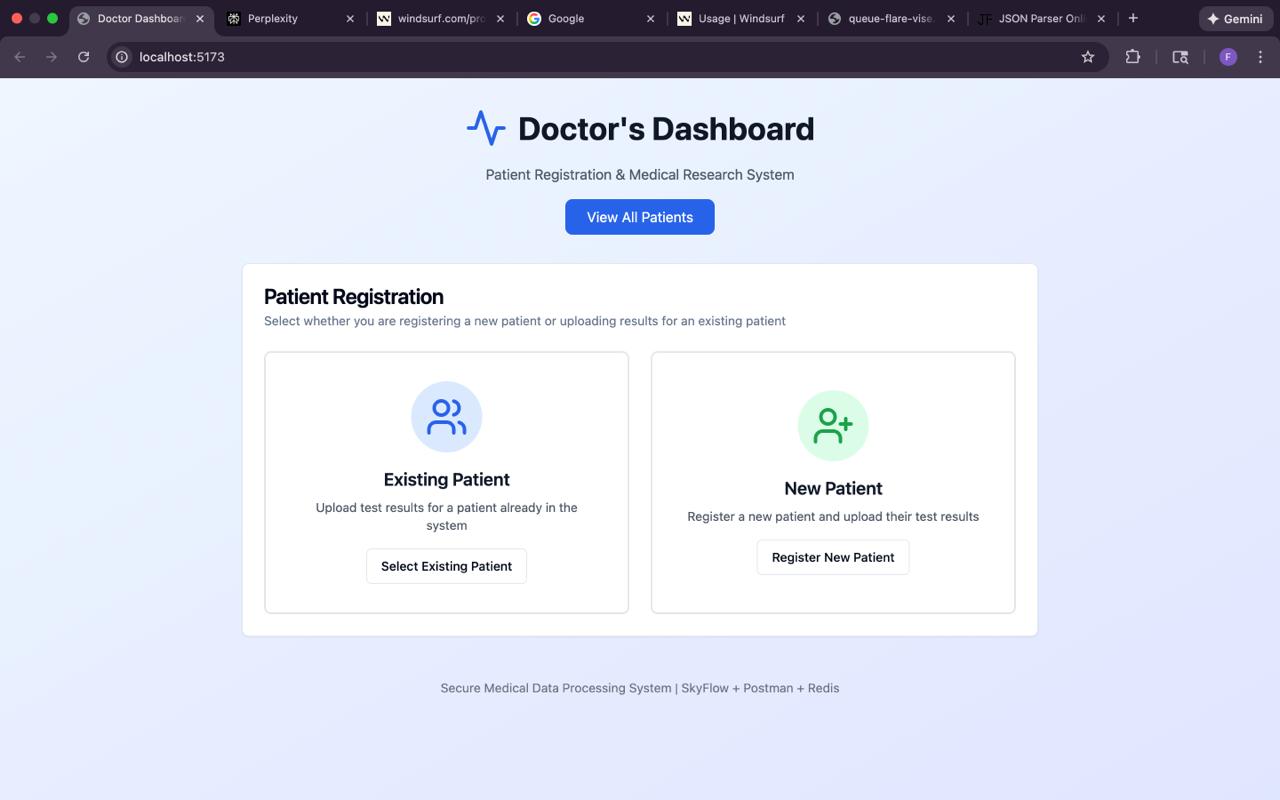
🩺 CuraBot — Intelligent Research Assistant for Doctors
Your AI-powered clinical research agent with secure data handling, redis-backed personalization, and automated medical literature discovery.
🚑 💡 Problem
Doctors lose valuable time searching through scattered medical literature, clinical trials, and symptom-specific research. Even with AI, privacy and data accuracy remain major concerns — PHI leakage, hallucinations, and irrelevant search results slow down critical decisions.
🚀 ✨ What We Built
CuraBot is an AI-powered research assistant for doctors.
A doctor uploads the patient's details → sensitive data is immediately redacted → CuraBot performs deep medical research → indexes everything in Redis → the doctor gets actionable, evidence-backed insights through an interactive chat.
The system delivers:
- Automated symptom-based medical research
- Redis-powered semantic search + personalization
- Skyflow-protected patient data with instant PHI masking
- Doctor-facing chat interface to interpret research clearly
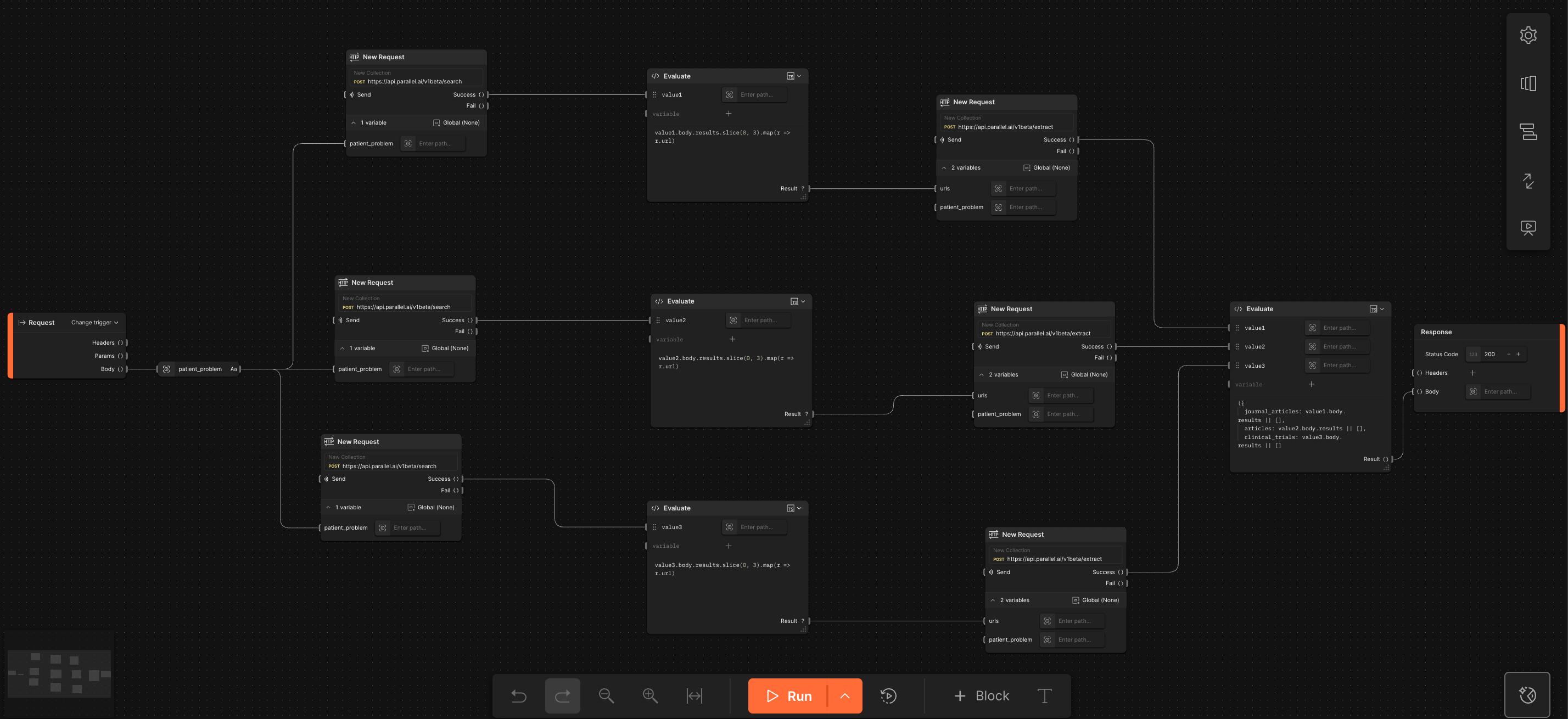
- Postman Flow agent orchestration for rapid prototyping
🔧 Tech Stack
- Postman Flows (agent workflow automation)
- Redis Vector Library (RedisVL) (semantic retrieval + personalization memory)
- Skyflow Data Privacy Vault (PHI redaction + tokenization)
- Typescript + Node backend
- Parallel Web Systems (high-speed research + content extraction)
🤝 Sponsor Integrations (Why & How We Used Each)
🧡 Redis — Why We Chose It & How It Powers CuraBot’s Intelligence
Why Redis?
CuraBot needed a system that could:
- retrieve medical evidence instantly
- run semantic search on embeddings
- personalize results based on real doctor behavior
- adapt across repeated patient cases
- stay fast even as the dataset grows
Redis + Redis Vector Library (RedisVL) gave us exactly that: millisecond retrieval, vector similarity search, and stateful personalization — all in one place.
How We Used Redis Inside CuraBot
We store vector embeddings for:
- peer-reviewed research articles
- clinical trials
- medical reviews
RedisVL handles top-k semantic search, letting CuraBot surface the most meaningful evidence for any patient problem—instantly and at scale.
We also track lightweight interaction data in Redis:
- which articles the doctor opened
- which sources they preferred (journals, trials, reviews)
- categories they repeatedly interact with
- patterns across similar patient cases
This gives CuraBot a continuously updated picture of what each doctor finds useful.
🧠 Redis Gives CuraBot a Sense of What Matters to Each Doctor
Every interaction — every click, every ignored link, every repeated case — becomes a subtle learning signal stored in Redis.
Over time, CuraBot begins to understand:
- preferred evidence types
- high-value sources
- search patterns across specialties
- what answered previous cases effectively
Redis turns these signals into a foundation for smart, adaptive recommendations.
⚡ Redis Lets CuraBot Re-Rank Results in Real Time
Using the data stored in Redis, CuraBot adjusts how results are ordered:
- frequently opened sources rank higher
- irrelevant ones drop
- certain journals get boosted for certain specialists
- clinical trials surface when they historically helped
- semantic matches from similar past cases guide new searches
This makes each search feel more aligned with how the doctor actually works.
🌱 Redis Makes CuraBot Grow With Every Use
Each query enriches Redis. Each interaction refines future relevance. Each repeated case strengthens embeddings. Each update makes recommendations feel more “right.”
CuraBot doesn’t just fetch evidence — it evolves into a faster, more intuitive assistant for every doctor who uses it.
Redis is the engine behind that evolution.
🔒 Skyflow — Secure Data Masking & Privacy Layer
Why Skyflow?
We needed a robust privacy solution to handle patient uploads securely and avoid accidental PHI exposure. Skyflow's Zero-Trust Data Privacy Vault provided tokenization that goes far beyond simple regex masking.
How We Used It:
- Immediately redacted sensitive information right after the upload
- Masked: names, DOB, contact details, identifiers, and other PHI
- Ensured only de-identified symptom text enters our research + embedding pipeline
- Guaranteed all stored data & vector embeddings remain PHI-free
🧰 Postman — Agent Flow Automation
Why Postman?
We needed a rapid prototyping tool to orchestrate our multi-step agent pipeline without building everything from scratch.
How We Used It:
Created a Postman Flow that:
- Receives the doctor's de-identified symptoms
- Triggers a Parallel Web Systems research job
- Extracts structured results (title, URL, excerpt)
- Sends content to our backend for embedding
- Stores vectors in RedisVL
- Sends sanitized content to Skyflow for tracking
- Enabled external triggering via HTTP from our backend
This allowed us to test and refine the pipeline extremely fast during the hackathon.
🌐 Parallel Web Systems — Deep Research Engine
Why Parallel?
We needed a high-speed engine capable of crawling and extracting relevant medical research automatically.
How We Used It:
- Conducted fast, large-scale research on the patient's symptoms
- Retrieved structured medical content:
- Journals
- Reviews
- Clinical trials
- Provided clean results for embedding + indexing in Redis
🧠 How CuraBot Works (Simplified Flow)
- Doctor uploads patient details
- Skyflow instantly masks PHI (names, age, phone, identifiers)
- De-identified symptoms trigger Postman Flow
- Parallel Web Systems fetches medical research
- Extracted content → embedded → stored in RedisVL
- Doctor interacts through chat interface
- Redis returns top relevant evidence
- LLM summarizes based purely on retrieved content (no hallucinations)
🎯 What Makes CuraBot Unique
- Immediate PHI masking ensures safety from the first second
- Redis-backed personalization layer makes future suggestions smarter
- Evidence-grounded medical insights instead of hallucinated answers
- End-to-end automated research pipeline
- Doctor-centric interface designed for clarity + speed
Log in or sign up for Devpost to join the conversation.