-
-
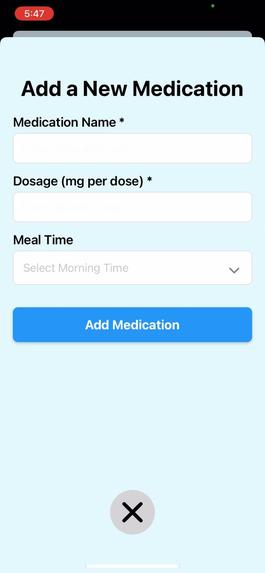
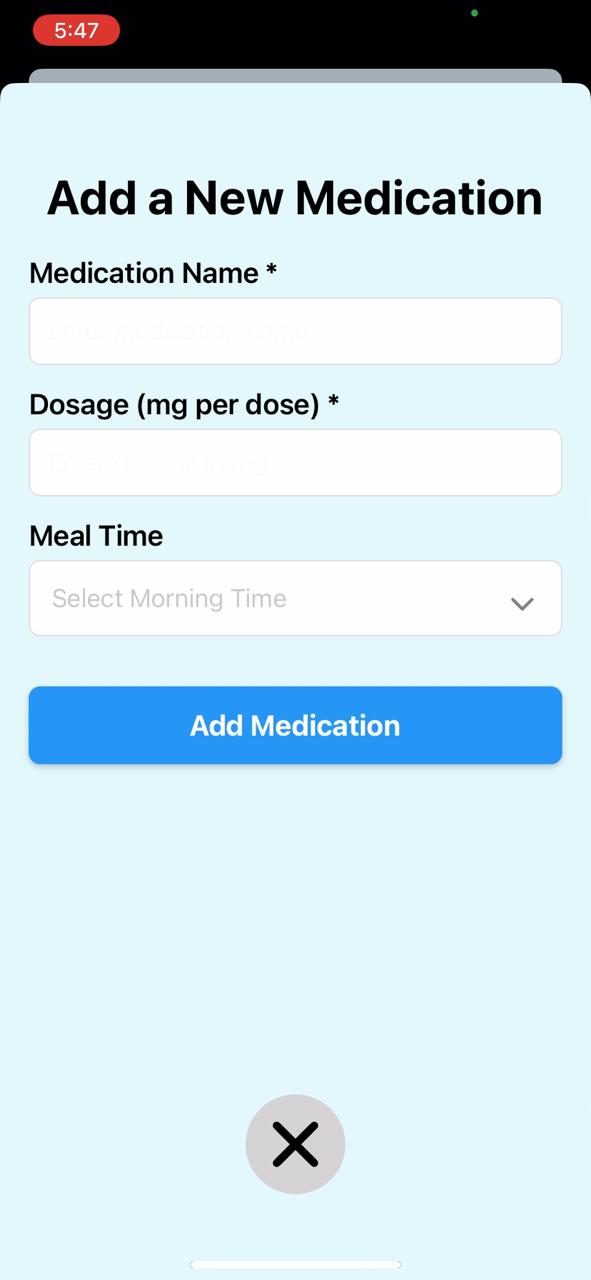
Manual medication adding
-
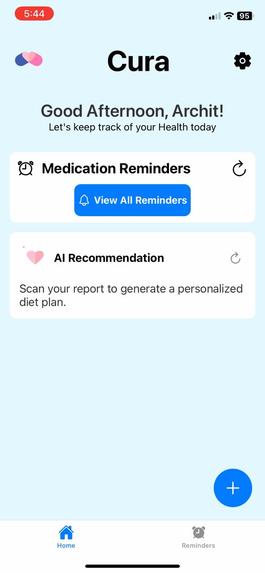
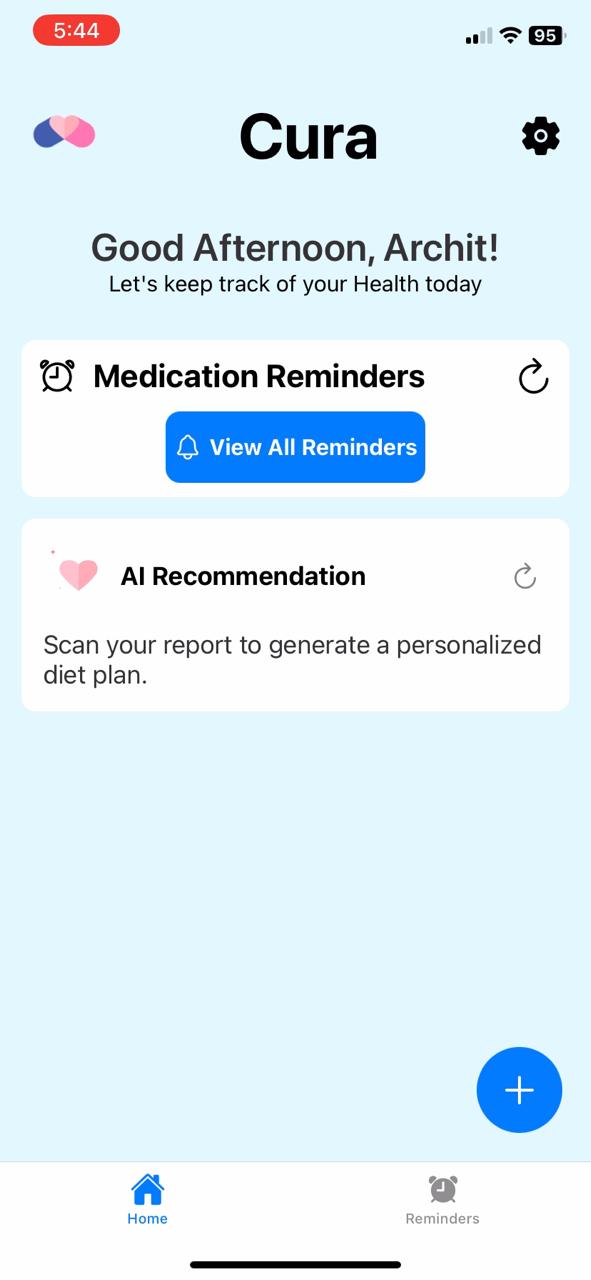
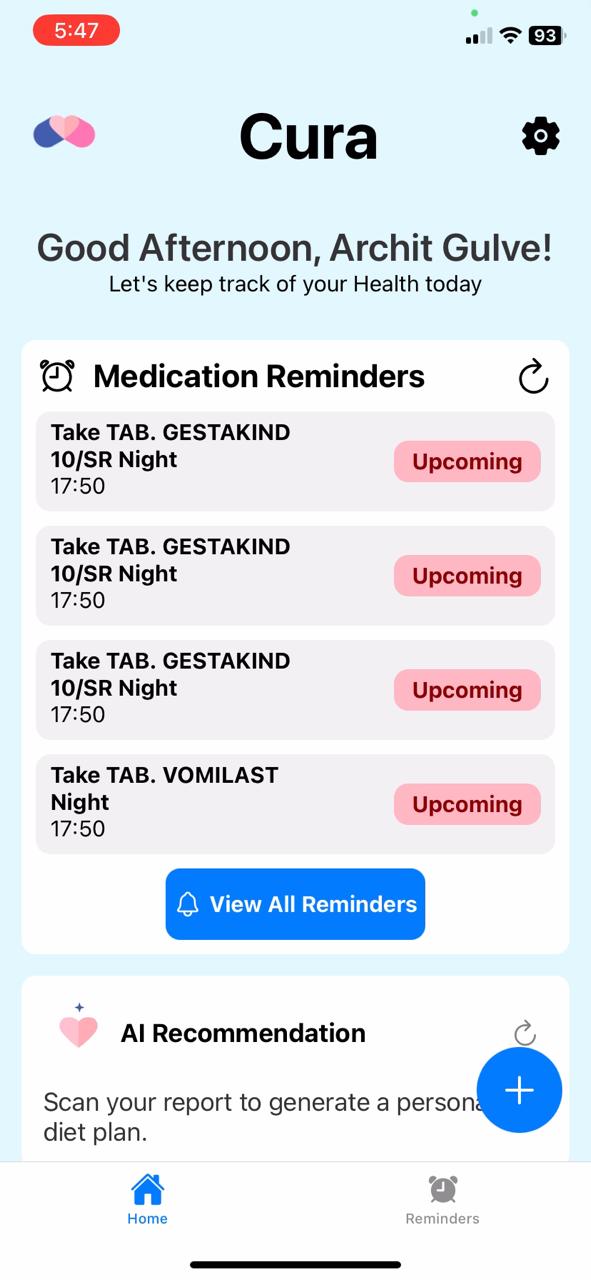
Homepage
-
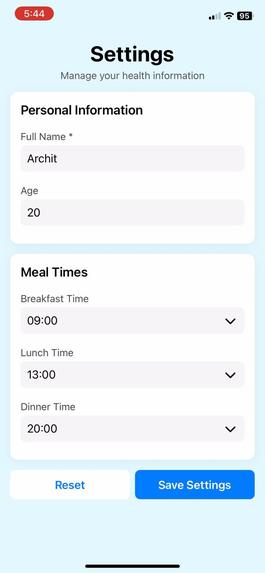
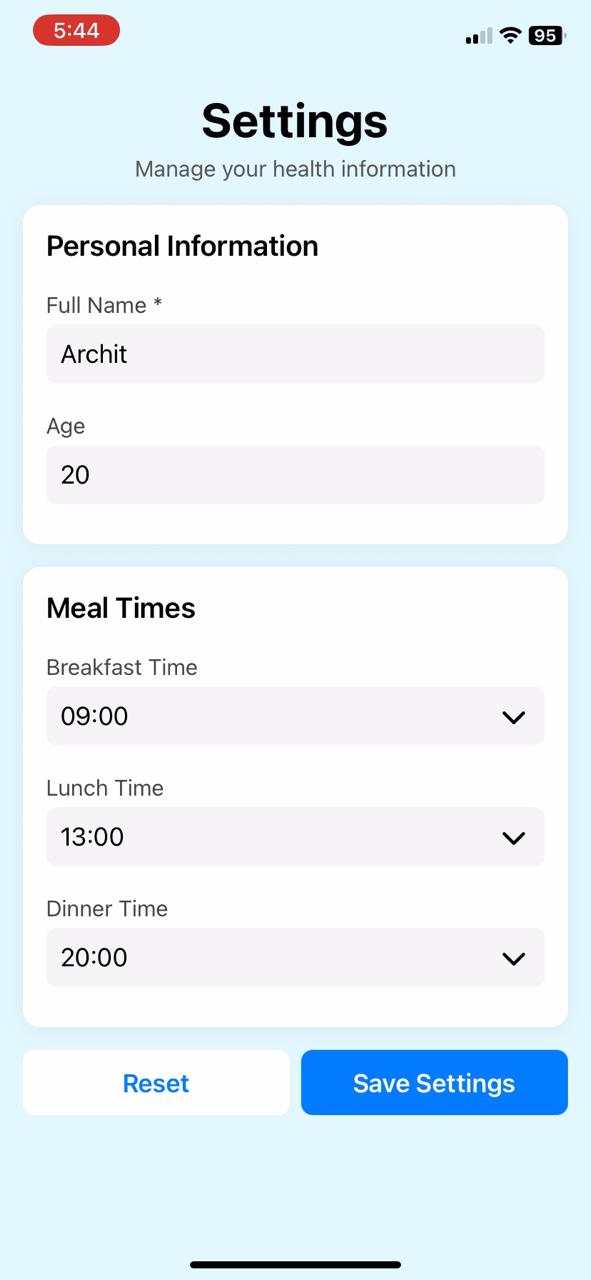
Setting page
-
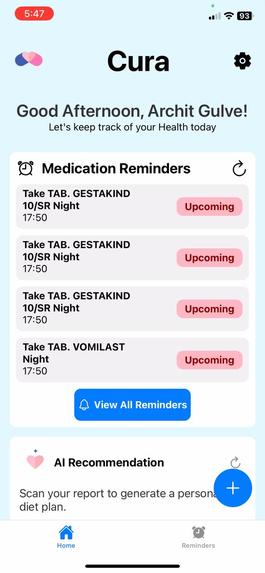
Upcoming Reminder list
-
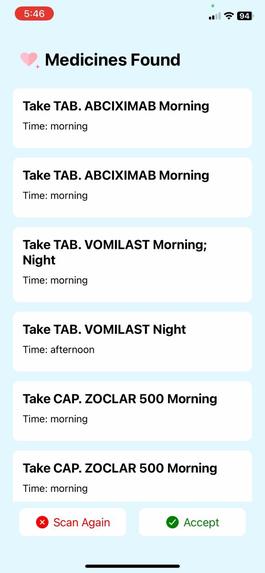
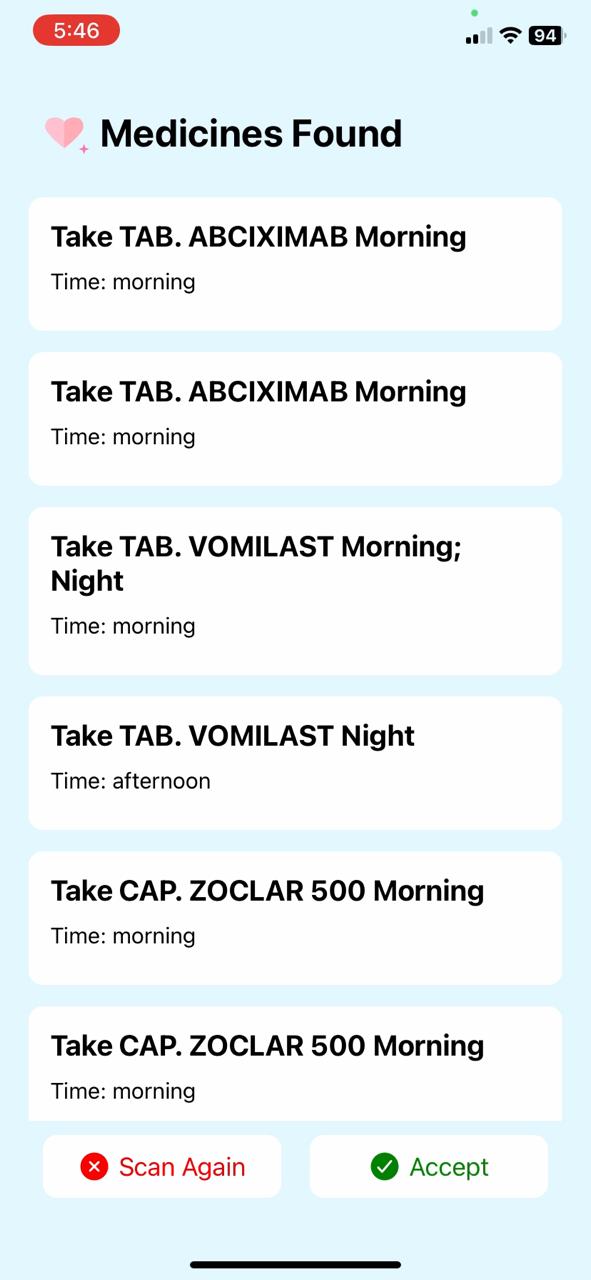
Confimation page
-
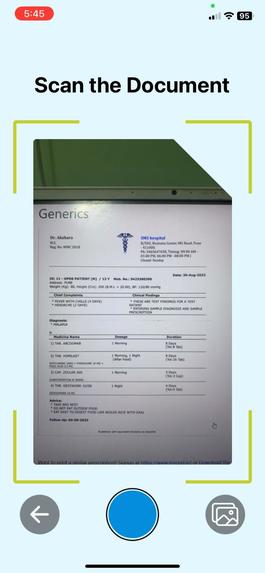
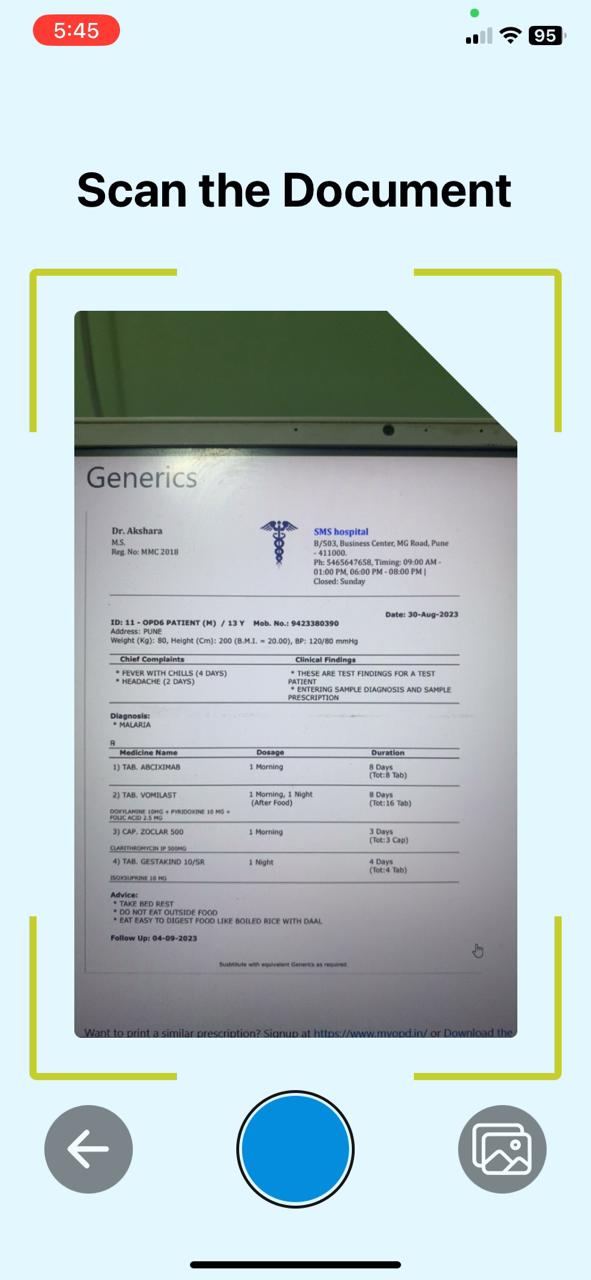
Scanning in action
Inspiration Behind Cura
Healthcare doesn’t end at the hospital door, but for many patients, clear guidance does.
We were inspired to build Cura after seeing how overwhelmed patients feel once they’re discharged. Whether it's our grandparents struggling to remember their medications, or a neighbor unsure about medical terms in their reports, one thing was clear: People need more support after they leave the hospital, not just papers. Discharge instructions are often filled with complex jargon, multiple follow-up steps, and medication schedules that are hard to follow, especially for:
- Elderly patients
- Individuals with cognitive impairments
This gap in care leads to confusion, mistakes, and in many cases, re-hospitalization.
What Cura Does
Cura acts as a smart post-discharge companion, simplifying recovery through clarity, structure, and support. By scanning a discharge report, Cura automatically extracts key information and generates personalized medication reminders that are easy to understand and follow. It reduces the burden of complex instructions and ensures that users never miss a dose.
What It Does
- Allows users to upload or scan a discharge report
- Uses OCR (Optical Character Recognition) to extract text from the image
- Sends the extracted text to Groq’s hosted LLM to identify medicines and schedules
- Automatically creates personalized, easy-to-understand reminders
- Notifies users at the right times based on medication instructions
- Stores all reminders locally using SQLite for offline reliability
- Provides a clean, simple, mobile-first interface for accessibility
How We Built It
We used React Native (Expo) to build the mobile app, ensuring compatibility across Android and iOS devices. For local data storage, we used SQLite, allowing the app to store and retrieve user reminders even without internet access. To process scanned discharge reports, we integrated EasyOCR, a lightweight open-source OCR engine. The extracted text is then sent to a Groq-hosted LLM, which analyzes and converts it into structured medication instructions. We designed the UI in Figma, focusing on clarity and ease of use for all age groups. The result is a lightweight, fast, and intelligent healthcare assistant.
Challenges We Ran Into
Throughout the development of Cura, we faced a number of challenges, starting with the difficulty of coming up with a truly impactful idea that stood out. Once we had our concept, designing a user-friendly UI/UX that made complex health data feel simple and approachable was no small task. Navigating through multiple opinions within the team required constant collaboration and compromise. On the technical side, connecting the frontend to the backend storage and integrating the Groq API for AI processing brought their own set of hurdles. Finally, getting everything to work seamlessly and run fast as a cohesive app pushed us to refine, optimize, and test continuously.
Accomplishments We're Proud Of
- End-to-End Functionality: Successfully built a fully functional health companion app that assists users with medicine reminders, diet tracking, and recovery support.
- Intelligent Automation: Integrated OCR and Groq’s LLM API to automate the extraction and simplification of complex medical information, reducing patient confusion and improving adherence.
- Intelligent Notifications: Built a dynamic reminder system that adapts to user routines and medication schedules.
- Scalable Architecture: Built a modular and scalable codebase, making it easier to add future features like doctor chats, prescription uploads, or health tracking.
Real-World Impact
Tackled a genuine healthcare gap by helping patients stay on track post-discharge, improving adherence and recovery. Cura empowers users with the clarity they need to confidently manage their medications, reducing the chances of miscommunication, skipped doses, or unnecessary hospital visits.
What We Learned
This medication reminder app was built using React Native, combining cross-platform mobile development with persistent local storage and intelligent notification scheduling. We structured the code to separate backend logic from the user interface, ensuring modularity and scalability. The app features personalized medication alerts and adapts to user-defined schedules. AI was integrated to enhance user experience through features like natural language understanding of discharge reports, making the system more responsive to individual needs. Through this project, we strengthened our understanding of mobile architecture, real-time interaction, and practical AI application in healthcare contexts.
What's Next
Moving forward, we plan to expand the app's functionality by integrating personalized diet programs tailored to each user's medical needs and medication schedule. We also aim to introduce a feature for scheduling and tracking doctor appointments, ensuring users never miss a consultation. Additionally, we intend to implement a secure database system that allows users to upload or scan medical reports, creating a centralized repository for their health records. These enhancements will transform the app into a comprehensive personal health management tool.


Log in or sign up for Devpost to join the conversation.