-
-
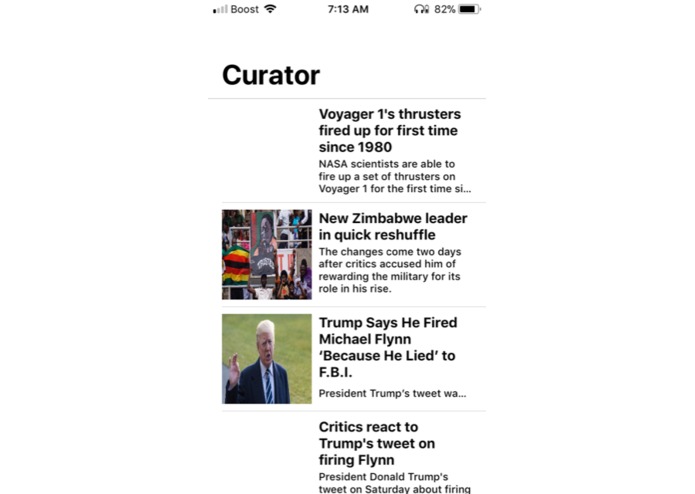
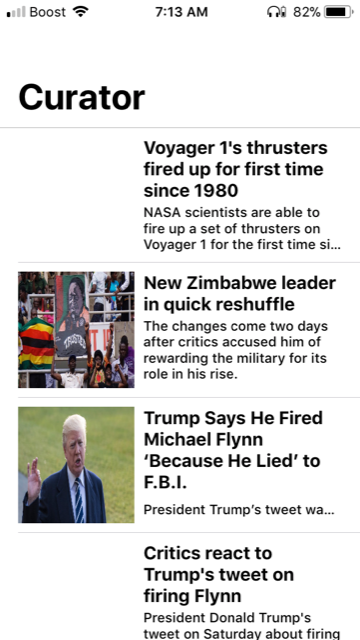
Landing page with news feed.
-
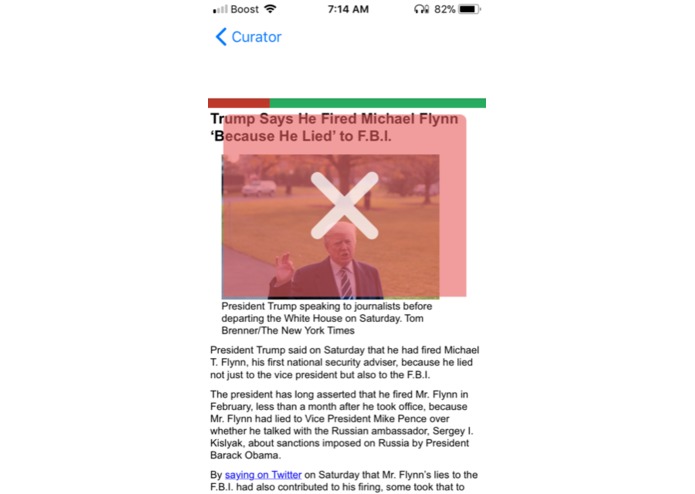
If a user determines an article is fake, they can swipe from the left to claim it's fake.
-
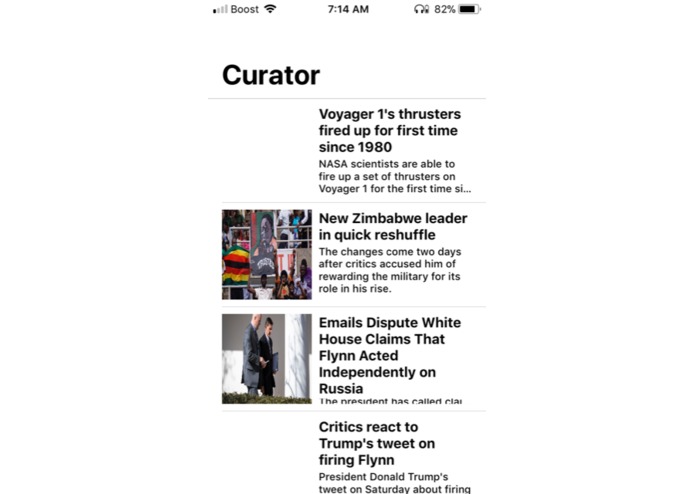
If an article receives enough fake claims from the community, it will be removed from the news feed of all users.
-

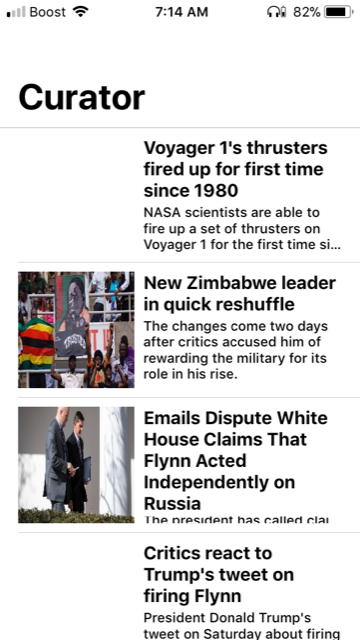
Another example of an article. From the bar at the top, the majority of the community believes this news is real.
-
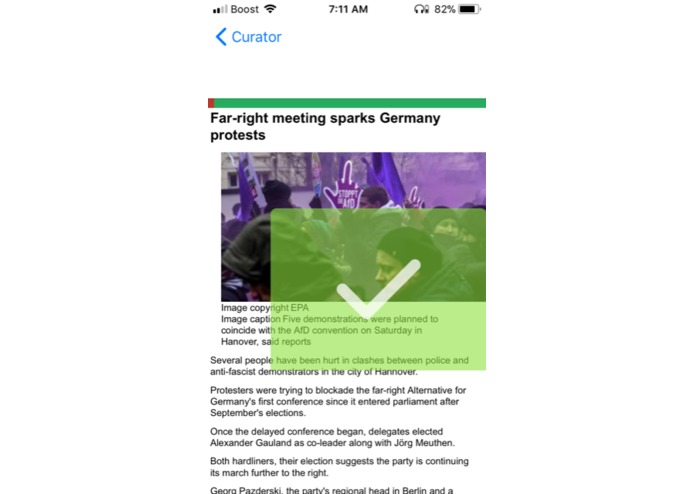
The user can swipe from the right to also claim that the news is real.



Inspiration
While a lot of people––including tech giants Google and Facebook––have been working to combat the problem of fake news using machine learning, machine learning algorithms have never truly been able to identify fake news. So rather than use machine learning, we decided to go back to the basics: human learning.
What it does
At its heart, Cura is a news-reader app just like Apple News or Feedly. However, after reading check article users have the option to swipe right to verify an article as acurate or left to mark the article as fake. The running percentage is displayed at the top of each article and if a high enough percentage of people identify an article as fake we stop displaying the article all-together.
How we built it
We used News API to populate the story feed, Mercury Reader to help display the articles, MongoDB as our data-store, and Flask/Python to write our API. The iOS app is entirely written in native Objective-C.
What we learned
Learning how to make a functional backend with MongoDB and Flask!
What's next for Cura News Reader
The big problem would be to get people on-board with the Cura News reader to yield data. Thus, before making this production-ready we'd need to improve the overall reader experience adding categories, different sources, etc like a traditional RSS reader. Moreover, the system is currently prone to abuse which could be curbed by blocking individuals whose habits differ from the norm.


Log in or sign up for Devpost to join the conversation.