-
-
Logo identity
-
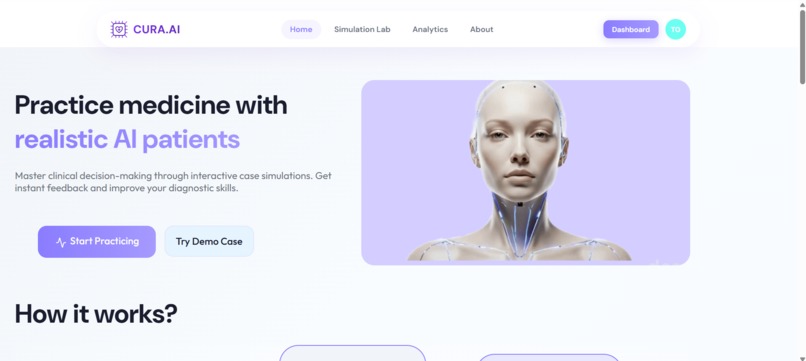
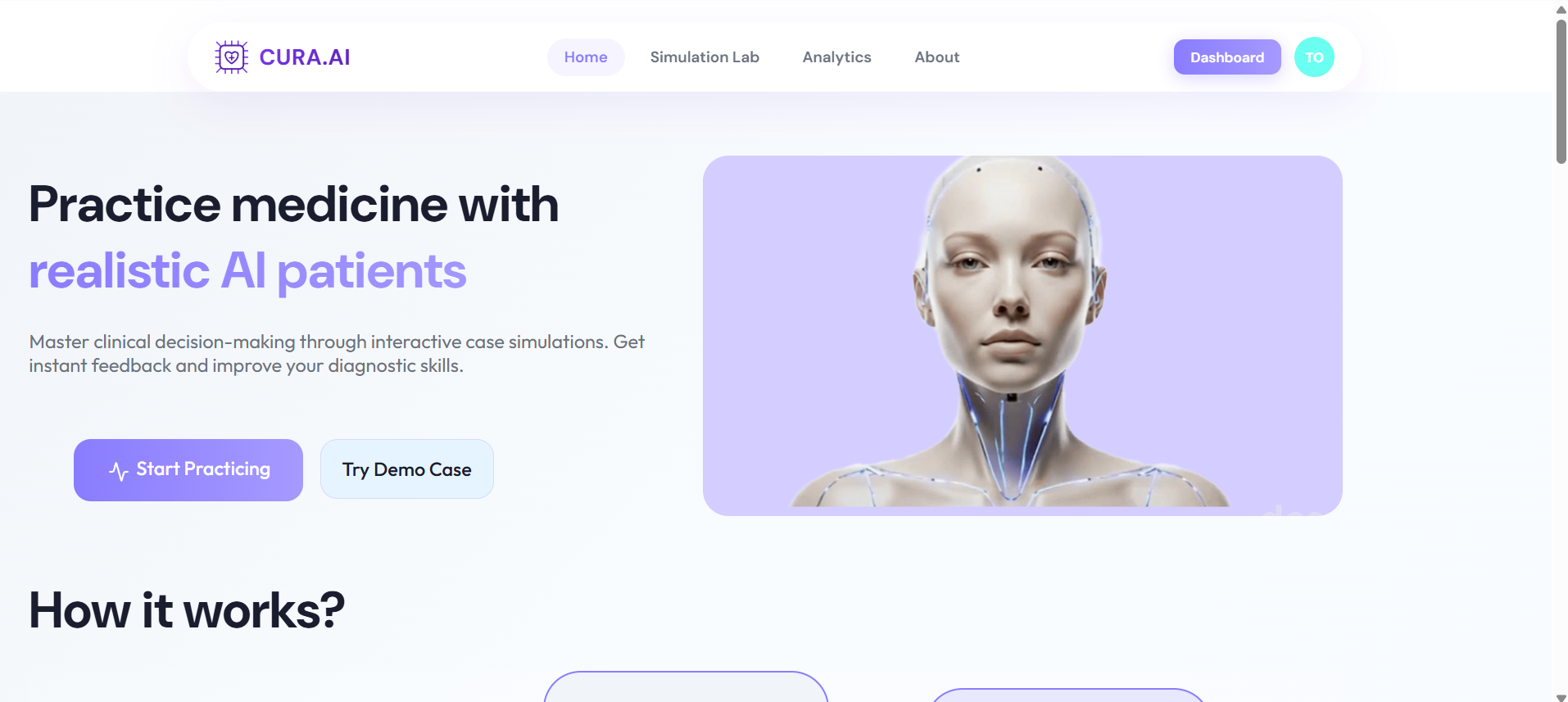
Home page
-
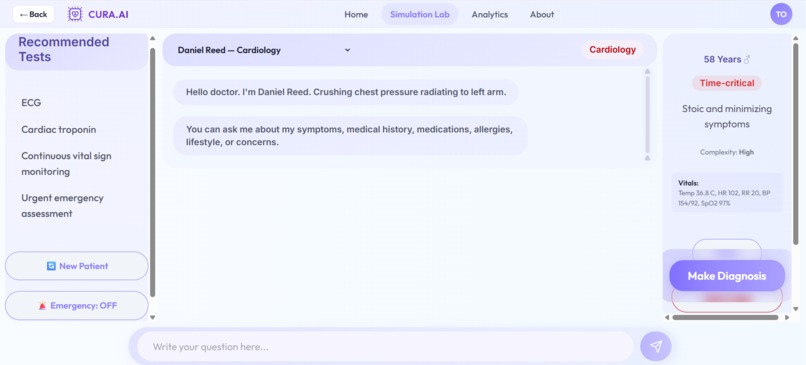
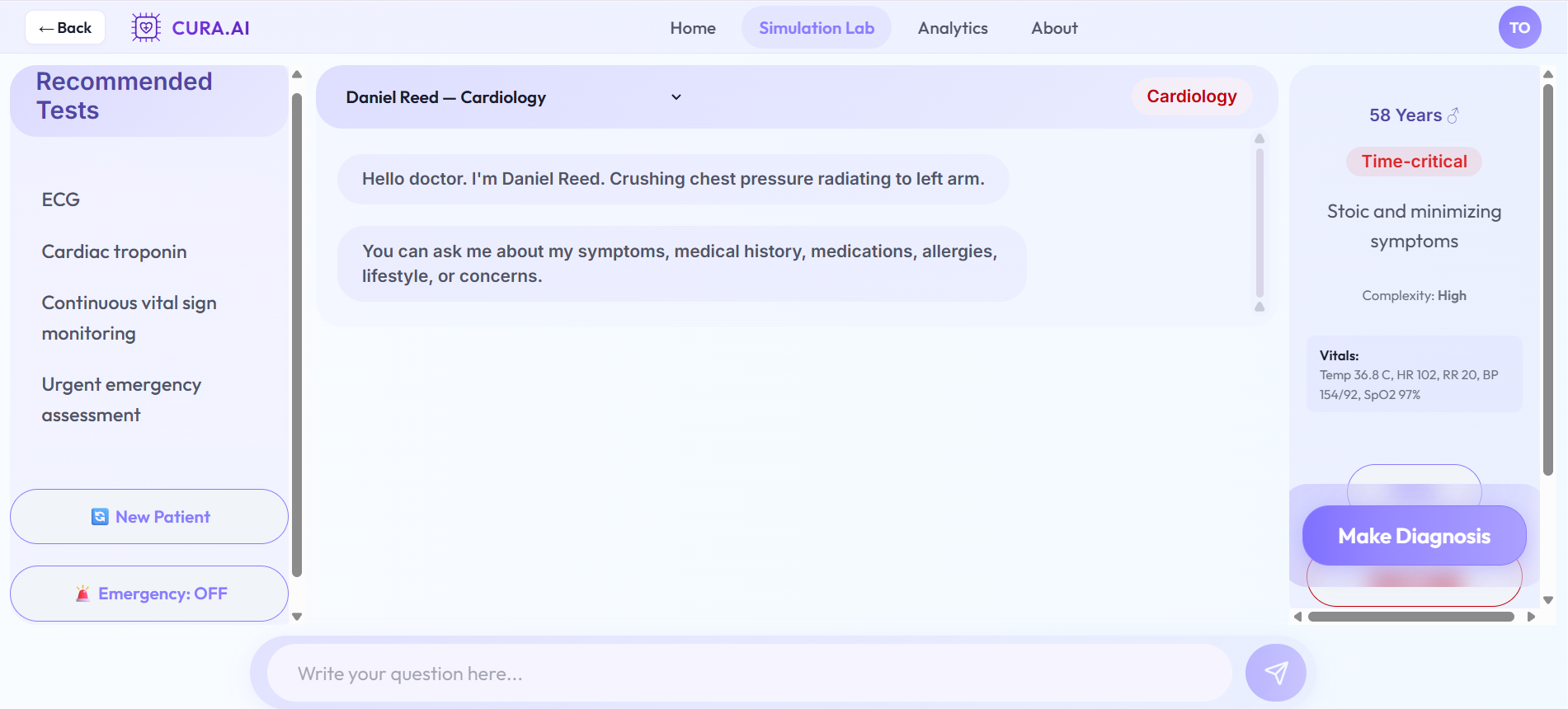
Simulator chat page
-
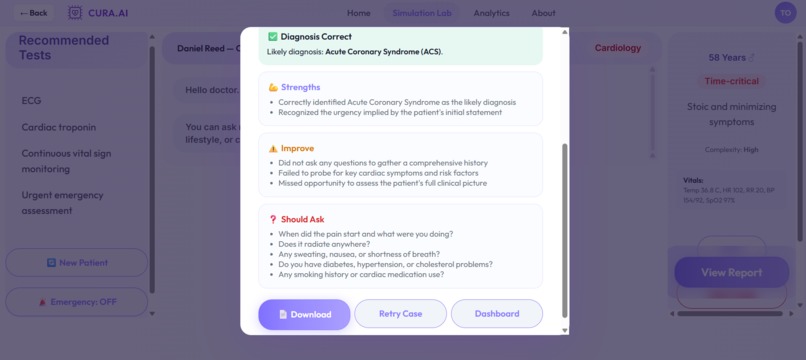
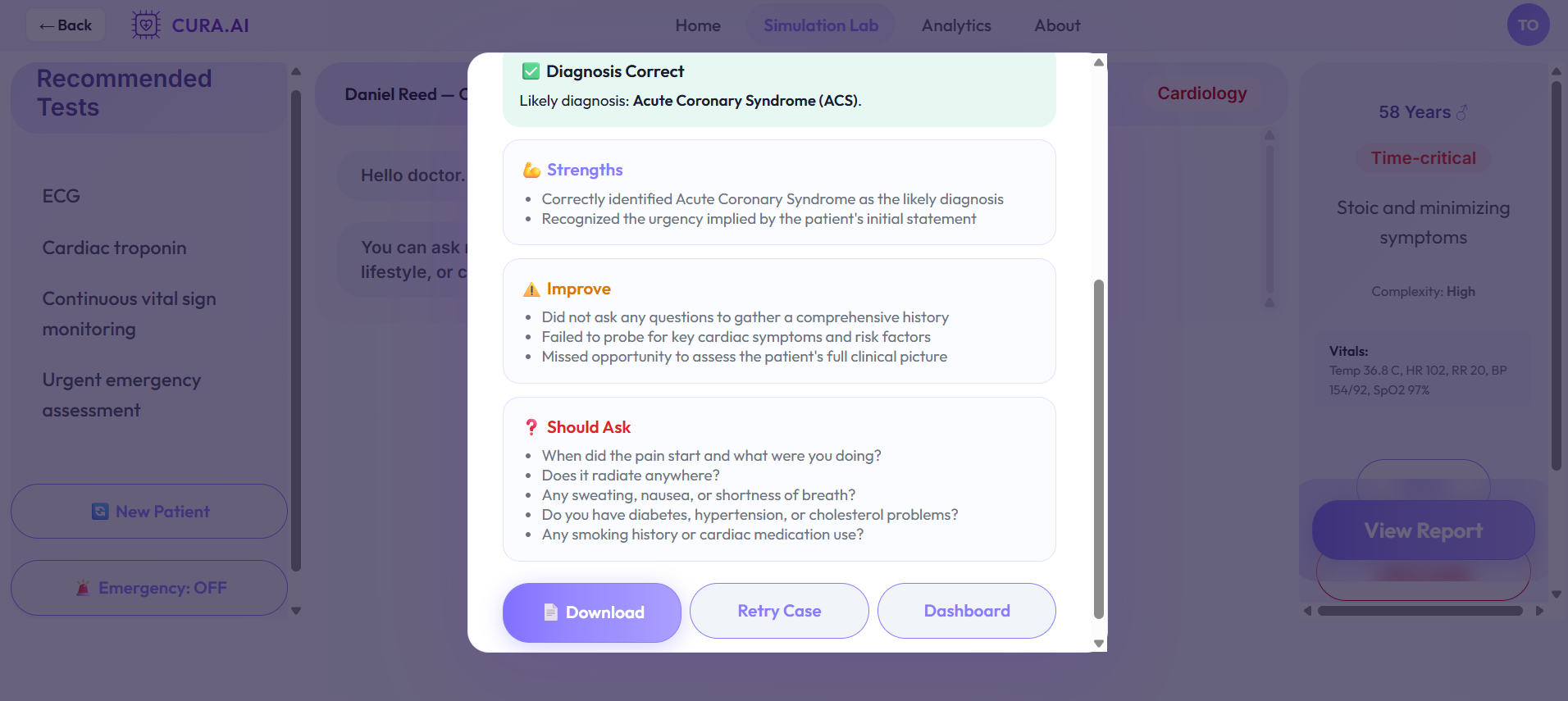
After diagnosis feedback
-
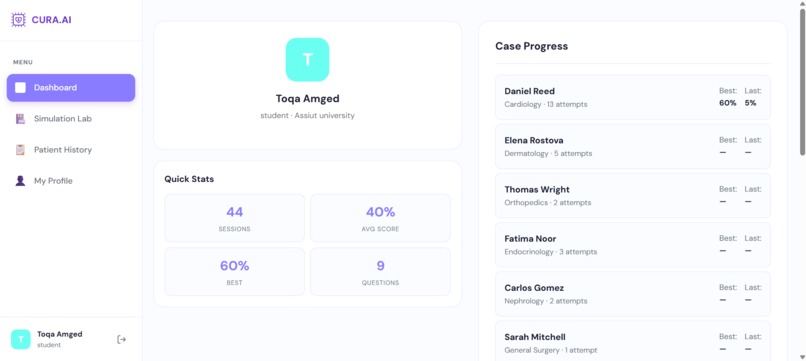
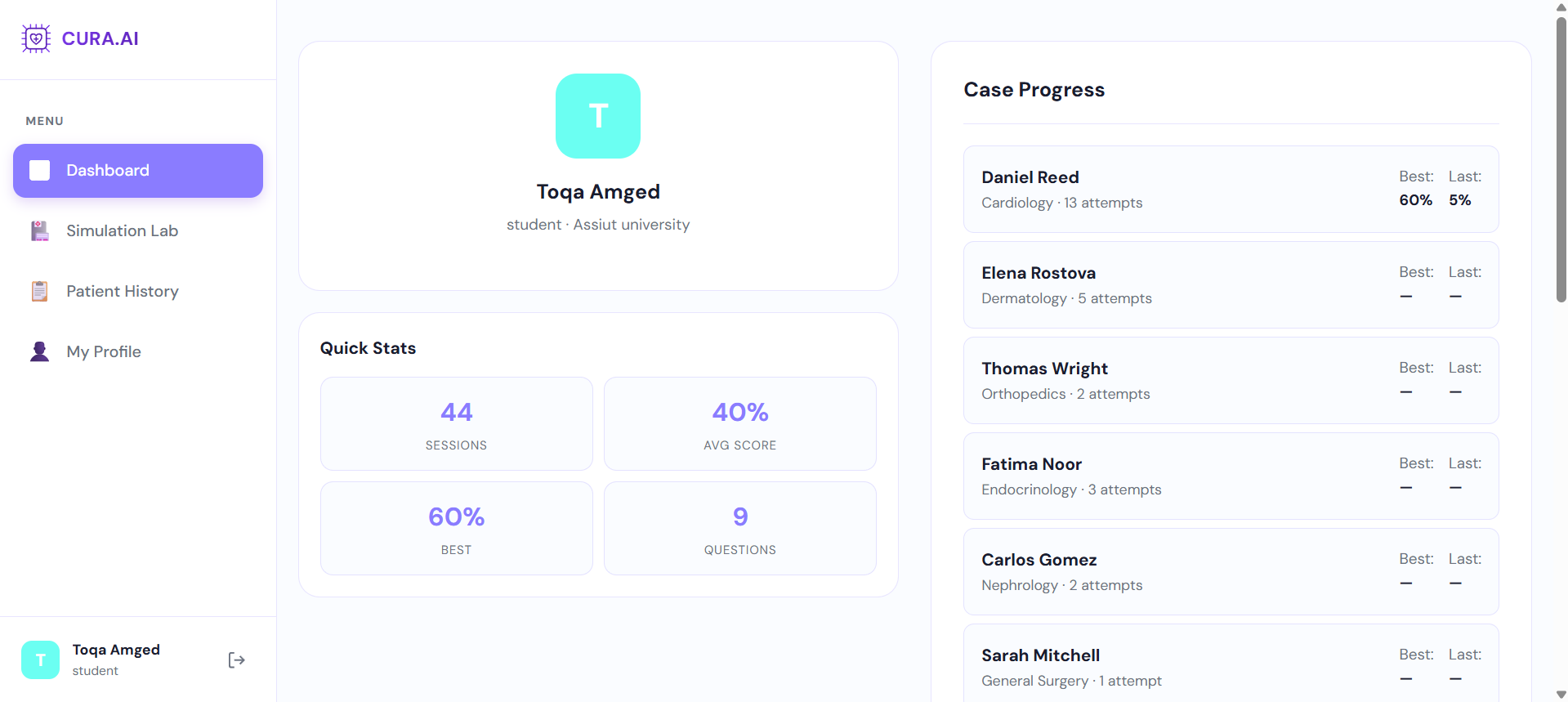
Dashboard

Inspiration behind CURA.AI
As medical students, we lived the "theory-practice gap" every day. We spent years memorizing symptoms and protocols, yet the first time we faced a patient, the fear of making a clinical error was overwhelming. We realized that the current medical education system lacks a "safe sandbox"—a place where students can fail, learn, and refine their clinical reasoning without risk to human life.
Our inspiration is based on three core pillars:
- The "Safe to Fail" Zone: Transforming the paralyzing fear of medical mistakes into a risk-free, creative learning playground.
- Medicine Without Borders: Ensuring high-fidelity simulation isn't a luxury for elite hospitals, but a tool available in every student’s pocket.
- The Clinical Simulator (Dynamic Personas): Moving beyond static Q&A to create living simulations where every AI patient has a unique personality, specific age, and dynamic health states (stable vs. critical) that evolve based on your decisions.
Our Global Impact (SDGs)
CURA.AI stands at the vital intersection of SDG 3 (Good Health and Well-being) and SDG 4 (Quality Education). While our platform leverages cutting-edge educational technology to transform medical training (Target 4.4), our ultimate mission is to fulfill Target 3.c by significantly strengthening the global health workforce. By providing a risk-free simulation environment, we are not just teaching students; we are reducing future clinical errors and ensuring safer, higher-quality healthcare outcomes for communities worldwide.
What it does
CURA.AI is an immersive clinical simulator that transforms medical education into a dynamic, high-stakes experience where every decision counts.
Tailored Learning Paths
- Specialist vs. Student Modes: The platform adapts to the user. Specialists receive high-complexity cases, while students access a broad range of specialties (Cardiology, Pediatrics, Orthopedics, etc.) to build a well-rounded foundation.
Interactive Diagnosis & Reasoning
- Beyond Multiple Choice: Students must justify their clinical reasoning, ensuring a deep understanding of the "Why" behind every decision.
- Smart Clinical Guidance: Integrated Intelligent Hints and Recommended Tests guide users through complex investigations like ECGs or specific lab panels.
Comprehensive Insight Reports
- Deep Performance Analysis: Every case concludes with a detailed report featuring an Accuracy Score and a breakdown of "Correct vs. Incorrect" actions.
- Portable Documentation: Summaries are available as Downloadable/Printable PDF Reports, perfect for clinical portfolios.
Emergency Mode: The Ultimate Challenge
- High-Pressure Simulation: A dedicated mode with a 10-minute countdown timer to test speed and accuracy under stress.
- The "Unknown Specialty" Factor: The specialty is hidden, forcing users to perform rapid differential diagnoses based purely on clinical presentation and raw lab results.
How we built it
CURA.AI is built with a high-performance full-stack architecture, focusing on stability and medical accuracy.
- Frontend & UX Design: Built with React.js (via Vite) for ultra-fast performance. We translated Figma designs into custom Vanilla CSS, featuring a glassmorphic interface with professional purple and baby blue gradients.
- AI Engine & Backend: Powered by Node.js and Express.js. Our modular engine supports multiple LLMs like Gemini and Ollama. We used advanced System Prompt Engineering and integrated a library of 10 pre-built cases to solve latency issues during demos.
- Data & Optimization: We utilized Supabase (PostgreSQL) for secure auth and session management. We built a Guest Mode using secure UUIDs, optimized with React.useMemo to prevent infinite rendering loops.
- Deployment: The entire ecosystem is unified and deployed via Vercel using a serverless architecture for scalable global access.
Challenges we ran into
- Combating AI Hallucinations: Implementing rigorous prompt engineering and knowledge-base constraints to ensure the AI stays 100% medically accurate .
- Bridging the Med-Tech Gap: Translating complex "doctor-speak" into clean code and structured data models.
- The Design Challenge (UX/UI): * Visual Harmony: Using a soothing palette of Light Purple and Baby Blue to reduce anxiety.
- Information Hierarchy: Organizing dense medical data (labs, vitals, chats) into a clean, "frictionless" layout.
Accomplishments that we're proud of
- Seamless Med-Tech Integration: Merging clinical logic with AI to create patients that feel "alive" and consistent.
- Adrenaline-Pumping Emergency Mode: Successfully building a high-stakes timer system that simulates real ER pressure.
- End-to-End User Journey: Developing a complete ecosystem—from patient greeting to a downloadable PDF report.
- An Engaging UI design: Creating a unique vibe experienced by integrating animated breathing robot video and Calming color pallete
What we learned
- Med-Tech Synergy: The incredible potential when medical expertise and software engineering speak the same language.
- The Precision of AI Prompting: Taming AI to be a realistic patient requires deep medical knowledge and specific logic.
- The Beauty of Iteration: Realizing that a great project is built through constant testing and refining.
What's next for CURA.AI
The current website is a demo version, and our roadmap includes:

- Advanced AI Refinement: Fine-tuning models for even more complex, multi-systemic conditions.
- Mobile Expansion: Dedicated Android and iOS apps for "a clinical ward in your pocket".
- The Rare Disease Project: Integrating specialized databases for symptoms often missed in traditional training.
- Visual Diagnostic Integration: Incorporating medical imaging (X-rays, CT scans, MRIs) directly into the AI diagnostic flow.
- Global Accessibility: Adding multi-language support (Arabic, French, Spanish, etc.) to reach every medical student worldwide.
Created by:
- Muddasir Rauf (23 years from Pakistan)
- Toqa Abdul-Hafez (21 years from Egypt)
- Maham Taqi (24 years from Pakistan)
- Abubakar Mughal (24 years from Pakistan)
Built With
- .env
- authentication
- css
- css3
- express.js
- figma
- gamma
- gemini
- github
- java
- javascript
- llms
- node.js
- ollama
- openai
- postgresql
- react
- react.js
- supabase
- svg
- vercel
- vite


Log in or sign up for Devpost to join the conversation.