Inspiration
Healthcare access often breaks down at the simplest points—understanding symptoms, getting to appointments, and communicating across language or technology barriers. Cura AI was inspired by the gap between patients and providers, especially for older adults like “Marie,” a 58-year-old navigating daily health concerns. We wanted to create something that reduces confusion, improves communication, and works even for users with limited internet access.
What it does
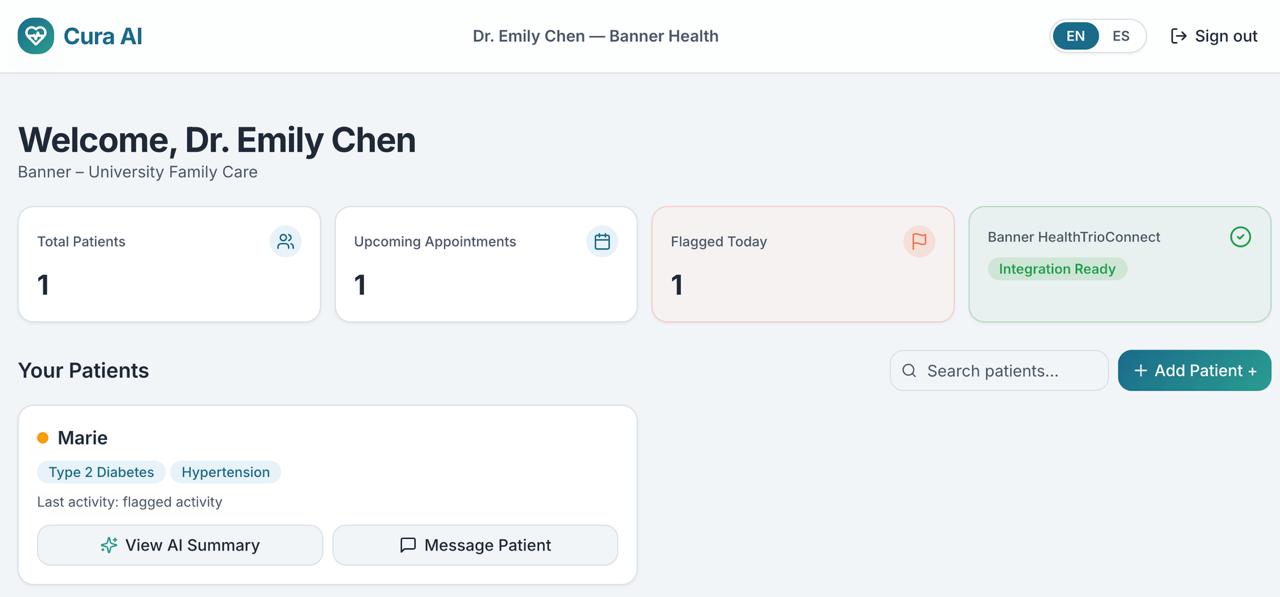
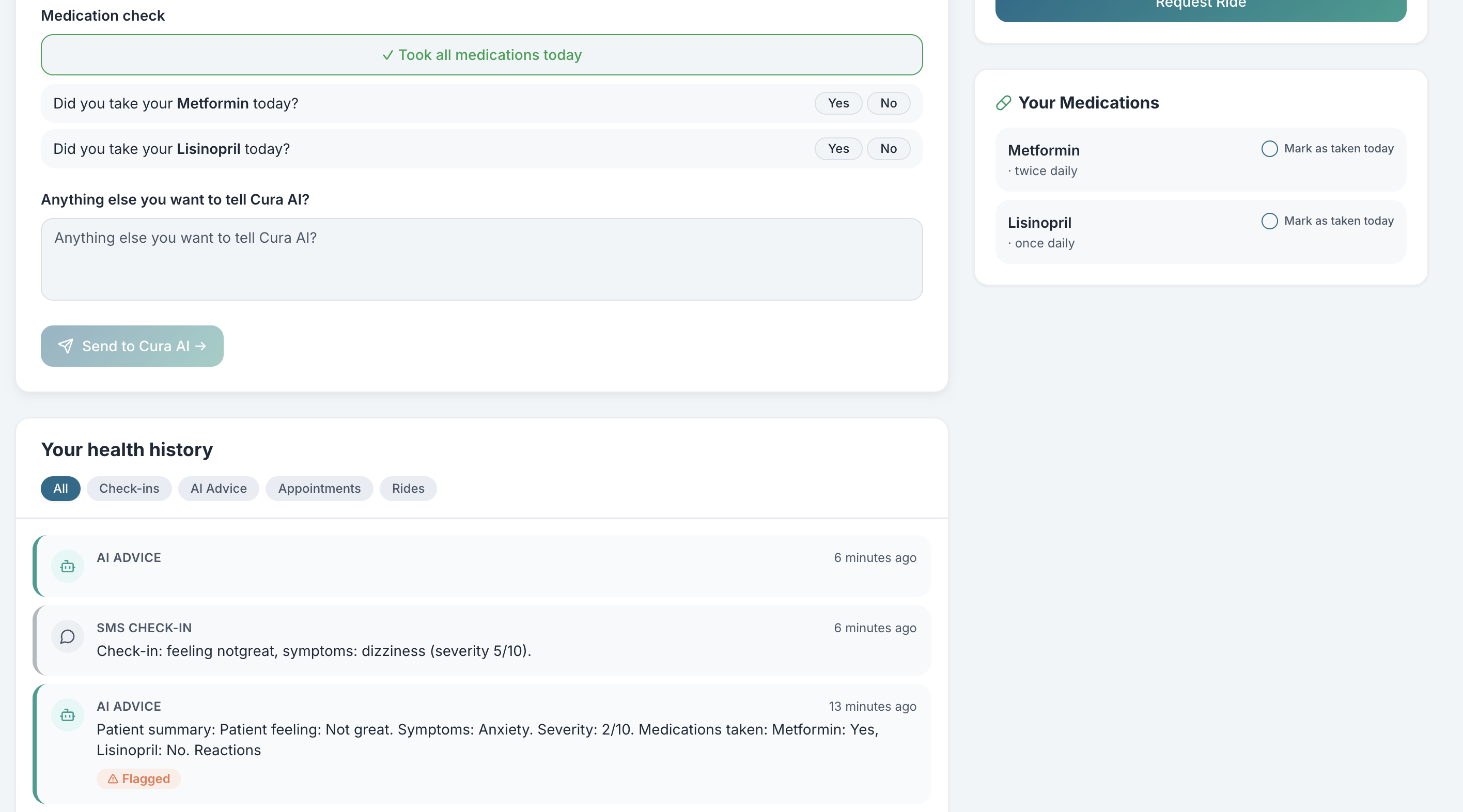
Cura AI is a patient-support platform that combines AI guidance, accessibility tools, and care coordination into one system.
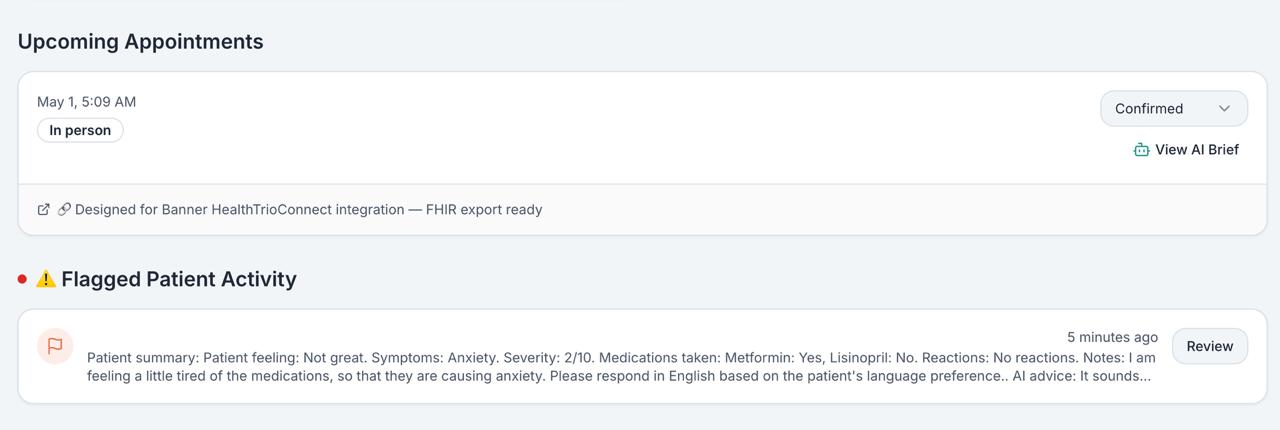
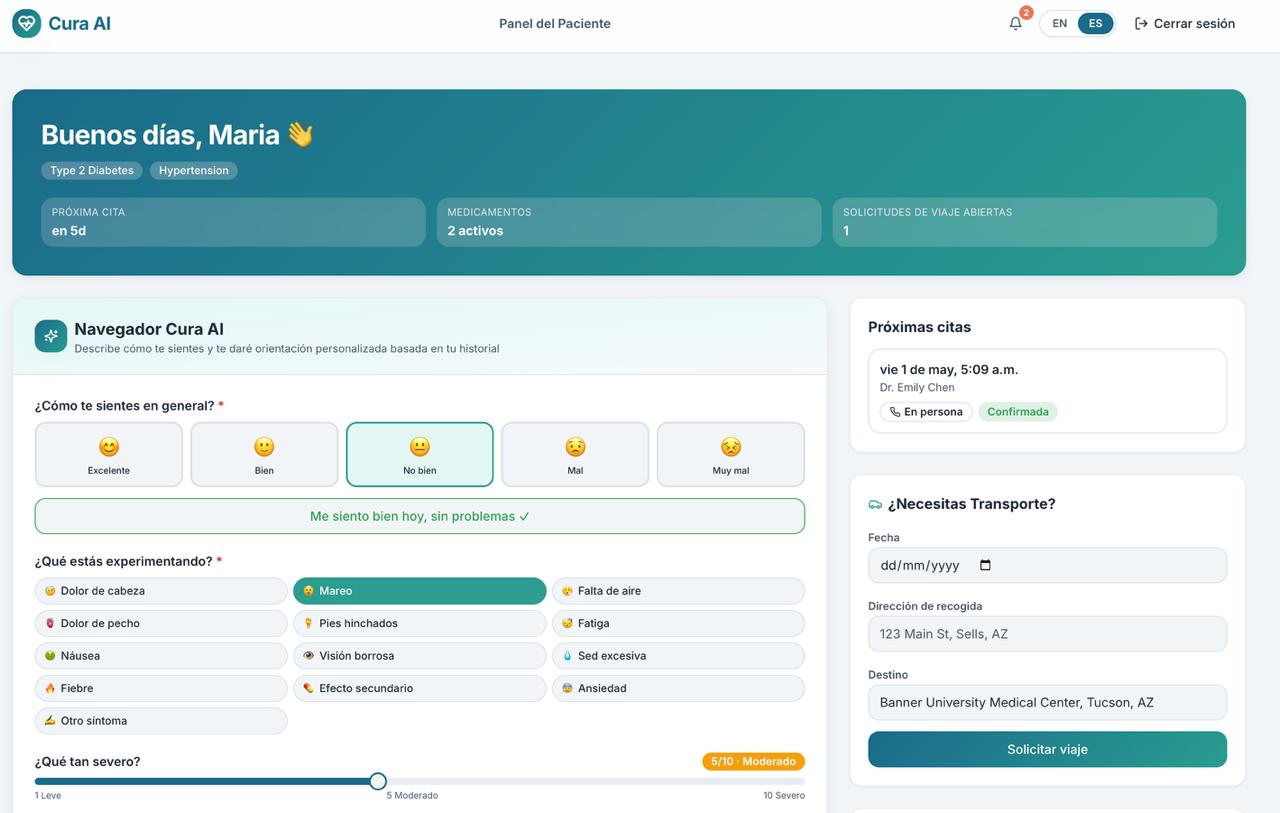
- AI Navigator: Patients describe how they feel and receive simple, personalized guidance. At the same time, the system generates a structured pre-appointment summary for doctors.
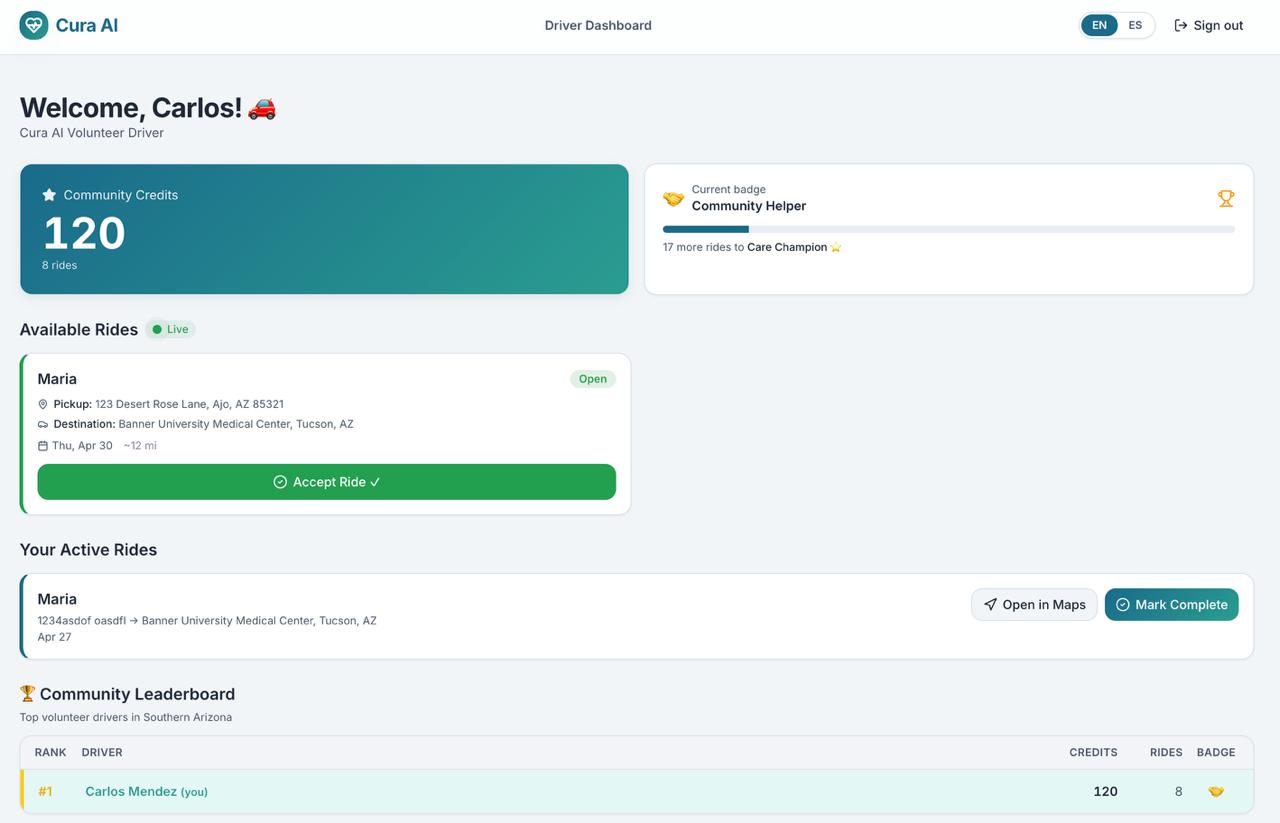
- Volunteer Ride System: Connects patients with available volunteers based on schedule, with a basic reward mechanism.
- SMS Integration: Ensures patients without internet can still receive updates, reminders, and guidance.
- Translation Support: Enables English/Spanish communication for broader accessibility.
- Demo Case (Marie): Demonstrates how a real patient could use the system daily—from symptom input to doctor visit preparation.
- Integration-ready: Designed to connect with systems like Banner Health’s HealthTrio.
How we built it
We used Lovable to rapidly scaffold the frontend and user flows, focusing on speed and usability.
- Frontend: Built in Lovable with simple UI flows for patient input, summaries, and scheduling
- Backend & Database: Powered by Supabase for authentication, user profiles, and storing patient data
- AI Processing: Integrated Claude (via API) to generate patient advice and structured summaries for doctors
- Development Acceleration: Used Cursor / Claude to quickly generate components, database schemas, and API logic
- SMS Layer: Designed as an API-based extension (e.g., Twilio-style integration) for offline communication
- Architecture: Lightweight, modular, and API-driven so each feature (AI, rides, SMS, translation) can scale independently
Challenges we ran into
- Scope vs. time: Fitting multiple impactful features into a short development window required aggressive prioritization
- AI reliability: Ensuring outputs are helpful but not misleading in a healthcare context
- Integration complexity: Designing something that could integrate with healthcare systems without actually implementing full EHR integration
- User diversity: Balancing usability for both tech-savvy users and those relying on SMS
- Data structure: Creating a flexible schema that supports patients, volunteers, and multilingual data
Accomplishments that we're proud of
- Building a functional AI-driven healthcare assistant in just a few hours
- Creating a system that supports both online and offline (SMS) users
- Designing a doctor-ready summary feature, not just patient-facing AI
- Structuring the platform to be real-world deployable and integratable
- Demonstrating a realistic patient journey through the Marie use case
What we learned* Simplicity is critical—clear, focused features are more impactful than complex systems
- AI becomes much more useful when paired with structured outputs (like doctor summaries)
- Accessibility (SMS, translation) is not optional—it’s essential in healthcare
- Rapid development tools like Lovable and Cursor can dramatically accelerate MVP creation
- Designing for real-world constraints (time, integration, users) is as important as building features
What's next for Cura AI
- Deeper AI personalization: Incorporate patient history and trends into recommendations
- Full SMS workflow: Allow complete interaction (input + output) via text
- Real healthcare integration: Connect with systems like Banner Health’s HealthTrio
- Enhanced ride system: Add real-time matching, tracking, and incentives
- Multilingual expansion: Go beyond English/Spanish
- Security & compliance: Move toward HIPAA-compliant infrastructure
- Mobile optimization: Improve usability for older and low-tech users
Built With
- claude
- cursor
- lovable
- ngrok
- railway
- supabase
- twilio
- vercel

Log in or sign up for Devpost to join the conversation.