-
-
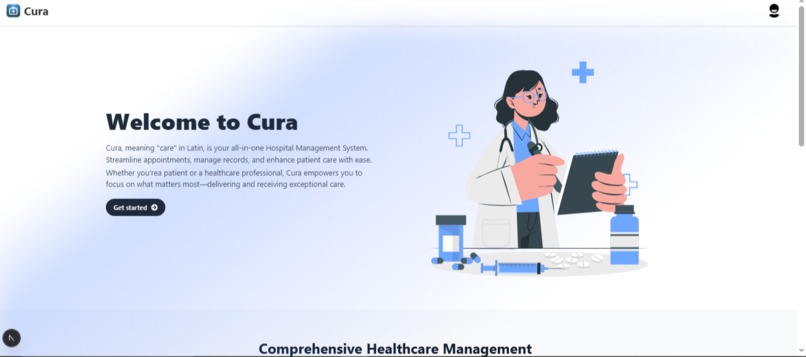
Hero Section
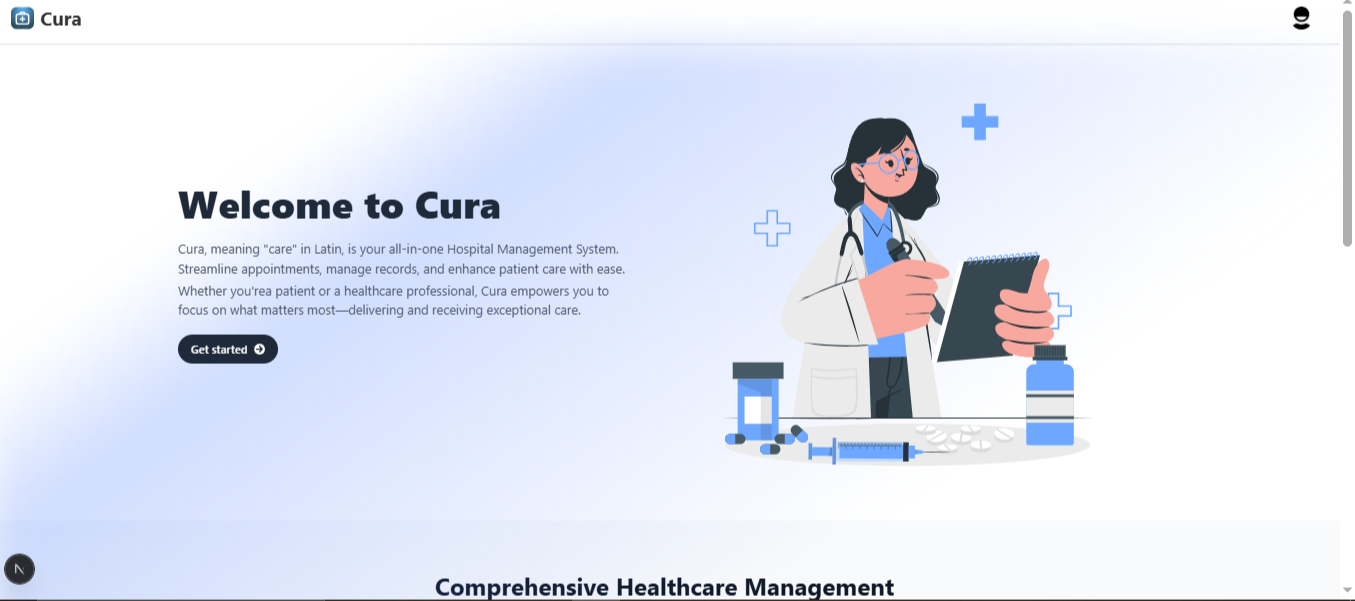
Inspiration
Cura, meaning "care" in Latin, was inspired by the need to simplify healthcare management for patients and staff. I wanted to create a platform that empowers patients to manage their healthcare journey while helping staff deliver efficient care, using technology to bridge the gap between patients and providers.
What it does
Cura is a Hospital Management System that streamlines healthcare operations. Patients can log in to view their dashboard, manage appointments, request prescription refills, access medical records, pay bills, and update their profile. They can also use an AI chatbot to ask questions like "When is my next appointment?" Staff can log in to manage their dashboard, view assigned patients, complete tasks (e.g., approve refills), generate reports, and handle prescriptions across patients.
How I built it
I built Cura over 10 days using Next.js with TypeScript, Tailwind CSS, and DaisyUI for the frontend. The backend uses MongoDB for the database and Next.js API routes for handlers. I implemented authentication with NextAuth for secure patient and staff logins. For AI, I integrated the Gemini API to power a patient chatbot. The app is deployed on Vercel, with the codebase on GitHub.
Challenges I ran into
Integrating the Gemini API for the AI chatbot was tricky due to prompt engineering and handling patient context. Ensuring a responsive design across devices while maintaining a consistent UI with DaisyUI was another challenge. Time constraints also made it difficult to fully implement AI-driven features like smart scheduling and report insights, so I mocked those for the demo.
Accomplishments that I'm proud of
I'm proud of building a fully functional Hospital Management System in just 10 days, with both patient and staff portals. The AI chatbot, which answers patient queries, is a standout feature that showcases innovation. Deploying Cura on Vercel and creating a polished 1.5-minute demo video for the hackathon submission are also achievements we’re excited about.
What we learned
We learned how to integrate AI into a healthcare app using the Gemini API, balancing user experience with technical complexity. We also gained experience with Next.js, TypeScript, and MongoDB for building scalable web apps. Working under tight deadlines taught us to prioritize features and mock future enhancements effectively.
What's next for Cura
Next, I plan to fully implement AI-driven features like smart scheduling to suggest appointment times and insights for staff reports (e.g., predicting no-shows). I also aim to develop a mobile app version, add advanced analytics for staff, and enhance the chatbot with real patient data integration for more personalized responses.
Built With
- javascript
- mongodb
- next.js
- node.js
- tailwindcss

Log in or sign up for Devpost to join the conversation.