Inspiration
Cura was inspired by the challenges families and caregivers face in staying connected with patients, especially elderly individuals and people recovering from illnesses. Managing medications, monitoring health updates, and responding quickly during emergencies can be difficult when information is scattered or communication is delayed. Cura was created to simplify caregiving through a secure, real-time platform that keeps patients and caregivers connected, informed, and supported at all times.
What it does
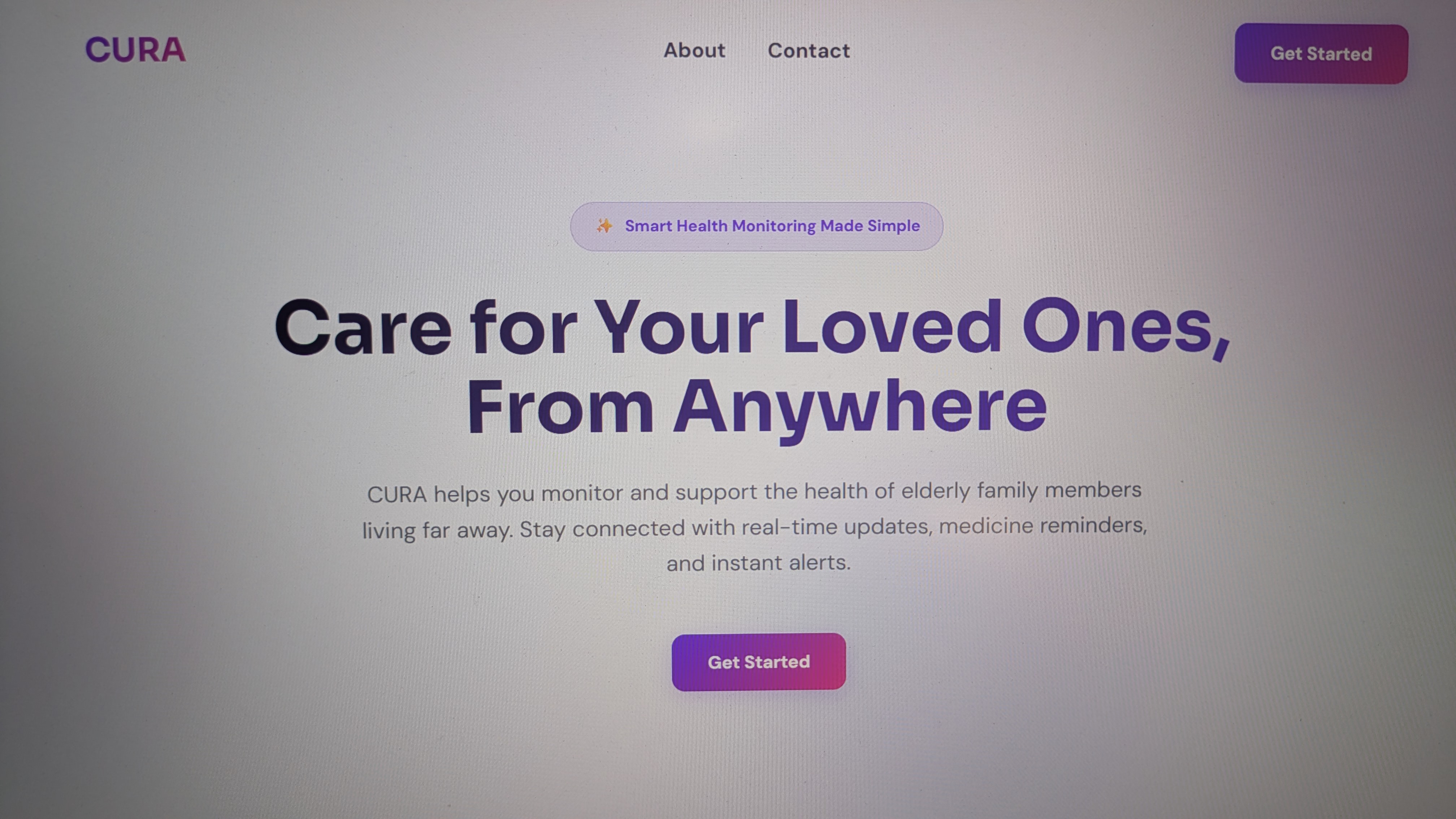
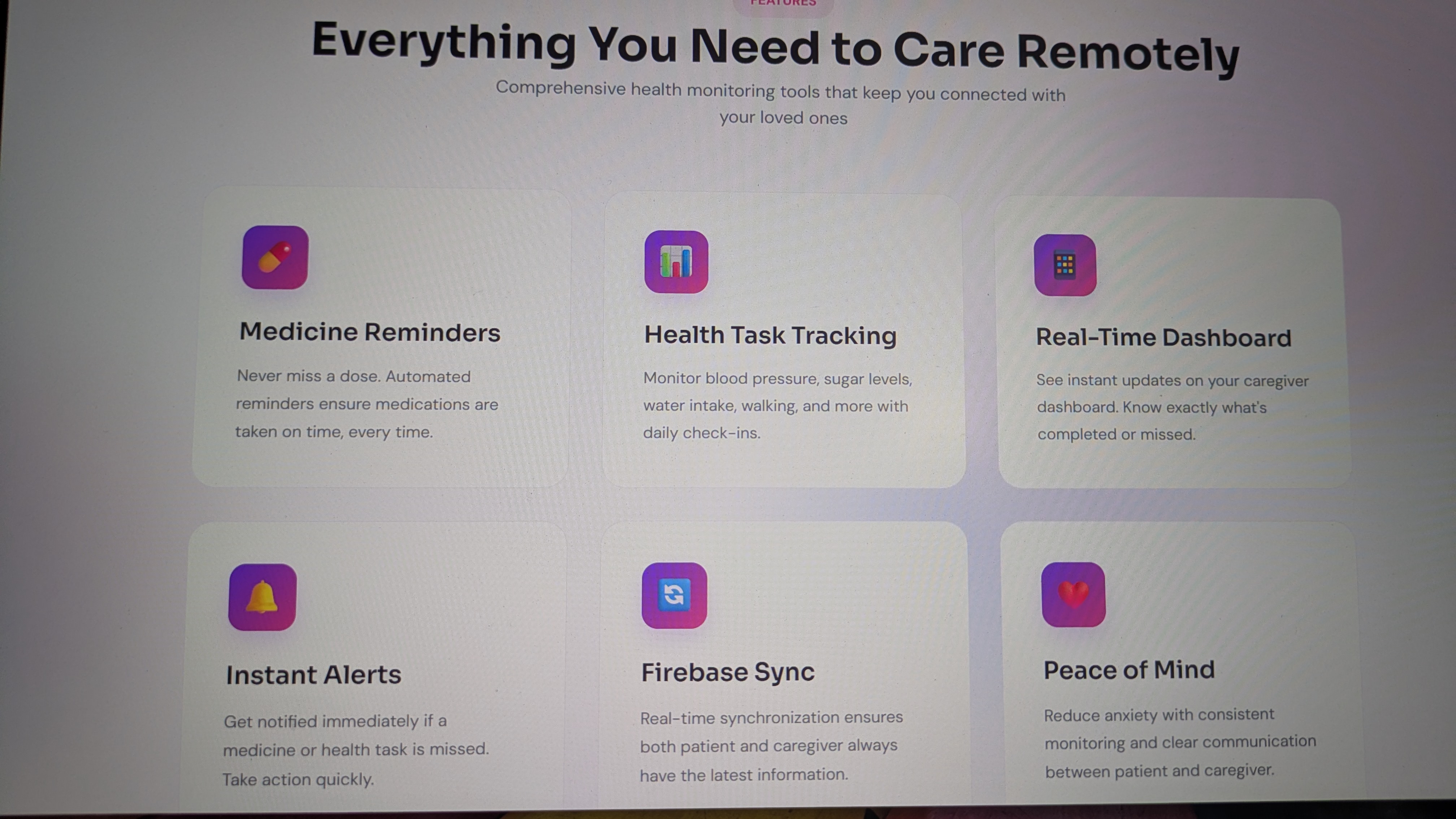
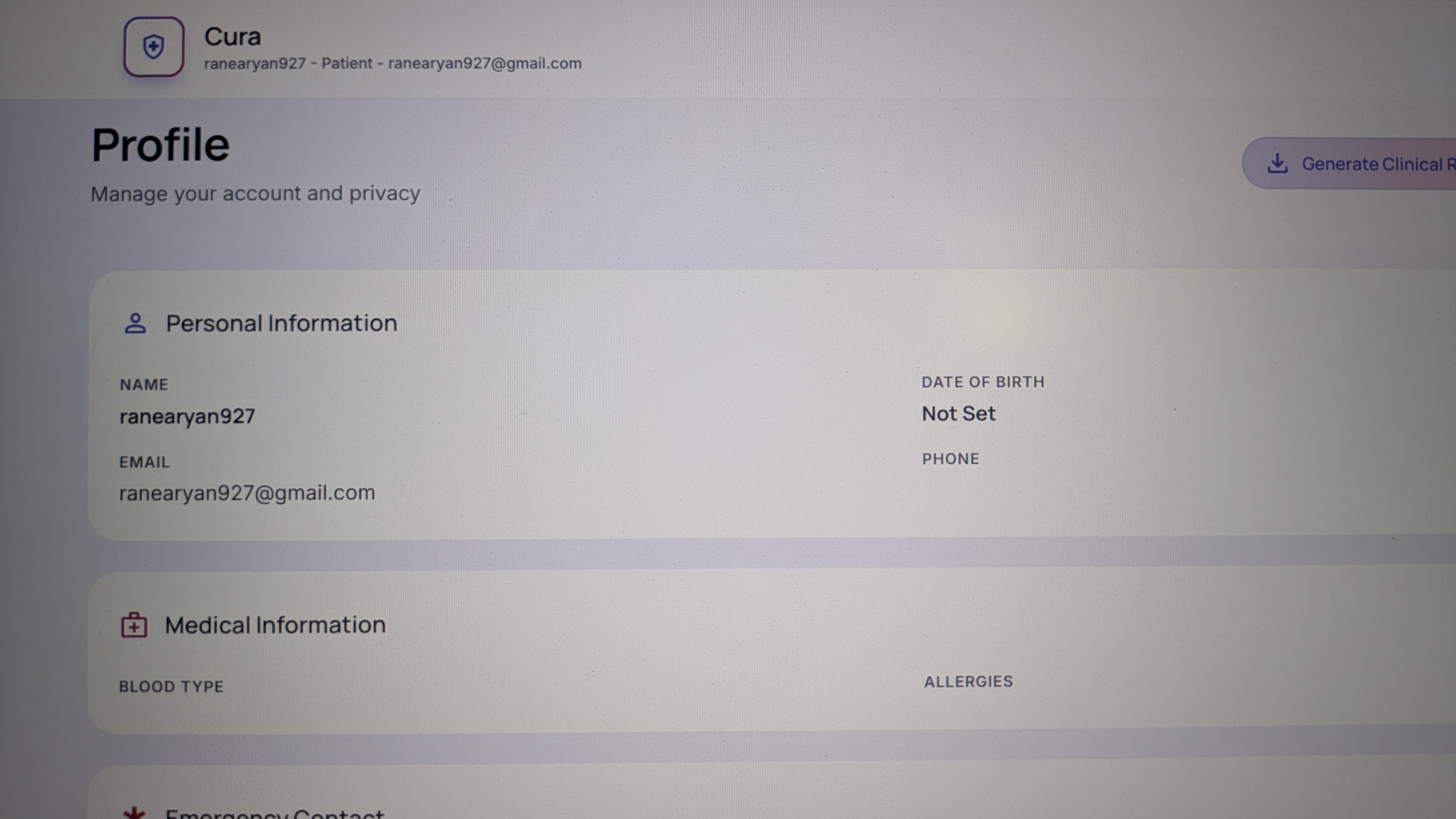
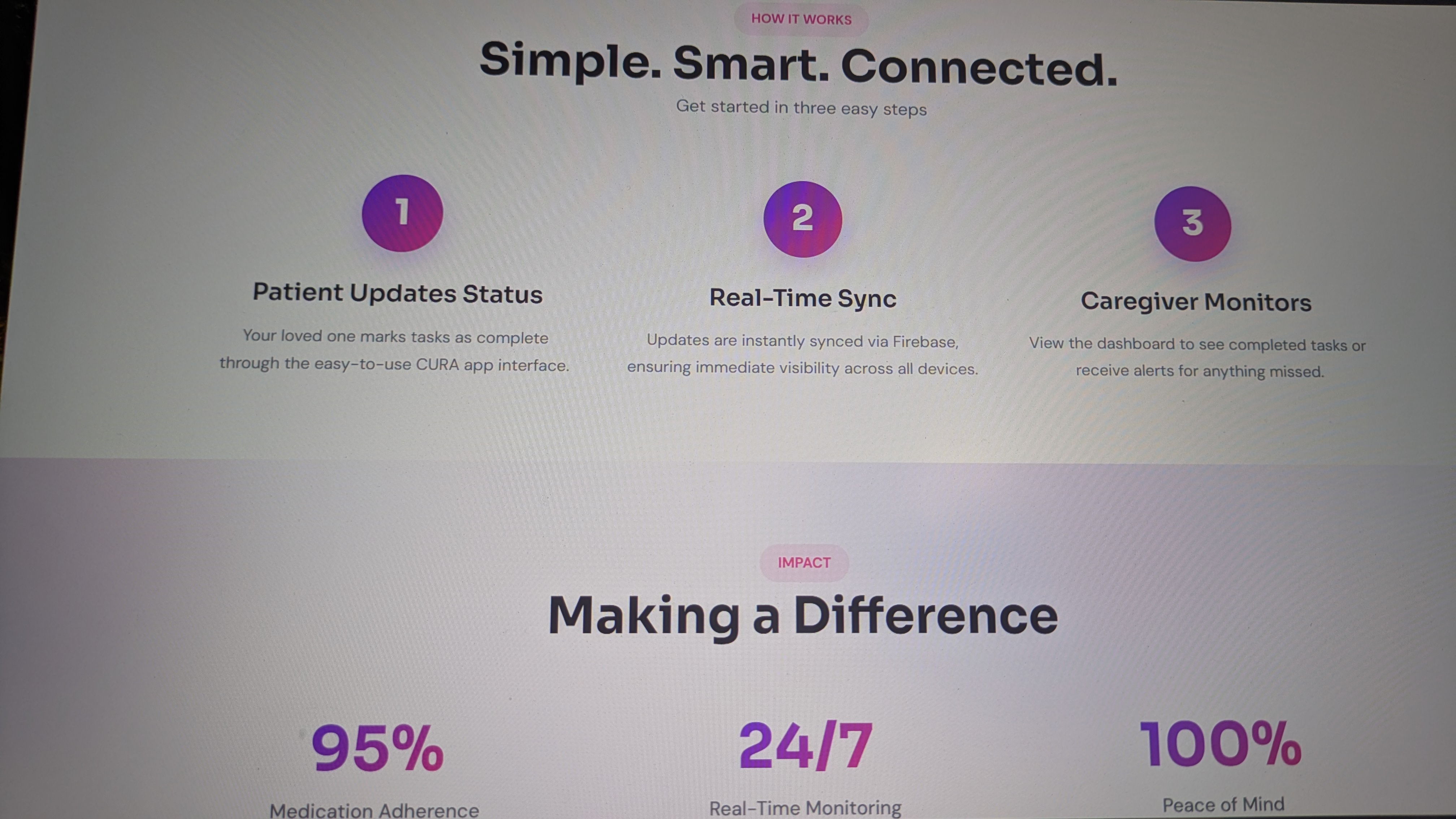
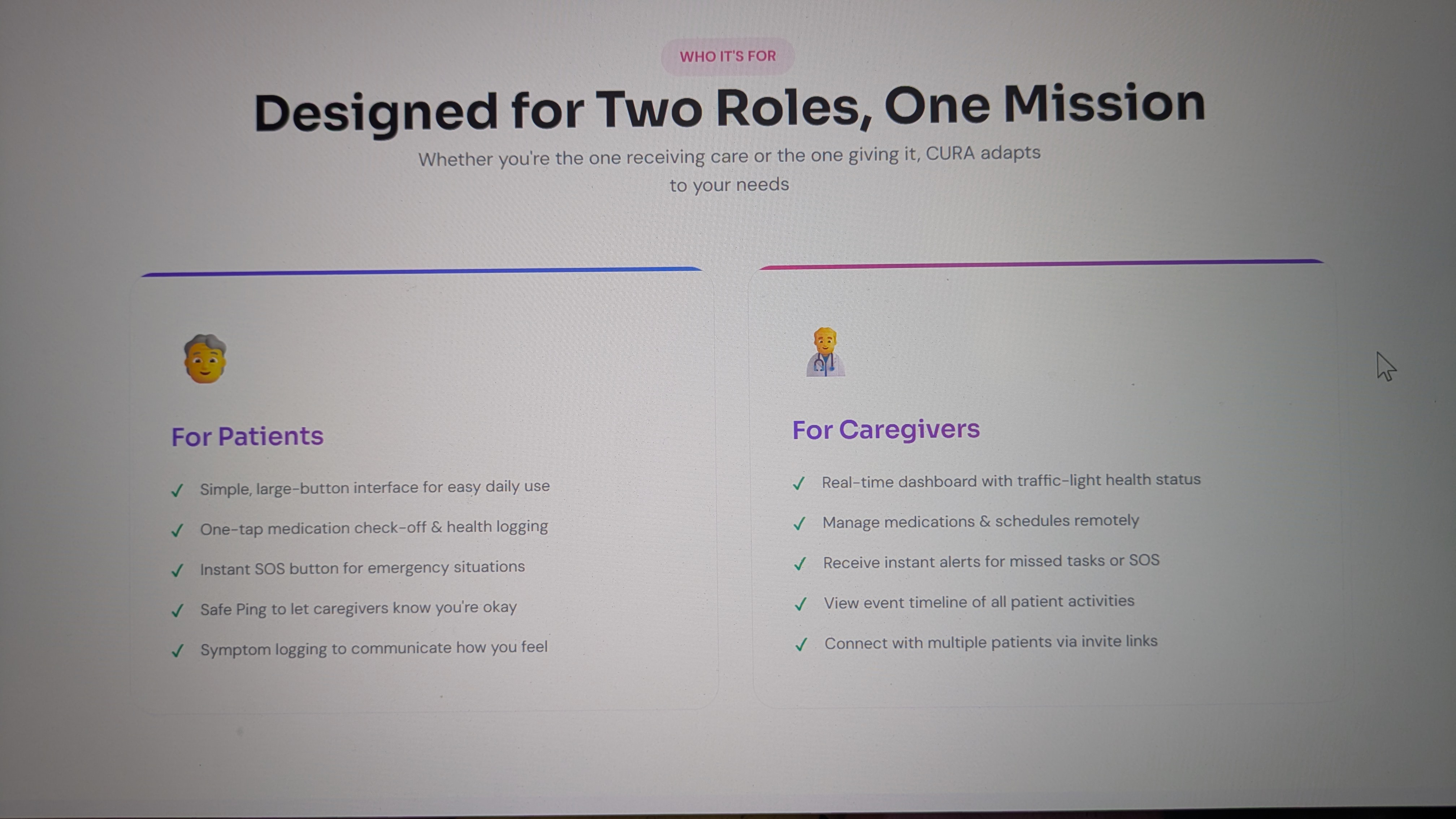
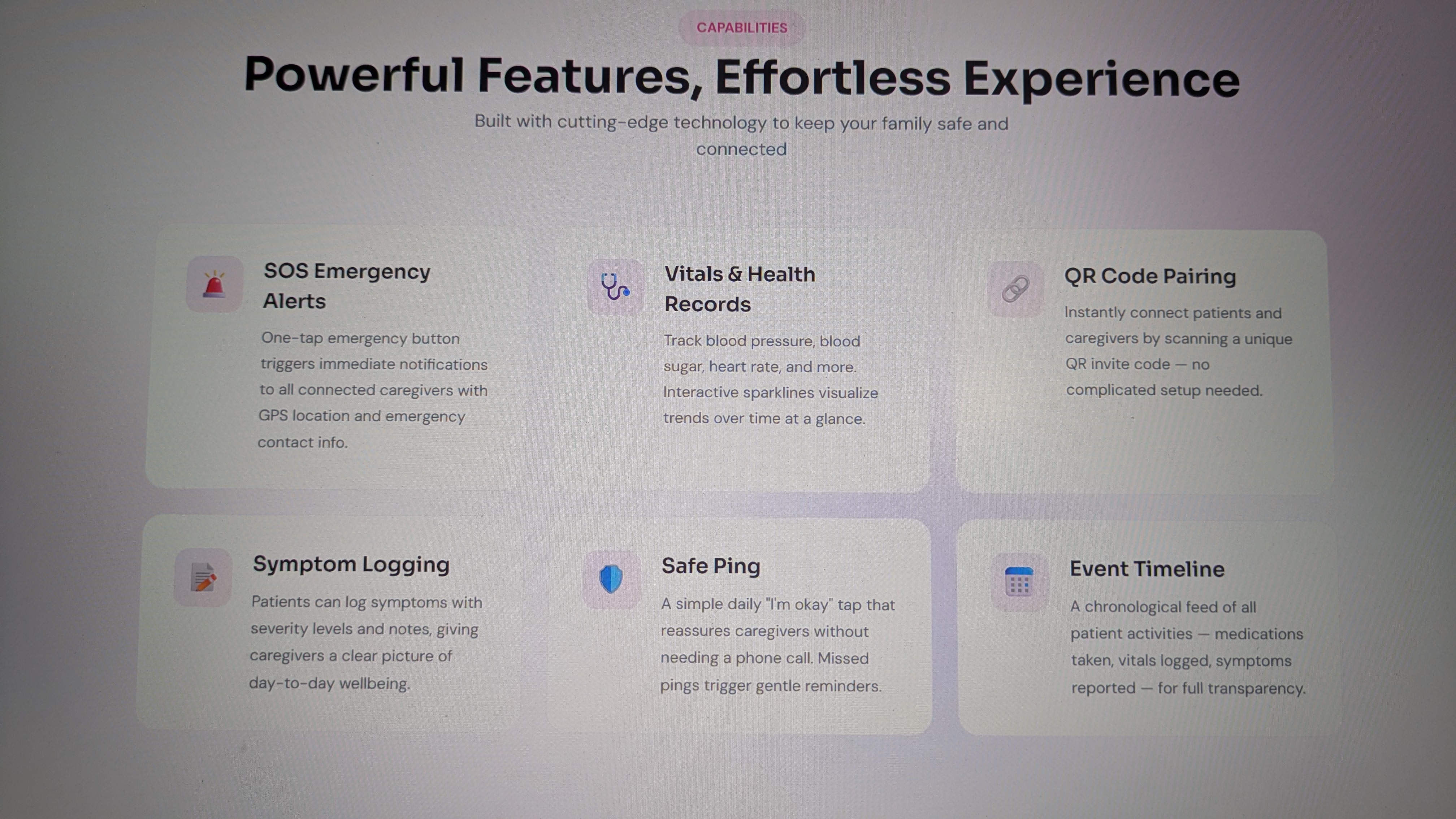
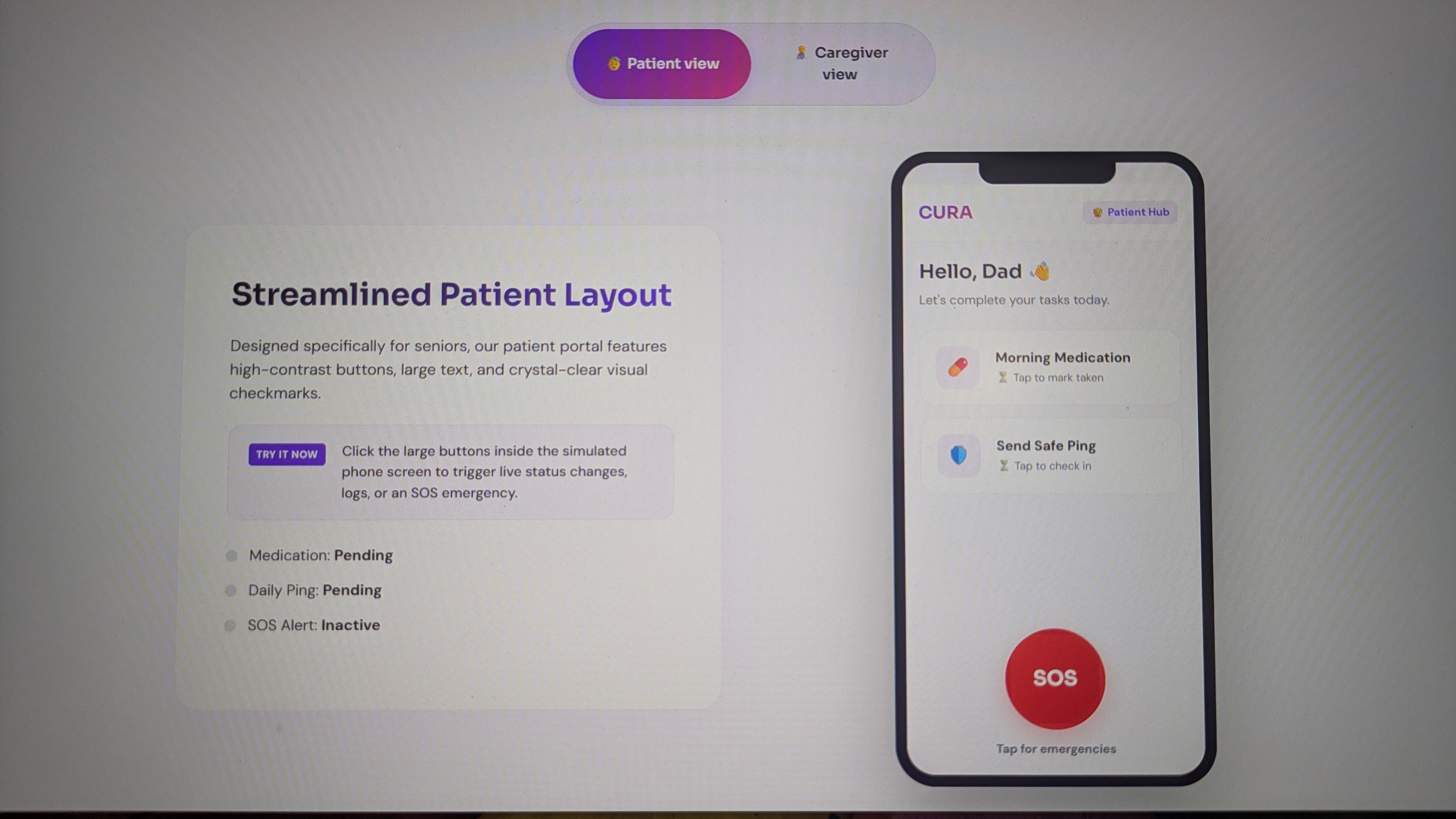
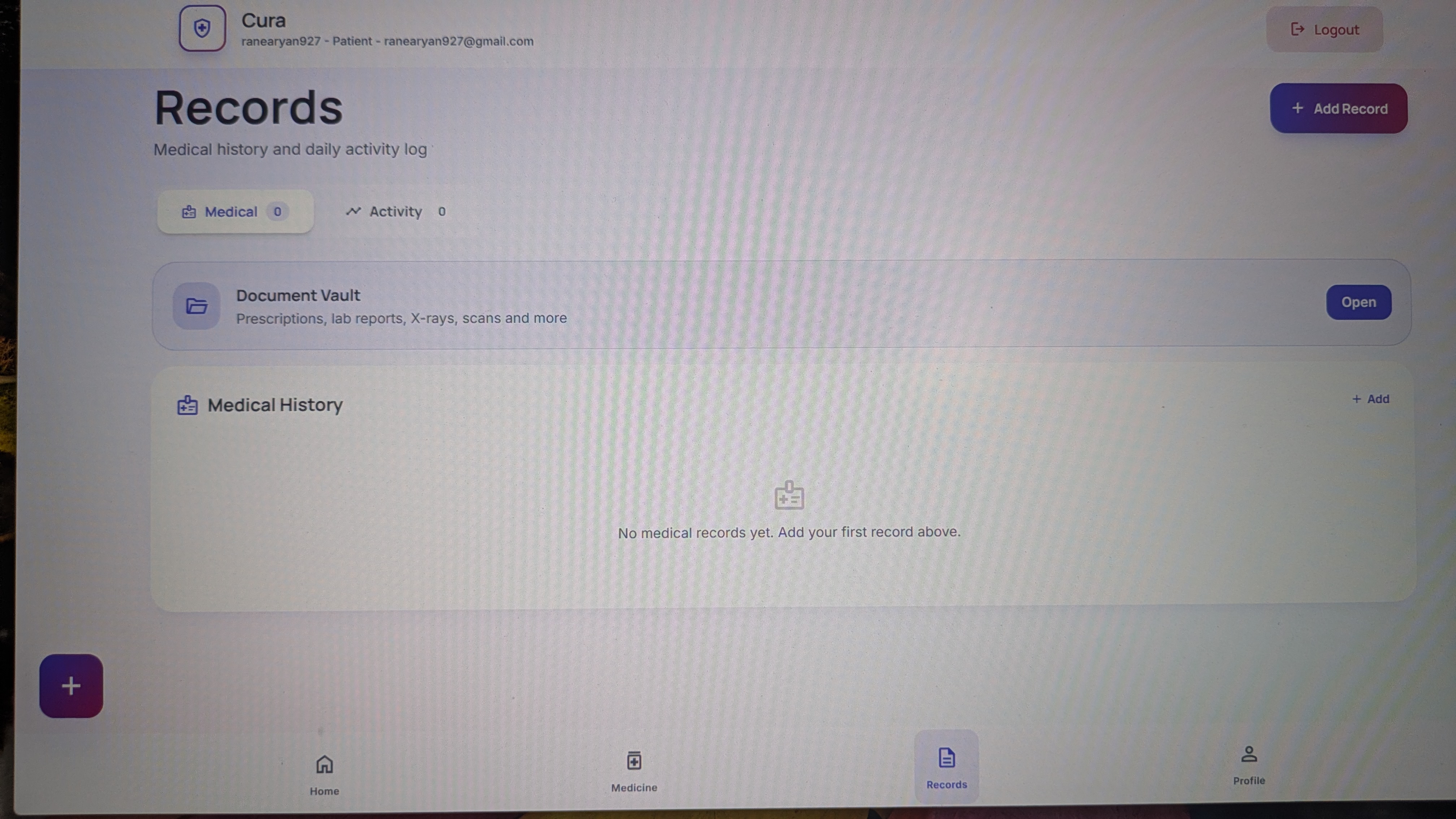
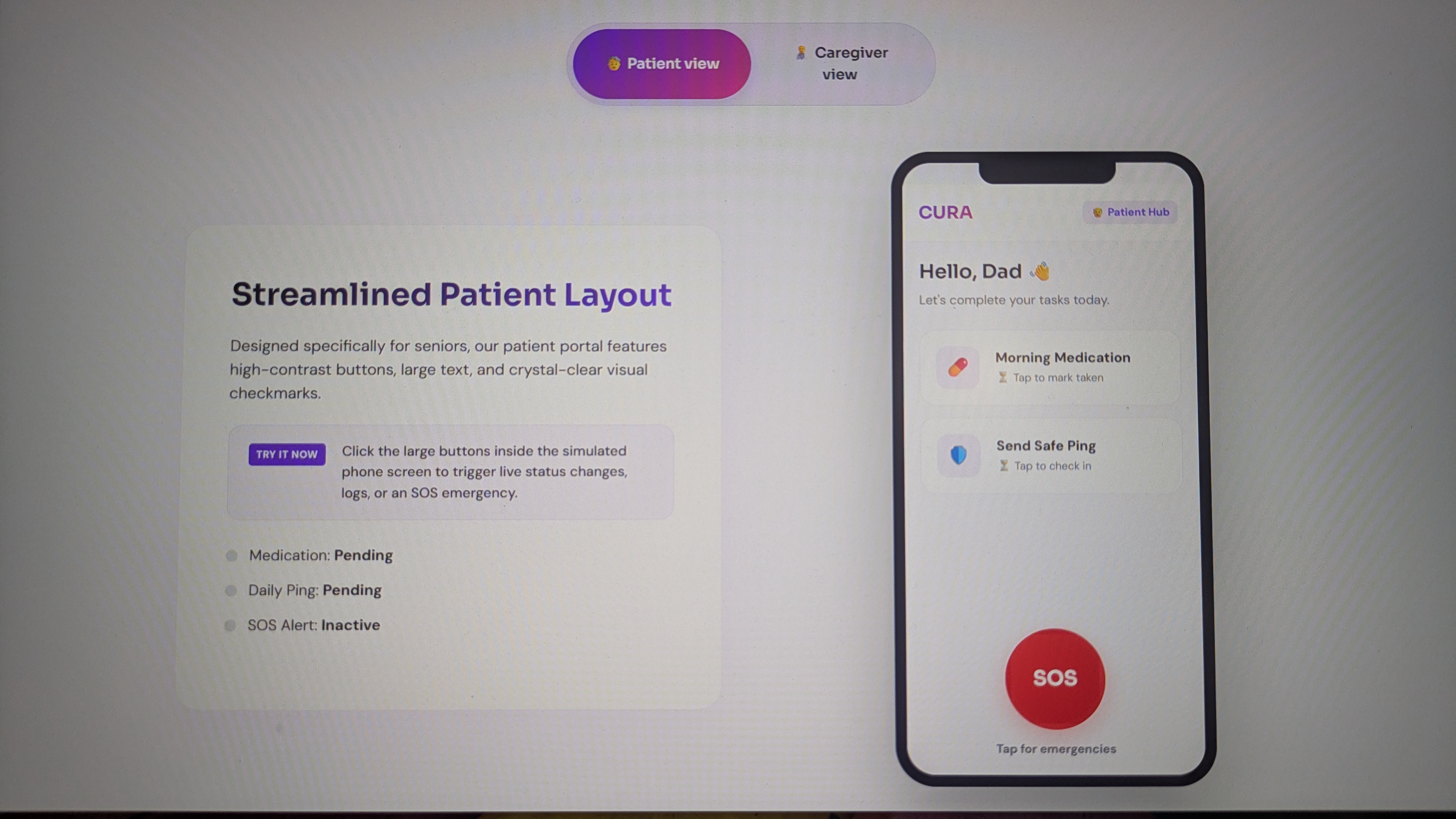
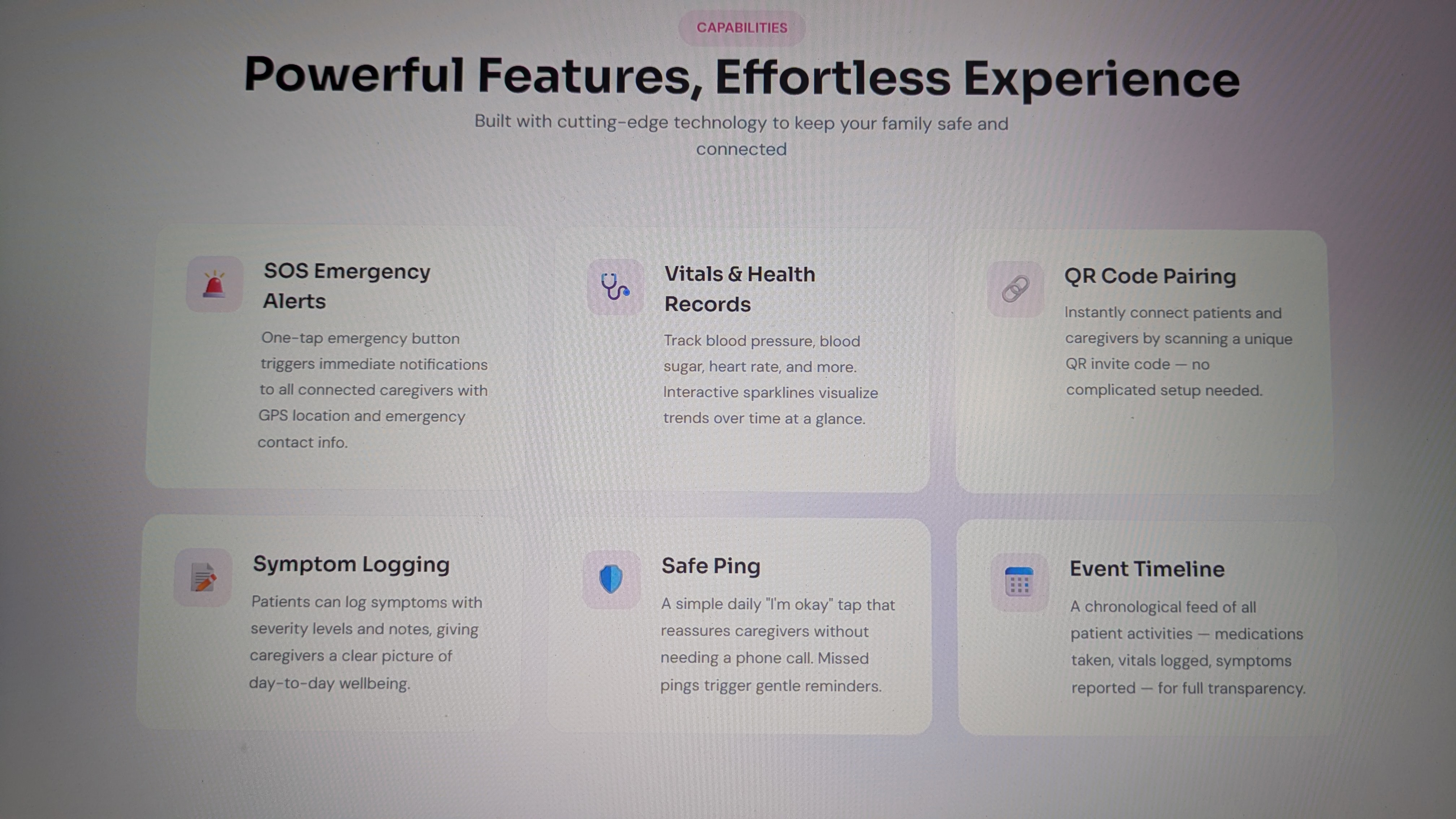
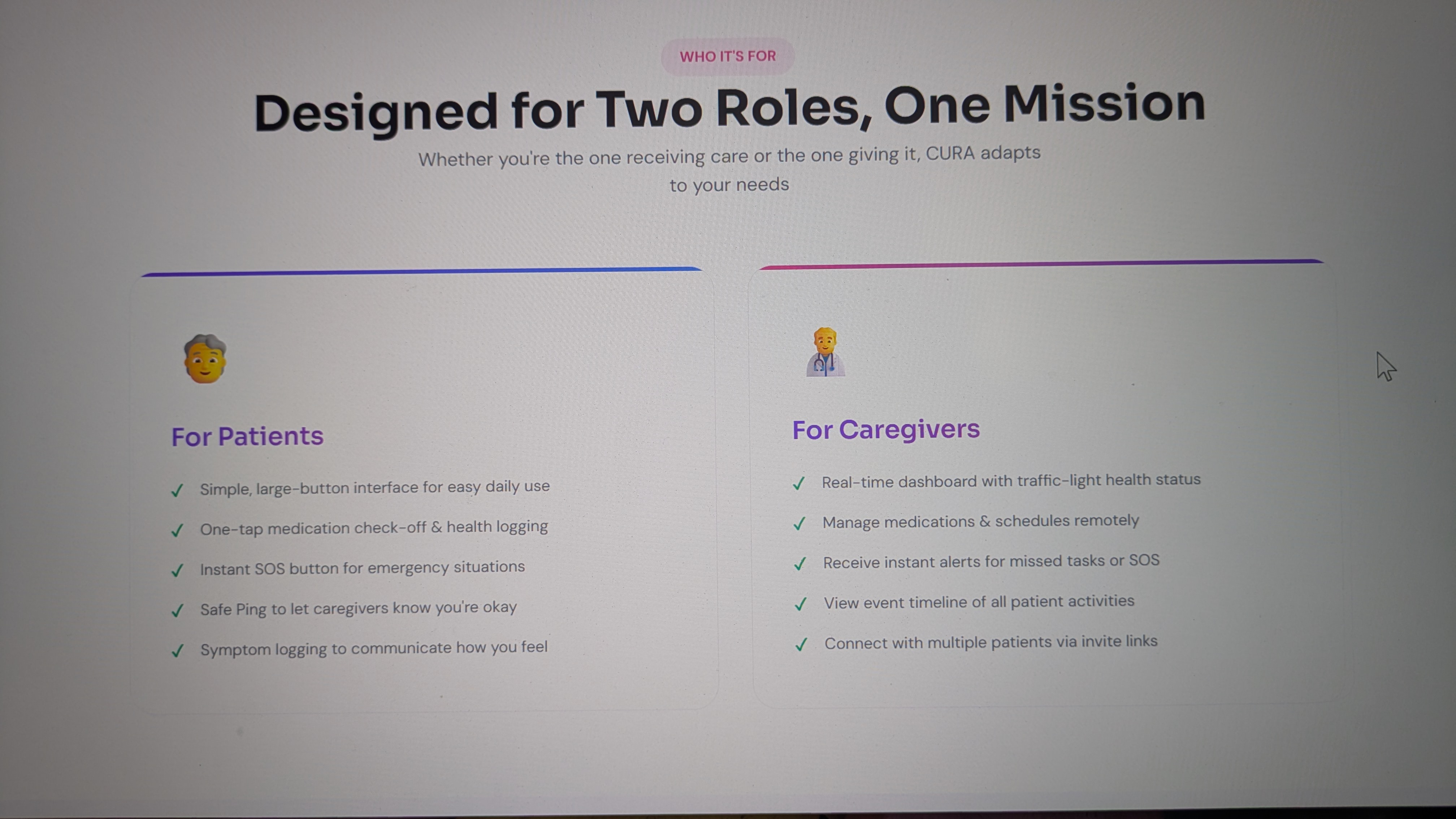
Cura helps patients and caregivers stay connected through real-time health monitoring, medication tracking, emergency alerts, symptom logging, and shared health updates — all in one secure and easy-to-use platform.
How we built it
We built Cura using React for the frontend and Firebase for authentication and real-time data handling. The platform was designed with a modern healthcare-focused UI to make it simple and accessible for both patients and caregivers. To improve scalability and reliability, we are integrating firebasebase for relational data management and Cloudflare Workers for secure backend logic, ensuring stable patient-caregiver connectivity, secure data handling, and real-time monitoring.
Challenges we ran into
One of the biggest challenges we faced while building Cura was managing reliable patient–caregiver connectivity in real time. Since the platform depends heavily on synchronization between multiple users, we encountered issues with authentication persistence, delayed updates, and inconsistent relationship mapping between patients and caregivers. Firebase handled real-time updates well initially, but as the application grew, managing complex relational data such as invitations, shared access, and caregiver connections became difficult.
Another major challenge was ensuring the platform remained secure while still being easy to use. We had to carefully design authentication flows, access permissions, and database structures to prevent unauthorized access to sensitive health-related information. Balancing security with a smooth user experience required multiple iterations of backend logic and state management.
We also faced challenges in creating an interface that was both modern and accessible for users of different age groups, especially elderly patients who may not be comfortable with complex technology. This required us to focus heavily on intuitive UI design, clear navigation, and simplified interactions without compromising functionality.
To solve these issues, we began restructuring the backend architecture by integrating Supabase for relational data management and Cloudflare Workers for secure server-side processing. This approach improves scalability, stabilizes real-time synchronization, and ensures safer handling of patient-caregiver interactions as the platform continues to evolve.
Accomplishments that we're proud of
One of the accomplishments we are most proud of is successfully building a real-time caregiving platform that connects patients and caregivers through a clean, accessible, and modern interface. As first-year students, developing a system that handles authentication, real-time monitoring, emergency features, and patient-caregiver synchronization gave us valuable hands-on experience in solving real-world technical challenges.
We are also proud of designing Cura around a meaningful social problem rather than just creating a generic application. The platform focuses on improving communication, safety, and monitoring for patients, elderly individuals, and caregivers, making the project both technically challenging and socially impactful.
Another accomplishment was learning and implementing modern technologies such as React, Firebase, Supabase, and Cloudflare Workers while continuously improving the architecture for better scalability and security. Despite facing issues with synchronization and backend logic, we were able to identify scalable solutions and restructure the system without changing the overall user experience and design.
Most importantly, we are proud that Cura evolved from a simple idea into a functioning healthcare-focused platform with the potential to make caregiving more connected, organized, and accessible.
What we learned
Building Cura taught us that creating a healthcare and caregiving platform goes far beyond designing a good-looking interface. One of our biggest learnings was understanding the importance of backend architecture and secure data management, especially when dealing with real-time patient and caregiver interactions. We learned how critical reliable authentication, synchronization, and role-based access control are in applications that involve sensitive health-related information.
We also gained valuable experience working with modern technologies like React, Firebase, Supabase, and Cloudflare Workers, and learned how each technology solves different problems within a scalable application. Through the challenges we faced, we understood the importance of separating frontend and backend responsibilities, structuring relational data properly, and building systems that can remain stable as more users interact simultaneously.
Another important learning was designing technology with accessibility and usability in mind. Since caregiving apps may be used by elderly patients or non-technical users, we learned how crucial it is to create interfaces that are intuitive, simple, and stress-free while still offering meaningful functionality.
Most importantly, Cura taught us how technology can solve real human problems. Working on the project helped us better understand the daily challenges caregivers and patients face, and how thoughtful software design can improve communication, monitoring, safety, and overall quality of care.
What's next for Cura
Our next goal for Cura is to evolve it from a basic caregiving platform into a more intelligent and scalable healthcare support system. We plan to improve patient–caregiver connectivity by integrating firebase and Cloudflare Workers to make the platform more secure, reliable, and capable of handling real-time monitoring at scale. This will help us create a stronger backend architecture while keeping the current user-friendly interface intact.
We also aim to introduce advanced caregiving features such as medication adherence tracking, real-time health alerts, symptom monitoring, appointment management, and multi-caregiver support. In the future, we want to integrate wearable device support and AI-powered health insights to help caregivers detect risks earlier and monitor patients more effectively.
Another important direction for Cura is accessibility. We want to add voice-based interactions, simplified workflows for elderly users, and better emergency response systems to make the platform easier and safer to use for people of all age groups.
Ultimately, our vision for Cura is to build a connected caregiving ecosystem that improves communication, monitoring, and healthcare accessibility for patients and caregivers through secure and intelligent technology.

Log in or sign up for Devpost to join the conversation.