-
-
Webpage
-
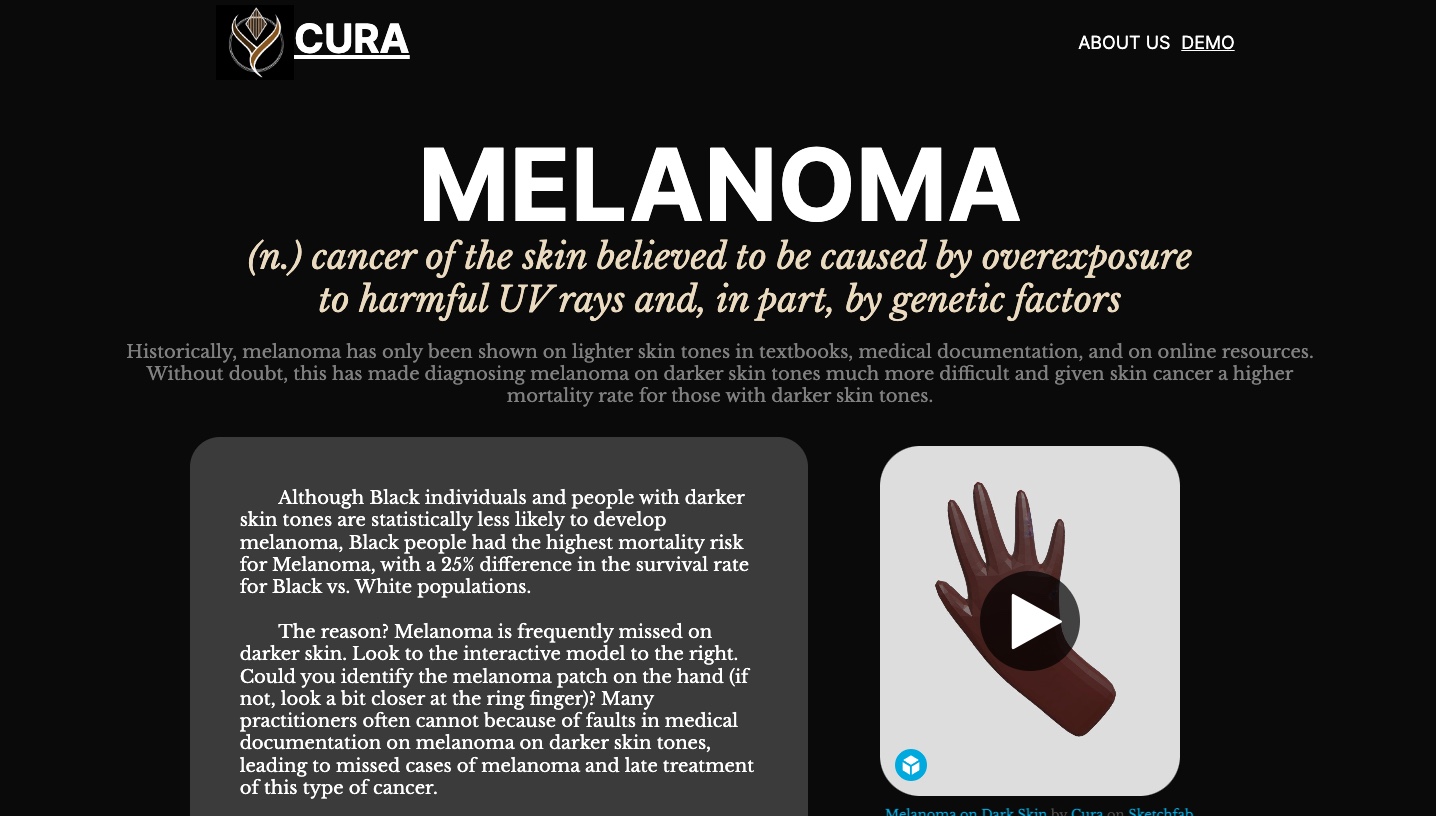
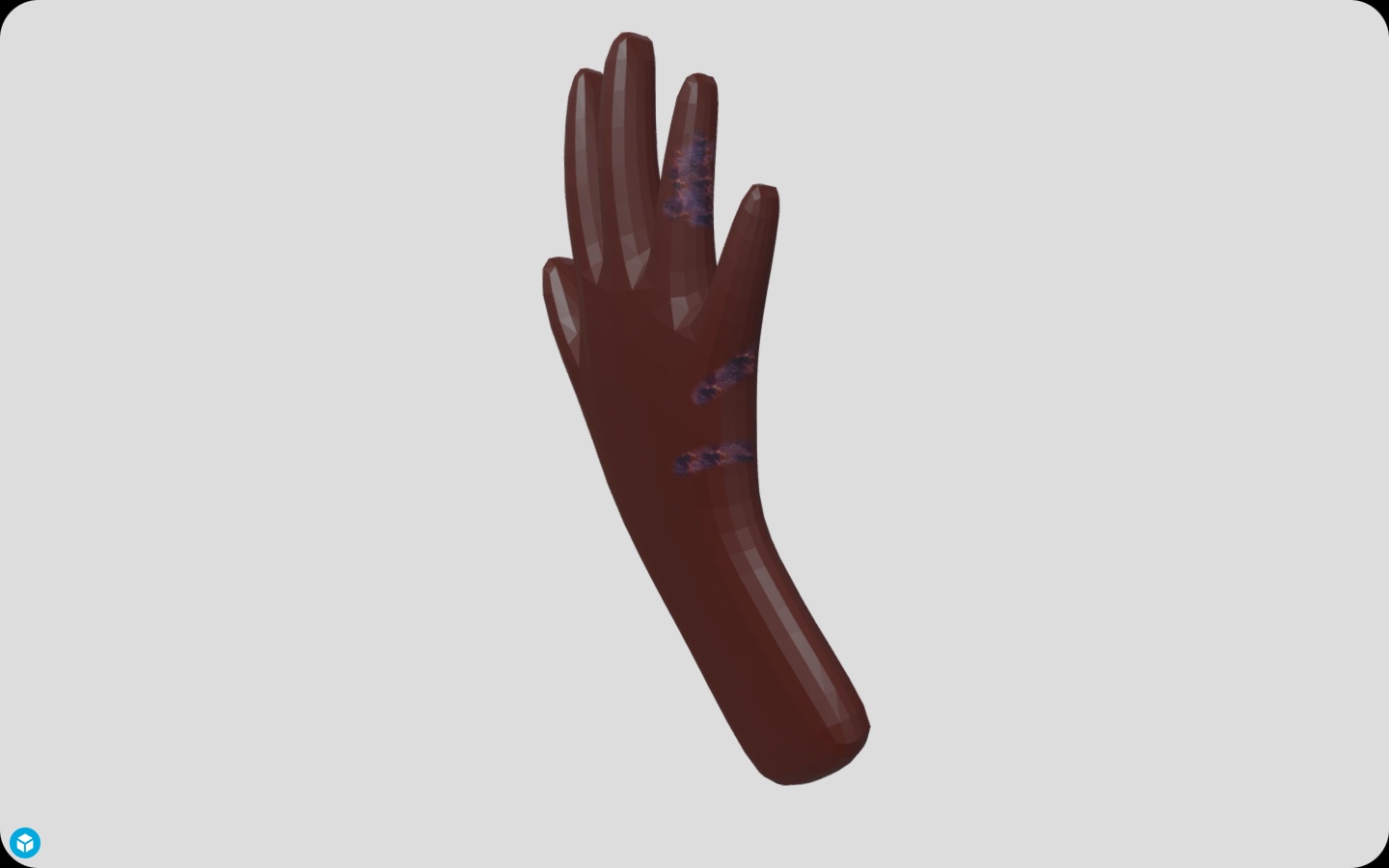
3D rendering of melanoma
Inspiration
There was a viral TikTok about black representation in medical textbooks - revealed by the fact that students were shocked when they saw a diagram of a Black pregnant woman in a textbook. It opened our eyes to how there's a lack of representation in the medical field, which can be detrimental in diagnosing serious disorders like skin cancer.
What it does
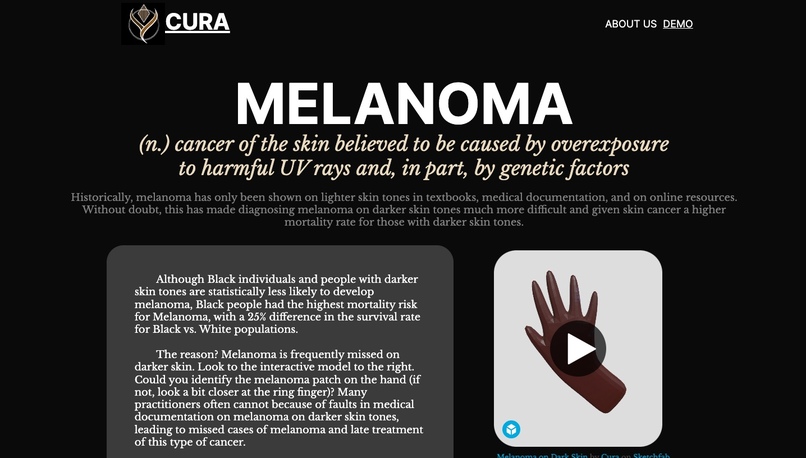
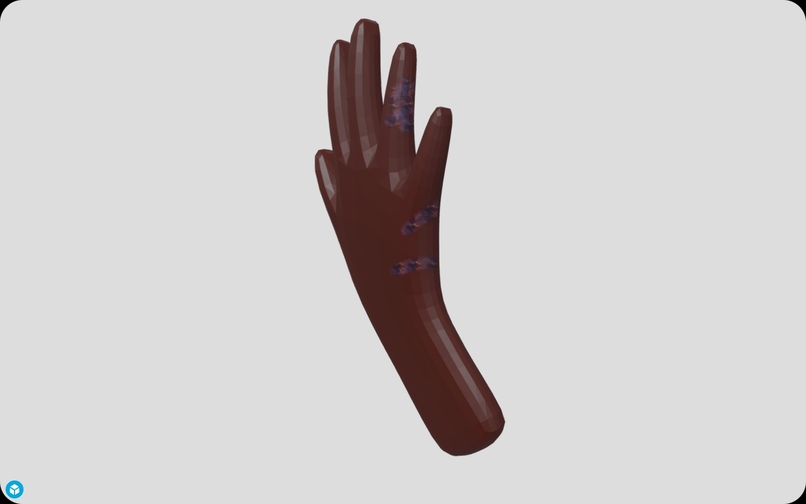
We wanted to address this issue by creating a website that renders 3D models of darker skin tones layered with images of melanoma, allowing patients to have an increased awareness/ability to self-diagnose. This could also serve as a learning tool in K-12 classroom or eventually more advanced areas to contribute to more diversity in STEM representation.
How we built it
VS Code (HTML and CSS), Blender, Powerpoint, Sketchfab, Screencastify
Challenges we ran into
It was the first time we used Blender (3D modeling/creation software) and the specific need for us to embed it onto a website caused us to have to sometimes use older models (which had less resources to learn online). It was also the first time we tried doing a lot more creative animation incorporating both HTML and CSS at the same time. It was fun and pretty gratifying when we made progress, though!
Accomplishments that we're proud of
Being able to learn and produce something meaningful using complex software in one day was a huge accomplishment. We were also proud of creating two different 3D experiences for people who may find it harder to click and drag through the live 3D model viewer, especially since accessibility is a huge part of inclusivity.
What we learned
We learned a lot about pushing through dead ends and not giving up on our idea. There were a lot of times where we realized it would've taken us a lot less time to make simpler web applications, but we didn't want to sacrifice our passion for making this product and what it could change.
What's next for Cura
We wanted to do animations in Blender that takes you through the stages of melanoma to improve efficiency in early detection. Ultimately, we want to be able to 3D model all types of skin disorders and move on to larger body disorders.
Built With
- blender
- css
- html
- powerpoint
- screencastify
- sketchfab
- visual-studio-code

Log in or sign up for Devpost to join the conversation.