-
-
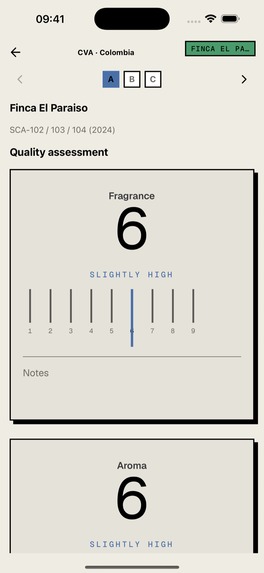
Protocols
-
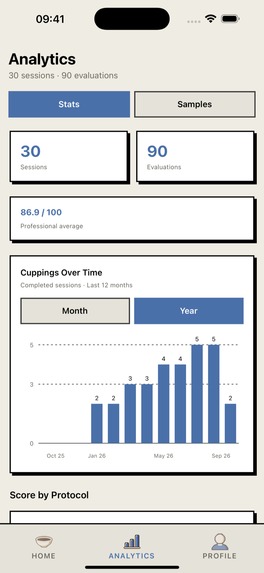
Analytics
-
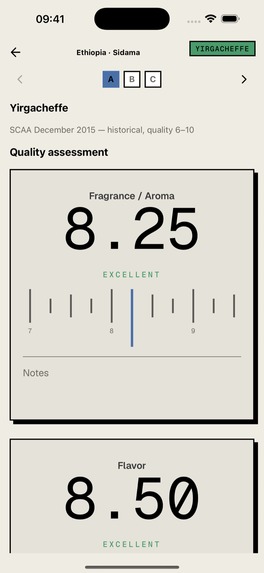
Evaluation
-
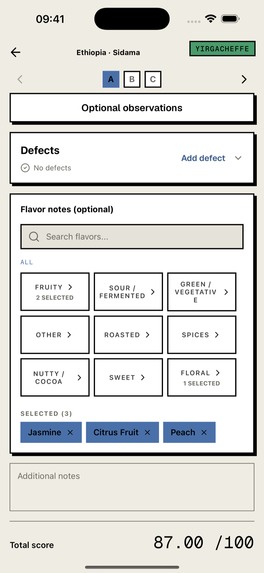
Flavor notes
-
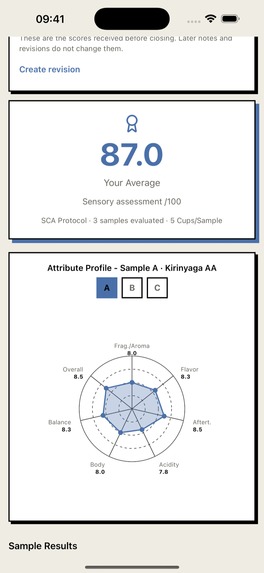
Results
-
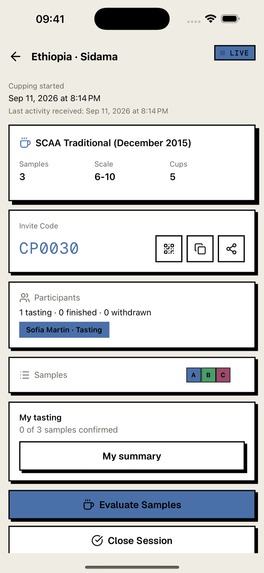
Live sessions
-
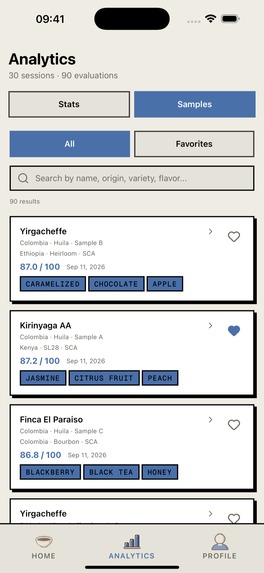
Samples
-
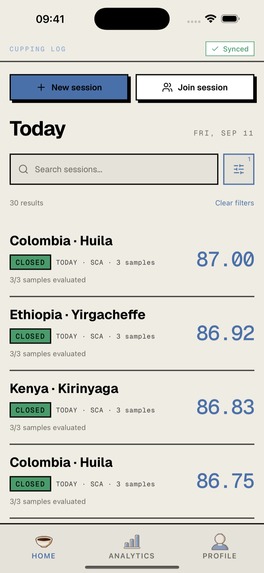
History
-
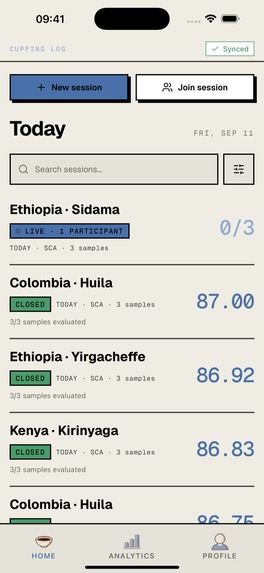
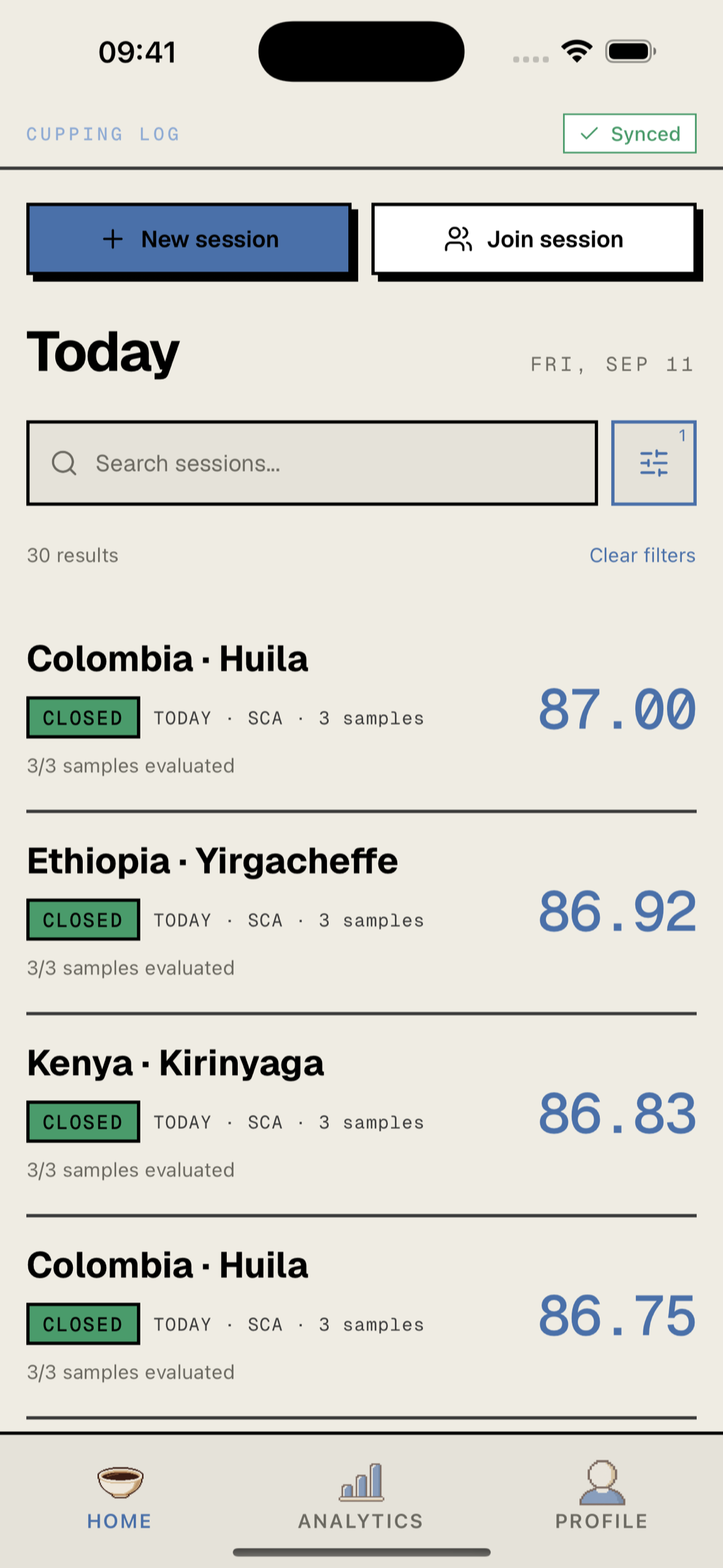
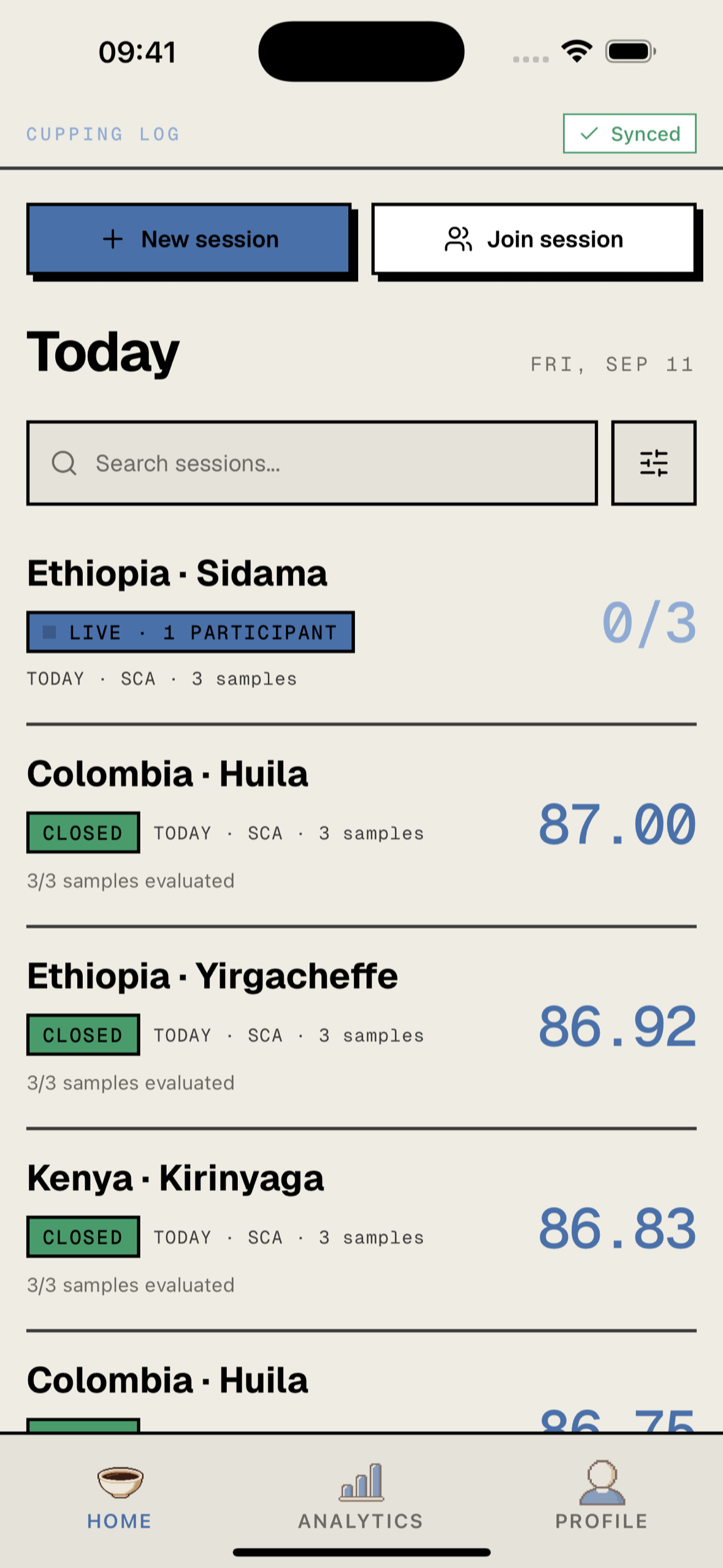
Home view
-


Inspiration
Coffee evaluation, without the paperwork.
A coffee tasting produces more than a score: it captures flavors, observations, and differences worth coming back to. But when those details live on separate tasting sheets, it becomes harder to compare coffees, discuss results, and learn from previous sessions.
Cupping brings that process into one place, keeping the structure of a coffee evaluation while making it easier to record, share, and revisit.
What it does
Cupping is an offline-first coffee evaluation app for individual tasters and groups.
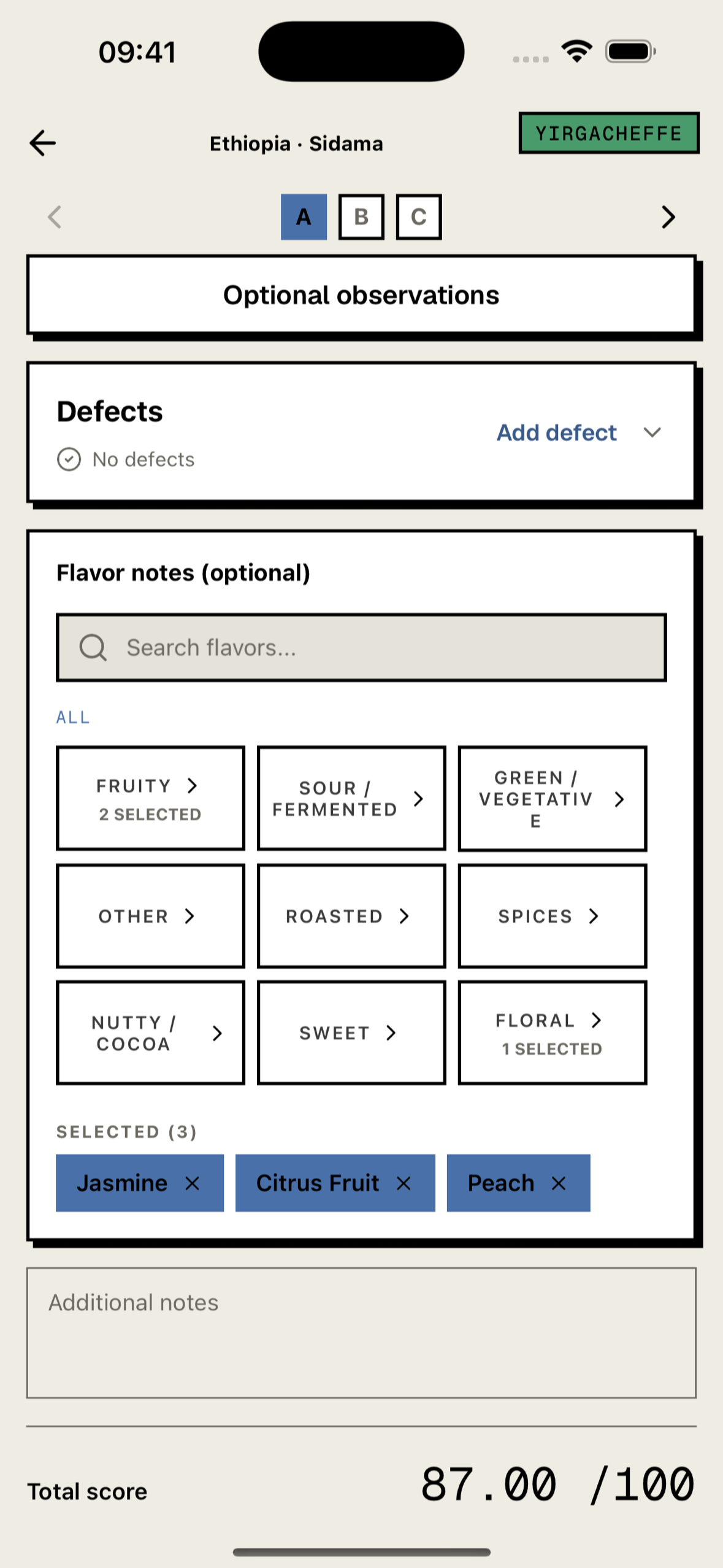
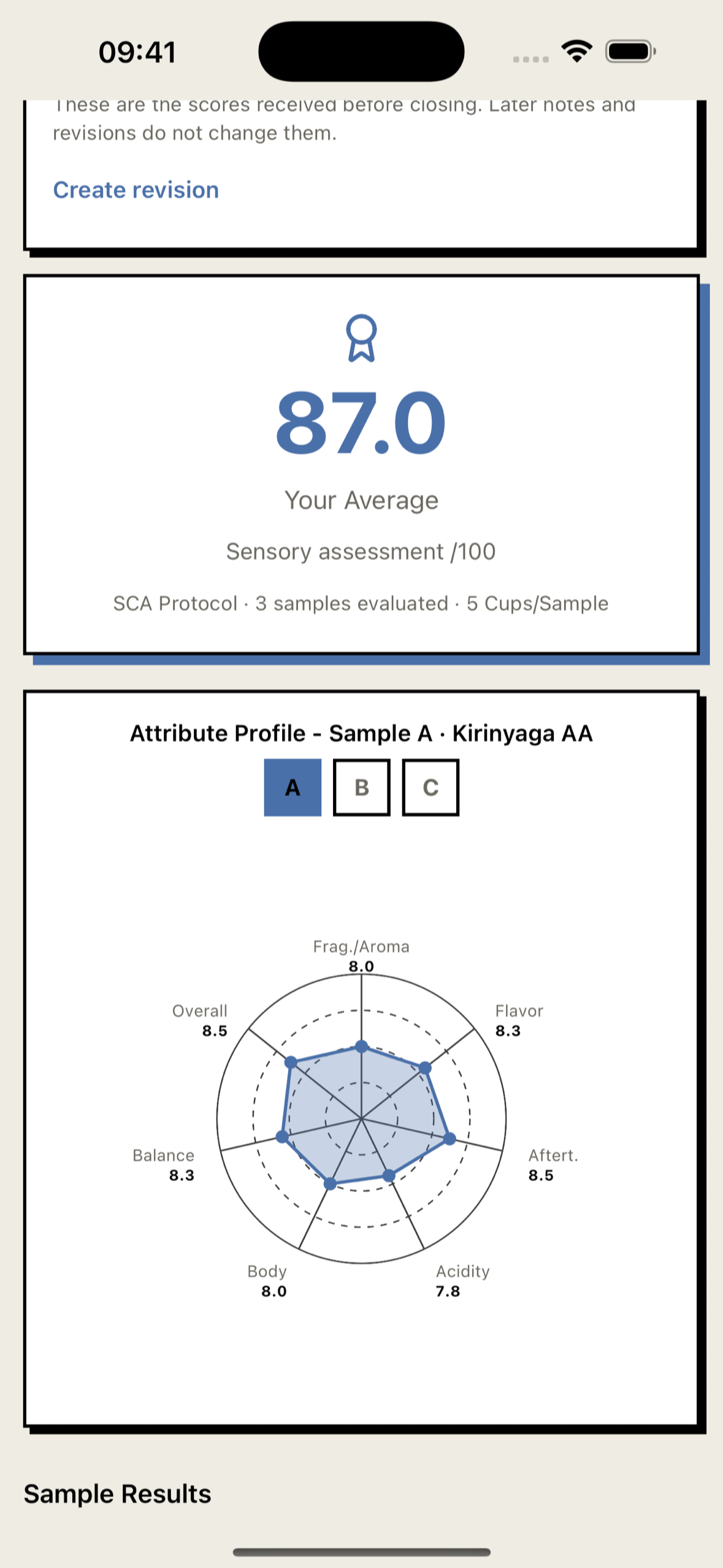
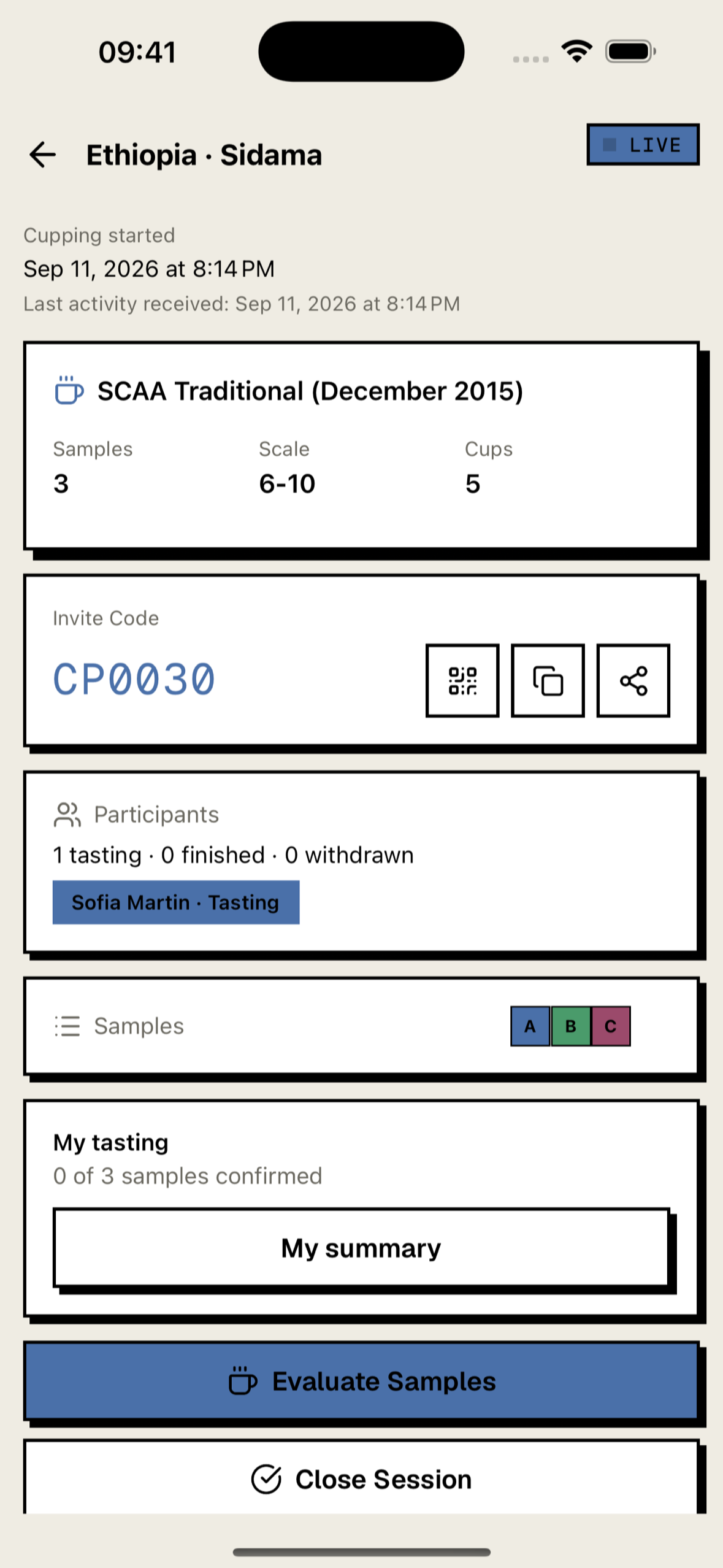
Users can create a session, add coffee samples, record scores and flavor notes, and explore their results. Other tasters can join through an invitation code or QR code, making it possible to compare perspectives within a shared session.
Individual evaluations can continue without an internet connection, with synchronization resuming when connectivity returns. Live collaboration requires a connection.
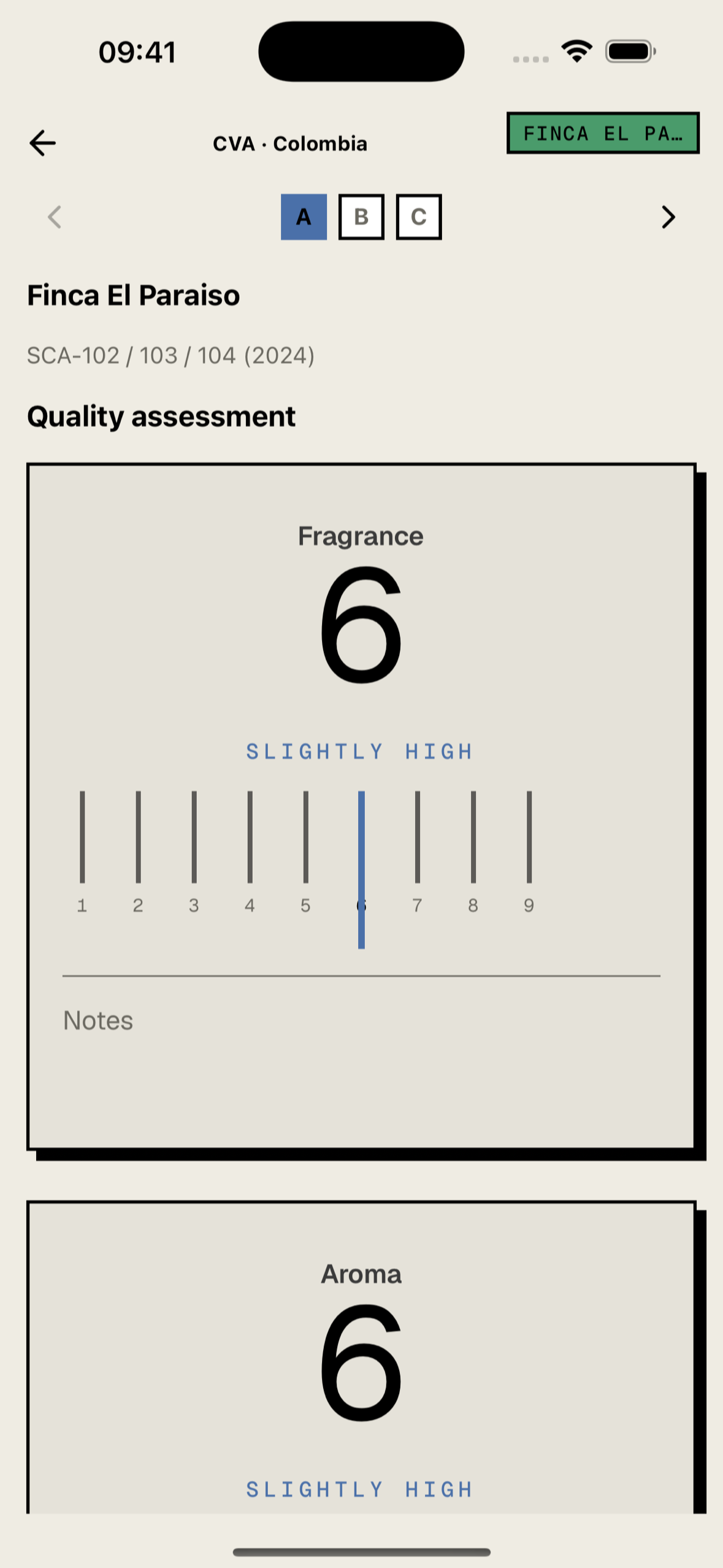
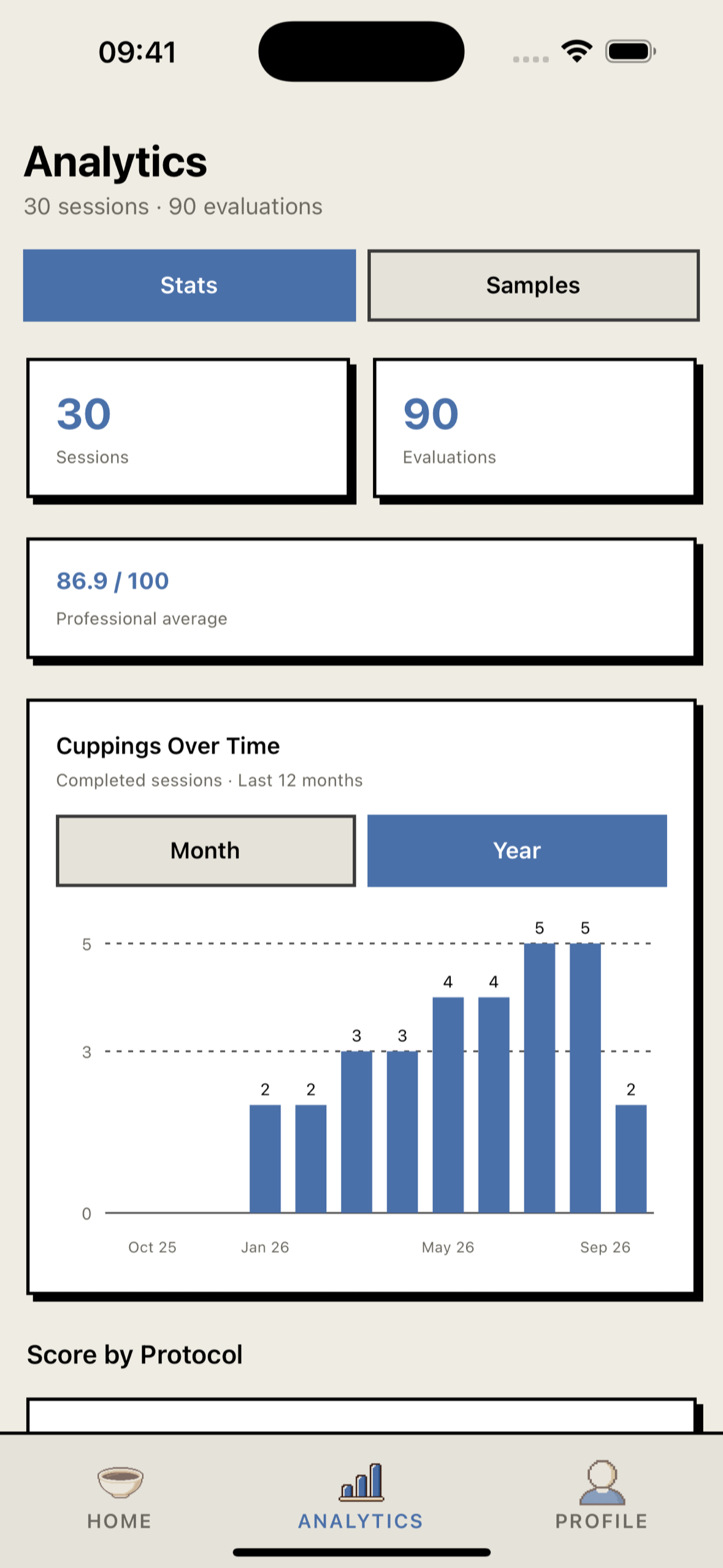
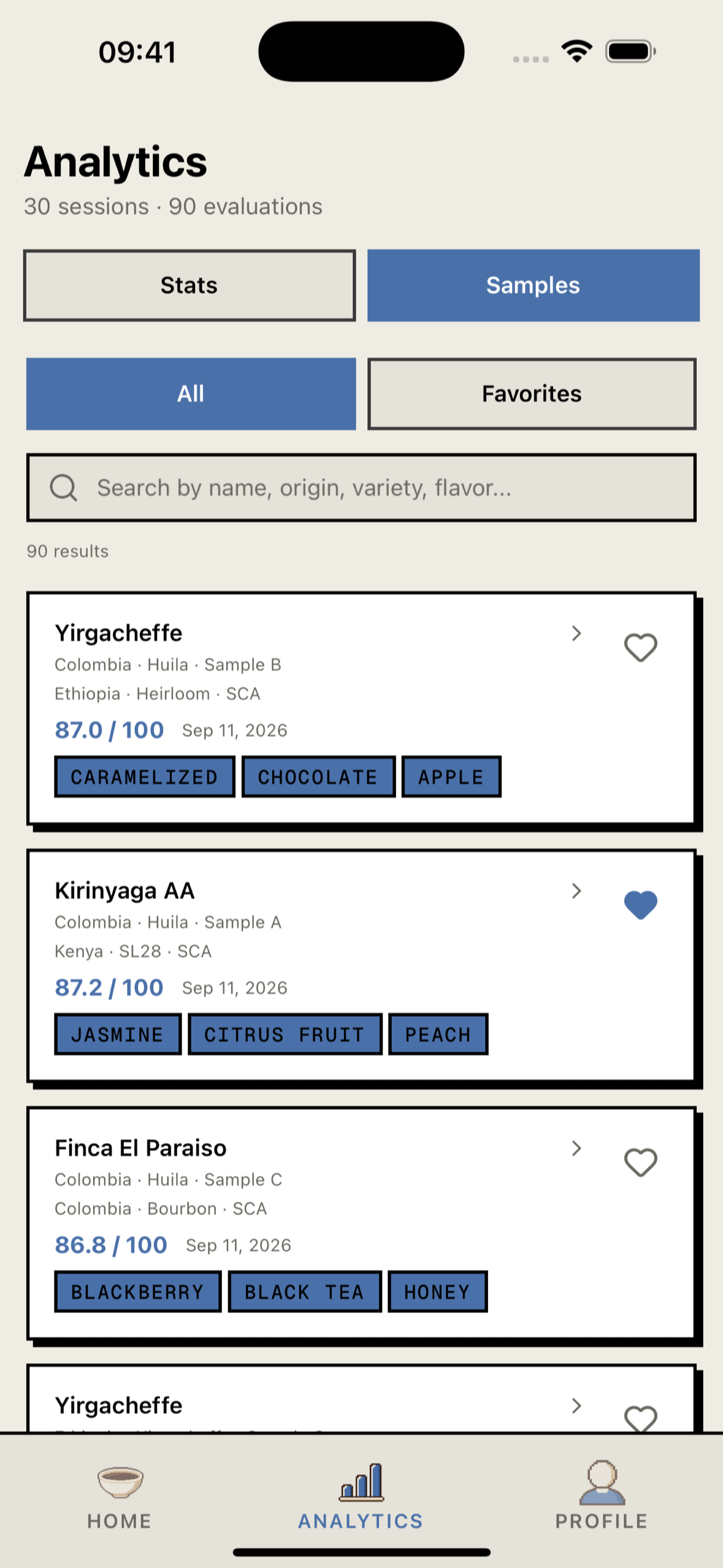
The free tier provides an accessible starting point for everyday tastings. Cupping Pro adds professional protocols—including SCA Traditional and Coffee Value Assessment—along with larger sessions, full history, advanced analytics, calibration tools, and PDF/CSV exports.
The app is available in English and Spanish.
How I built it
I built Cupping with TypeScript, React Native, and Expo. TinyBase supports local-first data storage, while Supabase provides authentication, backend storage, and realtime collaboration.
The design combines neobrutalist layouts with pixel-art details: bold borders, clear typography, a restrained color palette, and a small pixel-art coffee bowl that gives the app its identity. The aim was to make a structured evaluation tool feel approachable without losing clarity.
RevenueCat powers Cupping Pro, connecting monthly and annual App Store subscriptions to premium access. Its React Native SDK handles offerings, localized pricing, purchases, and restoration. The app checks the active Cupping Pro entitlement, while backend webhook processing keeps subscription status synchronized with Supabase.
Free tasting functionality remains independent of the subscription, so the free tier has a purpose of its own.
Challenges I ran into
One of the main challenges was combining offline evaluation with shared sessions. Recording a tasting locally and keeping several participants synchronized are different problems. The app needed to preserve individual work while making the state of connected sessions understandable.
Another challenge was making subscription access consistent. A successful checkout is only one part of the experience: signing in, restoring purchases, checking trial eligibility, and handling subscription changes all need to agree.
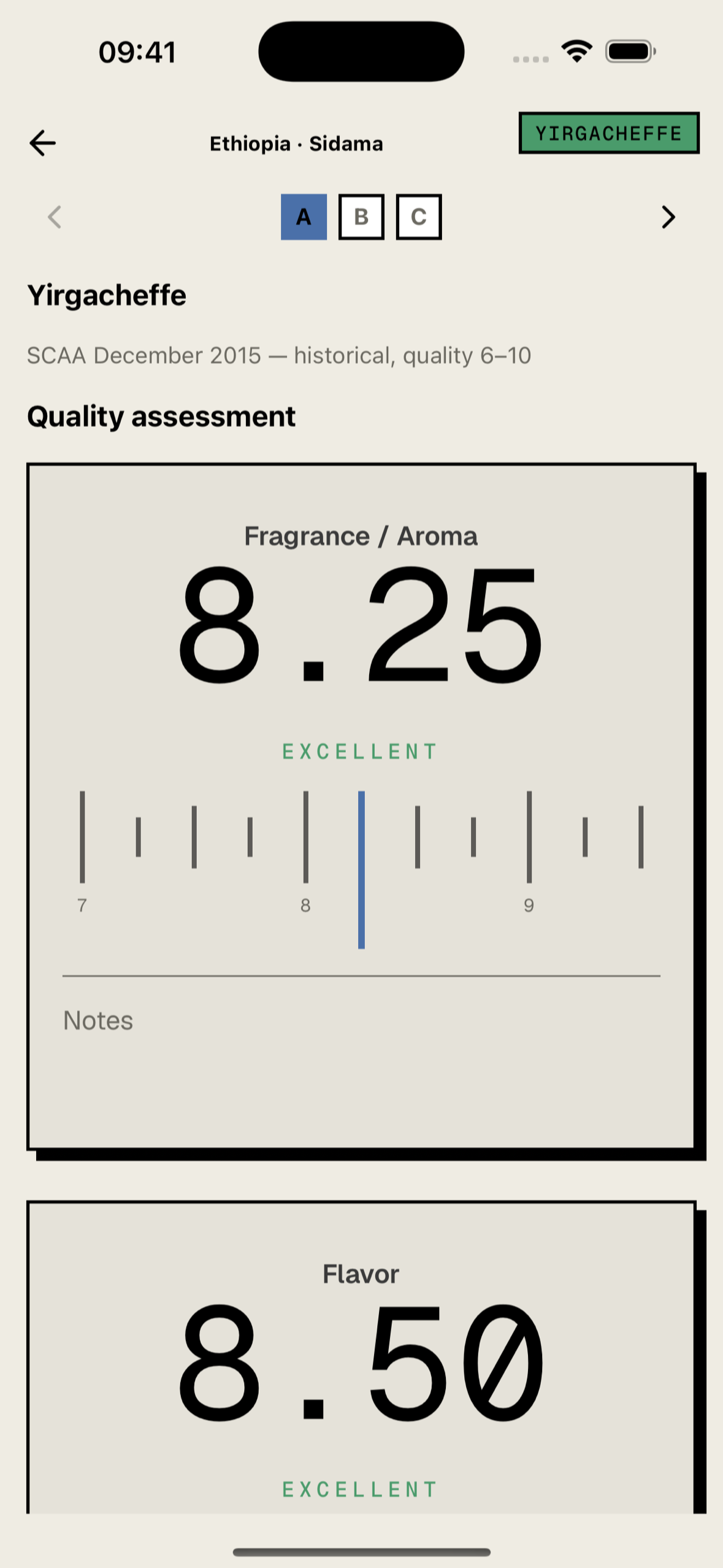
There was also a design challenge: supporting detailed professional protocols without turning every screen into a dense digital form. Large scoring controls and a clear visual hierarchy help keep the tasting itself at the center of the experience.
Accomplishments I'm proud of
Cupping has moved beyond a prototype and is published on the App Store.
It brings individual evaluation, group tasting, and reporting into one workflow, with a useful free tier and a RevenueCat-powered professional tier. Purchases and restoration were tested through TestFlight before release.
I'm especially proud of giving a specialized tool its own visual identity while keeping the core task practical: taste, record, compare, and come back to what you learned.
What I learned
Building Cupping made it clear that shipping means thinking beyond the main user flow. Interrupted connections, restored purchases, returning users, and subscription changes are part of the product—not secondary details.
I also learned that presenting results deserves as much attention as collecting them. Recording scores is useful, but helping someone understand and compare those scores is what makes the history worth revisiting.
What's next for Cupping
The next step is to learn from real tasting sessions and refine the released experience: where users hesitate, which comparisons they find useful, and what helps them return to their notes.
The goal remains simple: less time managing tasting sheets, more time understanding the coffee.
Built With
- expo.io
- react-native
- revenuecat
- supabase
- tinybase
- typescript
