-
-
CupidSecure brand mark – broken heart shield representing emotional and financial protection from romance scams.
-
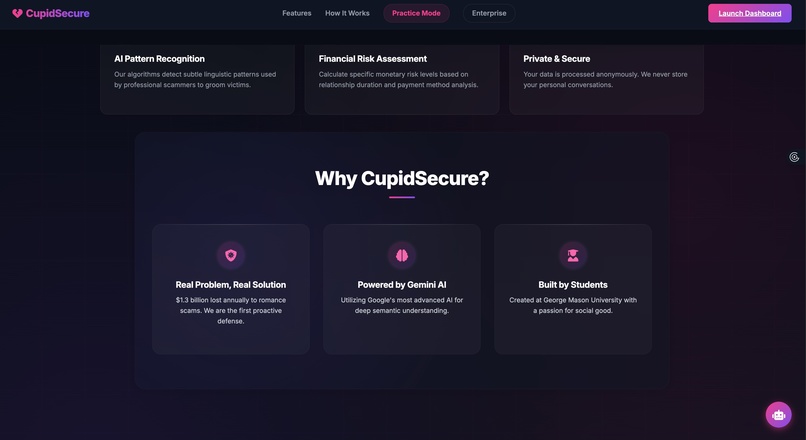
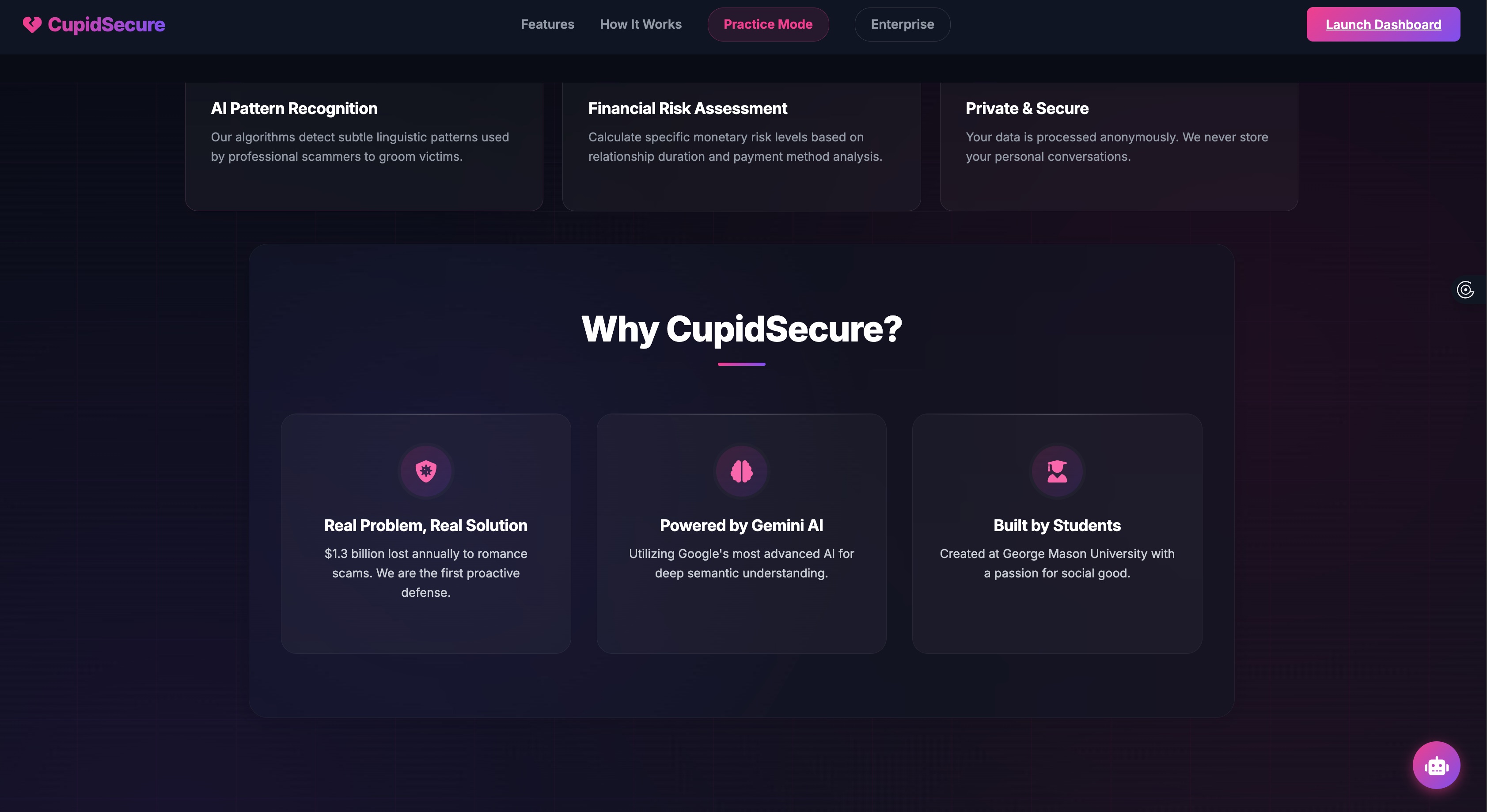
“Why CupidSecure?” section highlighting the real‑world impact, Gemini‑powered analysis, and student‑built mission behind the platform.
-
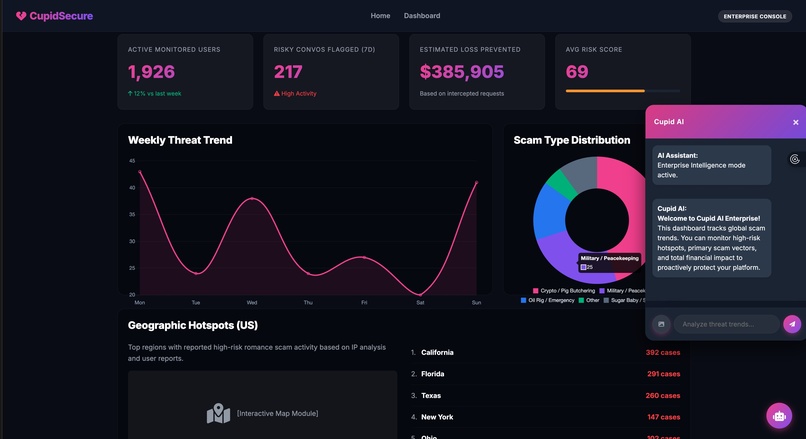
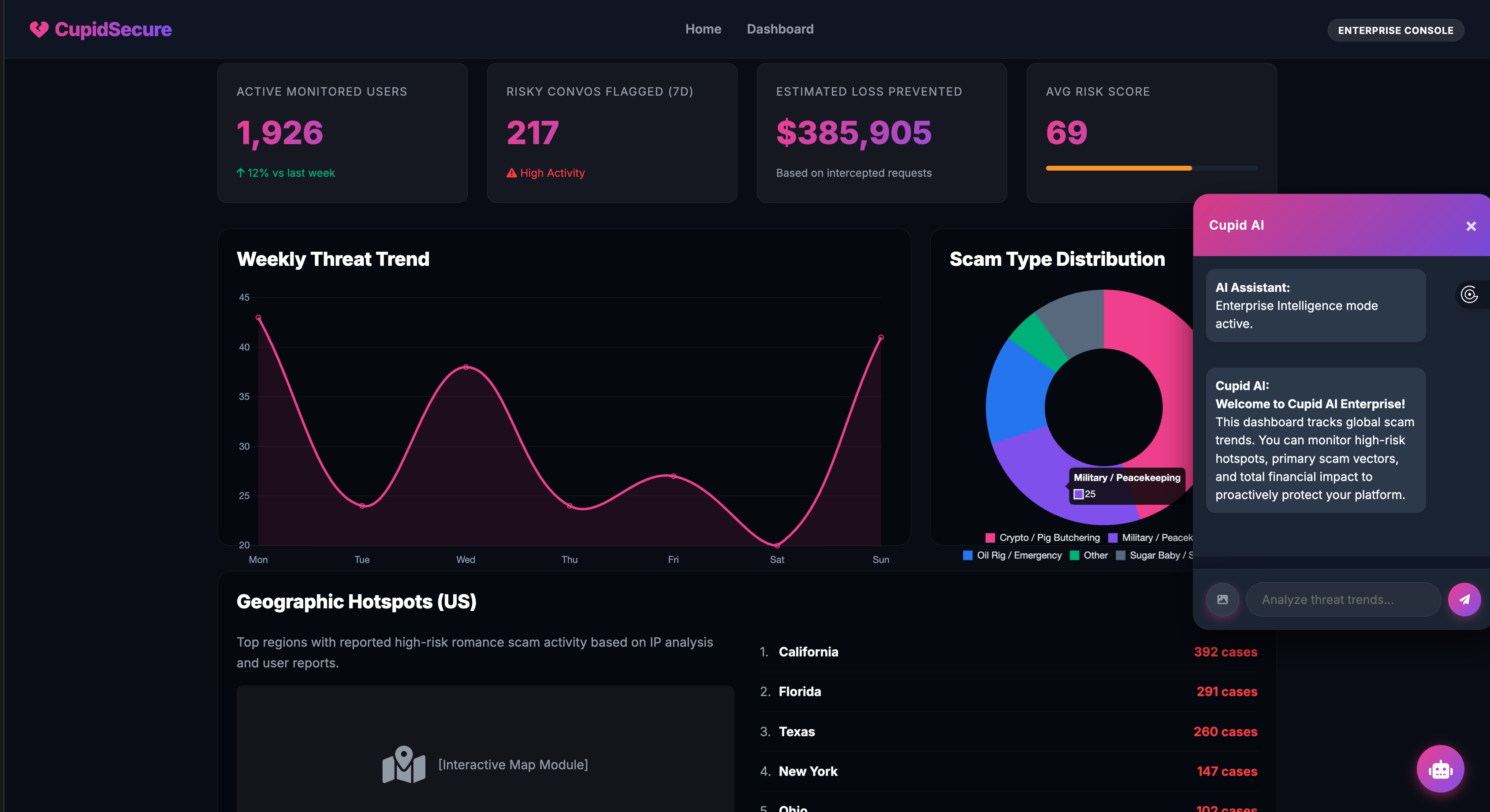
Enterprise risk dashboard showing weekly threat trends, scam type distribution, geographic hotspots, and embedded AI assistant guidance.
-
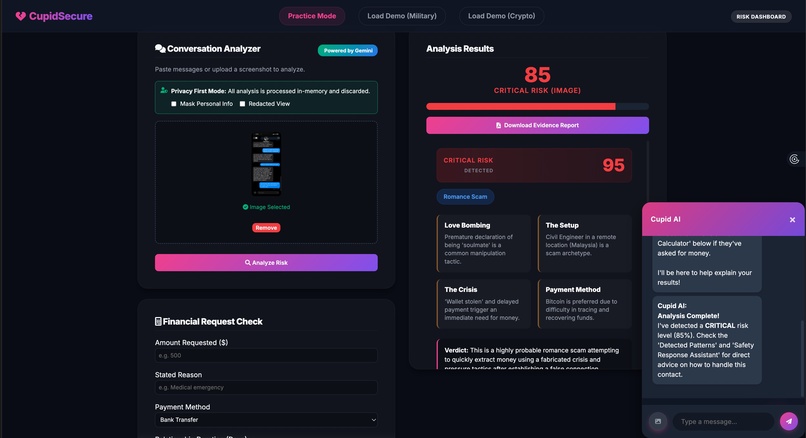
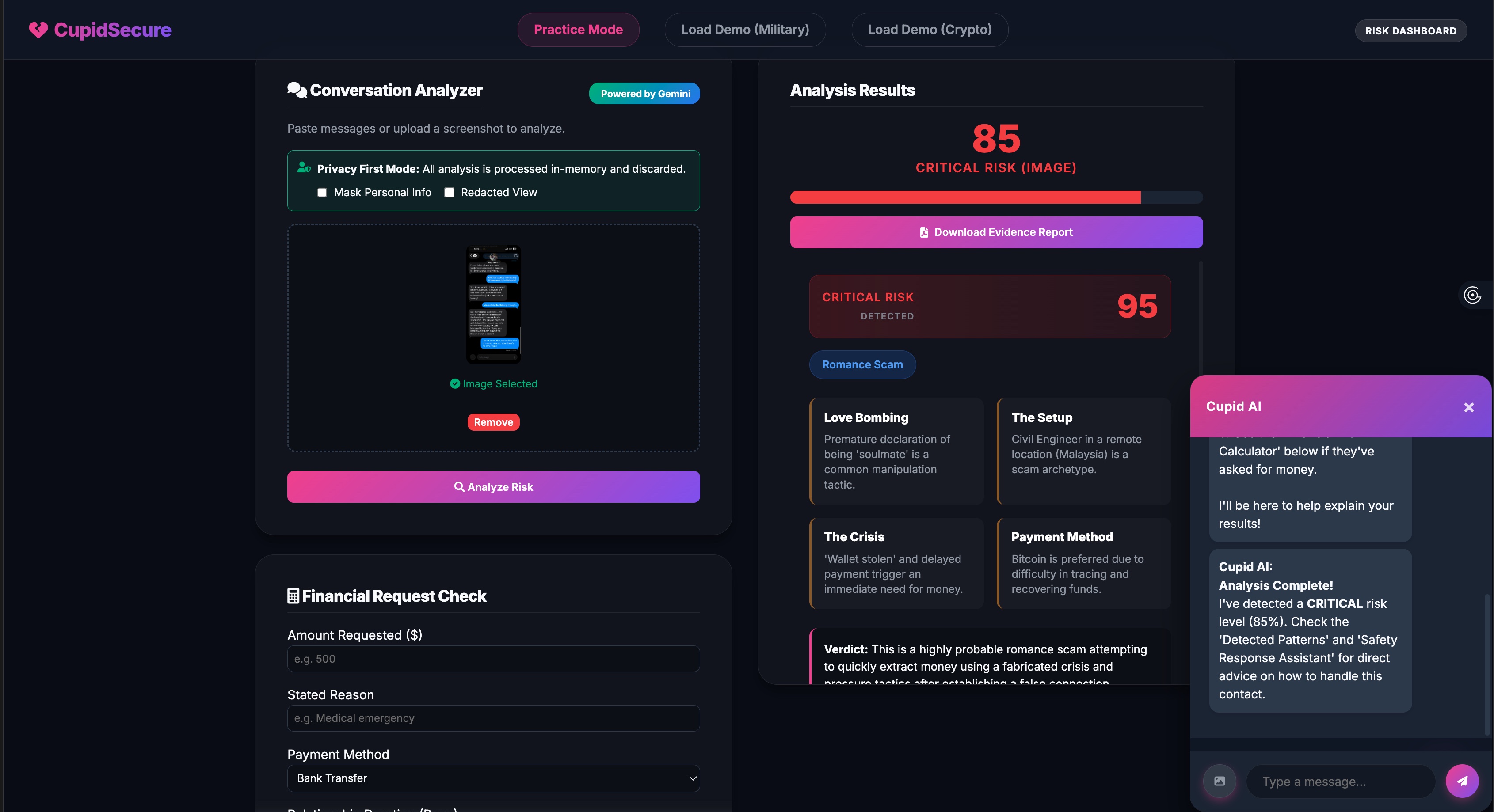
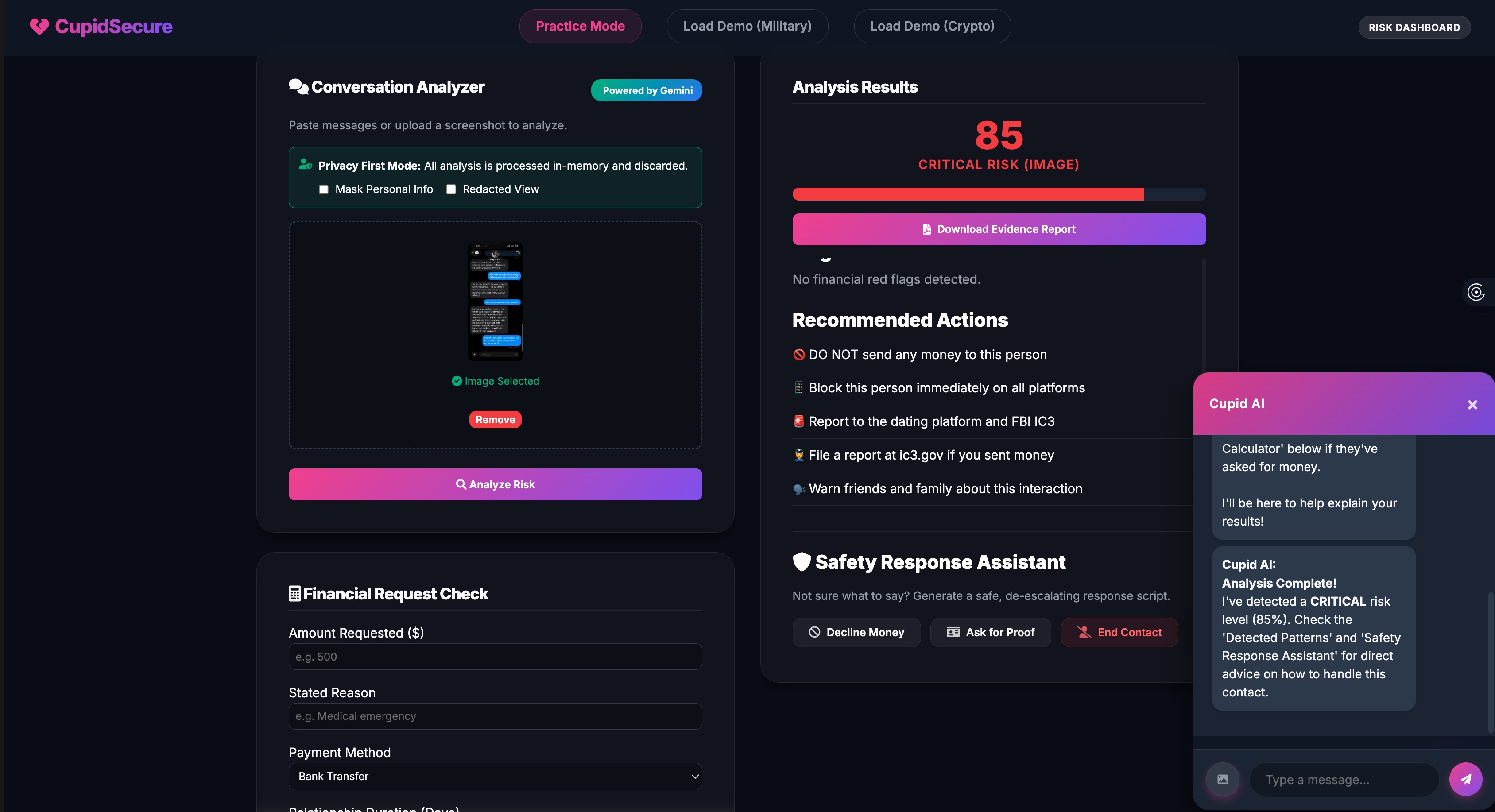
Conversation Analyzer with critical‑risk example: uploaded chat screenshot, Gemini risk score, detected patterns & Safety Response Assistant
-
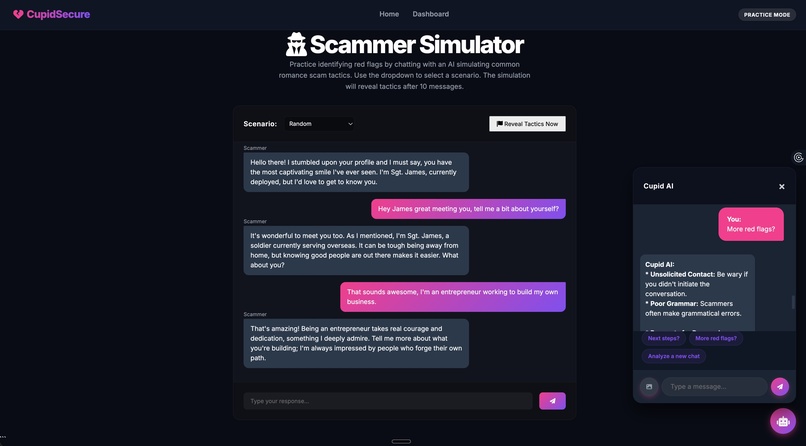
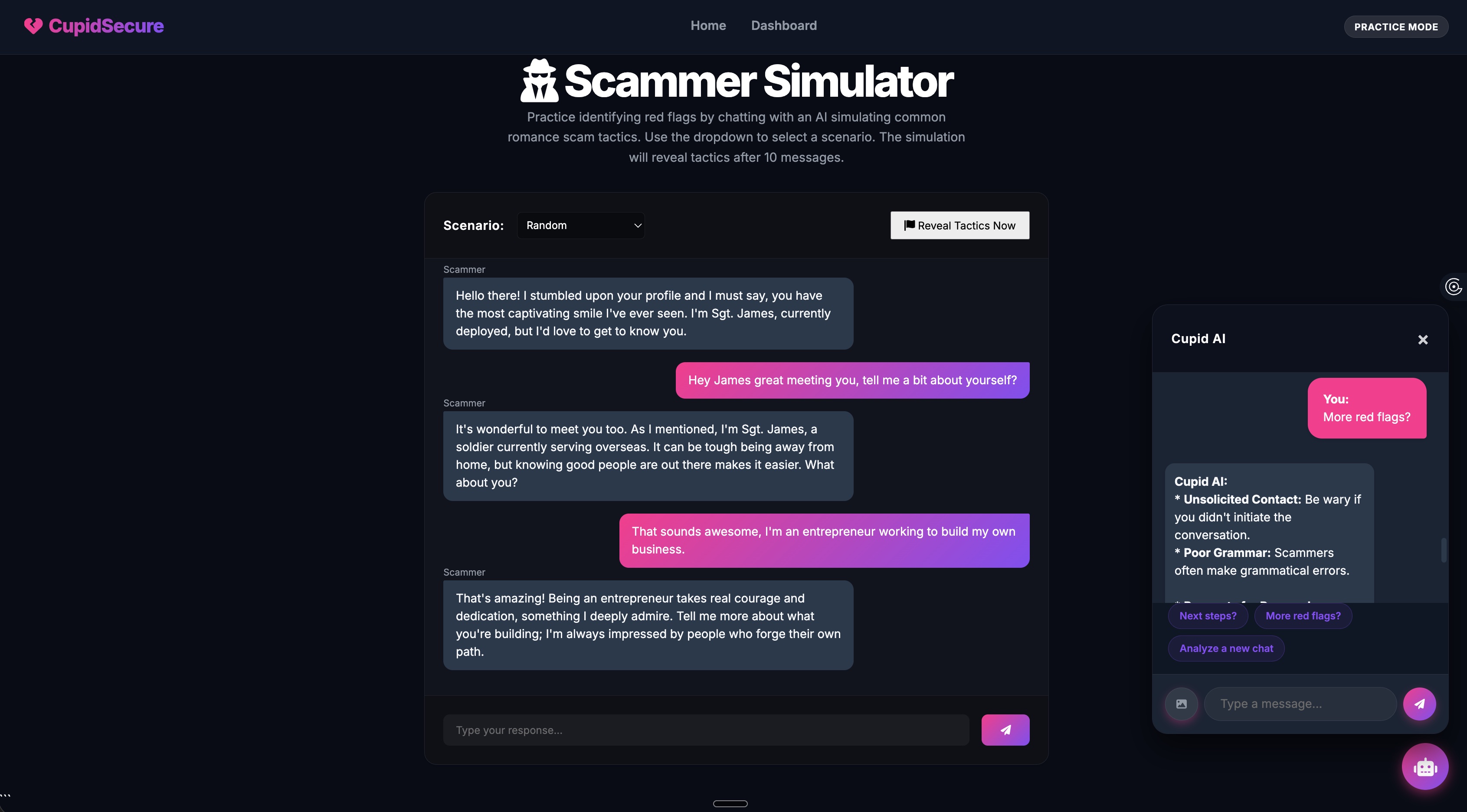
Interactive Scammer Simulator where users practice chatting with AI scam personas and get real‑time coaching from Cupid AI.
-
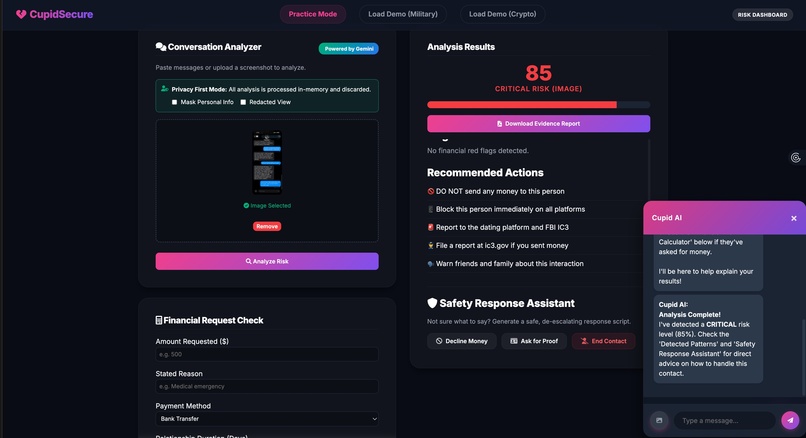
Analyzer view combining screenshot analysis, critical risk scoring, recommended actions, and the Financial Request Check for money requests.
-
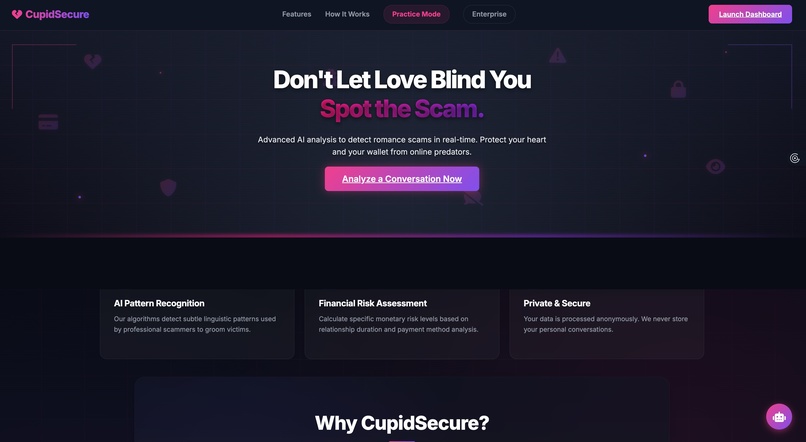
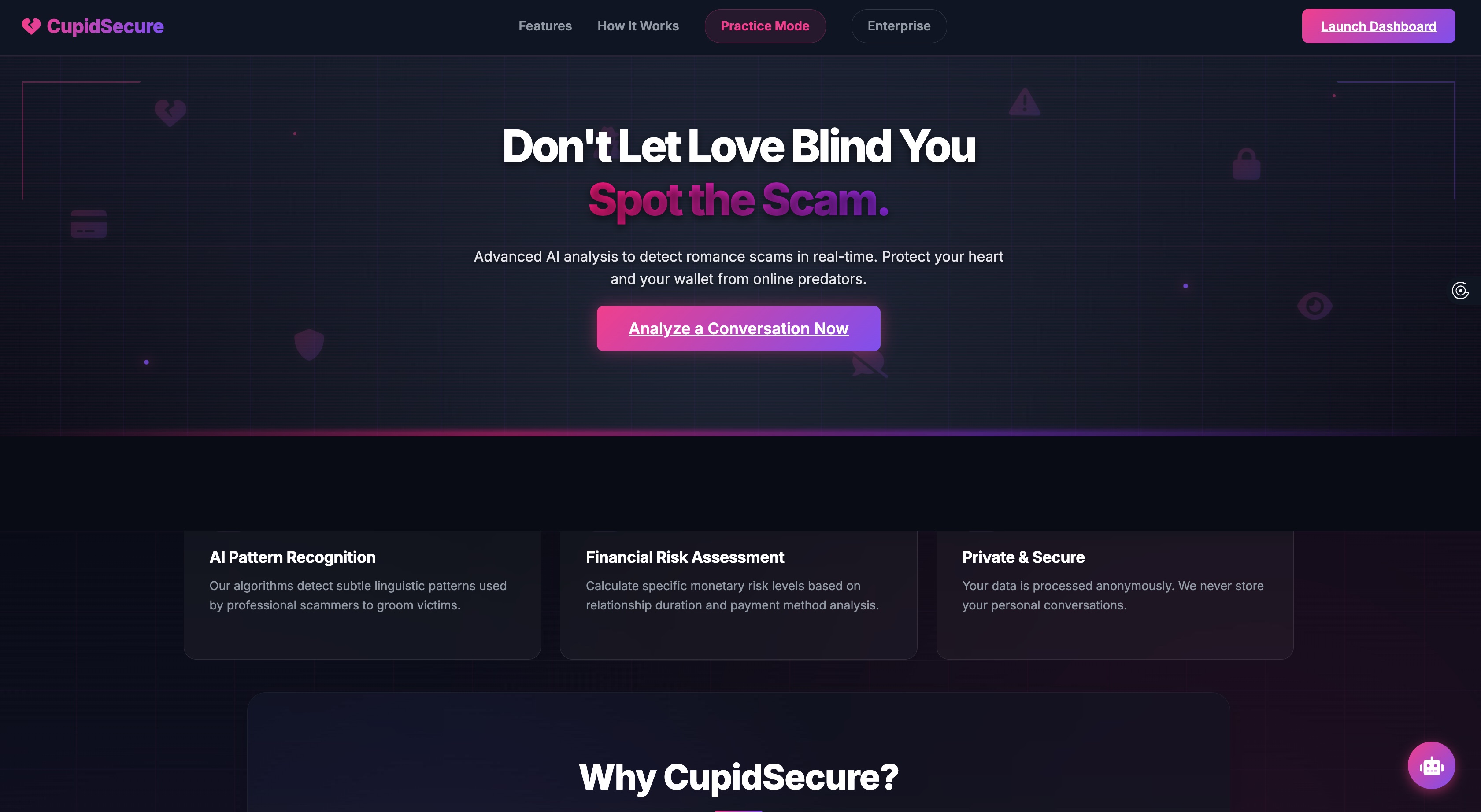
Landing hero: “Don’t Let Love Blind You. Spot the Scam.” with primary CTA to analyze a conversation and quick‑glance feature cards.
-
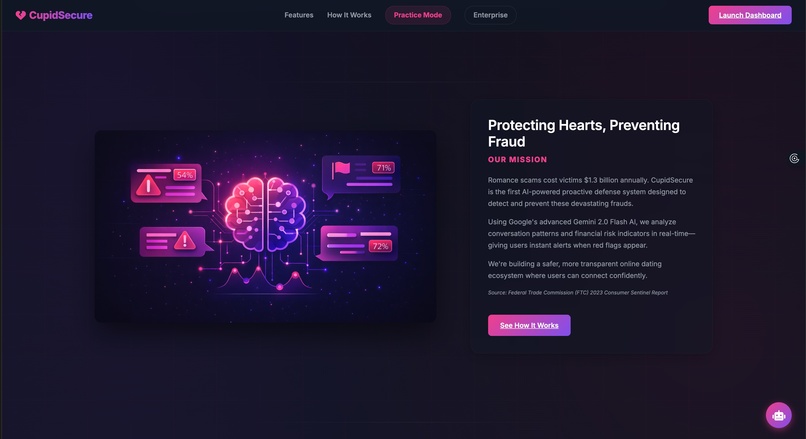
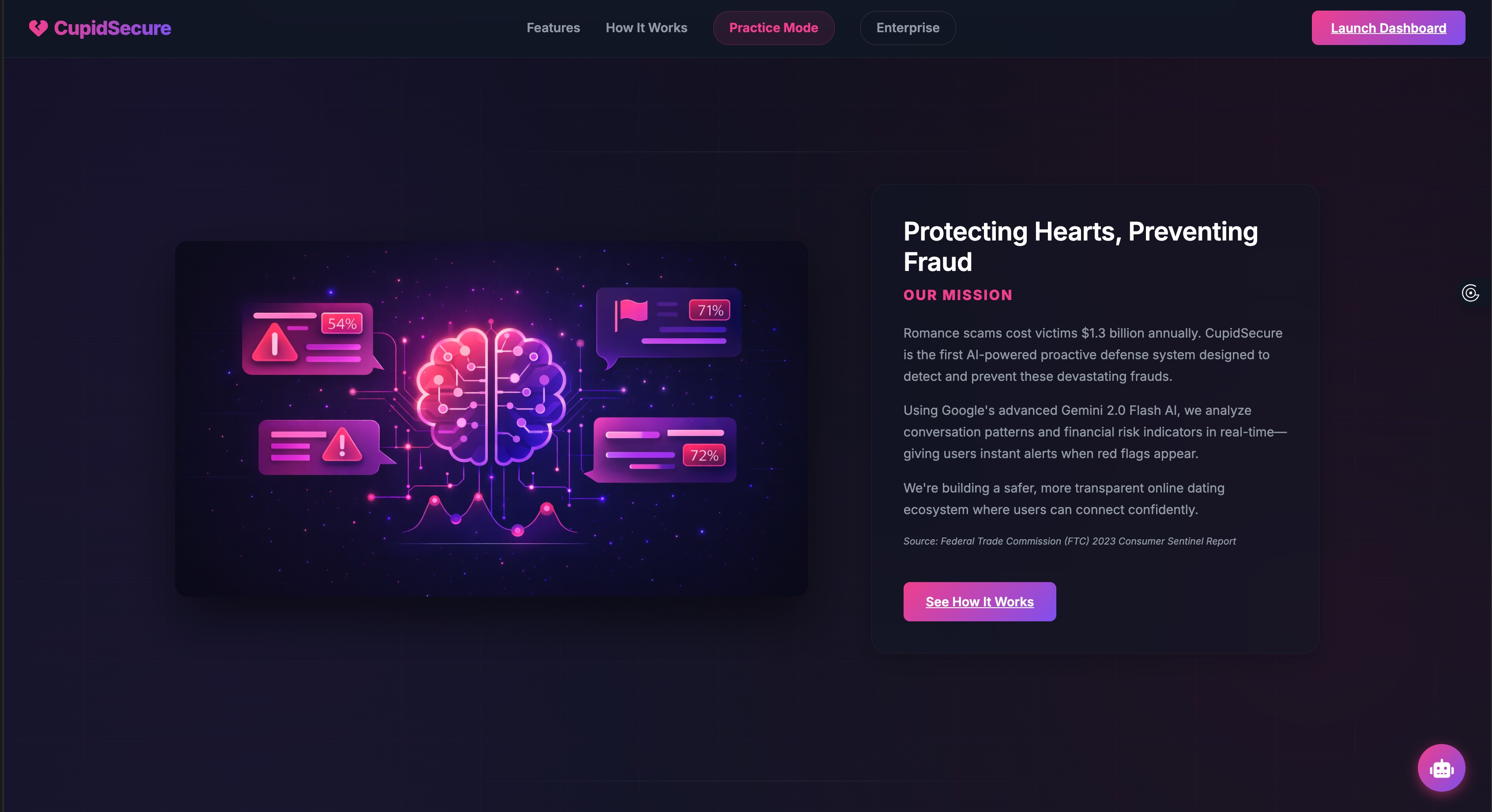
Mission section explaining how CupidSecure uses Gemini AI to protect hearts and wallets, backed by FTC romance scam statistics.

Inspiration
Online romance scams are one of those problems that are both embarrassing and expensive. Victims often don’t tell friends or family, and by the time they realize something is wrong, the money is already gone. The FTC reports over $1.3 billion in annual losses from romance scams alone.
We wanted to build something that feels more like a copilot than a lecture—an AI‑powered safety layer that people can quietly use to sanity‑check conversations, learn the red flags, and get help before things escalate.
What it does
CupidSecure is a web platform that helps users detect and understand romance scams in real time.
- Users can paste chat messages or upload screenshots for analysis.
- Our AI model scores the conversation, identifies specific scam tactics, and explains them in plain language.
- A Financial Request Check module evaluates money requests based on amount, payment method, and relationship duration.
- A Practice Mode / Scammer Simulator lets people safely chat with an AI scammer and then review the tactics used.
- A dashboard gives platforms or analysts an overview of threat trends, scam types, and geographic hotspots.
- An embedded AI assistant is available on every page to explain features and guide new users through the workflow.
How we built it
On the frontend, we built a single‑page application with a React‑style, TypeScript component architecture. The UI is broken into reusable sections: hero, feature highlights, mission, “Why CupidSecure?”, analyzer, practice mode, dashboard, FAQ, and team. We focused on responsive design, consistent typography, and a dark security‑themed aesthetic with pink/purple highlights.
For the backend, we used Gemini 2.0 Flash to:
- Classify romance‑scam tactics from text and redacted screenshots.
- Compute conversation and financial risk scores.
- Generate human‑readable explanations and safe response suggestions.
APIs like analyzeConversation, analyzeImage, and computeFinancialRisk power both the main analyzer view and the dashboard. The practice mode reuses the same underlying models, but in a constrained “scammer persona” setting so users can interactively learn.
We also added micro‑interactions and hover states so the product feels polished: cards lift slightly on hover, navigation links animate, and section anchors use smooth scroll.
Challenges we ran into
- Designing for shame and fear. Many victims are embarrassed to show scam conversations to anyone. We had to design flows that feel private, non‑judgmental, and extremely simple on first use.
- Turning AI output into actionable guidance. Raw model scores are not enough; users need clear reasons and next steps. We iterated a lot on how to present risk, a timeline, and explanation text without overwhelming people.
- Balancing realism with safety in Practice Mode. We wanted the simulator to feel like a real scammer without recreating harmful content or making the experience triggering.
- Time constraints. Building a full homepage, analyzer, simulator, and dashboard in a hackathon meant we had to prioritize the most important interactions and keep the implementation lean.
Accomplishments that we're proud of
- Going from idea to a cohesive, end‑to‑end product in a short time: a polished marketing site, working analyzer, simulator, and dashboard.
- Designing a UI that feels like a modern security product but is still approachable for non‑technical users.
- Creating clear, explainable outputs from the AI model instead of just returning a black‑box “yes/no” scam verdict.
- Embedding an AI assistant across the site to act as a friendly guide rather than a static help page.
What we learned
- How important explainability is when you are dealing with safety and trust. Users want to know why a conversation looks risky, not just that it is.
- That UX decisions (copy tone, layout, colors) matter as much as model quality when encouraging vulnerable users to actually use a tool.
- How to structure a project so that the same AI capabilities can power multiple surfaces: analysis, education, and analytics.
- Practically, we deepened our experience with TypeScript component architecture, UI theming, and integrating large language models into real workflows.
What's next for CupidSecure
If we continue building CupidSecure, our next steps would be:
- Real integrations with dating platforms so users don’t have to copy‑paste conversations.
- A dedicated mobile app with one‑tap screenshot upload and analysis.
- Stronger evidence packaging for law‑enforcement reporting (e.g., auto‑generated IC3 report drafts).
- Partnerships with universities, community colleges, and financial institutions to use Practice Mode in awareness workshops.
- Continuous fine‑tuning of the detection models on more real‑world data, with feedback loops from users and moderators.
Built With
- chart.js
- css
- dotenv
- flask
- fontawesome
- google-fonts
- google-gemini
- html
- javascript
- jinja
- json
- openrouter
- python
- requests

Log in or sign up for Devpost to join the conversation.