-
-

Vidense app icon — current 2026 identity.
-
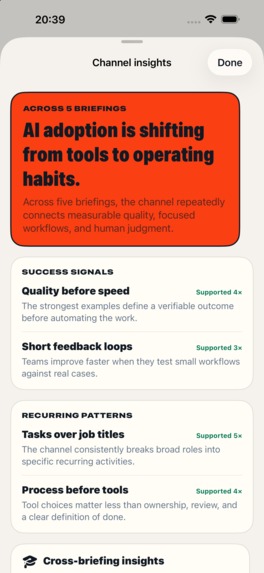
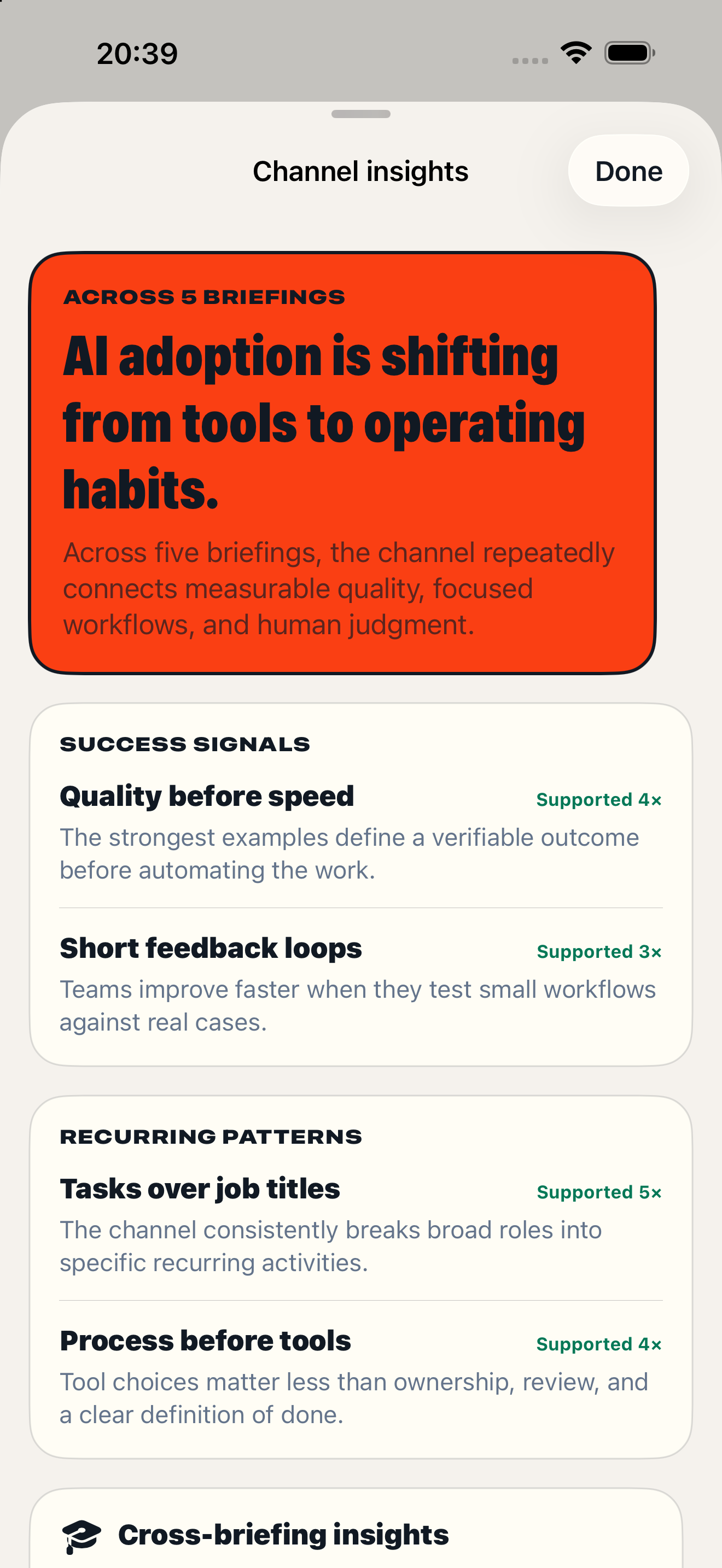
Channel Insights: compare briefings to reveal patterns, signals, and meaningful exceptions.
-
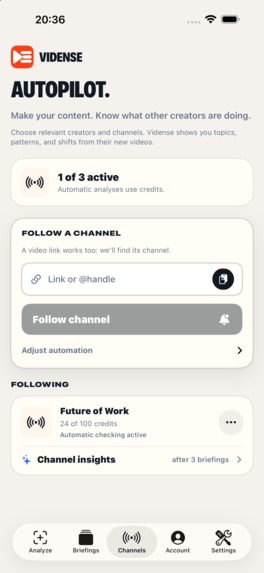
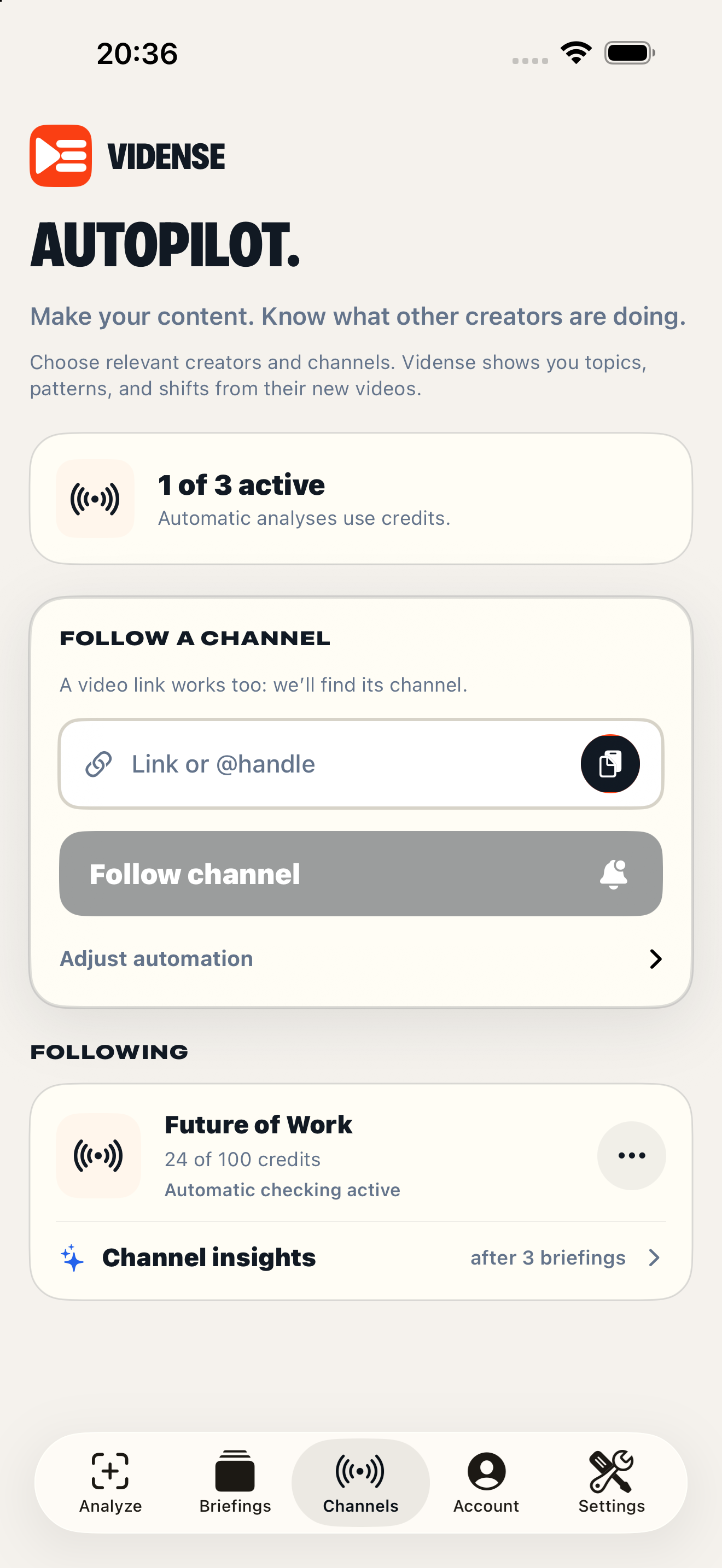
Channels: follow creators and turn new videos into briefings automatically.

Inspiration
I genuinely love watching Starter Story and long-form founder interviews. They are full of hard-won lessons about products, marketing, mistakes, and growth. But I kept running into the same problem: sometimes I missed an interesting video entirely, and even when I watched one, I could not remember every useful insight afterward. Valuable knowledge disappeared into the feed as soon as the video ended.
I built Vidense because I wanted that knowledge to stop evaporating. Vidense saves me time, but the more important benefit is that it turns each video into something I can keep: a structured, searchable briefing with the key ideas and exact moments I may want to revisit.
What it does
Vidense turns video into knowledge you can keep.
A user adds a supported public video link or selects a recording they own. Before analysis starts, Vidense shows the exact credit requirement based on the video's duration. The resulting briefing combines:
- a compact overview of what matters;
- chronological chapters with precise timestamps;
- key claims, decisions, steps, or trade-offs adapted to the video's content type;
- a searchable transcript and useful export options;
- a personal library for finding and revisiting past briefings.
The result is not another wall of generic summary text. A product review emphasizes verdicts and trade-offs, a tutorial emphasizes steps and pitfalls, and an interview emphasizes claims and context.
Channels turn Vidense into an autopilot for learning. Users follow the creators that matter, set a monthly credit budget, and new videos can become briefings automatically. After three completed briefings, Channel Insights compare videos to reveal recurring patterns, success signals, cross-briefing lessons, and meaningful exceptions.
Why it is different
Vidense is designed around the decision after the summary: what should I understand, revisit, or do next? Each analysis becomes part of a personal knowledge library rather than a disposable summary. It works with both public links and private uploads, so the product is not tied to one video platform. Uploaded source files are processed rather than archived and are deleted after analysis.
How we built it
The iPhone and iPad app is native SwiftUI and includes a share extension for sending a video link directly into Vidense. It shares product rules and server contracts with a Next.js web experience backed by Supabase and Cloudflare Workers. Structured video analysis uses Gemini multimodal capabilities behind validated provider adapters, and Zod schemas validate external inputs and AI output, including timestamp boundaries.
RevenueCat is the cross-platform purchase and entitlement layer. StoreKit powers Apple purchases, while RevenueCat Web Billing connects the web experience to Stripe. Both use the same offering and stable user identity. The catalog contains three monthly plans plus optional top-ups for active subscribers.
Behind the paywall is an append-only credit ledger. One credit equals one started video minute. Credits are granted only after a verified provider event, reserved before analysis begins, finalized with a verified result, and released after a terminal failure. Events are processed idempotently to handle retries and reordering safely.
Challenges
The hardest challenge was making several complex systems feel like one calm product:
- keeping StoreKit, web billing, entitlements, and usage credits consistent across platforms;
- producing structured, timestamped output that adapts to very different kinds of video;
- processing large private uploads without turning Vidense into permanent media storage;
- deriving useful channel-level patterns without repeating the same generic summary;
- showing enough purchase detail to build trust without exposing infrastructure jargon in the main flow.
What we learned
The best briefing is not the longest one. It is the one whose structure matches the source and helps a person make a decision quickly. We also learned that billing reliability and privacy are product-design features: users should know the exact cost before starting and should not have to trust a client-side success screen.
What's next
Vidense is now live on the App Store. The immediate focus is learning from the first users, improving the path from a shared video link to a useful completed briefing, and refining Channels and Channel Insights with real viewing habits. Our Q4 goal is 100 verified Starter subscriptions, with product work prioritized by its measurable effect on activation, checkout completion, and retained customers.
Built With
- cloudflare-r2
- cloudflare-workers
- gemini-api
- ios
- next.js
- revenuecat
- storekit
- stripe
- supabase
- swift
- swiftui
- typescript
- zod


Log in or sign up for Devpost to join the conversation.