-
-
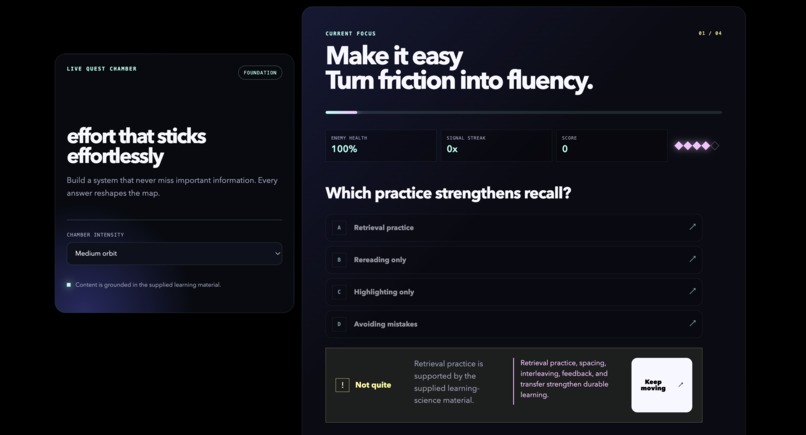
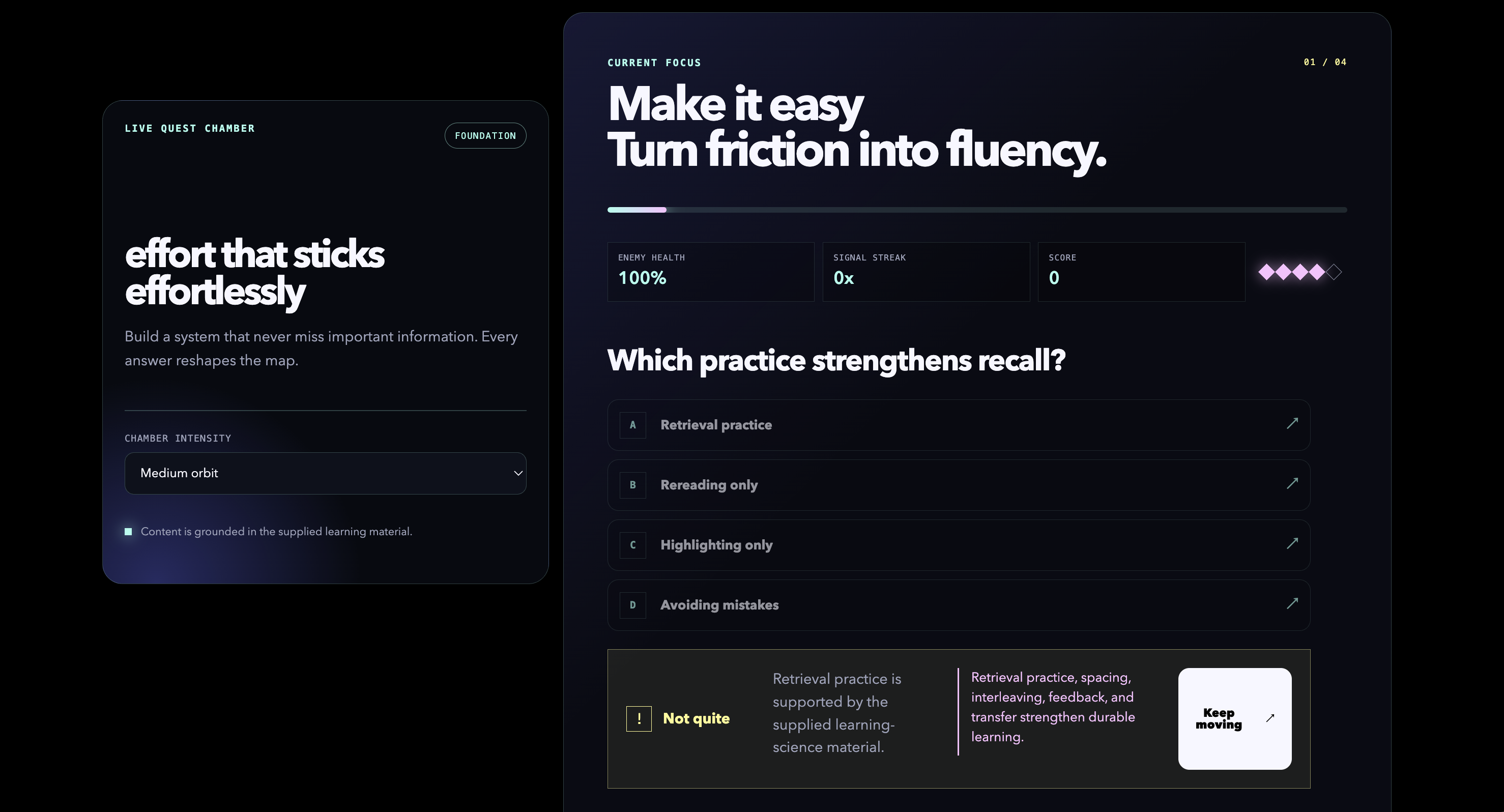
wrong answer example with clear explanation and losing gem logic
-
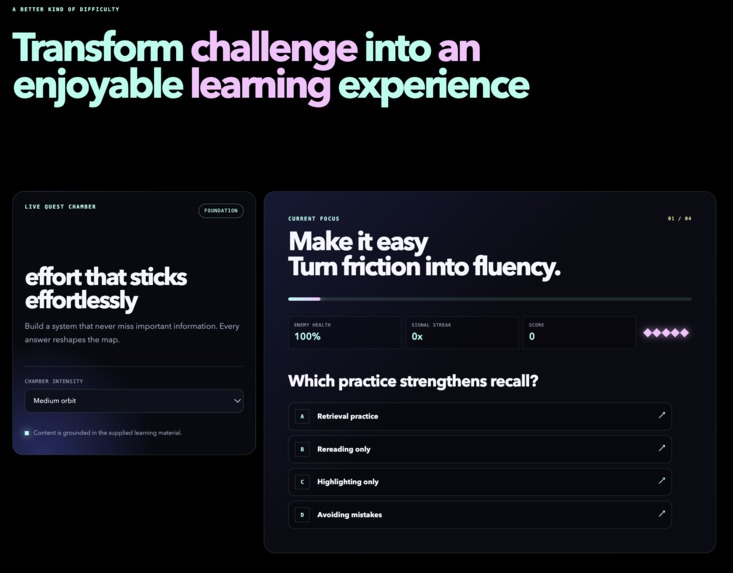
Quest space
-
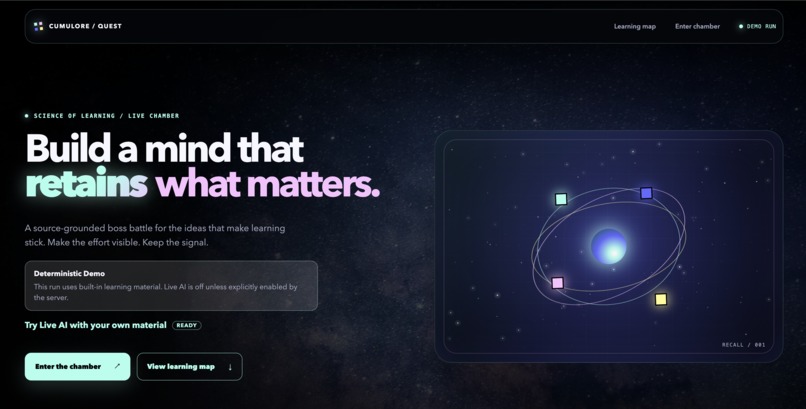
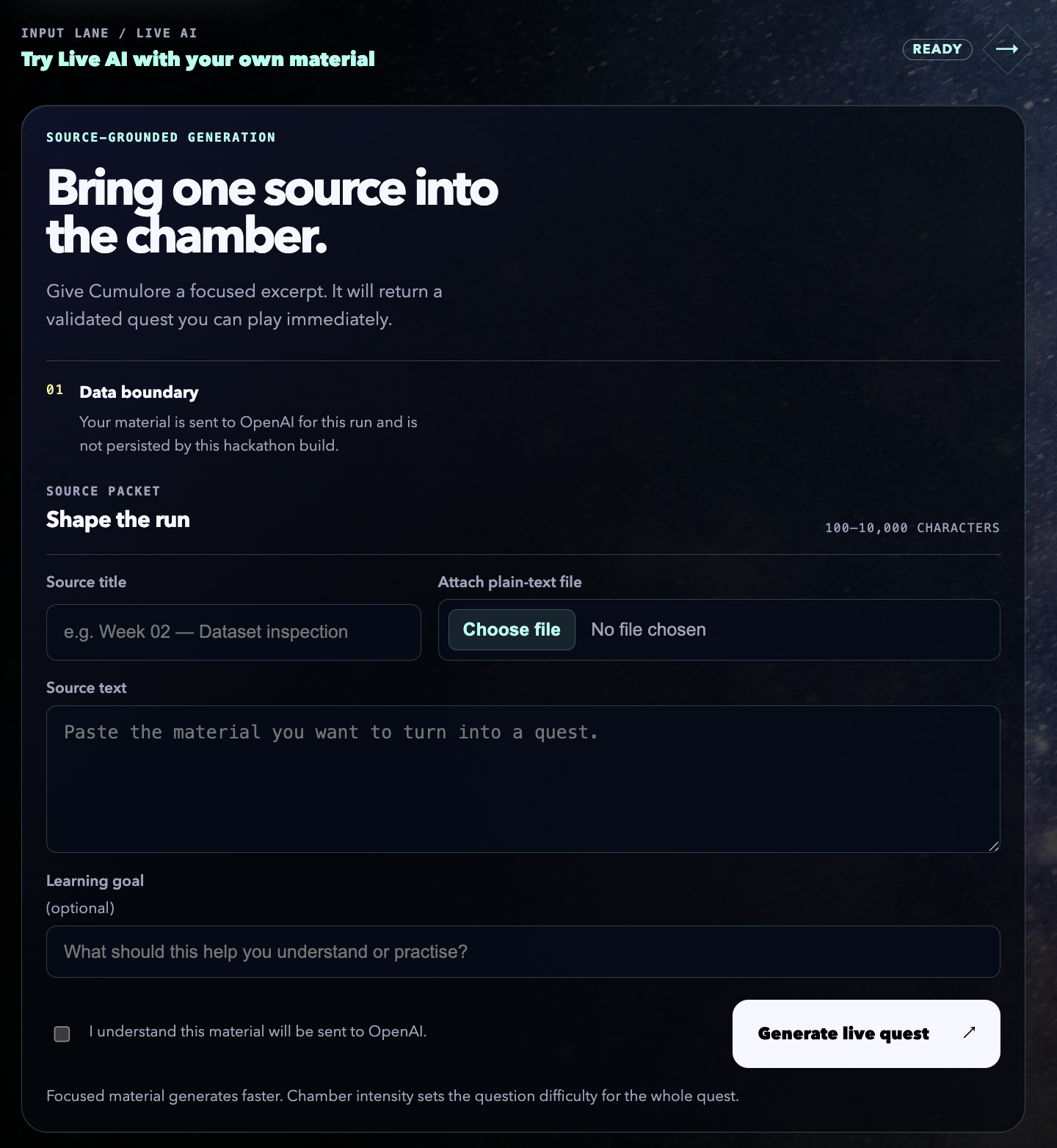
Assist text pasting or .txt file uploading to automatically generate quests from OpenAi API
-
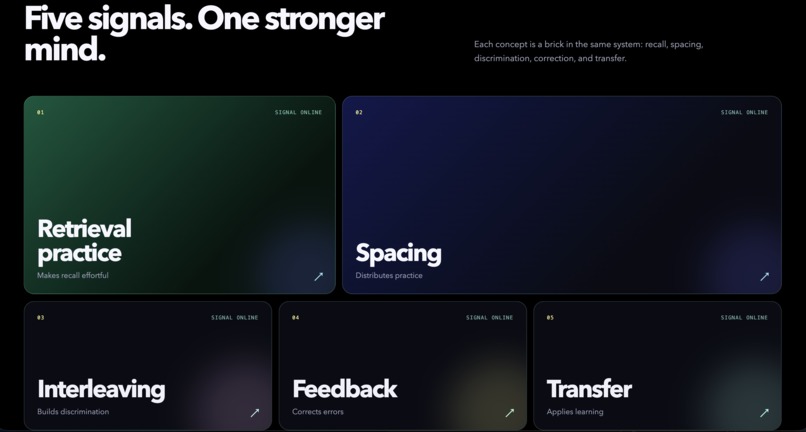
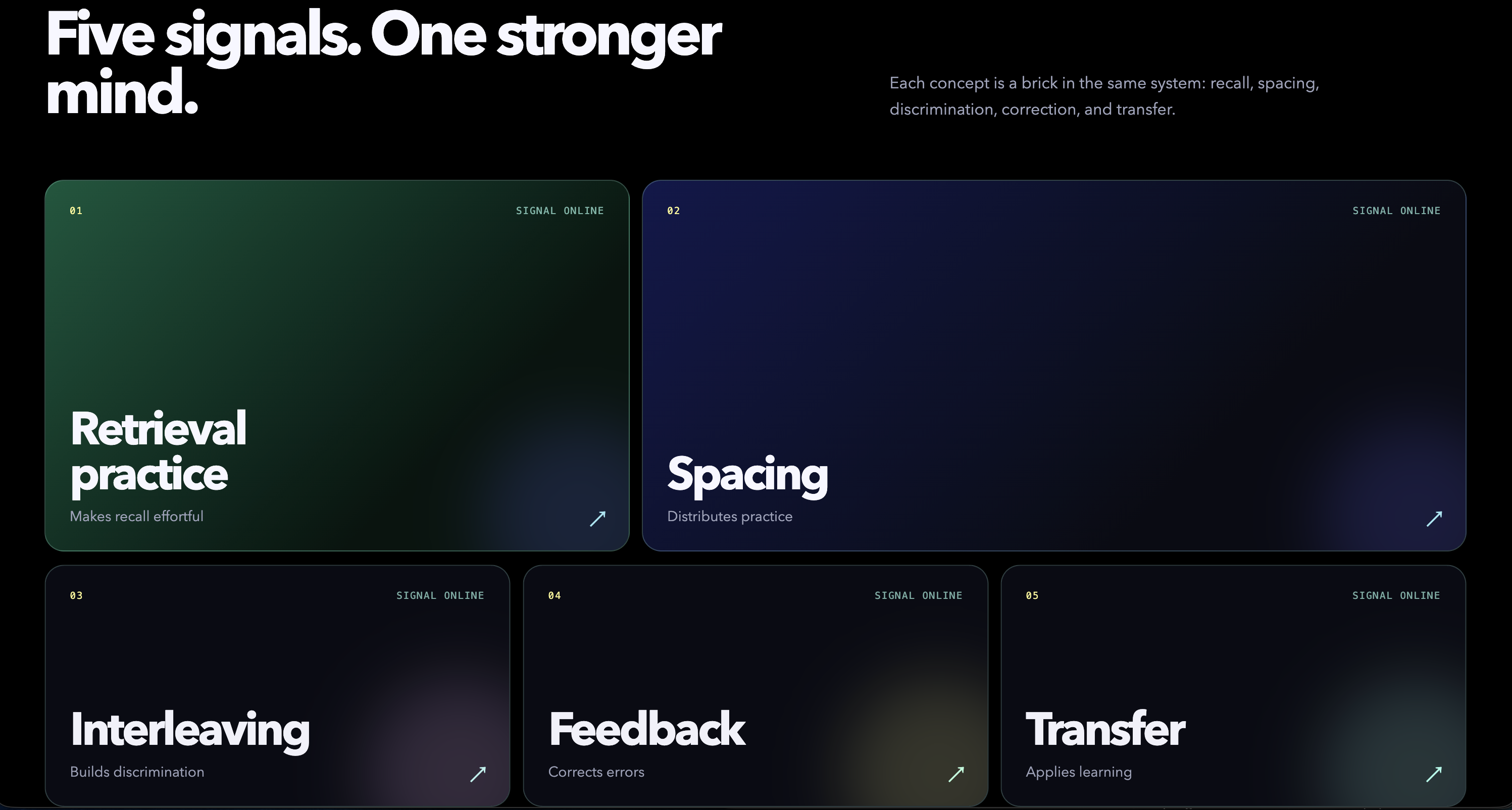
Signals, information signs
-
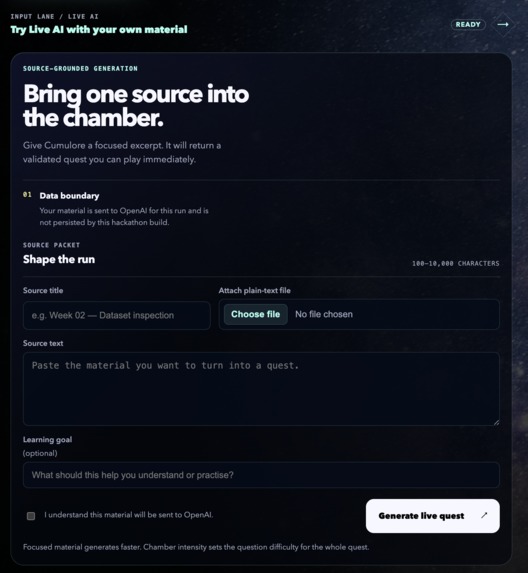
Cumulore AI notes generation assisted function (OpenAI api)
Inspiration
As a student, I often had many study materials, notes but no quick way to turn them into practice I actually wanted to finish. By the time I manually created flashcards or quiz questions, I had spent too much energy preparing to learn instead of learning.
I also did not want another quiz generator that expected learners to trust unexplained AI answers. I wanted revision to feel immediate and playful while keeping evidence visible. That inspired me to build Cumulore Quest: a learning game where misconceptions become stage enemies, but understanding remains more important than the score. Everything the user need is straight forward with explained reasoning for wrong answers so it removes friction in learning and the user never have to guess. Currently Cumulore Quest lives inside a larger library repository that is in progress.
What it does
Cumulore Quest turns study material into a three stage using active recall strategy .
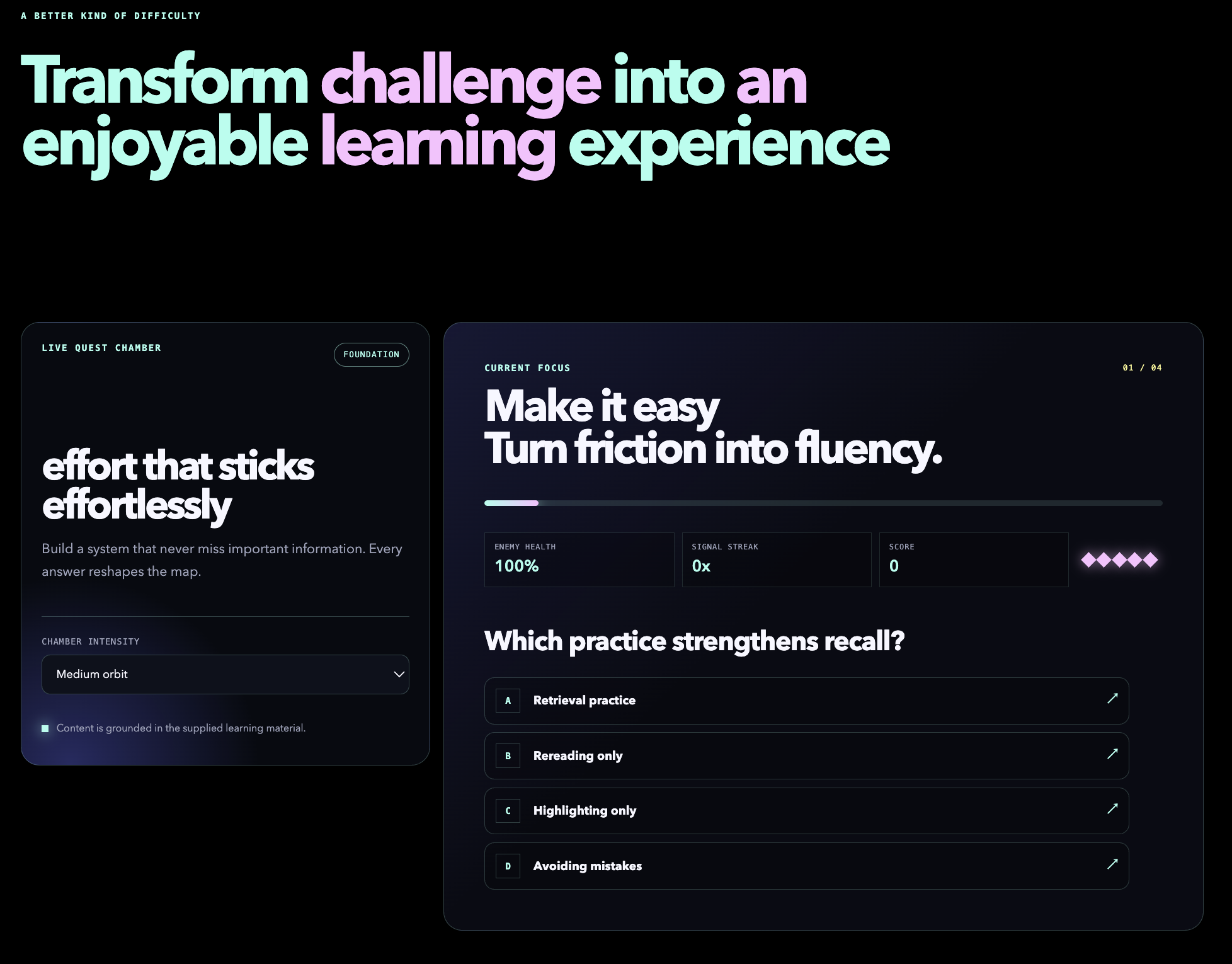
The learner selects a level of difficulty for the entire quest, reviews five ranked Priority Focus concepts, and progresses through foundation, connection, and synthesis stages. Each quest contains twelve main questions and four prepared rematch questions.
Every answer provides an explanation and supporting source excerpt. Incorrect answers are not dead ends: they reveal which concepts need attention and contribute to a targeted rematch.
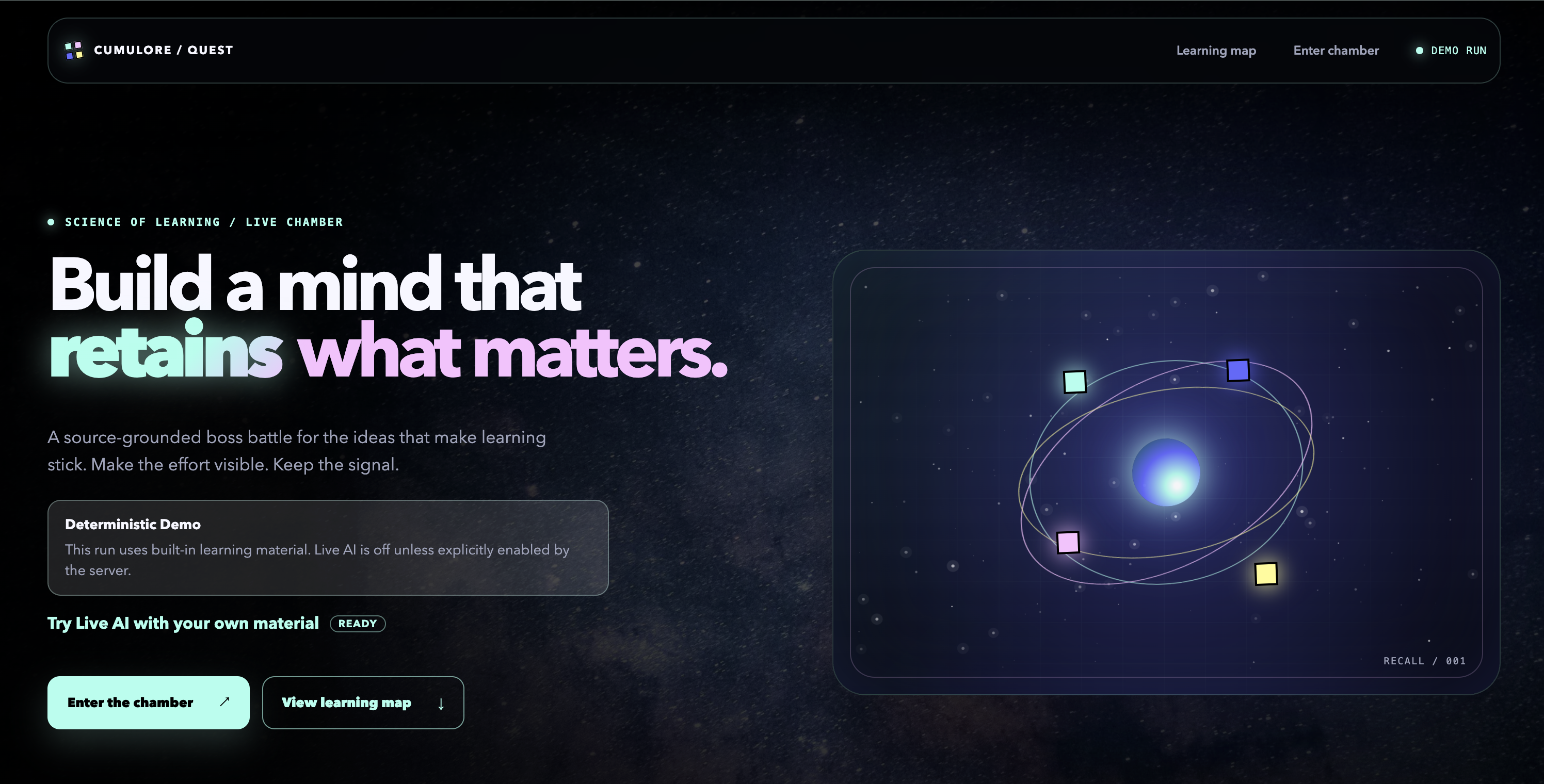
A Deterministic Demo works instantly without accounts, credentials, or model availability. An optional Live AI mode can generate a new quest from pasted material after clearly explaining that the material will be sent to OpenAI.
The central design rule is:
Content teaches, code plays.
GPT-5.6 Terra may generate concepts, questions, explanations, and source evidence. It cannot control health, damage, hearts, scoring, enemies, streaks, animations, or victory rules. Typed application code owns every game mechanic, keeping the experience predictable and testable.
How I built it
I built Cumulore Quest with Next.js, React, and strict TypeScript.
I used Codex 5.6 High for planning and review, fixing big bug and found it very powerful. Then use Codex 5.6 Terra medium for most of implementations, Luna extra high for UI creation and fix. Live generation is handled by a server-only route using the OpenAI Responses API with GPT-5.6 Terra, Structured Outputs, bounded input and output, store: false, a timeout, and at most one safe repair request. Credentials never reach the browser.
Generated content must pass deterministic validation before it can enter the game. These checks cover:
- JSON Schema and contract versioning;
- identifiers and concept references;
- answer-option integrity;
- duplicate questions;
- source locators and verbatim excerpt matching;
- selected difficulty and cognitive-stage rules; and
- separation between educational content and game mechanics.
Invalid content fails closed. The learner receives a safe, recoverable error and can retry or continue with Deterministic Demo.
The deterministic experience contains separate Easy, Medium, and Hard question banks. Each difficulty has four foundation, four connection, four synthesis, and four rematch questions, covering all five learning concepts.
I used Codex throughout the project as an engineering collaborator, not only as a code generator. GPT-5.6 helped me challenge the original contract, divide the work into reviewable slices, implement typed boundaries, design adversarial tests, diagnose deployment failures, and verify each change.
One important outcome of this collaboration was moving difficulty, combat, scoring, progression, and retry behaviour entirely into deterministic application code. This allowed generated educational content to remain creative without controlling product behaviour.
I chose the problem, product name, Education track, visual direction, scope, trade-offs, and final acceptance decisions. I inspected the changes and required focused tests and a production build to pass before accepting each slice.
Challenges I ran into
The hardest problem was not obtaining an AI response. It was deciding when that response was trustworthy and useful enough to become part of a learning experience.
Strict Structured Outputs, source provenance, response size, deployment timeouts, API configuration, and exhausted quota all produced different failure modes. I had to make each failure explicit and recoverable instead of hiding everything behind a generic loading state.
Grounding was another challenge. A structurally valid question could still cite the wrong source segment or provide an excerpt that did not support its answer. Cumulore Quest therefore validates locators, excerpts, concept references, answer options, duplication, and difficulty rules after generation.
Cost protection also influenced the design. The public experience remains fixture-first, credentials stay server-side, requests are bounded, repeated submissions are suppressed, and the OpenAI project uses a fixed prepaid balance rather than unrestricted automatic recharge.
Accomplishments that I'm proud of
I am proud that Cumulore Quest is a complete learning journey rather than a prompt wrapped in a form.
The deterministic experience works without accounts, credentials, or provider availability. The optional Live AI path uses the same validated contract and cannot bypass the evidence or game-mechanics boundaries.
The Medium demonstration bank contains sixteen individually reviewed questions. Automated fixture evaluation covers three representative sources across all three difficulties. Focused tests cover generation, provenance, combat, rematches, answer ordering, progress, route security, provider failures, duplicate submissions, and runtime configuration.
The complete repository verification and production build pass, and the deployed application remains useful when Live AI is unavailable.
Most importantly, every generated claim must retain source evidence while every game rule remains deterministic. The playful experience does not come at the cost of trust.
What I learned
My main lesson was that dependable AI products need deterministic boundaries around probabilistic generation.
A JSON Schema is only the beginning. Useful educational content also needs evidence validation, cognitive intent, safe retries, explicit state ownership, cost controls, and a fallback that still demonstrates the product's value when a provider is unavailable.
I also learned that game mechanics improve learning only when they return attention to the concept. The most valuable moment is not the damage animation. It is the moment when a learner understands why an answer failed, checks the supporting source, and receives a focused opportunity to try again.
Working with Codex also reinforced the importance of reviewing AI-generated code instead of accepting it automatically. The best results came from using Codex to challenge assumptions, inspect boundaries, test failure cases, and iterate on decisions I could explain and defend.
What's next for Cumulore Quest
After Build Week, I want to evaluate Cumulore Quest with real learners and measure whether the combination of active recall, evidence-based feedback, and targeted rematches improves learning.
The next product steps would include:
- private PDF, DOCX, and PPTX ingestion;
- longer-term progress tracking;
- spaced rematches scheduled over time;
- stronger learning-quality evaluations;
- accessible teacher-created quest collections; and
- integration with Cumulore's production workspace architecture.
These are future directions rather than features in the current hackathon build.
Built With
- codex-5.6-luna
- codex-5.6-sol
- codex-5.6-terra
- gpt-5.6-terra
- next.js
- openaiapi
- react
- typescript

Log in or sign up for Devpost to join the conversation.