-
-
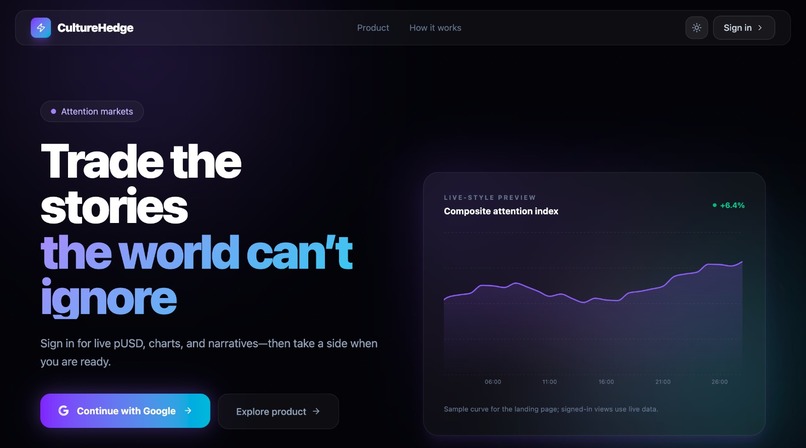
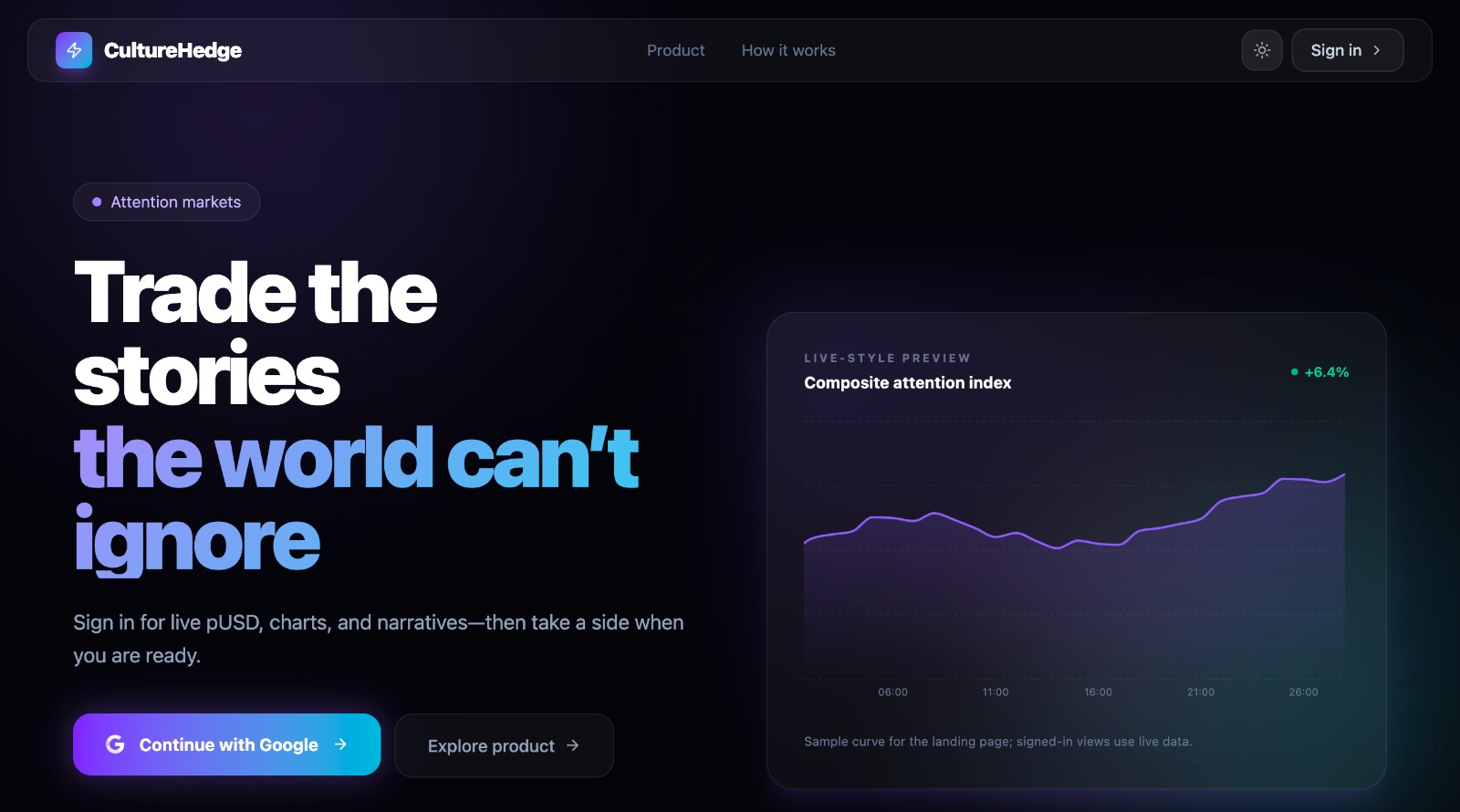
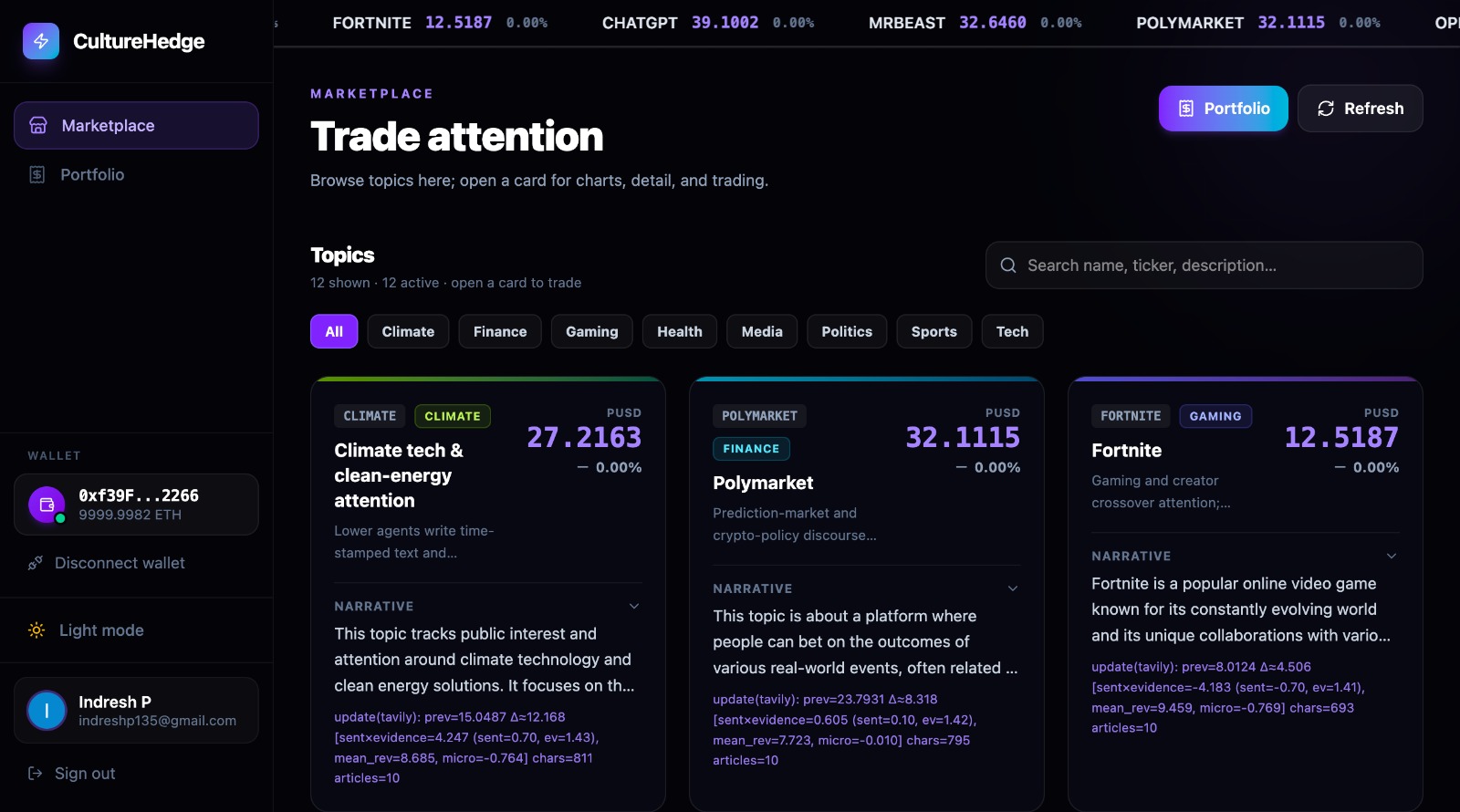
Webpage
-
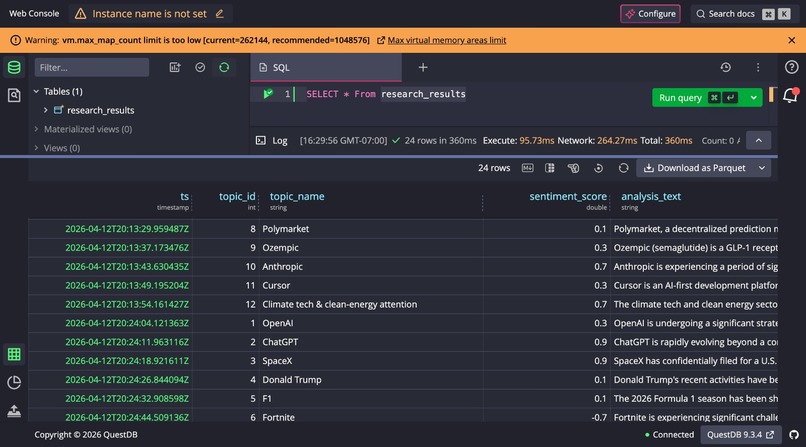
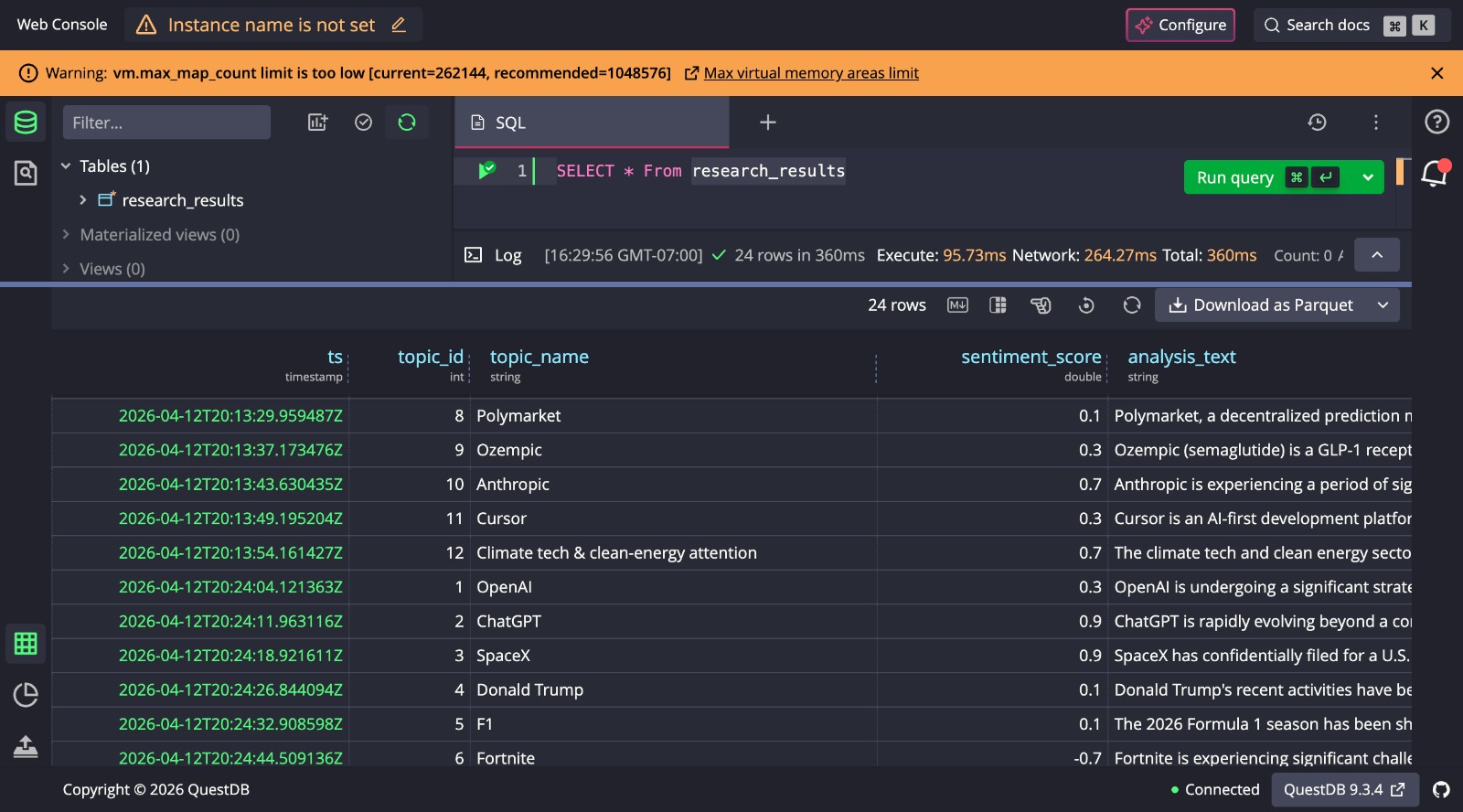
QuestDB
-
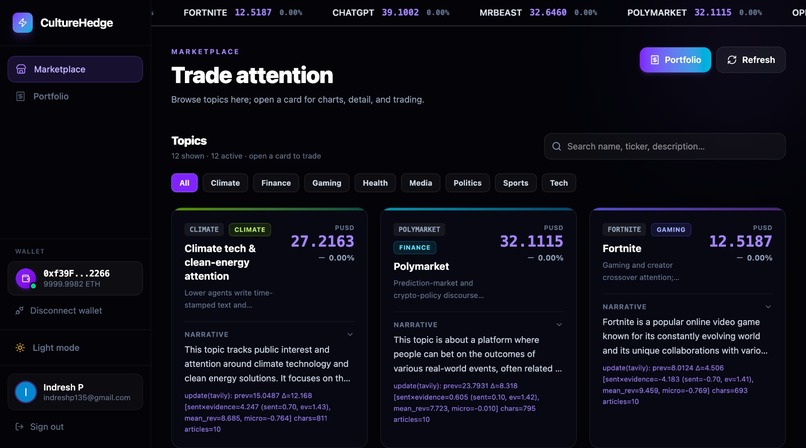
User Page
-
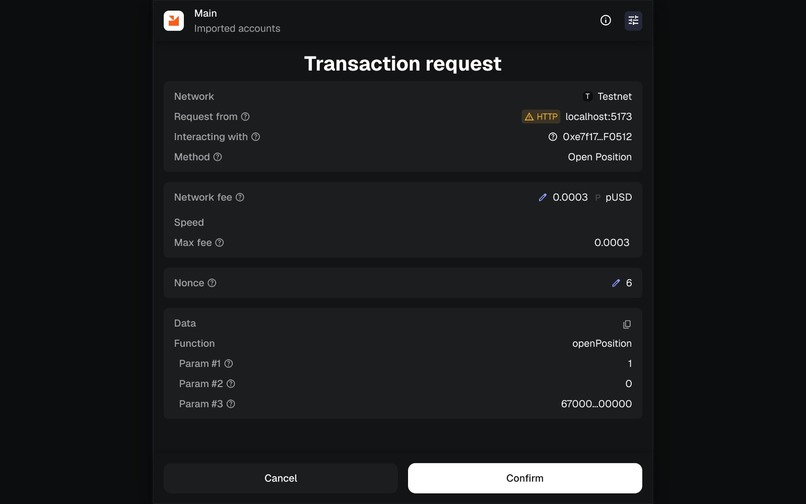
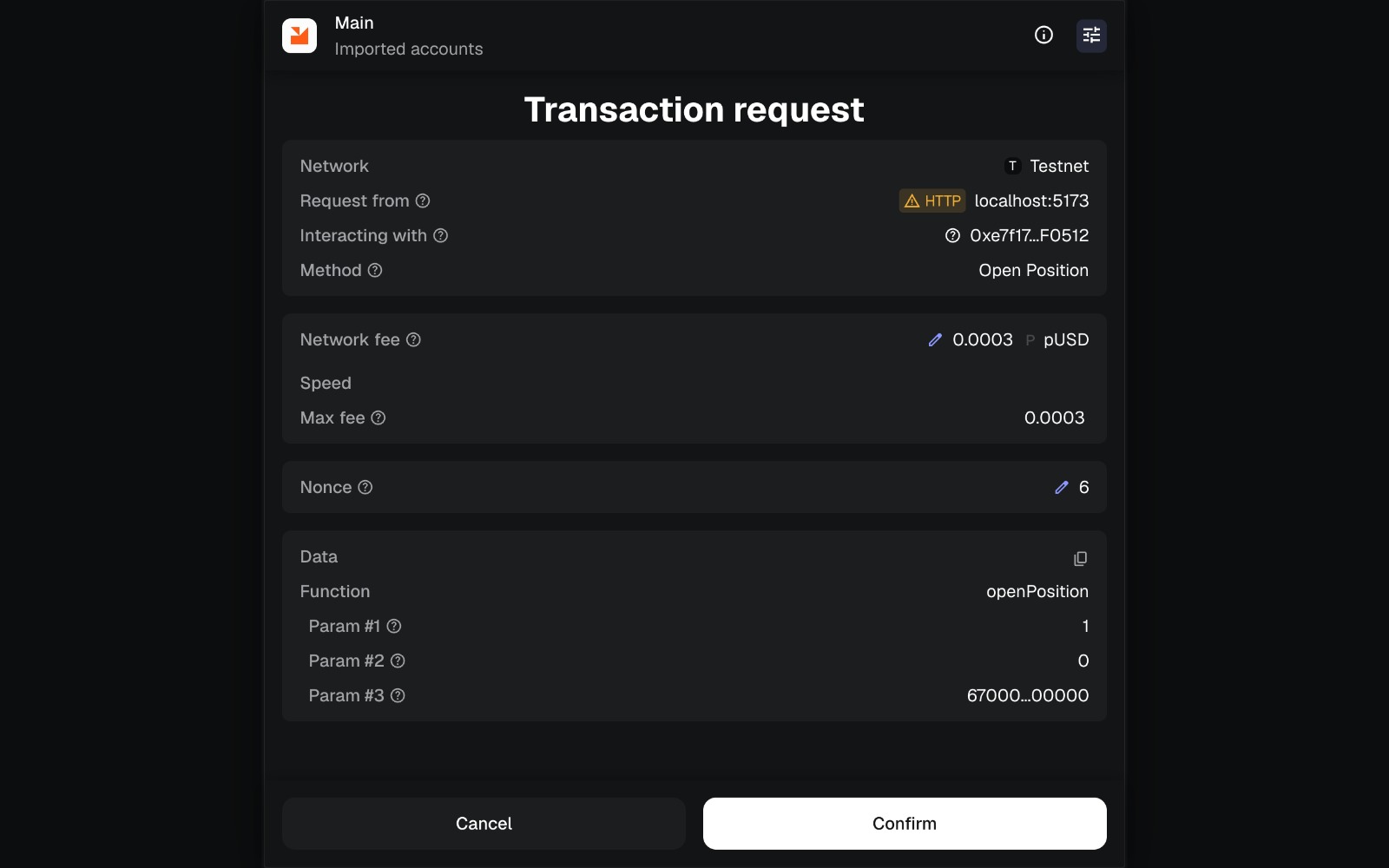
Metamask Transaction
-
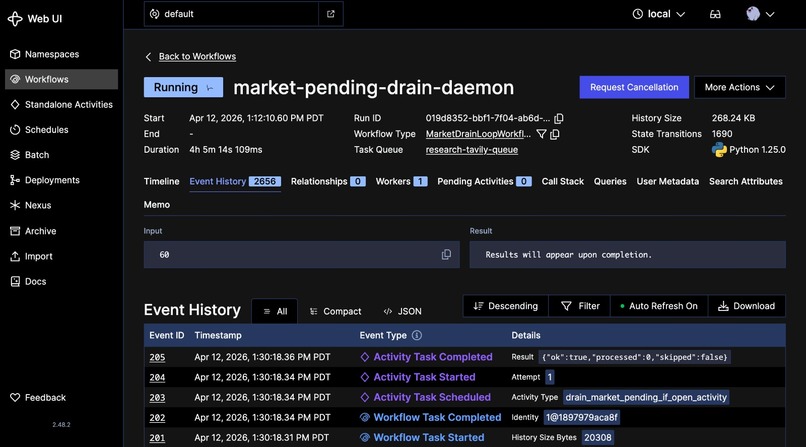
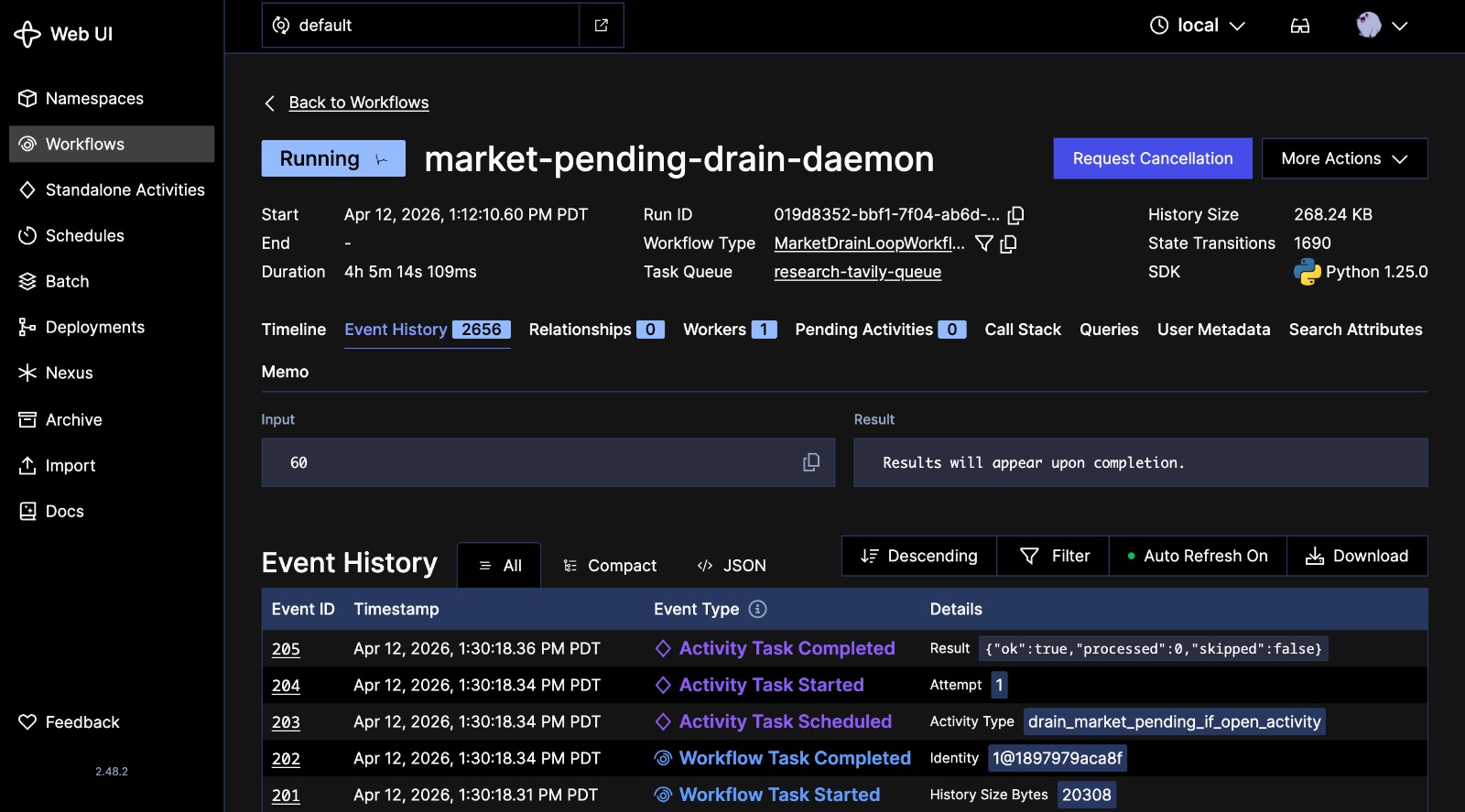
Temporal
-
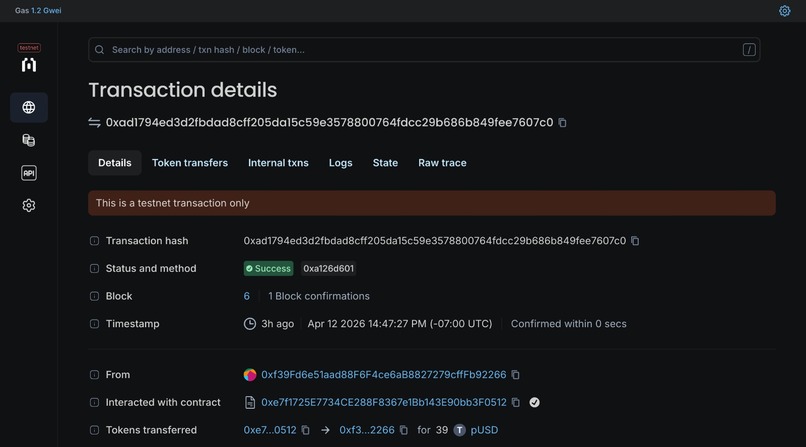
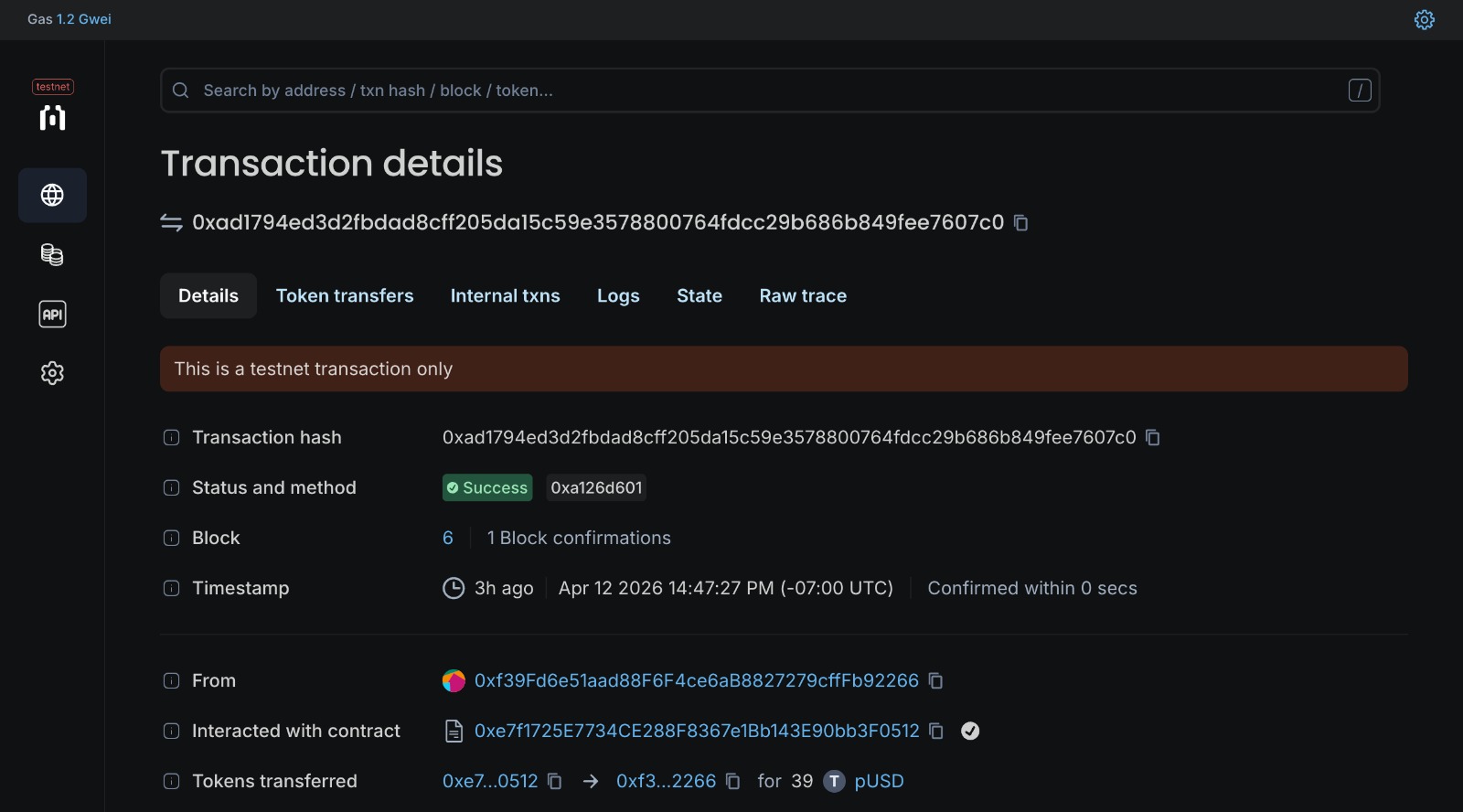
Blockchain details
Inspiration
CultureHedge was inspired by the idea that markets are influenced not only by fundamentals, but also by culture, sentiment, public attention, and narrative. Topics trending across news, social media, and public discussion often shape market behavior before traditional financial signals fully catch up.
For the Finance Track, we wanted to build a product that connects current cultural events with financial analysis in a meaningful way. That led us to the idea of an attention market where users can track topics, trade on their momentum, and understand the narrative behind market movement.
What it does
CultureHedge is an AI-powered attention market platform.
- Admin users can add new topics into the system.
- Lower-level research agents gather fresh information about those topics from sources like GDELT and Tavily.
- The incoming data is stored over time and used to generate both market movement and narrative summaries.
For normal users, the platform allows them to:
- authenticate and enter the marketplace
- view active topics
- buy or sell positions
- view wallet information
- read narrative explanations for market movement
- get portfolio-level insights
The system is powered by three main agents:
- Market Agent — drives market behavior for each topic
- Narrative Agent — summarizes recent happenings and trends
- Portfolio Agent — analyzes the user’s holdings and explains possible risks or opportunities
How we built it
We built the frontend using React and TypeScript, with authentication and wallet-connected flows for users entering the marketplace. The backend is built with FastAPI, which acts as the main API layer between the frontend and the agent ecosystem.
At the core of the system is a multi-agent orchestration layer inspired by AGNTCY-style coordination. We used Temporal to schedule and control recurring workflows so that lower research agents can fetch fresh information regularly.
These research agents collect data from external APIs such as:
- GDELT
- Tavily
We stored time-series observations in QuestDB so we could track how attention, sentiment, and narrative signals evolve over time. We also used PostgreSQL for structured application data. For the market and wallet side, we integrated a lightweight blockchain setup instead of using something heavier like Hyperledger, allowing users to hold and manage positions in a decentralized way.
Challenges we ran into
One of the biggest challenges was dealing with noisy real-world data. Cultural and public signals are messy, fast-changing, and difficult to structure. Converting that data into something useful for market behavior was not straightforward.
Another challenge was coordinating multiple moving parts at once. We were working with:
- agents
- APIs
- recurring workflows
- multiple databases
- a frontend
- a backend
- a blockchain layer
Making sure all of these pieces communicated properly and stayed consistent required a lot of careful design.
We also found it challenging to make the system explainable. We did not want users to only see a topic moving up or down. We wanted them to understand the story behind that movement, while still keeping the product intuitive and usable.
What we learned
We learned that specialized agents work much better than trying to make one agent do everything. Splitting responsibilities across research, market reasoning, narrative generation, and portfolio explanation made the system more modular and easier to reason about.
We also learned that time-series thinking is essential for this kind of product. With cultural and sentiment-based signals, the value is not just in the latest data point, but in how that signal changes over time.
Most importantly, we learned that users need explanation alongside action. A market interface becomes much more useful when it is paired with narrative context and portfolio-level reasoning.
What's next
The next step for CultureHedge is to improve the quality and depth of the intelligence layer.
We want to:
- add more research sources
- improve topic classification and admin-side topic labeling
- make the market logic more robust
- make the Narrative Agent more dynamic with configurable summarization intervals
- improve portfolio-level risk and exposure insights
- expand the blockchain integration
- support better real-time updates
- move toward a production-ready system
Built With
- React
- TypeScript
- FastAPI
- Temporal
- AGNTCY-inspired multi-agent orchestration
- QuestDB
- PostgreSQL
- Blockchain / Solidity smart contracts
- GDELT API
- Tavily API
Built With
- agent2agent
- agntcy-dir
- agntcy-slim
- anvil
- api
- blockchain
- claude
- css
- cursor
- docker
- fastapi
- gdelt
- gemini
- google-gmail-oauth
- html
- javascript
- langgraph
- metamask
- postgresql
- python
- questdb
- react
- sentiment
- sqlalchemy
- tavily


Log in or sign up for Devpost to join the conversation.