Inspiration
Growing up around the Daivasthana in Kattabelthoor, we always felt that traditions like Daiva worship, Kola, and the rituals tied to Sri Bhadramahakali were rarely documented anywhere outside our own community. Most of what we know has been passed down by word of mouth — through elders, priests, and performers — and very little of it exists online in a form that outsiders, younger generations, or people from outside Tulunadu could actually understand and appreciate. We wanted to change that, even in a small way, by giving this sthana (sacred site) a proper digital presence that respects the tradition while making it accessible.
What it does
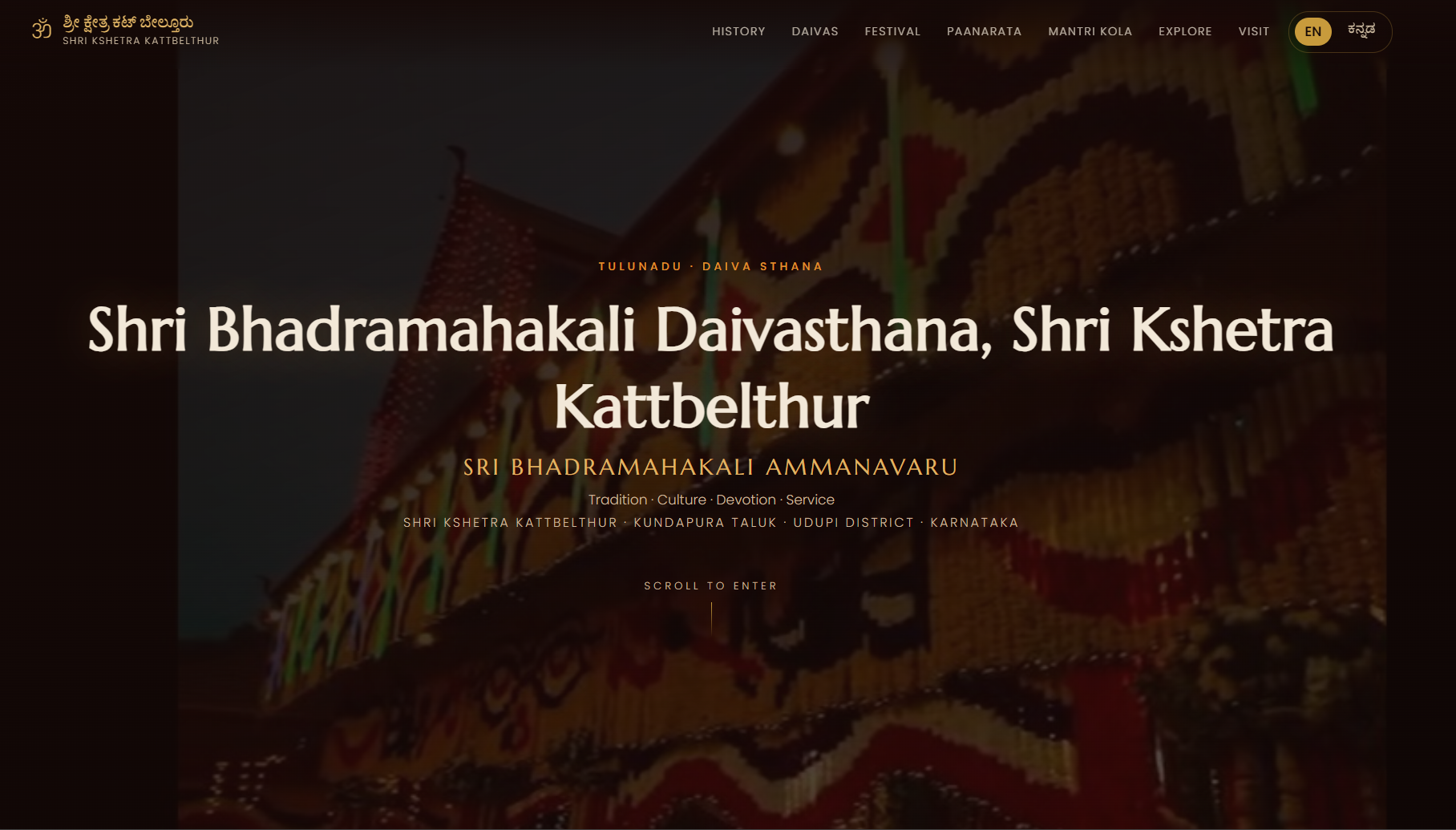
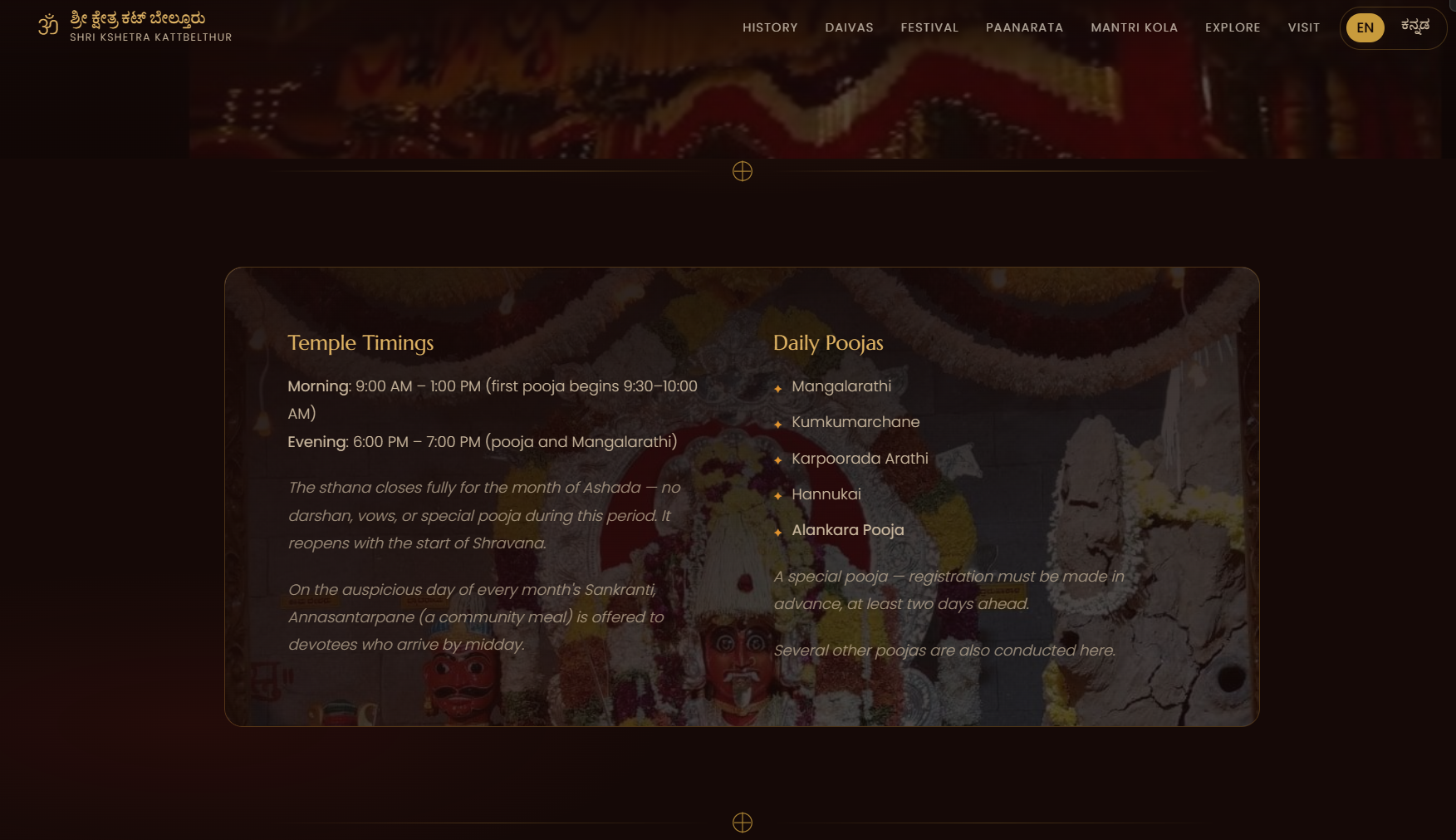
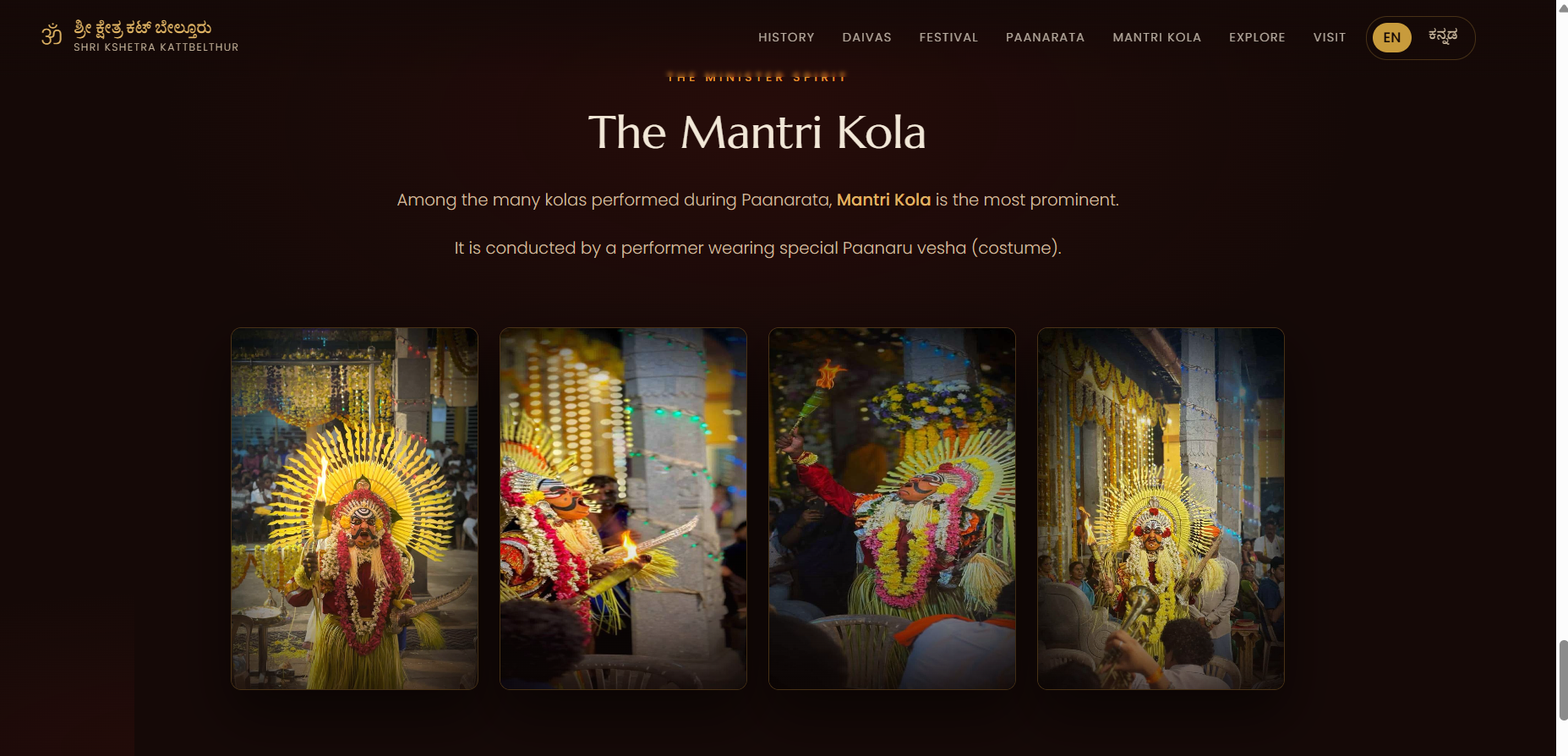
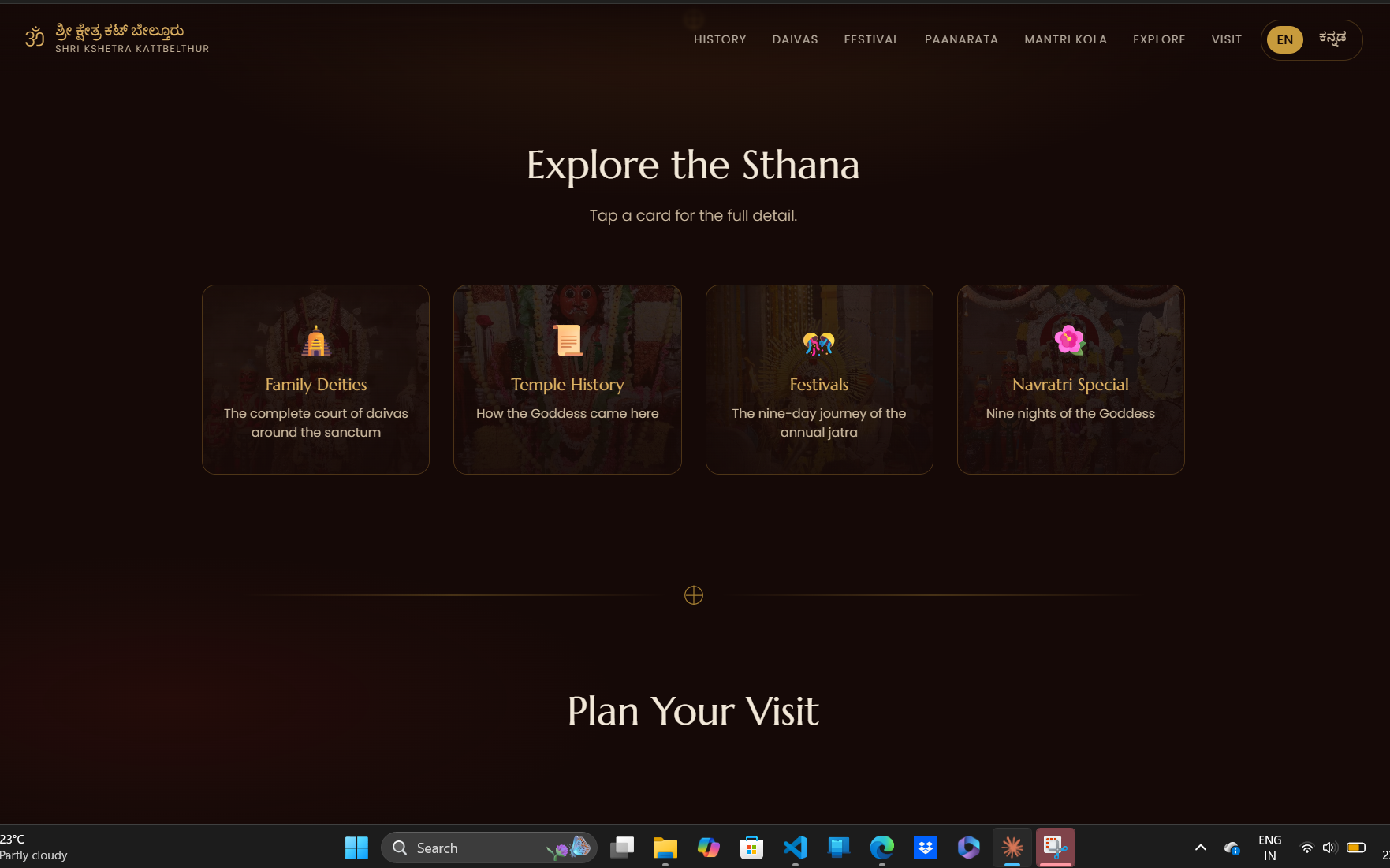
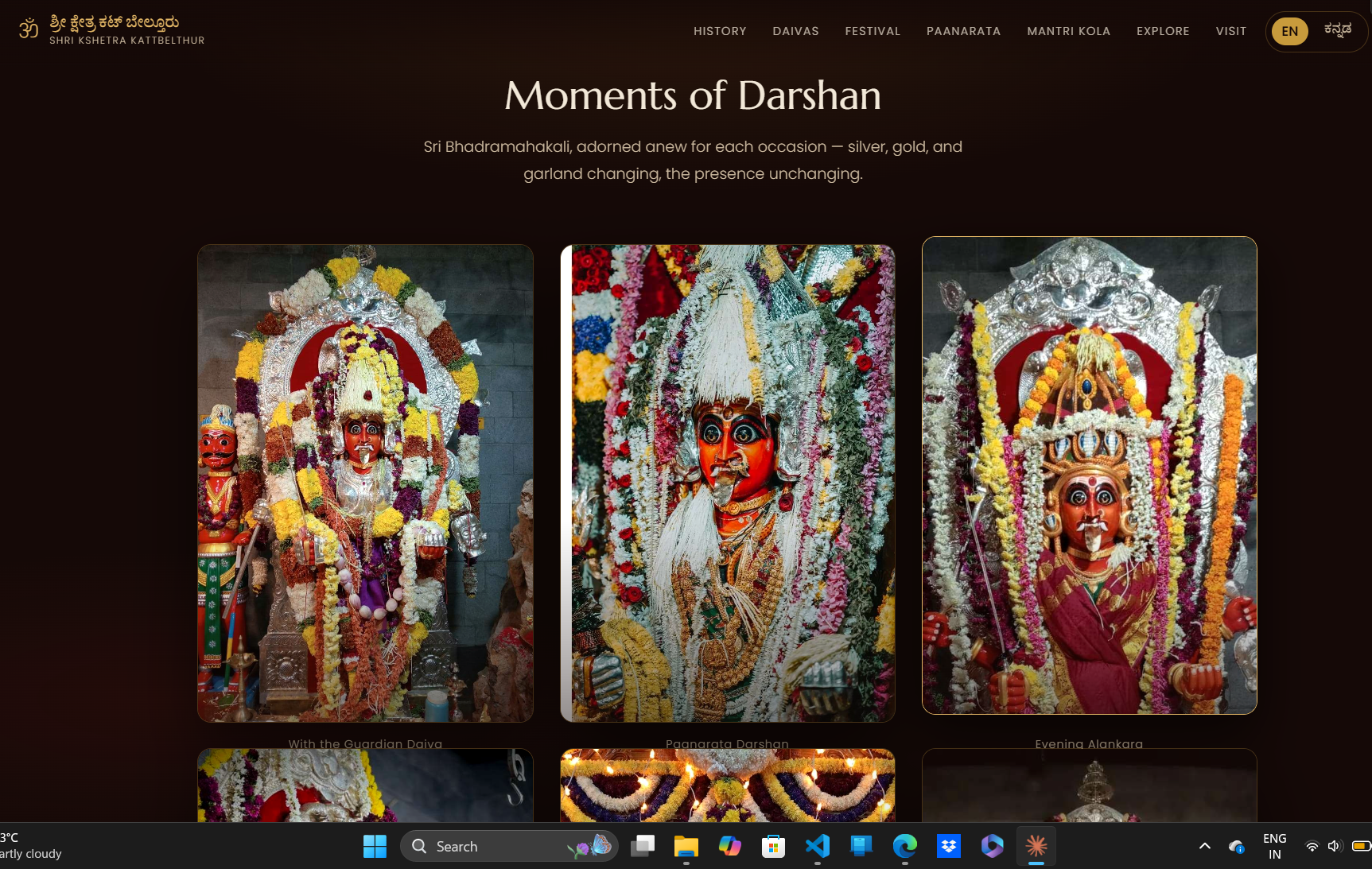
It's a bilingual (Kannada and English) website dedicated to the Shri Bhadramahakali Daivasthana in Kattabelthoor. It walks visitors through the history of the sthana, the daily poojas, the ritual timeline (including events like Mantri Kola and Haiguli Madu Seve), and the community — like the Paana community — who keep these traditions alive. There's a photo gallery of the daivas and kola performances, a video section, and a visit/directions panel for anyone who wants to actually go there. The language toggle lets people switch between Kannada and English instantly, so it's usable both by locals and by people discovering this tradition for the first time.
How we built it
We built it from scratch using plain HTML, CSS, and JavaScript — no frameworks. We wrote our own lightweight i18n system so every piece of text on the page (including the Kannada script) could be swapped in and out with a single click, without reloading the page. We spent a lot of time getting the visual design right too — using warm, temple-inspired colors (vermilion, gold, marigold) and Kannada serif typography so the site actually feels like it belongs to this tradition, rather than looking like a generic template.
Challenges we ran into
The biggest challenge wasn't technical — it was making sure we got the cultural and ritual details right. Daiva worship has a lot of nuance (different daivas, different roles for different communities, specific sequences of rituals) and we didn't want to get any of it wrong or present it in a way that felt disrespectful or oversimplified. We went back and forth with people from the community to verify details. On the technical side, getting the bilingual toggle to work smoothly across the whole site — fonts, layout, and text — without breaking anything took a fair amount of trial and error.
Accomplishments that we're proud of
We're proud that this isn't a generic "temple website template" — every section was written and designed specifically for this sthana. We're especially proud of the bilingual support, because it means someone who only reads Kannada and someone who's never heard of Daiva worship before can both use the same site and come away understanding something real about this tradition.
What we learned
We learned a lot about the depth of our own tradition just by trying to document it properly — details we'd taken for granted growing up turned out to have real history and meaning behind them once we sat down to write about them. We also learned a lot about building accessible, multilingual web experiences and about how much design choices (color, type, layout) affect whether something feels authentic or not.
What's next for this Temple website
We'd love to expand this into a broader digital archive for Tulunadu's Daiva worship traditions more generally — not just this one sthana — with audio recordings of Paddanas (ritual ballads), video documentation of Kola performances, and maybe even community contributions so other sthanas and families can add their own histories. Longer term, we'd also like to explore adding a simple AI-powered guide that can answer visitor questions about the rituals and history in either language.
Built With
- css
- development
- frontend
- google-fonts
- html
- javascript
- responsive
- responsive-design


Log in or sign up for Devpost to join the conversation.