-
-
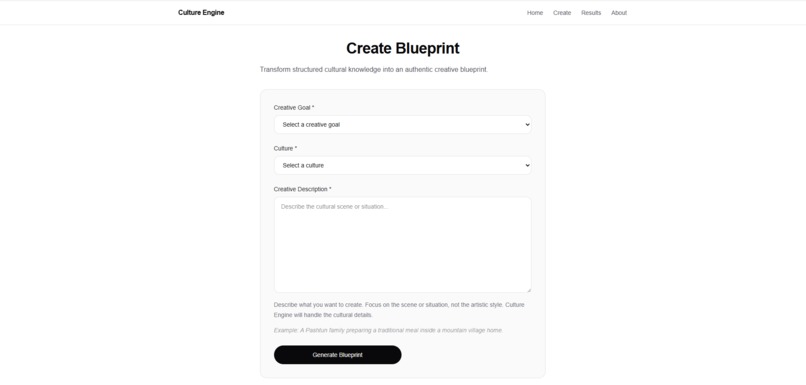
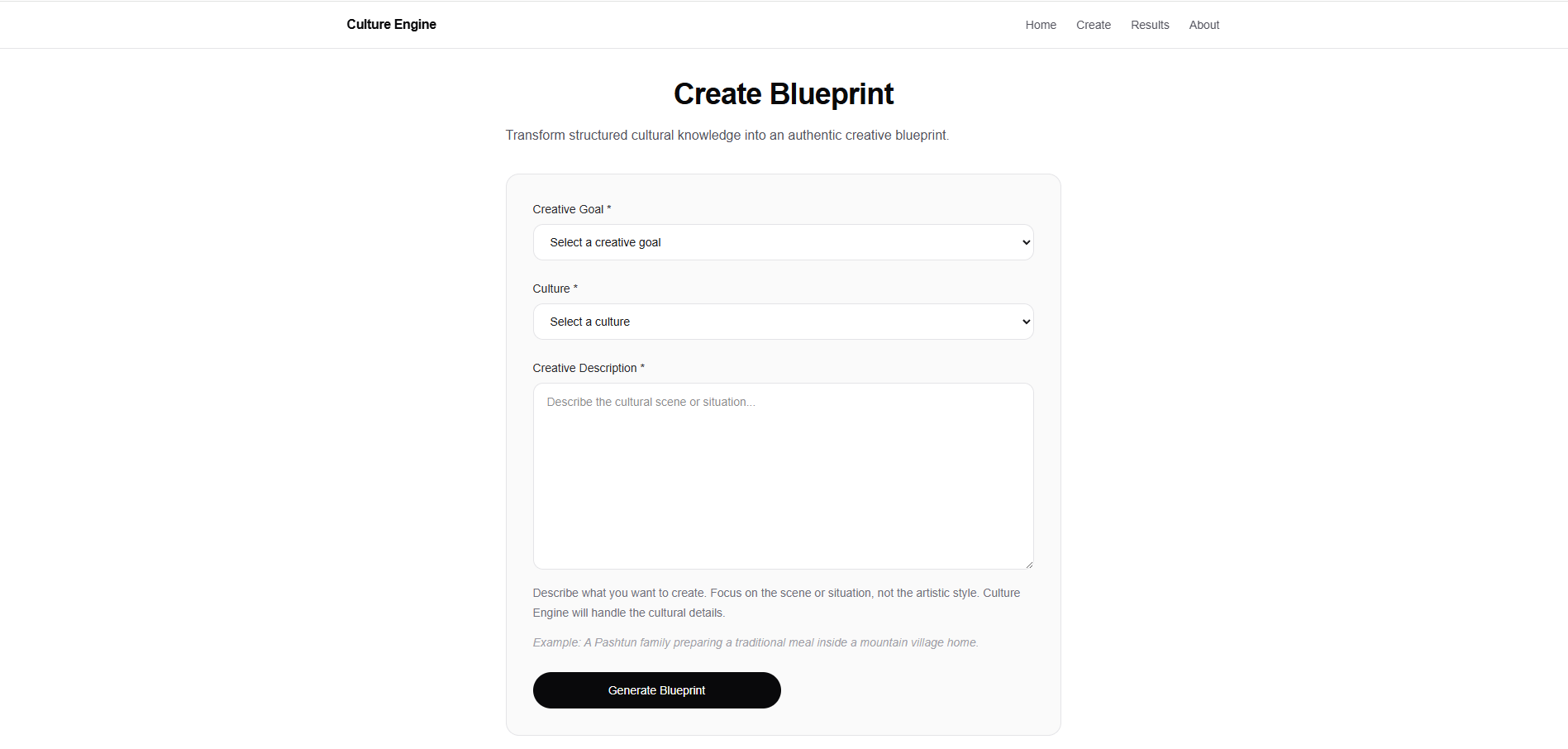
Create page where users submit a culturally-aware creative request.
-
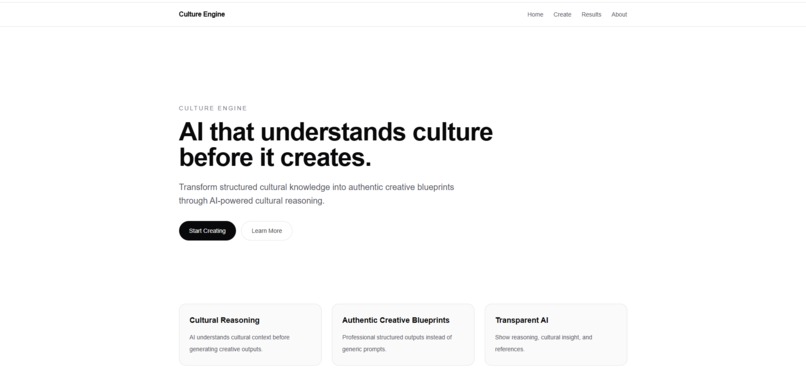
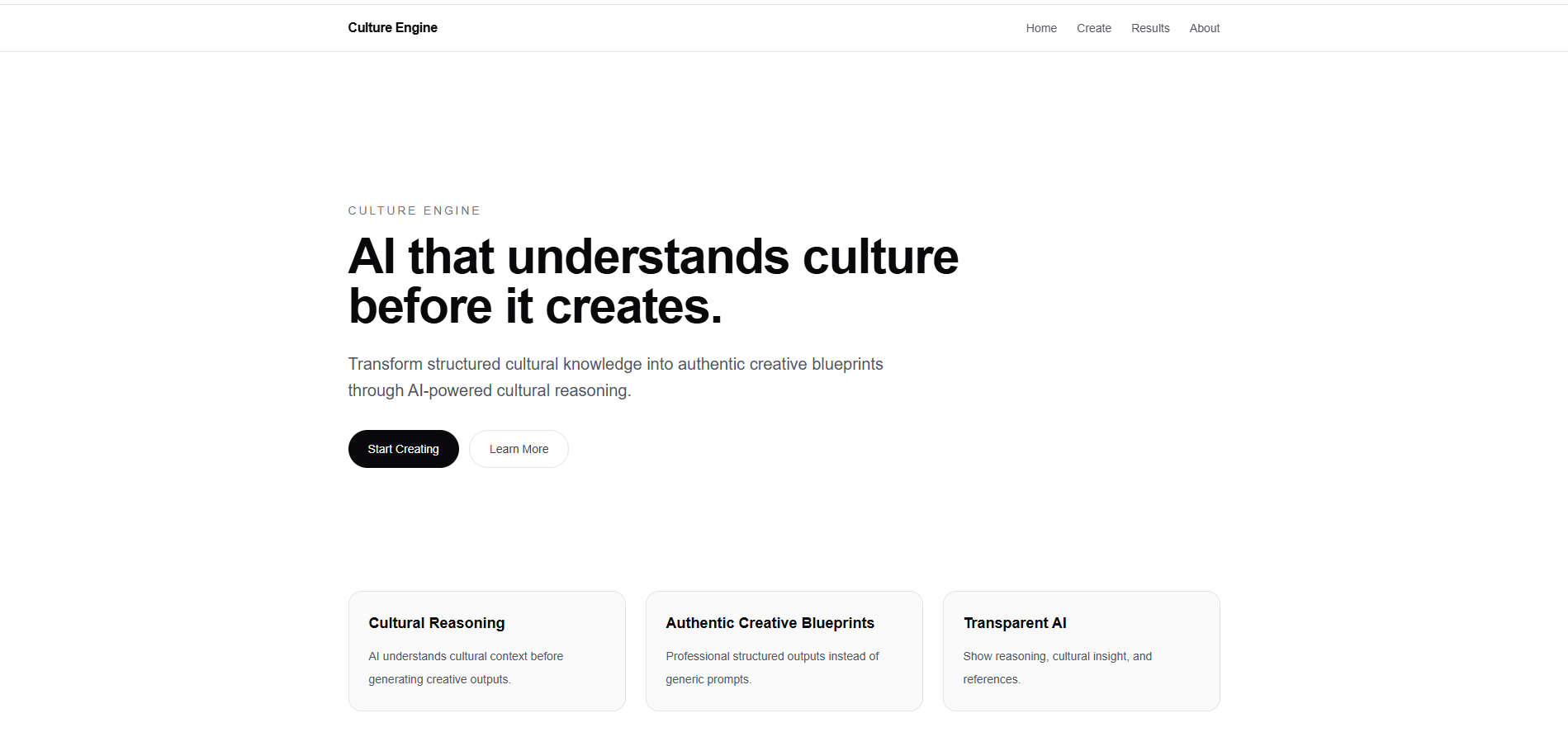
Culture Engine home page introducing the idea of cultural reasoning before AI generation.
-
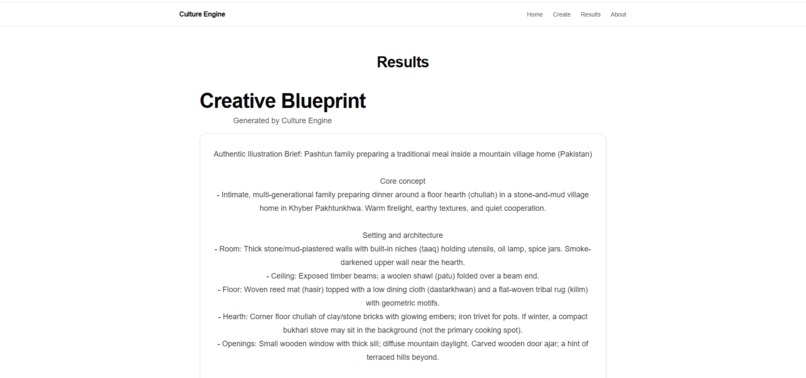
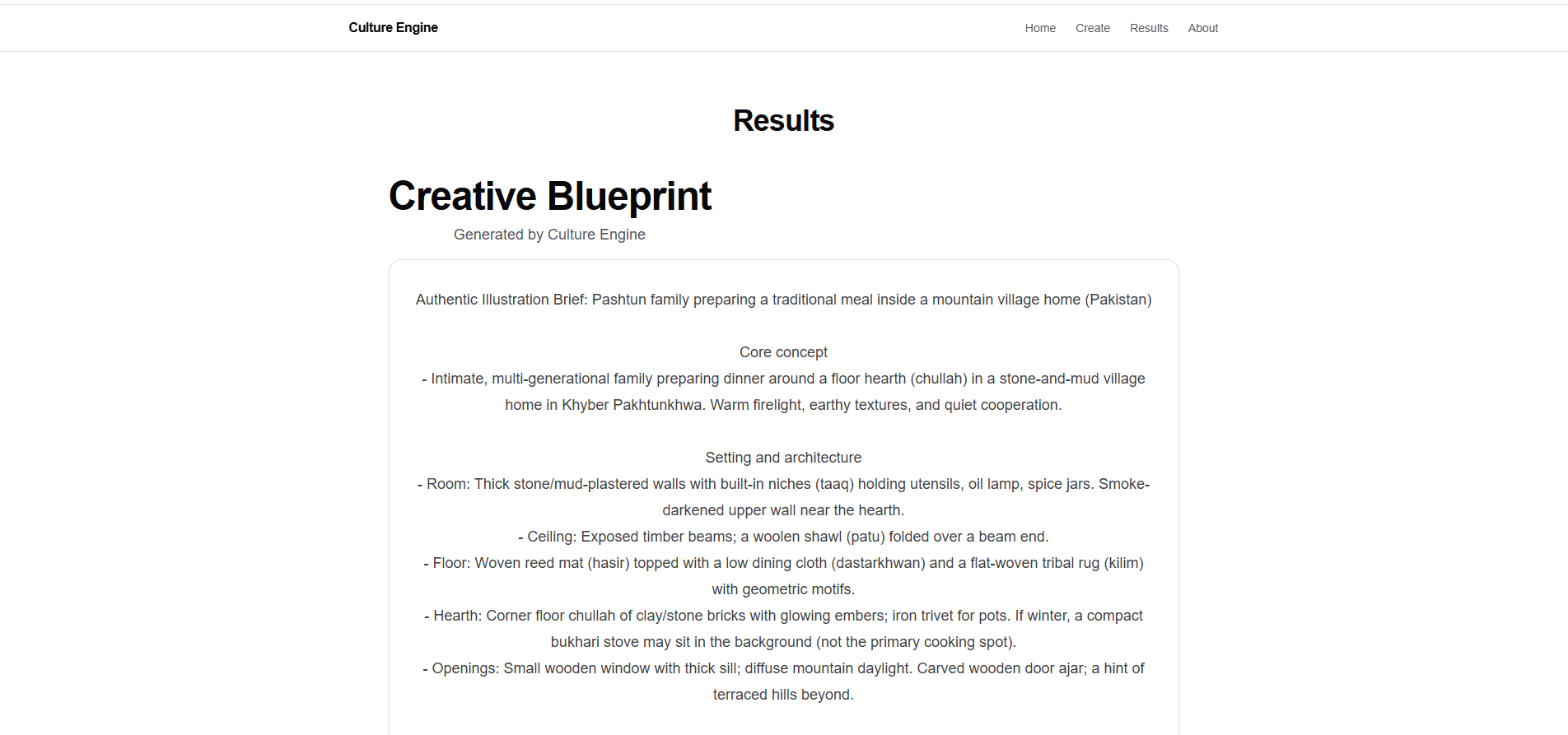
AI-generated cultural blueprint created through structured cultural reasoning.
Culture Engine
Inspiration
As a designer, I use AI every day to speed up my creative workflow. However, whenever I wanted to create artwork inspired by the cultures of Pakistan, I repeatedly faced the same challenge: cultural authenticity.
AI could generate beautiful images, but it often mixed cultural identities. Clothing from one region would appear in another, architecture would not match the geography, and important cultural details were often inaccurate.
Instead of spending more time designing, I found myself spending hours correcting AI outputs with references, research, and repeated prompt refinement.
That experience inspired me to build Culture Engine.
My goal was not to replace cultural research. My goal was to help AI begin with that research, so creators can spend more time creating and less time correcting.
What it does
Culture Engine helps AI understand a culture before generating creative content.
Instead of relying only on prompts, it uses structured cultural knowledge together with AI reasoning to build a cultural blueprint before generation.
The current MVP focuses on Pashtun (Pakistan) cultural knowledge and demonstrates how structured reasoning can produce more culturally consistent creative outputs.
How I built it
The application was built with:
- Next.js
- TypeScript
- Tailwind CSS
- OpenAI Responses API
- Vercel
- GitHub
The architecture follows a simple reasoning pipeline:
Knowledge Layer → Reasoning Layer → Blueprint Layer → OpenAI Responses API
This separates cultural understanding from content generation, making the system easier to improve and expand.
Challenges
The biggest challenge was not writing code.
The biggest challenge was defining culture in a structured way that AI could understand.
Culture is much more than clothing. It includes geography, architecture, environment, traditions, objects, crafts, daily life, and many small details that together create cultural identity.
Designing a knowledge structure that respected these relationships required careful thinking and continuous refinement.
What I learned
This project changed the way I think about AI.
I learned that better prompts are not always the answer.
Better understanding is.
When AI begins with structured cultural knowledge instead of assumptions, the creative results become more meaningful and respectful.
Future Vision
This MVP is only the beginning.
In the future, I hope to expand Culture Engine to support many cultures across Pakistan and eventually cultures from around the world.
The vision is to build a carefully curated cultural knowledge base using authentic references, including local architecture, traditional clothing, folk stories, cuisine, art, crafts, embroidery, paintings, historical objects, and cultural research.
I believe culturally authentic AI will be built by combining the knowledge of people who understand their own culture with the power of modern AI.
Before AI represents a culture, it should first learn to understand and respect it.
Built With
- github
- next.js
- openai
- tailwind
- typescript
- vercel


Log in or sign up for Devpost to join the conversation.