Inspiration
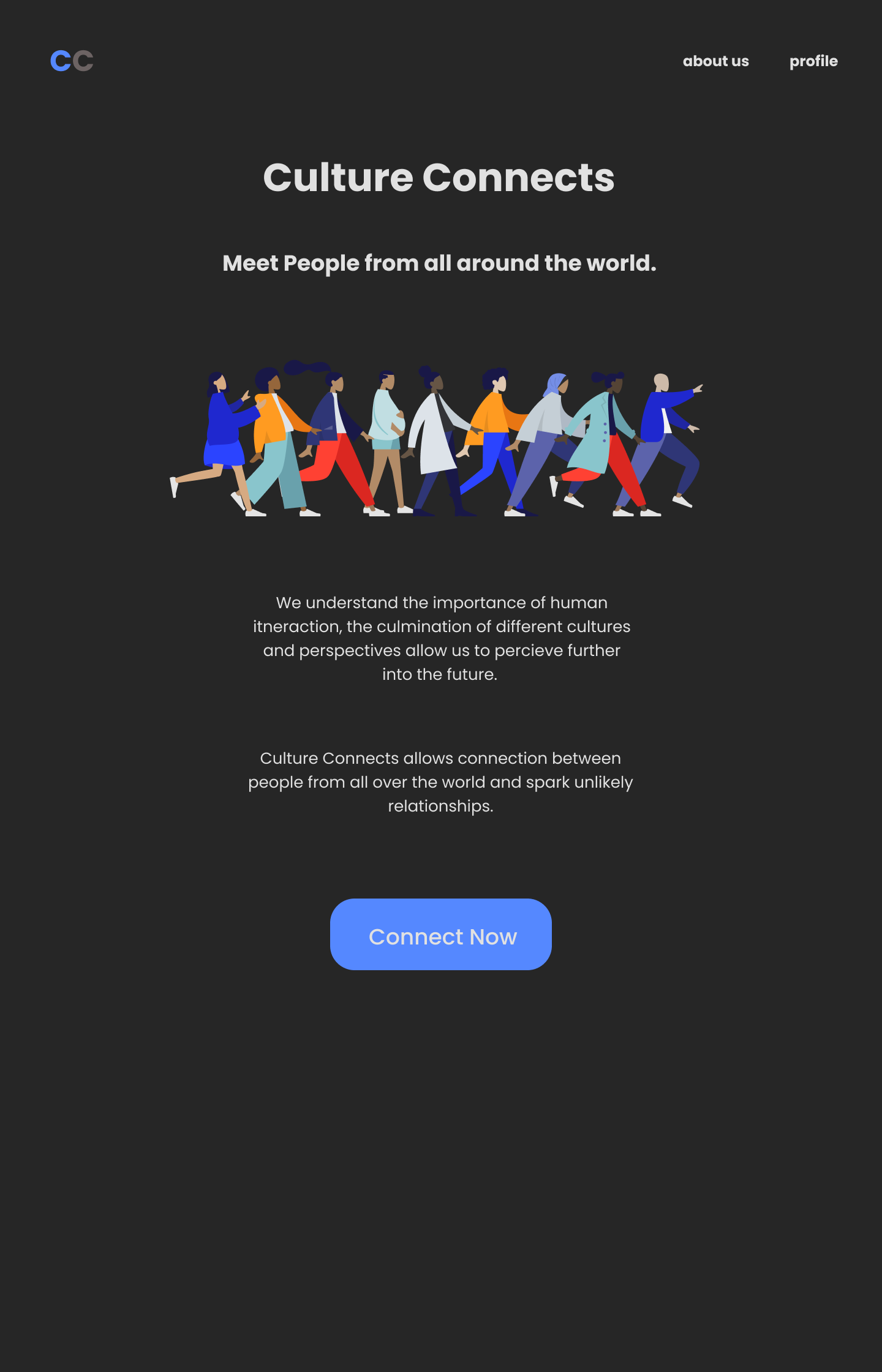
Following the themes of the hackathon, we wanted to see how people would learn of cultures that they are not born in, but are interested in. We looked at videos about different countries but we noticed that these videos do not always accurately represent these cultures, as they are typically made with the goal of promoting tourism. We realized that to truly experience or share different cultures, real connections between people need to be established. Through this app the users cultures will ultimately be expressed through users unique viewpoints and how they communicate.
What it does
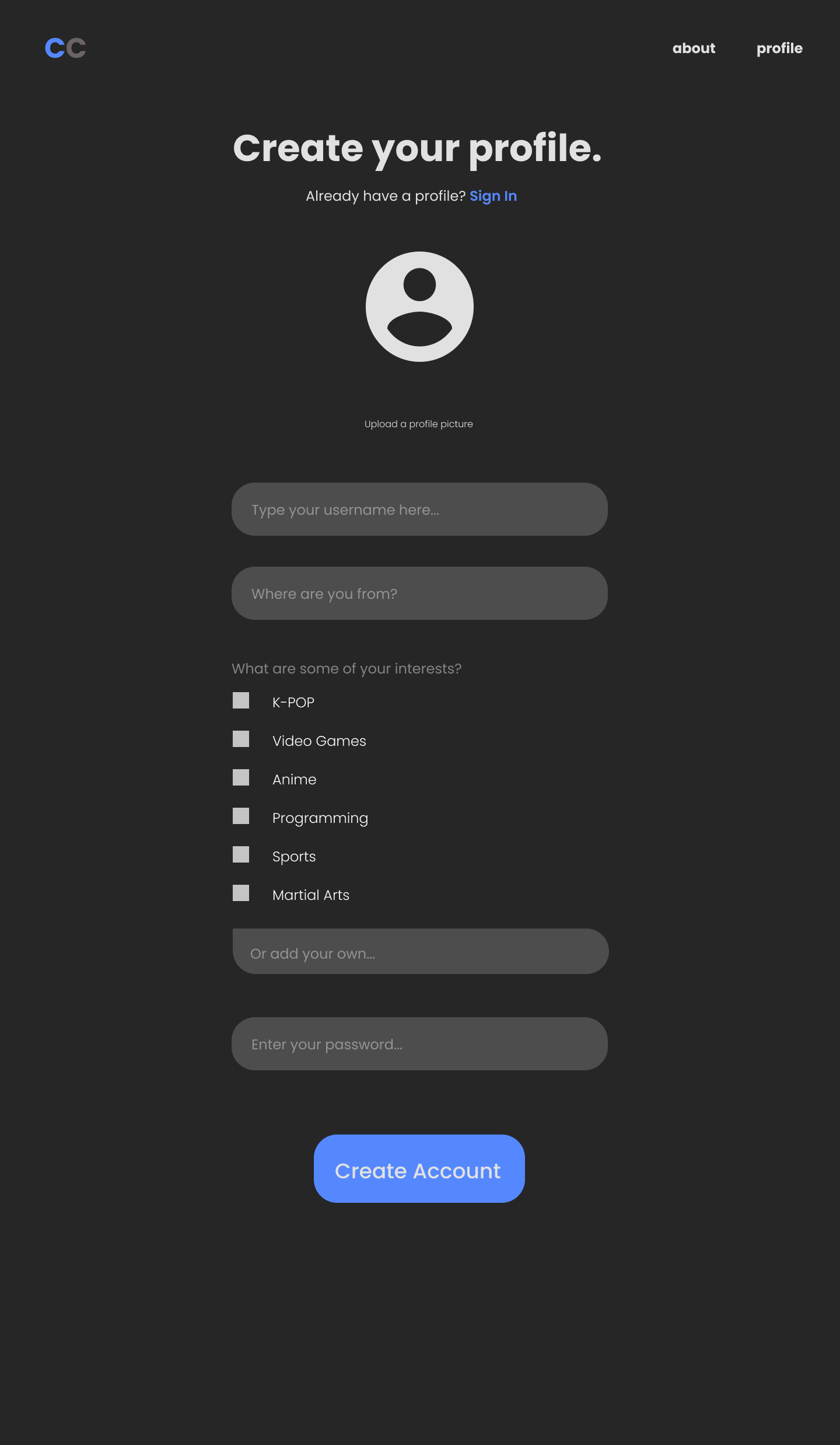
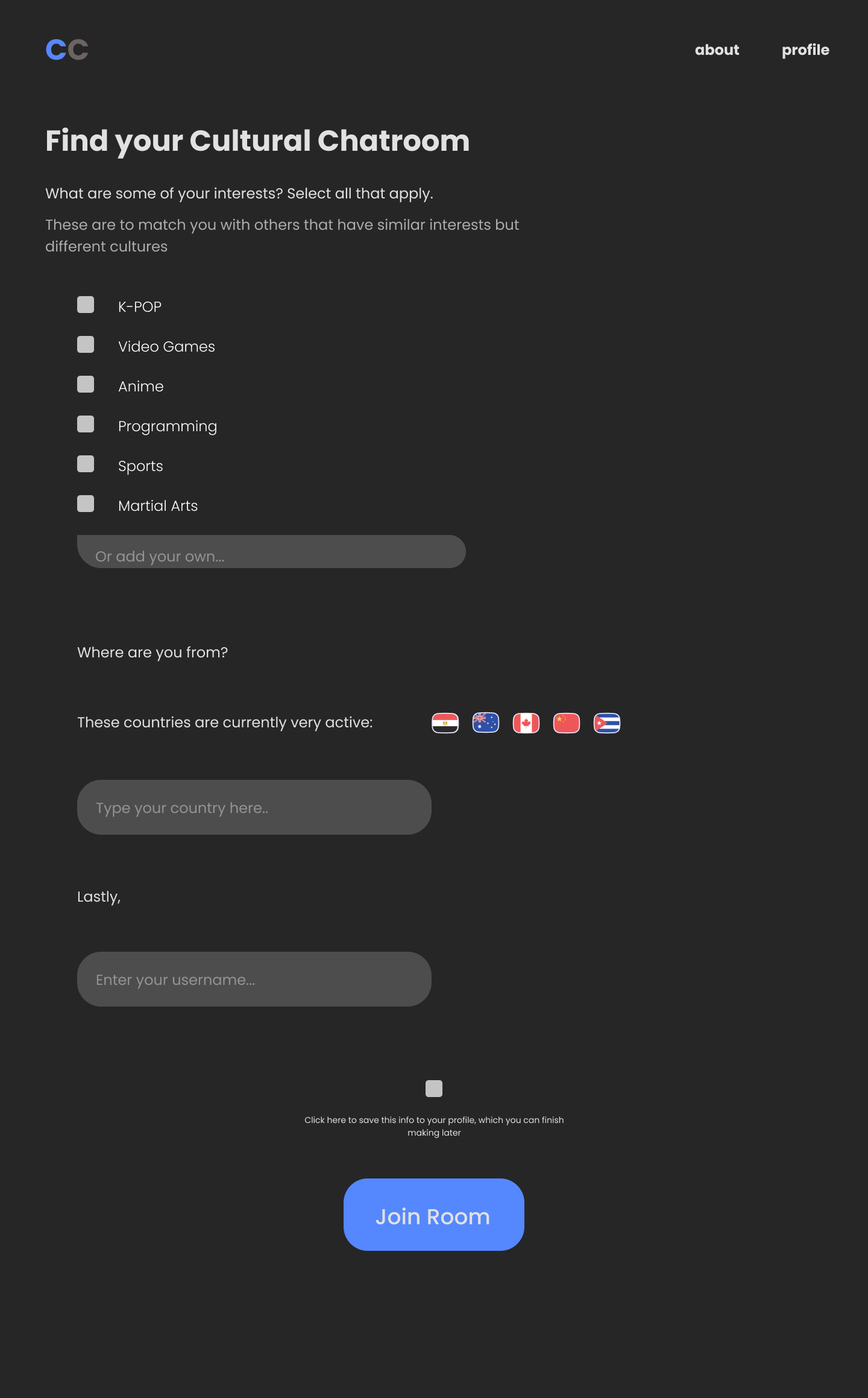
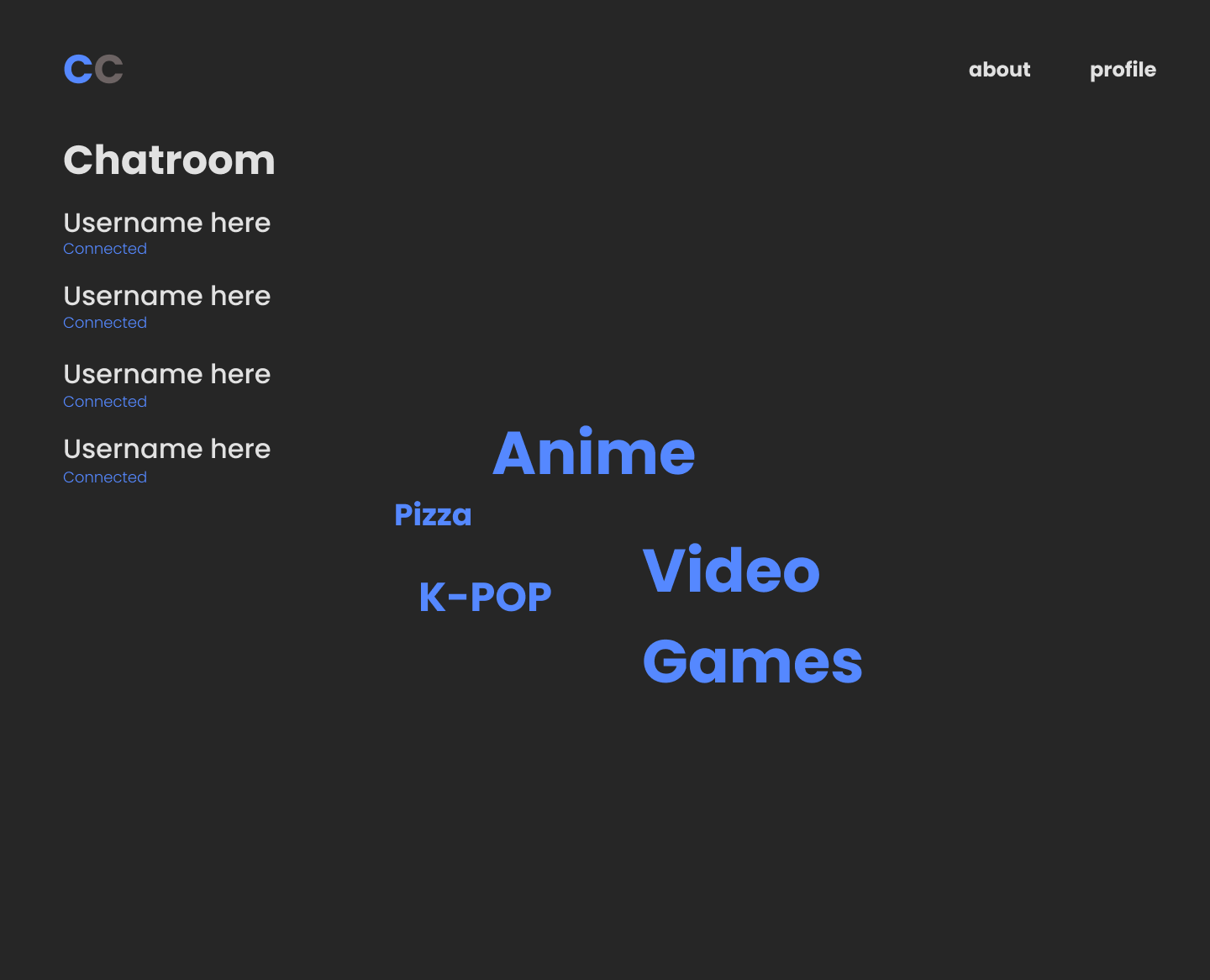
The goal of the application was to allow users of different cultures to interact with each other. Our application will match users together with similar preferences but of different cultures (depending on country of origin) and allow them to talk with each other to discuss their interests/hobbies and open up to each other in a laid-back and fun environment, generally through ice-breaker games (which was not implemented in the demo) and common interests.
How I built it
To combine our various skill sets, our group elected to design and develop Culture Connects into a functioning web application. We used Figma as our design tool of choice, then began development using HTML, CSS, JavaScript, and MongoDB. This process was expedited through the Live Share feature on VScode, which was helpful early on. The team then elected to switch to Glitch, as it provided hosting and real-time collaboration, while allowing us to view what our code was actually changing. Lastly, when Glitch began to “glitch”, we switched over to Repl.it for the remainder of the hackathon.
Challenges I ran into
Being inexperienced we had a few difficulties with just HTML/CSS formatting but through the power of css tricks, we overcame all of these challenges. The bulk of the issues came from the voice chat functionality as it was such a new technology that none of us really knew how it worked. We read up on it and researched but it was difficult to really wrap our heads around it. Steady progress was made on it, as when people were able to join, but establishing the connections proved to be a little tricky.
Accomplishments that I'm proud of
We were pretty inexperienced in the technologies we used, but we learned and were able to apply past knowledge to somehow make it work. We were pretty proud when we finished and we became excited about what we accomplished in the future once we have more knowledge and experience.
What I learned
We learned a lot since we didn't have that much experience to begin with. Specifically, ways to make a website more responsive, and we started getting a grasp of how databases and what types of databases there are. We also started to grasp how voice chat applications function as well as tools that can host and liveshare repositories. We think that this idea is promising as it removes the possibilities for echo chambers where everyone is interested in one thing.
What's next for Culture Connects
We have a lot of ideas to bring Culture Connects to the next level. For example, adding icebreaker games, implementing an algorithm that matches users based on preferences and culture, and improving on various frontend aspects. Additionally, we plan to add new features to help bypass the language barrier, such as active voice to text translation.
Built With
- css
- figma
- glitch
- html
- javascript
- mongodb
- repl.it
- vscode


Log in or sign up for Devpost to join the conversation.