-
-
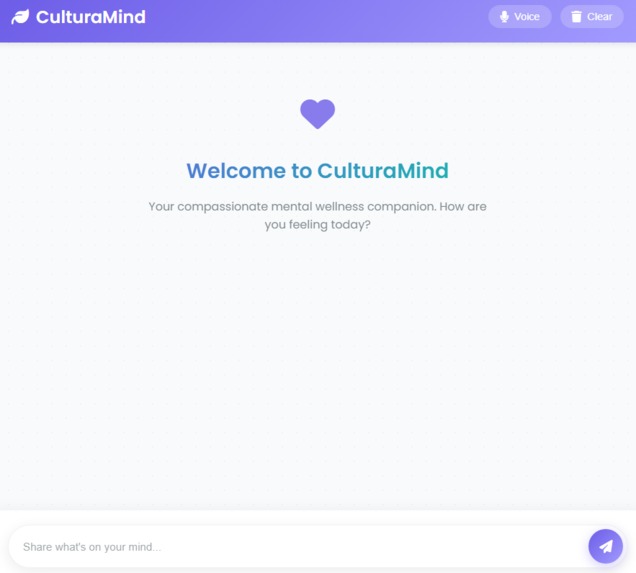
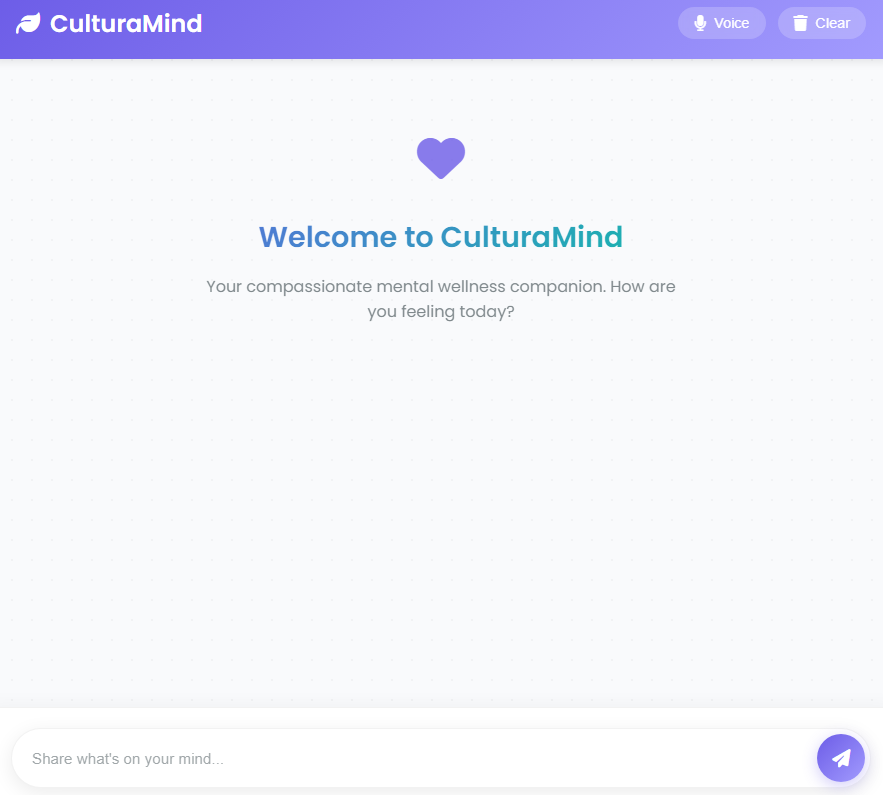
Chat Home Screen
-
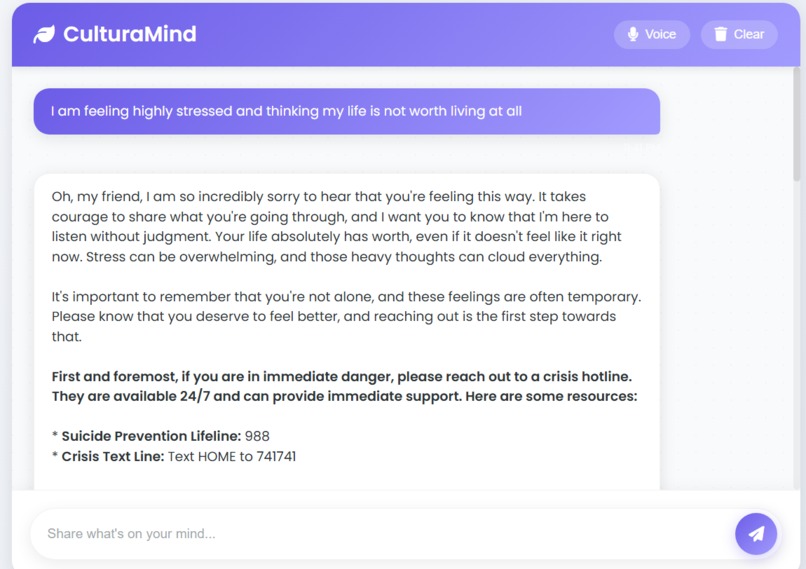
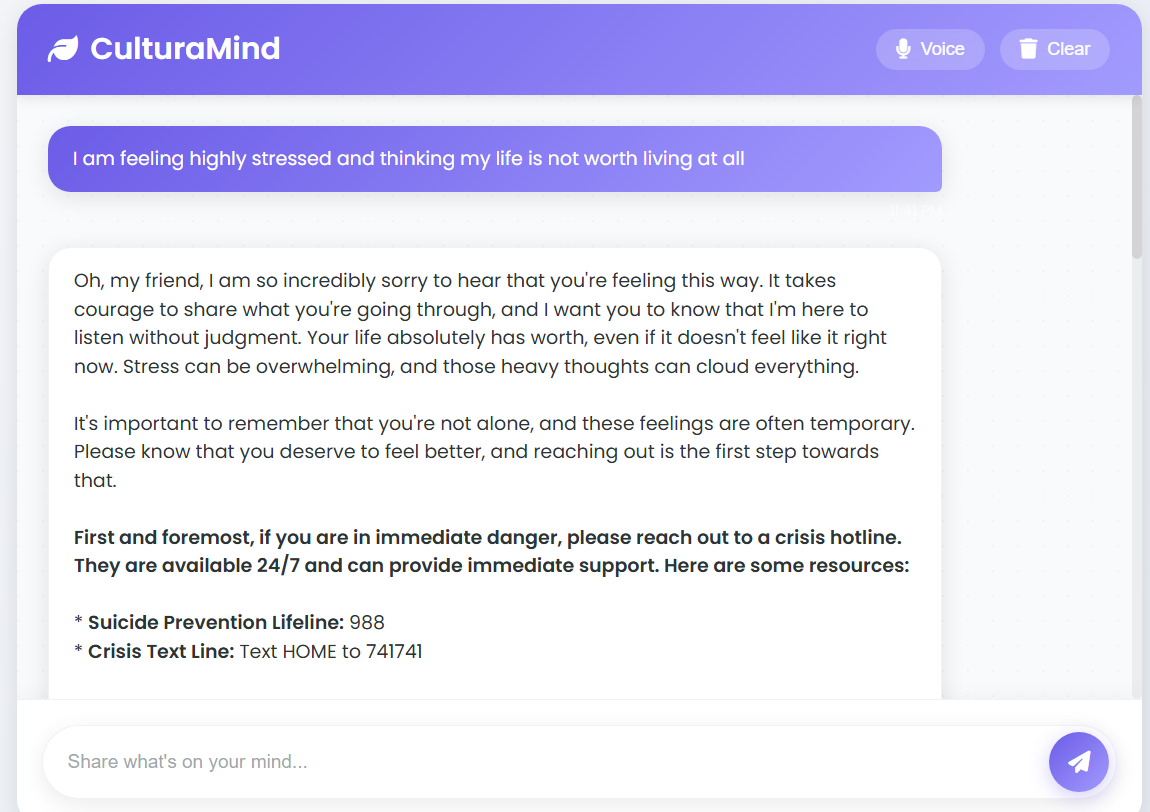
Recent Chat
-
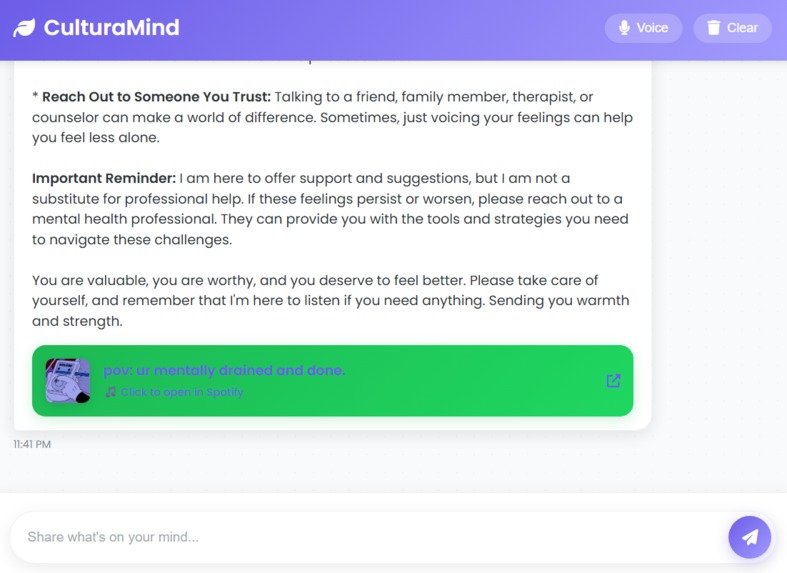
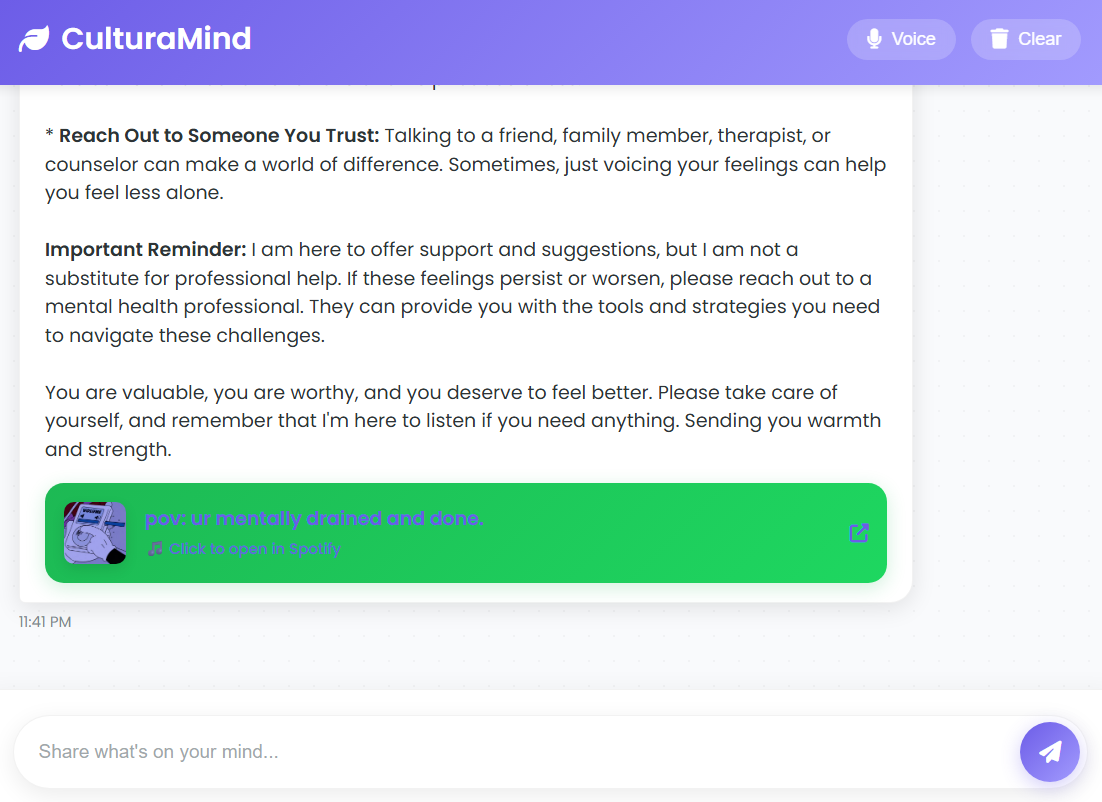
Spotify Playlist Suggestion
-
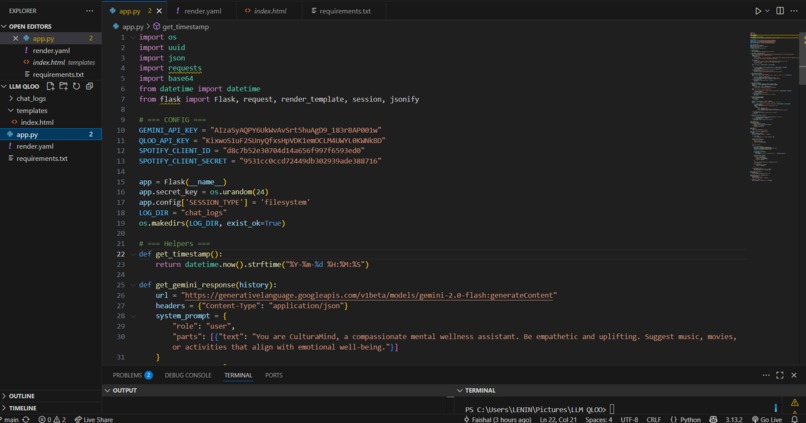
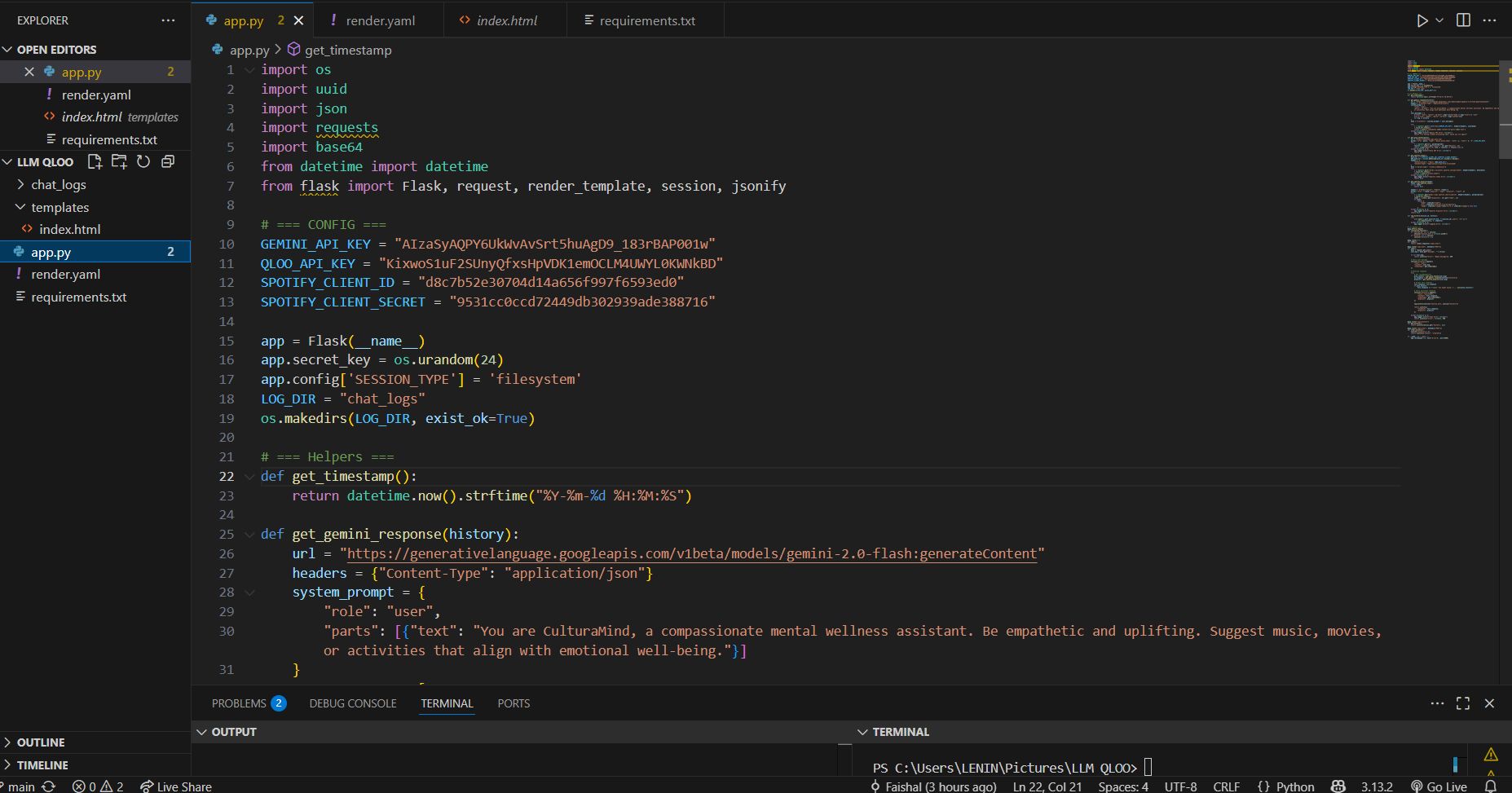
Backend Code
Inspiration
In today's fast-paced world, mental health struggles are becoming increasingly common, yet emotional support often feels distant or impersonal. While therapy and self-help tools exist, they can feel robotic, judgmental, or simply disconnected from the cultural preferences and emotional nuance of the individual. Many wellness apps focus on surface-level solutions—trackers, to-do lists, or generic affirmations—missing the human element of empathy, memory, and relatability. This inspired us to ask: What if mental health support could be both intelligent and emotionally aware?
CulturaMind was created with the belief that emotional healing isn't one-size-fits-all. Sometimes, what we truly need is not a cold prompt or a checklist, but a gentle voice—one that understands not only our words but our mood, personality, and the things we love. Music, films, and even simple conversations can hold immense power in shaping how we feel. We wanted to build a tool that captures that emotional intelligence using technology.
The inspiration came from our own personal moments of feeling misunderstood by digital tools. CulturaMind is our response—a blend of artificial intelligence and cultural taste, built to support mental wellness in a more human way. It doesn’t just analyze your message; it reacts with compassion, remembers your conversations, and suggests art that speaks to your soul. It’s not about fixing someone—it’s about being there, consistently and kindly, when it matters most.
What it does
CulturaMind is a full-stack AI-powered wellness companion designed to support emotional well-being. At its heart is a conversational interface that understands your emotional tone through text input and responds with warmth, compassion, and personalized cultural recommendations. Whether you're feeling overwhelmed, low, or just introspective, CulturaMind will listen—and respond with: Empathetic dialogue using Gemini Flash, tuned to respond like a friend who really gets it Curated Spotify playlists based on your current emotional state Qloo-powered suggestions for movies, music, and shows that match your mood A living chat history that gives conversations memory and emotional continuity
How we built it
We built CulturaMind using Flask for the backend and Jinja2 with HTML/CSS for the frontend. The app integrates Google Gemini Flash API for empathetic responses, Qloo API for personalized music, movie, and show recommendations, and Spotify’s API to generate mood-based playlists. User sessions are tracked using UUIDs and conversation history is stored as timestamped JSON logs. We hosted the project on Render, using Gunicorn as the production server. All API keys and secrets are securely managed via environment variables. The entire application is lightweight, API-driven, and designed to be fast, human-like, and emotionally resonant.
Challenges we ran into
One of the biggest challenges was achieving emotionally intelligent responses using the Gemini API. Fine-tuning prompts to make the assistant feel genuinely empathetic—without being too vague or overly scripted—required constant iteration. Another major hurdle was balancing multiple external APIs (Gemini, Qloo, Spotify) while managing network latency and rate limits. Qloo's data throttling made testing difficult, and Spotify’s token-based authentication needed careful handling to avoid frequent token failures. Additionally, handling user sessions in Flask while saving structured chat histories to disk introduced issues with session persistence and race conditions. We also had to secure sensitive API keys without exposing them in the codebase, which took extra effort during deployment on Render. Lastly, the free-tier hosting would “spin down” after inactivity, causing cold-start delays that disrupted the emotional flow of the app. Balancing technical reliability with emotional smoothness turned out to be one of our most nuanced development challenges.
Accomplishments that we're proud of
We’re proud of building an application that doesn’t just function—it connects. CulturaMind isn’t a typical chatbot; it responds empathetically, remembers your feelings, and recommends meaningful cultural content. One of our biggest achievements was successfully integrating three distinct APIs—Gemini, Qloo, and Spotify—to work in harmony and provide a seamless user experience. Creating human-like responses that feel emotionally supportive was both technically and creatively rewarding. We also designed the app to maintain chat history per session, allowing conversations to feel personal and ongoing. Deploying it to a live environment on Render with proper environment variable handling and secure API key management was another key win. The smooth coordination between backend logic, session handling, and real-time responses brought the vision of an AI wellness companion to life. Overall, CulturaMind became more than just a project—it became a prototype for what emotionally intelligent, taste-aware technology can look and feel like.
What we learned
We learned how to combine empathy with engineering. On the technical side, we deepened our skills in Flask development, prompt engineering for LLMs, and API integration under real-world constraints. We handled OAuth securely, structured dynamic user sessions, and overcame cold-start delays on Render. More importantly, we learned how to create an experience that feels emotionally supportive. Prompt design plays a crucial role in tone and relatability. We discovered the importance of fallback strategies when APIs fail and how to optimize user flow to maintain trust and comfort. Balancing tech performance with emotional depth was challenging but rewarding. This project reminded us that building human-first tools isn't just about what the app does—it's about how it makes people feel.
What's next for CulturaMind
Next, we aim to expand beyond text. We're planning to integrate voice input with tone-based emotion detection, so users can speak freely and be understood more intuitively. We're redesigning the frontend using React to support real-time streaming responses and a more dynamic UX. On the backend, we'll shift from local JSON files to cloud-based storage like Supabase or Firebase to enable persistent user sessions. We're also developing a mental health dashboard that shows emotional trends and personalized recommendations. Additionally, we plan to include daily mood check-ins, cultural content streaks, and optional sign-ins for saved experiences. In the long term, we envision CulturaMind becoming a trusted mental health companion—private, empathetic, and always evolving based on the user’s needs and emotional well-being. Our goal is to make it accessible, safe, and helpful for anyone who needs a quiet, understanding voice in their day.
Built With
- css
- flask
- geminiapi
- gunicorn
- javascript
- render
- spotifyapi
