-
-
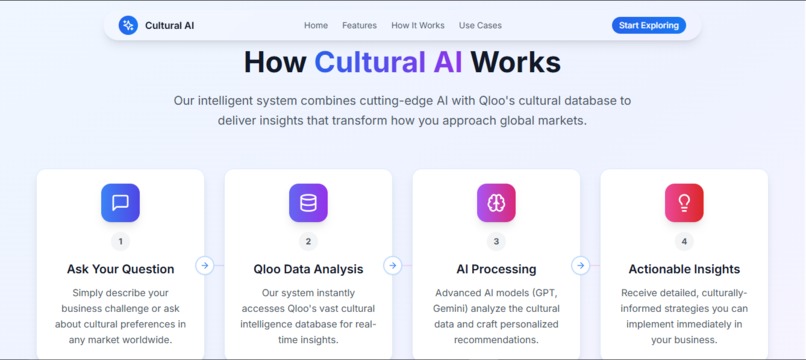
presentation
-
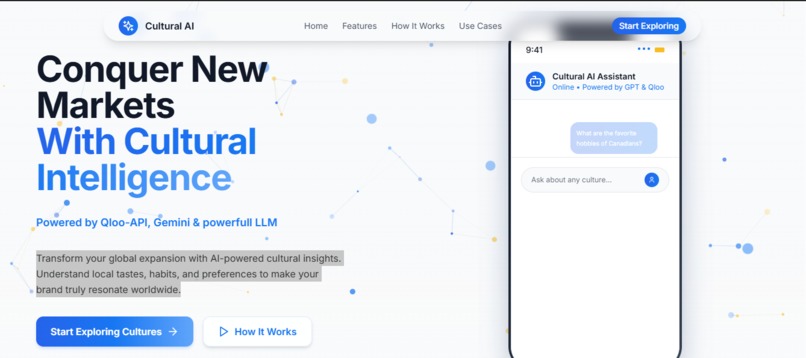
landing page
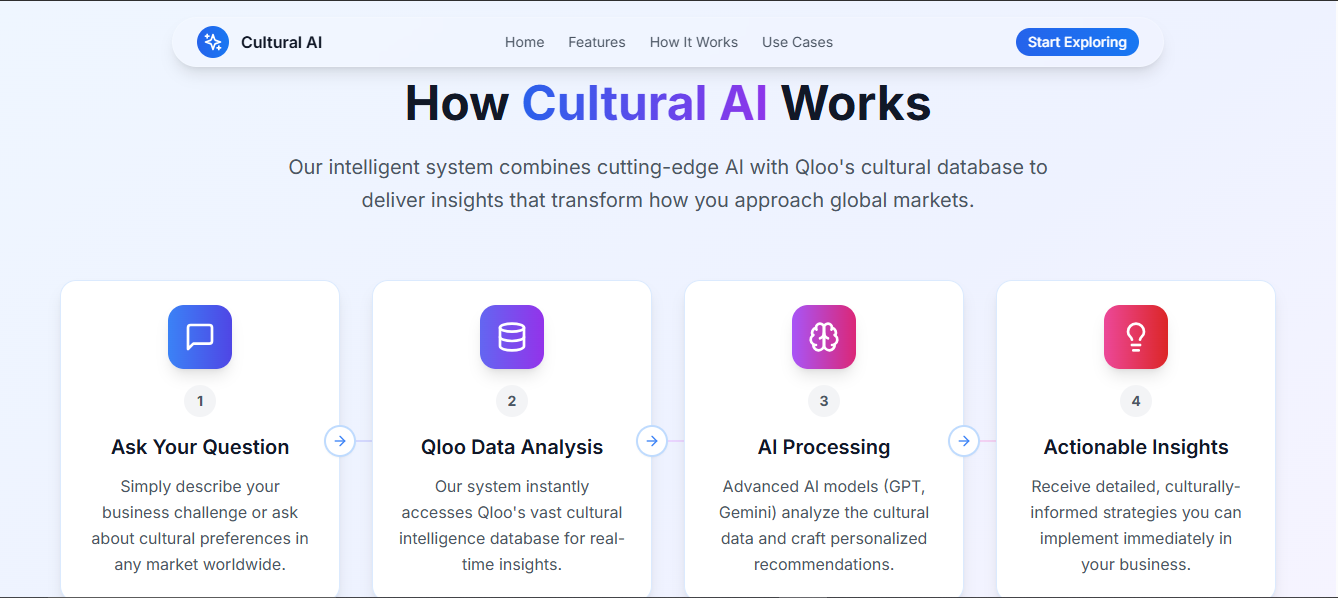
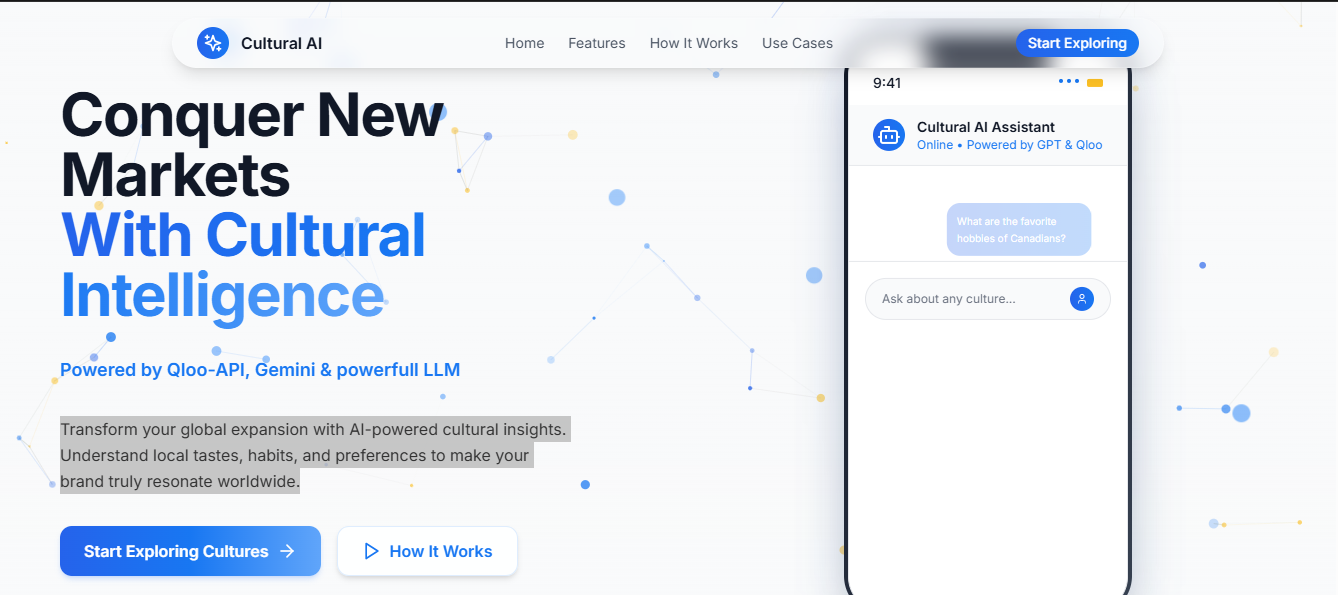
Inspiration
Launching a product in a new market, opening a store in another city, or simply communicating with a new audience... it's always a challenge.
Not because there's a lack of tools. There are hundreds of them.
But because there's a lack of real understanding of the local culture.
Too many retailers, brands, and startups fail — not because of a bad product — but because they don't know what their audience values, likes, understands, or really expects.
- ❌ A misinterpreted color
- ❌ A reference that doesn't resonate
- ❌ A product that doesn't fit local customs
In a world where every region, every city, and every neighborhood has its own codes, culture becomes a strategic factor.
And yet, there is currently no simple tool to help capture and understand these cultural nuances.
This is the gap that Cultural AI seeks to fill:
Offering an AI-based strategic assistant capable of guiding you by translating culture into concrete actions.
A tool that ensures every product, every idea, and every message truly speaks to its target audience.
How we built it
- Frontend: React + TailwindCSS, with a 100% conversational interface
- Serverless backend: Supabase Edge Functions
- Generative AI: Gemini 1.5 / Gemini 2.5
- Cultural data: Qloo Taste AI API
Challenges we ran into
The biggest challenge was orchestrating the dialogue between several external services — Qloo, Gemini, Supabase — while keeping the user experience smooth and fast.
Other difficulties included:
- Adapting cultural insights to different contexts without falling into stereotypes or generalizations
- Understanding the documentation and correctly using the Qloo API
- Facing API limitations (especially request caps), due to using a free model often overloaded
🏆 Accomplishments we're proud of
- Designing an app that can be used by everyone, even without technical skills
- Successfully translating culture into actionable recommendations
- Seamless integration of a specialized API (Qloo) into a modern AI pipeline
What we learned
- Working with cultural data requires sensitivity and contextual understanding
- AI is powerful, but only as good as the input and its alignment with real needs
- A conversational interface lowers the barrier to entry, making complex tools feel simple
What's next for CULTURAL_MATCH_AI
We want to go further:
- Localize the experience even more with hyper-contextualized suggestions
- Integrate more LLM models for a smoother, smarter user experience
- Add features for user accounts, personalized profiles, and custom LLM key management
- Introduce a "cultural discovery" mode for curious users and travelers
- Enable generation and export of reports in PDF and DOCX formats

Log in or sign up for Devpost to join the conversation.