-
-
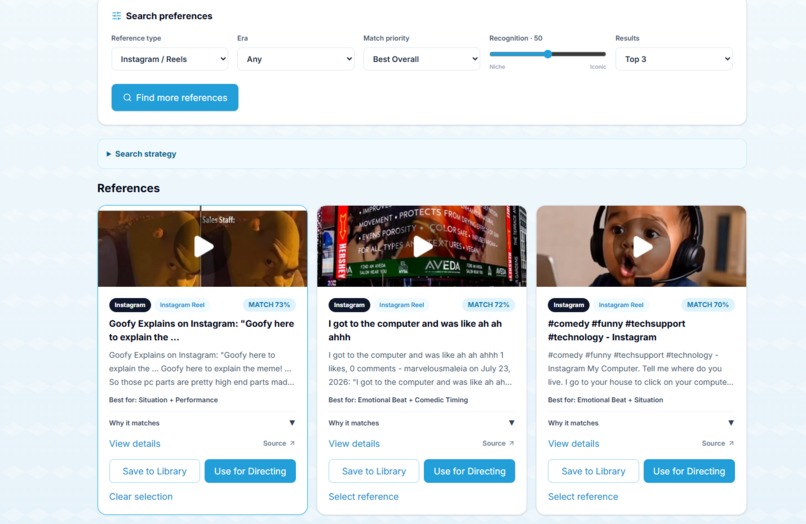
References Fetched - Instagram Reels
-
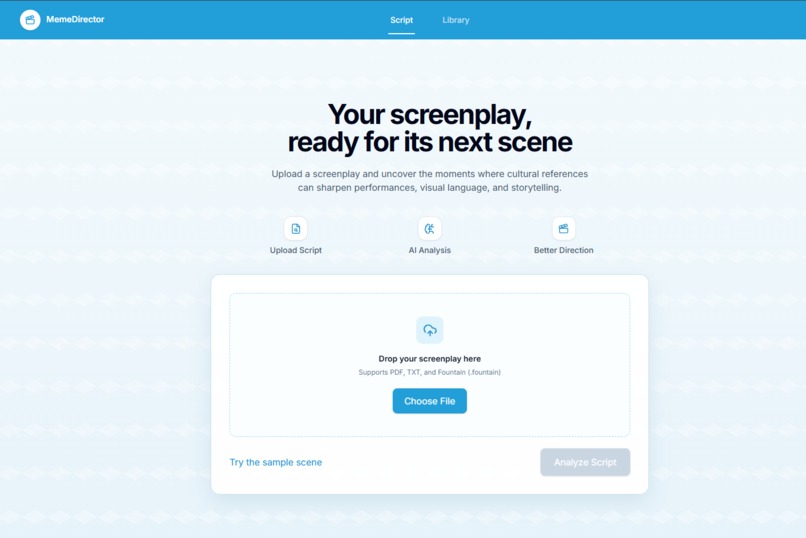
Home Page
-
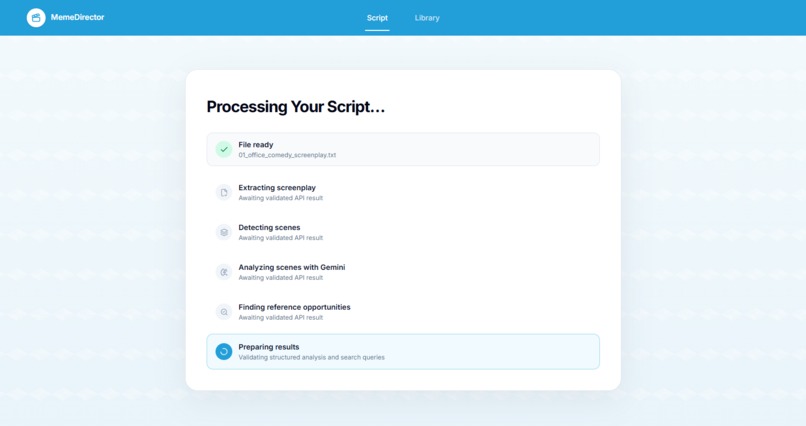
Processing Script
-
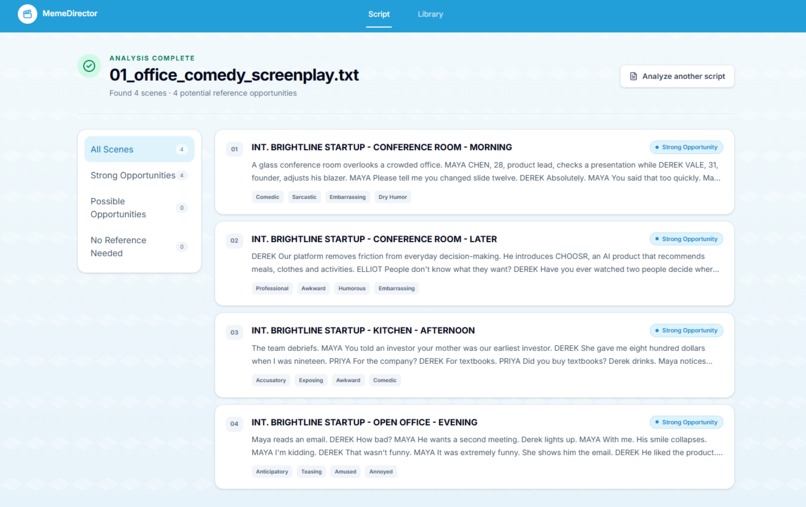
Processed Scenes
-
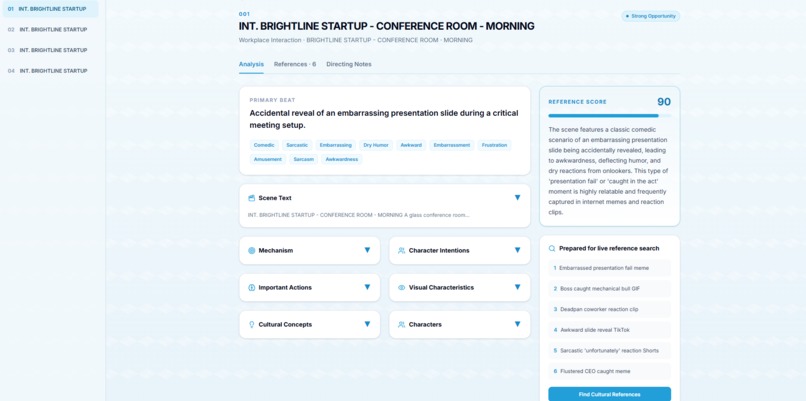
Script Analysis
-
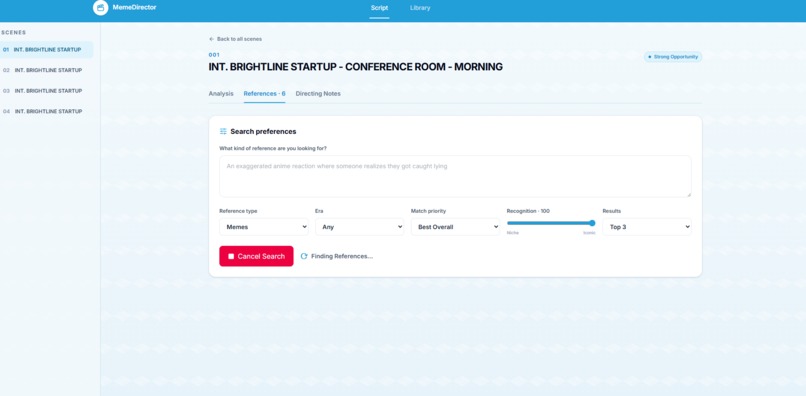
Fetching References
-
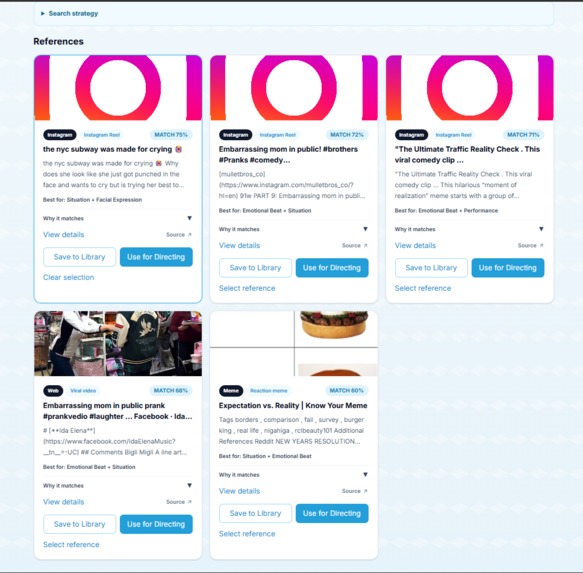
References Fetched
-
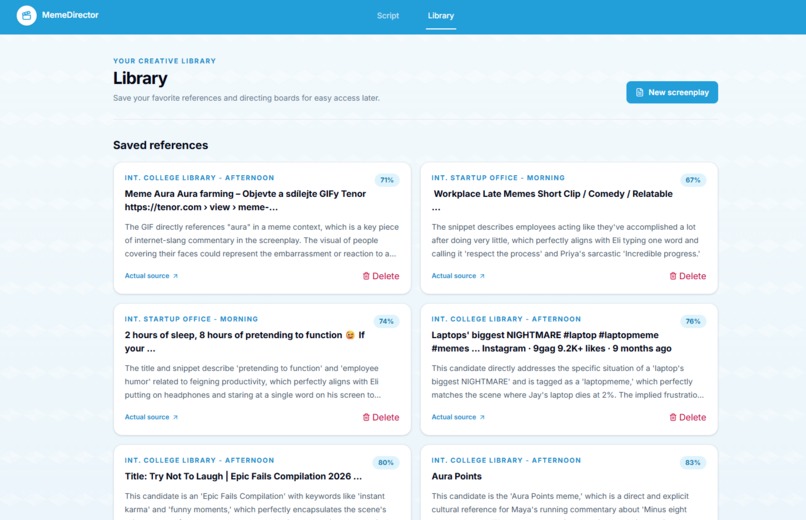
References Library
Inspiration
So many of us love internet memes, viral videos, and funny moments from social media. They have become a big part of how we communicate and share ideas. Filmmakers also use these cultural moments as inspiration when planning scenes, but finding the right reference can take a lot of time. That inspired us to build MemeDirector, an AI tool that understands a screenplay and finds cultural references that match its humor, emotions, actions, and visual style.
What it does
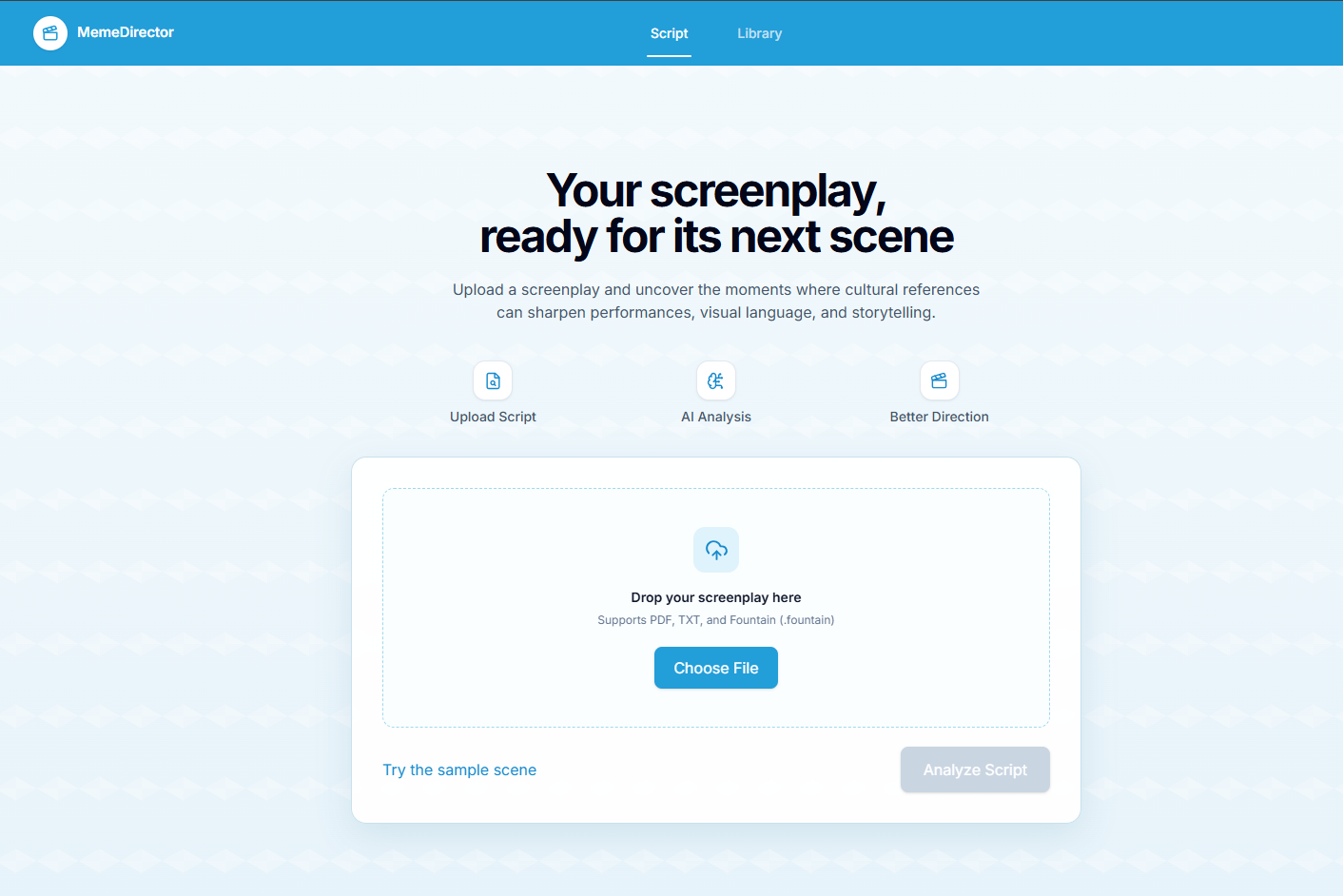
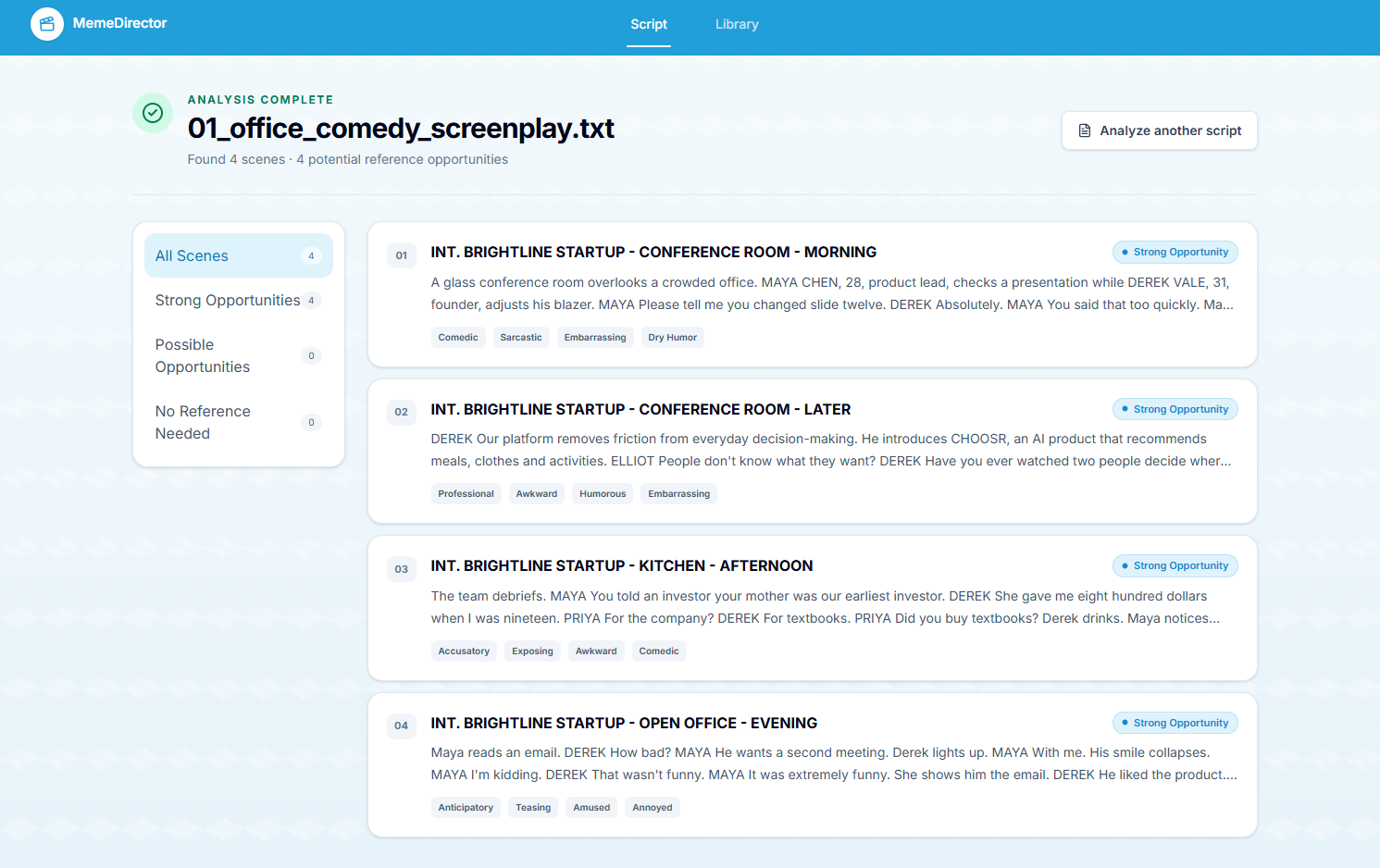
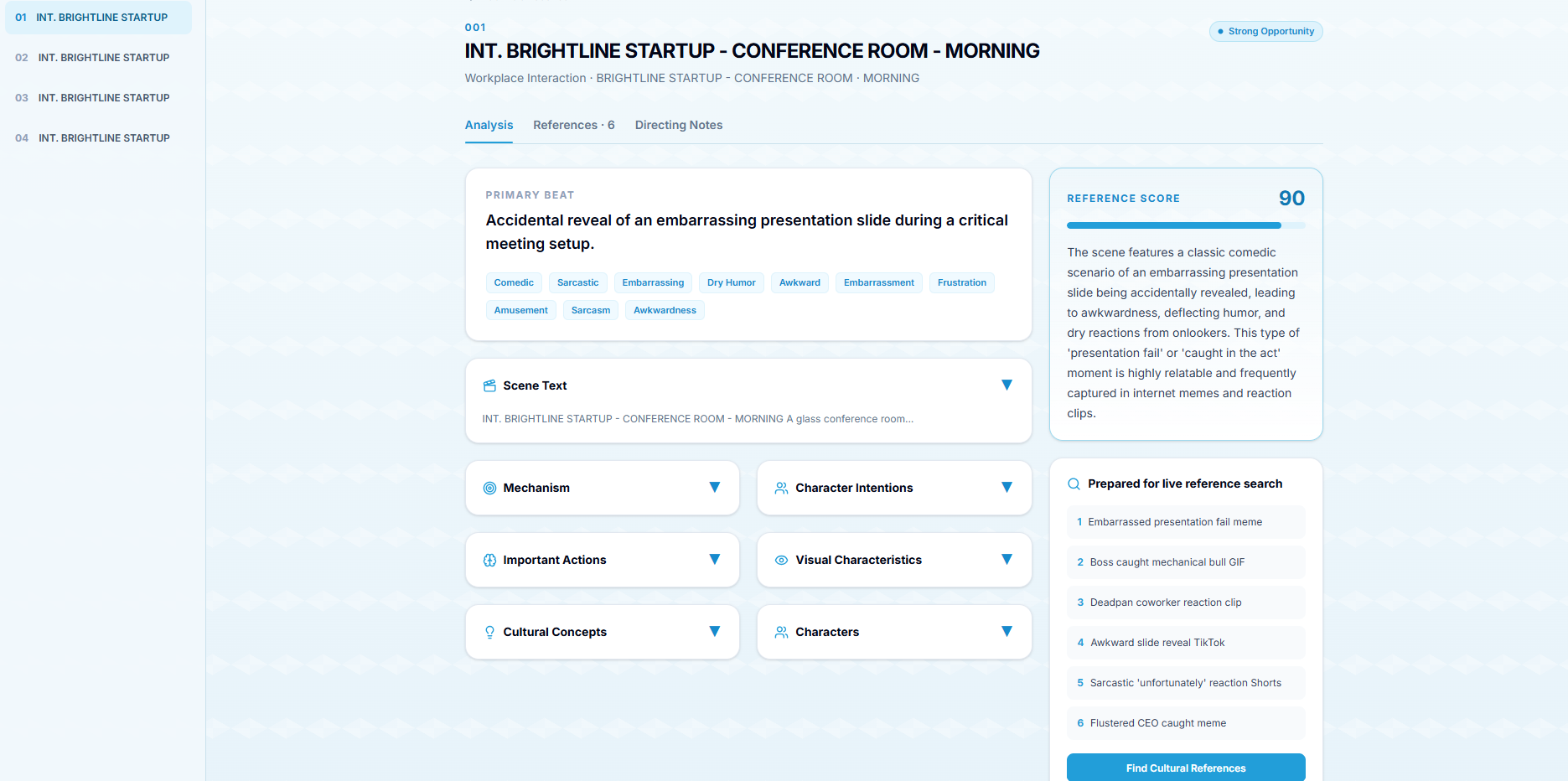
Cultural Reference Director analyzes an uploaded screenplay and breaks it into scenes. It identifies important actions, emotions, characters, and moments that could benefit from a cultural reference.
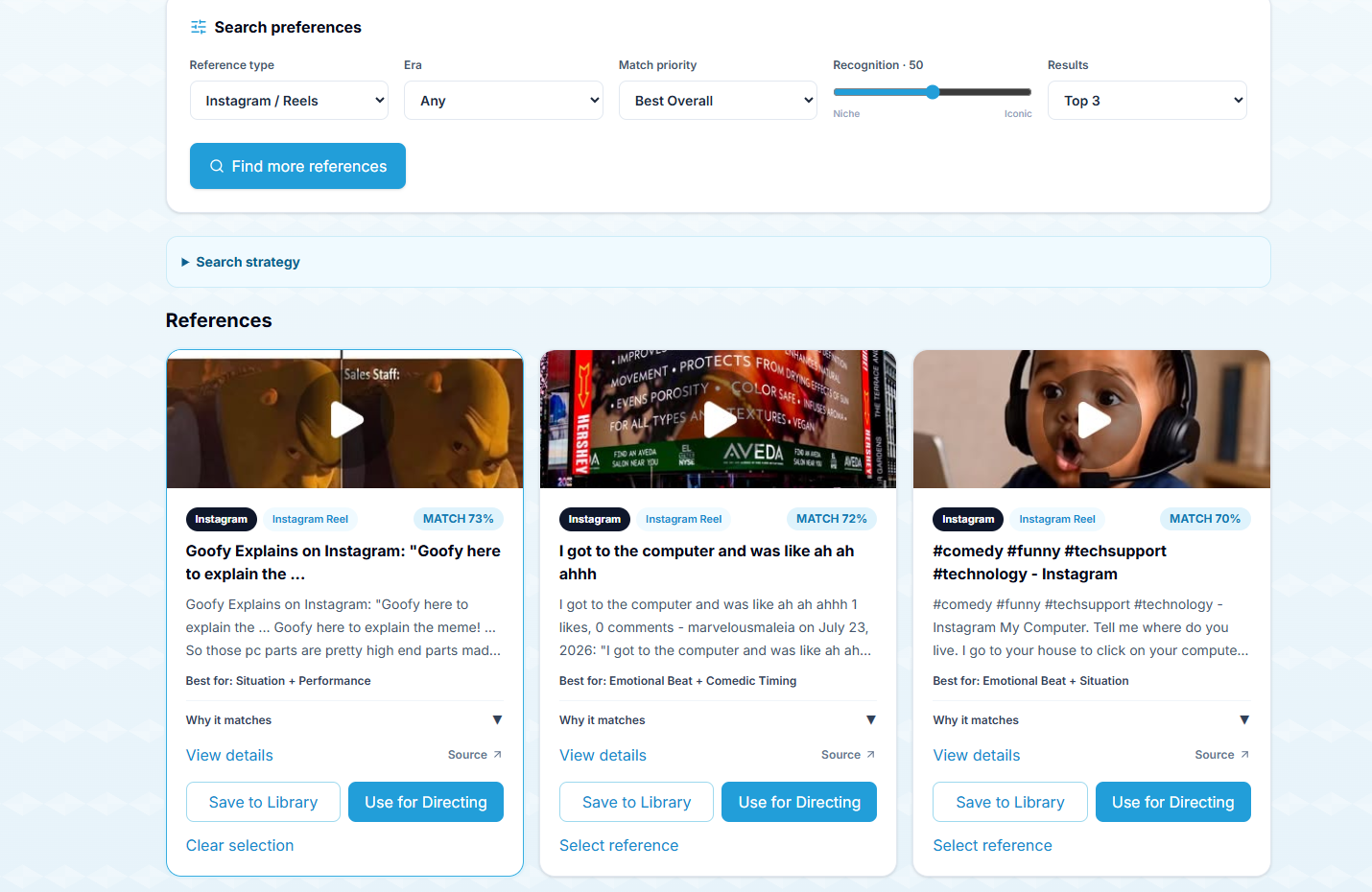
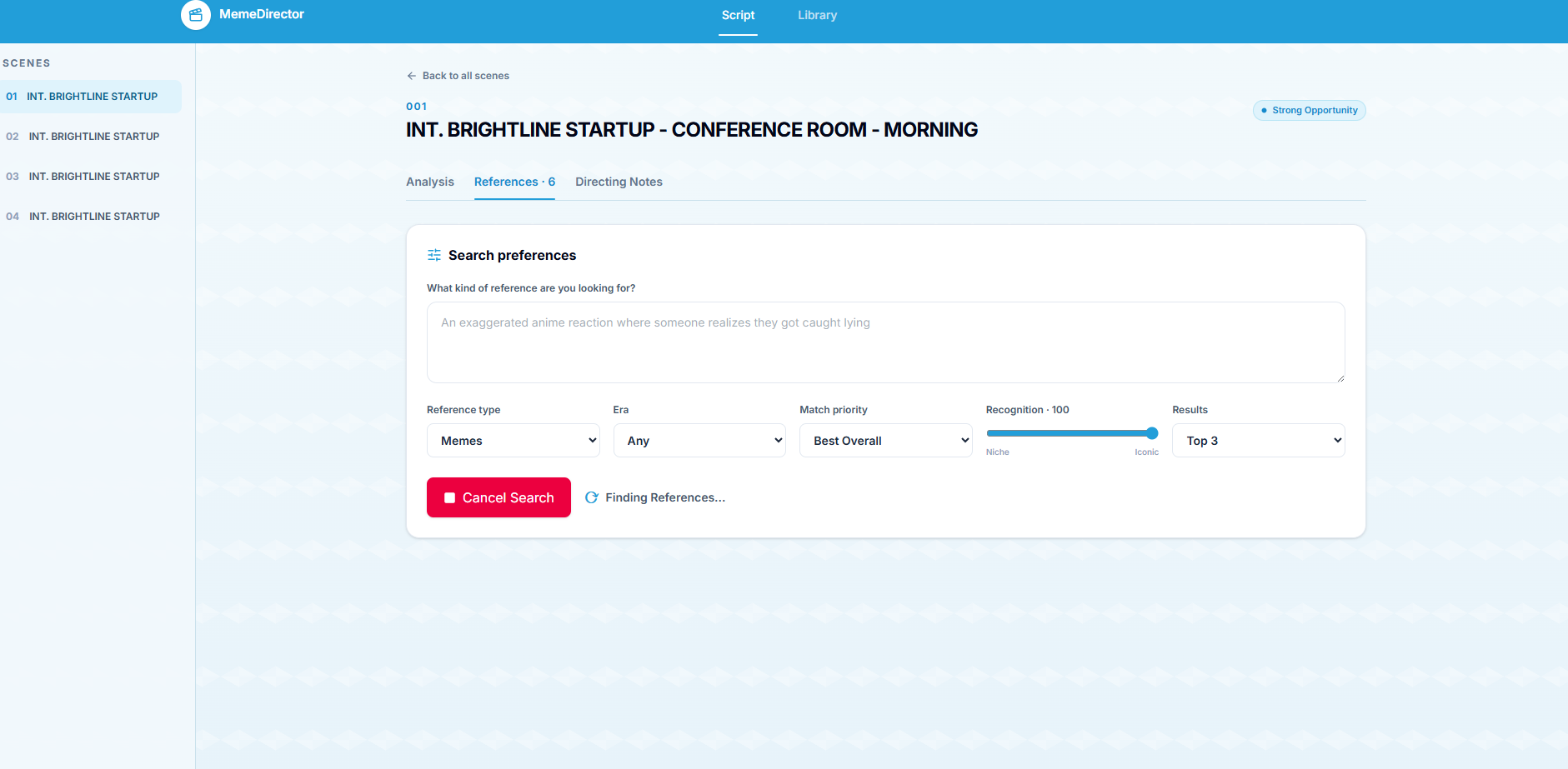
Users can search for references such as memes, GIFs, short-form videos, anime, movies, and TV scenes. They can also choose what matters most, such as facial expressions, acting, comedic timing, or visual style.
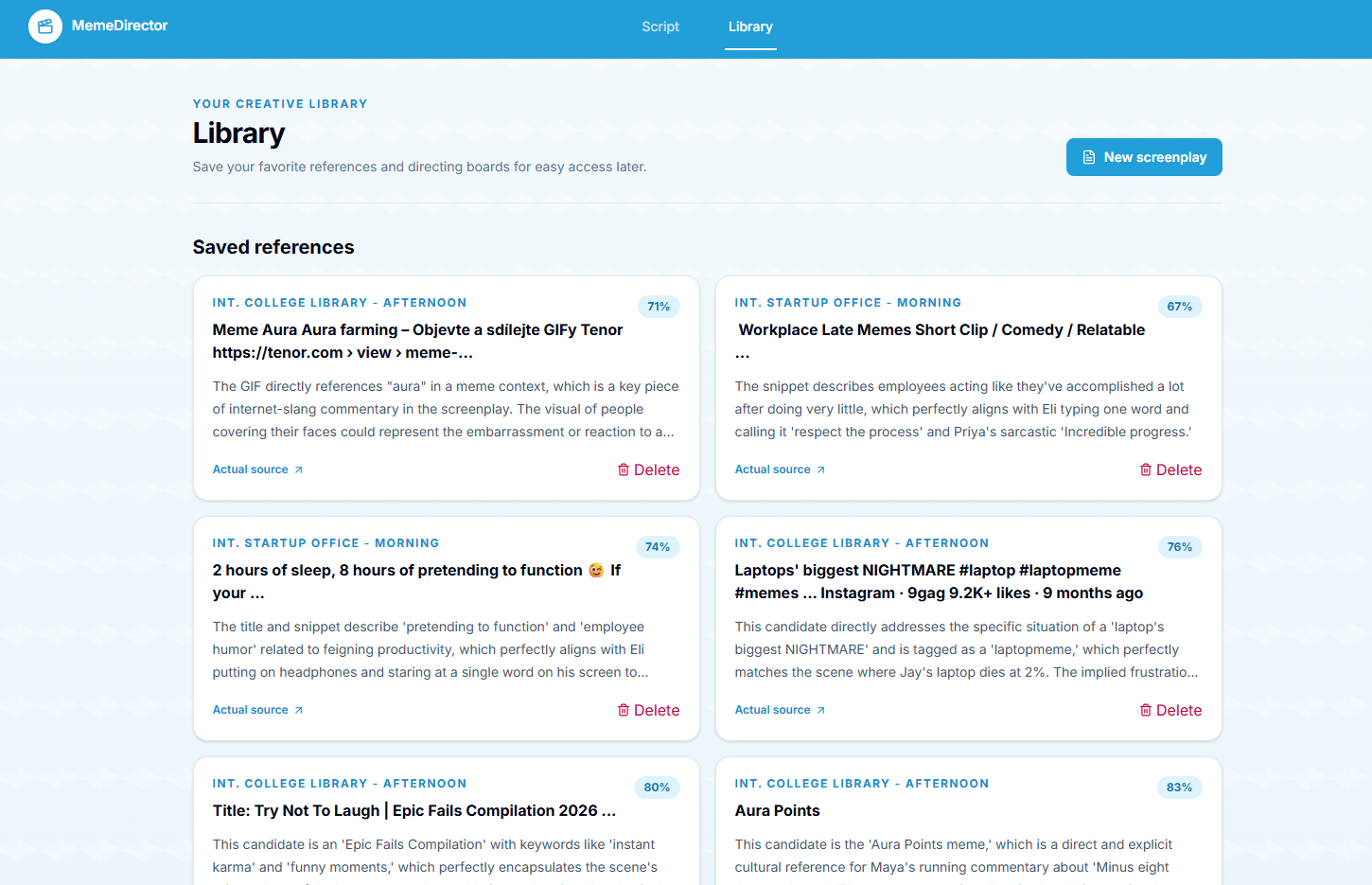
After a reference is selected, the AI creates directing notes for performance, camera work, blocking, timing, editing, and sound. References and directing boards can also be saved to a Library.
How we built it
We built the frontend with Next.js, React, and TypeScript, and the backend with Python and FastAPI.
We use Gemini on Vertex AI to understand screenplay scenes, create search plans, evaluate references, and generate directing guidance. Parallel Search API searches the live web for real cultural references.
We use Google ADK and Vertex AI Agent Engine to manage the AI agent and its tools. The application is deployed using Cloud Run, while Firestore stores saved references and directing boards. Secret Manager protects API keys and other secrets.
Challenges we ran into
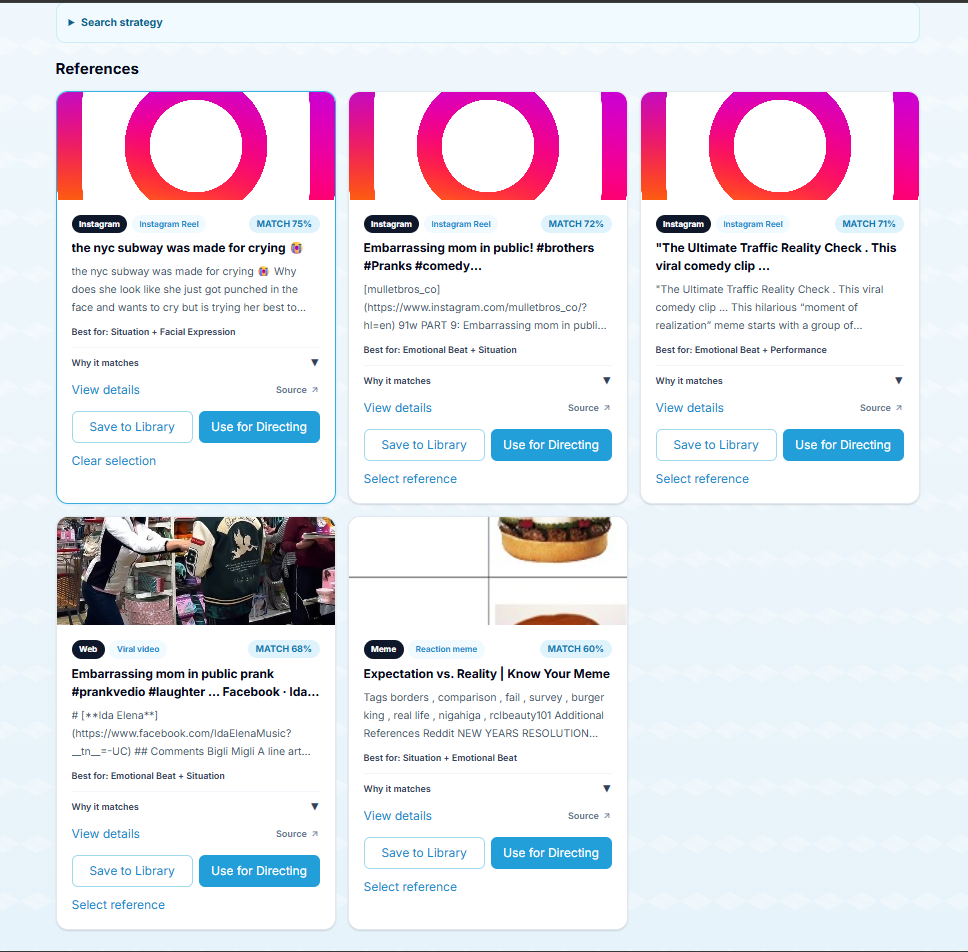
One of our biggest challenges was reference quality. Early versions often returned articles about a topic instead of actual memes, videos, or visual references.
We improved this by creating an AI search planner, filtering weak results, generating several different search queries, and ranking references based on things like situation, performance, emotion, timing, and visual similarity.
We also faced challenges with structured Gemini outputs, deployment, persistent storage, and connecting several AI services into one reliable workflow.
Accomplishments that we're proud of
We are proud that Cultural Reference Director became a real deployed application instead of only a prototype.
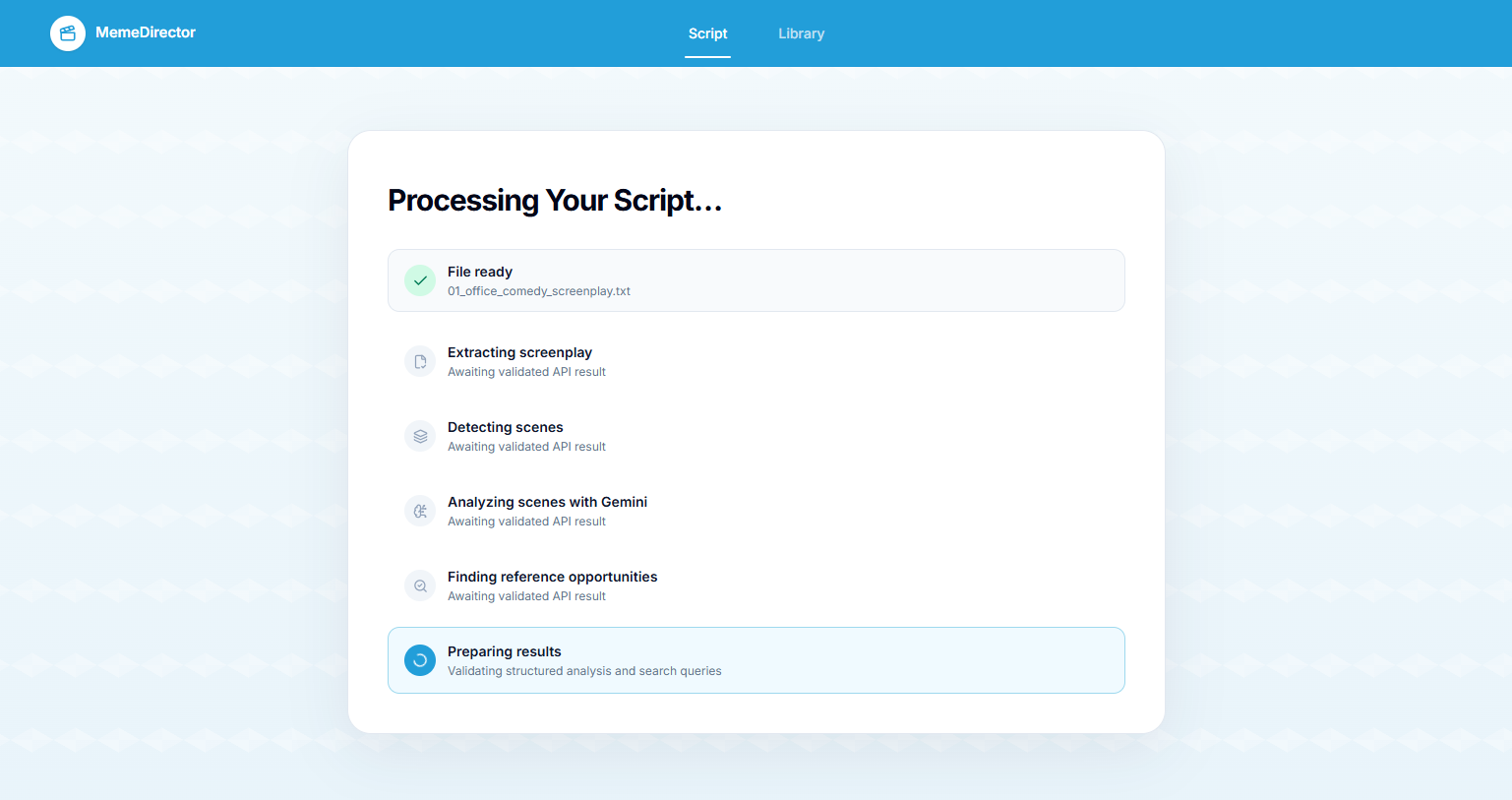
Our system can take a screenplay from upload to scene analysis, search the live web, rank real references, create directing guidance, and save results for later.
What we learned
We learned that building an AI agent is not only about giving an AI model a good prompt. The full system matters.
Search quality, structured data, ranking rules, tool calling, state, safety, deployment, and user experience all need to work together.
We also learned that AI works better for this project when it understands creative intent while real search tools provide the actual sources.
What's next for Cultural Reference Director
Next, we want to make reference discovery even better and more accurate, especially for TikTok and Instagram Reels.
We also want to improve directing guidance, make searches faster, add user accounts and collaboration, and expand the Library into a larger creative workspace.
Our long-term goal is to make Cultural Reference Director an AI creative partner that helps filmmakers move from a written scene to inspiration to a clear directing plan.
Built With
- agentic-ai
- ai-agents
- cloud-run
- cultural-intelligence
- fastapi
- film-technology
- function-calling
- gemini
- generative-ai
- google-adk
- google-cloud
- media-&-entertainment
- multimodal-ai
- next.js
- parallel-search-api
- parallel-web-systems
- pydantic
- python
- react
- secret-manager
- typescript
- vertex-ai
- vertex-ai-agent-engine
- web-search


Log in or sign up for Devpost to join the conversation.