-
-
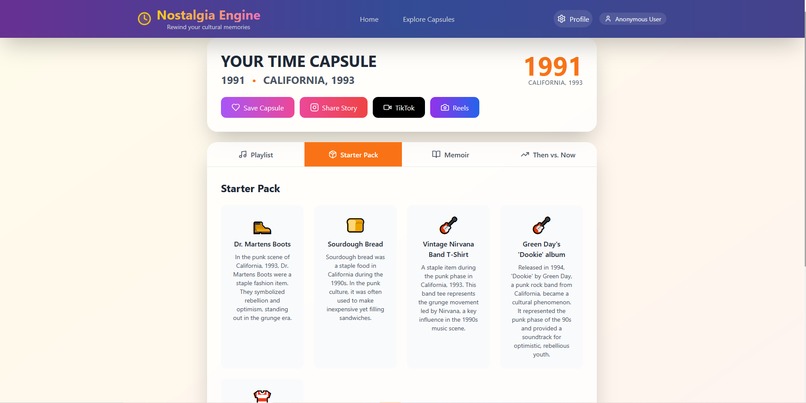
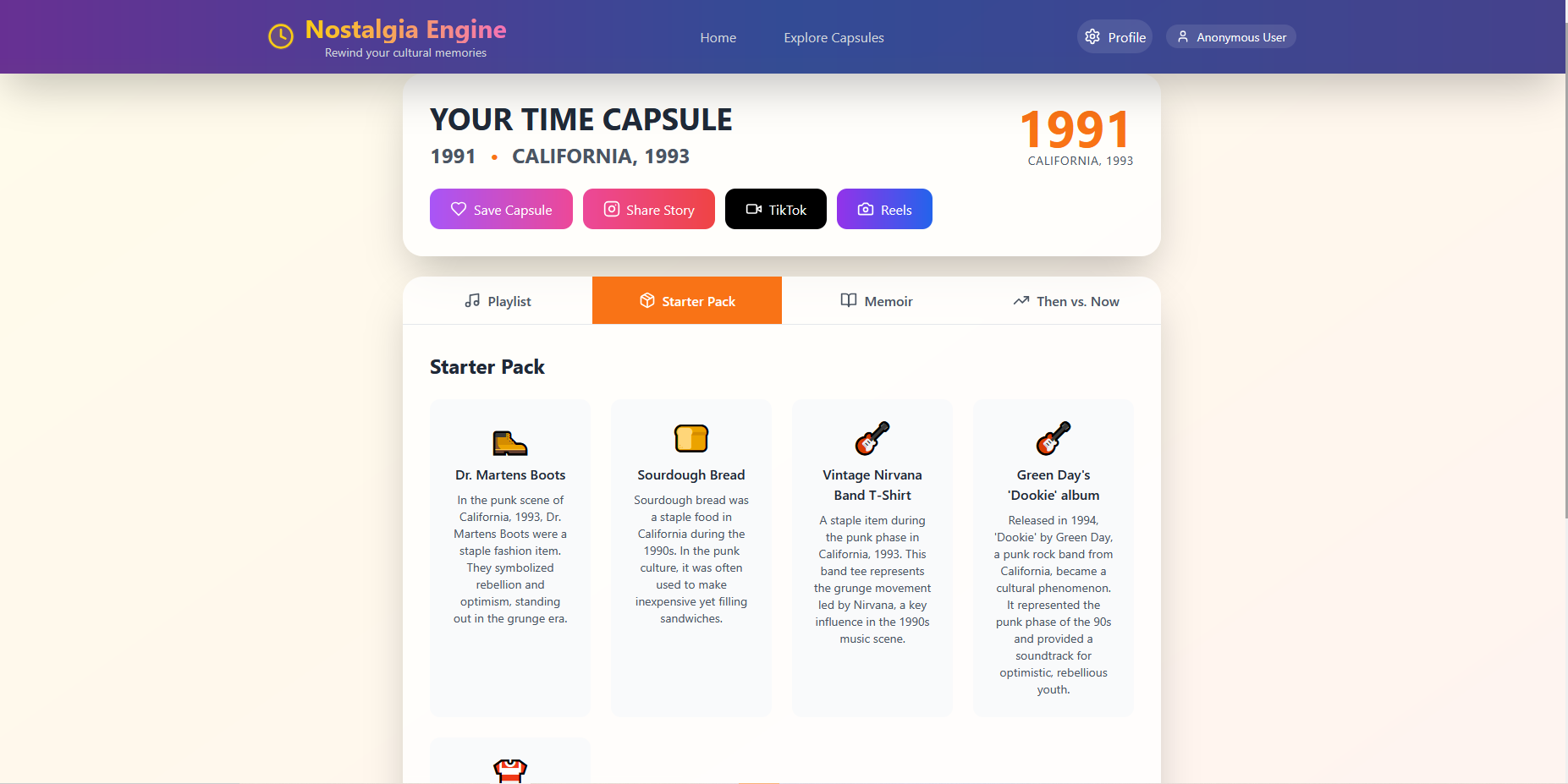
Starter Pack
-
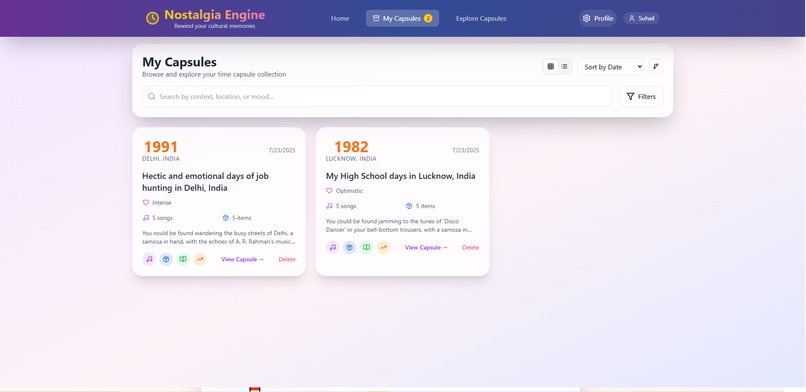
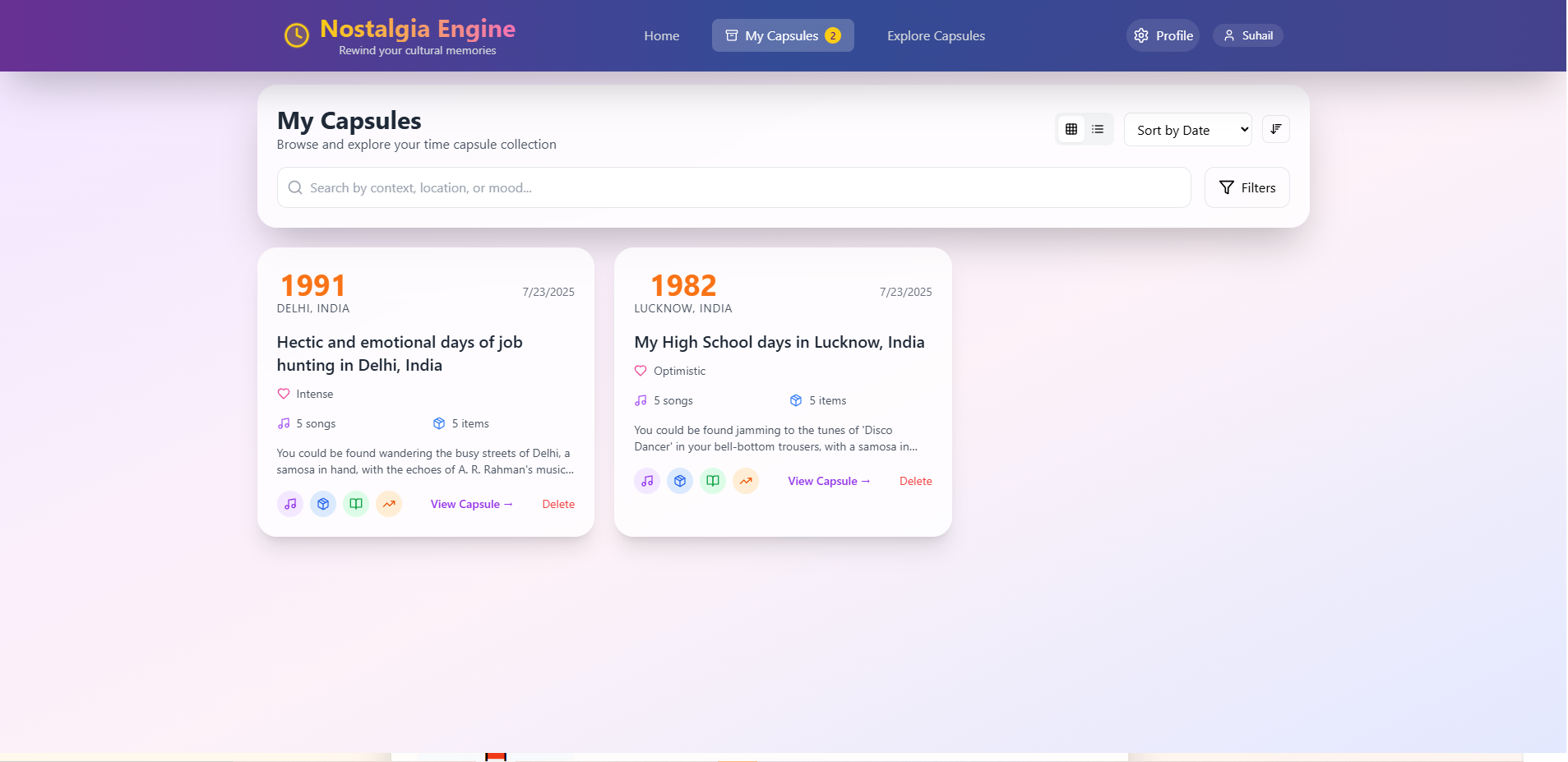
My Capsule Page
-
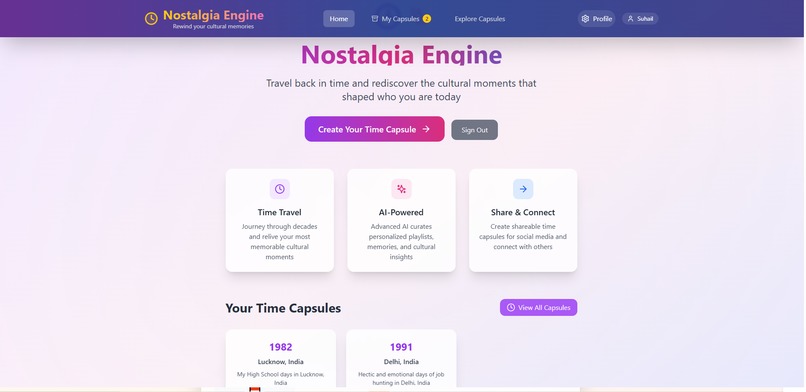
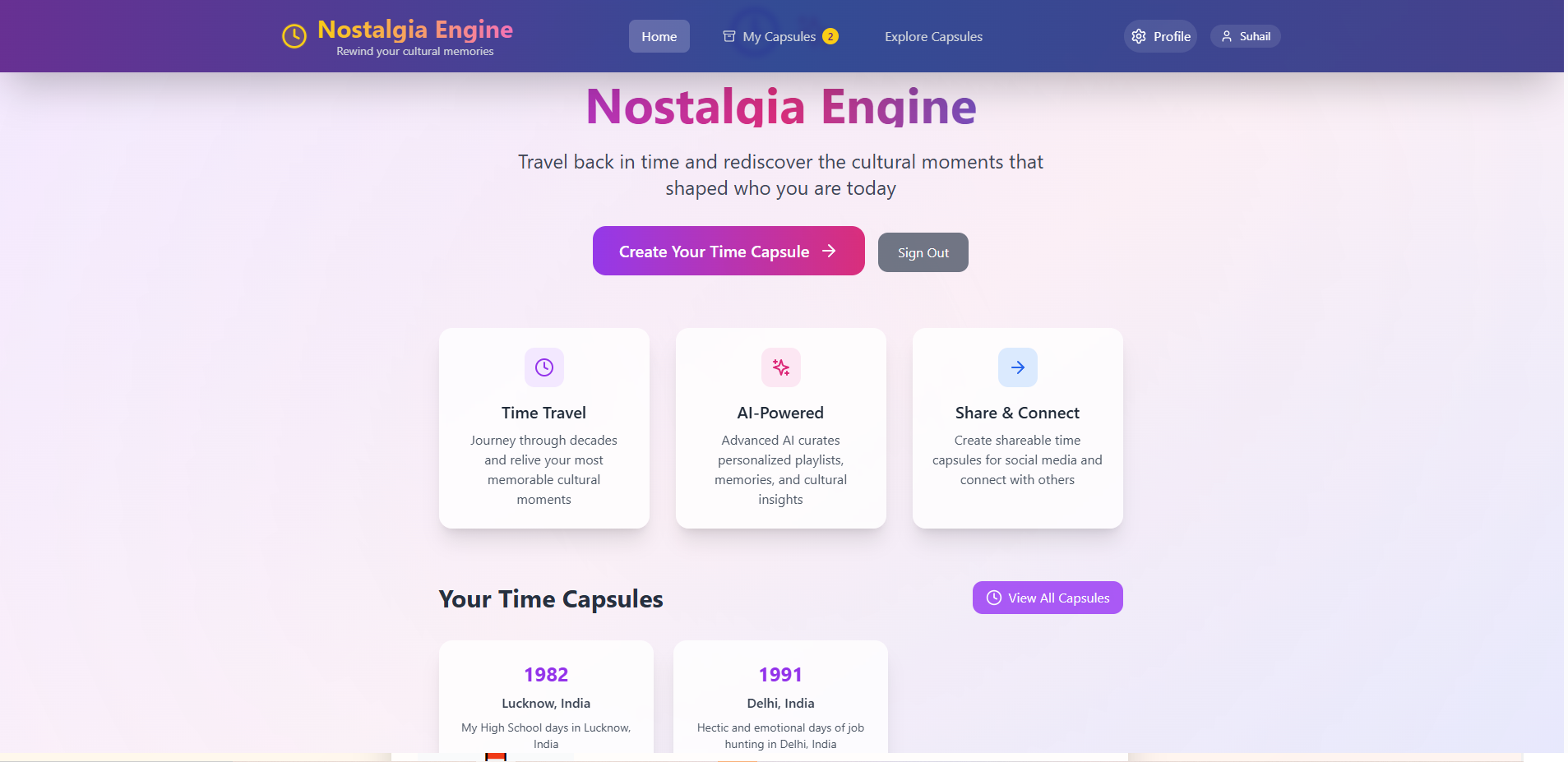
Home Page
-
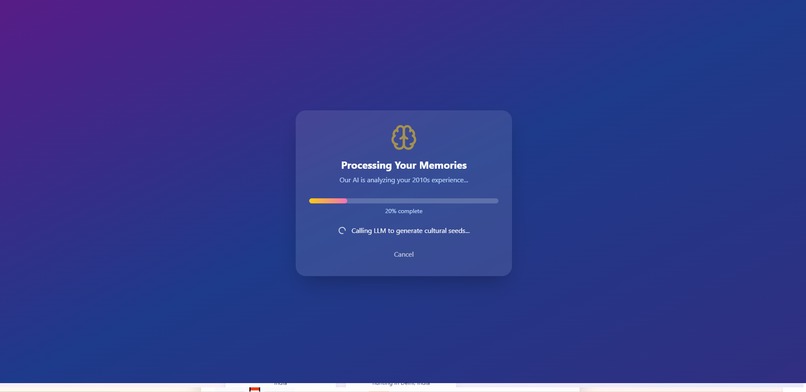
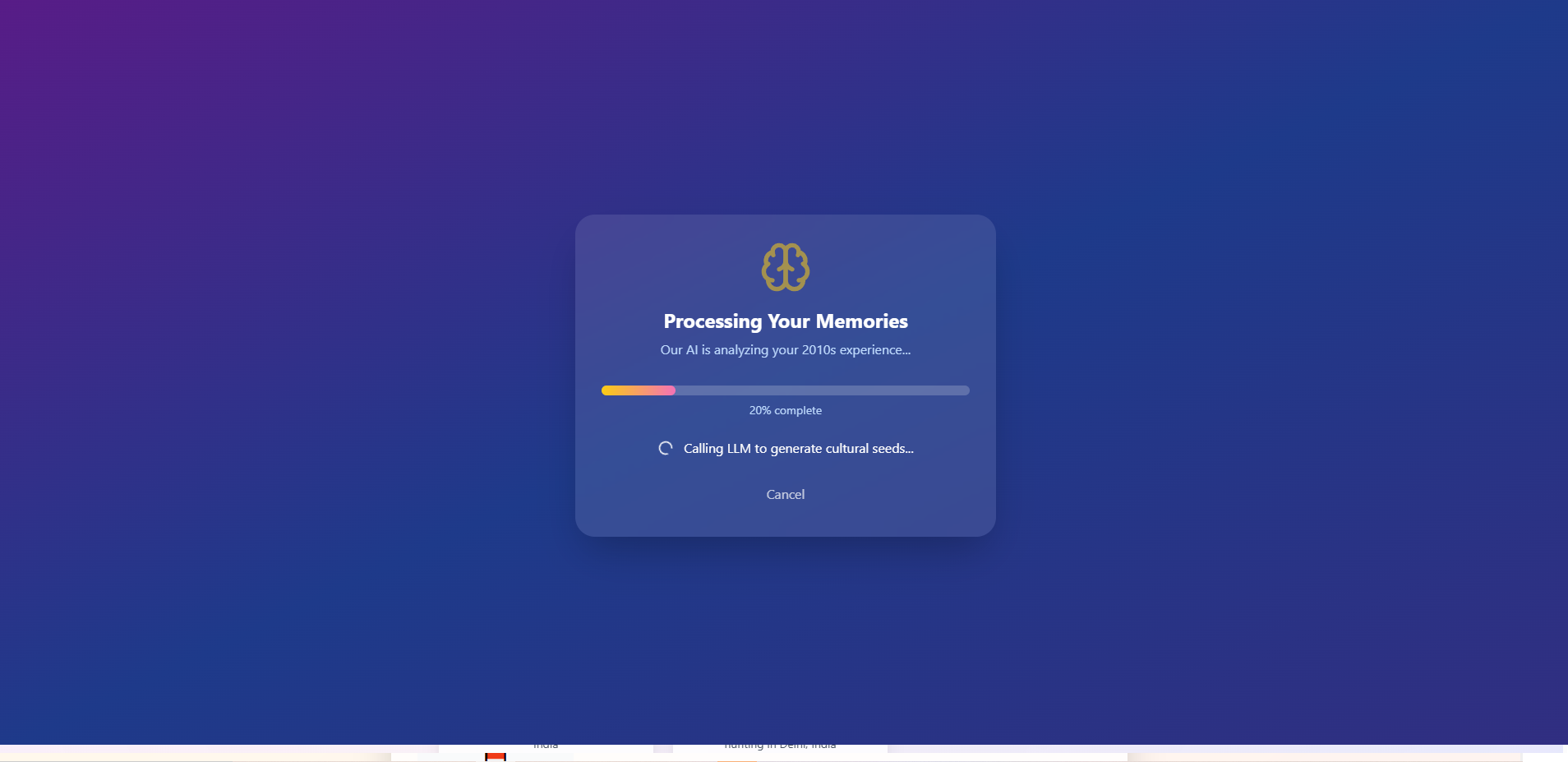
Capsule Generation processing Page
-
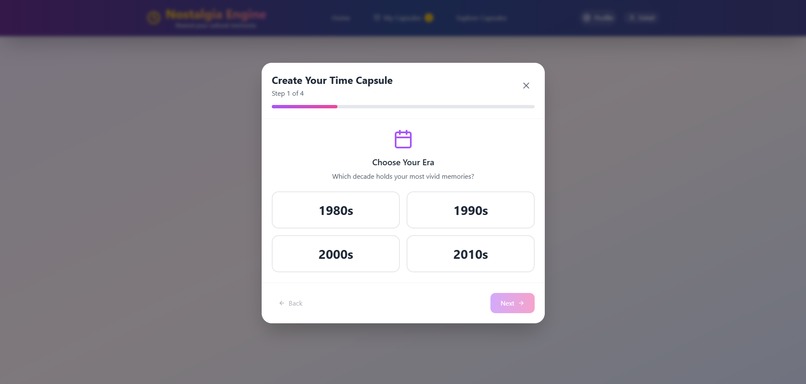
Memory Capture Page
Inspiration
The idea for Nostalgia Engine came from the universal emotional power of nostalgia and the realization that cultural memories are often fragmented across music, food, fashion, movies, and personal life moments. We wanted to create a fun and emotionally engaging way for people to rewind any era and see their own history reflected through personalized cultural snapshots. Inspired by tools like Qloo with cross-domain cultural insights, the goal was to transform fleeting memories into immersive, shareable experiences.
What it does
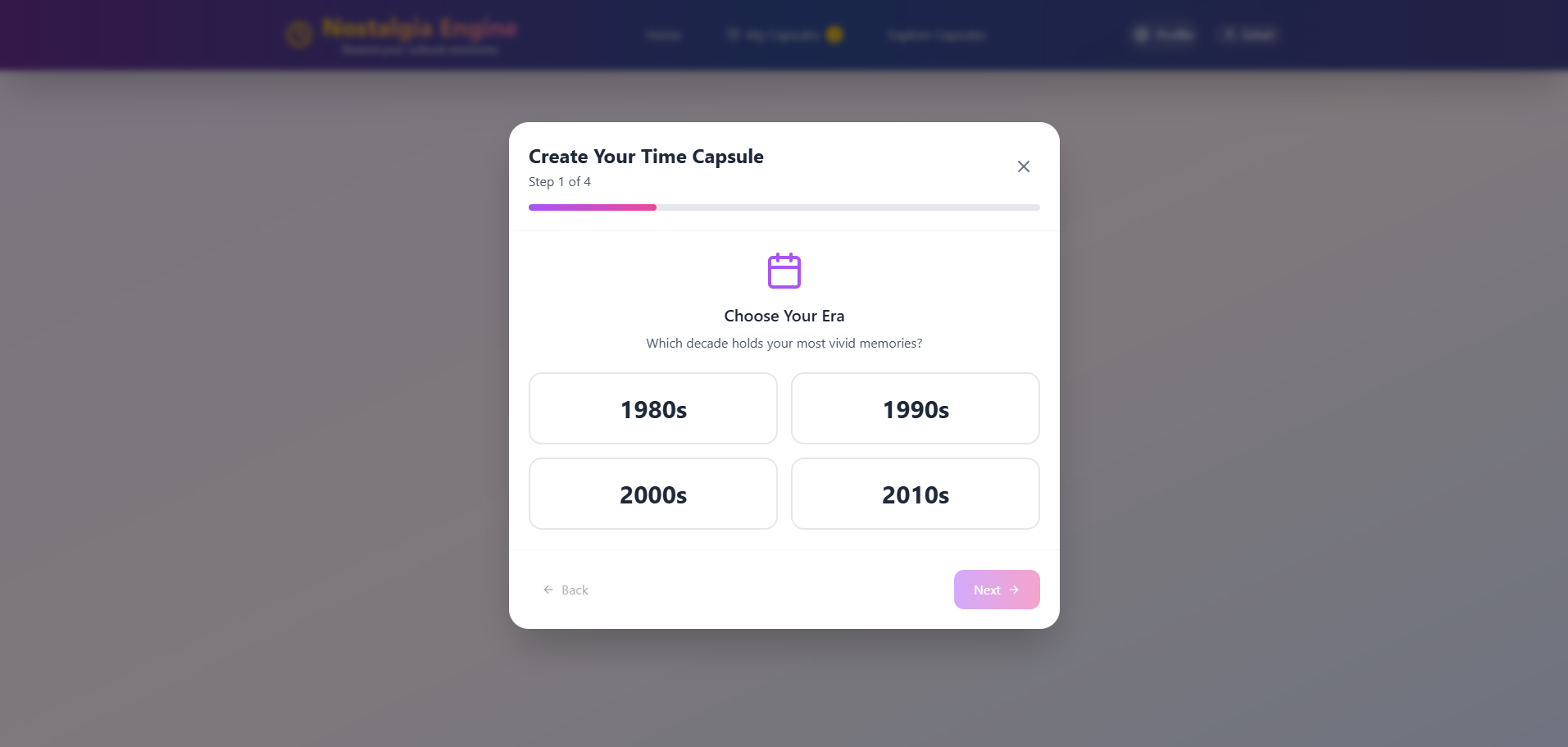
Nostalgia Engine allows users to input any year, era, or life event, and generates a Time Capsule filled with personalized cultural content from that period:
- Curated playlists based on cultural taste and favorite genres
- Starter packs with food, movies, and fashion trends of the time
- Memoir snippets generated by AI capturing life moments in narrative form
- “Then vs. Now” comparisons showcasing cultural shifts
- A Capsule Library where users can organize, download, and share multiple time capsules It transforms passive memories into vivid, dynamic experiences that can be enjoyed, archived, or shared on social platforms. For better experience , use Chrome browser. Here is a short video to learn about the features of this product , https://youtu.be/0FeaivRyzCM
How we built it
I used a multi-layered tech stack:
- Bolt.New to rapidly prototype the application front-end with React
- Memory database for storing users, capsules, playlists, and user preferences
- LLMs (GPT/Claude/DeepSeek) to parse user inputs and generate cultural narratives
- Qloo Taste AI™ API for cross-domain cultural recommendations
- AWS cloud for hosting ## Challenges we ran into I wanted to store all data in a backend database such as Supabase but ran into some challenges so I decided to submit my solution with memory database , data is stored in userr's browser session for this prototype. Secondaly , therre was some issue with managing Qloo API limitations and handling fallbacks for unsupported queries. I also wanted to integate with Spotify API for real-time playlist generation and streaming integration but due to time contraints, it is not done. ## Accomplishments that we're proud of
- Built a highly engaging nostalgic experience that merges AI + cultural intelligence
- Achieved cross-domain personalization that feels both fun and emotionally resonant
- Developed a clean, responsive interface usable across mobile and web
What we learned
- Cultural nostalgia is deeply personalized and regional — generic trends don’t connect; contextual AI output is key.
- Cross-domain recommendations (food, fashion, music, travel) make the nostalgia richer than single-domain apps.
- Building for emotional resonance means focusing not just on data accuracy but on storytelling and user experience.
- Clean fallback designs (LLM+Qloo) prevent dead-ends and create consistent user delight.
What's next for Cultural Compass
- Launch a public beta version with improved capsule sharing
- Supabase database integration and single SSO integration with Google, Microsoft , Facebook and other social media tool.
- Integration with Spotify for real-time playlist generation and streaming integration
- PDFKit/Puppeteer for generating downloadable capsule PDFs
- Sharing capsule data to social media platforms (e.g. TikTok, Instagram etc )
- Add multi-user capsule merging (friends/family nostalgia bundles)
- Explore AI-powered playlist blending (e.g., "College Party Capsule vs. Work From Home Capsule")
- Launch community features (most popular decades, moods)
- Allowing users to link their social data for deeper personalization.
- Collaborate with brands for branded cultural capsules (e.g., 90s capsule powered by Pepsi)
Built With
- amazon-web-services
- bolt
- database
- llm
- memory

Log in or sign up for Devpost to join the conversation.