-
-
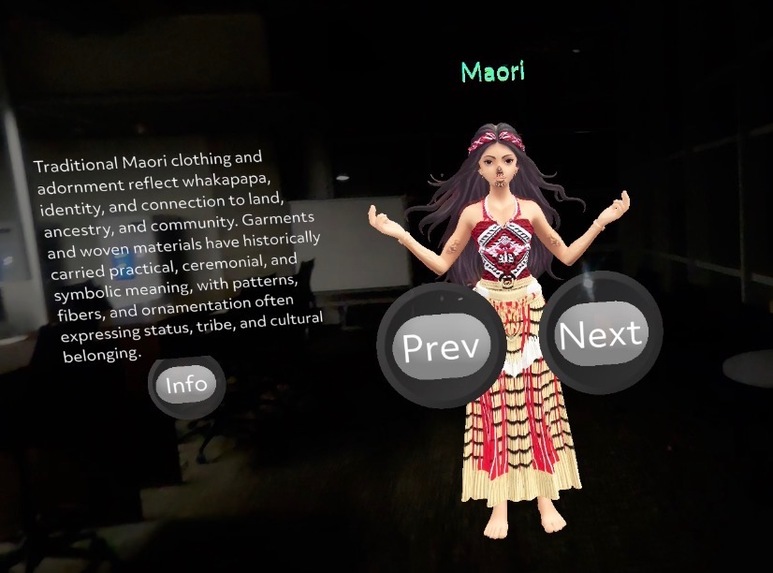
One example of cultural clothing
Inspiration
Cultural Clothing Catalogue was inspired by the idea that AR can be more than a technical novelty. I wanted to create something that used spatial computing to present traditional clothing in a way that felt interactive, respectful, and educational. Clothing carries identity, history, and cultural meaning, so the project became a way to explore how AR could help users engage with that context more directly than a static slideshow or image gallery.
What it does
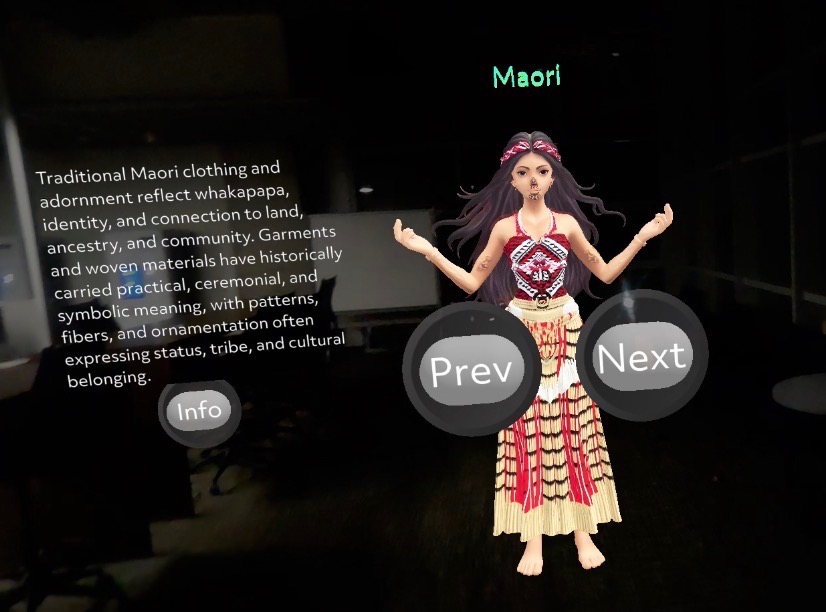
Cultural Clothing Catalogue is a Snap Spectacles AR experience that places a life-sized mannequin in front of the user and allows them to browse different traditional outfits from multiple cultures. Users can switch between garments using simple spatial buttons and view short cultural background text for the currently selected clothing. The result is a lightweight AR exhibit that combines 3D visualization with educational context.
How we built it
We built the project in Lens Studio for Snap Spectacles using a world-space interface and a simple scene hierarchy. A mannequin and multiple clothing models were placed into the scene, and custom scripts were used to toggle which model was visible at a given time. We used Spectacles interaction components such as Interactable and PinchButton to make the spatial buttons work reliably in AR. We also added a billboarded UI setup so labels and controls stayed readable from the user’s perspective, while keeping the experience grounded in 3D space.
Challenges we ran into
One of the biggest challenges was learning the difference between standard Lens Studio UI and Spectacles-specific interaction. Early on, some buttons appeared visually correct but were not actually interactable because they were using the wrong component system. Another challenge was organizing the scene hierarchy so that models, labels, and controls behaved consistently in world space. We also had to troubleshoot Git and Git LFS issues when publishing the project, especially because generated Lens Studio cache files had accidentally been tracked.
Accomplishments that we're proud of
We are proud that the final experience does more than display 3D assets. It gives users a simple way to browse garments, read cultural context, and interact with the project naturally in AR. We are also proud that the interface stayed minimal and usable, which was important for a Spectacles experience. On the technical side, getting the spatial buttons, model switching, info panel, and clean repository setup all working together felt like a major milestone.
What we learned
We learned a lot about how AR UI design differs from traditional screen UI. Placement, readability, and interaction all matter more when elements live in 3D space. We also learned how Snap Spectacles projects rely on specific interaction patterns and components, which made it important to use the right tools instead of forcing a standard UI workflow. Beyond the technical side, the project also reinforced how important presentation and context are when building around cultural material.
What's next for Cultural Clothing Catalogue
The next step is to make the experience feel more polished and expanded. That could include improving the visual design of the interface, adding more garments and cultural descriptions, and making the information panel feel more like part of a curated AR exhibit. In the future, the project could also support more dynamic interaction, such as comparing outfits side by side, adding narrated audio context, or turning the catalogue into a broader educational archive of traditional dress.
Built With
- javascript
- lensstudio
- snapspectacles
- typescript


Log in or sign up for Devpost to join the conversation.