Inspiration
We often hear stories of small companies struggling to grow their market. Hiring consultants is expensive, often costing hundreds of dollars per day, and even then cultural nuances are overlooked. Yacon&Co, for example, appeared on a TV show to raise funds and showcase their healthy yacon syrup. The product received strong demand, and the funding helped them grow, but mostly within France. This shows that the problem is often not the product, but the resources needed to scale internationally. We also see many companies succeed at home but hesitate to export because of foreign regulations, or fail abroad because their product doesn’t adapt to cultural differences. Inspired by these stories, we set out to build an affordable, AI-driven, trustworthy, open-source solution to make international expansion accessible to all.
What it does
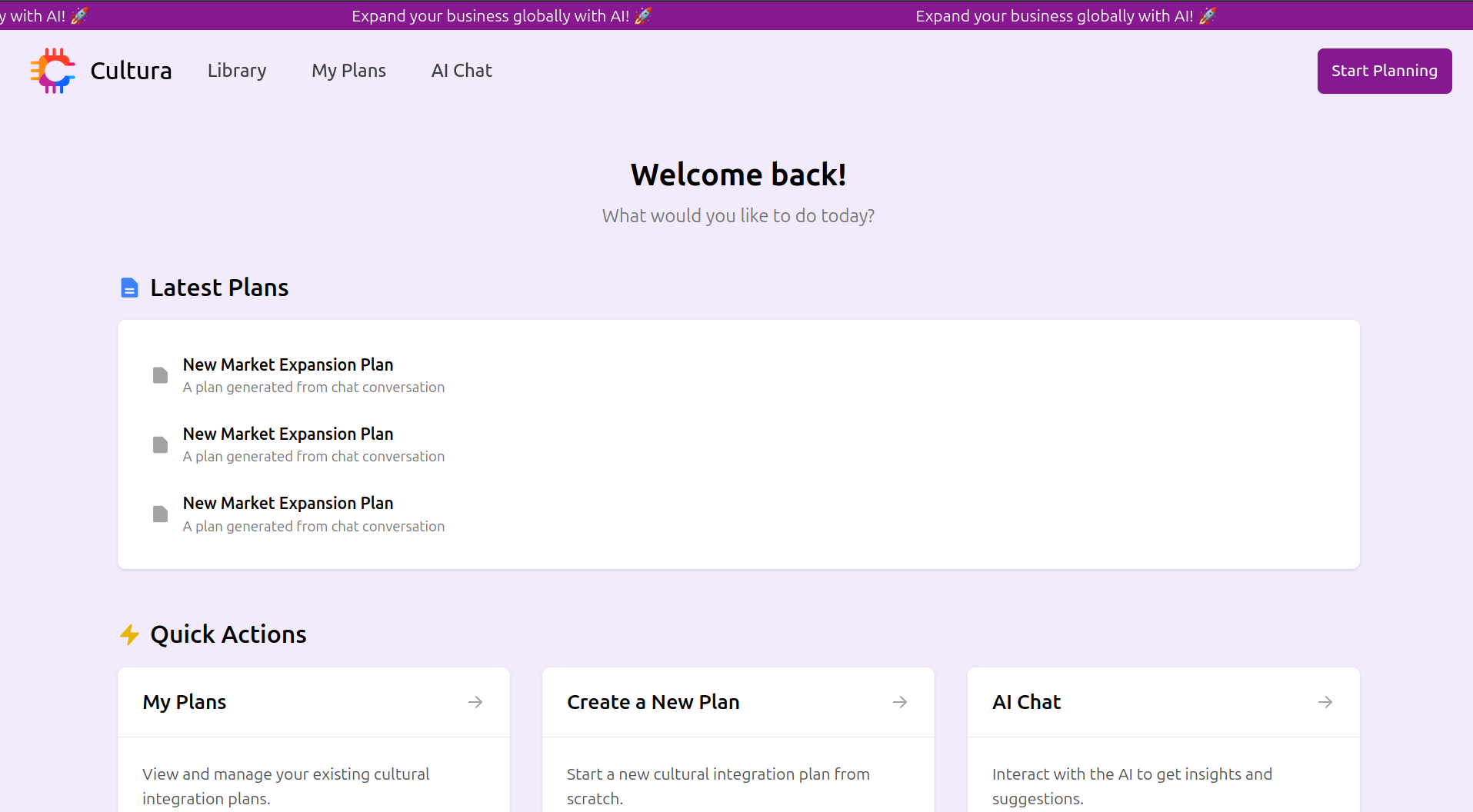
Cultura is an open-source AI agent built on Apertus that acts like a full international business consultant. It guides companies step by step through entering new markets:
- Identifies promising markets based on product fit and regulations.
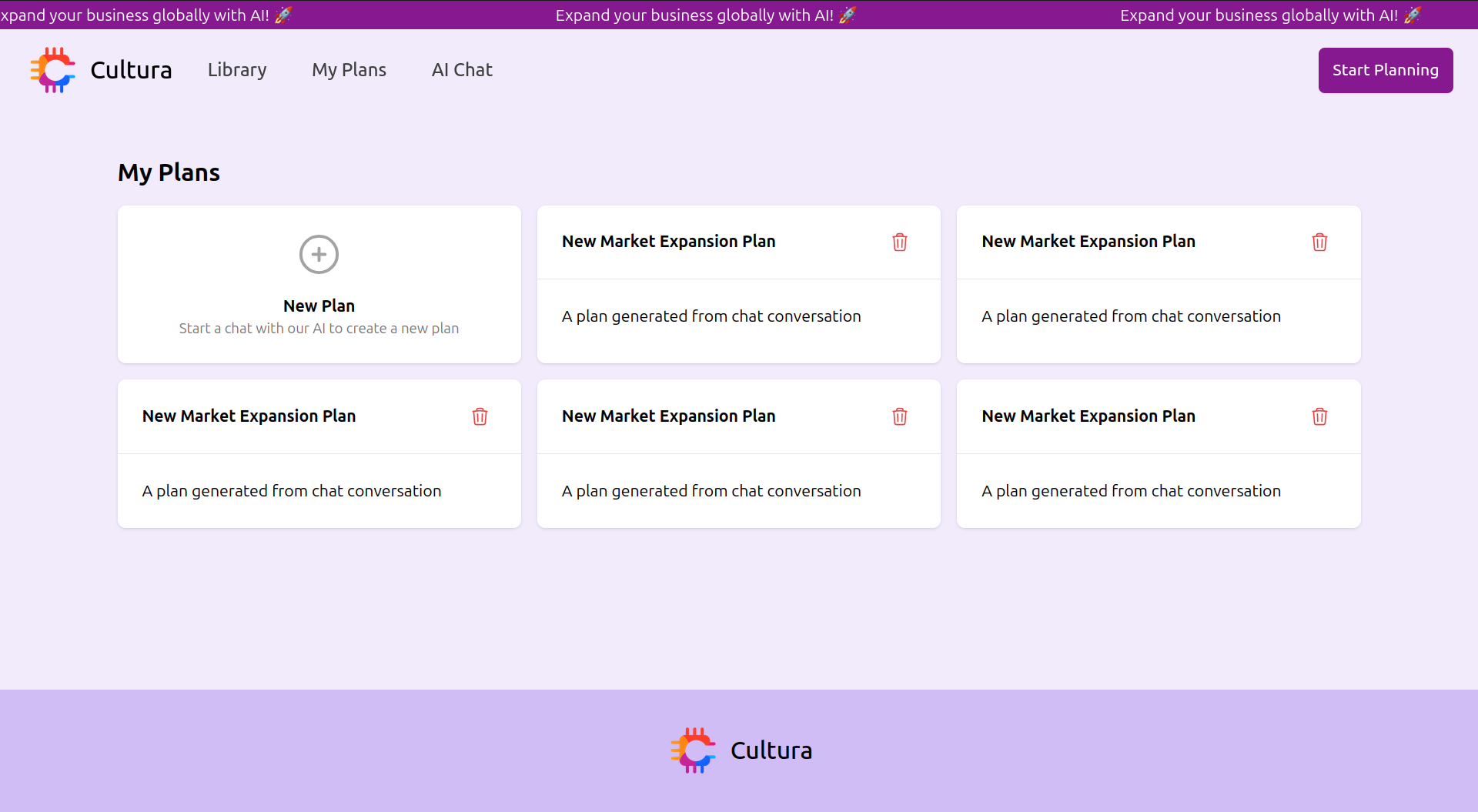
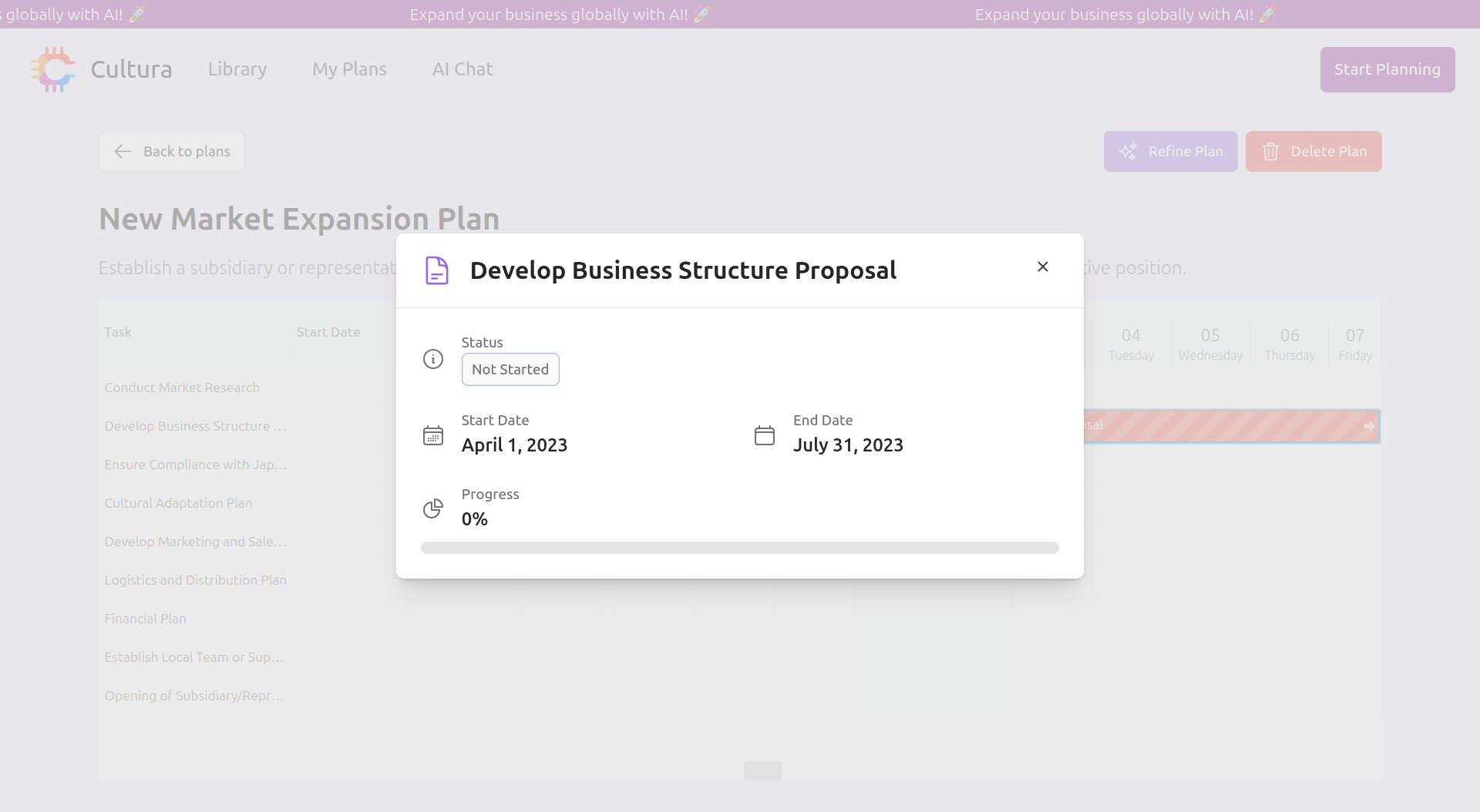
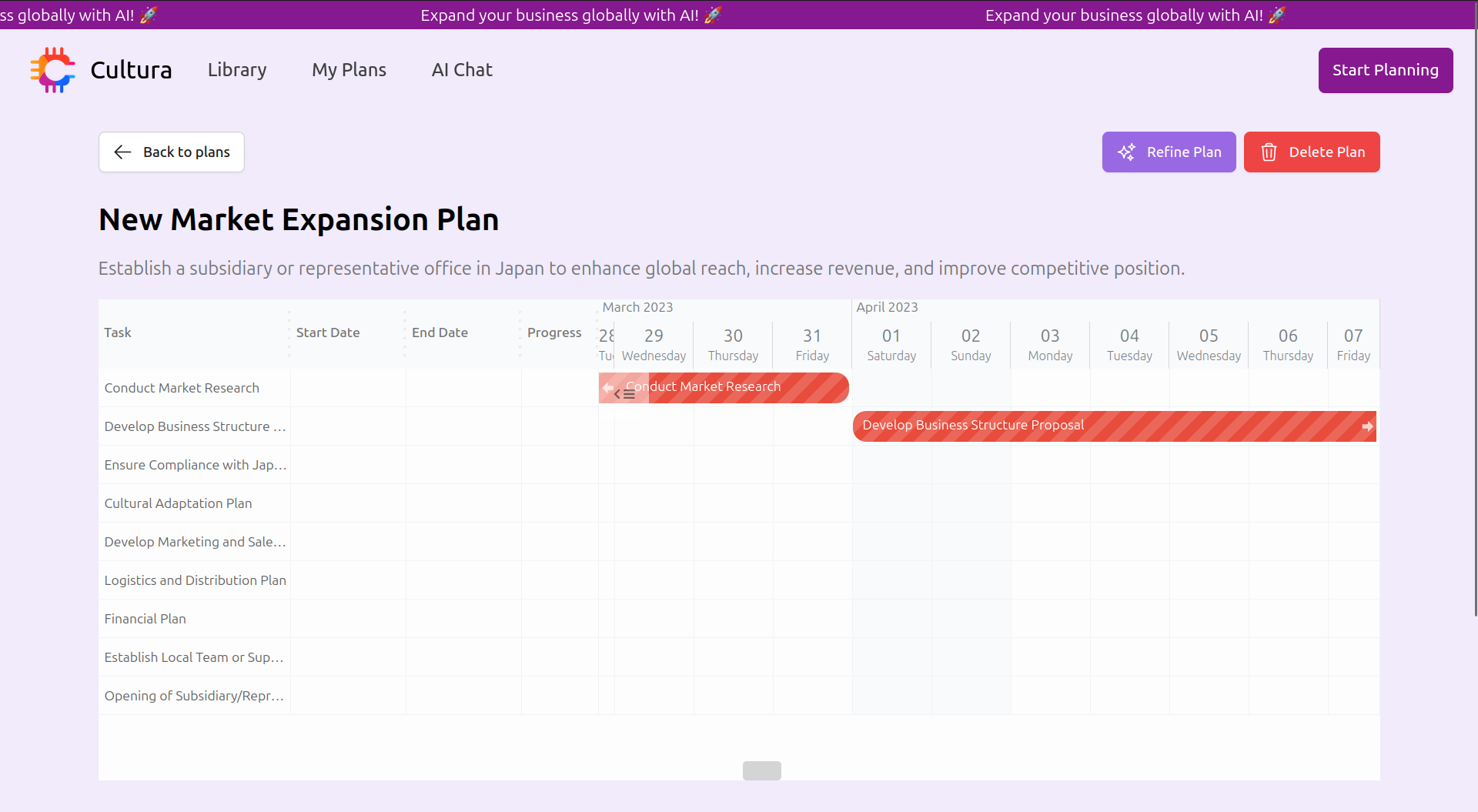
- Generates a complete market entry plan with timelines and tasks.
- Ensures compliance with legal and customs requirements (HS codes, certifications, …).
- Suggesting adaptation of packaging, labeling, and marketing to cultural norms.
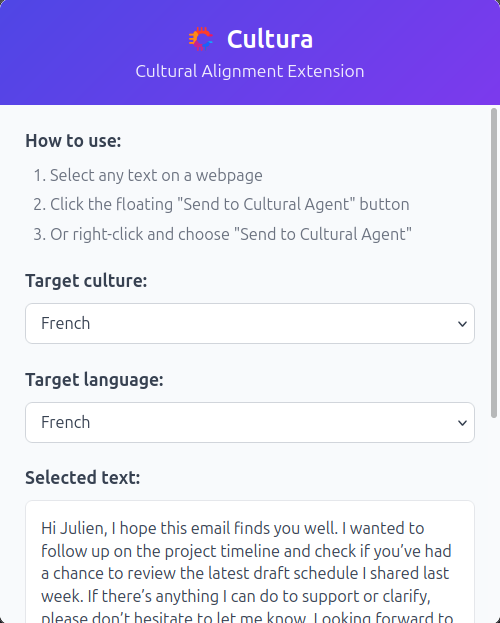
- Reviews emails or messages before they are sent to partners, ensuring cultural and legal appropriateness. In short, Cultura combines market intelligence, cultural expertise, and business planning into one trustworthy, AI assistant.
How we built it
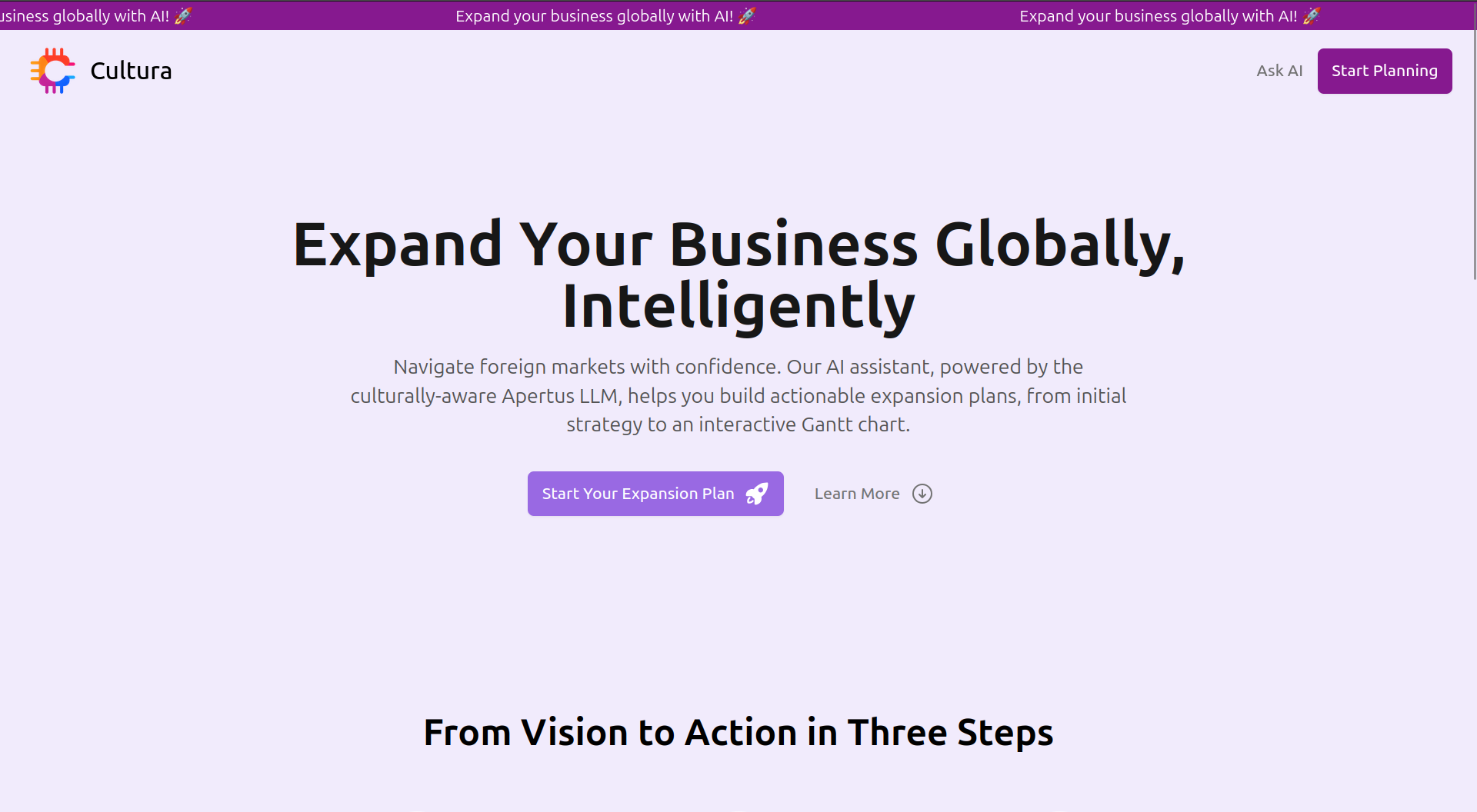
We built Cultura on top of the open-source Apertus LLM, ensuring transparency and sovereignty. The system integrates:
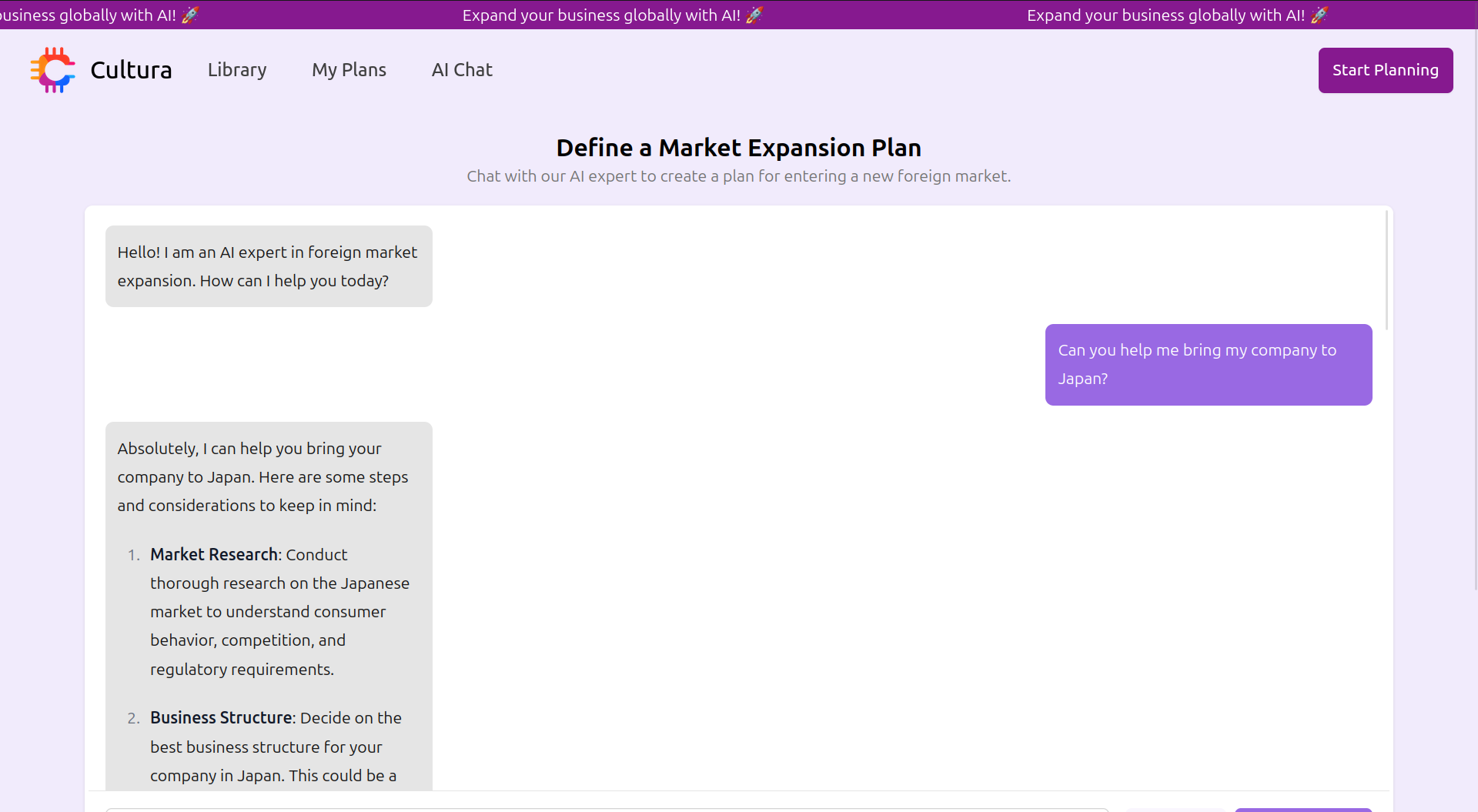
- A chat-based interface where businesses can input their profile and expansion goals.
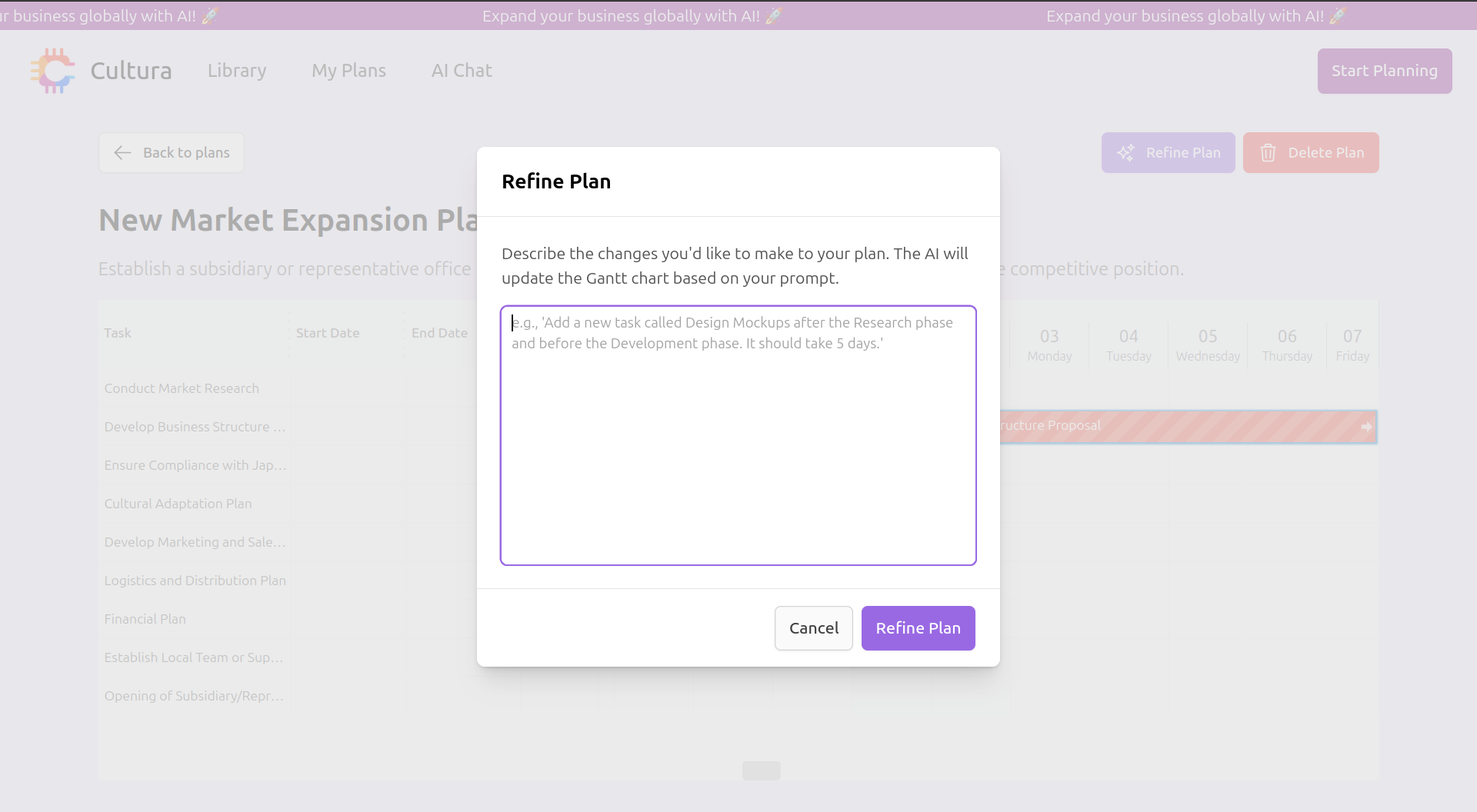
- A planning module that generates a dynamic interactive Gantt timeline, adaptable to constraints and changes.
- A communication review tool that checks messages for tone, clarity, and compliance with local cultural norms. Everything is reproducible and deployable on sovereign infrastructure, and being open-source, Cultura is designed for community contributions and continuous improvement.
Accomplishments
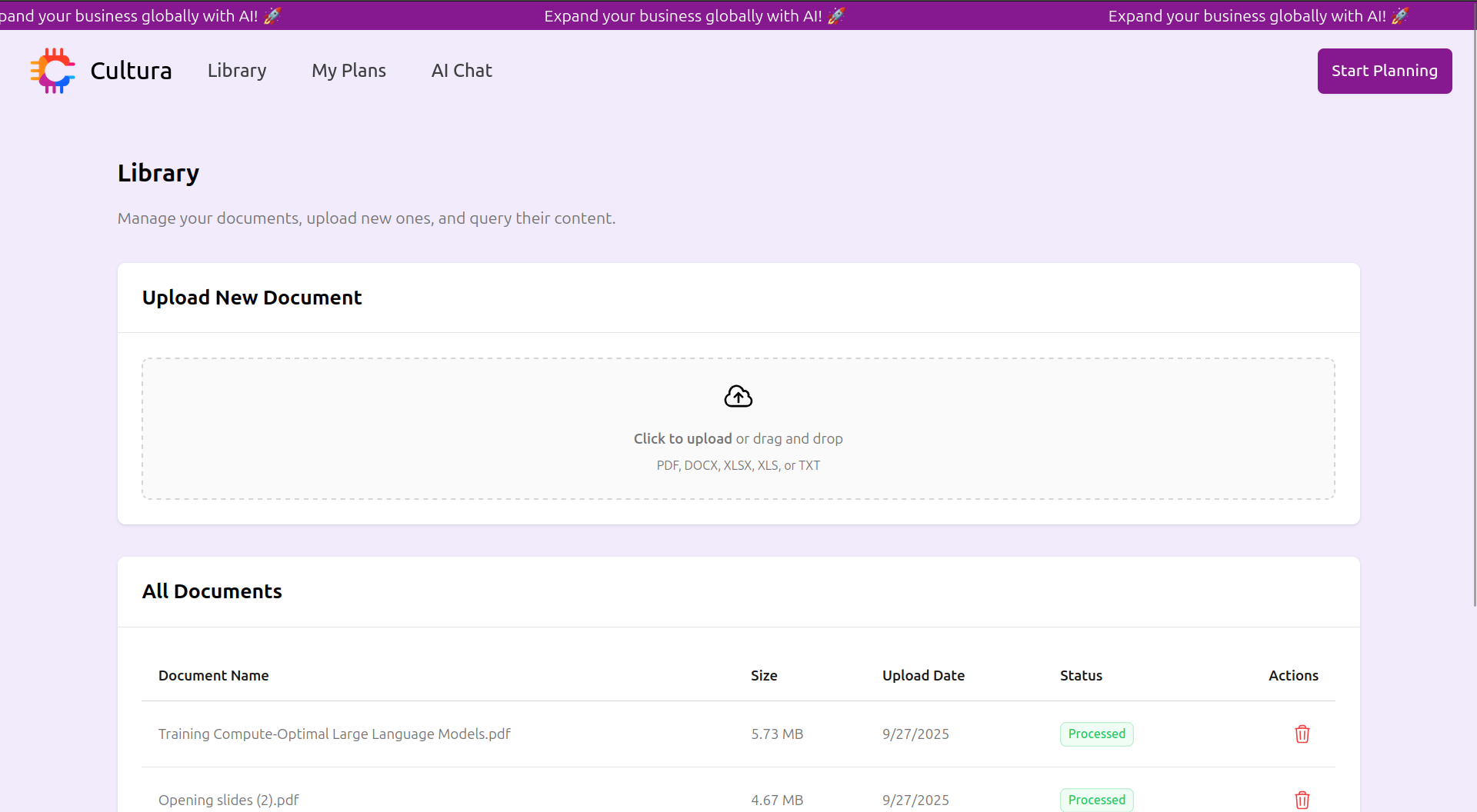
We achieved reliable upload and indexing across formats, enabling quick access to materials. Initial testing shows that responses remain relevant and contextually appropriate, particularly with culturally specific content. The search component consistently retrieves meaningful information rather than unrelated fragments. The interface is efficient and unobtrusive, keeping the focus on the content itself.
Key Learnings
Cultural context influences interpretation as much as language. Effective retrieval is as critical as model performance for delivering accurate results. Developing robust approaches to embeddings, chunking, and database management has improved system stability. Ultimately, technology is most effective when it supports mutual understanding.
Next Steps
We plan to expand the corpus to incorporate a wider range of cultural perspectives. Users will be able to provide corrections and contribute context, making the system more collaborative. Future development includes adaptive context switching to adjust tone and references appropriately. We will test the system in educational and professional settings where cultural understanding is essential.
Challenges We Encountered
- Managing communication across multiple languages (French and Italian).
- Addressing technical issues and learning to use unfamiliar tools.
- Coordinating contributions across repositories and shared tasks.
- Defining clear roles and responsibilities within the team.
Built With
- apertus
- fastapi
- huggingface
- python
- rag
- typescript
- vue.js


Log in or sign up for Devpost to join the conversation.