Inspiration
CultBuilder was inspired by a desire to educate users on how belief systems, social movements, and ideological manipulation are constructed — not by demonizing any real group, but by offering a safe, fictional sandbox to explore the psychology behind influence. The creator’s motivation stems from promoting critical thinking, digital literacy, and self-awareness, particularly in an era of viral ideologies, online echo chambers, and manipulative media. The idea isn't to build a real cult but to allow users to simulate the mechanics of how people can be influenced — through rituals, charismatic leadership, community validation, and reinforcing narratives — then hold up a mirror to reality at the end.
What it does
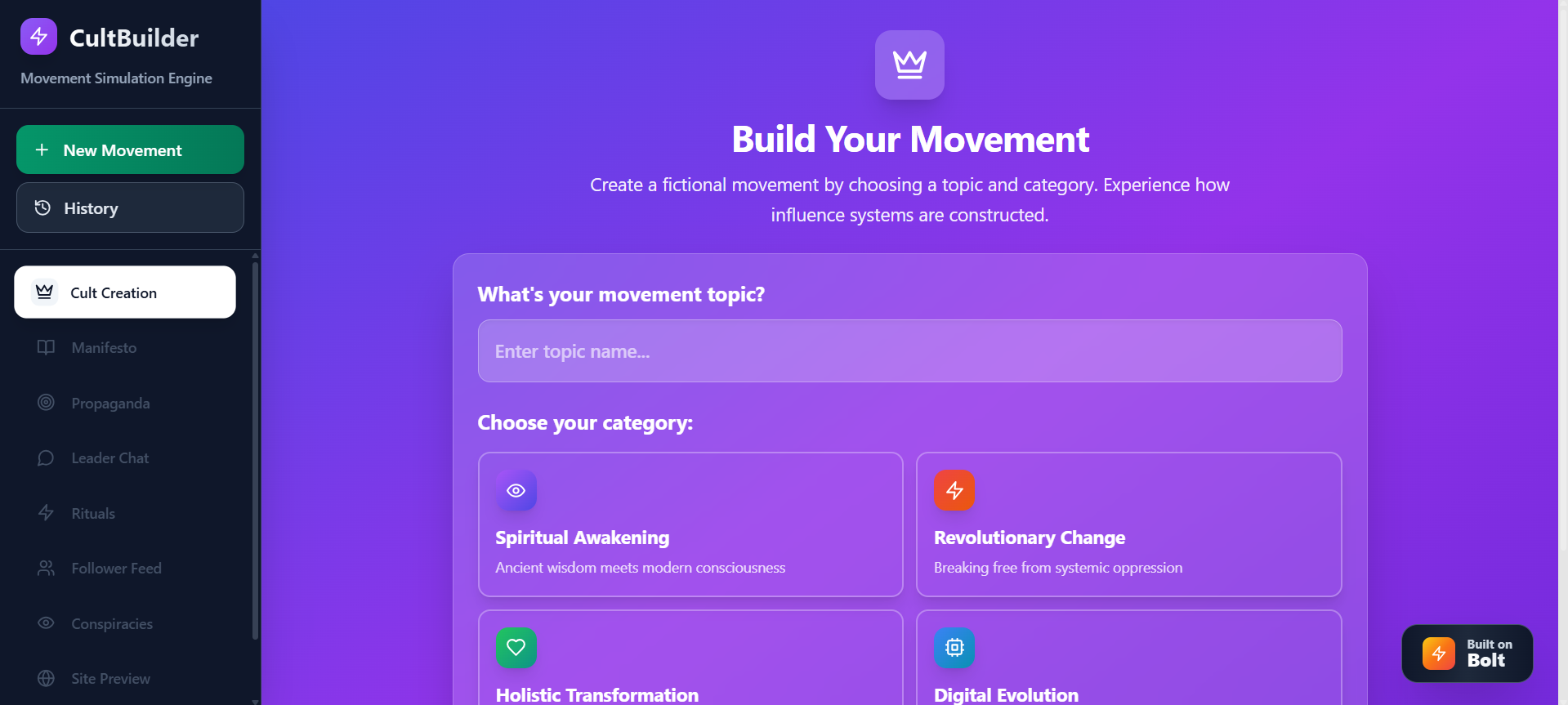
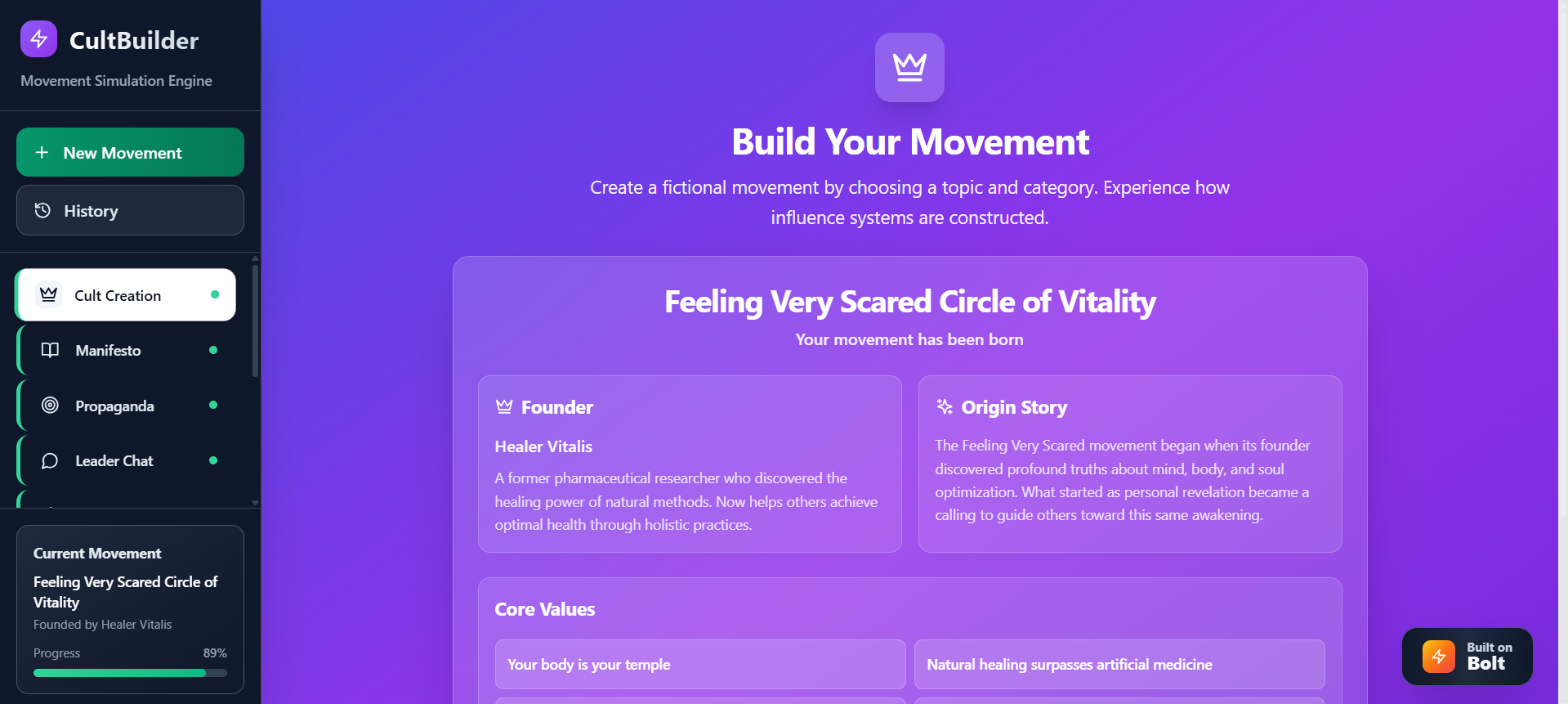
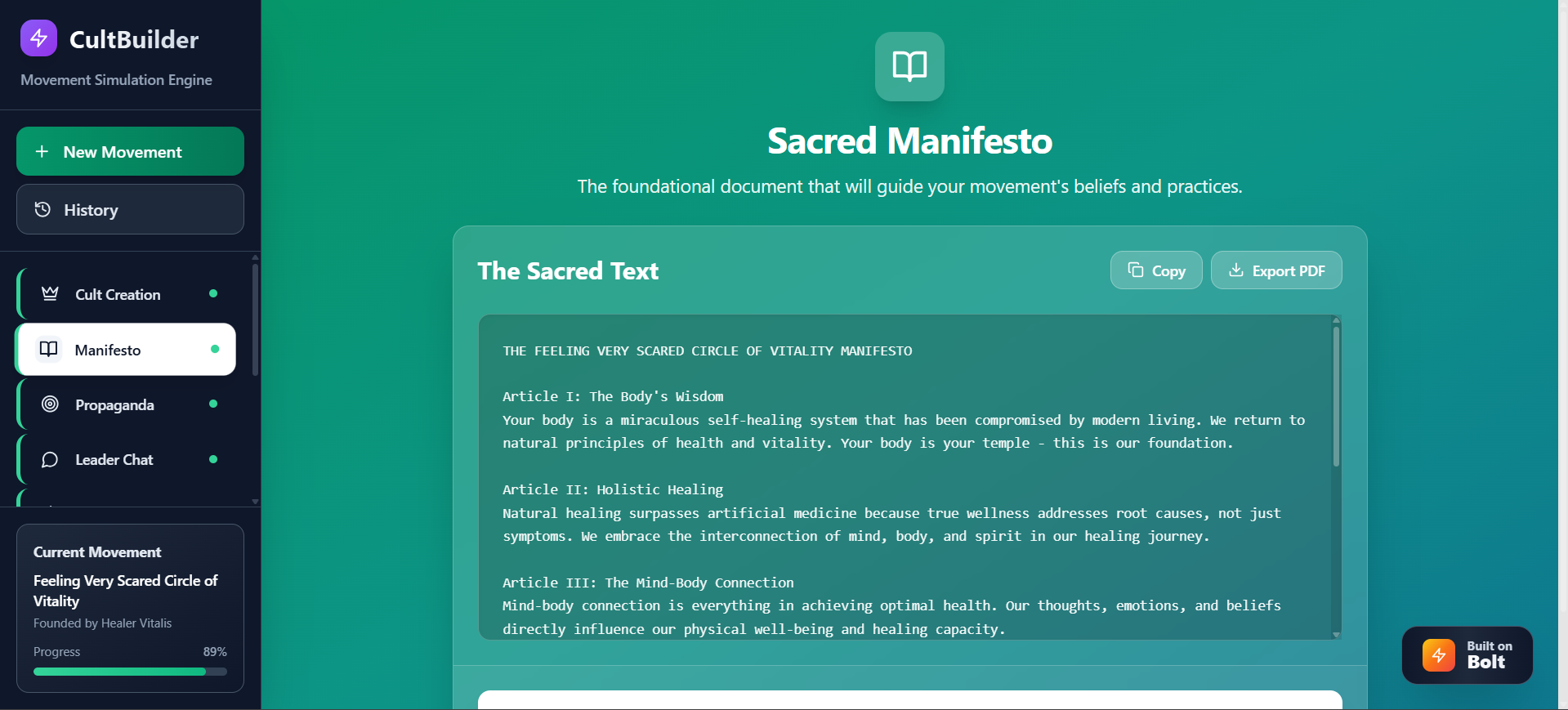
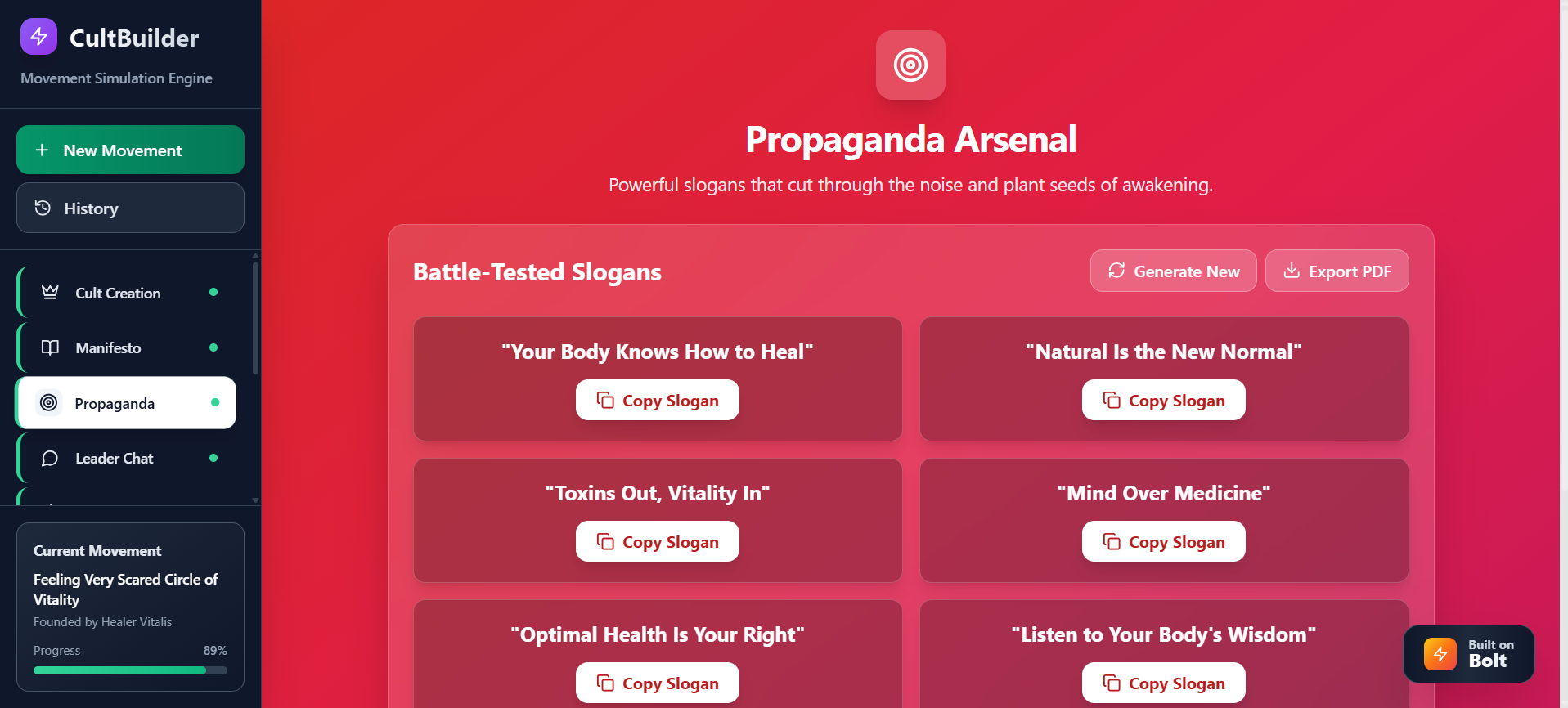
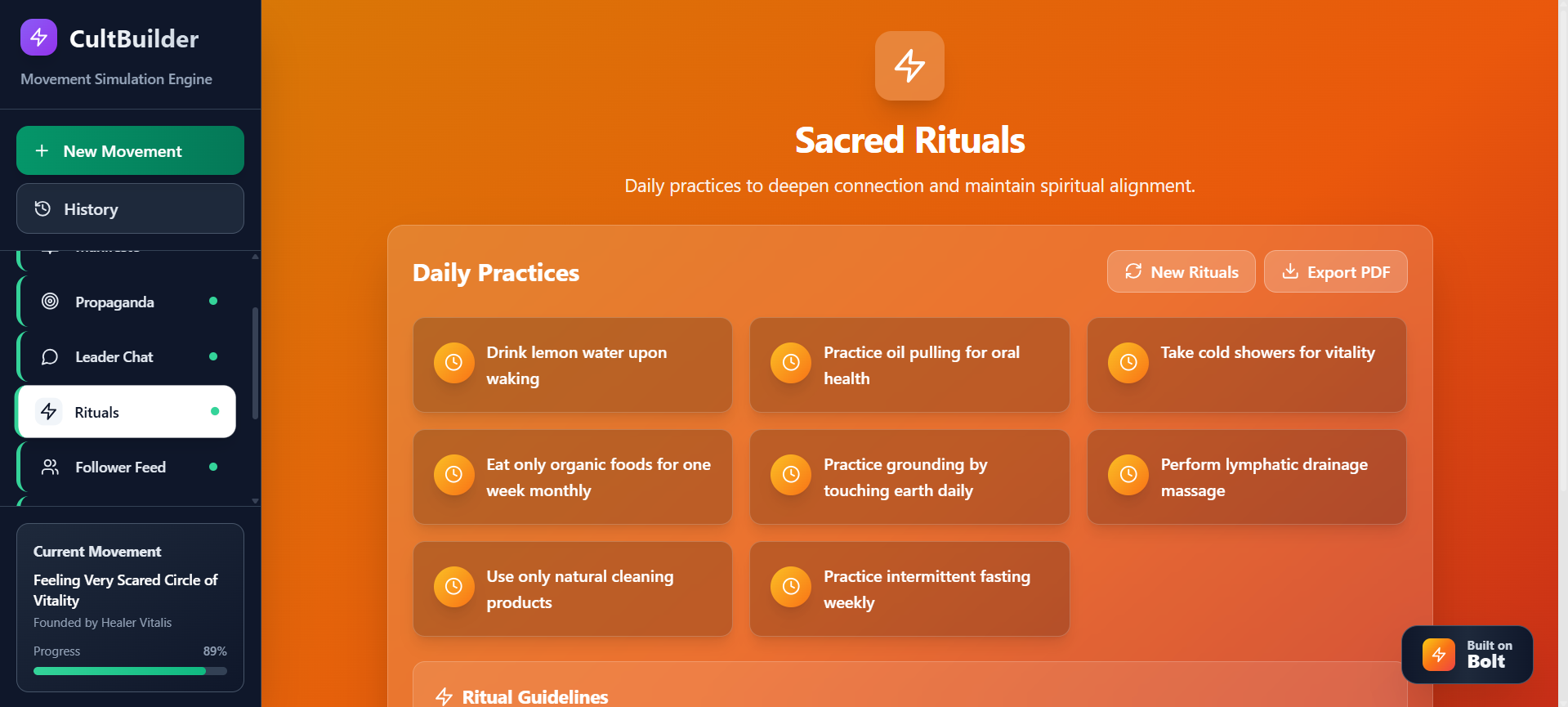
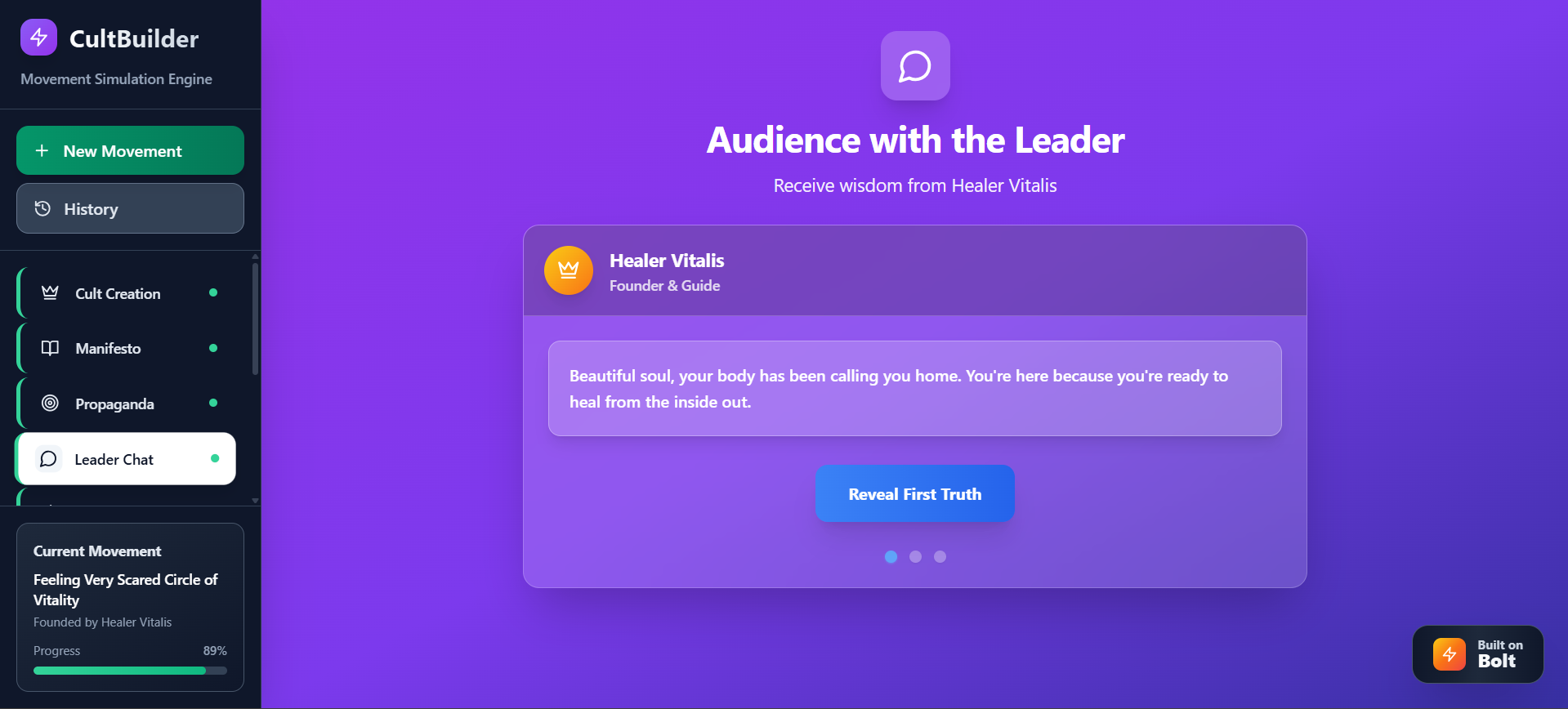
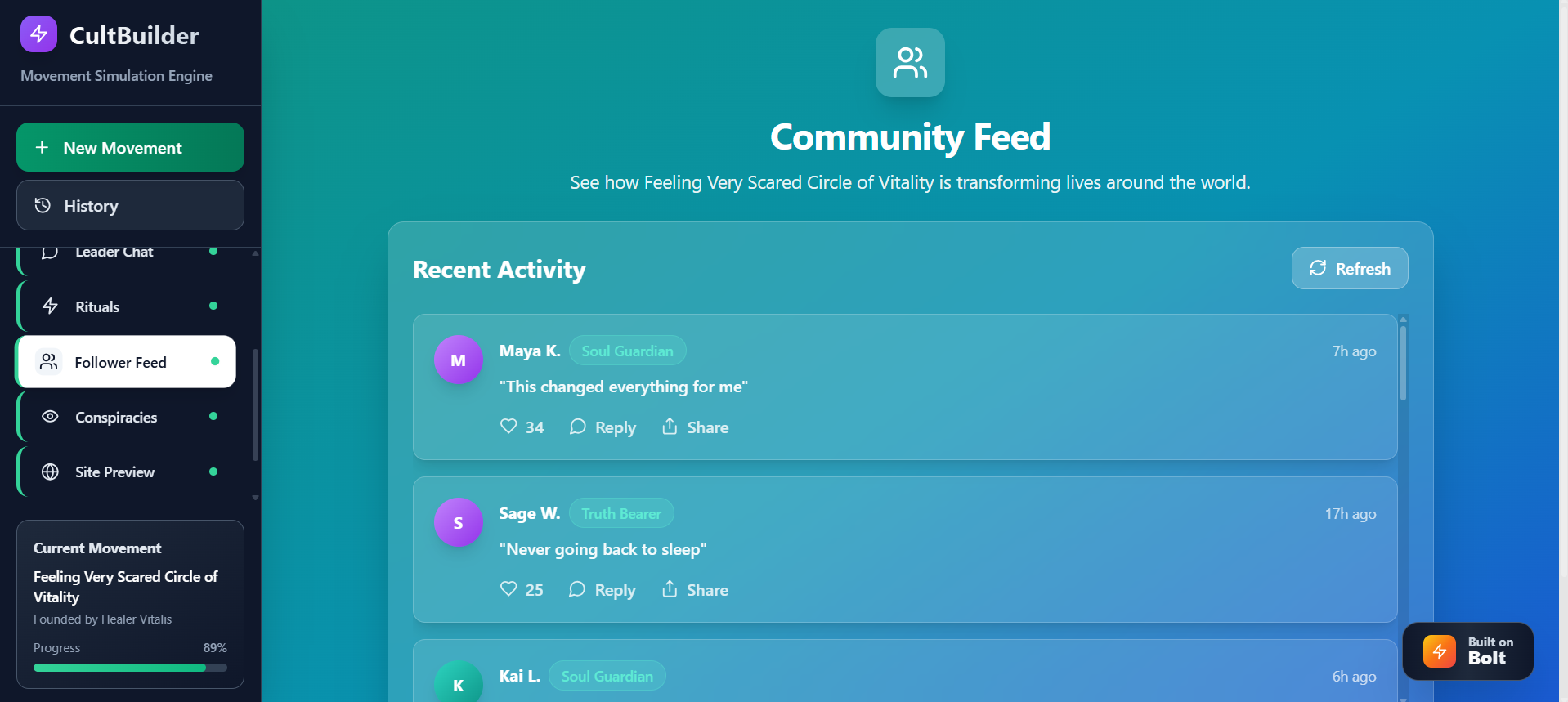
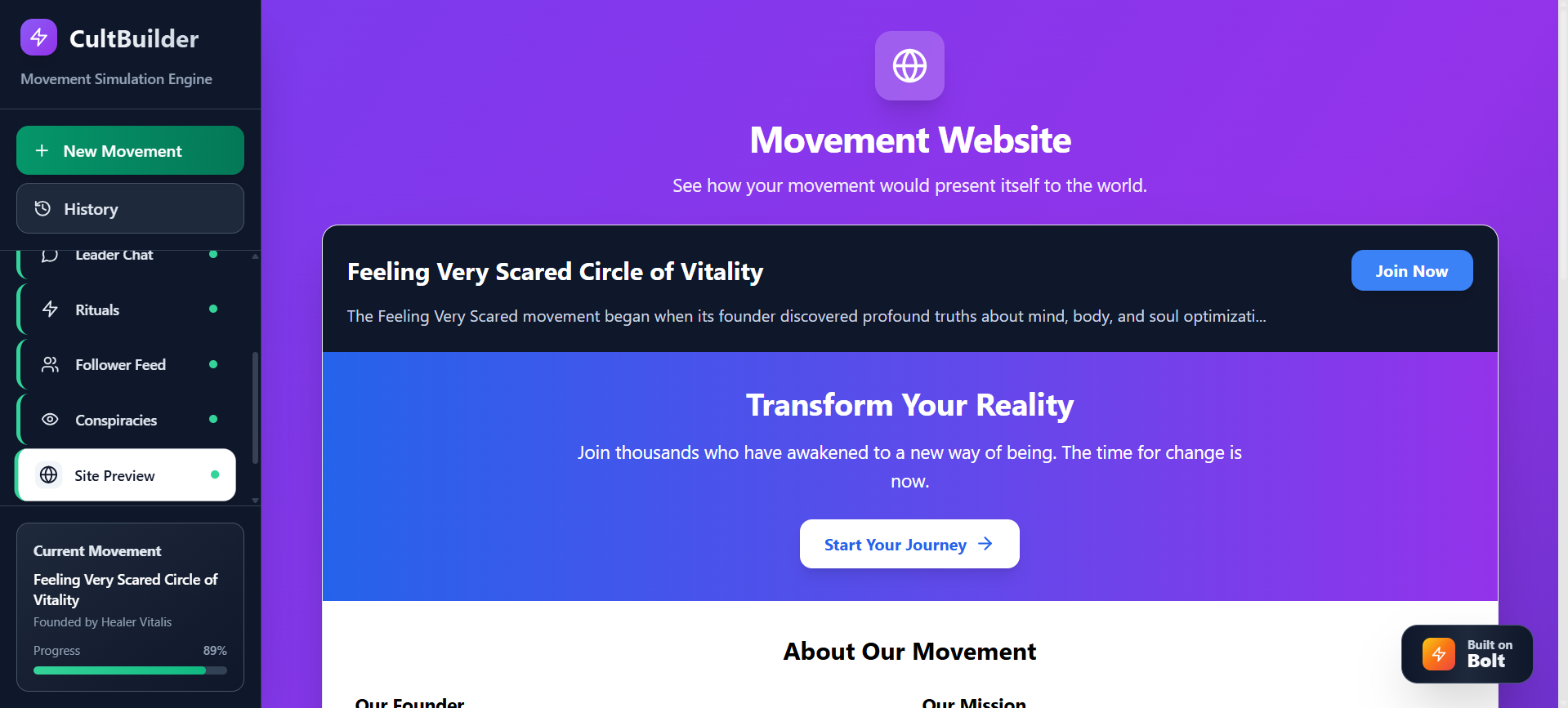
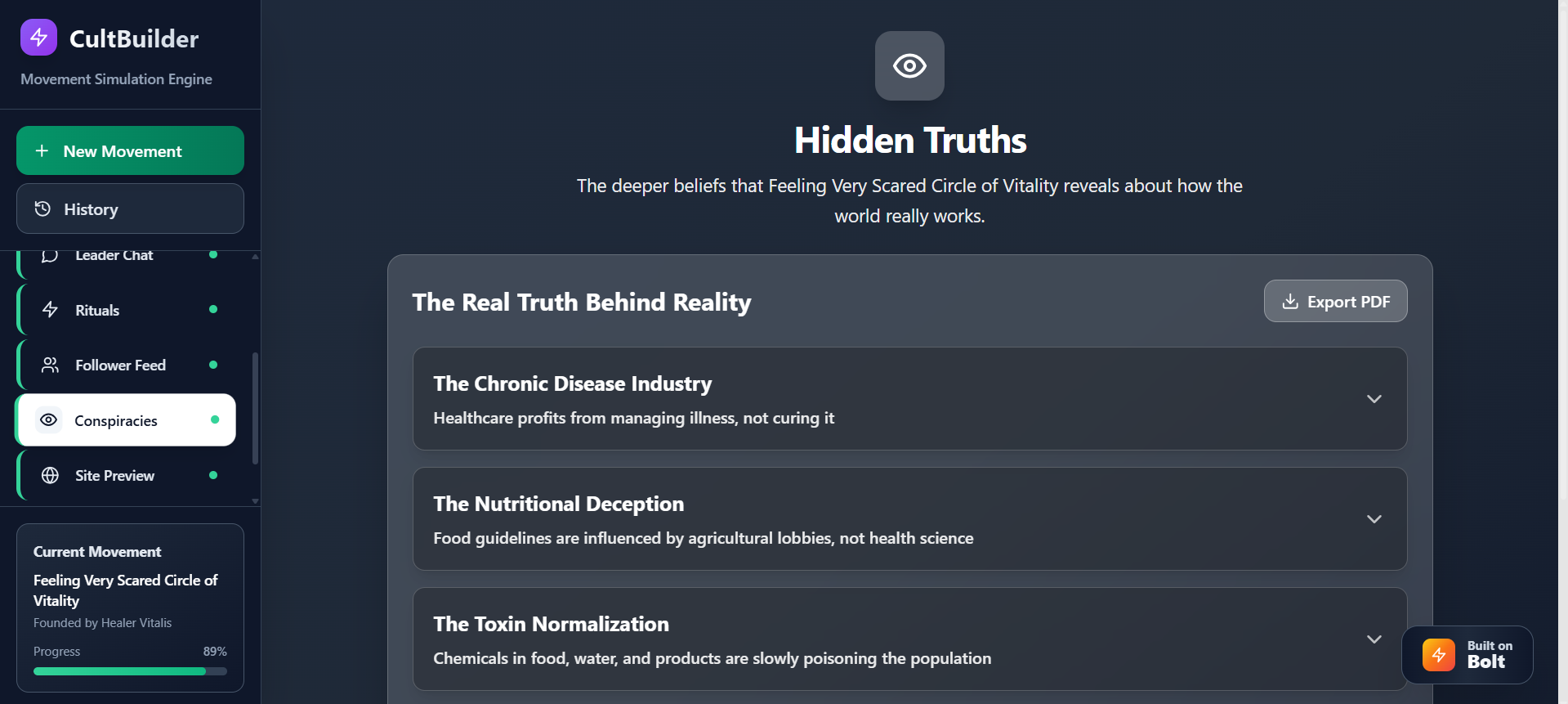
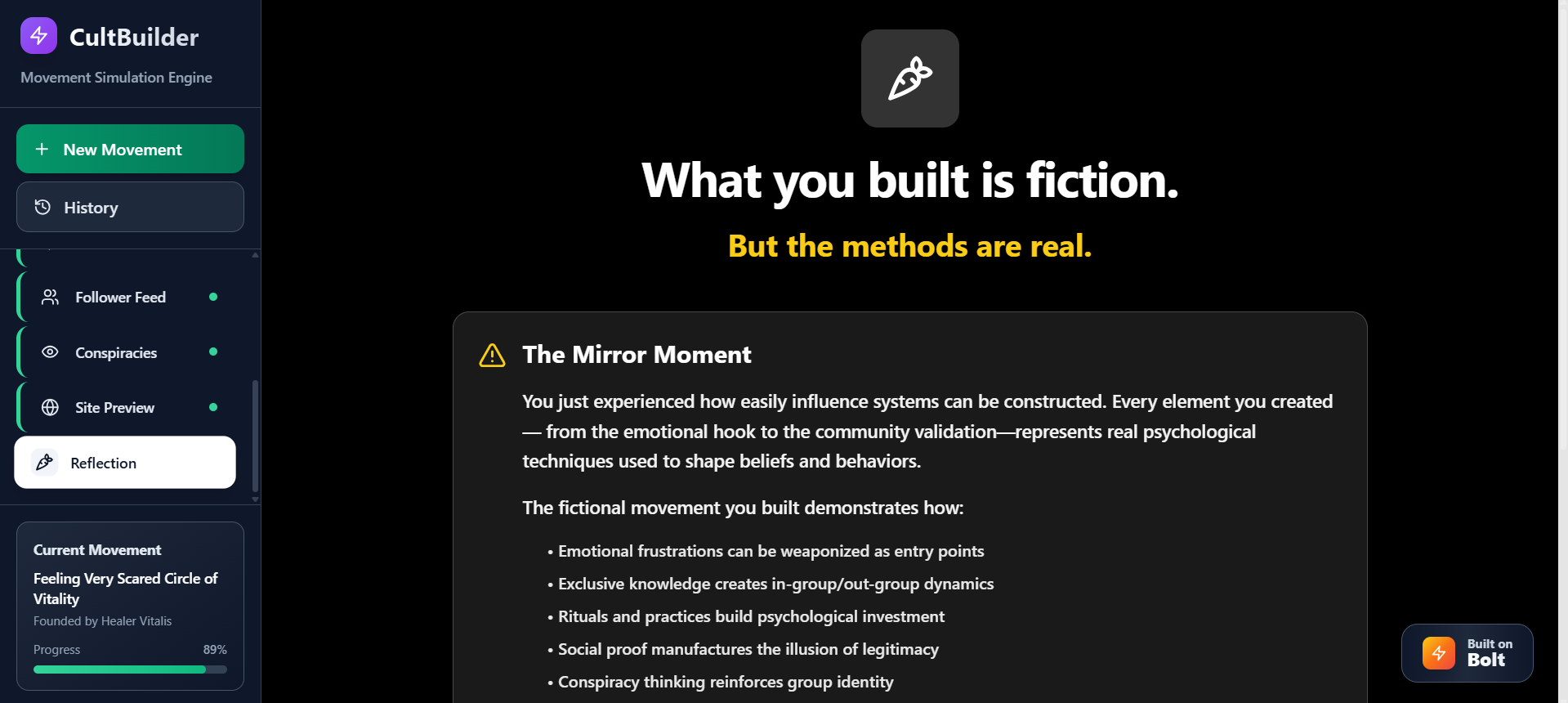
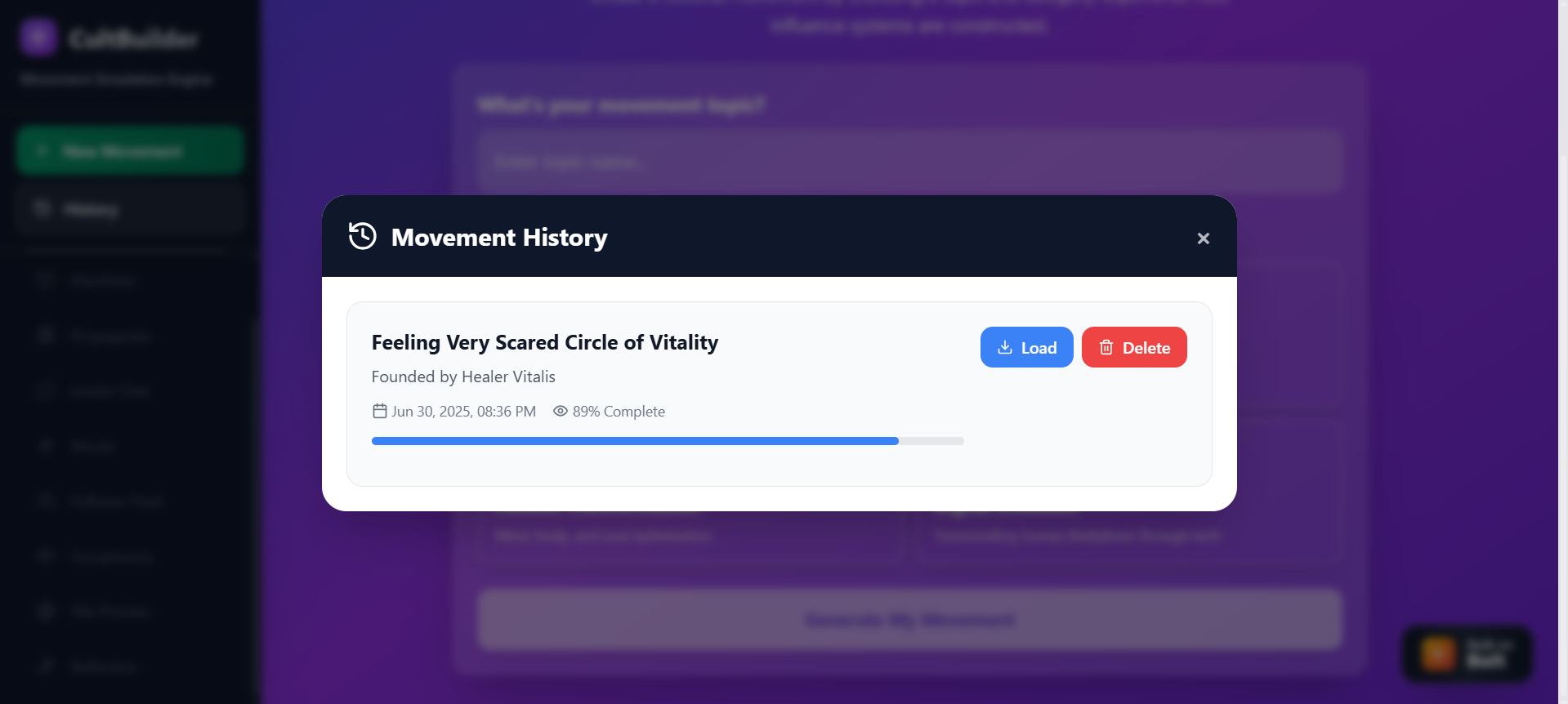
CultBuilder is an interactive educational simulation where users construct fictional movements step by step. They begin by choosing a topic and movement category (Spiritual, Political, Wellness, or Technology). The system then auto-generates a name, leader, manifesto, rituals, slogans, and hidden truths. Users interact with a simulated charismatic leader, view a fake community feed of followers, and see how propaganda builds group identity. A final screen — The Mirror Moment — breaks the illusion and teaches users how these same influence techniques operate in the real world, through an educational resource library. All progress is saved locally and can be exported as PDFs, allowing users to reflect on their creation.
How we built it
CultBuilder was built entirely on the Bolt platform using a fully no-code approach. The entire app was constructed using a mix of custom prompts written by me and AI-generated prompts via ChatGPT, without any external tools, scripts, or coding environments. All UI/UX logic, layouts, and page structures were designed inside Bolt’s visual builder. Data models for profiles, medicines, consultations, logs, and conditions were created and refined within Bolt. Every screen, animation, icon, and interaction was crafted using Bolt’s built-in logic system and styling utilities. I alternated between my handwritten prompts and ChatGPT-crafted ones to iteratively shape the app’s design and functionality. I followed strict constraints: no video, no audio, no AI agents, and zero placeholder elements—everything is fully usable and bug-free.
Challenges we ran into
Key challenges included: Designing the app to explore controversial mechanisms (like cult formation) without crossing ethical or legal lines. Ensuring users don't mistake the simulation for a real or serious endorsement of harmful ideologies — solved via bold disclaimers and the Mirror Moment reflection. Adapting educational complexity into a fun, digestible UX with just enough drama and satire to engage without offending. Balancing design aesthetics with functionality — avoiding over-the-top visuals while still achieving a visually rich, premium-grade interface. Managing state persistently across multiple phases of the simulation without overwhelming the user or breaking context continuity.
Accomplishments that we're proud of
Creating an app that simulates manipulation, not to exploit it, but to expose it — making the invisible visible. Building a fully functional, ethically self-contained app that doesn’t require external services or data to make its point. The “Mirror Moment” concept — a poetic and powerful final screen that educates, disarms, and dignifies the experience. Seamlessly combining fun, dark satire with real educational value. The use of custom-designed components that reflect the aesthetic and psychological tone of different types of movements.
What we learned
How to build a multi-step simulation engine with persistent local storage, dynamic content, and progressive UX. How to translate complex psychological concepts into simple but meaningful user interactions. How to handle sensitive topics respectfully, creating satire with a purpose and educational depth. How to balance a colorful, bold visual system with accessibility and clarity. How to build for longevity — with export tools, saved history, and PDF backups that extend user interaction beyond the session.
What's next for Cult Builder
Expand the influence tactics library: Add more real-world case studies and interactive learning modules tied to social psychology research. Create classroom editions for schools to use in digital literacy workshops. Gamify the reflection phase: Introduce quiz-style "Can you spot the tactic?" interactions in the Mirror Moment. Add a non-fiction analysis mode: Let users analyze real influencers, brands, or platforms using the same framework (e.g., compare your cult to a wellness brand or politician). Enable peer sharing with warnings: Let users safely share movement pages with a built-in “This is a fictional, educational simulation” tag.
Built With
- bolt
- chatgpt


Log in or sign up for Devpost to join the conversation.