-
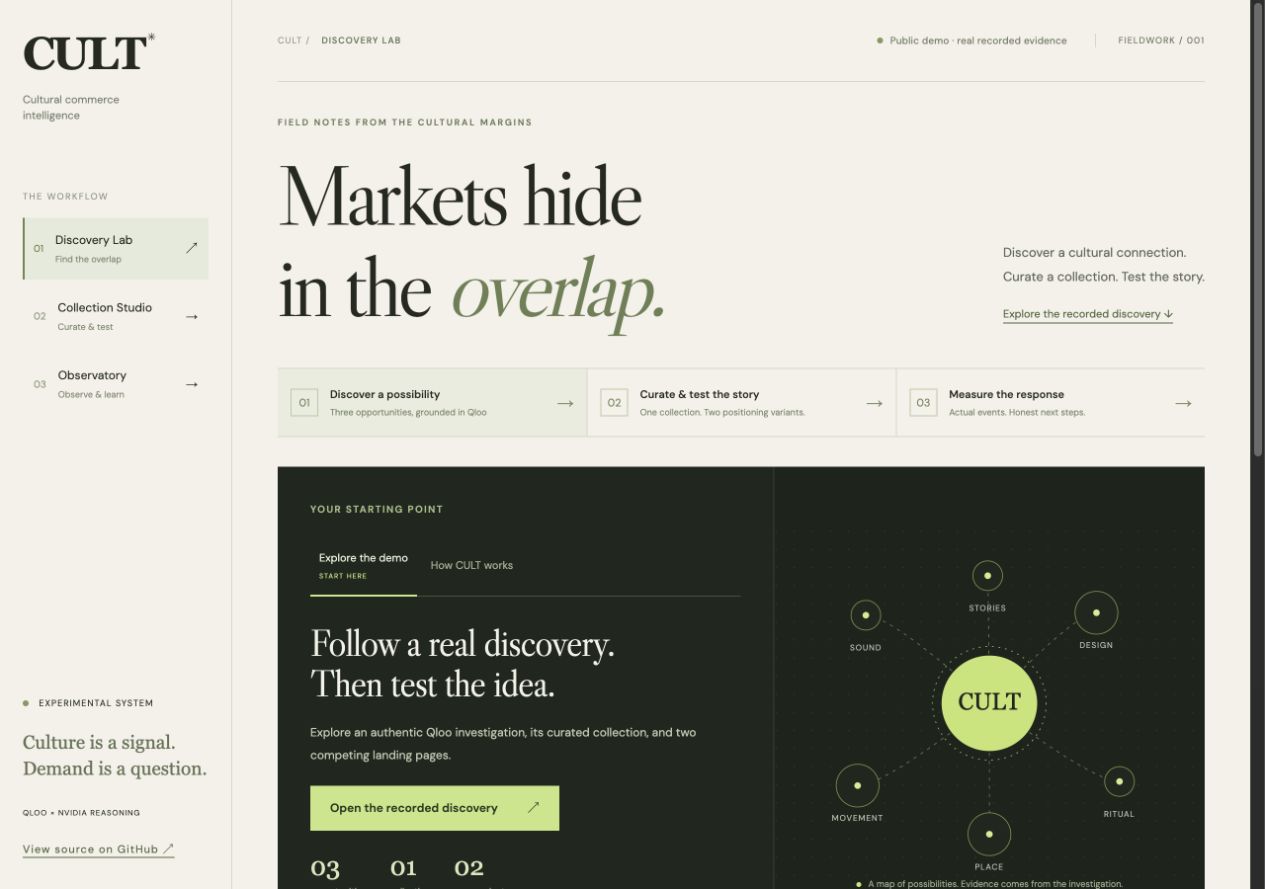
1. CULT overview
-
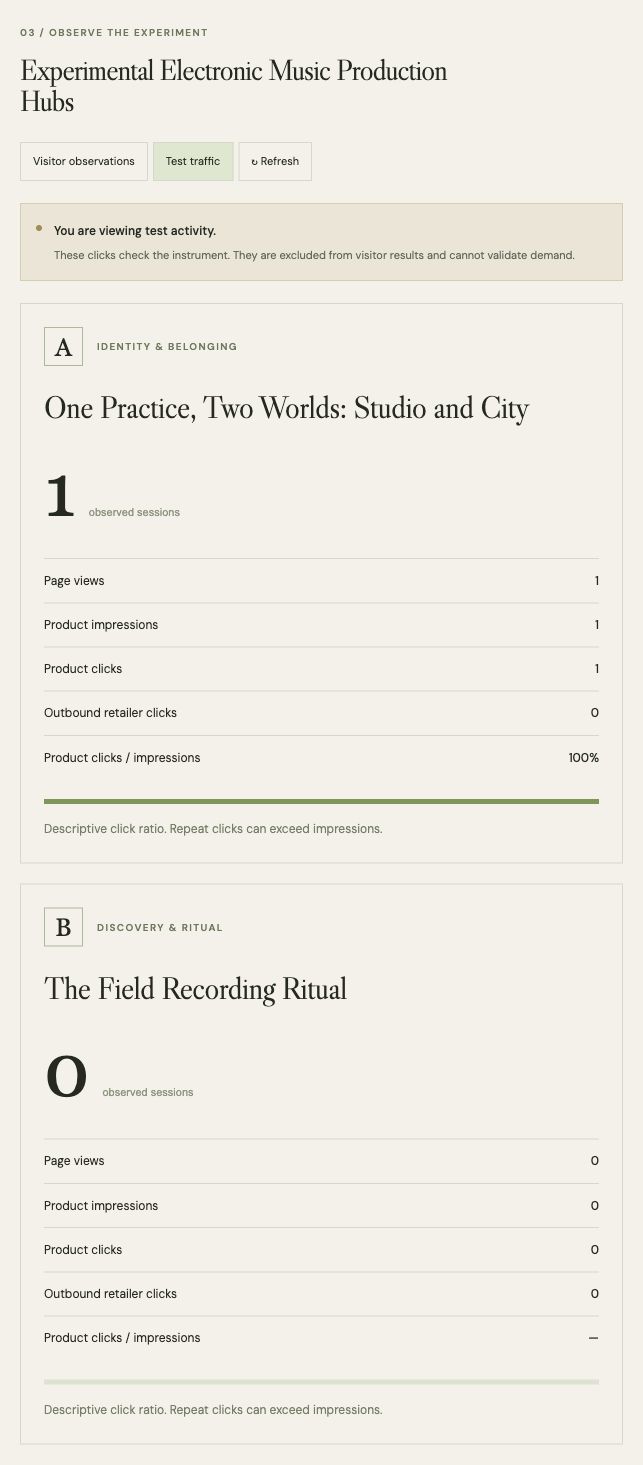
5. Observatory — labeled test results
-
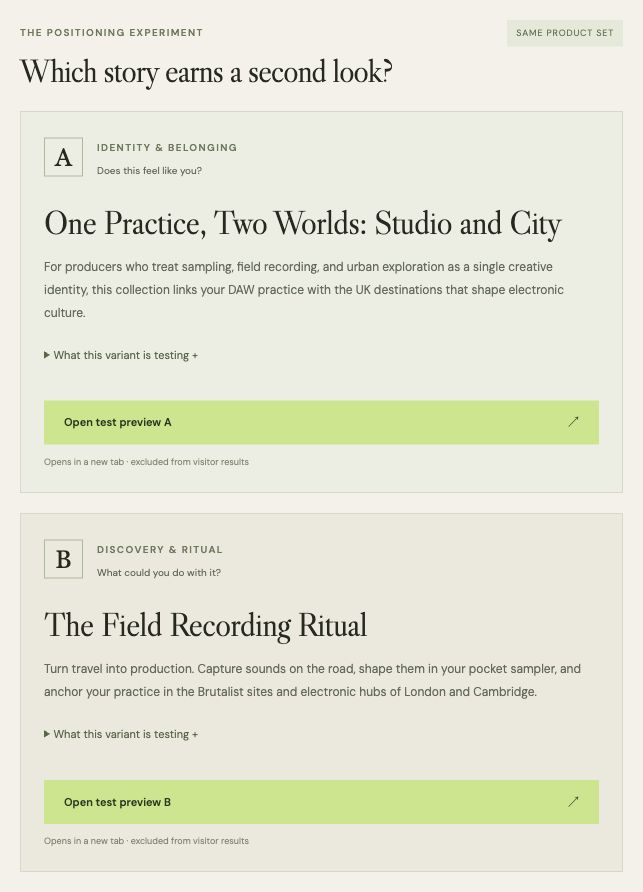
4. Two positioning stories
-
2. Cultural discovery
-
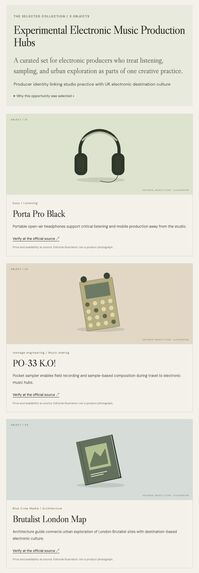
3. Curated collection
Inspiration
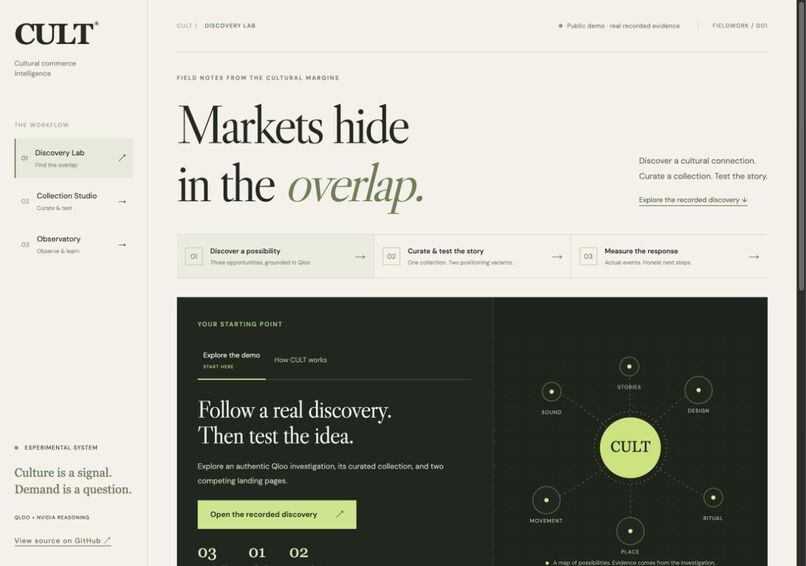
People’s interests rarely fit into a single product category. Music connects to architecture. Cinema connects to fashion. A collection can make sense culturally even when its objects belong on different retail shelves.
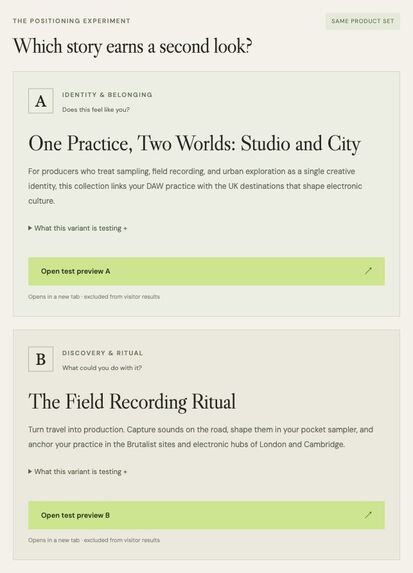
We built CULT to explore those connections—and ask what they might become. Could an unexpected cultural affinity inspire a coherent collection? Could two different stories about that collection produce different responses?
Our guiding principle: culture is a signal; demand is a question.
What it does
People’s interests rarely fit into a single product category. Music connects to architecture. Cinema connects to fashion. A collection can make sense culturally even when its objects belong on different retail shelves.
We built CULT to explore those connections—and ask what they might become. Could an unexpected cultural affinity inspire a coherent collection? Could two different stories about that collection produce different responses?
Our guiding principle: culture is a signal; demand is a question.
How we built it
We built CULT with React and TypeScript, using Next.js App Router conventions through Vinext and Vite. Cloudflare Workers serves the application, while D1 persists investigations, experiment assignments, and interaction events.
Qloo supplies cultural affinity evidence. NVIDIA-hosted reasoning drives five stages: planning, discovery interpretation, opportunity evaluation, merchandising, and experiment design.
The completed live investigation used nine successful Qloo requests and five structured model decisions. We preserved response receipts, timestamps, and hashes so the findings can be inspected. Structured-output validation rejects unsupported citations and products outside the catalog.
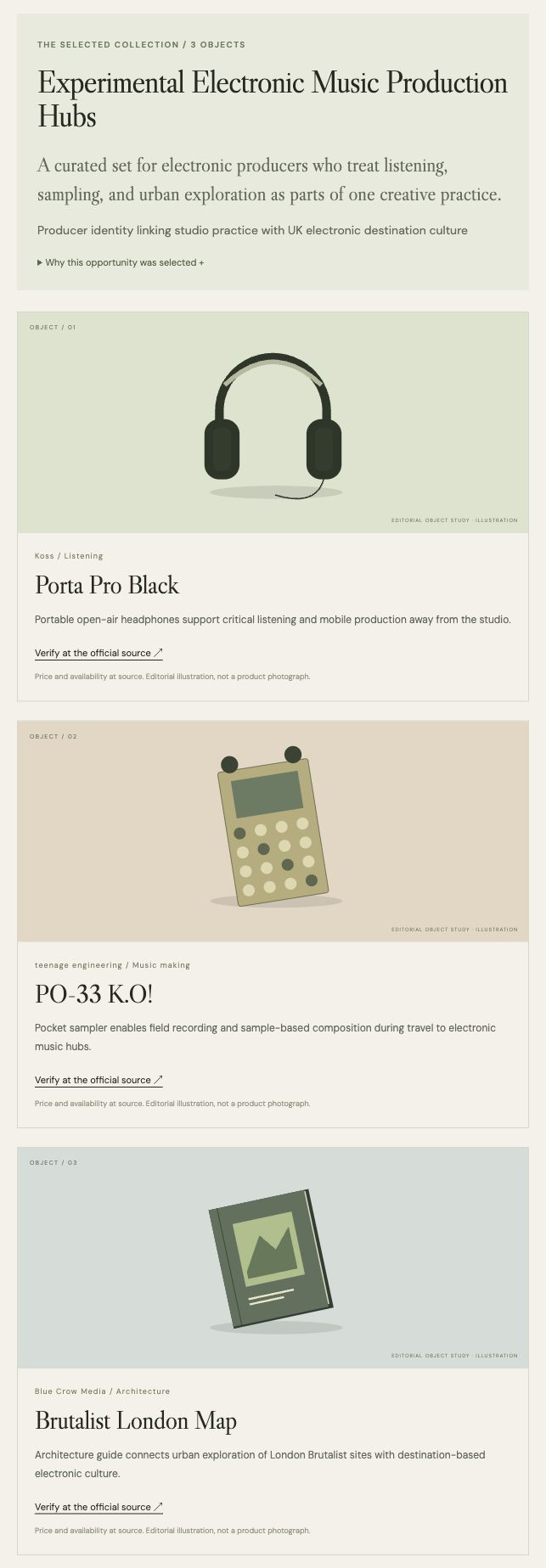
We also implemented a reproducible keyword baseline. In the captured investigation, it selects the headphones and sampler; CULT’s collection adds the architecture map. This makes the difference in selection logic visible without claiming that one approach performs better.
Challenges we ran into
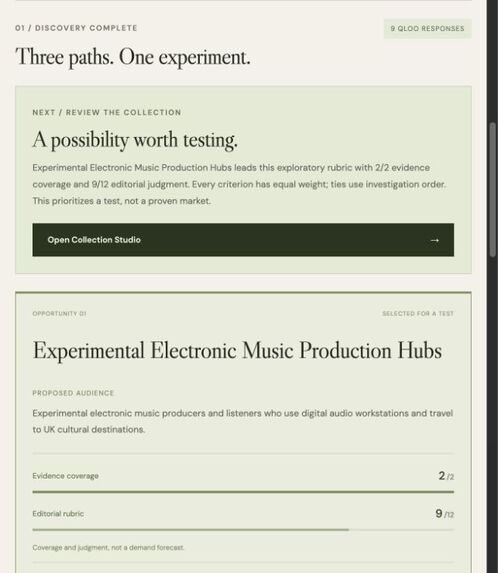
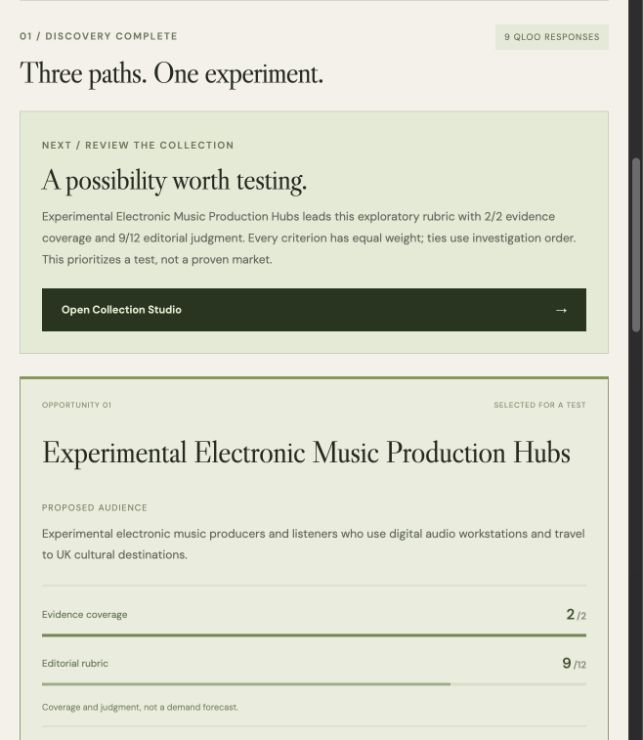
The hardest challenge was separating an interesting cultural story from evidence of a commercial opportunity. We made evidence coverage and editorial scoring distinct, labeled audience hypotheses explicitly, and avoided presenting affinity as purchase intent.
Provider integration introduced practical challenges too. Some proposed seed types were unsupported by our Qloo access, model requests timed out, and one structured response contained malformed JSON. We added typed entity resolution, bounded retries, persistent progress, strict validation, and a narrowly scoped formatting repair that preserves the original response.
Public access required another design decision: judges needed a working demo without exposing private research or unrestricted provider calls. The public edition serves one intentional recording and accepts validated experiment interactions; fresh research remains available in private or local installations.
Accomplishments that we're proud of
We completed the full path from live cultural discovery to a curated collection, two functioning landing pages, and measurable interactions.
We’re especially proud that the project makes its reasoning inspectable. Visitors can examine Qloo receipts, scoring rationales, product sources, and the conventional baseline alongside the proposed collection.
The public site and source repository are available, all 33 automated tests pass, and the hosted workflow successfully records test interactions separately from visitor traffic. The demo uses genuine captured evidence rather than fabricated cultural results.
What we learned
Cultural intelligence is most useful when it helps formulate a better question. An affinity can suggest a connection; it cannot establish that people want a product or will buy it.
We also learned that agent autonomy needs clear boundaries. Explicit budgets, validated references, saved progress, and transparent failure states made the workflow more reliable and easier to explain.
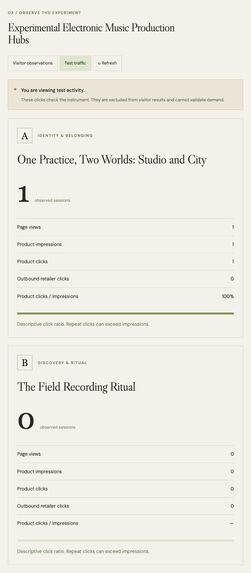
Finally, measurement needs as much care as generation. A click is an observation, test traffic is instrumentation, and a small sample is a reason to keep investigating.
What's next for CULT
Our next step is to recruit independent visitors and observe how they respond to the two positioning variants.
We also want to expand the verified product catalog, strengthen traffic-quality controls, and add retention and deletion controls. A future iteration could use observed results to propose revised collections or positioning, with human approval before launching another experiment.
Today, CULT’s next-step recommendations use transparent rules. The longer-term ambition is a carefully bounded learning loop that connects cultural discovery, merchandising, and real audience response.
Built With
- cloudflare-d1
- cloudflare-workers
- css
- drizzle-orm
- javascript
- nemotron
- next.js
- nvidia-nim
- qloo
- react
- sqlite
- typescript
- vinext
- vite

Log in or sign up for Devpost to join the conversation.