Inspiration
In the work from home era, many are missing the social aspect of in-person work. And what time of the workday most provided that social interaction? The lunch break. culina aims to bring back the social aspect to work from home lunches. Furthermore, it helps users reduce their food waste by encouraging the use of food that could otherwise be discarded and diversifying their palette by exposing them to international cuisine (that uses food they already have on hand)!
What it does
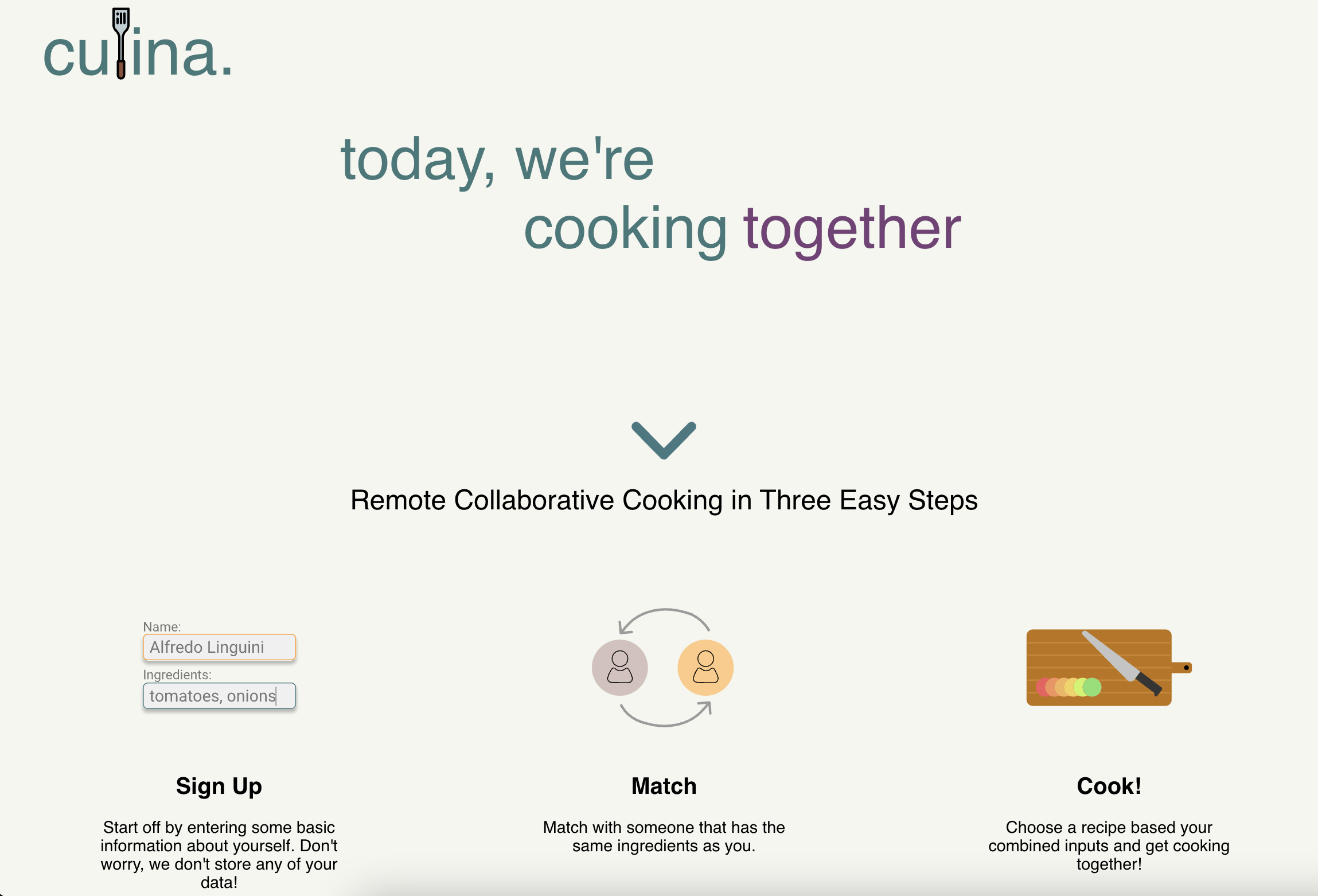
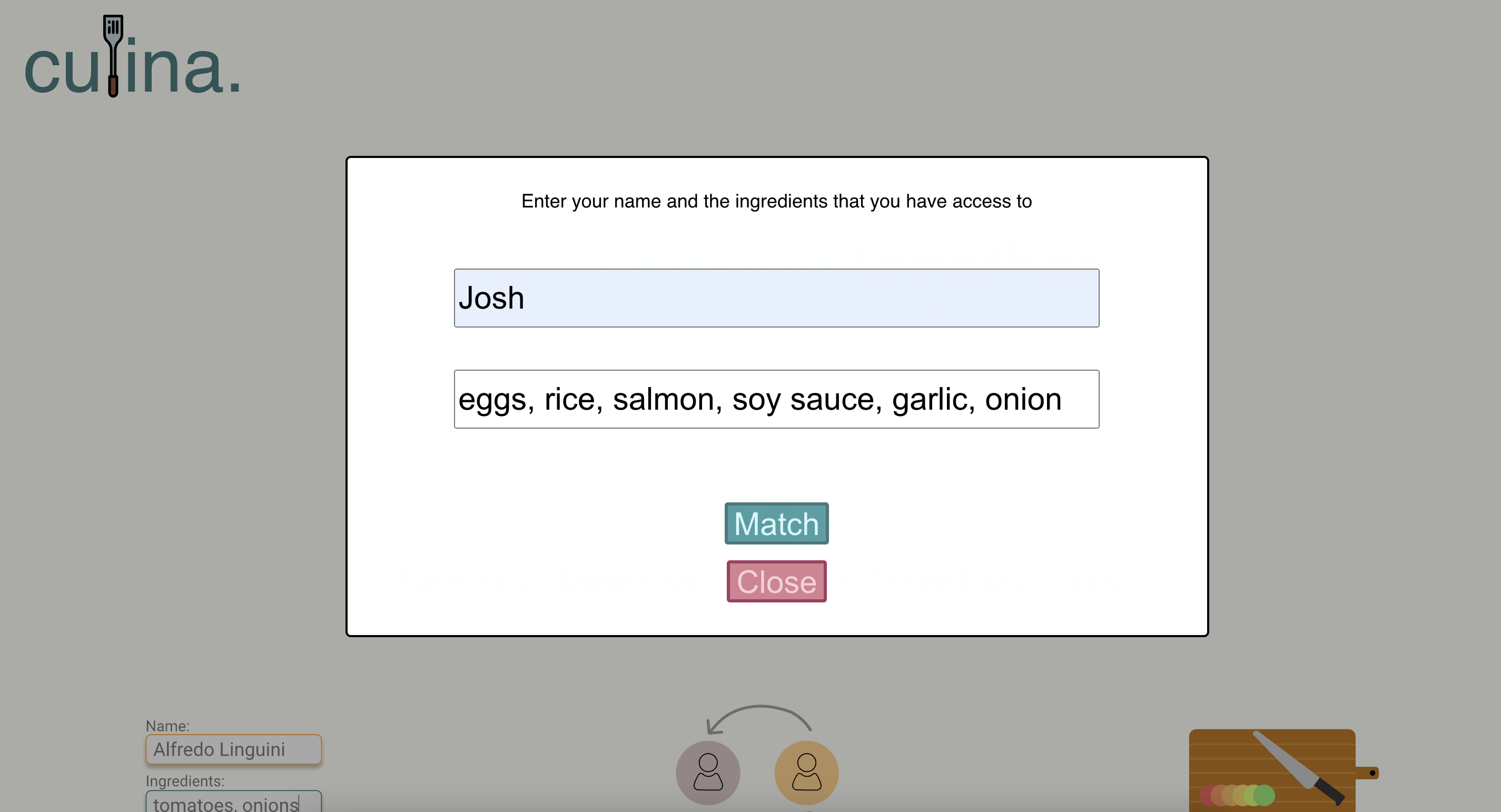
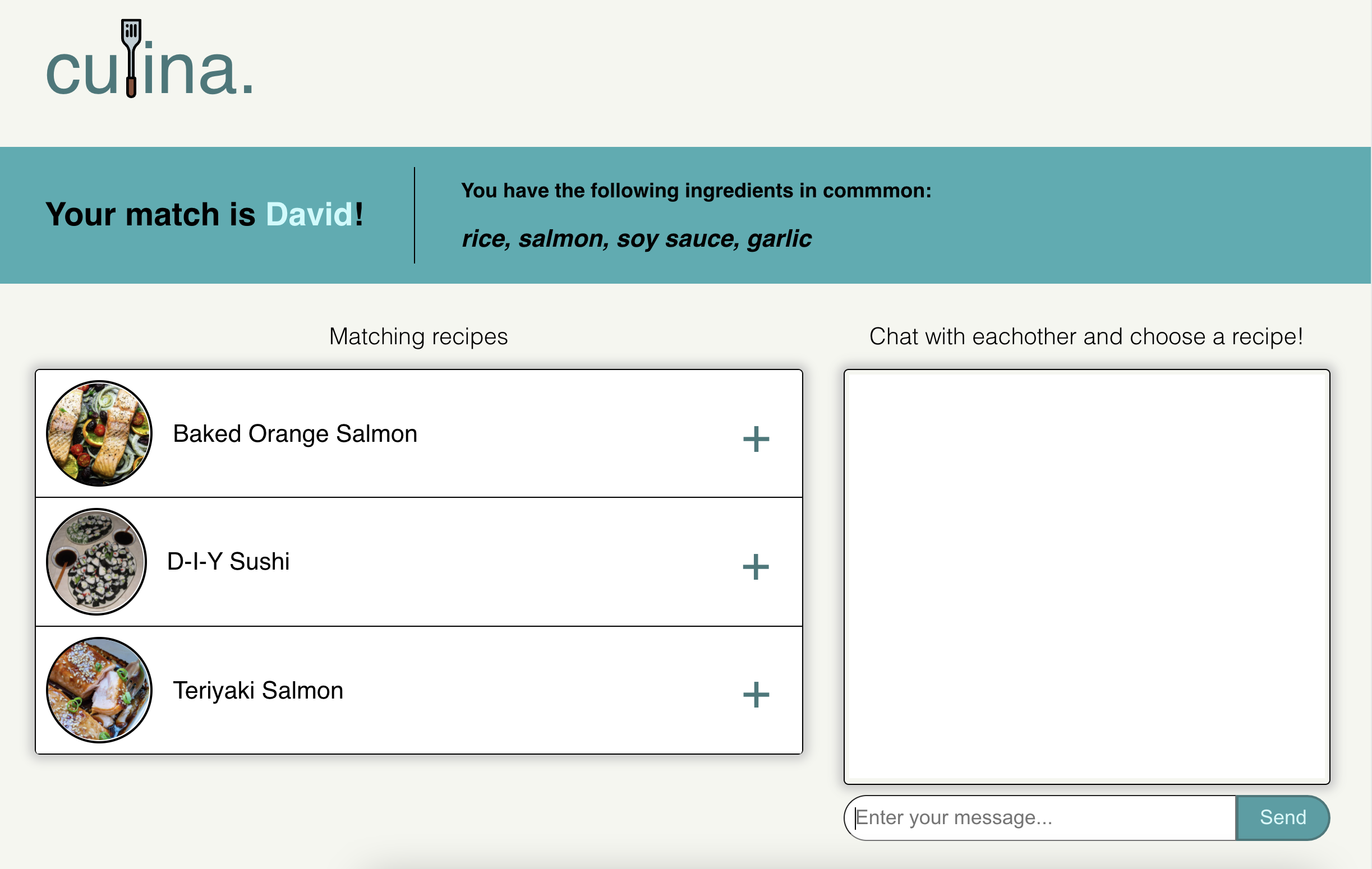
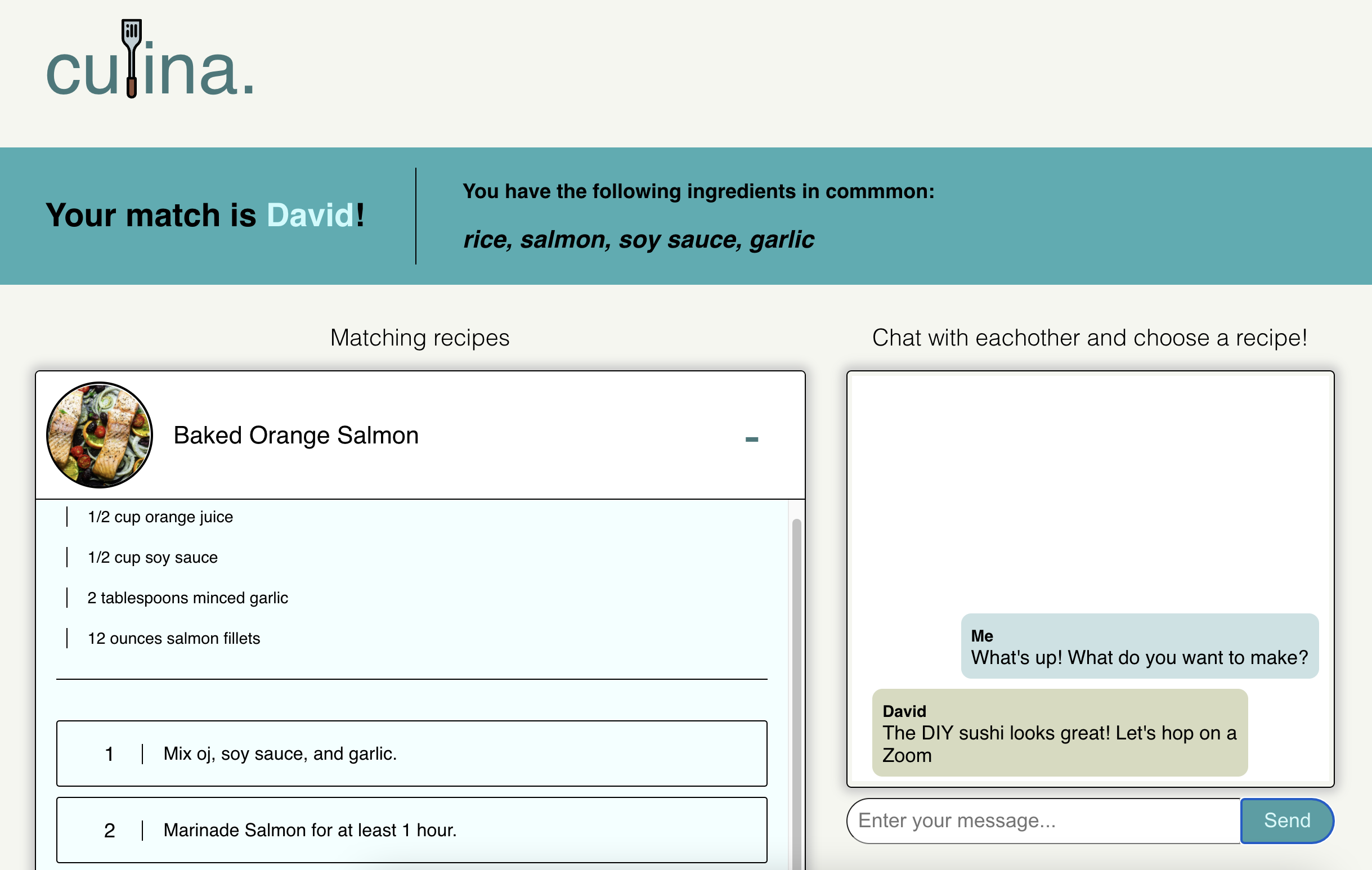
First, users input the groceries they have on hand. When another user is found with a similar pantry, the two are matched up and displayed a list of healthy, quick recipes that make use of their mutual ingredients. Then, they can use our built-in chat feature to choose a recipe and coordinate the means by which they want to remotely enjoy their meal together.
How we built it
The frontend was built using React.js, with all CSS styling, icons, and animation made entirely by us. The backend is a Flask server. Both a RESTful API (for user creation) and WebSockets (for matching and chatting) are used to communicate between the client and server. Users are stored in MongoDB. The full app is hosted on a Google App Engine flex instance and our database is hosted on MongoDB Atlas also through Google Cloud. We created our own recipe dataset by filtering and cleaning an existing one using Pandas, as well as scraping the image URLs that correspond to each recipe.
Challenges we ran into
We found it challenging to implement the matching system, especially coordinating client state using WebSockets. It was also difficult to scrape a set of images for the dataset. Some of our team members also overcame technical roadblocks on their machines so they had to think outside the box for solutions.
Accomplishments that we're proud of.
We are proud to have a working demo of such a complex application with many moving parts – and one that has impacts across many areas. We are also particularly proud of the design and branding of our project (the landing page is gorgeous 😍 props to David!) Furthermore, we are proud of the novel dataset that we created for our application.
What we learned
Each member of the team was exposed to new things throughout the development of culina. Yu Lu was very unfamiliar with anything web-dev related, so this hack allowed her to learn some basics of frontend, as well as explore image crawling techniques. For Camilla and David, React was a new skill for them to learn and this hackathon improved their styling techniques using CSS. David also learned more about how to make beautiful animations. Josh had never implemented a chat feature before, and gained experience teaching web development and managing full-stack application development with multiple collaborators.
What's next for culina
Future plans for the website include adding videochat component to so users don't need to leave our platform. To revolutionize the dating world, we would also like to allow users to decide if they are interested in using culina as a virtual dating app to find love while cooking. We would also be interested in implementing organization-level management to make it easier for companies to provide this as a service to their employees only. Lastly, the ability to decline a match would be a nice quality-of-life addition.





Log in or sign up for Devpost to join the conversation.