-
-
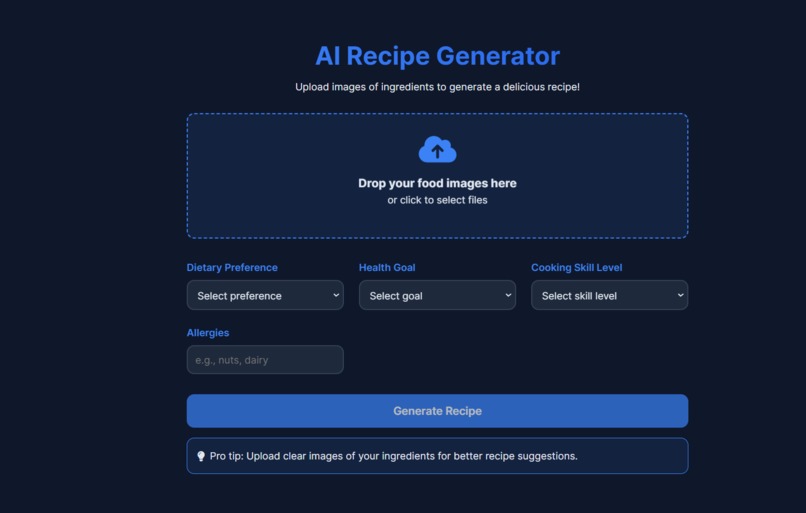
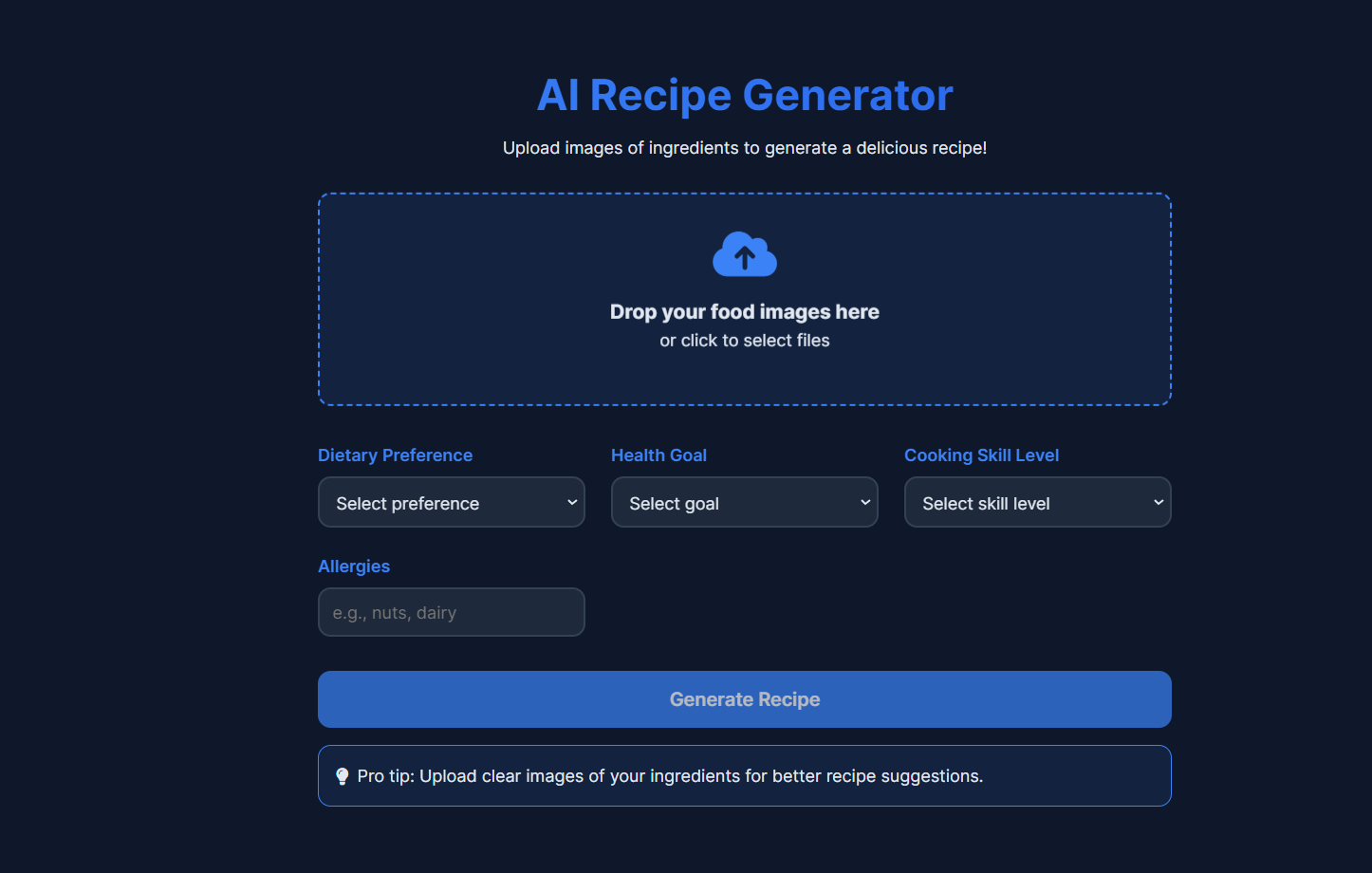
Home Page
-
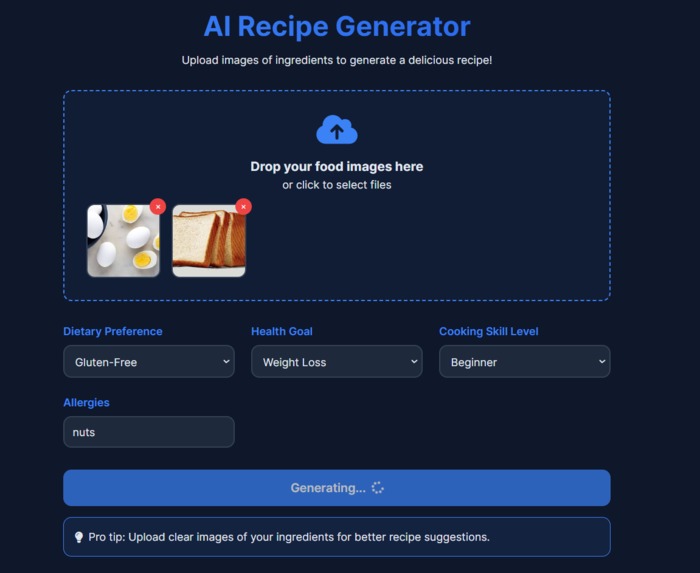
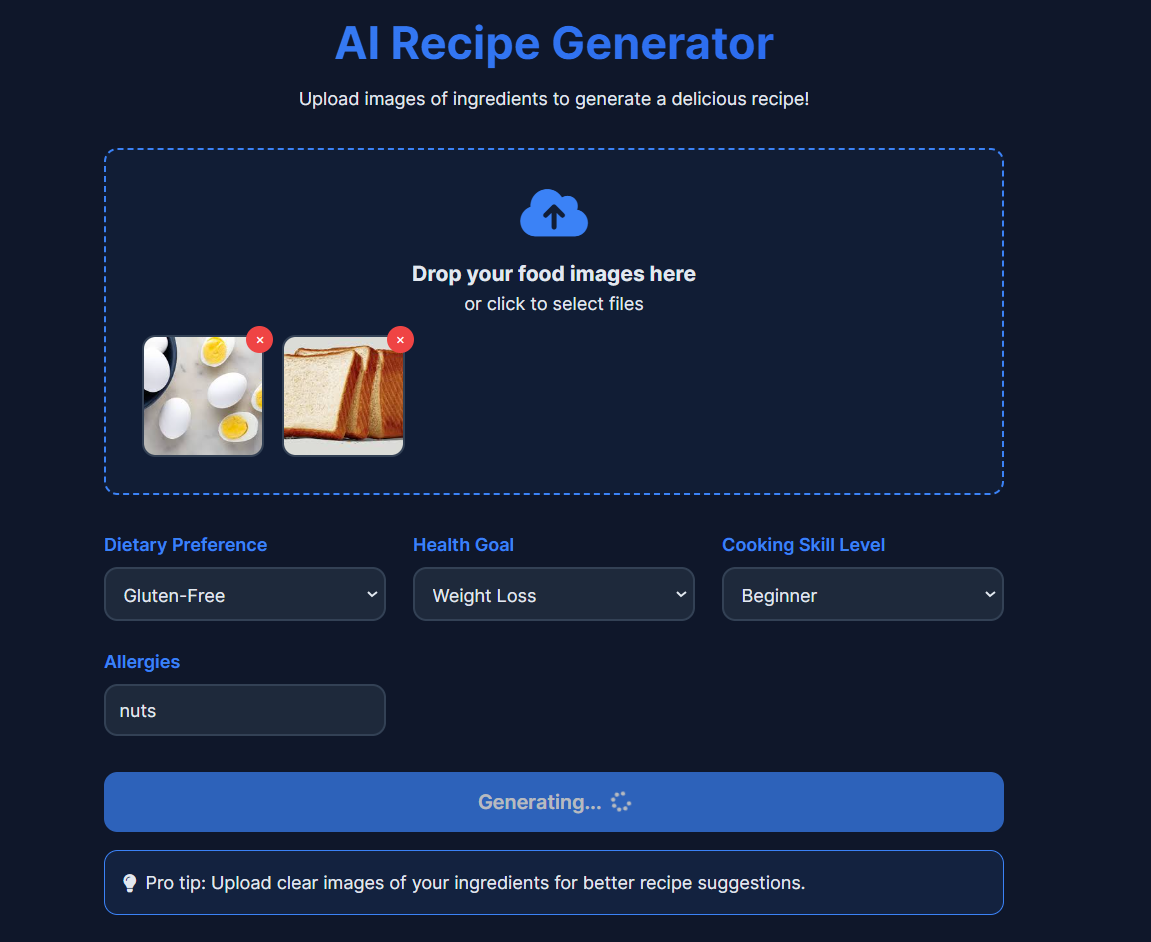
Genrating
-
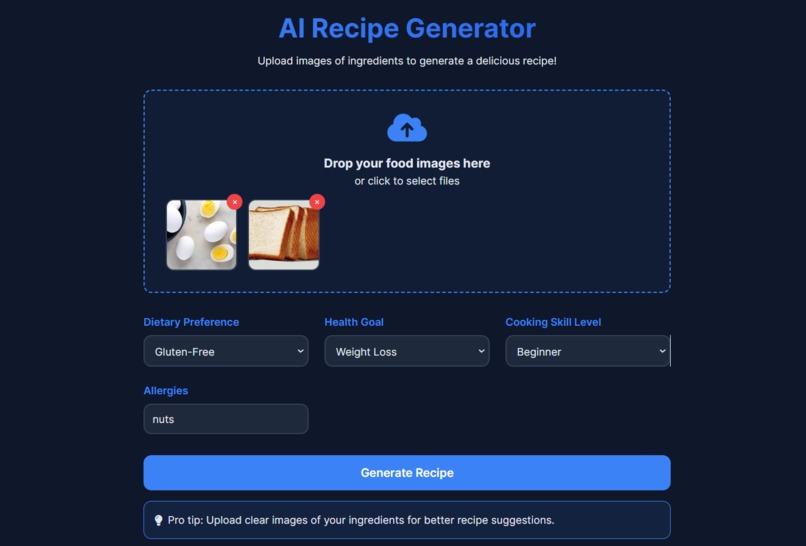
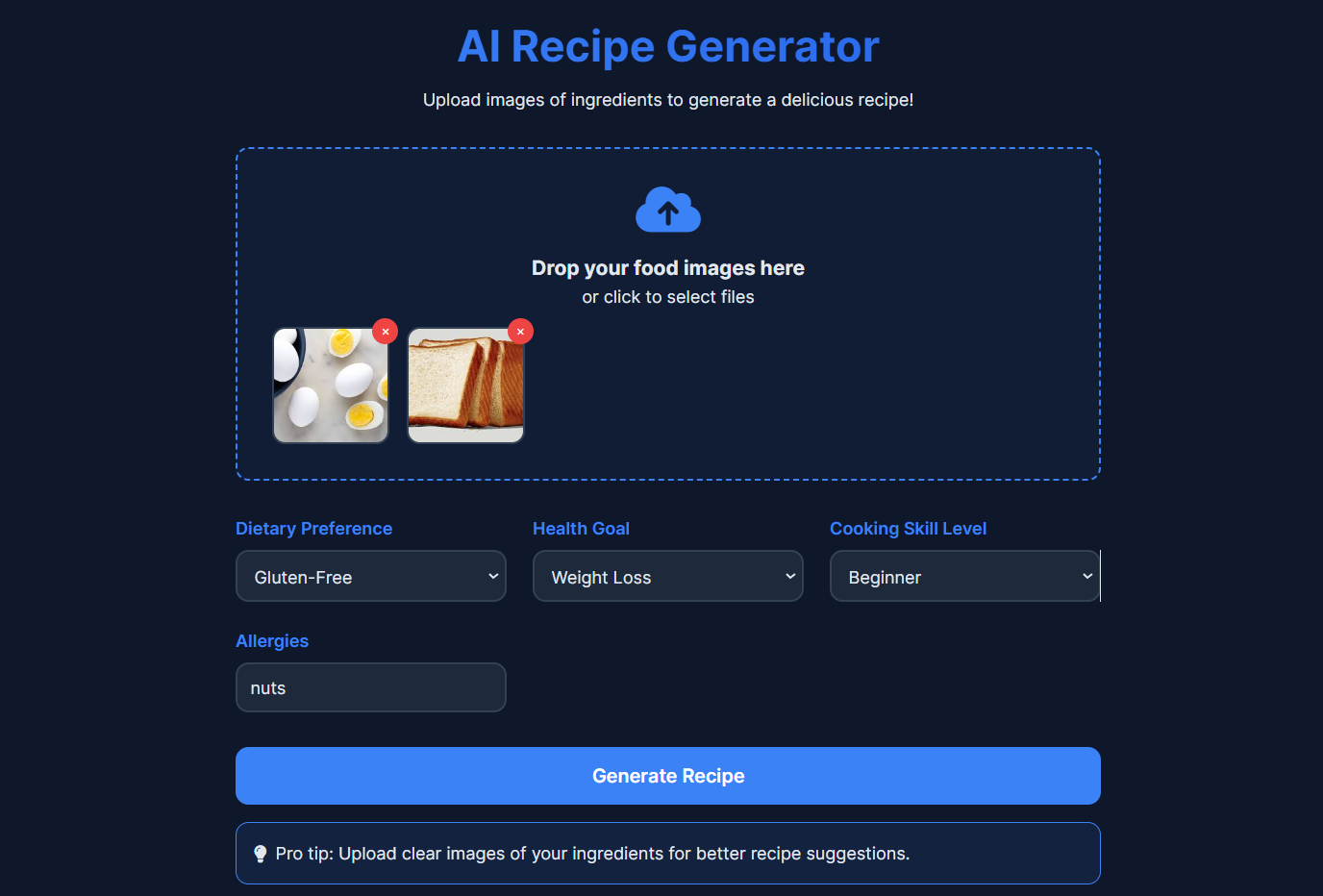
Adding Ingredients and Preferences
-
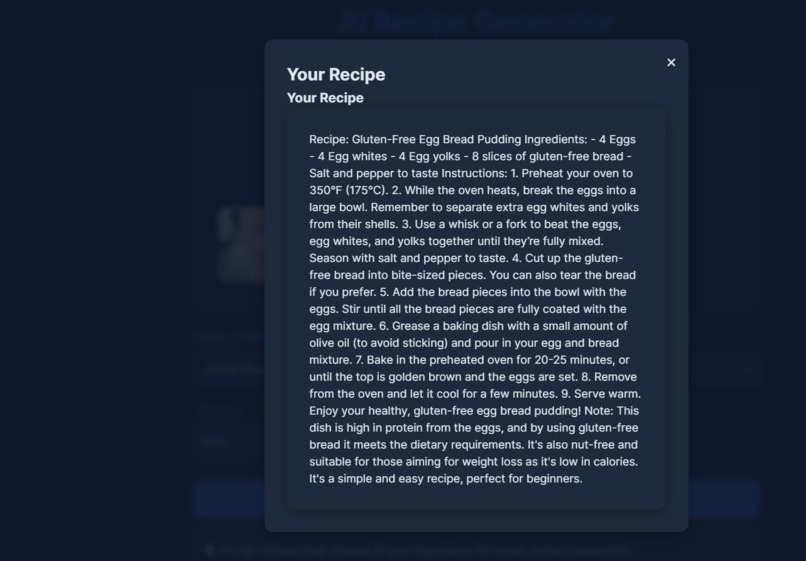
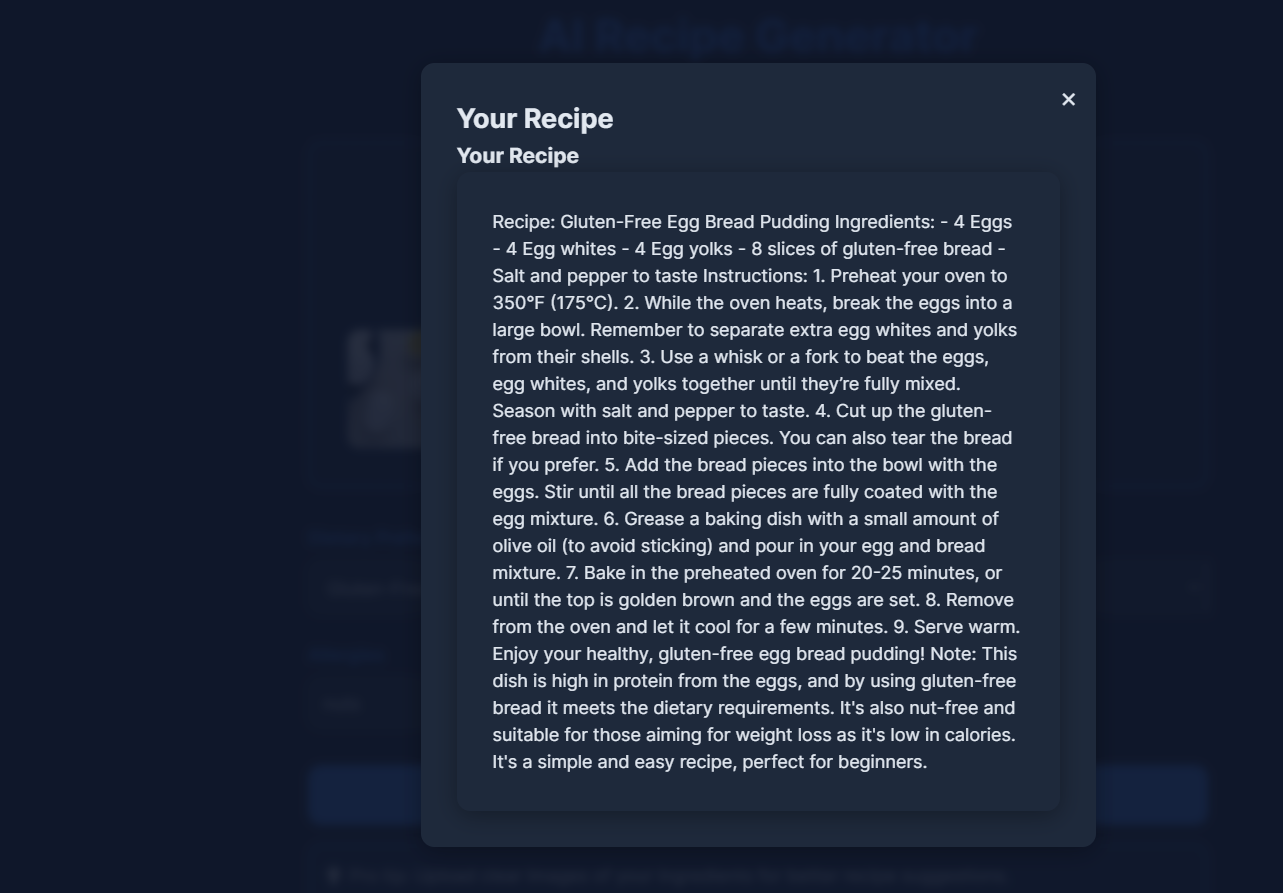
Recipe Output
Culina AI Project Summary
Inspiration
Cooking can be daunting, especially when limited by available ingredients, dietary restrictions, or a lack of inspiration. The idea behind Culina AI is to create a tool that transforms these challenges into opportunities for creativity, reducing food waste, and fostering healthier eating habits—all powered by artificial intelligence.
What It Does
Culina AI is an intelligent recipe generator designed to streamline and personalize cooking. Here’s what it offers:
- Ingredient Recognition: Upload images of available ingredients to identify them using AI-powered computer vision.
- Custom Recipe Generation: Receive tailored recipes based on dietary preferences, health goals, and skill levels.
- Dietary and Allergy Considerations: Ensure safe and inclusive recipes by incorporating dietary restrictions and allergies.
- Sustainability Focus: Maximize ingredient usage to minimize waste.
- User-Friendly Interface: Navigate seamlessly through an intuitive design.
How We Built It
Frontend:
- Technologies: HTML, CSS, and JavaScript for a responsive and visually appealing interface.
- Features: User-friendly input forms and drag-and-drop functionality for uploading images.
Backend:
- Framework: Flask to handle server-side logic.
- Recipe Engine: OpenAI GPT models for generating recipes from recognized ingredients and user preferences.
AI and Machine Learning:
- Computer Vision: Models trained to identify ingredients from images with precision.
- Natural Language Processing: Generate detailed, personalized recipes based on user inputs.
Data Handling:
- Ingredient datasets and recipe repositories were utilized for training and ensuring accurate outputs.
Challenges We Ran Into
- Image Recognition Accuracy: Differentiating between visually similar ingredients (e.g., flour vs. cornstarch) required advanced preprocessing techniques.
- User Diversity: Catering to a broad range of dietary preferences, allergies, and skill levels posed design challenges.
- Scalability: Ensuring the application could handle multiple concurrent users while maintaining performance.
- Integration: Combining computer vision with GPT-powered recipe generation into a cohesive system was technically complex.
Accomplishments That We're Proud Of
- Seamless User Experience: Created an intuitive and efficient tool for users of all skill levels.
- AI-Driven Insights: Successfully integrated AI to solve real-world cooking challenges.
- Sustainability Impact: Empowered users to reduce food waste through intelligent ingredient usage.
- Custom Recipes: Delivered truly personalized recipes that adapt to dietary needs and available ingredients.
What We Learned
- Technical Insights: Enhanced understanding of AI, computer vision, and natural language processing integration.
- User-Centric Design: Learned to prioritize user needs and preferences in application development.
- Collaboration: Developed stronger collaboration skills through effective team coordination across diverse technical domains.
What’s Next for Culina AI
- Enhanced Image Recognition: Incorporate advanced vision models to recognize mixed and complex ingredients in real-world scenarios.
- Meal Planning: Add functionality to create meal plans and generate shopping lists based on user preferences.
- IoT Integration: Enable real-time guidance by connecting with smart kitchen devices.
- User Feedback Loop: Implement ratings and feedback mechanisms to refine recipe suggestions and improve AI accuracy.
- Language Support: Expand language capabilities for global usability.
Transform Cooking with Culina AI
Discover a new way to cook smarter, waste less, and enjoy personalized meals that align with your lifestyle. Join us in redefining the culinary experience. 🌟
Built With
- css3
- flask
- html
- javascript
- openai


Log in or sign up for Devpost to join the conversation.