-
Short-term load forecasting
Inspiration
Buildings contribute nearly one-third of global energy use and emissions, making them a key focus for sustainability. We wanted to create a solution that not only forecasts energy demand but also detects inefficiencies in real-time, driving smarter, greener buildings.
What it does
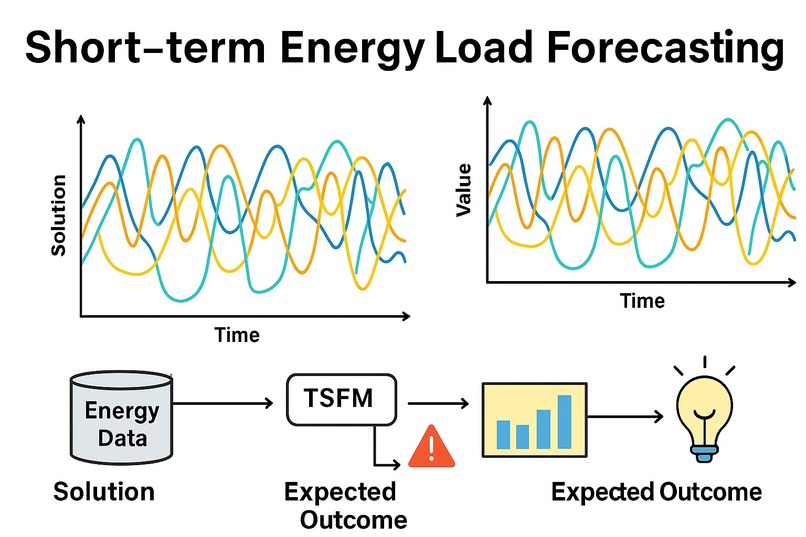
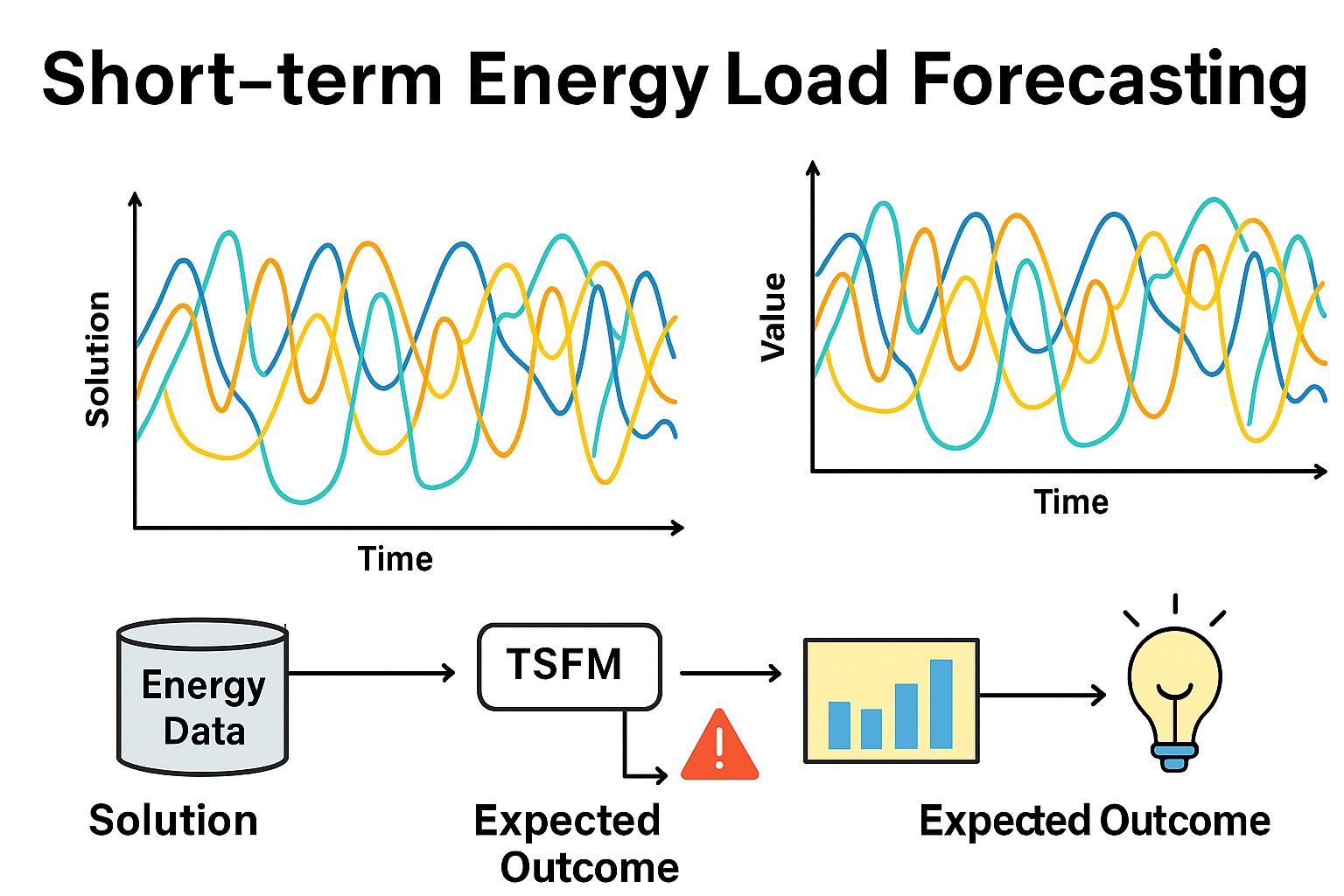
Our system provides short-term energy load forecasting using pre-trained Time Series Foundation Models (TSFMs). It predicts hourly or daily energy demand for commercial and residential buildings and detects anomalies, helping reduce wastage and optimize renewable energy integration.
How we built it
Collected and preprocessed building energy consumption datasets.
Leveraged pre-trained TSFMs to generalize across diverse building types.
Fine-tuned models for specific operational needs where required.
Integrated an anomaly detection module to identify unusual consumption patterns.
Challenges we ran into
Handling irregular or incomplete datasets from different building types.
Balancing model accuracy with computational efficiency for real-time use.
Designing a scalable system that works for both small residences and large commercial spaces.
Accomplishments that we're proud of
Achieved high forecasting accuracy without extensive retraining.
Successfully implemented anomaly detection to identify potential faults early.
Created a solution that is adaptable, cost-efficient, and supports decarbonization goals.
What we learned
The importance of pre-trained foundation models in reducing development time.
How small data irregularities can significantly affect time-series forecasting.
Strategies to integrate renewable sources with better load predictions.
What's next for Short-term energy load forecasting
Scaling the solution for real-time deployment in smart cities.
Incorporating renewable energy source predictions (solar, wind) for more holistic energy planning.
Developing a user dashboard for building managers with actionable insights and anomaly alerts.
Built With
- aws/google-cloud
- numpy
- pandas
- plotly
- postgresql/mysql
- python
- scikit-learn
- streamlit
- tensorflow/pytorch

Log in or sign up for Devpost to join the conversation.