-
-
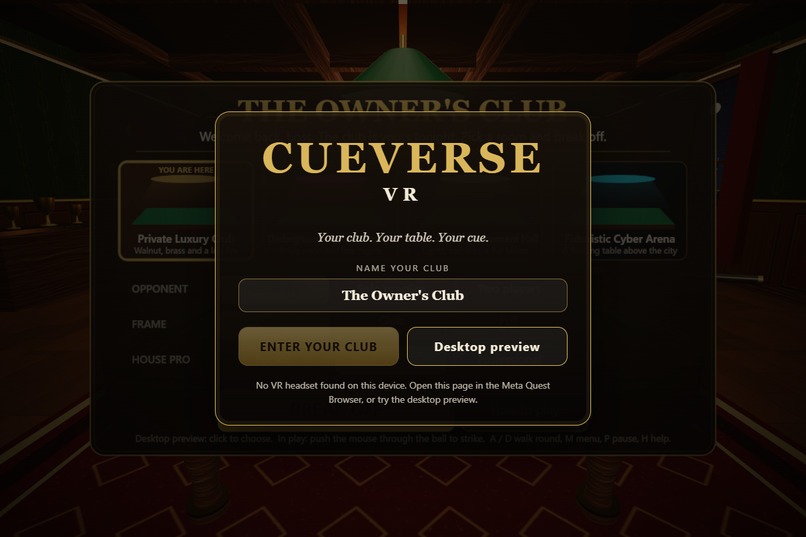
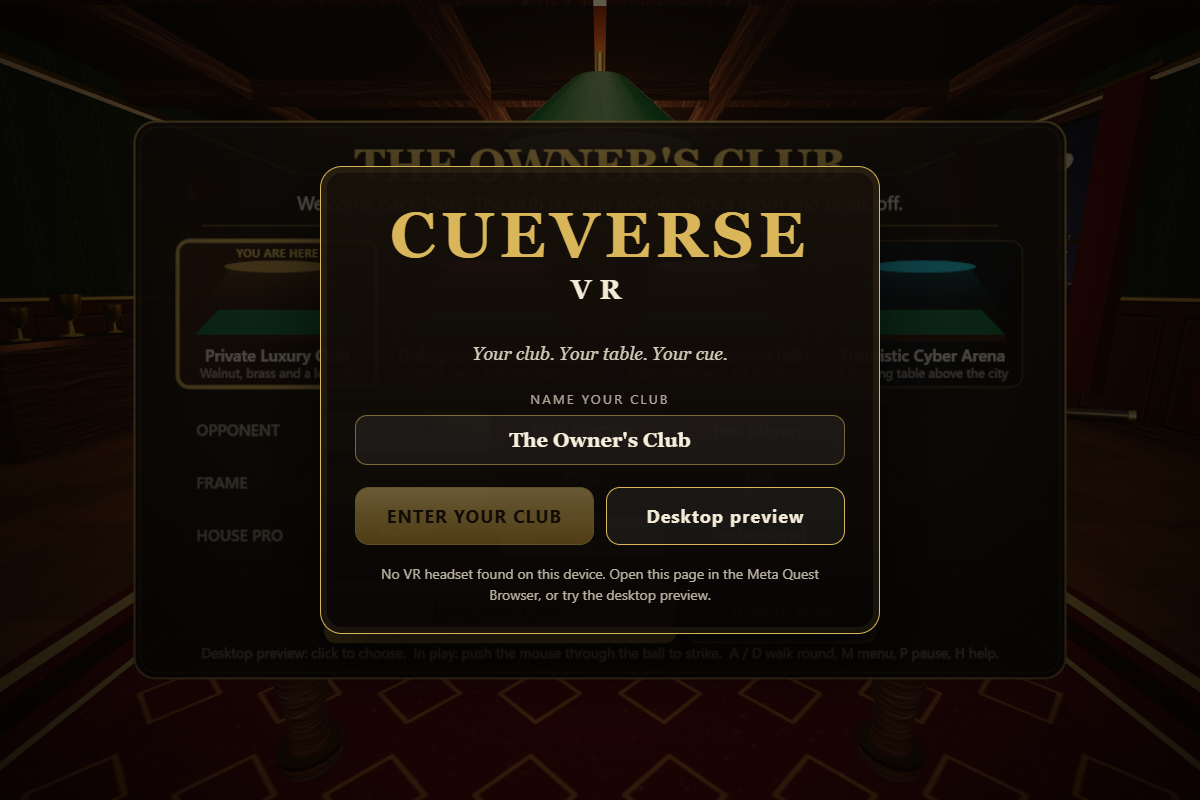
Name your club and enter it. Works on Quest or as a desktop preview.
-
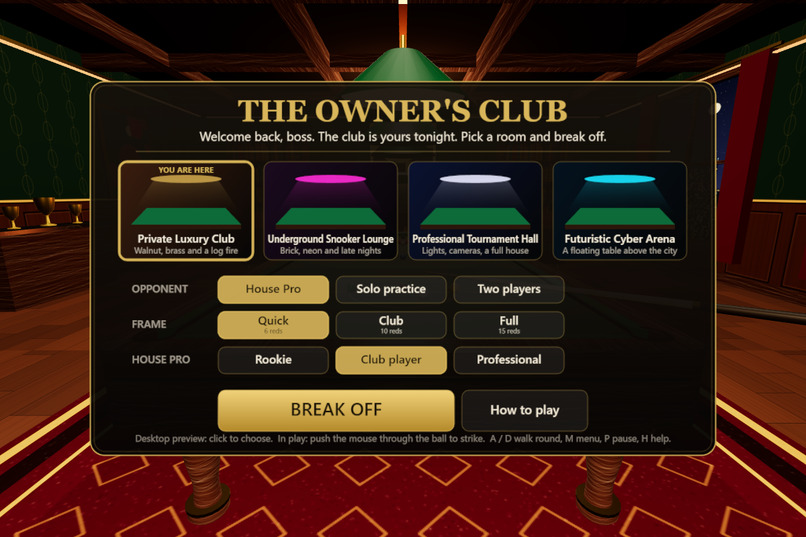
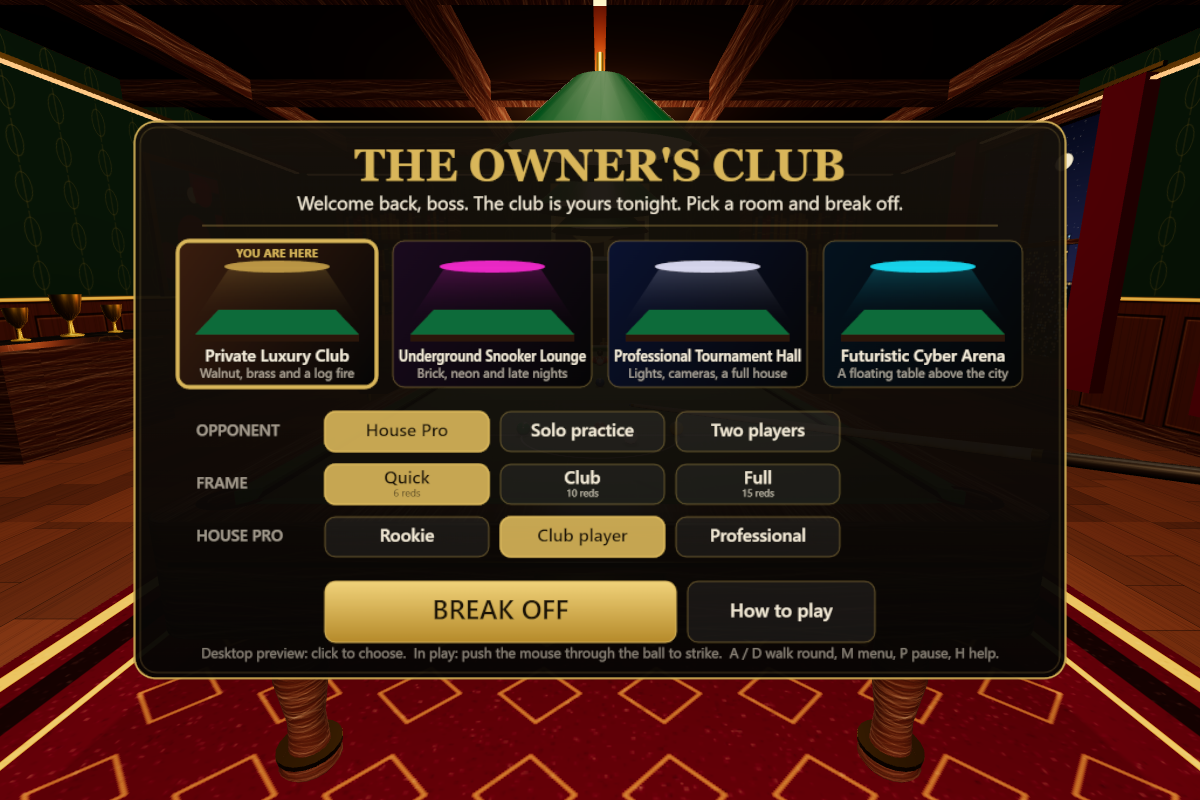
The table menu: pick a room, opponent, frame length and House Pro level.
-
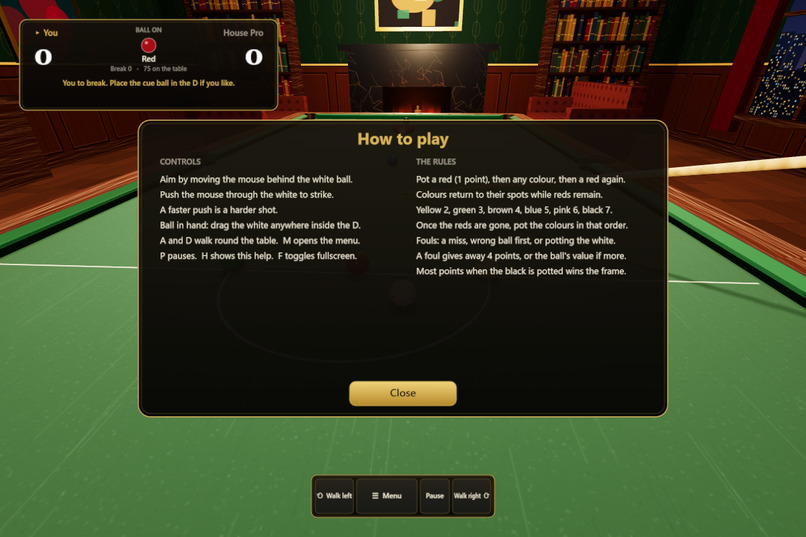
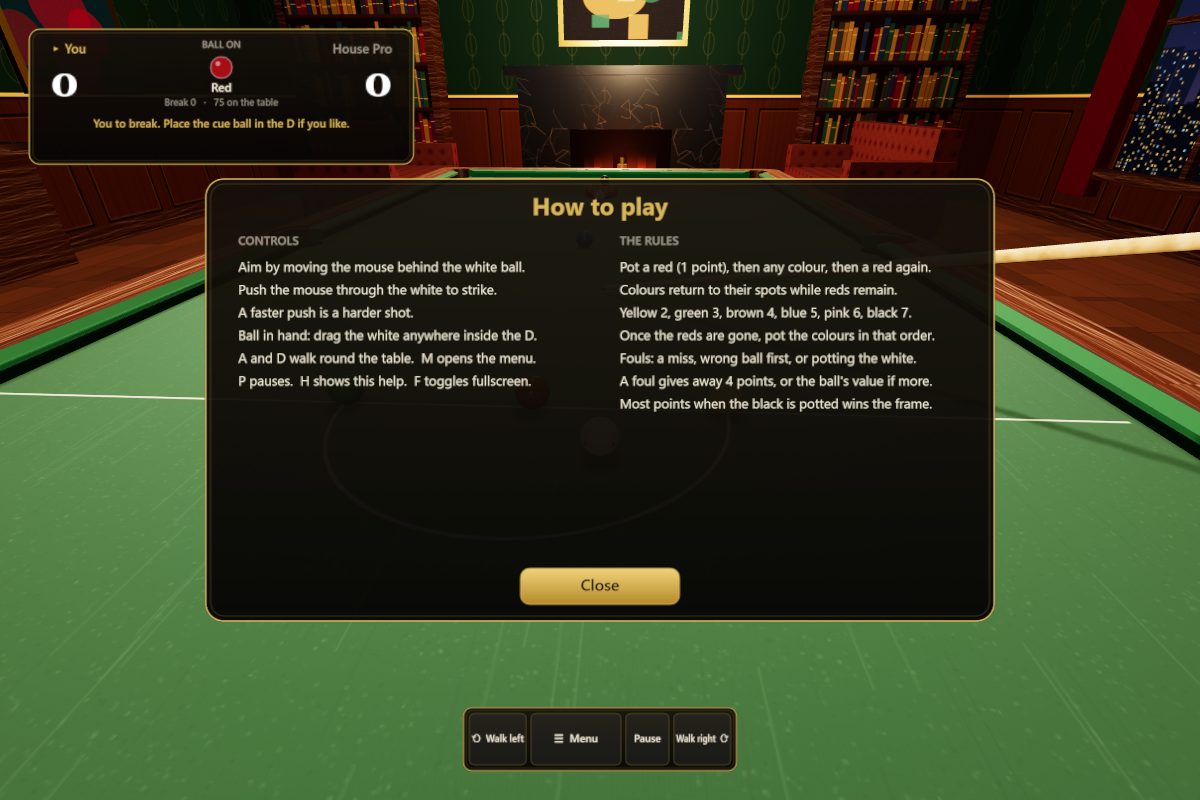
How to play: grab, bridge, pinch to walk, palm up for the menu.
-
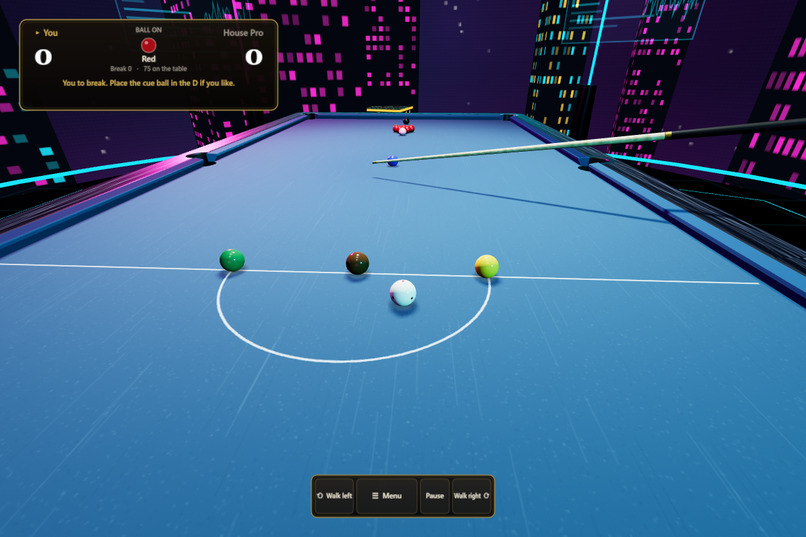
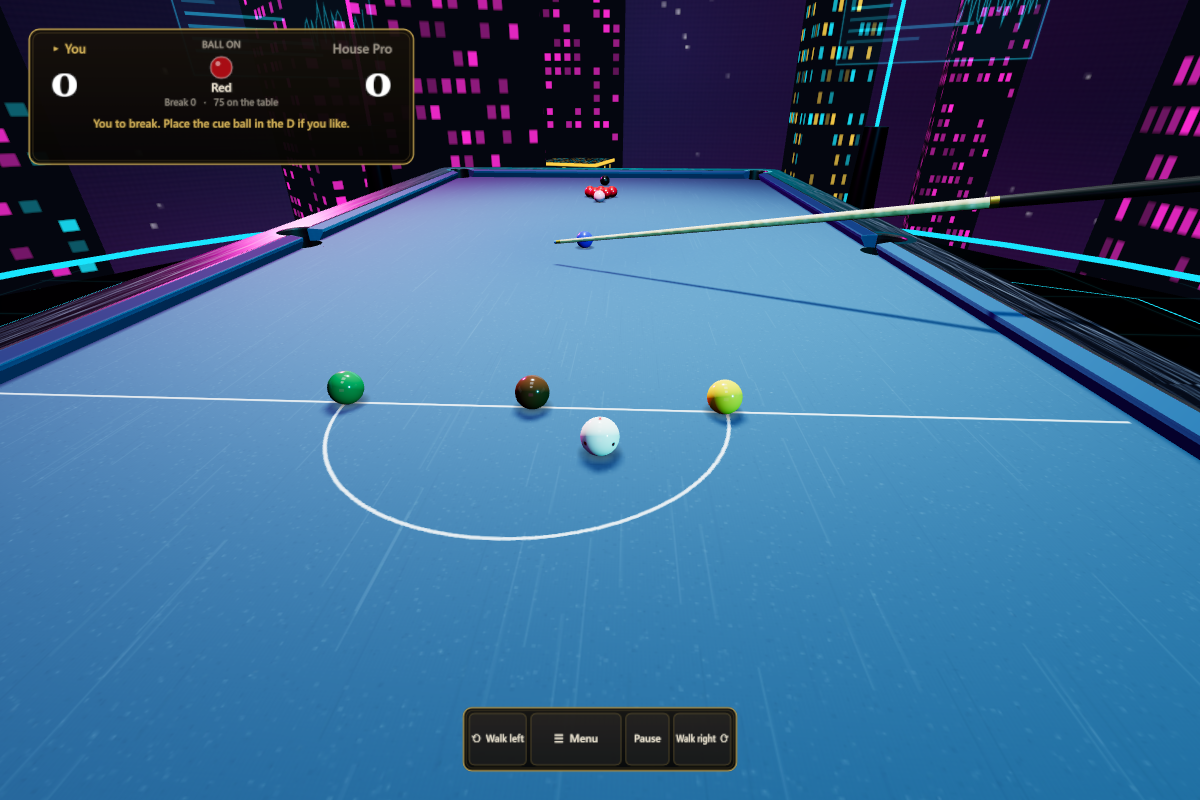
The Futuristic Cyber Arena, a table floating above the city.
-
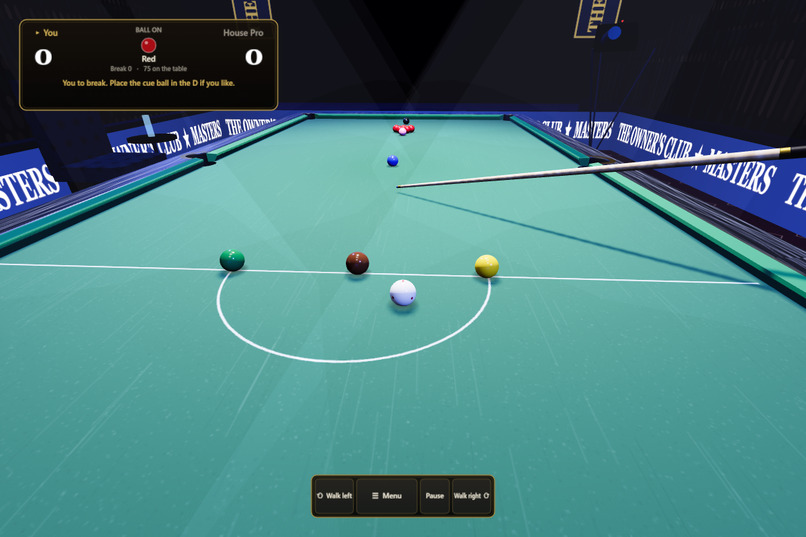
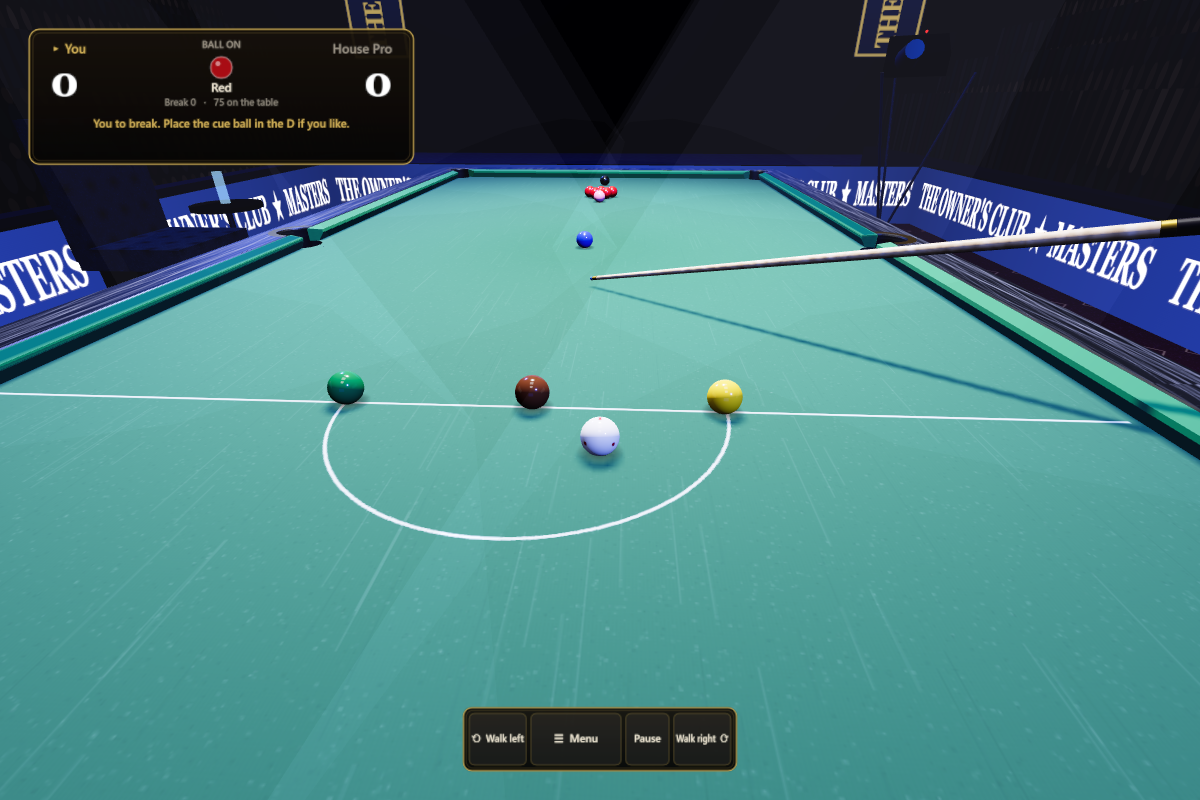
The Professional Tournament Hall, with a crowd and a big screen.
-
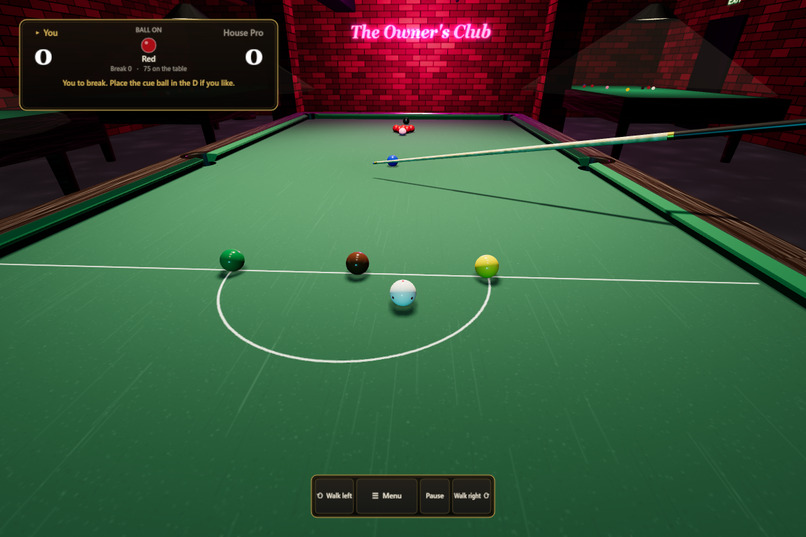
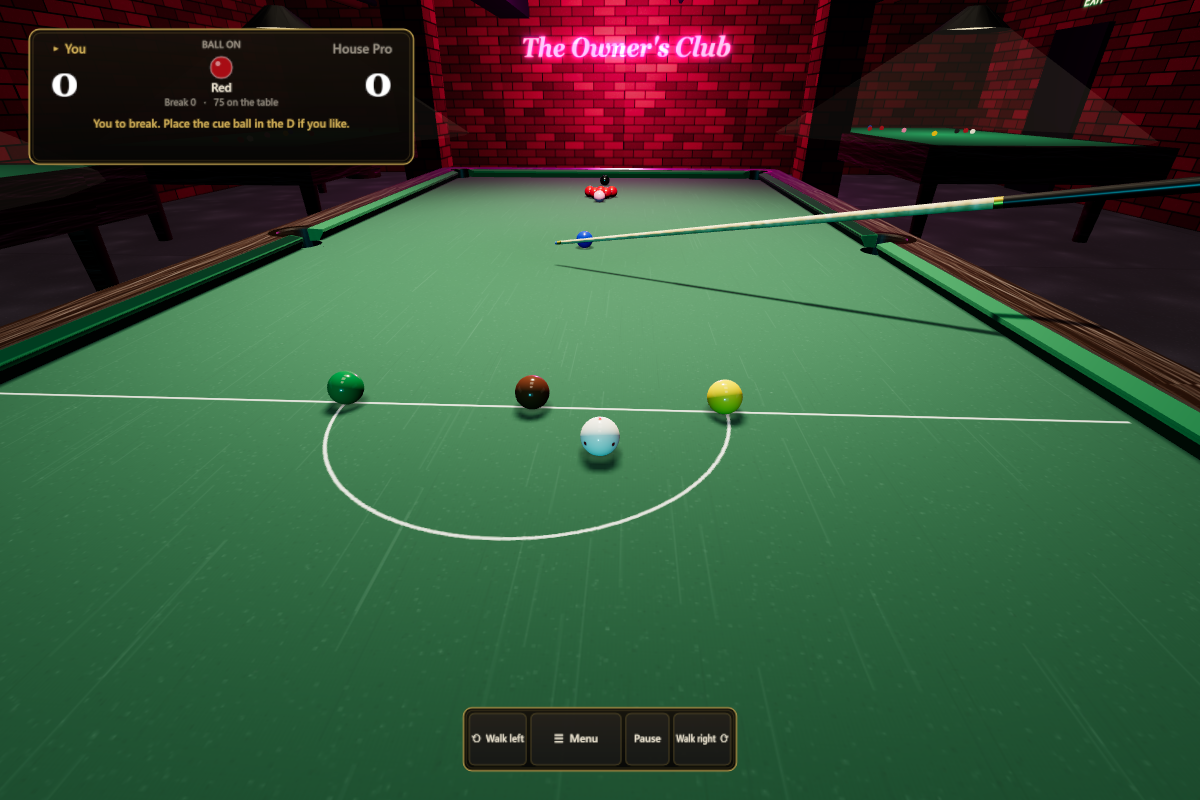
The Underground Snooker Lounge. Brick, neon and late nights.
-
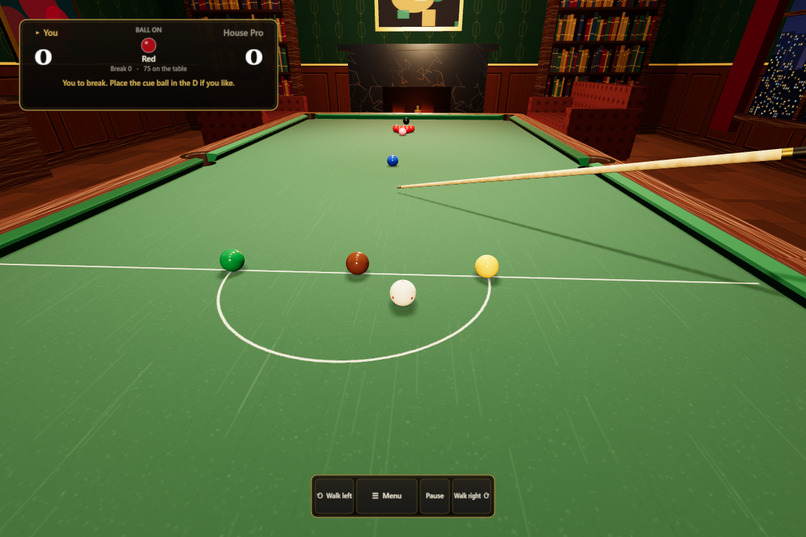
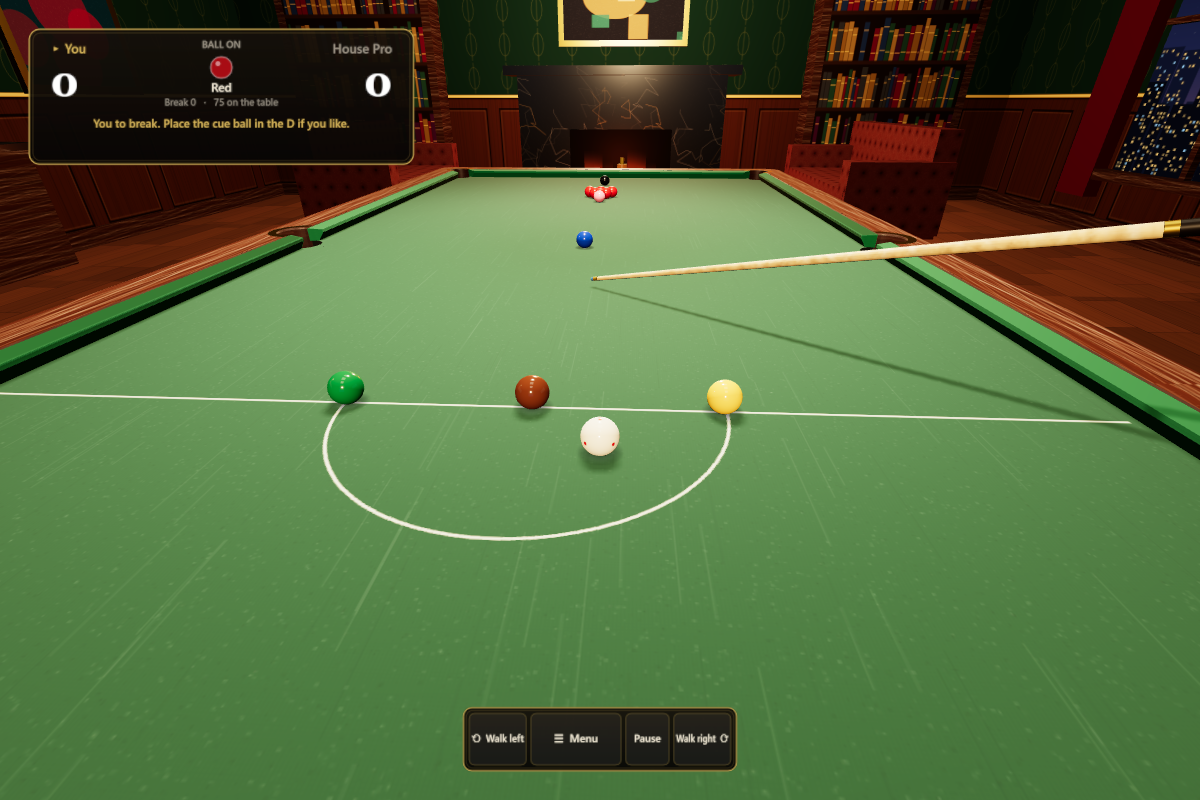
The Private Luxury Club. Walnut, brass and a log fire.
Inspiration
I fell in love with snooker by watching it online. I have never had a full-size table within reach. VR can put one in any room, so the only thing left to solve was the cue stroke, and a plastic controller held like a cue was never it. I wanted to see if a real stroke could be read from your bare hands.
What it does
First-person, hand-tracked snooker for Meta Quest, running in the Quest Browser. No install.
- Grab the cue with your hand, pull back, push through the white. Hand speed is the power. Bridge with your other hand for top, back or side spin.
- Full snooker rules: 15 reds, re-spotted colours, fouls, free balls, snookers, re-spotted black, 147.
- Real spin physics: slide, roll, swerve, side off the cushions.
- House Pro AI at three levels, solo practice, two-player.
- Four rooms: luxury club, underground lounge, tournament hall, cyber arena.
- Replays, spatial audio, and a desktop preview you can try with a mouse.
How we built it
Plain JavaScript on three.js, bundled with Vite. No engine, no backend, no image or audio files. Every texture, room and sound is generated in code.
- Hand input comes from the WebXR Hand Input API into a small layer the cue, physics and menus share. Controllers are a fallback.
- Physics, rules, AI and the cue stroke are headless modules with a Node test suite. GitHub Actions runs the tests and publishes to GitHub Pages.
Challenges we ran into
I planned this in Unity. My PC could not run it. It is a 2012 Dell Vostro 3560 laptop: a 3rd-generation Intel Core i5-3380M (2 cores, 2.9 GHz), 8 GB of RAM, Intel HD Graphics 4000 integrated graphics with no dedicated GPU, a 128 GB SSD, running Windows 10 Pro. The Unity editor was unusable and Quest builds took most of an hour, so I switched to the browser, where a full build takes four seconds. Every choice above comes from that: no engine, no asset pipeline, tests that run without a browser.
I do not own a Meta Quest. This game has never run on a headset. Hand tracking is written to the WebXR spec and tested with simulated hands in Node: a real stroke fires, a feathering touch does not, a sudden hand jump never does. Everything else is checked in the desktop preview. The stroke thresholds are single numbers in one file and will need tuning on real hardware. I would rather tell you that than have you find out on the first grab.
Accomplishments that we're proud of
- A cue stroke read from bare hands, with spin from a two-hand bridge.
- The complete snooker rule set, down to free balls and the re-spotted black.
- Four rooms, a table, hands and sound shipped with zero art or audio files.
- All of it built on a 2012 laptop with no game engine and no headset.
What we learned
Constraints decide the architecture. Losing Unity gave me a small, testable, engine-free game, and that turned out to be a strength. But you can build a VR game without a headset; you cannot finish one.
What's next for CueVerse VR
- A day with a real Quest to tune grab, stroke and power.
- A native Unity build on the Meta XR SDK, carrying over the physics, rules and stroke model, once I have a machine that can run it.
- Online two-player, passthrough mode, tournaments.
This is the version my hardware allowed, and it already proves the idea. Give me a capable PC and a Quest and I will build the version I set out to make.
