-
-
The planning pages
-
The planning pages
-
The planning pages
-
The planning pages
-
The planning pages
-
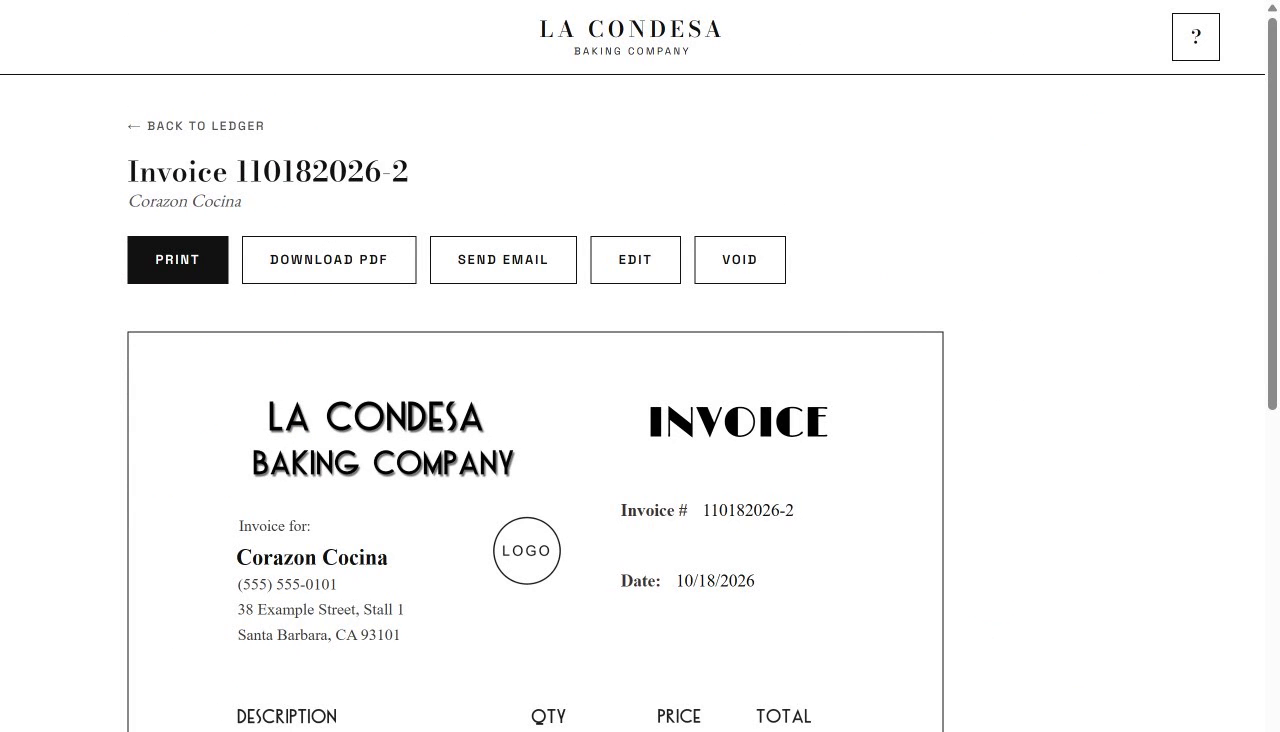
The branded invoice
-
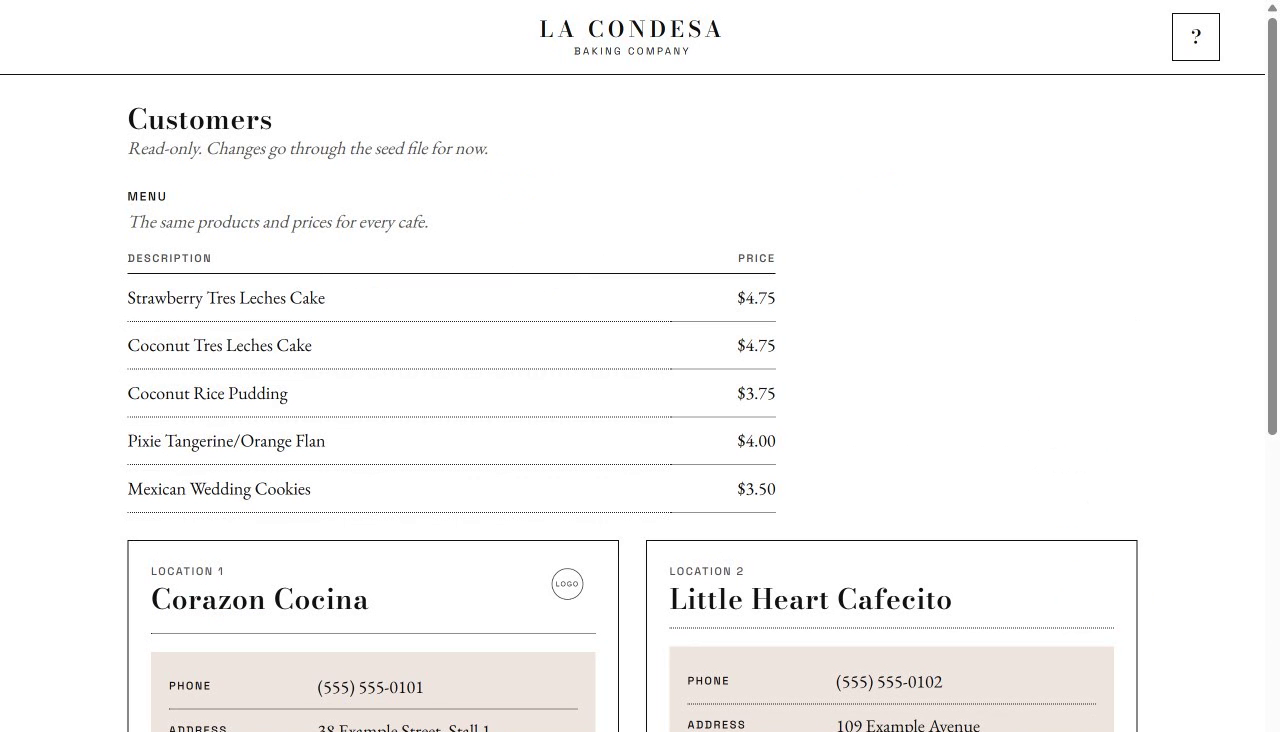
Customers and the menu
-
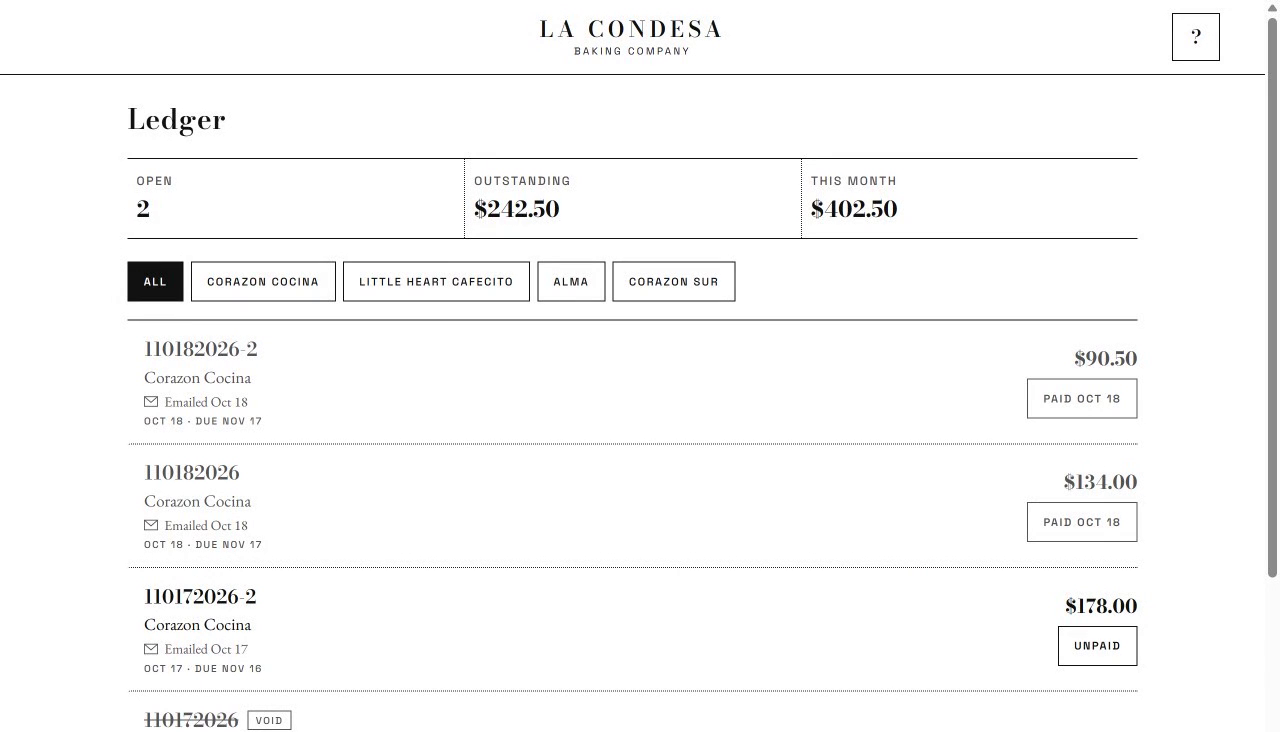
The Ledger
Cuenta — Because the Yellow Book Was Too Important to Lose
A phone-first bakery workflow built for Eileen, with the Devpost Learn Skill Pack.
Demo: https://www.youtube.com/watch?v=jktG-dGdQZc
Source and build evidence: https://github.com/earlgreyhot1701D/cuenta
Inspiration
Last week, Eileen lost the yellow book.
The yellow book is sacred. Eileen runs a wholesale bakery serving four cafés, and that notebook holds the counts she uses to decide what to bake and the delivery records she needs to prepare invoices. Her bookkeeping depended on handwritten forms, manual calculations, and remembering which customers still owed her money.
For a little while, the book—and all that information—was missing. Thankfully, we found it. But I couldn't stop thinking about how much of someone's livelihood could depend on one notebook.
I wanted to build something for someone I care about. Not an enterprise platform, not a generic dashboard: a practical tool that fits the way Eileen already works. The Devpost Learn Skill Pack offered a second opportunity: could I use a plan-first AI workflow to avoid some of the expensive mistakes I'd made while building before?
That's how Cuenta began.
What it does
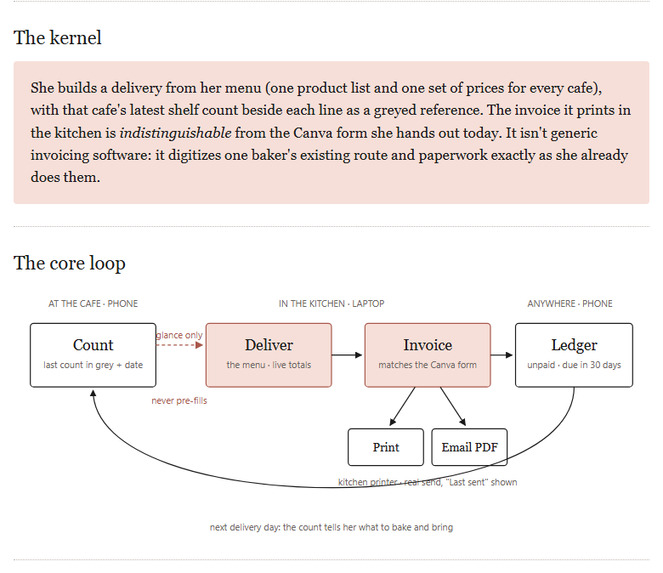
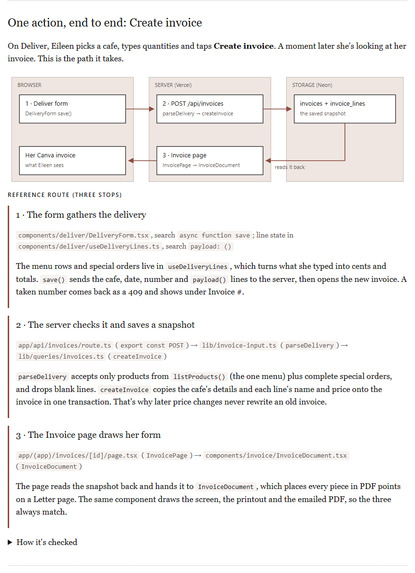
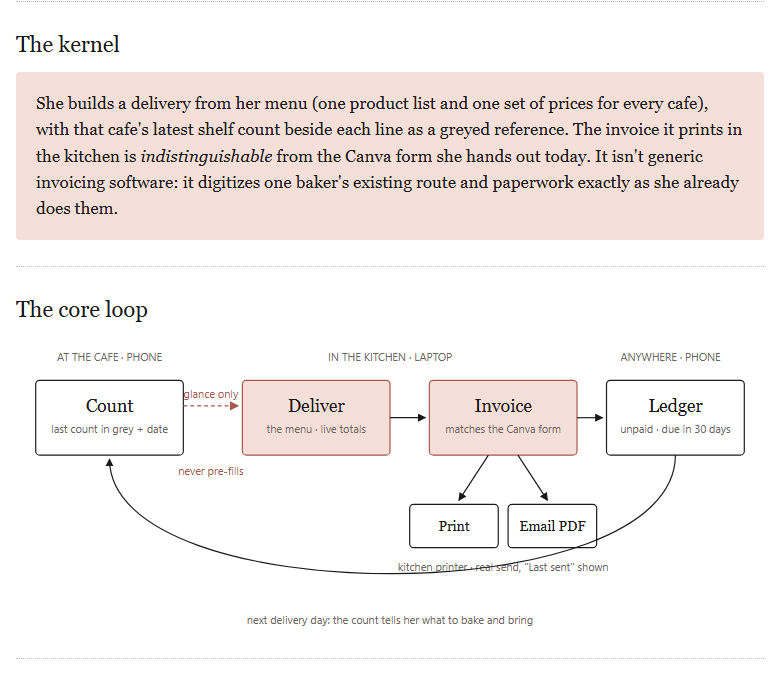
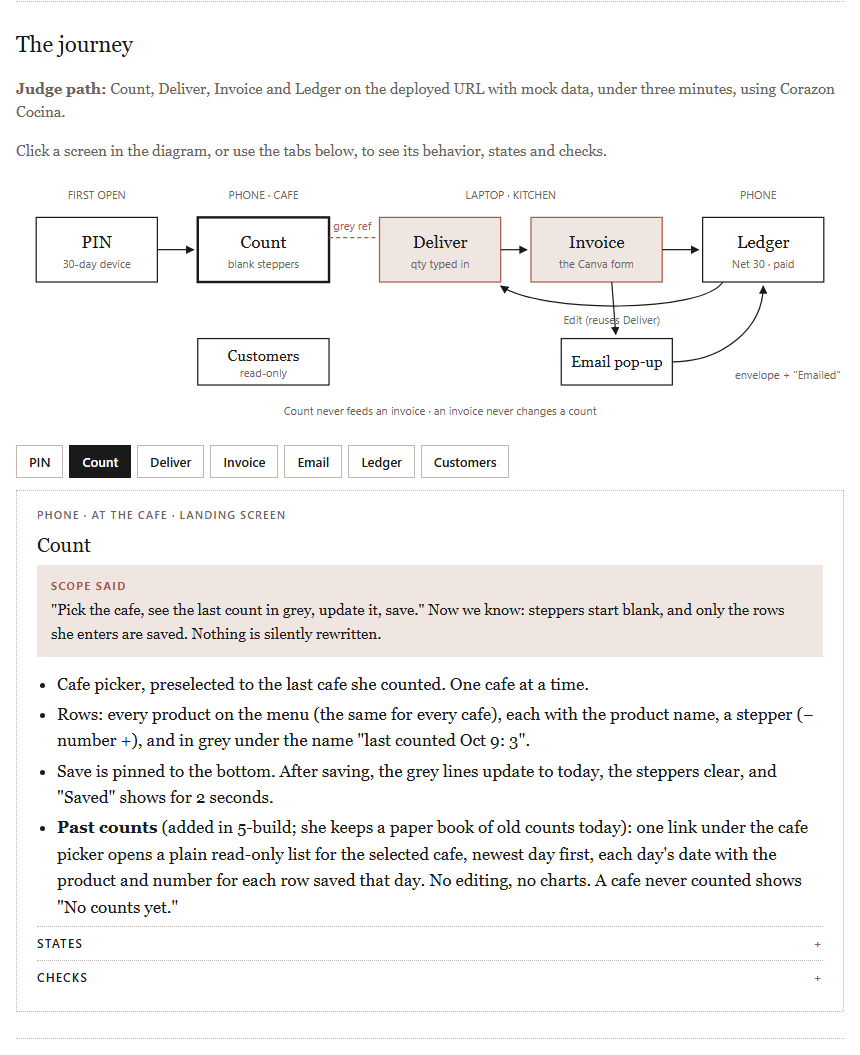
Cuenta takes the yellow book to the cloud and connects Eileen's daily route into one phone-first workflow: Count → Deliver → Invoice → Ledger.
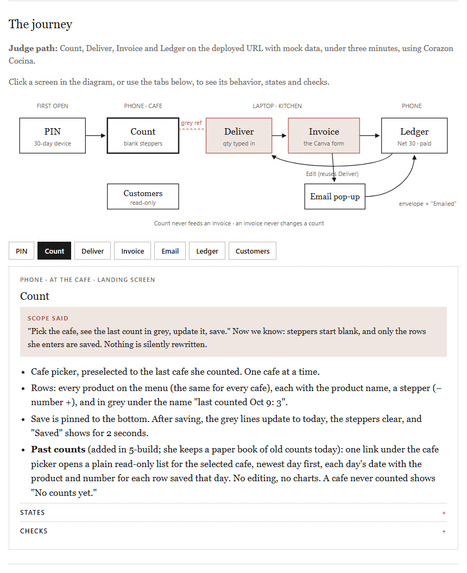
- Count: Record what remains on each café's shelves. The latest count is visible while entering a new one, and earlier counts remain available by café and date.
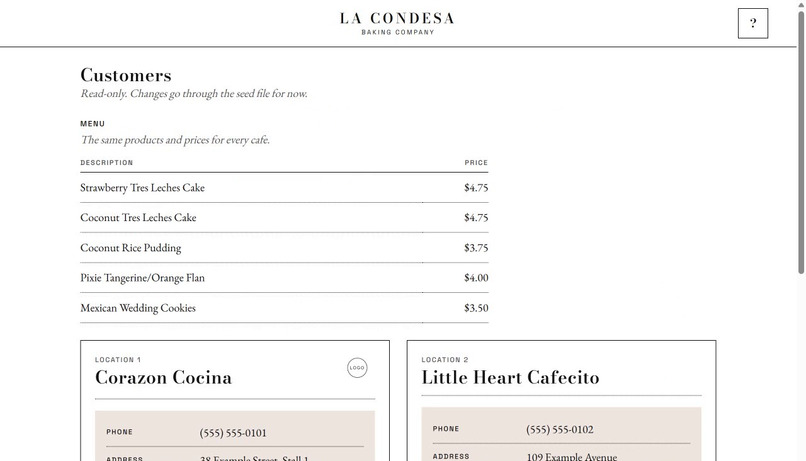
- Deliver: Select a café, enter delivered quantities from a shared menu, see totals calculated automatically, and add one-off special orders when needed.
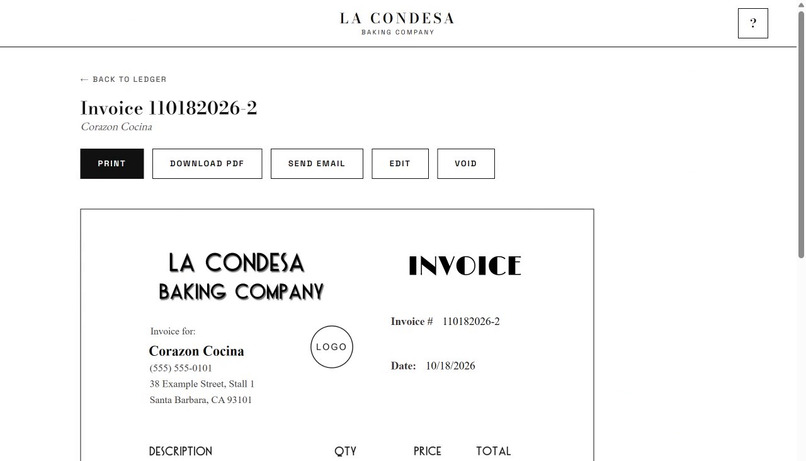
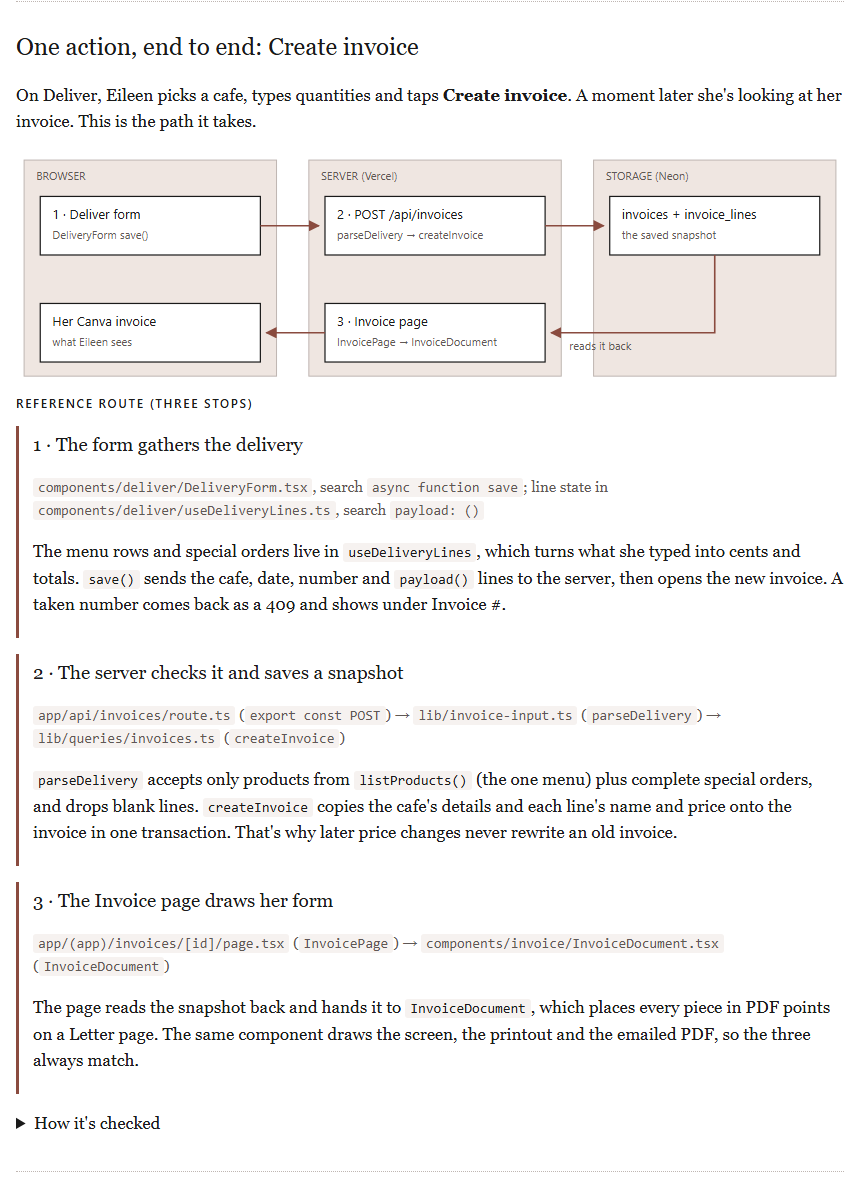
- Invoice: Generate an invoice modeled on Eileen's existing Canva form, then print it, download a PDF, or send it by email. Sent status and errors are shown clearly.
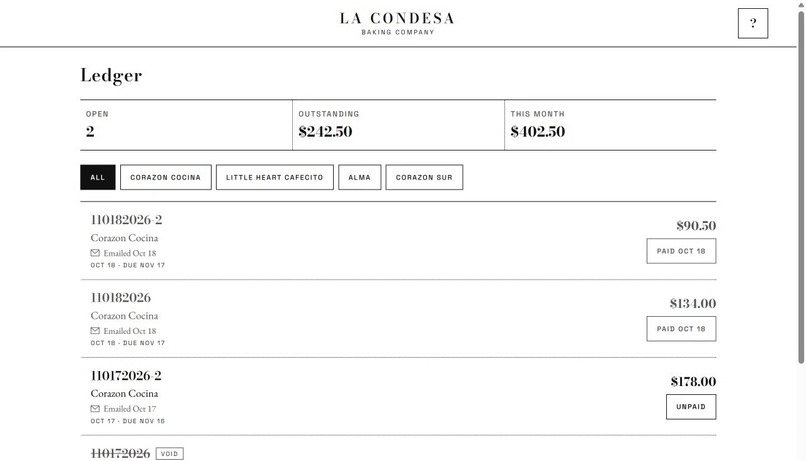
- Ledger: See open and outstanding invoices, overdue balances, and payment status. Filter by café, mark invoices paid or unpaid, and void mistakes without erasing their history.
A price change later doesn't rewrite an old invoice: each invoice stores a snapshot of its line items and customer details. Counts preserve their history, and voided invoices remain visible. Those are small technical decisions with big practical consequences when a business needs trustworthy records.
The point wasn't to teach Eileen a new way to run her bakery. It was to give her existing workflow a safer home.
How we built it
I started in VS Code with Claude Code and the Devpost Learn Skill Pack. Instead of asking an agent to build everything at once, I let the skills interview me about the problem. We created and approved a scope, PRD, and technical specification before implementation.
Then we divided the project into eight reviewable slices. Each slice had a concrete outcome, a mechanical check, and a hands-on checkpoint. The build checklist records what was planned, what was checked, and what changed. I also used Claude Cowork for additional review and Google Stitch for UI inspiration.
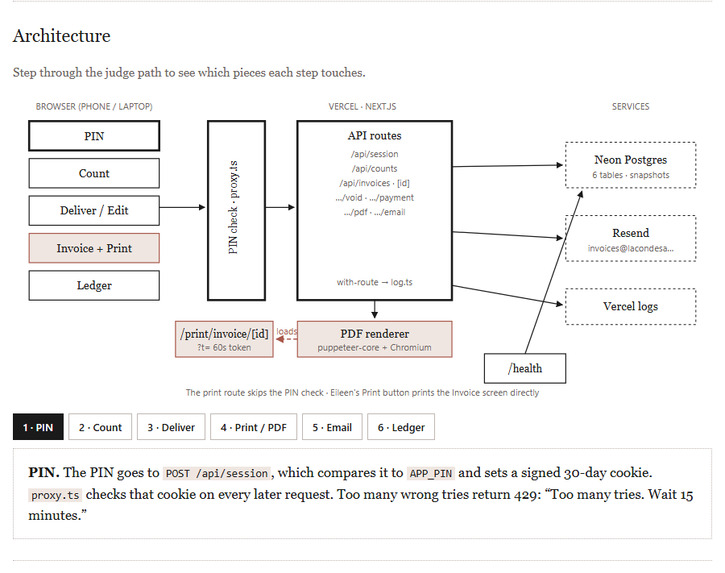
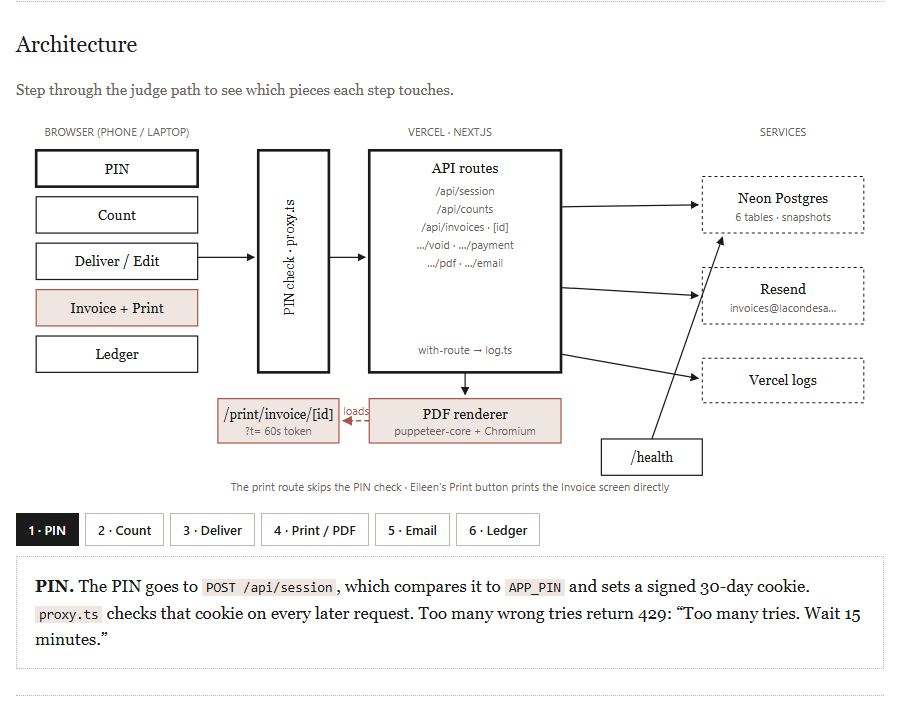
The application uses Next.js and TypeScript, Vercel, Neon Postgres, Drizzle, and Resend. The invoice PDF uses a server-side Chromium renderer, with short-lived signed links protecting the print route.
We went from an empty folder to a working application and README in approximately 20 hours, sleep included.
The biggest surprise wasn't how much code AI could generate. It was how much more deliberate the process made me. The Devpost skill pack helped turn a personal idea into an approved scope, PRD, technical specification, and eight verifiable implementation slices. We documented decisions, reviewed the work, tested the complete workflow, and traced a missed business requirement back to an assumption in the original plan. The result wasn't just a working app in roughly 20 hours. It was a development process I could understand, audit, and repeat.
The documentation also let me start fresh agent conversations without losing the project's intent in an enormous chat history.
Challenges we ran into
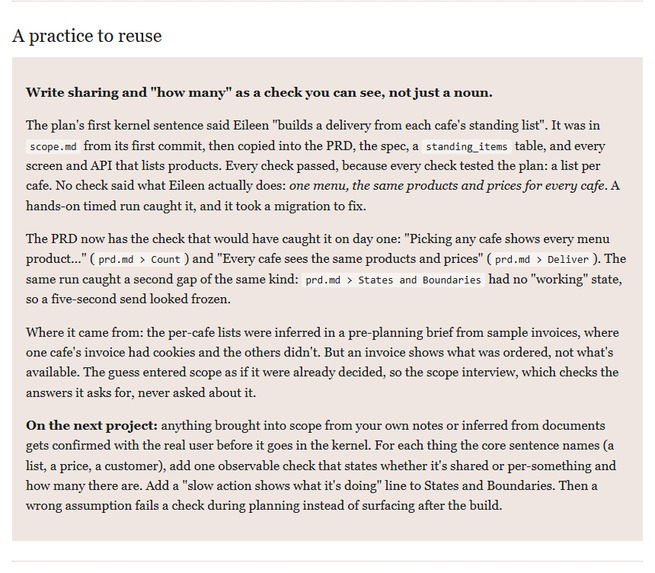
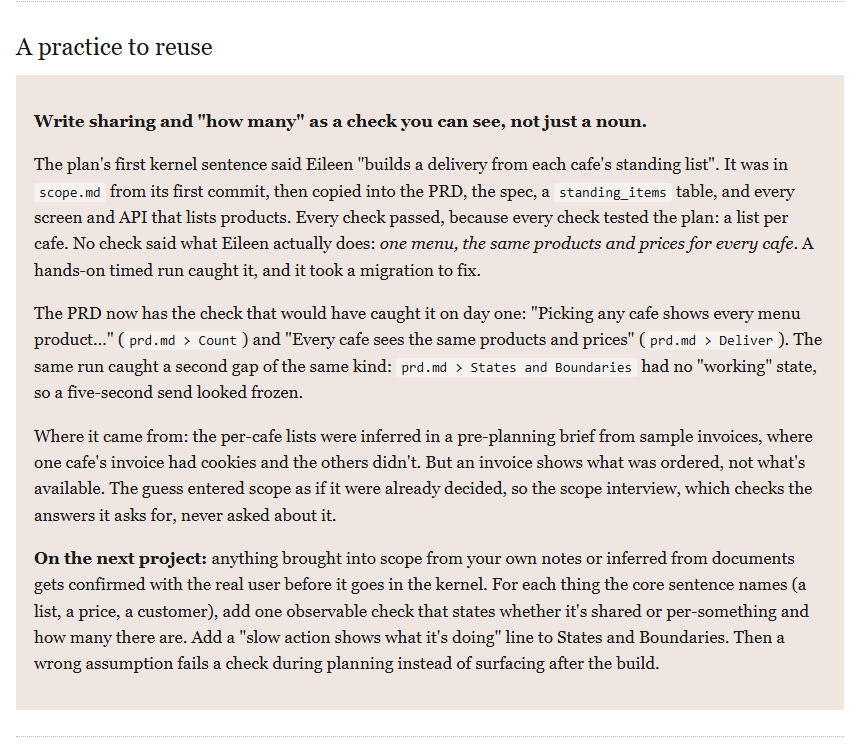
Our biggest mistake was not that the code ignored the plan. It was that the code followed a wrong assumption in the plan.
The original notes and sample invoices suggested each café had its own limited product list. That interpretation entered the scope, and I approved it. During hands-on testing, I realized the real rule: any café can buy any product.
The agent had implemented what we'd specified. The specification itself was wrong.
We corrected the menu behavior, but that moment taught me something important about AI-assisted development: reviews against a specification can verify faithful implementation without proving the specification reflects reality.
Another hands-on test revealed that invoice actions needed visible working states. Without feedback, Send or Print could look frozen. We added clearer progress and result states.
Security and reliability required deliberate choices too: a six-digit PIN with rate-limited lockout, signed sessions, short-lived invoice print links, server-side secrets, and care not to expose real customer information in demo data.
The process didn't eliminate mistakes. It made them visible, fixable, and easier to explain.
Accomplishments that we're proud of
Eileen loves it. That's the accomplishment I care about most.
She tried the early Count flow on her own phone. We also checked the invoice output against the Canva form she already used. Those moments mattered because this wasn't a hypothetical persona or an invented business problem.
I'm proud of the engineering discipline behind the result, too:
- Eight documented implementation slices, with verification and learner checkpoints.
- 42 unit tests across nine files, covering money, dates, invoice numbering, delivery validation, ledger calculations, email state, sessions, and print links.
- A Playwright end-to-end judge path covering Count, Deliver, Invoice, and Ledger, measured at 15.9 seconds on production.
- A mock-data audit to help keep real business details out of the public submission.
- A final review that documented the issues found in real testing and their resolution.
The repository includes the planning artifacts, checklist, tests, and an application map. I wanted the development process to be inspectable, not just described in hindsight.
We didn't have a perfect first plan. We had a process that could survive an imperfect one.
What we learned
AI-assisted development doesn't remove the need for human judgment. It makes human judgment more important.
The skill pack helped me plan before coding, break work into manageable pieces, and carry decisions forward through documentation. The reviews helped catch deviations and implementation concerns. But real-world testing caught things the planning documents couldn't: a misunderstood menu rule and an interface that needed better feedback.
I learned that there are different kinds of correctness. Code can be correct against a spec, while the spec is incorrect about the user's work.
I also learned that a fresh agent conversation can be productive when the project has durable documents to refer to. Instead of depending on one massive conversation, I could continue from the scope, PRD, spec, and checklist.
Most of all, I learned to value the right small product over a larger pile of features. Cuenta needed to connect counts, deliveries, invoices, and payments. Everything else could wait until Eileen told me it mattered.
What's next for Cuenta
Next comes the part I've been looking forward to: handing Cuenta over for Eileen's daily use.
The handoff plan separates the public demo and its mock data from her real business setup. We'll finish preparing her actual menu and café records, connect the appropriate business email settings, and complete the PIN handoff.
Then I'll ask for her first week of feedback. We may add features—or decide not to. I want her real workflow to make that call.
Potential additions include Excel export, overdue aging, and payment reminders.
Eileen knows other chefs who run one-person operations. This experience has made me think about how structured AI-assisted development could lower the cost of building small, specific, dependable software for businesses that don't need an enormous SaaS platform.
But first, Cuenta has one person to serve well.
The yellow book was found. Now its information has somewhere else to live.
Built With
- claude
- claudecode
- google-stitch
- neon
- nextjs
- resend
- vercel

Log in or sign up for Devpost to join the conversation.