-
-
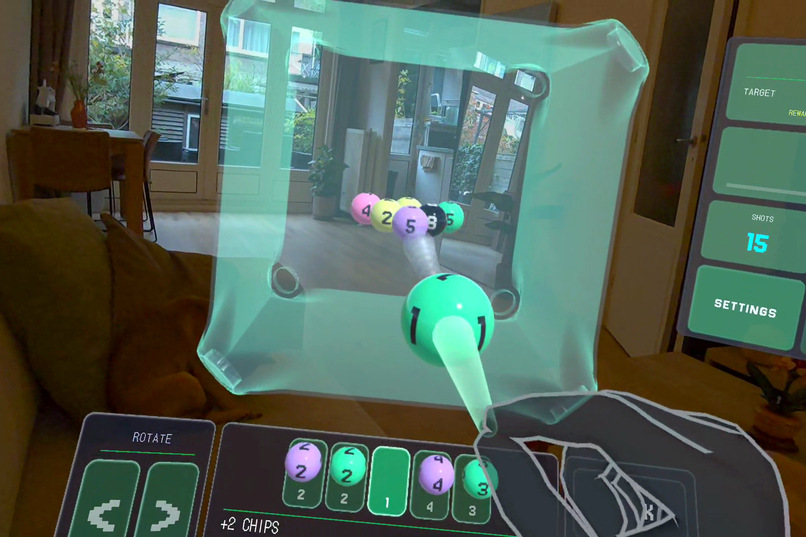
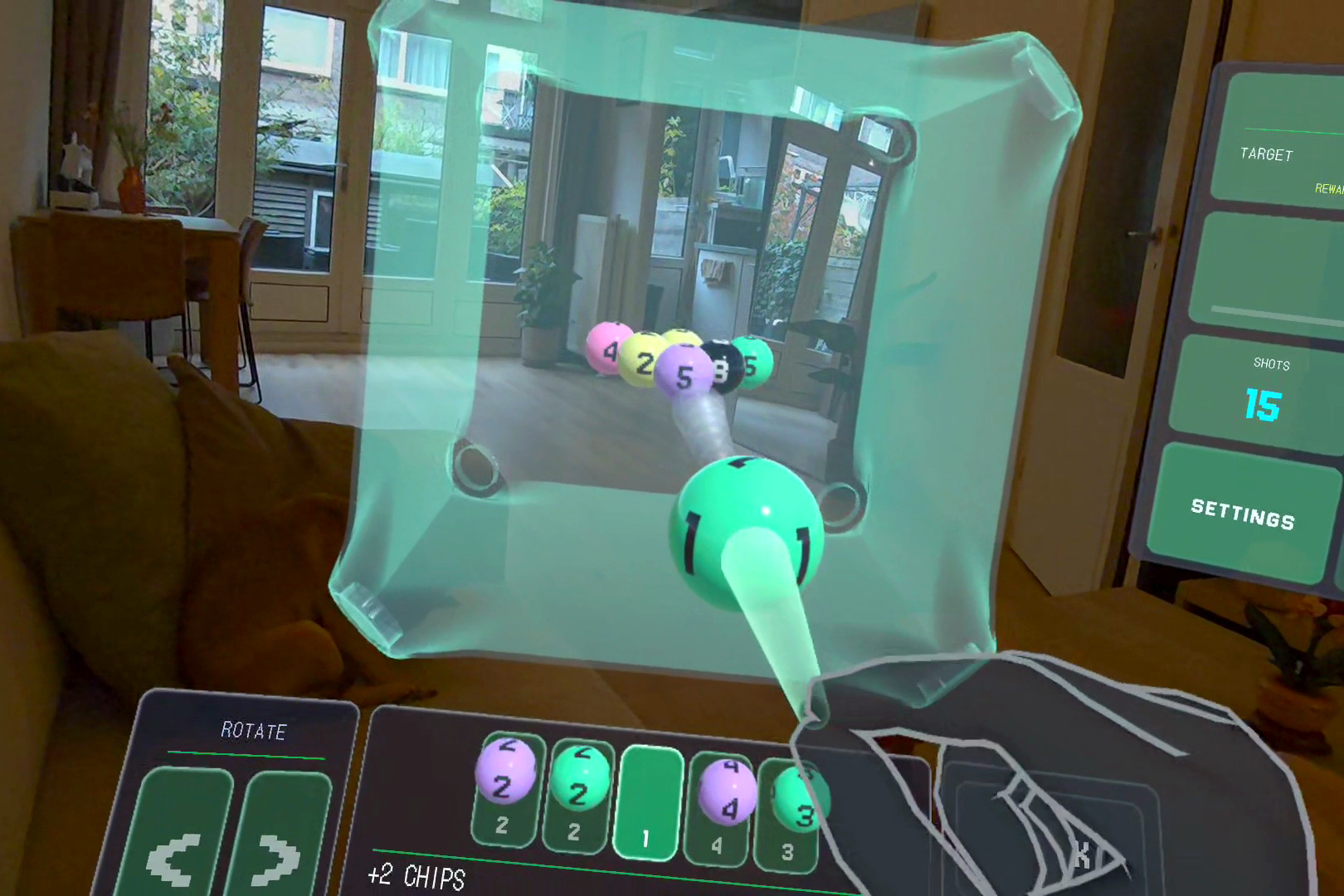
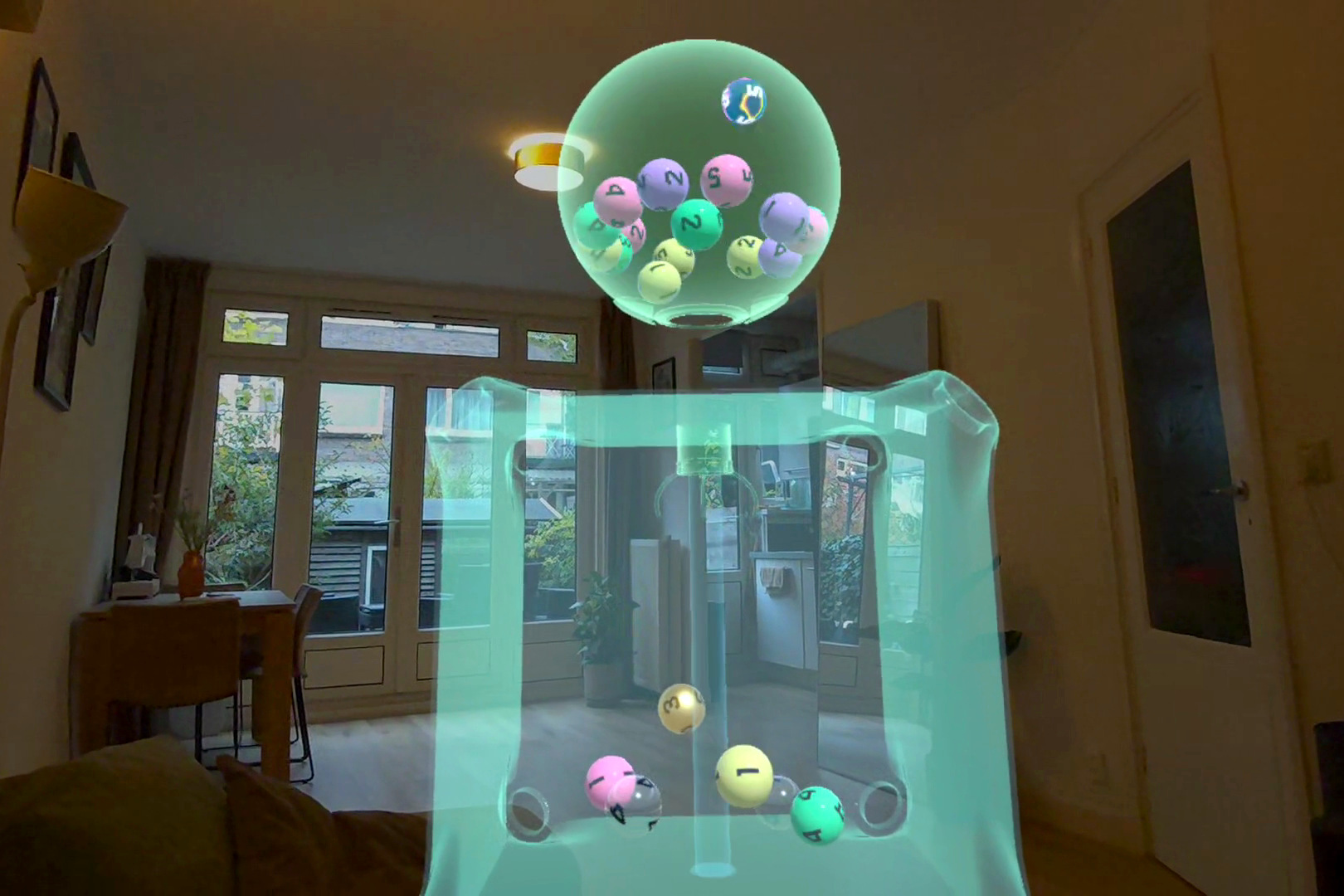
shoot into the cube using pinch, pull back and release
-
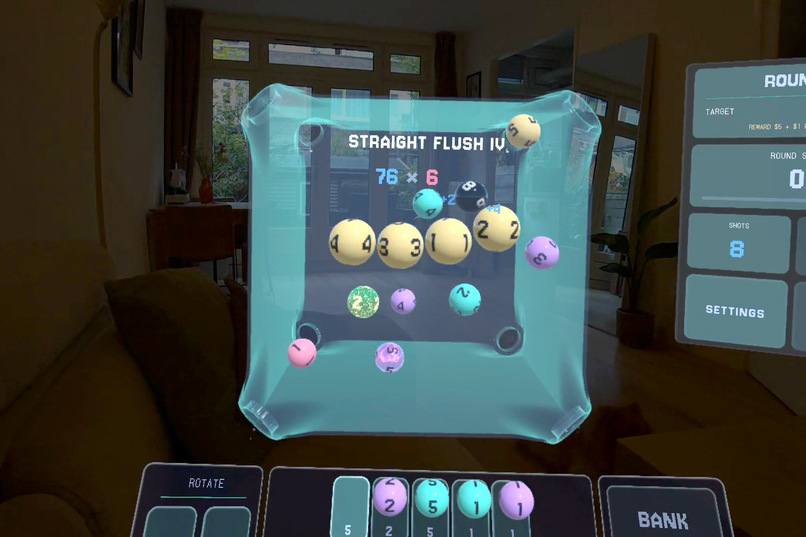
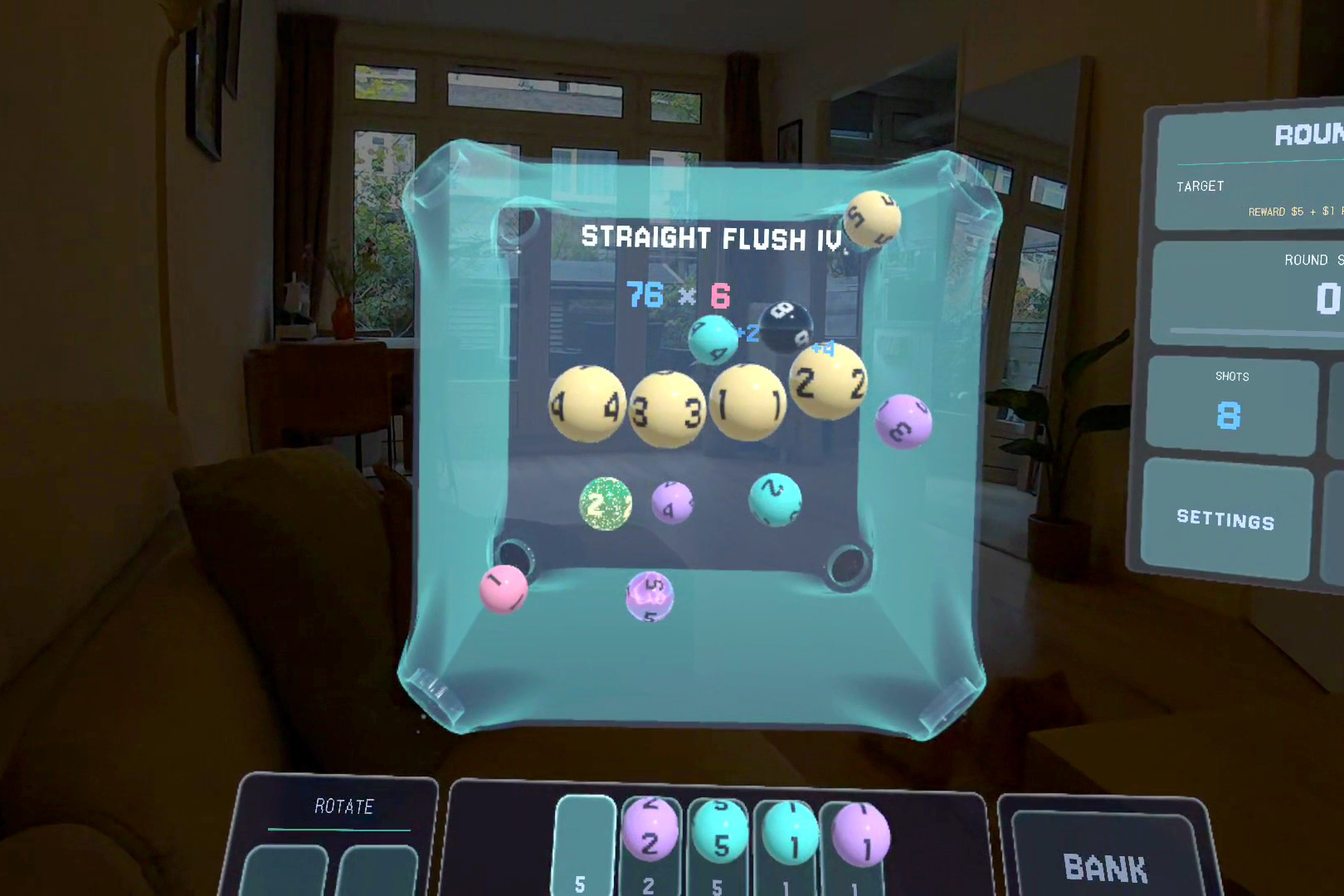
score with poker-inspired ball combinations
-
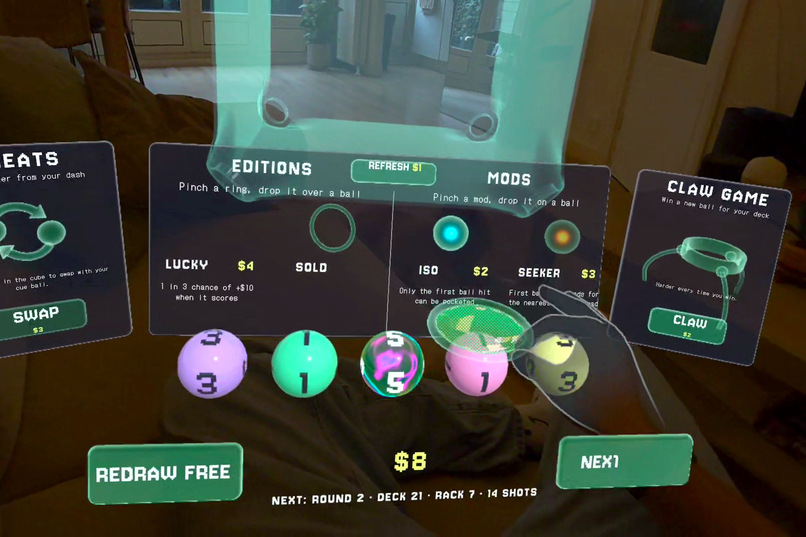
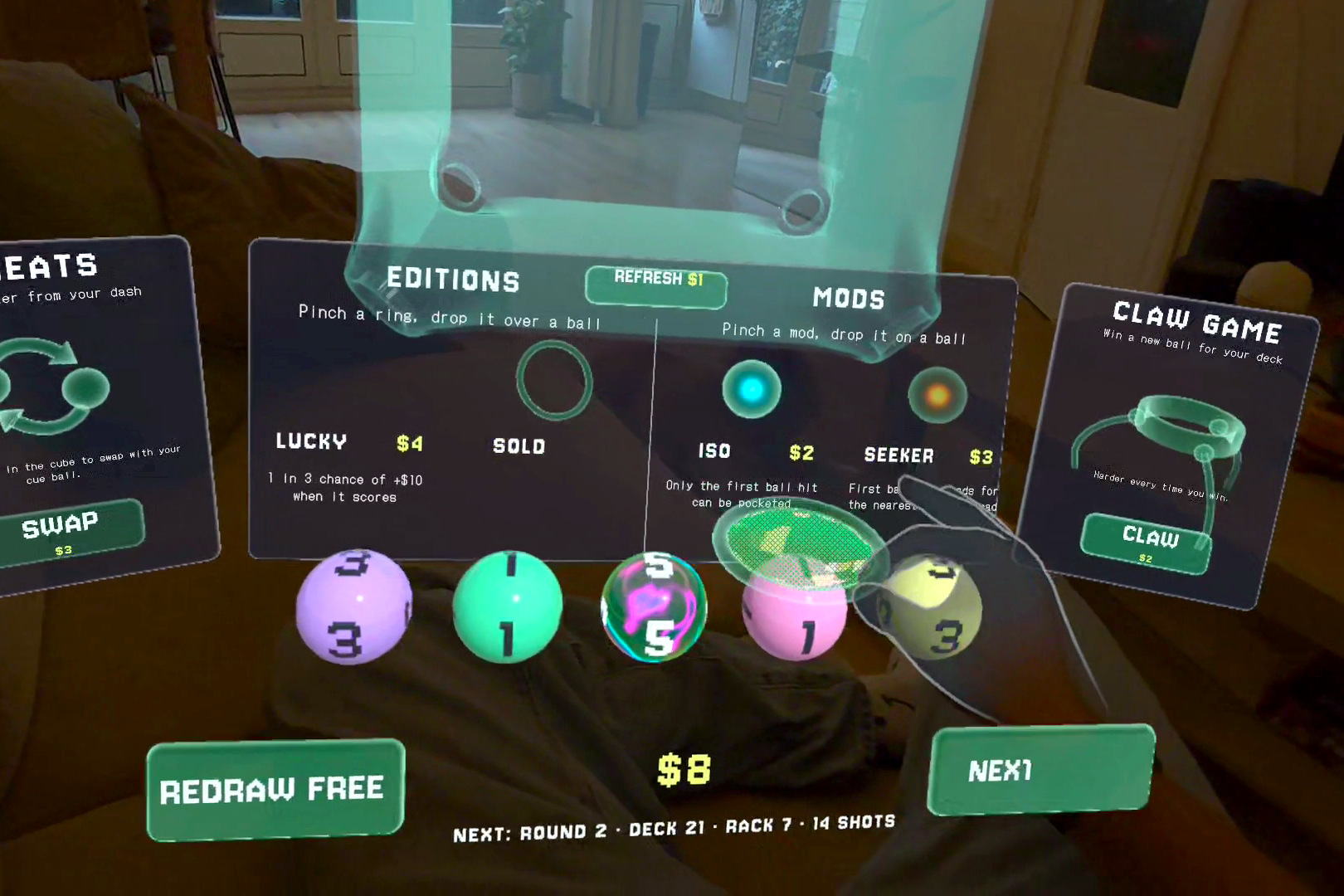
upgrade your "deck" in the store
-
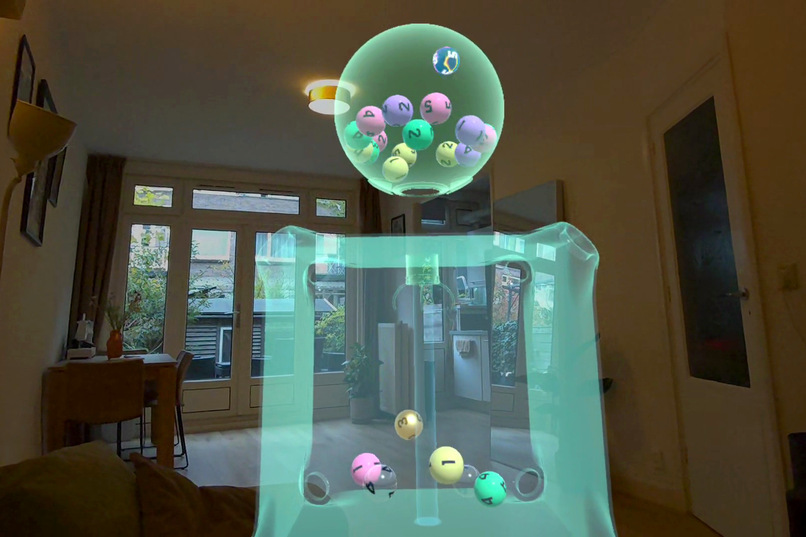
grab extra balls in the claw game
-
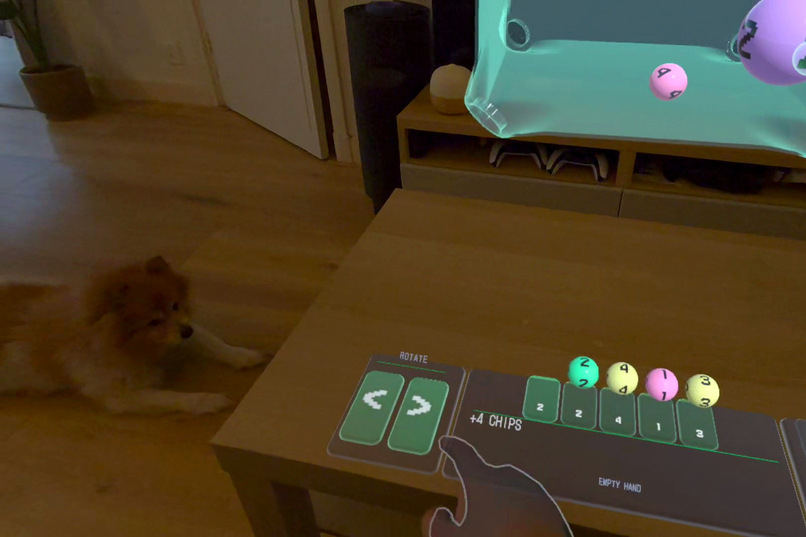
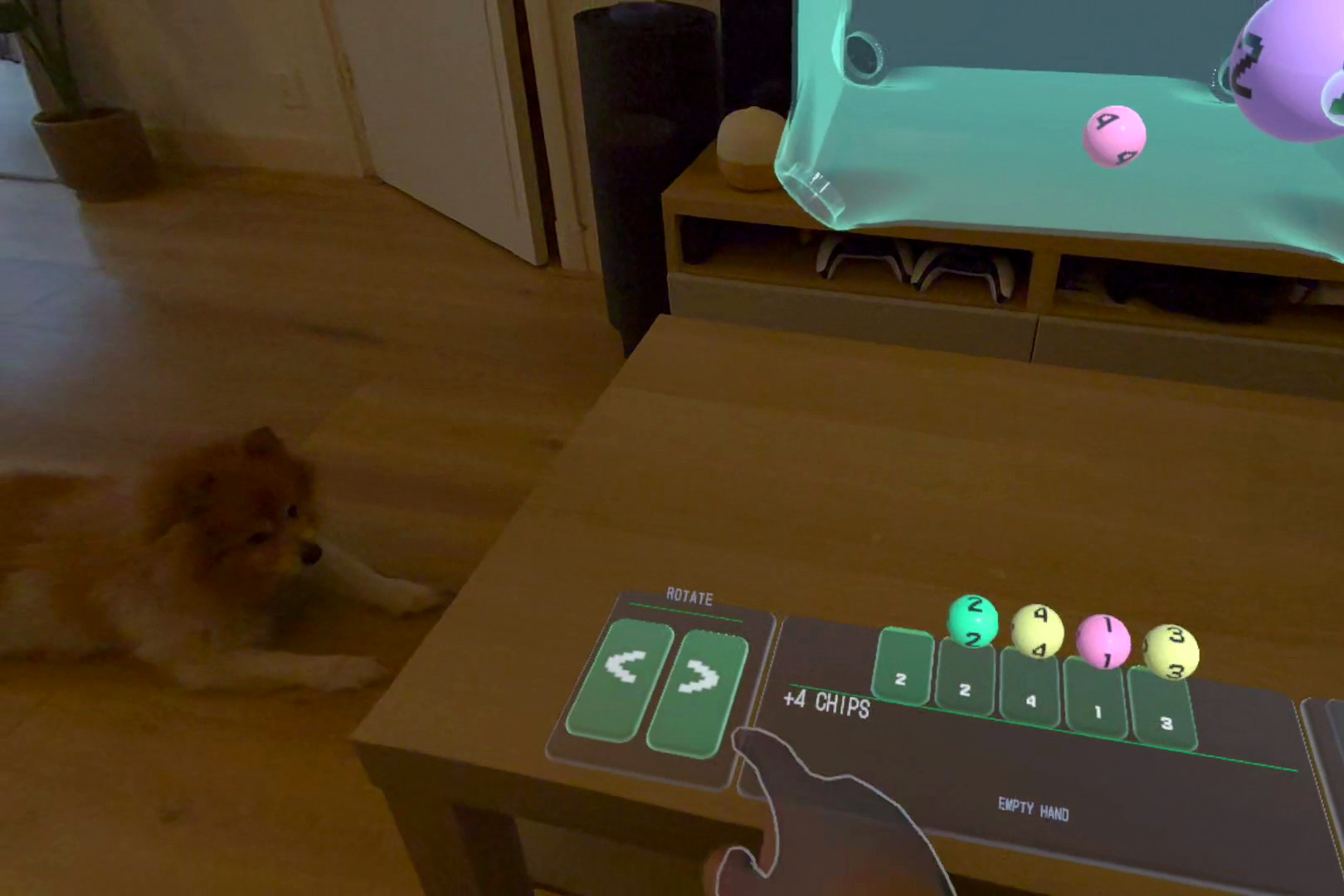
Butler approves of your table setup
-
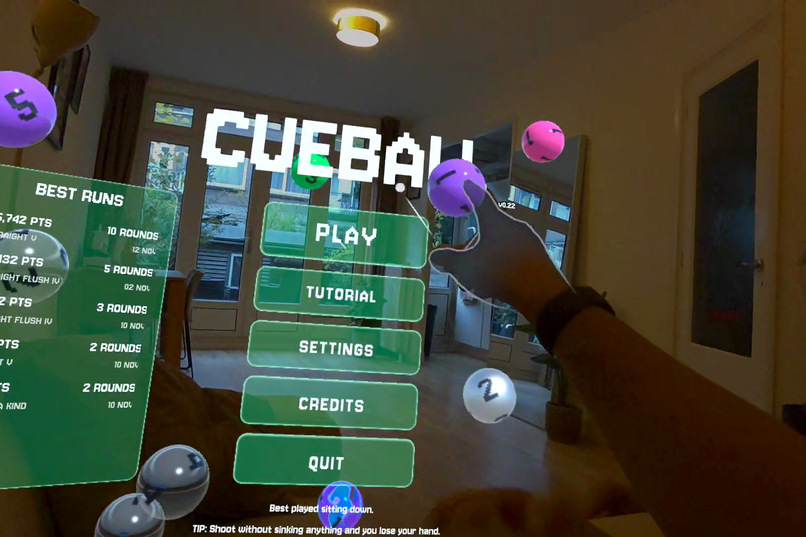
menu screen with some surprises
-
coming to the Meta Horizon Store in December 2026 :)
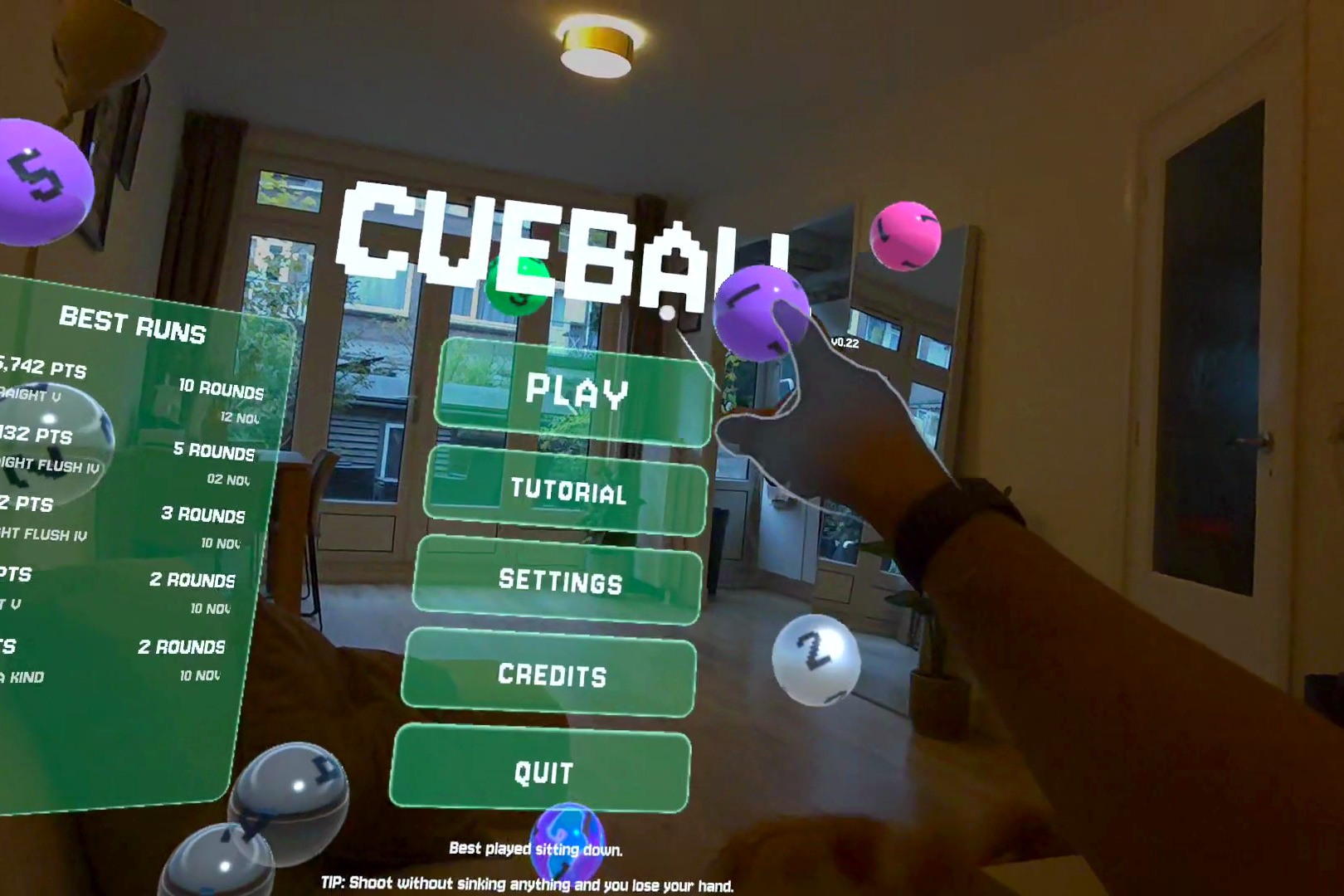
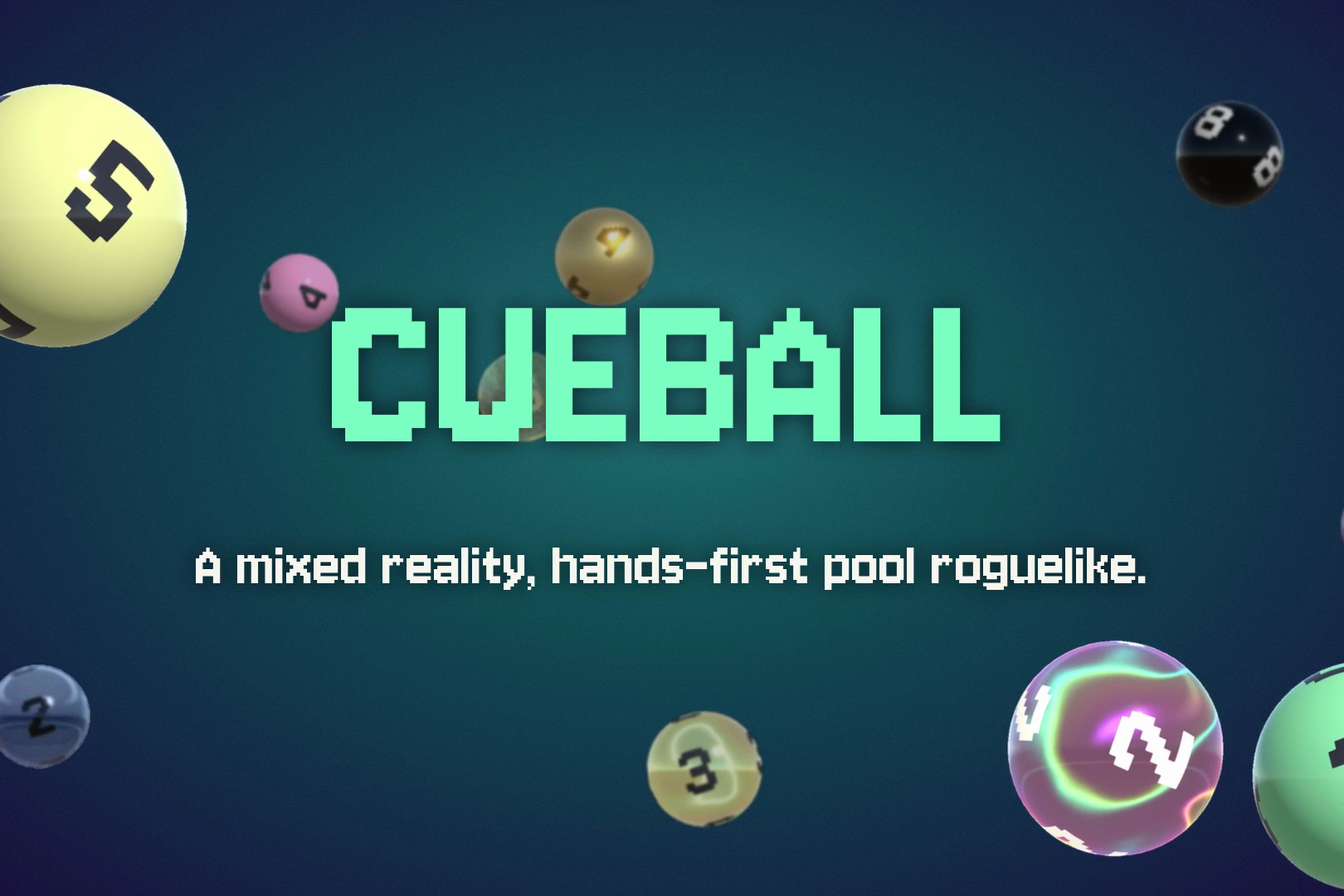
Inspiration
It started with one of Meta's Unity samples: a slingshot, a ping pong racket and a stack of cups. Slinging things into other things with just my hands was more fun than it had any right to be, and I knew there was a game hiding in there. It turned out to be pool, with the table taken away. No felt, no gravity, no cue stick: a glass cube floating in your space, eight corners for pockets, and balls knocked around in three dimensions.
Then I got hooked on Balatro and wondered what a pool run would feel like if every ball you sank was a playing card.
What it does
Cueball is a seated, hands-first roguelike pool game in mixed reality. Every ball has a rank and a suit. You pull back, release, and a cue ball flies into the cube. Pocketed balls score as poker hands: flushes, straights, full houses. Every shot is a choice: bank the pair you have, or chase the flush. Scratch or sink the 8-ball, and you lose the lot.
A run is an endless climb: every round raises the target, and the run ends the first time you fall short. Between rounds, the shop lets you win new balls from a claw machine, upgrade the balls you own with editions (silver, gold, holographic, lucky, polychrome) and precision mods (Reaper, Iso, Ricochet, Seeker), and buy cheats like Insurance, Swap, Pluck and Revive. Your deck carries through the whole run and grows with every shop.
How I built it
Unity 6, URP and the Meta XR SDK, with the Interaction SDK for hands and MR Utility Kit for the room. Sound effects were made with ElevenLabs, and the music with Google Gemini.
Challenges I ran into
- Adding depth without losing people. Cueball kept growing: poker hands on top of pool, then a deck, editions, mods, cheats and a shop. Every layer made the game richer and harder to read. The hard part wasn't building features. It was making a first-time player understand them in a headset, with no controller and no wall of text.
- UI that lives in your room. Flat menus don't survive mixed reality, so everything became glass you can touch: a dashboard, and keys you press with a fingertip or a pinch. Then came the details. Glare on the glass hid text at some angles, labels had to lean back towards a seated player's eyes, and every control had to sit within arm's reach. The shop alone was rebuilt three times before buying something felt obvious.
- Sound. I wanted Cueball to sound musical, not mechanical: closer to a lo-fi card game than a pool hall. I generated dozens of takes, auditioned them on a test page that simulated shots and the plunger pull, and kept only a few. After two full sound passes, the plunger plays rising notes as you pull, the bank count ticks up in pitch, and a good hand lands like a chord.
- Feel. Most of my time went into things nobody would name: how the cube eases into a turn and out of it, how a slow ball rolls to a stop instead of freezing, how pocketed balls fly to your rail, how the glass catches the light without costing frame rate on a Quest that is also running passthrough, and countless other details and quirks. None of it shows up in a feature list, and every bit of it needed the headset on to judge.
Accomplishments that I'm proud of
A full roguelike loop in seven weeks, playable start to finish seated comfortably, with just your hands. A first run that teaches itself while you play. And a look and sound that make Cueball feel like one toy, not a pile of features.
What I learned
Every new idea costs the player attention. The features that survived were the ones I could teach in one sentence, or without any. Hands want physical things: every time a button became something you grab, pull or push (the plunger, the claw's joystick), the game got easier to understand. And no amount of planning beats putting the headset on. Most of my best changes came from watching a single play session.
What's next for Cueball
Multiplayer first: two players sharing one cube in the same room, or across the world. Then more ball types, mods and editions, boss rounds, more particles and juice, and real progression between runs. I'm aiming for a Meta Horizon Store release by December 2026.


