-
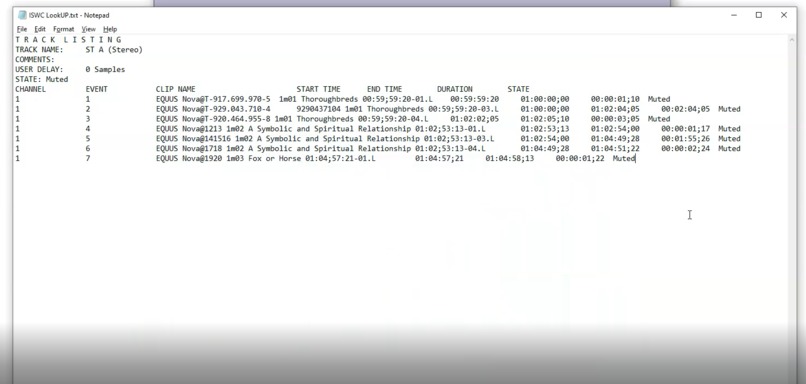
Sample EDL file with three ISWC numbers
-
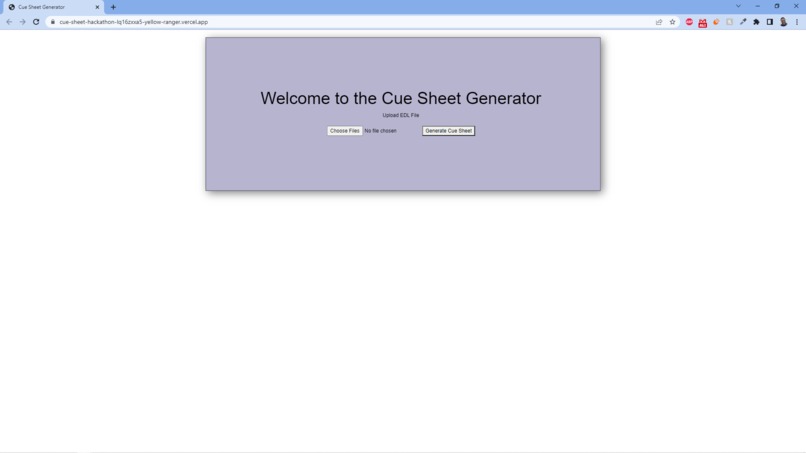
Uploading EDL file and automatically generating cue sheet
-
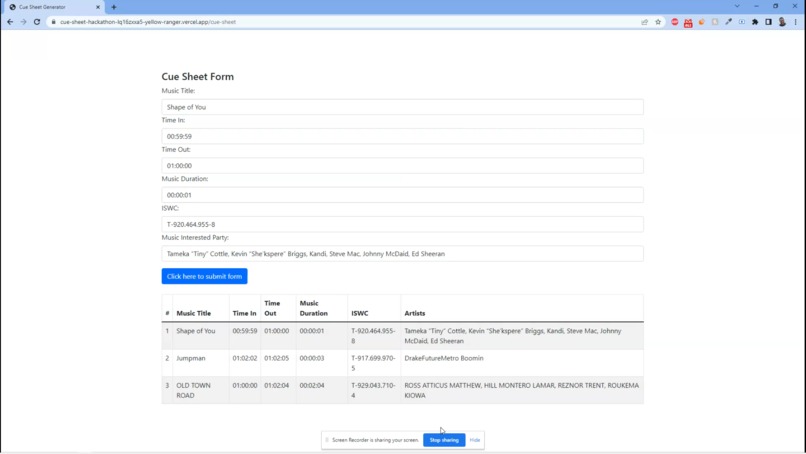
Sample Cue Sheet


Inspiration
After speaking with several stakeholders, it was discovered that a main pain point in the payment process was the creation of the cue sheet. Any errors in the cue sheet will cause problems down the pipeline and creating the cue sheet takes significant time. My effort in the hackathon was spent devising a way to make the cue sheet creation process less manual and user friendly.
What it does
The program automatically generates a cue sheet from an edl file. (EDL files can be created by most professional editing programs when exporting a project).
How we built it
The cue sheet generator was built entirely with react. It parses the edl file with regex and looks for time stamps as well as an "@T-XXXXXX" pattern which it stores as an ISWC. Then it uses the "MusicBrainz" iswc lookup api to generate a cue sheet.
Challenges we ran into
I'm relatively new to react. I've worked on one or two projects and haven't quite mastered the concepts of Reducers and useEffect dependencies so there were some bugs that kept me up all night. Also finding a free iswc lookup api was difficult. Most sites use other metadata as search parameters like the artist name or song title but from what I've gathered, the ISWC number is the most unique way to identify a piece of music.
Accomplishments that we're proud of
This is a viable solution to smoothing out and speeding up the creative process to payment flow.
What we learned
I got a cold water refresher on React and was forced to internalize some regex syntax.
What's next for Cue Sheet Generator
Some of the cue sheet information was hard coded for the presentation. Making the regex more robust and updating the cue sheet with all the fields that are needed in a working document would be the next steps.


Log in or sign up for Devpost to join the conversation.