Inspiration
Everyone has speaking habits they don't notice: saying "um" between every point, rushing when nervous, going two minutes without a breath. You usually find out afterwards, from a recording or a friend, when it's too late to fix it in the moment.
When we talked to speaking coaches, the same thing kept coming up: coaching only works when it fits the person. A fast talker isn't necessarily rushing. Someone who pauses on purpose isn't stuck. Most tools use the same rules for everyone, so people get flagged for things that aren't problems for them, stop trusting the feedback, and stop using the tool. We wanted a coach that's private, works in the moment, and gets better the more you use it.
What it does
Cue is a small device that sits behind your ear. While you talk, it listens for habits that get in your way: runs of filler words, rushing, no pauses, a turn that goes on too long, or speaking too quietly. When one shows up, it gives you a private tap only you can feel:
- Pause: one short tap
- Slow down: three slow steps
- Speak up: one long push
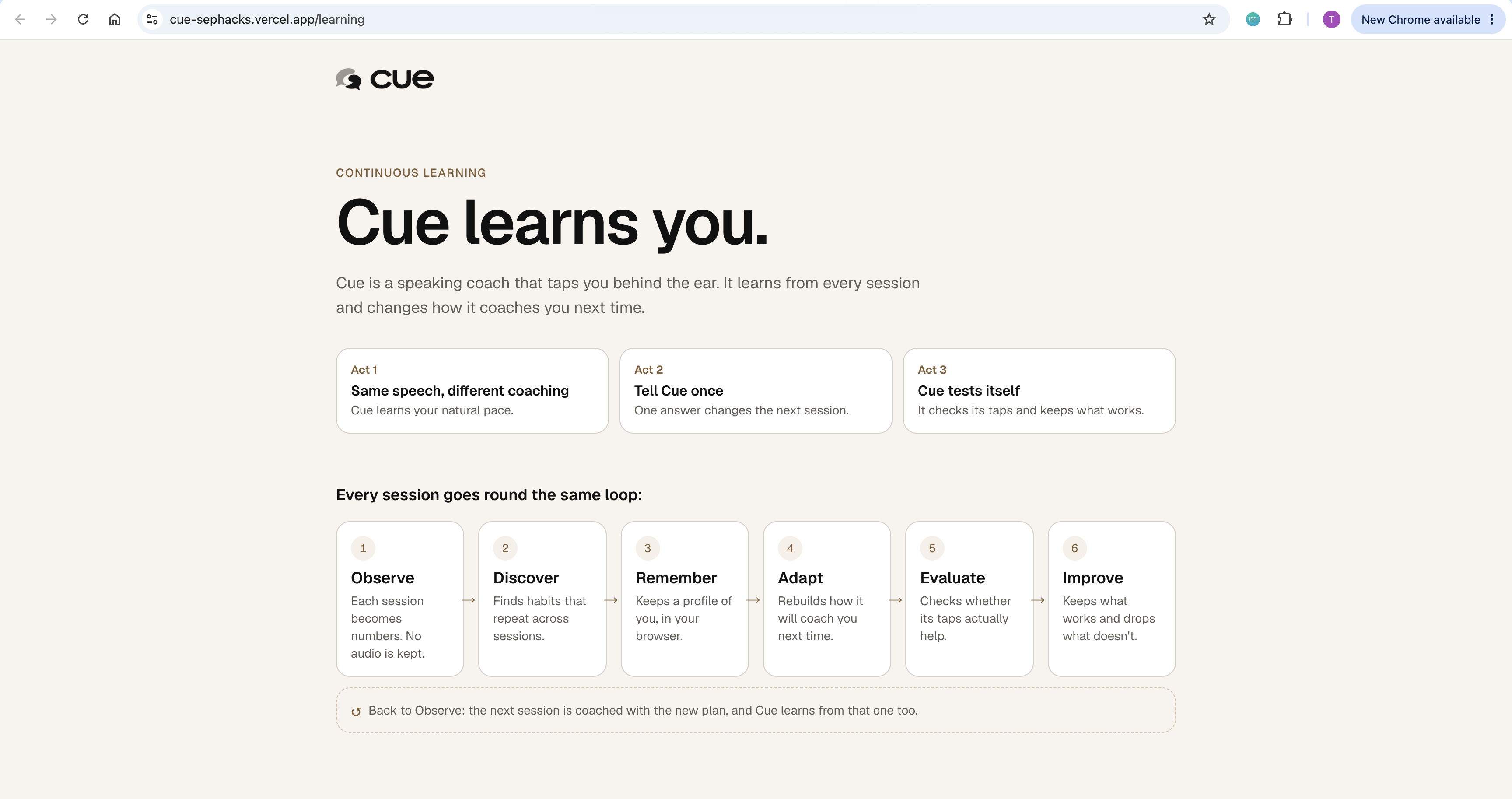
The core of Cue is continuous learning. After every session, Cue saves a numbers-only summary (pace, fillers, pauses, turns) and looks for patterns that hold across sessions. It only trusts a pattern after a statistical check over several sessions, not a hunch from one. Each new session is coached from your personal profile, so a naturally fast talker stops getting slow-down taps once Cue learns their pace. If you say the taps are "too many," you get fewer starting with the next session.
Cue also checks itself. It randomly holds back about 1 in 5 taps and compares what happens after a tap with what happens without one. If its taps aren't helping, it tests a different way of tapping and keeps whichever works with less interruption. When you improve, it steps back and picks a new focus. Every change comes with a plain "Cue updated" note saying what changed and why, and you can undo any of it. All of this runs privately in your browser, with no audio or transcripts saved.
How we built it
- Live speech: Deepgram Flux streaming speech recognition, which keeps "um" and "uh" (most speech-to-text drops them) and returns results about every 0.2s.
- Pauses: Silero voice activity detection running in the browser with ONNX Runtime.
- Filler "like": part-of-speech tagging (compromise) plus rules, so "I like went to the mall" counts and "I like tofu" doesn't.
- Decision engine: decides whether a tap would help right now, waits for a natural break so it doesn't land mid-word, and spaces taps out.
- Learning loop: observe → discover → remember → adapt → evaluate → improve. Sign tests and binomial tests find patterns, Bayesian (Beta) estimates compare taps against held-back taps, and strategies are tested against each other across sessions.
- App: Next.js, React and TypeScript on Vercel, plus a three.js 3D model of the device that shows each tap.
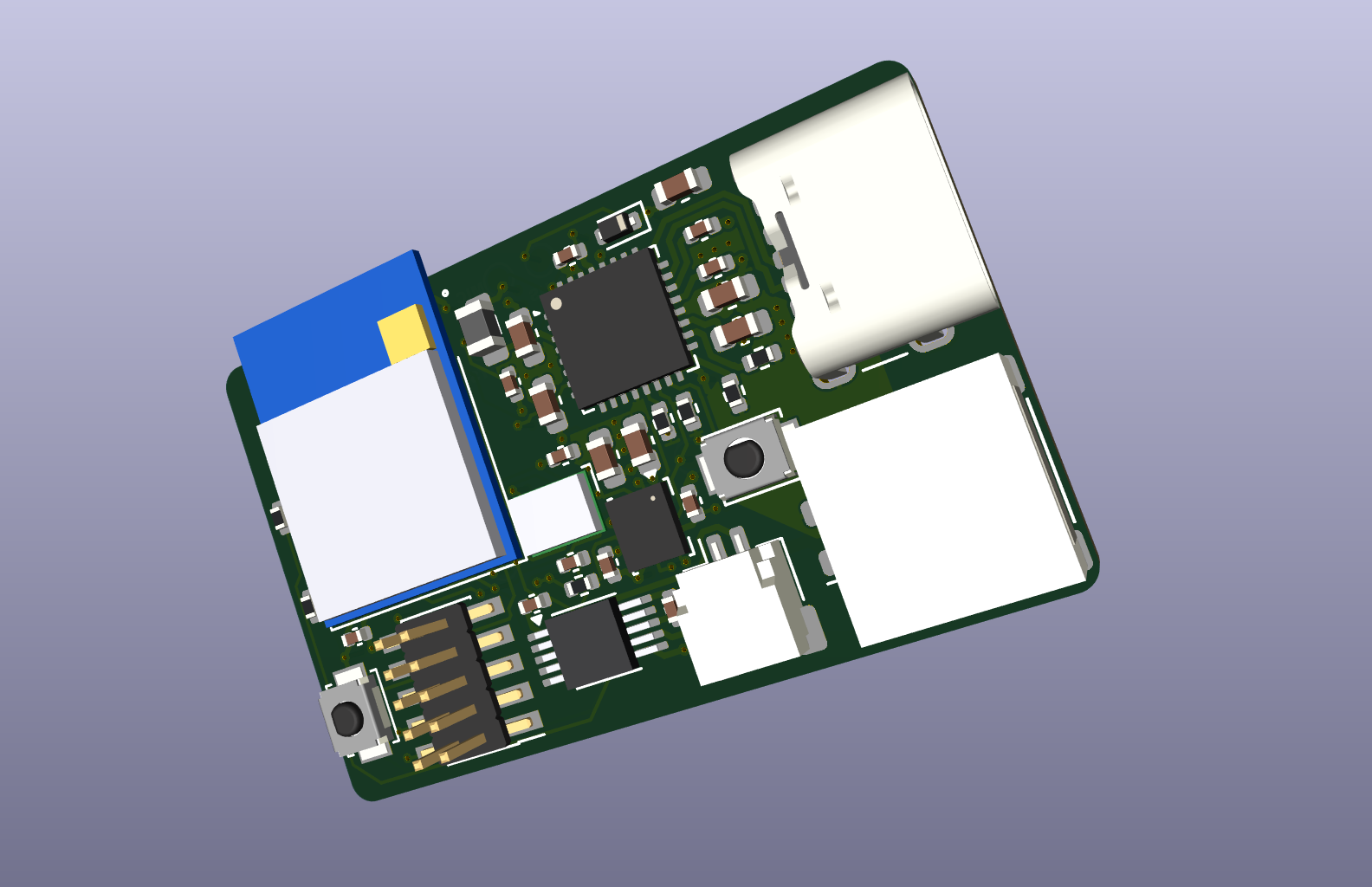
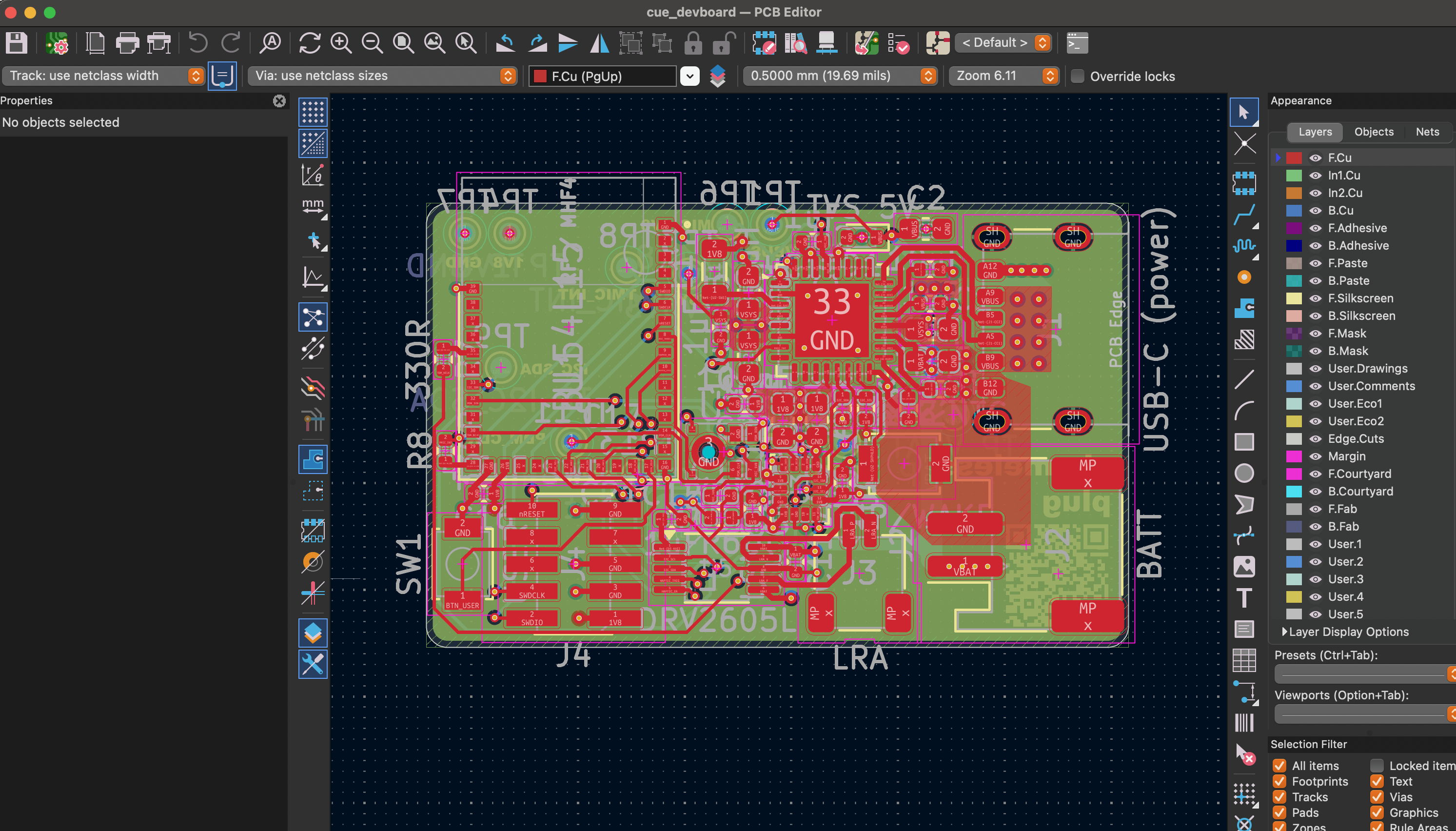
- Hardware: a 33 × 21 mm, 4-layer dev board designed in KiCad, with a Nordic nRF54L15 Bluetooth chip, a TDK microphone, a bone-conduction sensor and a TI DRV2605L haptic driver.
- Testing: 309 tests, including simulated speakers run through the real live engine across 2 and 20 sessions.
Challenges we ran into
- Proving a tap actually helped. People often slow down on their own, so "they slowed down after the tap" proves nothing. In our simulations, speakers slowed down 79% of the time after a tap and 75% without one, so almost all of it would have happened anyway. That's why we added held-back taps.
- Learning from very little data. A person might do five sessions, not five thousand, which isn't enough to train a model. We used simple statistical tests instead, so every change can be explained in one sentence and undone.
- Not learning the wrong thing. If someone rushes through their first session, Cue shouldn't decide rushing is their normal. We added limits on the learned pace, and patterns have to hold across several sessions.
- Catching fillers fast enough. Most speech recognition removes "um" and "uh." We had to find a model that keeps them and still responds in a fraction of a second.
Accomplishments that we're proud of
- The same speech, coached differently. A simulated fast talker gets 2 slow-down taps in session 1 and none in session 2, because Cue learned their pace.
- A coach that measures itself. Over 20 simulated sessions, Cue found that its own taps weren't helping one speaker, tested an alternative and switched to it.
- Explainable and private. Every change is a plain-language note with an undo, and nothing leaves the browser.
- Real hardware. A custom circuit board, ready to manufacture, with the device's actual chips.
What we learned
- Trust is the whole product A coach that taps you for the wrong things gets ignored or taken off, so fitting each person matters more than catching every habit.
- Measuring your own impact is hard but necessary.Most products just assume their feedback works.
- Simple statistics beat fancy models when data is small and every decision has to make sense to the user.
What's next for CUE - SEP HACKS
- Testing with real wearers to tune the starting thresholds, which so far come from simulated speakers.
- Building the dev board and connecting it to the app over Bluetooth.
- An opt-in way to share session numbers (never audio), so new wearers start from better defaults.
- A version for coaches, so they can see their clients' progress between sessions without hearing a single recording.
Built With
- compromise
- deepgram
- https://cue-sephacks.vercel.app
- https://cue-sephacks.vercel.app/learning
- kicad
- next.js
- nordic-nrf54l15
- onnx-runtime
- react
- silero-vad
- tailwindcss
- three.js
- typescript
- vercel
- vitest
- web-audio-api
