-
-
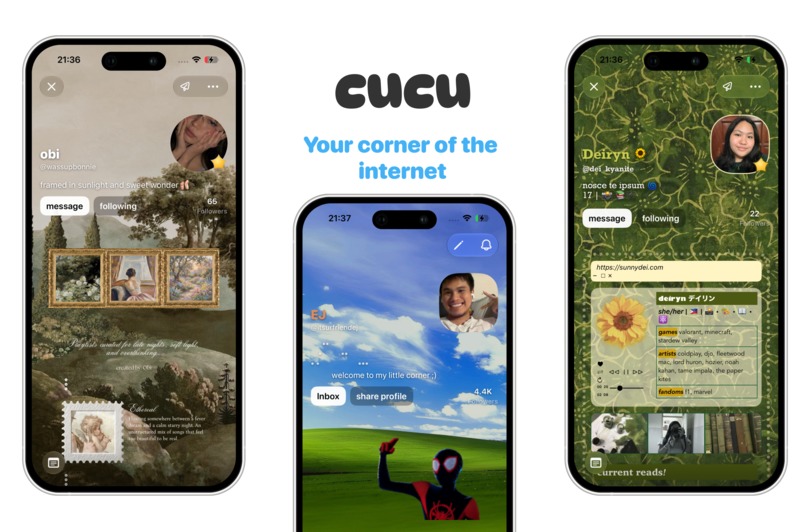
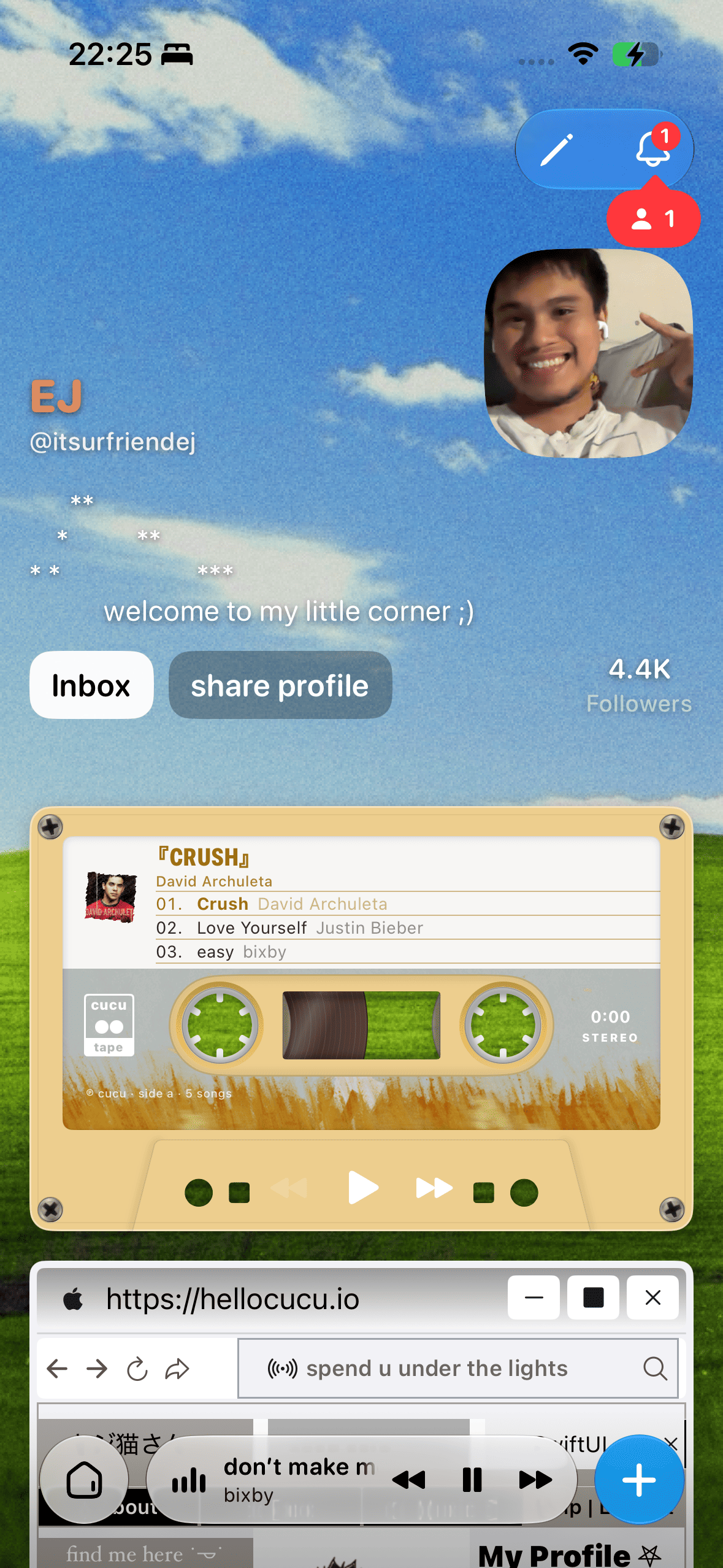
Your corner of the internet
-
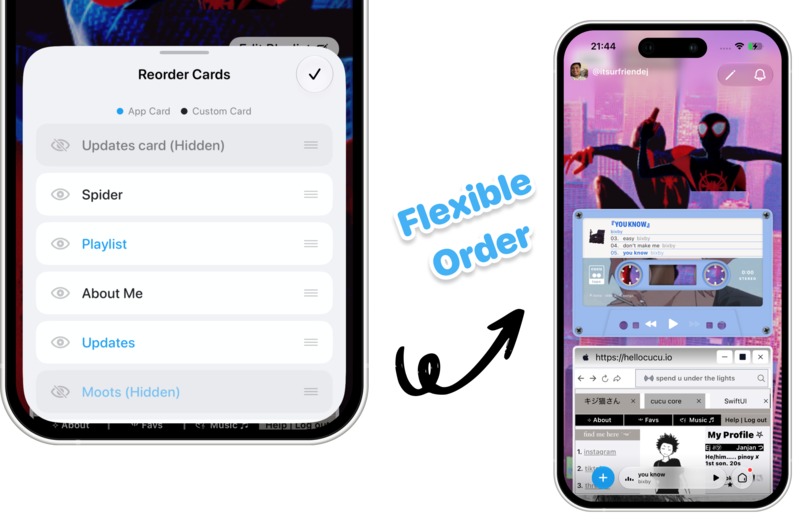
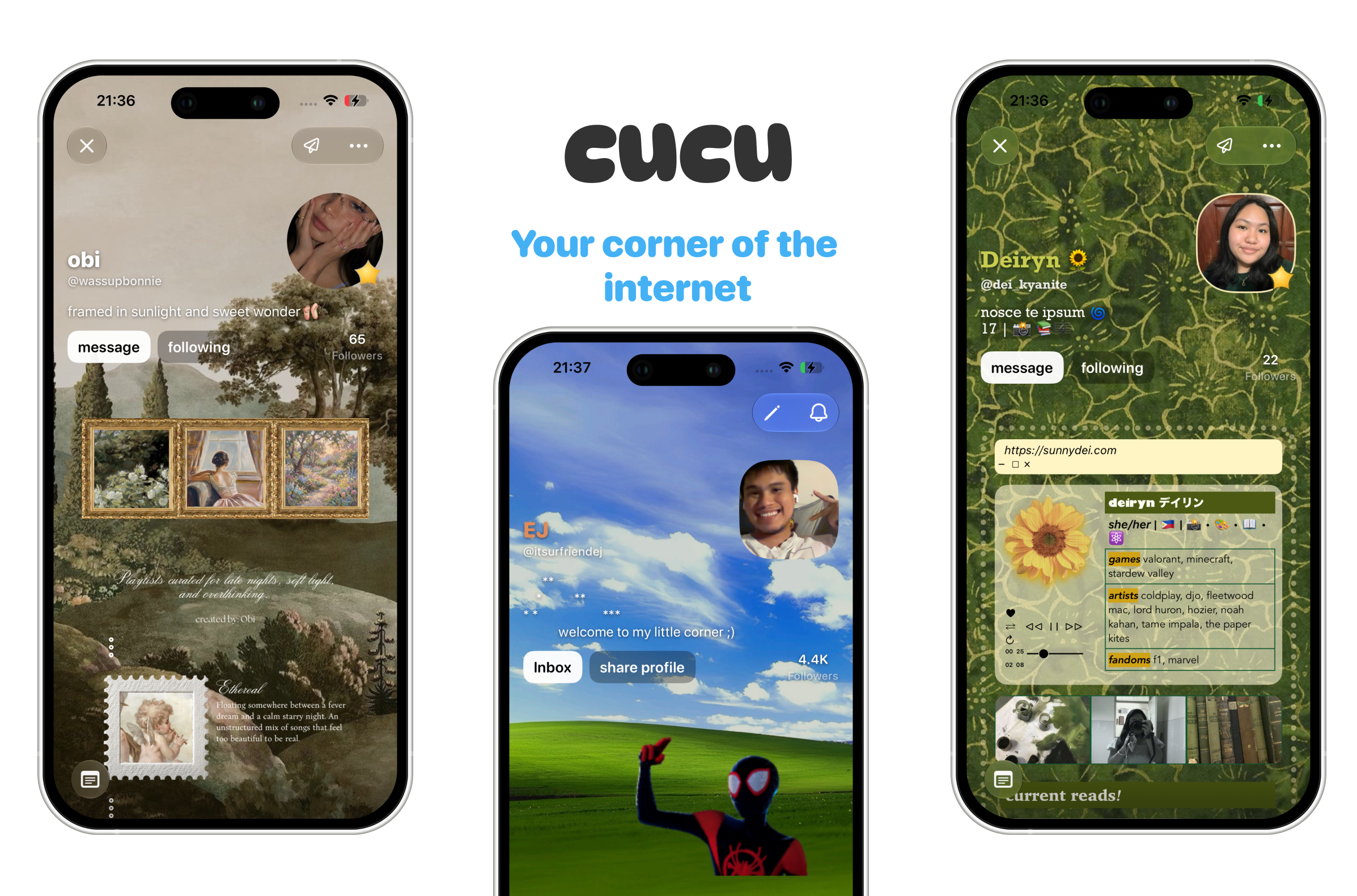
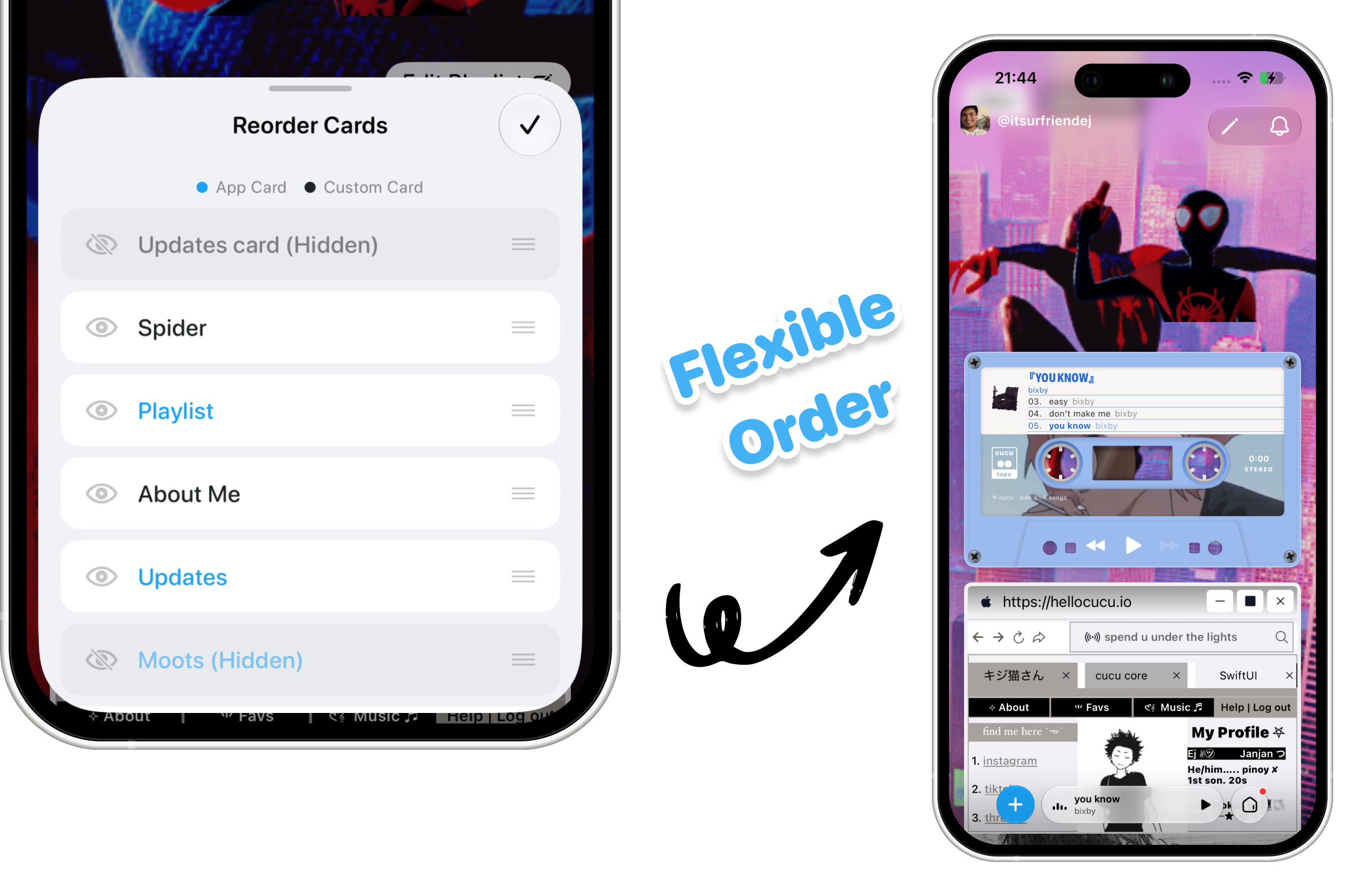
Like your personal site, customize and arrange the sections that represent you.
-
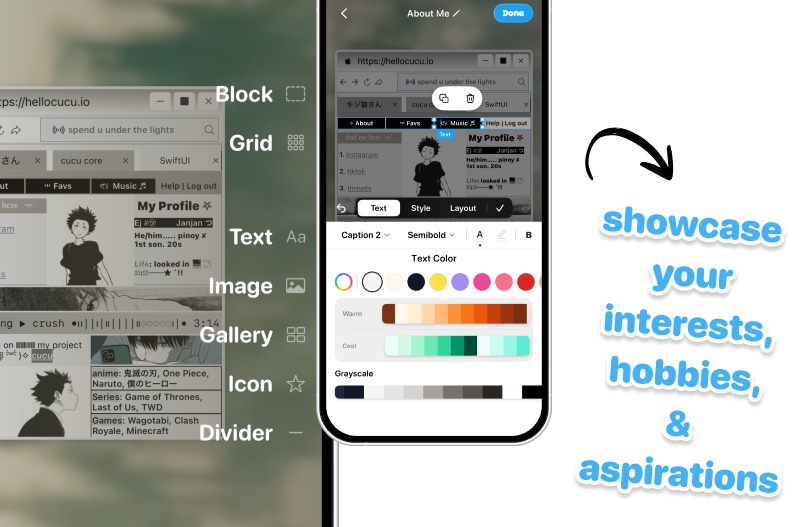
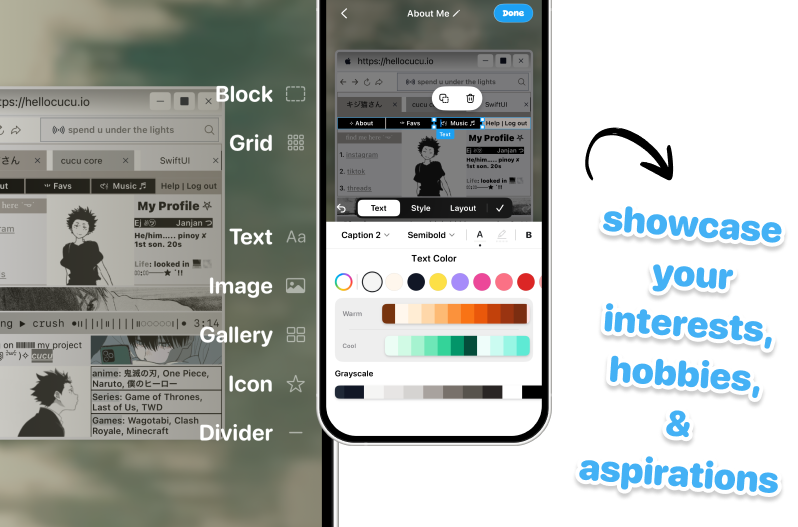
Customizable cards for your interests, hobbies and aspirations.
-
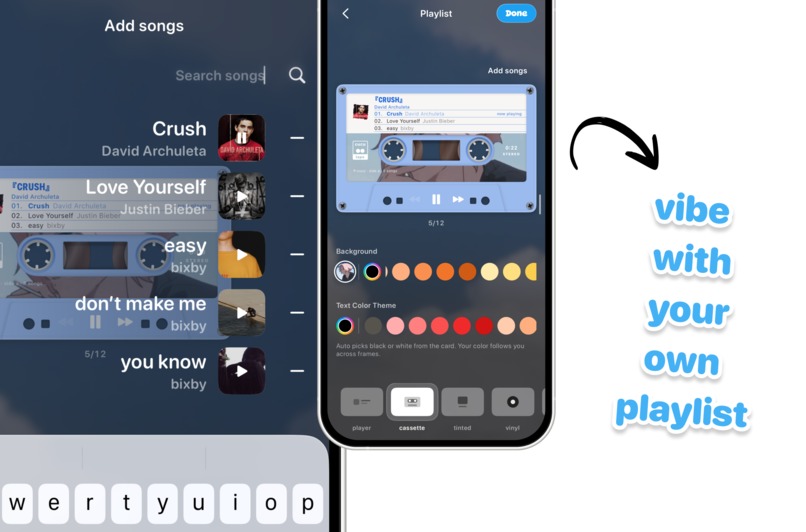
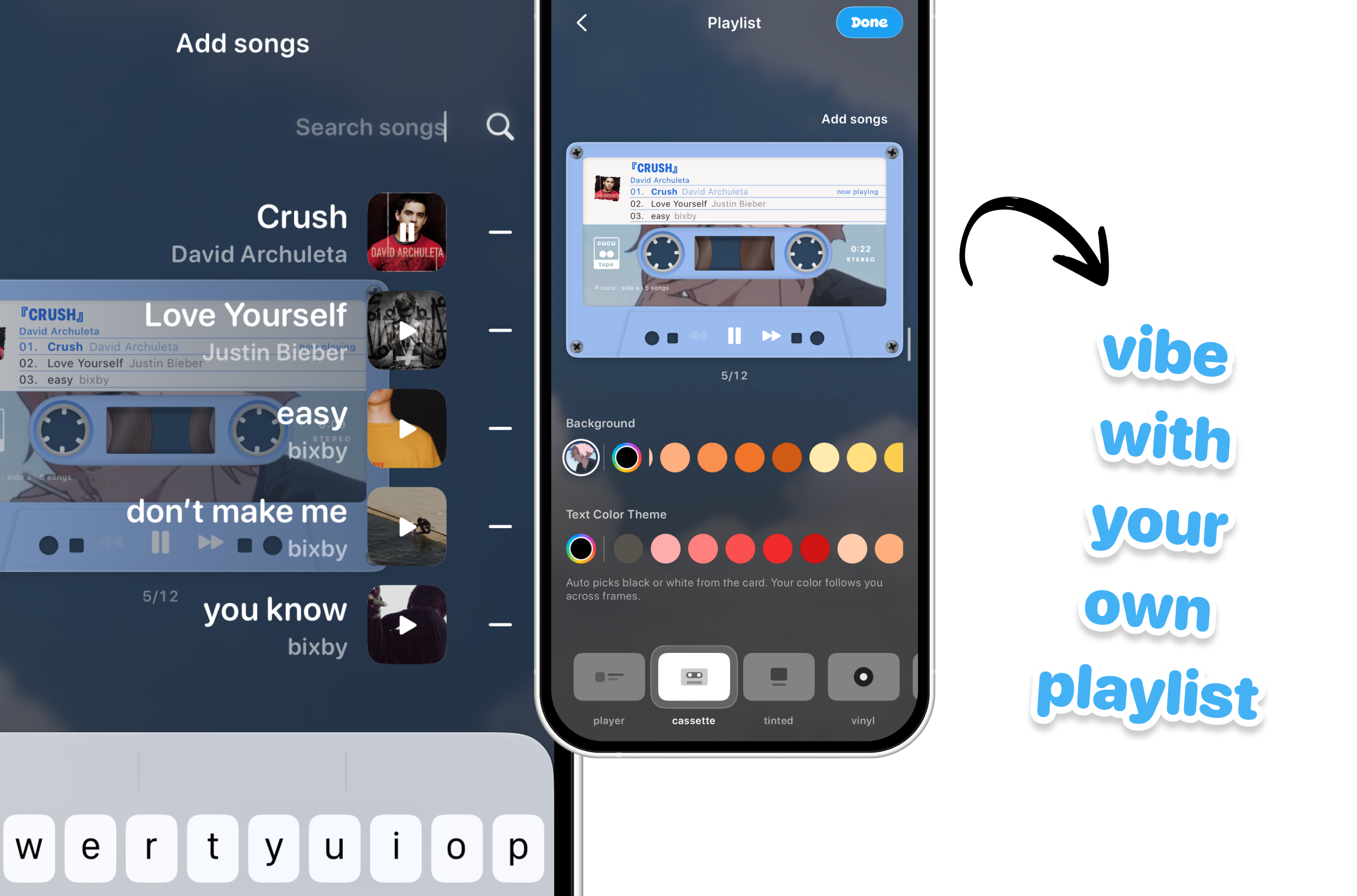
Vibe with your own playlist
-
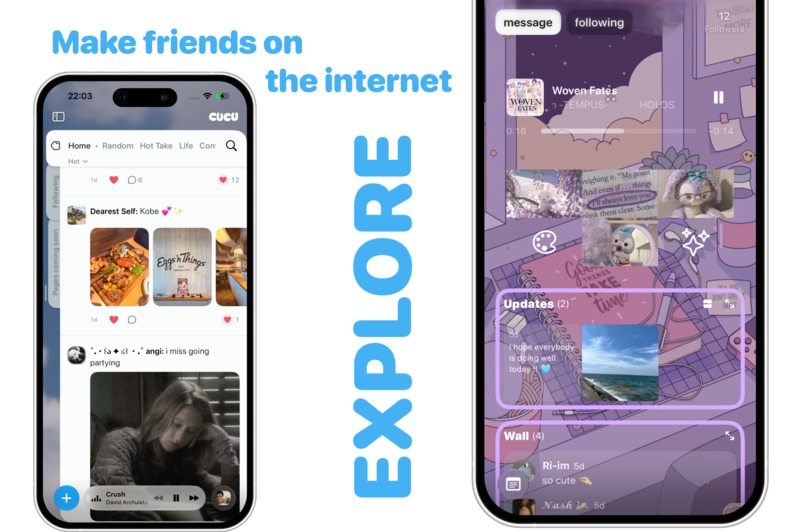
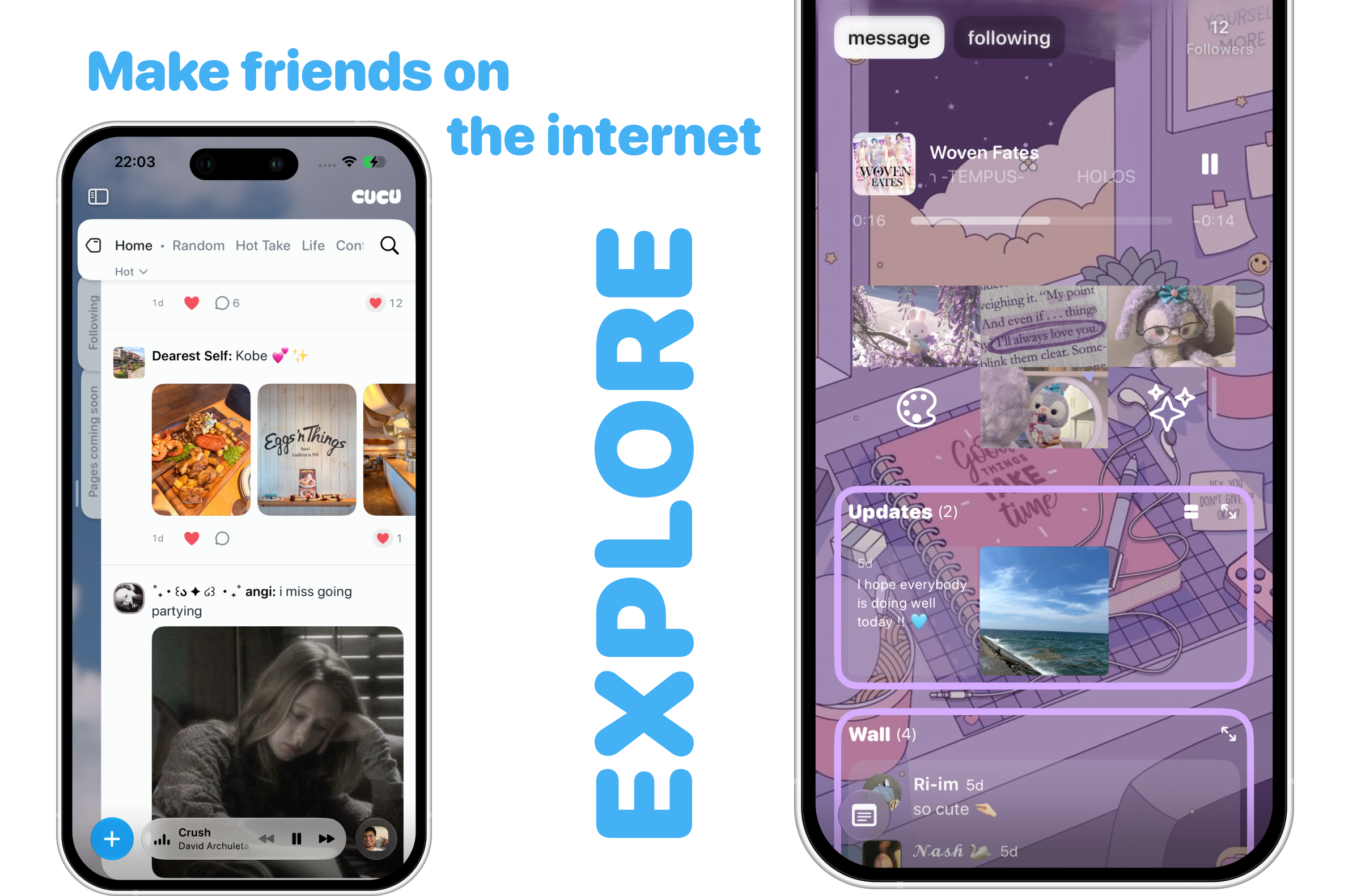
Meet and have friends with other people and join the community to grow.
-
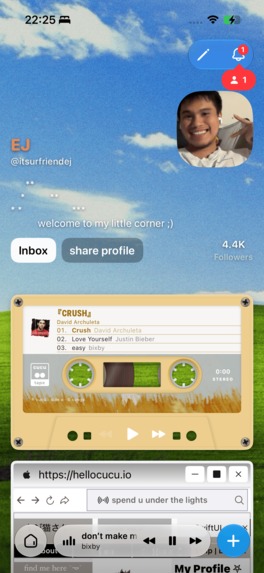
A profile in Cucu
-

Cucu logo (1024x1024)
-
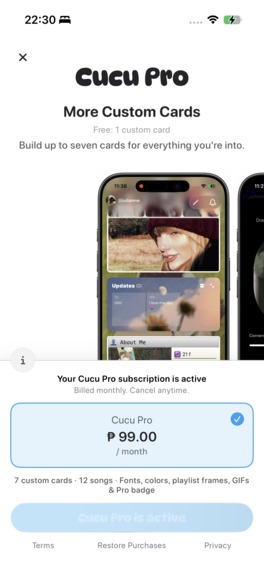
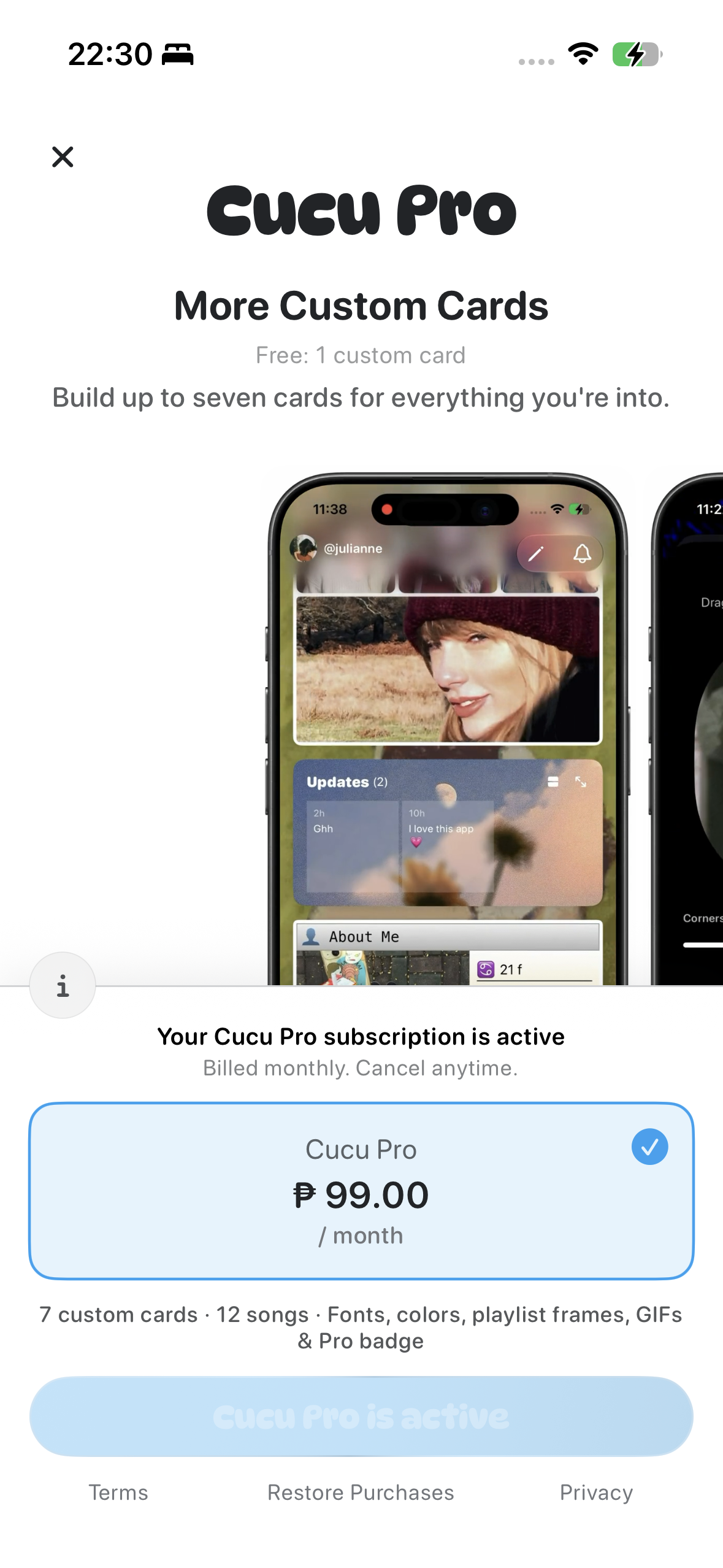
Custom subscription paywall powered by RevenueCat

Inspiration
Cucu started while I was browsing Notion templates. I loved how customizable a page could be and wanted that same freedom for something more personal and shareable.
That led me to Carrd, where I saw people turning simple pages into creative profiles, fandom spaces, and personal introductions. I loved the idea, but wanted to add what those pages were missing: a social layer. Instead of only sharing a link, Cucu would let people build their own custom profile and still discover, follow, and interact with others.
Later, I discovered Myspace and loved how music was part of someone’s identity there. That became a major inspiration for making songs part of every Cucu profile.
What it does
Cucu gives everyone a profile they can really make their own. Pages are built from cards, and people can fill them with text, photos, galleries, links, music, and whatever else they want to share. They can change the background, colors, fonts, layouts, and style each card differently.
Music is a big part of the experience too. A song can show up as a spinning vinyl, a disc peeking out of a card, or a little click-wheel player, and people can even let music play when someone visits their page.
Around that, Cucu works like a social app. People can post updates, add friends, leave notes on Walls, reply, see mutuals, and discover other profiles and posts through Explore. The idea is to give people both a space that feels like theirs and an easy way to find and connect with others.
How I built it
A lot of the work went into making heavily customized profiles still feel fast. I added smaller image previews, caching, and smarter loading so pages with lots of photos and animated elements do not feel too heavy.
I also wanted editing to feel like part of the profile instead of a separate tool. The profile, edit mode, and custom-card editor all keep the same background, so it still feels like you are inside the space you are building.
I carried that idea into the animations too. Posts open from the feed, photos expand into a draggable popup, and mutual friends grow out of their card. I wanted moving around Cucu to feel playful, but still easy to follow.
Challenges I ran into
The biggest challenge was that Cucu profiles can look completely different from one another. Once people can choose their own backgrounds, colors, fonts, photos, music, and layouts, there are a lot more things to consider than with a fixed design.
One of those is keeping the interface readable. Buttons, labels, and editing controls have to adapt to very light, very dark, colorful, or photo-based backgrounds without getting lost. I had to think a lot about contrast, overlays, spacing, and when the app should adjust colors automatically.
Media loading was another big challenge. Some profiles can have a lot going on at once, so Cucu prioritizes what is visible, reuses downloads already in progress, limits its cache, and shows smaller previews while larger images load.
Last and biggest challenge is marketing, but I'm glad people are doing the work for Cucu. It is growing in just over a month to almost 5,000+ profiles.
What I learned
One thing I learned is that giving people more creative freedom also means building a lot of things underneath to support it. Something as simple as saving a layout properly, loading a photo quickly, or remembering what someone was doing after a purchase can make a big difference to the experience.
I also learned that small design choices matter more than I expected. Keeping the same background while someone edits a card, for example, helps everything feel connected instead of like they are jumping between different screens.
The best part has been seeing what people actually do with the tools. In about a month, nearly 5,000 people from more than 100 countries and regions have made pages, built playlists, designed cards, and added friends. A lot of their profiles look nothing like what I imagined while building Cucu, and I think that is exactly the point.
What's next for Cucu
Long term, I want Cucu to grow into more than a social app. I want to explore an economy where the people who create the community also benefit from its growth, instead of building everything around advertising and attention.
A big part of that is making a "follow" actually mean something. If someone chooses to follow you, they should be able to keep up with you without every post needing to chase a trend or perform for an algorithm. I want people to be able to grow an audience around their personality, interests, work, and the space they have created.
Eventually, that could grow into stores inside profiles, collaborations between people, and new ways for creators to earn directly from the communities they build. The bigger idea is to create an economy that circulates through the people who make Cucu worth visiting in the first place :)
Built With
- node.js
- postgresql
- railway
- revenuecat
- supabase
- swift
- swiftui
- typescript
- uikit
- xcode

Log in or sign up for Devpost to join the conversation.