-
-
-
-
-
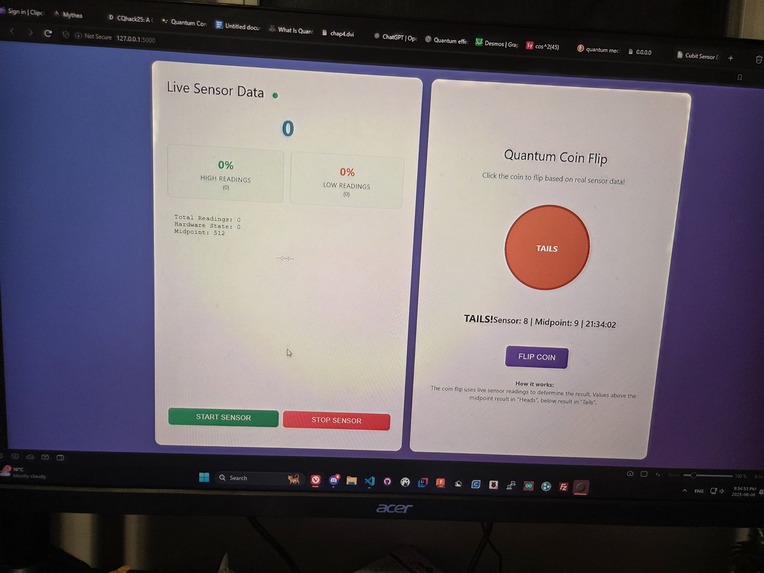
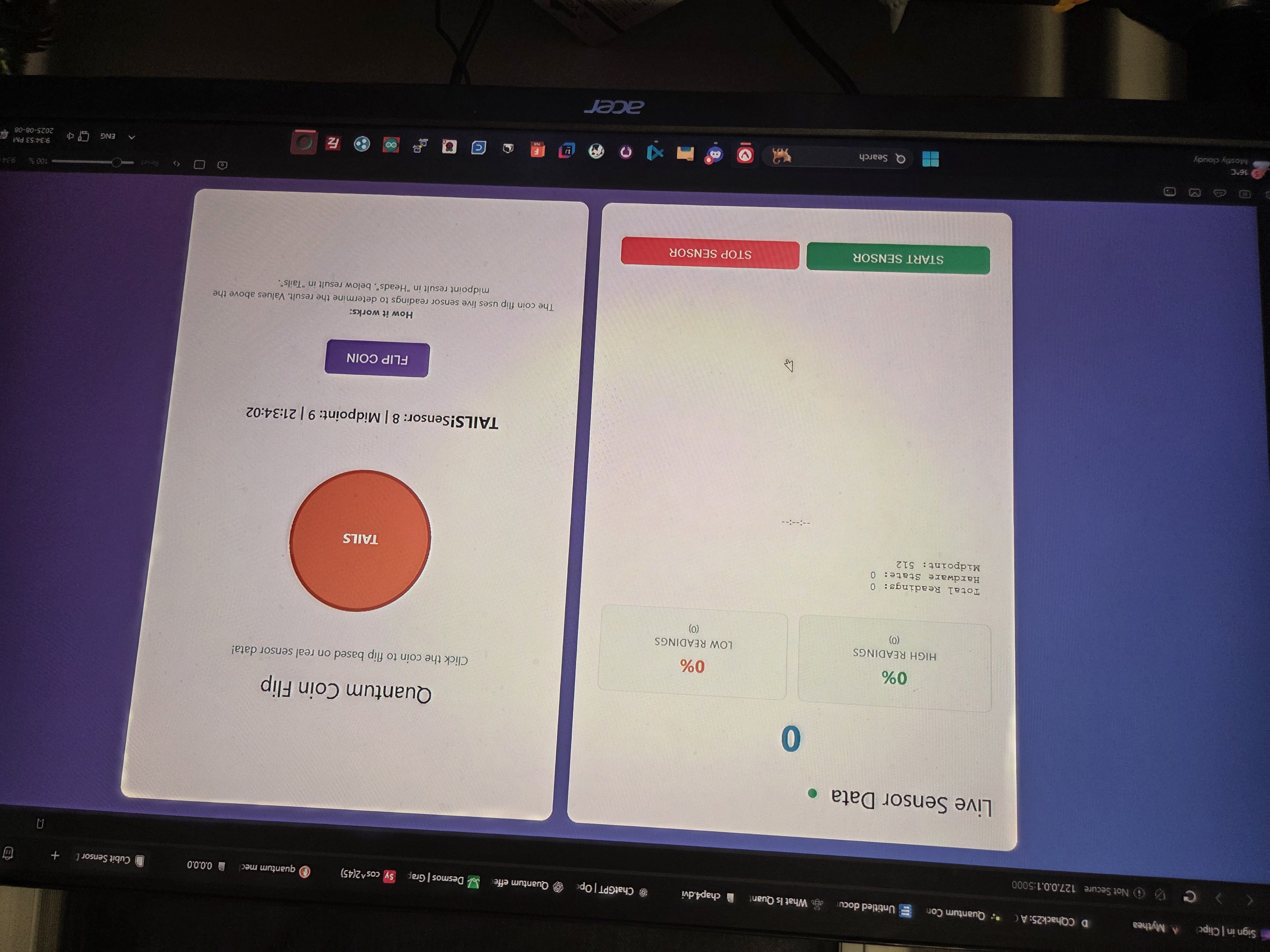
Web Dashboard
-


Inspiration
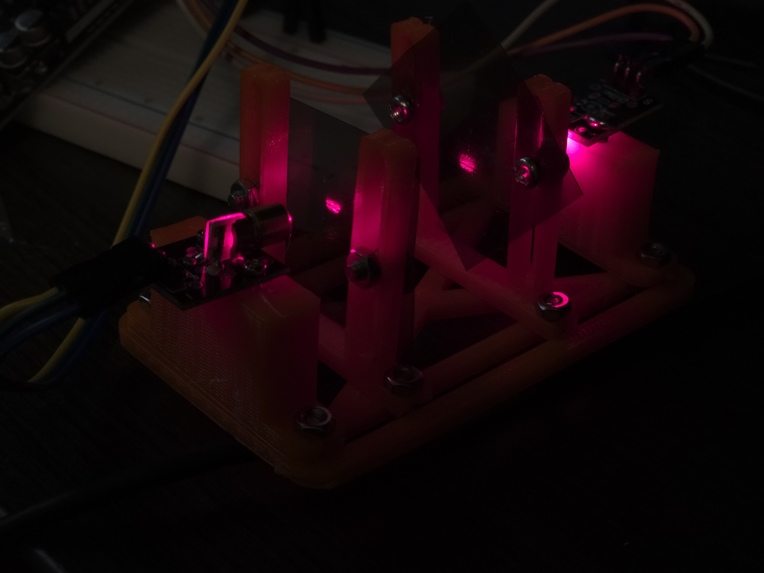
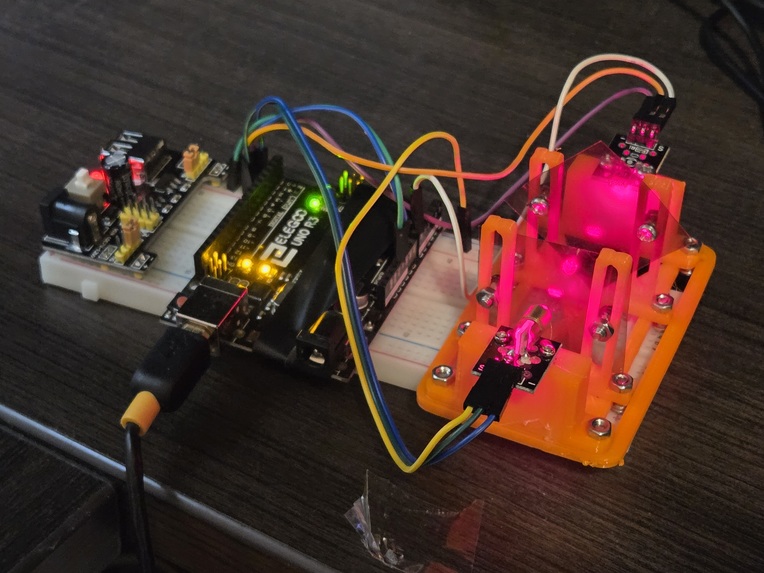
I was largely inspired by a YouTube video of a similar setup but using a beam splitter to create the same 50/50 probability theoretically achieved through my setup. As I didn't have a beam splitter, I decided to use polarized filters to achieve the same 50% probability of photons passing through a filter.
Features & How it works
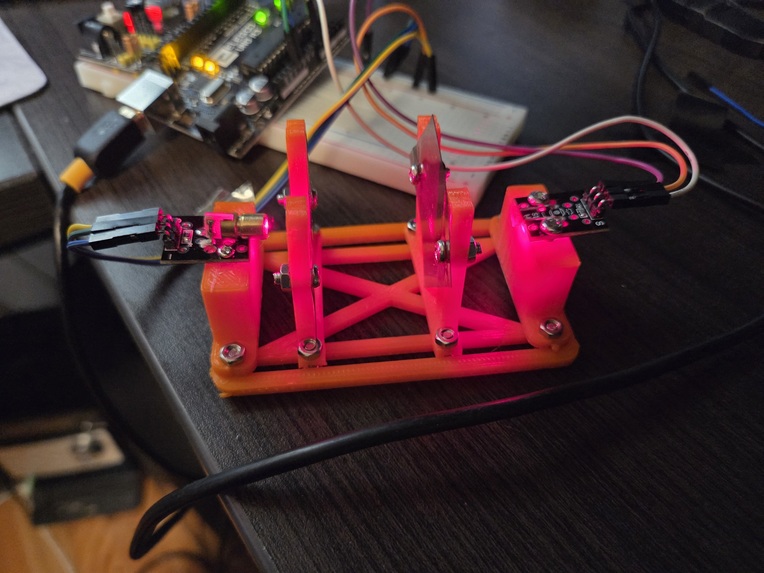
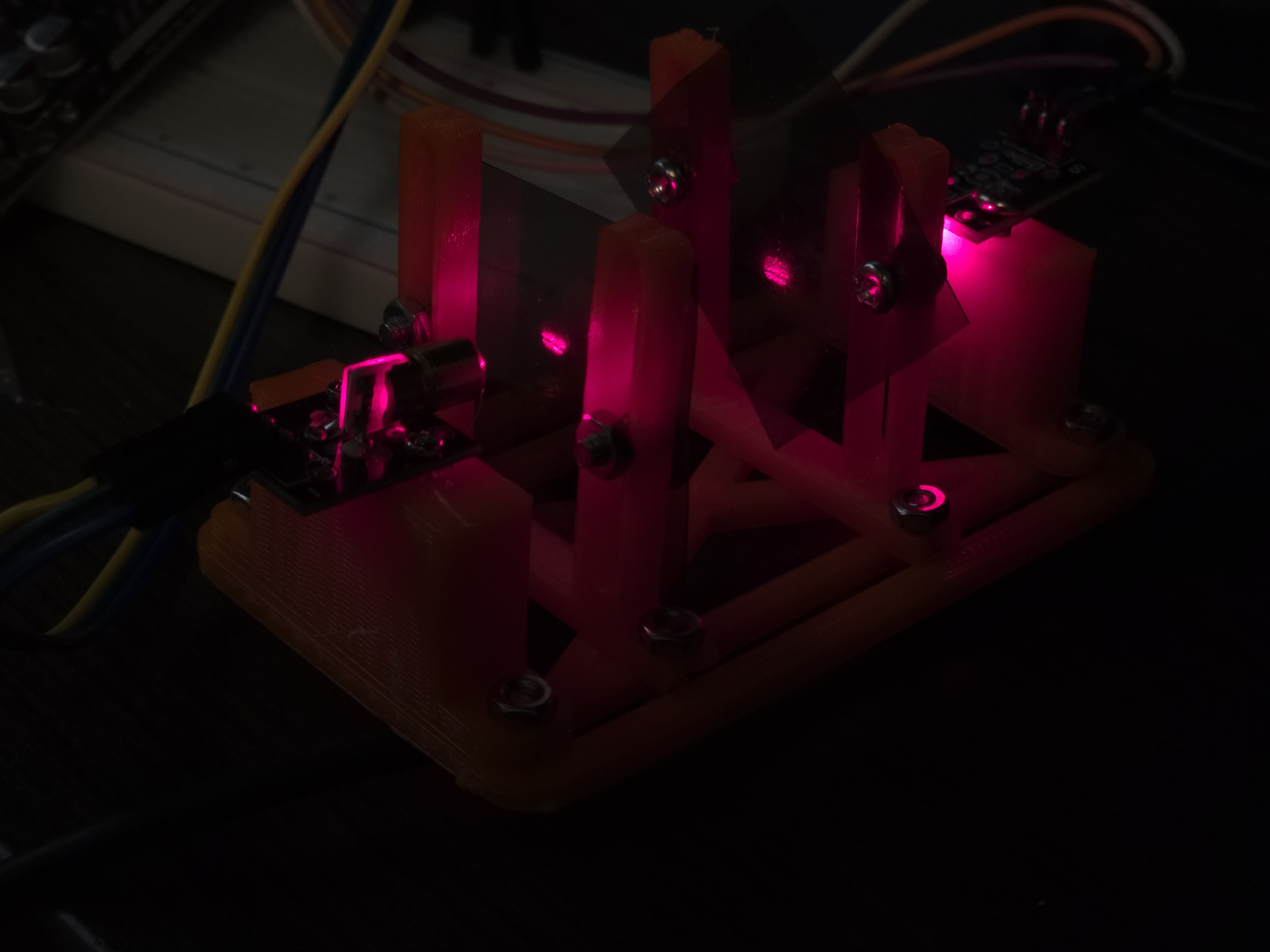
As explained by the submission video, the polarized light through the first filter will experience a 50% probability to go through the 45% filter. This can be captured through Malus' law as a 50% intensity of the initial light source. By mapping a midpoint to calibrate a 50% value, the cubit can then take future analog readings and convert them into either a 1 or 0, depending on whether the value has reached the threshold. This can then be used in a coinflip that harnesses quantum probability to interactively show the user the next value as a coinflip.
Features Include: Live Sensor Monitoring: Real-time display of sensor readings with automatic updates Statistics Display: Shows high/low reading percentages and counts Quantum Coin Flip: Interactive coin flip using actual sensor data for randomness
How we built it
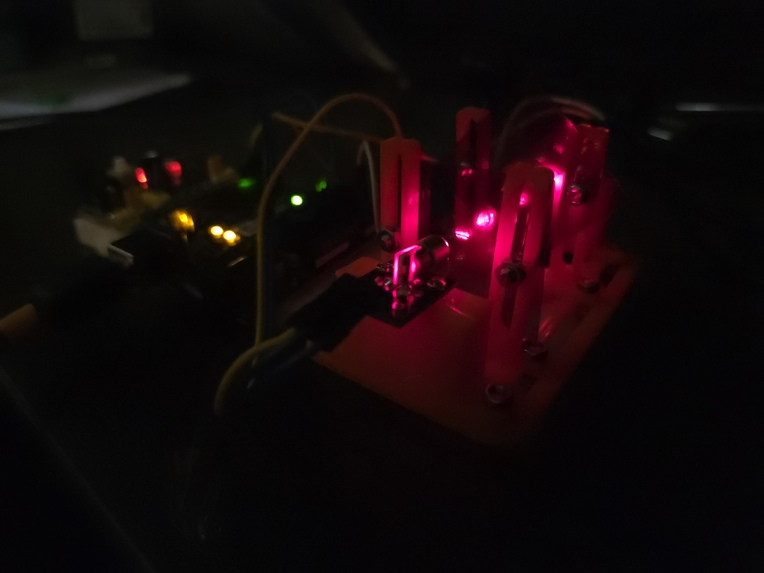
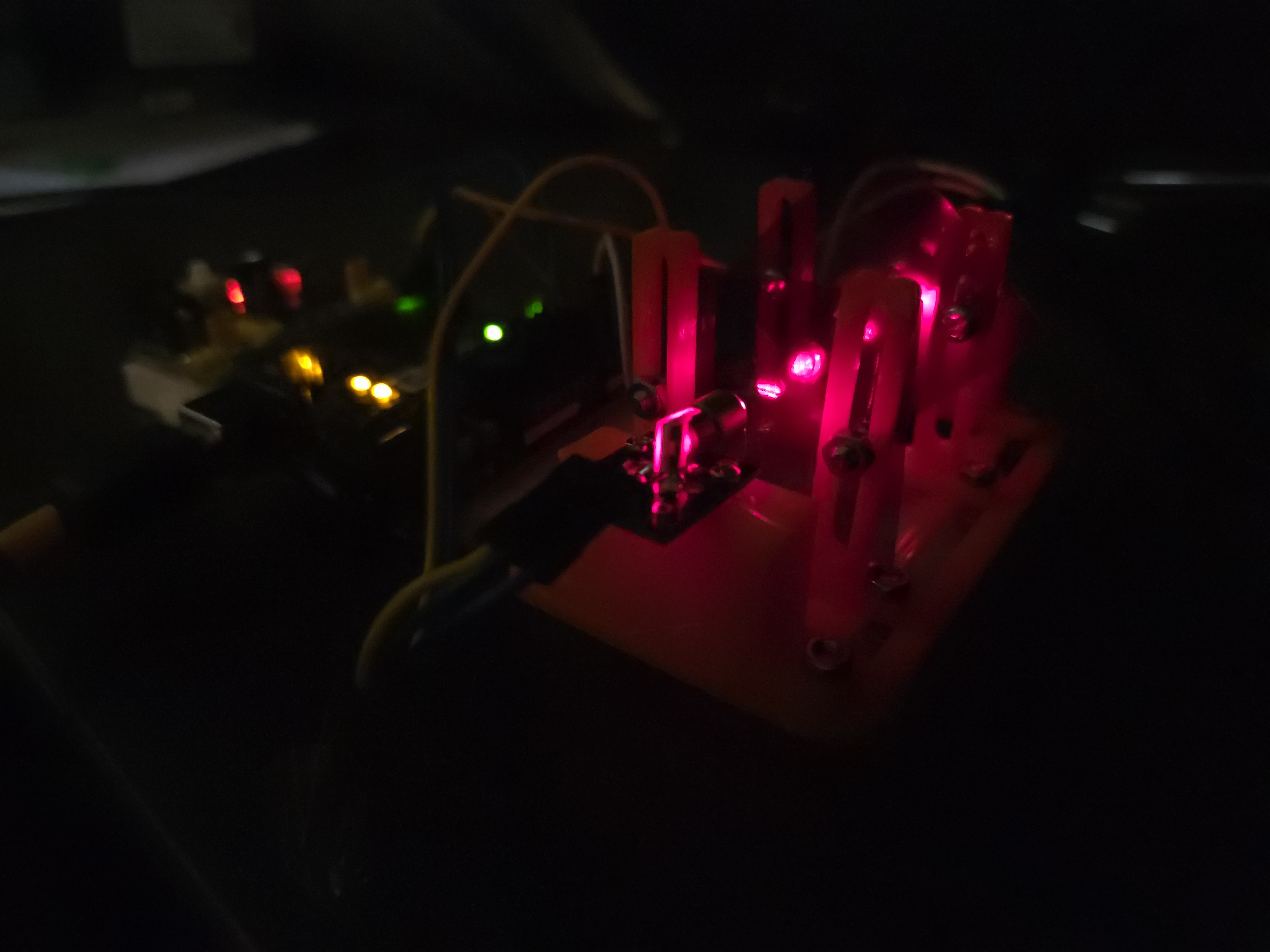
The setup utilizes a 5v breadboard power supply to power an arduino that transmits the sensor data to the computer. By creating a serial connection between a python script and the arduino, the python script is able to control the lazer light as well as receive the live data to be used in an interactive frontend. The stands and base of the setup were 3D printed in PLA with all models created in Fusion 360
Challenges we ran into
The biggest challenge experienced is the lack of accuracy due to the intense light of the lazer. The lazer could consistently max out the sensor even with both filters in place, and required a paper dimmer in front for more accurate readings. Additionally, the sensor was not accurate enough to utilize the calibrated midpoint effectively, which skewed the probability and the coinflip results significantly.
Accomplishments that we're proud of
I'm extremely proud to have created a setup that truly harnesses quantum probability through a cheap 3D printed setup. I have always been interested in the field of quantum computing, and I have taken my first leap through this project by experimenting with fundamental concepts.
What we learned
I've learned so much about quantum physics through this demo, ranging from the connection between physics concepts (Malus' law & Born Rule), and have realized that quantum physics doesn't have to be a very obscure concept. In fact, the fundamentals are truly just as easy to understand as other physics concepts in high school.
What's next for Cubit - The Homemade Quantum Coinflip
Cubit is an extremely promising project in my eyes, and could demonstrate its full capabilities in the future through a better detection system and a more static test environment. By utilizing a fully polarized laser and a better filtration system, a more accurate sensor would most likely pick up on the 50% probability much better than my current setup.

Log in or sign up for Devpost to join the conversation.